What Is Brand Advocacy And Why It Matters
Discover what is brand advocacy and learn how to turn your most passionate customers into a powerful growth engine for your business.
When a friend raves about a new coffee shop they discovered, you listen. When a colleague can’t stop talking about how a piece of software simplified their life, you take note. That’s brand advocacy in action.
It’s the genuine, unprompted enthusiasm your best customers have for your brand, and it’s the most powerful marketing you can’t buy. It goes way beyond just repeat purchases; it’s when customers become your volunteer marketing team, singing your praises simply because they believe in what you offer.
What Brand Advocacy Really Means
Think about it this way: a polished ad on Instagram is a message from a company. A recommendation from a trusted friend is a message from a person. One feels like a sales pitch, while the other feels like a helpful tip. Brand advocacy is all about earning that second kind of recommendation.
These customers—your brand advocates—aren't on your payroll. They're motivated by their own fantastic experiences with your products, your top-notch customer service, or a real connection to your company's mission. They’re the ones leaving five-star reviews on a whim, tagging you in their success stories, and defending your brand in online forums.
The Power of Authentic Trust
In a world saturated with ads, authenticity is everything. The data backs this up: a massive 92% of consumers trust word-of-mouth recommendations over any other form of advertising. It’s a stark contrast when you learn that 42% of people flat-out distrust brand-led messages. The trust gap is real, and advocacy is the bridge.
This is where the magic happens. A happy, loyal customer becomes so invested that they start actively promoting you to their network.
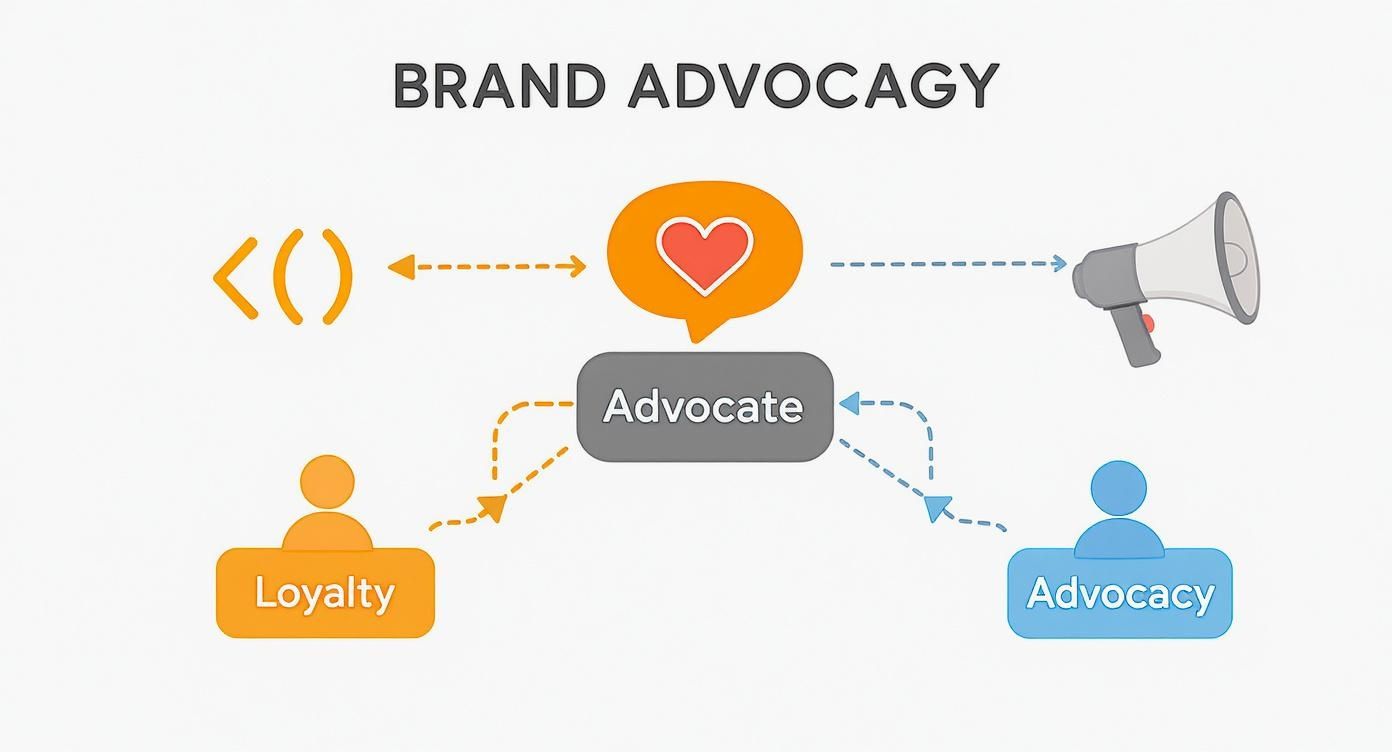
Loyalty is the foundation, but advocacy is the action. It's the next step up the ladder of customer connection.
More Than Just a Transaction
Brand advocacy shifts the entire customer dynamic from a simple transaction to a genuine relationship. It’s a virtuous cycle: you provide an incredible experience, that experience builds deep loyalty, and that loyalty blossoms into voluntary promotion.
It's closely related to another important concept, customer advocacy, which is more about how a company champions the needs of its own customers. For a deeper look at that side of the coin, you can check out our guide here: https://www.buildwithtoki.com/blog-post/what-is-customer-advocacy.
Brand advocates are the ultimate form of social proof. Their voluntary endorsements are more credible and impactful than any ad campaign because they are rooted in genuine satisfaction and personal experience, not financial incentive.
For more on the latest strategies and conversations happening in this space, Branditok's blog is a fantastic resource to follow. Building these deep-seated relationships isn’t just a "nice-to-have"—it's a cornerstone of sustainable growth.
The Real-World Impact of Brand Advocacy on Your Business
It's one thing to know what brand advocacy is, but it’s another to see how it directly impacts your bottom line. When you cultivate a base of true advocates, you're not just creating good vibes; you're building a powerful, measurable growth engine for your brand.

This is where the magic happens. Customers who actively promote your brand create a ripple effect that paid ads just can't match. This organic marketing becomes a consistent stream of high-quality leads, fundamentally changing how you grow.
Slash Your Customer Acquisition Costs
One of the first and most tangible wins you'll see is a serious drop in your Customer Acquisition Cost (CAC). Think about it: traditional marketing means spending big on ads, content, and sales teams just to get new people in the door.
Advocacy flips that entire model.
Your happiest customers do the heavy lifting for you, bringing in new buyers through trusted recommendations. This word-of-mouth marketing costs a tiny fraction of a paid ad campaign. By focusing on your advocates, you're tapping into one of the most effective strategies to reduce customer acquisition cost available.
This frees up your marketing budget to invest back into the customer experience, creating even more advocates. It’s a powerful, self-sustaining cycle where your best customers become your best marketing channel.
Boost Your Customer Lifetime Value
Here’s the thing about advocacy—it doesn’t just bring you more customers; it brings you better ones. A referral from a friend isn't a cold lead. They arrive already trusting you, and that has a huge impact on their value over time.
Referred customers don't just convert at a higher rate; they stick around longer and spend more. In fact, studies show that the Customer Lifetime Value (CLV) for a referred customer is, on average, 16% higher than for customers acquired through other channels.
What this really means is that a strong advocacy program isn't just a short-term sales tactic. It's a long-term investment in building a more profitable and resilient customer base.
The Unstoppable Power of Word-of-Mouth
The reach you get from brand advocates is both massive and authentic. A paid ad has a limited audience and a clear expiration date. But a genuine recommendation from a customer can spread like wildfire through social media, group chats, and real-life conversations.
The numbers are staggering. Research shows that word-of-mouth can improve marketing effectiveness by up to 54%.
A single advocate might reach a few hundred people in their network. As your community of supporters grows, that reach multiplies exponentially. Imagine this: just 1,000 brand advocates can organically share your brand’s message with up to 600,000 people.
This kind of trusted exposure builds brand equity in a way that paid ads simply can't buy. For any e-commerce brand serious about long-term success, investing in advocacy isn't just a nice idea—it's essential.
Building the Foundation for Your Advocacy Program
https://www.youtube.com/embed/wasqxAgv5oc
You can’t just buy brand advocacy off the shelf. Real, passionate advocacy has to be earned, and it grows from a foundation you build long before you ever ask for a referral. Think of it like gardening: you can't just toss seeds on barren ground and expect a harvest. You need to cultivate the soil first.
For your brand, that "soil" is built on three core pillars. These aren’t quick-fix campaigns; they're ongoing commitments that create an environment where customers want to shout your name from the rooftops. Get these right, and your advocacy programs will practically run themselves.
Pillar 1: Deliver an Exceptional Customer Experience
Everything starts here. Before a customer will even think about recommending you, they have to be more than just satisfied—they have to be genuinely impressed. This isn't just about the product itself, but every single touchpoint they have with your brand along the way.
Map out their entire journey, from their first visit to your site to the moment they unbox their order.
- A Frictionless Website: Is your site a breeze to navigate? Is checkout smooth and simple? Any hint of frustration can kill advocacy before it has a chance to sprout.
- Support That Wows: How do you handle problems? A fantastic, proactive support interaction is often the very thing that turns a regular customer into a lifelong fan.
- An Unboxing to Remember: Does your packaging feel special? Small details show you care about the entire experience, not just the transaction.
Every interaction is a chance to build the goodwill that fuels advocacy. It’s no surprise that 86% of consumers are willing to pay more for a great customer experience—it’s the bedrock of it all.
Pillar 2: Cultivate a Strong Community
Advocates thrive when they have a place to connect, both with your brand and with each other. A strong community turns a group of individual customers into a passionate collective that feels a real sense of belonging. This is where their enthusiasm for your brand really catches fire.
But this takes more than just starting a Facebook group. It means creating a dedicated space where your best customers can share their stories, swap tips, and feel like they’re part of something bigger. If you want to dive deeper, we've got a great guide on branding a community to foster loyalty.
A community isn't just another marketing channel; it's a home for your best customers. It’s where casual fans become invested partners who are emotionally connected to your brand's journey and success.
Pillar 3: Offer Meaningful Recognition and Rewards
The final piece of the puzzle is showing your appreciation. While true advocates are motivated by their love for your brand, a little recognition goes a long way. It validates their support and gives them a reason to keep going. This is where strategic rewards come in.
The key is to make it feel authentic, not transactional. It’s about more than just dangling a discount.
- Grant Exclusive Access: Give them a sneak peek at new products or behind-the-scenes content.
- Give Public Shout-Outs: Feature their photos and stories on your social media channels (with permission, of course!).
- Build Tiered Programs: Create a system where the more they engage, the better the perks they unlock.
When you nail all three—an amazing experience, a thriving community, and genuine recognition—you create an unstoppable combination. This is the fertile ground where brand advocacy can truly take root, transforming your happy customers into a volunteer army of passionate promoters.
Proven Tactics to Cultivate Brand Advocates
Alright, you've laid the groundwork. Now it's time to get proactive. Cultivating brand advocates isn't about sitting back and hoping for the best; it's about building clear, engaging pathways for your happiest customers to share their enthusiasm.
You're not trying to force recommendations. You're simply making it easy, rewarding, and genuinely fun for them to do what they already want to do: tell people about your brand.
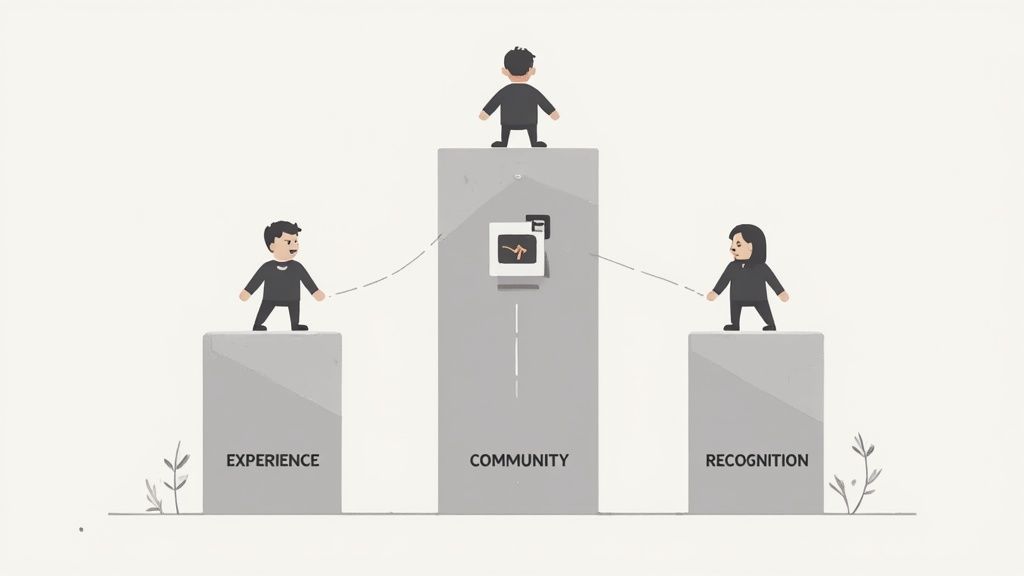
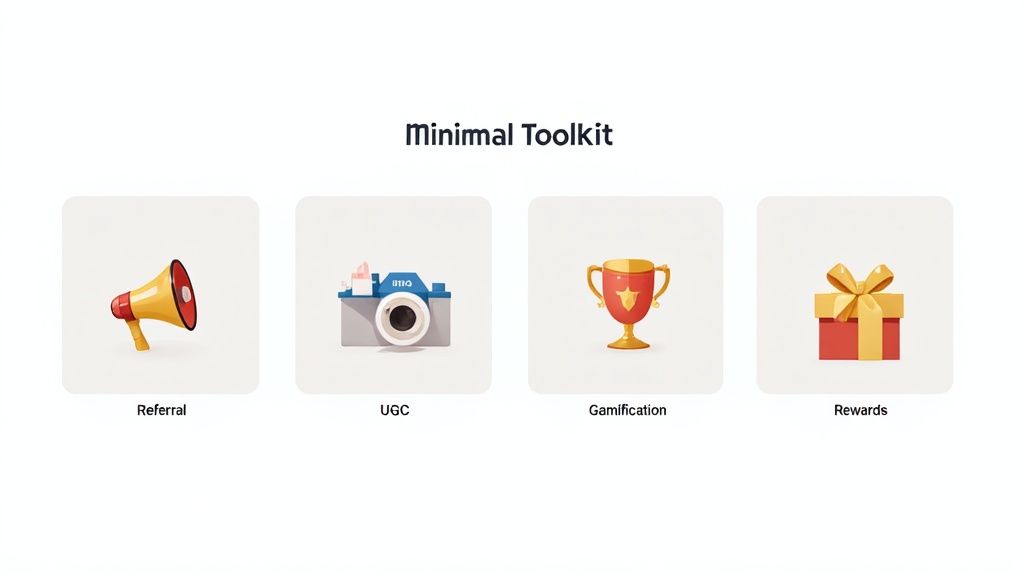
The right tactics are what turn quiet satisfaction into loud, active promotion. These strategies give your customers a framework to become a volunteer marketing army, driving real growth and making your community stronger.
Launch a High-Impact Referral Program
A referral program is probably the most direct line you can draw to encouraging advocacy. It takes casual word-of-mouth and puts a structure around it, rewarding your current customers for bringing new people into the family. The whole thing hinges on making the process dead simple and the rewards compelling for everyone involved.
Think about it: more than 70% of consumers are more likely to recommend a brand if it offers a good loyalty program, which often includes referrals. Your program needs to be a no-brainer to use—we're talking one-click sharing for a unique link or code.
- Offer Dual-Sided Incentives: Don't just reward the person referring. Reward the new customer, too. A "give 10%, get 10%" model feels like a generous gift exchange, not a selfish grab for a discount.
- Make Sharing Effortless: Give them everything they need. Pre-written messages and easy share buttons for social media, email, and texts are a must. The less work it is, the more people will do it.
- Track Everything: You need to see what's working. A system like Toki's referral and affiliate feature lets you watch the shares, clicks, and sales roll in, so you know exactly which advocates are your biggest champions.
This tactic works because it taps directly into the powerful trust people have for recommendations from friends, making it an essential piece of your advocacy puzzle.
Design Tiered Rewards That Inspire Action
A one-size-fits-all rewards program is a missed opportunity. A tiered system, on the other hand, gamifies the entire experience and gives your most dedicated fans a clear goal to shoot for. As customers spend more and engage more, they unlock better perks, greater exclusivity, and a higher status—a clear journey from casual buyer to VIP.
This approach is so effective because it actively recognizes and celebrates commitment. It’s a way of telling your best customers, "We see you, and we appreciate you," which motivates them to keep climbing that ladder for even better benefits.
A well-designed tiered system doesn't just reward transactions; it rewards behaviors. By offering points for actions like leaving reviews, sharing on social media, or referring friends, you actively encourage the habits that define a brand advocate.
For example, a basic tier might just offer points on purchases. But the top tier? That could grant early access to new products, a dedicated support line, or invitations to exclusive events. Tools like Toki’s tiered paid memberships give you the power to build these compelling value ladders that keep advocates hooked for the long run.
Spark Engagement with Gamification
Let's be honest—people love games. Gamification weaves elements of fun and friendly competition into the customer journey, making brand engagement feel less like a chore and more like play. Things like badges, leaderboards, and challenges can turn simple actions into exciting achievements.
This taps into our natural drive for accomplishment and recognition. When a customer earns a "Super Fan" badge for their fifth purchase or a "Top Sharer" badge for referring three friends, they get a little rush that strengthens their positive connection to your brand.
Here are a few quick ideas to get you started:
- Challenges: Run weekly or monthly contests, like "Share a photo with our product and tag us to earn 50 bonus points."
- Badges: Award digital badges for milestones, like their one-year customer anniversary or for writing their first product review.
- Leaderboards: Publicly recognize your top advocates for referrals or points earned. A little friendly competition never hurts!
These small touches keep your brand top-of-mind and give your advocates a fun reason to check in and interact every day.
To help you decide which tactics to prioritize, here’s a quick breakdown of how each one aligns with key business goals.
Brand Advocacy Tactics and Their Primary Goals
| Tactic | Primary Goal | Key Metrics to Track |
|---|---|---|
| Referral Programs | Customer Acquisition | Referral Conversion Rate, Cost Per Acquisition (CPA), Referred Customer LTV |
| Tiered Rewards | Customer Retention & LTV | Tier Progression Rate, Repeat Purchase Rate, Average Order Value (AOV) by Tier |
| Gamification | Customer Engagement | Daily/Monthly Active Users, Actions Performed (e.g., reviews, shares), Time on Site |
| UGC Campaigns | Social Proof & Brand Trust | UGC Submissions, Engagement on UGC Posts, Conversion Rate from UGC Content |
Choosing the right mix of these tactics depends on whether your immediate focus is on growth, retention, or boosting overall engagement.
Fuel Authentic Social Proof with UGC Campaigns
User-generated content (UGC) is the ultimate social proof. It's real people, using and loving your products in the wild. Actively running campaigns that encourage customers to create and share their own content is one of the most powerful and authentic forms of advocacy marketing you can do.
Your goal here is simple: turn your customers into your best content creators. A photo contest, a branded hashtag challenge, or a call for video testimonials can generate a treasure trove of marketing material that feels far more credible than anything your team could produce.
This strategy is a massive booster for loyalty and customer lifetime value (CLV), as your advocates are already some of your most valuable customers. The authentic content they create then attracts new customers who tend to show similar high-value behaviors, sticking around longer and spending more. You can dive deeper into these dynamics with these powerful insights on brand advocacy.
How to Measure the Success of Your Program
Launching an advocacy program without a way to measure it is like flying blind. You need clear data to understand what's working, prove the program’s value, and make smart decisions to actually improve it. Measuring your efforts is what turns brand advocacy from a feel-good concept into a tangible, powerful growth driver for your e-commerce store.
This isn’t just about tallying up likes or shares. It's about drawing a straight line from your advocacy activities directly to your bottom line. When you focus on the right Key Performance Indicators (KPIs), you can see the real-world impact your biggest fans are having on your business.
Key Advocacy Metrics You Must Track
To get a complete picture of your program's health, you have to look beyond the surface-level numbers. These core KPIs give you actionable insights into both the activity of your advocates and the results they generate.
- Referral Conversion Rate: This is your North Star metric. It tells you the percentage of people who actually make a purchase after being referred by an advocate. A high rate is a great sign that your advocates are bringing in high-quality, motivated traffic.
- Share of Voice (SOV): This KPI is all about how often your brand gets mentioned online compared to your competitors. A rising SOV shows that your advocates are successfully amplifying your message and winning more of the conversation in your niche.
- Advocate Engagement Rate: Don't just count how many advocates you have; measure how active they truly are. This metric tracks how often they jump into campaigns, share your content, or complete challenges, which helps you pinpoint your most influential supporters.
These metrics give you the raw data, but the real magic happens when you connect them to business outcomes. While these KPIs are specific to advocacy, it's also worth understanding how to measure customer loyalty, which provides a solid foundation for customer sentiment.
Connecting Data to Your Bottom Line
Ultimately, the goal is to prove that your brand advocacy efforts are fueling growth. You do this by linking your KPIs to core business metrics, creating a clear, undeniable line between what your advocates do and your financial success. This is where you calculate the real return on investment (ROI).
One of the most powerful metrics you can calculate is the Advocate Lifetime Value (ALTV). This goes a step beyond the standard Customer Lifetime Value (CLV) by tacking on the value of all the new customers an advocate brings in through their referrals.
Advocate Lifetime Value (ALTV) = Individual CLV + (Total Revenue from Referred Customers)
This simple formula reveals the true financial impact of an advocate, proving that your most vocal fans are also your most valuable customers, period.
By tracking ALTV, you can confidently pour more resources into the programs that nurture these incredibly high-value relationships. Platforms with built-in analytics, like Toki, make this a whole lot easier. They give you a single dashboard where you can see referral revenue, engagement data, and your overall program ROI at a glance. This allows you to stop guessing and start making data-driven decisions to fine-tune your strategy.
Watch Out for These Brand Advocacy Pitfalls
Getting a brand advocacy program off the ground is exciting, but it's easy to stumble. Some common missteps can sabotage even the best-laid plans, undoing all the hard work you've put into building trust and authentic connections with your customers.
Building real advocacy isn't about launching a flashy, one-off campaign. It’s about cultivating genuine relationships that last. Getting this wrong can turn your biggest fans into crickets, so let’s walk through the traps to avoid.
Don't Try to Force It
The fastest way to kill authentic advocacy is to make it feel like a chore. Advocacy has to come from a real place. When you push too hard or make the reward the only reason to participate, the whole thing starts to feel like a cheap ad. Your customers are smart—they'll see right through it.
True brand advocacy is a side effect of an amazing customer experience, not just a transaction. If the incentive is more compelling than the passion for your brand, you’re just renting mercenaries who are loyal to the discount, not to you.
Instead of a hard sell, create an environment where sharing feels natural and fun. You're not trying to invent passion out of thin air; you're just giving your existing fans a megaphone.
Don't Ghost Your Advocates
This one's a biggie. A customer refers a friend, shares a great post, gets their coupon code, and then... nothing. Treating advocacy like a one-and-done transaction completely misses the point. Your advocates are your MVPs, and they deserve to be treated that way.
If you disappear after they've done something for you, they'll feel used. It’s that simple. You have to keep the relationship going.
Here’s how you can keep them in the loop:
- Share exclusive content: Give them a sneak peek at new products or a behind-the-scenes video. Make them feel like insiders.
- Offer ongoing recognition: Keep shouting them out! Feature their content regularly, not just when you're running a specific campaign.
- Talk to them directly: Set up a private community, like a VIP Facebook group or Discord server, where they can chat with your team and each other.
These people aren't just numbers on a spreadsheet. They're the heart and soul of your community. Treat them like it.
Don't Use a Cookie-Cutter Strategy
Your advocates are all different. They're motivated by different things, they shop differently, and they engage with your brand in unique ways. Sending the same generic reward or message to everyone is a guaranteed way to make them tune out. In fact, research shows 86% of consumers say authenticity is a huge factor when they decide which brands to like and support—and a personalized touch is a massive part of that.
This is where segmentation becomes your secret weapon. Dig into your data to figure out what makes different groups tick. Some people love a good discount, while others would rather have early access to a new collection or a public shout-out on Instagram.
Using a platform like Toki helps you slice and dice your audience to create personalized campaigns. This ensures every advocate gets the kind of recognition that actually means something to them. A tailored approach shows you’re paying attention, and it makes your best customers feel seen and valued.
A Few Common Questions About Brand Advocacy
Even the best-laid plans can leave you with a few lingering questions. Let's tackle some of the most common ones that pop up when merchants start building out their brand advocacy programs.
How Do I Find Potential Advocates in My Customer Base?
This is easier than you think. Your future advocates are already out there, waving flags and showing their support—you just need to know where to look.
Start with your social channels. Who’s tagging you in their posts, sharing your content without being asked, or even defending your brand in the comments section? Those are your people. Next, dig into your own data. Your best advocates are often hiding in plain sight: look for customers with a high number of repeat purchases, those who consistently leave glowing five-star reviews, or anyone who gives you a top-tier Net Promoter Score (NPS).
These aren't just data points; they're clear signals of genuine happiness, which is the fuel for authentic advocacy.
What Is the Difference Between a Brand Advocate and a Brand Ambassador?
This one trips a lot of people up, but the difference is simple: one is paid, and the other isn't.
- Brand Advocates are real, happy customers who rave about your brand for free simply because they love what you do. Their word is gold because it’s authentic and comes from a place of genuine satisfaction.
- Brand Ambassadors are people you formally hire or contract to represent your brand. They’re part of a paid marketing strategy, and while they can be great for reach, their endorsement is a transaction.
Here's an easy way to think about it: an advocate is a fan, while an ambassador is on the payroll. Both can be valuable, but their motivations are worlds apart, and so is the trust they build.
An advocate’s power comes from their authenticity; their word-of-mouth is earned, not bought. An ambassador’s influence comes from their reach and is part of a paid marketing strategy. Understanding this difference is key to what is brand advocacy at its core.
How Long Does It Take to See Results from an Advocacy Program?
Patience is a virtue here. Brand advocacy is a long game—think of it more like planting an orchard than flipping a light switch. You're building real relationships, and that takes time.
While you'll likely see some early encouraging signs in the first few months (a jump in social shares, a few referral link clicks), the truly meaningful results tend to show up around the six to twelve-month mark. That’s when you'll start to see a real impact on your bottom line, like a steady stream of referral revenue or a lower Customer Acquisition Cost (CAC).
The timeline really depends on how solid your foundation is. A fantastic customer experience and an engaged community will speed things up. The key is to stay consistent—nurturing these relationships is an ongoing effort that pays back with interest.
Ready to turn your most loyal customers into your most powerful marketing channel? Toki provides all the tools you need—from referrals and tiered rewards to gamification and robust analytics—to build, manage, and scale a winning brand advocacy program. Start growing with Toki today.