10 Actionable Referral Programs Ideas for E-Commerce in 2026
Discover 10 powerful referral programs ideas to boost customer acquisition. Get actionable tips and examples for your Shopify store's growth in 2026.
Word-of-mouth marketing remains one of the most powerful and cost-effective growth channels for e-commerce brands. While a basic "give $10, get $10" referral program is a good start, it often fails to capture the full potential of your customer base. In a crowded market, inspiring true brand advocacy requires more creativity, personalization, and strategic depth. Customers expect programs that feel less transactional and more like a genuine extension of the brand experience they already love.
This guide moves beyond the standard playbook. We've compiled 10 actionable referral programs ideas designed specifically to help modern e-commerce stores acquire high-value customers, increase loyalty, and build a thriving community. Each idea is a complete blueprint, detailing not just the concept but also the reward mechanics, target audience, and key performance indicators to track for success.
You'll learn how to implement everything from a tiered system that rewards your most active advocates to seasonal campaigns that create timely buzz. For each concept, we'll provide practical implementation tips and highlight how a dedicated loyalty and referrals platform can simplify execution, turning your happy customers into your most effective and enthusiastic sales force. This isn't just a list of suggestions; it's a strategic resource for building a referral engine that drives sustainable growth and deepens customer relationships.
1. Tiered Referral Rewards Program
A Tiered Referral Rewards Program moves beyond the standard one-off reward model by creating a multi-level system that incentivizes ongoing advocacy. Instead of offering the same reward for every referral, this structure provides increasingly valuable rewards as a customer successfully refers more people. This gamified approach motivates advocates to keep sharing, turning a single referral into a sustained habit.
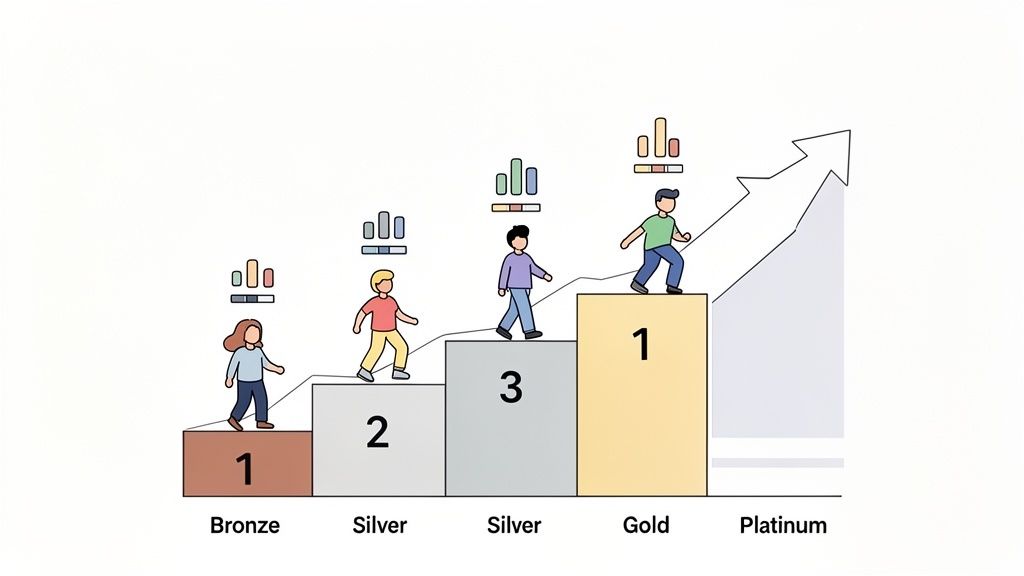
This method is one of the most effective referral programs ideas because it taps into the human desire for achievement and status. As referrers unlock higher tiers, they feel a sense of accomplishment, which strengthens their connection to your brand. Dropbox famously used this model, offering users more storage space for each referral, creating a powerful growth loop that fueled its early expansion.
How to Implement a Tiered Program
-
Define Clear Tiers: Structure your program with achievable levels. For example:
- Bronze (1-2 Referrals): 10% off coupon.
- Silver (3-5 Referrals): $25 store credit.
- Gold (6-9 Referrals): Free product of their choice.
- Platinum (10+ Referrals): Exclusive access to new products and a permanent 15% discount.
-
Visualize Progress: Provide referrers with a personal dashboard showing how many successful referrals they've made and how close they are to the next tier. Visual progress bars or checklists are highly effective.
-
Automate Tier Recognition: Use automated emails to celebrate when a referrer reaches a new tier. This immediate positive reinforcement encourages them to aim for the next level.
Pro Tip: Align your tier rewards with your customer lifecycle and product value. High-value rewards should be reserved for top-tier advocates who drive significant new business. For more inspiration, you can learn more about various referral incentive ideas on buildwithtoki.com.
Platforms like Toki simplify this process by allowing you to build and automate tiered loyalty and referral structures seamlessly, tracking progress and distributing rewards without manual intervention. This approach not only boosts acquisition but also deepens loyalty by turning your best customers into powerful, long-term brand champions.
2. Dual-Sided Referral Incentives
A Dual-Sided Referral Incentive program is a balanced model that rewards both the advocate making the referral and the new customer they bring in. This two-way structure removes the selfish perception that can sometimes accompany referrals, as both parties benefit from the transaction. The new customer gets an immediate discount to encourage their first purchase, while the existing customer receives a reward for their successful advocacy.
This approach is one of the most popular referral programs ideas because it creates a powerful win-win-win scenario. The new customer feels welcomed, the referrer feels appreciated, and the brand gains a new, high-intent buyer. Companies like DoorDash and Venmo leverage this by giving both the sender and receiver account credits, which dramatically increases the likelihood of the referral code being shared and used.
How to Implement a Dual-Sided Program
-
Define Clear, Mutual Benefits: Offer complementary rewards that motivate both sides. For example:
- Advocate Reward: $20 store credit after their friend's first purchase.
- Friend's Reward: 20% off their first order.
- This creates an immediate incentive for the new customer to convert.
-
Communicate the "Win-Win" Clearly: Your messaging should explicitly state that both parties get a reward. Use phrases like "Give 15%, Get $15" to make the mutual benefit instantly understandable on landing pages, emails, and social shares.
-
Make Redemption Effortless: The new customer's discount should be easy to apply, ideally automatically added at checkout when they use the referral link. The advocate's reward should be credited to their account as soon as the friend's purchase is confirmed.
Pro Tip: The value of the friend's offer is often more critical than the referrer's reward. A compelling introductory discount for the new user is the key to driving conversions, which in turn unlocks the reward for your advocate.
Platforms like Toki excel at managing dual-sided incentives by automating the entire process. It can track the referral from link click to purchase, automatically apply the discount for the new customer, and instantly credit the advocate's digital wallet, ensuring a seamless and trustworthy experience for everyone involved.
3. Social Media Amplified Referrals
A Social Media Amplified Referral program leverages the vast reach and viral nature of platforms like Instagram, TikTok, and Facebook. Instead of relying on email or direct messages, this model encourages customers to share unique referral links or codes directly in their posts, stories, and bios. This approach turns every customer into a potential micro-influencer, tapping into their established social circles to drive organic, trusted traffic.
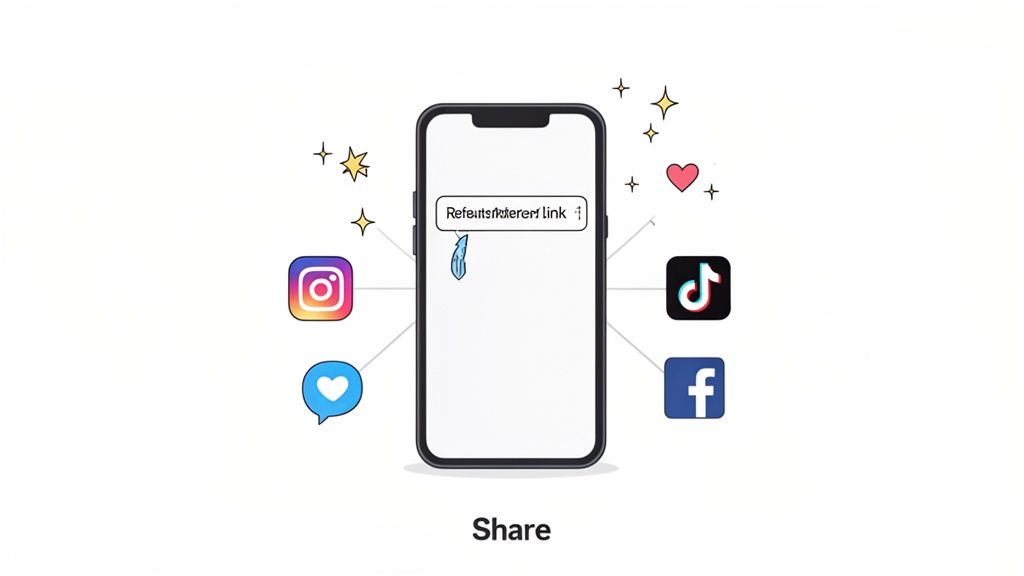
This method is one of the most powerful referral programs ideas because it meets customers where they already are. Brands like Glossier and Gymshark built their empires by empowering their communities to share on social media, creating a self-perpetuating engine of user-generated content and authentic endorsements. The key is making the sharing process seamless and visually appealing.
How to Implement a Social Media Program
-
Create Share-Worthy Assets: Design visually compelling graphics, videos, and templates that are optimized for different platforms (e.g., vertical for Instagram Stories, square for feed posts). Make them easy for advocates to download and post.
-
Simplify Sharing: Provide pre-written captions and relevant hashtags to remove friction. A one-click "Share to Instagram" or "Share to TikTok" button in the customer's referral dashboard can significantly boost participation.
-
Offer Engagement Bonuses: Reward advocates not just for successful referrals but also for social engagement. For example, offer 50 loyalty points for an Instagram story share or an extra reward for a post that gets over 100 likes.
Pro Tip: To truly amplify your referrals on social media, visually stunning and engaging content is essential. The tools and techniques are constantly evolving, and you can learn how AI in fashion content creation is revolutionizing how brands produce compelling visuals at scale.
Platforms like Toki make it easy to generate unique referral links and track their performance across all social channels. With detailed analytics, you can identify which platforms and advocates are driving the most conversions, allowing you to double down on what works and optimize your social referral strategy for maximum growth.
4. Exclusive Access & VIP Referral Program
An Exclusive Access & VIP Referral Program shifts the focus from purely transactional rewards to status-driven incentives. Instead of just offering discounts or cash, this model grants top referrers access to perks that money can't buy, such as early product launches, dedicated VIP customer service, or invitations to private brand events. This approach appeals to a customer's desire for recognition and belonging, creating a powerful emotional connection to your brand.
This is one of the most compelling referral programs ideas because it fosters a community of elite brand advocates. By making certain benefits feel exclusive and earned, you transform your most loyal customers into a genuine inner circle. Programs like Lululemon's ambassador community and Sephora's top-tier Beauty Insider perks leverage this sense of exclusivity to build fierce brand loyalty and drive consistent, high-quality referrals.
How to Implement an Exclusive Access Program
-
Define VIP Tiers and Perks: Create clear milestones for achieving VIP status. For example:
- Insider (5 Referrals): Early access to sales and new product announcements.
- Ambassador (15 Referrals): Free products, a dedicated support line, and a feature on your social media.
- Elite (25+ Referrals): Invitations to exclusive virtual or in-person events and a direct line to your product development team.
-
Communicate Exclusivity: Make the value of VIP status clear in all your marketing. Use language that emphasizes rarity and privilege to motivate advocates. Promote the unique experiences your VIPs receive on social media to create aspiration among your wider customer base.
-
Maintain Scarcity: To preserve the value of the program, limit VIP access to a small, dedicated group, such as the top 5-10% of your referrers. True exclusivity is key to making the rewards feel special and worth striving for.
Pro Tip: Personalize the VIP experience as much as possible. A handwritten thank-you note from the CEO or a personalized welcome gift can have a far greater impact than a generic coupon, solidifying the advocate's role as a valued partner.
Using a platform like Toki, you can segment customers based on their referral activity, automating the process of identifying and communicating with your top advocates. This allows you to easily manage your VIP tiers and deliver personalized, exclusive rewards that turn your best customers into your most powerful and vocal brand champions.
5. Affiliate & Partner Channel Referral Program
An Affiliate & Partner Channel Referral Program scales your advocacy efforts beyond your customer base by formalizing partnerships with content creators, bloggers, and industry influencers. Instead of solely relying on customers, this model recruits brand-aligned partners who promote your products to their own audiences in exchange for a commission on the sales they generate. This structure blends traditional affiliate marketing with referral mechanics to unlock new acquisition channels.
This strategy is one of the most powerful referral programs ideas for brands ready to expand their reach exponentially. By tapping into the established trust and authority of partners, you can access highly-qualified audiences you might not otherwise reach. Programs like Amazon Associates and Shopify's Partner Program demonstrate how affiliates can become a primary engine for scalable, performance-based growth.
How to Implement an Affiliate & Partner Program
-
Recruit the Right Partners: Identify creators and publishers whose audience demographics and brand values align with your own. A smaller, engaged niche audience is often more valuable than a large, generic one.
-
Provide a Resource Hub: Equip your partners for success with a dedicated dashboard containing unique tracking links, marketing assets (like banners and copy), product information, and performance analytics.
-
Offer Competitive Commissions: Structure a clear, attractive commission plan. Consider offering performance-based bonuses for top affiliates who consistently exceed sales targets to keep them motivated.
Pro Tip: Build genuine relationships with your top-performing affiliates. Treat them as true partners by offering them exclusive sneak peeks of new products, co-hosting webinars, or featuring them on your brand’s social media channels.
To expand beyond direct customer referrals, businesses can also explore affiliate and partner channel programs, leveraging established networks for wider reach. Platforms like Toki streamline this by managing affiliate onboarding, tracking sales via unique referral codes, and automating commission payouts. You can learn more about creating a successful affiliate program with buildwithtoki.com to effectively scale your brand's reach and drive sustainable revenue growth.
6. Seasonal & Event-Based Referral Campaigns
A Seasonal or Event-Based Referral Campaign leverages the natural urgency and heightened consumer activity surrounding holidays, seasons, or special events. Instead of a year-round, static offer, this approach creates time-sensitive campaigns with unique themes and often more generous rewards. This creates a powerful sense of FOMO (fear of missing out), motivating both referrers and their friends to act quickly.
This method is one of the most effective referral programs ideas because it aligns your marketing efforts with existing shopping behaviors. Customers are already in a buying mindset during periods like Black Friday or the winter holidays, making them more receptive to sharing and purchasing from a referral. The limited-time nature of the offer breaks through the noise and encourages immediate action.
How to Implement a Seasonal Campaign
-
Plan Ahead and Align Offers: Identify key dates relevant to your brand (e.g., Black Friday, Back-to-School, New Year's). Plan your campaign 6-8 weeks in advance, creating special offers like a 2x reward multiplier or a gift-with-purchase for successful holiday referrals.
-
Create Themed Assets: Develop unique landing pages, emails, and social media creative that reflect the seasonal theme. This visual consistency makes the campaign feel special and captures the spirit of the event.
-
Build Anticipation: Don't wait until the event to announce your campaign. Use teaser emails and social media posts to build excitement, letting your customers know a special, limited-time referral offer is coming soon.
Pro Tip: Coordinate your seasonal referral push with your inventory and fulfillment teams. A successful campaign can lead to a significant spike in orders, so ensure you have the stock and shipping capacity to handle the increased demand and deliver a great customer experience.
Platforms like Toki make it easy to schedule and automate these time-sensitive campaigns. You can set start and end dates for special reward rules, segment your audience for targeted promotions, and track the campaign's performance in real-time, allowing you to capitalize on peak shopping seasons with minimal manual effort.
7. Community-Powered Referral & Advocacy Network
A Community-Powered Referral & Advocacy Network transforms a standard referral program into a dynamic, engaged ecosystem. This strategy integrates referral incentives directly into a brand community, motivating members to advocate not just for a reward but for the benefit of the group. It combines referrals with community-wide challenges, leaderboards, and collaborative rewards, turning individual customers into a collective force of brand ambassadors.
This model is one of the most powerful referral programs ideas because it taps into social proof and belonging. When referrals originate from a trusted community, they carry more weight and convert at a higher rate. Brands like Lululemon and Glossier excel at this, building communities where advocacy is a natural byproduct of shared values and experiences, leading to organic, peer-to-peer promotion.
How to Implement a Community-Powered Program
-
Create an Exclusive Hub: Establish a dedicated space for your advocates, such as a private Facebook Group, Slack channel, or Discord server. Use this as the central point for announcing challenges and sharing exclusive content.
-
Gamify with Community Challenges: Host themed referral contests or group milestone goals. For example, "Refer 20 new members this month to unlock a group-wide 25% discount." This fosters collaboration and friendly competition.
-
Recognize and Elevate Advocates: Feature top referrers publicly on social media, in newsletters, or within the community itself. Public recognition serves as a powerful, non-monetary incentive that reinforces desired behavior.
Pro Tip: Your community is an extension of your brand, so establish clear guidelines and values from the start. A well-managed community ensures that advocacy remains authentic and positive. For a deeper dive, you can learn more about building a successful community marketing strategy on buildwithtoki.com.
Platforms like Toki make it easy to manage this by integrating gamification tools, such as badges for community contributions and leaderboards to track referral challenges. By building an active network, you not only drive new customer acquisition but also cultivate a loyal base of superfans who are emotionally invested in your brand's success.
8. Referral Rewards Marketplace & Choice
A Referral Rewards Marketplace empowers customers by giving them the freedom to choose their own rewards. Instead of a one-size-fits-all incentive, this model allows referrers to accumulate points for each successful referral and redeem them from a curated catalog of options. This approach transforms the referral process into a personalized and engaging experience, catering to diverse customer preferences.
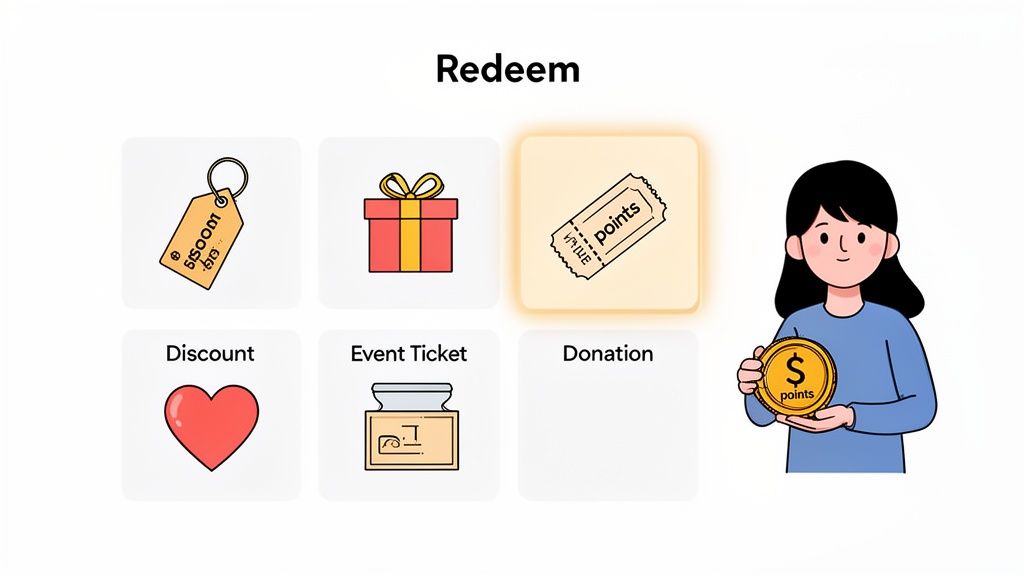
This method is one of the most flexible referral programs ideas because it acknowledges that what motivates one customer may not motivate another. By providing choice, you increase the perceived value of your program and strengthen emotional loyalty. Brands like Sephora and Starbucks have perfected this model with their points redemption marketplaces, offering everything from free products to exclusive merchandise and experiences, keeping customers engaged and motivated to earn more.
How to Implement a Rewards Marketplace
-
Curate a Diverse Reward Catalog: Survey your customers to understand what they value. Offer a mix of options:
- Transactional: Store credit, percentage discounts, free shipping.
- Products: Free products, limited-edition items, or exclusive bundles.
- Experiential: Early access to sales, VIP event tickets, or partner brand offers.
- Altruistic: Options to donate points to a charity of their choice.
-
Visualize Point Value: Make it easy for customers to understand the value of their efforts. Clearly display how many points each successful referral earns and how many are needed for specific rewards. Visual progress trackers towards a desired item can be highly effective.
-
Keep the Marketplace Fresh: Rotate limited-edition or seasonal rewards to create urgency and encourage repeat referrals. Announcing new marketplace additions can re-engage dormant advocates.
Pro Tip: Use customer data and segmentation to personalize the marketplace experience. Showcase rewards you know a specific customer segment is likely to desire based on their past purchase history. This level of personalization makes the rewards feel more attainable and relevant.
Platforms like Toki make building a rewards marketplace simple. You can easily create a catalog of redeemable rewards, automate point tracking from referrals, and use segmentation to display personalized options to different customer groups. This turns your referral program into a dynamic and highly motivating ecosystem that drives both acquisition and long-term loyalty.
9. Subscription Model Referral Program
A Subscription Model Referral Program is tailored specifically for businesses with recurring revenue, such as subscription boxes or memberships. Instead of a single reward for a new customer, this model often provides ongoing benefits for as long as the referred subscriber remains active. This aligns the incentive directly with customer lifetime value (LTV), making it a powerful tool for sustainable growth.
This approach is one of the most financially sound referral programs ideas for subscription services because the reward structure is directly tied to the revenue generated. It encourages referrers to bring in high-quality subscribers who are likely to stick around, rather than one-time purchasers. Companies like Notion and Canva Pro leverage this by offering credits or benefits that compound as referred users continue their subscriptions, ensuring advocates are rewarded for bringing in long-term value.
How to Implement a Subscription Program
-
Define Reward Mechanics: Decide if the reward is a one-time bonus (e.g., $20 for a new annual subscriber) or recurring (e.g., 10% off your subscription for every active referred friend). Recurring rewards are often more motivating.
-
Track Subscriber Tenure: Implement a system to monitor the status of referred subscribers. The advocate's reward should be contingent on the new subscriber remaining active past any trial or refund periods.
-
Create a Referrer Dashboard: Give advocates a dedicated space to track their referred subscribers' statuses (e.g., "Active," "Trial," "Canceled"). This transparency builds trust and keeps them engaged with the program.
Pro Tip: Offer accelerated bonuses when a referred customer upgrades their plan. For example, if a referred user moves from a monthly to an annual plan, provide an immediate bonus to the original referrer to incentivize them to find more high-value customers.
Platforms like Toki are ideal for managing subscription referrals, as they can automate the tracking of subscriber LTV and distribute recurring rewards accurately. This model transforms your referral program from a simple acquisition channel into a strategic asset that directly boosts long-term, predictable revenue and customer loyalty.
10. Omni-Channel Unified Referral Program
An Omni-Channel Unified Referral Program breaks down the walls between your online and offline sales channels, creating a single, cohesive experience for your customers. This strategy allows advocates to refer friends and redeem rewards seamlessly, whether they are shopping on your website, using your mobile app, or visiting a physical store. This unified approach eliminates friction and maximizes participation by meeting customers wherever they are.
This model is one of the most powerful referral programs ideas for modern retail because it reflects how customers actually shop today: a mix of digital discovery and in-person purchasing. By connecting all touchpoints, you ensure that every interaction reinforces brand loyalty and that no referral opportunity is lost. Brands like Sephora and Target have mastered this by integrating their loyalty and referral benefits across their entire ecosystem, making participation effortless.
How to Implement an Omni-Channel Program
-
Unify Customer Profiles: Use a central system to track customer activity across all channels. A customer should have one account where all their online and in-store referral activities are consolidated.
-
Use QR Codes and Digital Wallets: Generate unique QR codes that customers can easily share or that staff can scan in-store. Integrating with digital wallets like Apple Wallet or Google Pay allows customers to store and access their referral codes and rewards right from their phones.
-
Train In-Store Staff: Your retail team is your front line. Ensure they understand the program inside and out, can explain the benefits to customers, and can easily apply referral codes or rewards at the point of sale.
-
Promote Across All Channels: Create consistent marketing collateral. Use in-store posters, shelf talkers, and checkout displays to promote the referral program, mirroring the digital promotions on your website and social media.
Pro Tip: Use unified analytics to track which channels are driving the most referrals. This data can help you identify your most valuable touchpoints and optimize your promotional spending for maximum ROI.
Platforms like Toki are built for this modern retail environment. They provide the infrastructure to sync customer data, generate unique codes for both online and offline use, and track attribution accurately across every channel. This ensures a frictionless experience for your customers and provides you with a holistic view of your program's performance, turning every transaction point into a growth opportunity.
Top 10 Referral Program Ideas Comparison
| Program | Implementation Complexity (🔄) | Resource & Operational Needs (⚡) | Expected Outcomes (⭐📊) | Ideal Use Cases | Key Advantages (💡) |
|---|---|---|---|---|---|
| Tiered Referral Rewards Program | 🔄🔄🔄 High — tier tracking & gamification | ⚡⚡⚡ Medium–High — reward costs, analytics | ⭐⭐⭐⭐ 📊 Strong repeat referrals; higher CLV | E‑commerce with loyal customers | 💡 Encourages sustained advocacy; gamifies progress |
| Dual‑Sided Referral Incentives | 🔄🔄 Moderate — dual tracking & fraud prevention | ⚡⚡ Higher cost per referral; instant delivery systems | ⭐⭐⭐ 📊 Higher conversion rates; faster acquisition | DTC startups, retail brands | 💡 Mutual value reduces friction; increases participation |
| Social Media Amplified Referrals | 🔄🔄 Moderate — platform integrations & templates | ⚡⚡ Low–Medium — creative content investment | ⭐⭐⭐⭐ 📊 Wide organic reach; brand awareness spikes (variable conversion) | Brands with strong social presence, younger demos | 💡 Viral potential; lower CAC when content resonates |
| Exclusive Access & VIP Referral Program | 🔄🔄 Moderate — coordination of exclusive experiences | ⚡⚡ Lower monetary cost but high experience delivery | ⭐⭐⭐ 📊 Deep loyalty and UGC; lower volume impact | Premium/lifestyle and community brands | 💡 High perceived value; fosters long‑term advocacy |
| Affiliate & Partner Channel Referral Program | 🔄🔄🔄 High — partner onboarding & tracking infrastructure | ⚡⚡⚡ Significant — payouts, partner support, compliance | ⭐⭐⭐⭐ 📊 Scalable reach; measurable, performance‑based ROI | Established e‑commerce and subscription businesses | 💡 Access to new audiences; pay‑for‑performance scalability |
| Seasonal & Event‑Based Referral Campaigns | 🔄🔄 Moderate — campaign timing & creative coordination | ⚡⚡ Concentrated budget; short‑term fulfillment | ⭐⭐⭐ 📊 Urgency‑driven spikes; strong short‑term volume | Retail & e‑commerce with predictable seasons | 💡 Drives bursts of activity; cost‑effective in peak windows |
| Community‑Powered Referral & Advocacy Network | 🔄🔄🔄 High — community management & moderation | ⚡⚡ Ongoing investment in events, content, moderation | ⭐⭐⭐⭐ 📊 Sustained organic advocacy; lower CPA over time | Lifestyle, subscription, fitness/wellness brands | 💡 Leverages network effects; creates social proof |
| Referral Rewards Marketplace & Choice | 🔄🔄🔄 High — catalogue management & fulfillment complexity | ⚡⚡⚡ High operational overhead; inventory & partnerships | ⭐⭐⭐⭐ 📊 High perceived value; repeat engagement and data insights | E‑commerce with diverse customer preferences | 💡 Personalization increases satisfaction; reveals preferences |
| Subscription Model Referral Program | 🔄🔄🔄 High — recurring attribution & accounting | ⚡⚡ Medium — requires retention tracking, holdbacks | ⭐⭐⭐⭐ 📊 Aligns incentives with LTV; predictable referral economics | SaaS, memberships, subscription retailers | 💡 Rewards tie to retention; encourages quality referrals |
| Omni‑Channel Unified Referral Program | 🔄🔄🔄🔄 Very high — POS, wallet, and system integrations | ⚡⚡⚡ High — tech integration, staff training, inventory sync | ⭐⭐⭐⭐ 📊 Consistent cross‑channel experience; increased participation | Retail brands with brick‑and‑mortar + digital | 💡 Unified identity and analytics; captures offline + online referrals |
From Ideas to Implementation: Launching Your High-Impact Referral Program
The journey from a passive customer base to an active community of brand advocates is paved with strategic incentives and genuine engagement. Throughout this guide, we've explored ten distinct and powerful referral program ideas, each offering a unique pathway to transforming your most loyal customers into a high-powered, organic growth engine. You've seen how tiered rewards can gamify the sharing process, how dual-sided incentives create an irresistible win-win scenario, and how community-powered networks build a sense of belonging that transcends transactions.
The core lesson is clear: a one-size-fits-all approach to referrals is no longer effective. Modern e-commerce success demands creativity and a deep understanding of customer motivation. Whether you're a subscription service leveraging tiered benefits or a retail brand unifying your online and in-store experience with an omni-channel program, the right strategy is the one that aligns seamlessly with your brand identity and the expectations of your specific audience. The variety of referral programs ideas presented here serves as a powerful toolkit, not a rigid checklist.
Synthesizing Your Strategy: Key Takeaways
The most successful referral programs don't just exist; they are meticulously planned, seamlessly executed, and continuously optimized. As you move from brainstorming to building, keep these foundational principles at the forefront of your strategy:
- Value is a Two-Way Street: The most compelling programs, like the dual-sided and rewards marketplace models, recognize that both the referrer and the new customer need a clear and immediate benefit. The incentive must feel substantial and relevant to both parties to drive action.
- Experience Over Everything: An exceptional referral program is an extension of your brand's customer experience. It must be simple to understand, easy to use, and transparent in its tracking and rewards. A clunky, confusing process will deter even your most enthusiastic supporters.
- Segmentation is Your Superpower: Don't treat all advocates the same. Differentiating your approach for top-tier advocates, influencers, or loyal community members, as seen in VIP and affiliate programs, allows you to maximize the potential of your most impactful relationships.
- Data Drives Decisions: Each of these referral programs ideas comes with its own set of key performance indicators (KPIs). Meticulously tracking metrics like Referral Rate, Share Rate, and Customer Lifetime Value (CLV) of referred customers is non-negotiable for understanding what's working and where to pivot.
Your Actionable Next Steps to Referral Success
Armed with these concepts, the path forward is about focused action. Avoid the temptation to implement everything at once. Instead, follow a structured approach to launch a program that delivers tangible results.
- Define Your Primary Goal: What is the single most important outcome you want to achieve? Is it rapid new customer acquisition, increased average order value, or deeper community engagement? Your answer will help you select the most appropriate referral model from the ideas we've covered.
- Choose Your Starting Model: Select one or two referral programs ideas that best fit your brand and goal. A new subscription box might start with a subscription-focused model, while a fashion brand could leverage a seasonal campaign to capitalize on a new collection launch.
- Map the Customer Journey: Detail every step a customer will take, from discovering the program and sharing their link to receiving their reward. Identify and eliminate any potential friction points in this process.
- Invest in the Right Technology: Executing sophisticated ideas like omni-channel tracking or a tiered rewards system is nearly impossible without a dedicated platform. A robust tool handles the complexities of link generation, attribution, and reward fulfillment, freeing you to focus on strategy and promotion.
Ultimately, your referral program is more than a marketing tactic; it's a testament to the value your brand provides. When customers are willing to put their reputation on the line to recommend you, it's the ultimate validation of your product and service. By thoughtfully implementing these ideas, you aren't just acquiring new customers. You're building a sustainable, community-driven ecosystem that will fuel your brand's growth for years to come.
Ready to turn these powerful referral programs ideas into a reality? Toki provides the flexible, all-in-one loyalty and referral platform designed for modern e-commerce brands, making it simple to launch, manage, and scale the exact program your business needs. Explore how Toki can help you build your ultimate growth engine today.