10 Proven Referral Incentive Ideas for E-Commerce in 2025
Discover 10 powerful referral incentive ideas to boost sales. Learn how to implement cash rewards, tiered programs, and more for your Shopify store.
In the competitive world of e-commerce, a powerful referral program is more than just a marketing tactic; it's a critical growth engine. While most merchants understand the value of referrals, the true challenge lies in crafting incentives that genuinely motivate customers to become brand advocates. Generic discounts often fall flat, failing to capture the attention of modern consumers or drive meaningful action. The right reward can turn a happy customer into a proactive promoter, but the wrong one is just noise.
This guide moves beyond the obvious, providing 10 actionable referral incentive ideas specifically designed for Shopify and e-commerce stores. We'll break down not just the 'what,' but the 'how,' detailing everything you need to launch and manage a high-performing program. Each idea includes practical implementation steps, example messaging, and specific ways to leverage platforms like Toki to build a referral machine that drives sustainable, high-quality growth.
Success isn't just about the reward itself. Beyond the type of reward, how you present your incentives and create a sense of urgency can significantly impact their effectiveness. Explore proven strategies for creating urgency in sales to make your referral offers irresistible. This list is your blueprint for transforming satisfied customers into your most effective sales force, one well-crafted incentive at a time.
1. Monetary Rewards (Cash Back or Credits)
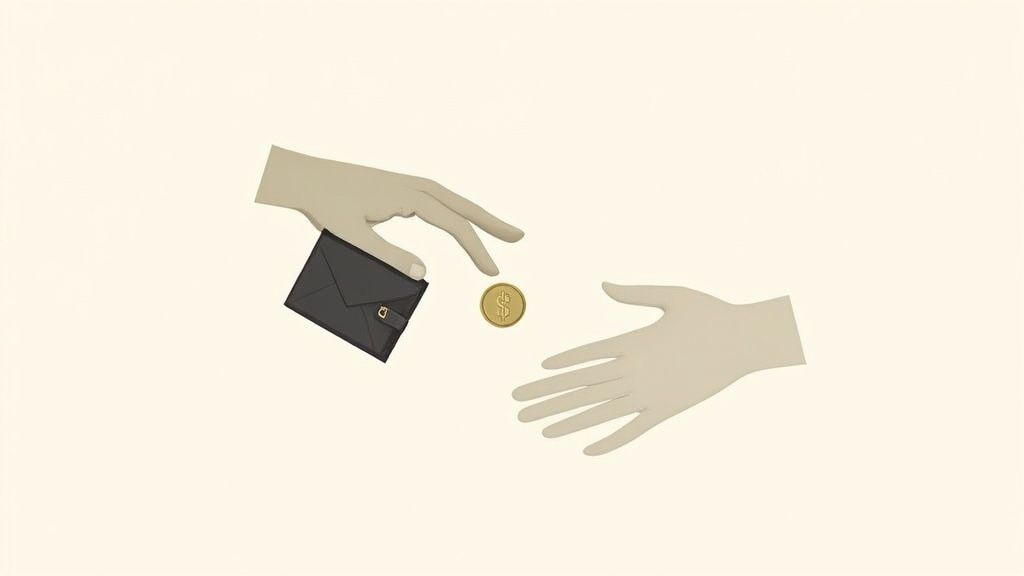
Monetary rewards are one of the most direct and compelling referral incentive ideas. This model offers tangible financial value to both the existing customer (the referrer) and the new customer they bring in (the referee). The reward can take the form of cash back, store credit, or a direct discount on a future purchase, making it universally appealing and easy to understand.
This straightforward approach removes any ambiguity about the reward's value, motivating participants with a clear and immediate benefit. It has been a cornerstone for rapid user acquisition for companies like Uber, which offered ride credits, and PayPal, which famously gave users $10 for each successful referral, fueling its explosive growth.
Why It Works So Well
The power of monetary incentives lies in their simplicity and universal appeal. Unlike product-specific rewards, cash or store credit gives customers the freedom to choose how they benefit, which increases the perceived value of the reward. This approach is especially effective for businesses with a broad product range or those whose products are not purchased frequently.
How to Implement This Referral Incentive
Implementing a monetary reward system requires careful financial planning to ensure profitability.
- Determine Reward Value: Analyze your Customer Acquisition Cost (CAC) and Customer Lifetime Value (CLV). Your total referral payout (for both referrer and referee) should be comfortably below your average CAC to ensure the program is sustainable.
- Balance the Incentive: Decide how to split the reward. A common strategy is a double-sided incentive, such as "$15 for you, $15 for them," which motivates both parties equally.
- Set Clear Conditions: Define what constitutes a "successful referral." This is typically a completed first purchase by the new customer. Be transparent about when and how the credit or cash will be delivered to prevent confusion.
- Use a Points System: With Toki, you can award points for referrals that can be redeemed for store credit. This keeps the value within your ecosystem and encourages repeat purchases. For a deeper dive into choosing the right financial incentive, explore our guide on deciding between cash rewards or discounts.
2. Tiered Reward Programs
Tiered reward programs take a long-term approach to motivation by offering progressively valuable incentives as referrers reach specific milestones. Instead of a single, static reward, this model introduces levels or tiers, with rewards escalating as customers successfully refer more people. This gamified structure encourages sustained participation and turns your best advocates into powerful brand ambassadors.
This approach is famously demonstrated by Dropbox, which offered users additional storage space for each referral, capping the reward to encourage multiple successful invitations. Similarly, Airbnb's program evolved to offer increasing travel credits as users hit referral milestones, creating a compelling reason for them to keep sharing. These programs transform a one-time action into an ongoing challenge, fostering deeper customer loyalty.
Why It Works So Well
The effectiveness of tiered reward programs lies in their use of gamification and goal-setting. By visualizing a clear path to better rewards, you tap into your customers' natural desire for achievement and status. The escalating value makes each subsequent referral feel more impactful than the last, which is a powerful psychological motivator. This model is particularly effective for cultivating a community of "super-advocates" who drive a significant volume of new business over time.
How to Implement This Referral Incentive
Building a successful tiered program requires strategic planning to ensure the milestones are both achievable and motivating.
- Define Clear Tiers: Structure your tiers around the number of successful referrals (e.g., Bronze at 1 referral, Silver at 5, Gold at 10). Ensure the progression feels natural and not impossibly difficult.
- Create Escalating Rewards: The value of the reward must increase meaningfully with each tier. For example, a Bronze member might get a 10% discount, while a Gold member earns a $50 store credit or exclusive access to a new product.
- Visualize Progress: Use a dashboard, progress bar, or a visual indicator to show customers how close they are to the next tier. Celebrating when a user levels up with a notification or email reinforces their achievement.
- Use Toki for Tiers: Toki makes it easy to set up tiered memberships where rewards unlock automatically as customers complete referrals. You can combine points, discounts, and exclusive perks to build a compelling program. For a comprehensive guide, see our post on how to build a successful tiered loyalty program.
3. Exclusive Access or Premium Features
Offering exclusive access or premium features is a powerful, non-monetary referral incentive idea that builds brand loyalty and creates a sense of community. This model rewards advocates with special privileges, such as early access to new products, upgraded account features, or entry into a VIP group. It makes customers feel like insiders, giving them status and utility that money can't always buy.
This strategy is particularly effective for SaaS companies, subscription services, and brands with strong communities. It was brilliantly executed by companies like Slack, which offered credits toward paid plans, and Figma, which extended Professional tier trials. The reward is directly tied to the product experience, encouraging deeper engagement from both the referrer and the new user.
Why It Works So Well
The allure of exclusivity taps into the human desire for status and belonging. These incentives create value without a direct financial cost to your business, protecting your profit margins. By granting access to premium features, you also give users a taste of what they are missing, which can drive future upgrades and increase their lifetime value. This makes it one of the most sustainable referral incentive ideas for digital products and services.
How to Implement This Referral Incentive
Implementing an exclusive access program requires a clear understanding of what your customers value most about your product or service.
- Identify Valuable Features: Audit your product or service to find features that are highly desired but gated behind a paywall or higher tier. This could be anything from advanced analytics to priority customer support.
- Create a Sense of Urgency: Offer limited-time access to these features. For example, grant a 30-day trial of your premium plan for every successful referral. This encourages both immediate action and showcases the value of upgrading permanently.
- Communicate the Exclusivity: Frame the reward as a VIP privilege in your marketing materials. Use language like "Unlock exclusive access" or "Join our inner circle" to highlight the special status being offered.
- Leverage Tiered Memberships: With Toki, you can use referrals as a way for members to unlock higher tiers in your loyalty program. A successful referral could automatically bump a customer up to a "Gold" tier, granting them permanent access to exclusive perks and content.
4. Charitable Donations on Behalf of Referrer
Aligning your referral program with a social cause is a powerful way to incentivize customers while reinforcing your brand’s values. Instead of a direct reward, your company makes a donation to a charity on behalf of the referrer for each new customer they bring in. This approach taps into your customers' altruism and connects their participation to a greater good.
This values-driven incentive resonates deeply with socially conscious consumers. It transforms a simple referral into a meaningful act, strengthening the customer's emotional connection to your brand. Companies like TOMS Shoes and Warby Parker have built their entire brand identities around social impact, using their "buy-one, give-one" models to create powerful word-of-mouth marketing that feels authentic and impactful.
Why It Works So Well
The effectiveness of charitable donations lies in its ability to build brand affinity and community. It attracts customers who share your values and are motivated by more than just personal gain. This type of referral incentive idea is less transactional and more relational, fostering long-term loyalty and turning customers into passionate brand advocates who are proud to share your mission.
How to Implement This Referral Incentive
Implementing a charity-based referral program requires authenticity and transparency to build trust.
- Partner with Reputable Charities: Choose non-profits that align with your brand’s mission and values. Partnering with well-known, established organizations adds credibility to your program.
- Offer Customer Choice: Allow referrers to choose from a pre-vetted list of charities. Giving them a say in where the donation goes makes the reward feel more personal and impactful.
- Be Transparent About Donations: Clearly communicate the donation amount per referral and provide regular updates on the total impact your community has made. Share milestones publicly to celebrate the collective effort.
- Track and Automate with Toki: You can use Toki to track successful referrals. When a referral is completed, you can manually trigger the donation process and use your marketing channels to notify the customer about the donation made in their name, reinforcing the positive action.
5. Gamification and Points Systems
Gamification transforms a standard referral program into an engaging and competitive experience by incorporating game-like mechanics. Instead of a simple one-off reward, this model uses points, badges, leaderboards, and progress tracking to motivate sustained participation. Customers earn points for successful referrals, which can then be redeemed for a variety of rewards, creating a dynamic and rewarding journey.
This approach taps into intrinsic human desires for achievement, competition, and status. It has been successfully deployed by companies like Starbucks, whose Rewards program integrates points for referrals, and Discord, which uses achievements to encourage user invitations. By making the referral process feel like a game, you can foster a more deeply engaged community of brand advocates.

Why It Works So Well
The strength of gamification lies in its ability to create long-term engagement and brand loyalty. It gives customers a reason to keep participating beyond a single transaction by offering ongoing recognition and escalating rewards. Visual progress indicators and leaderboards provide social proof and a sense of competition, encouraging advocates to make multiple referrals to climb the ranks. This method is particularly effective for brands with a strong community focus.
How to Implement This Referral Incentive
Successfully implementing a gamified system requires thoughtful design to keep users motivated without making it overly complex.
- Define Clear Rules and Milestones: Establish a clear points-to-reward ratio. For example, 100 points for a successful referral, with rewards unlocking at 500, 1000, and 2000 points.
- Create Leaderboards and Tiers: Introduce a public leaderboard to foster friendly competition. You can create tiers (e.g., Bronze, Silver, Gold) that offer increasing perks, giving top referrers a sense of exclusive status.
- Offer Diverse Redemption Options: Allow points to be redeemed for various rewards, such as discounts, free products, or exclusive merchandise. This gives customers control over how they benefit.
- Use Visual Progress Trackers: Implement progress bars or milestone maps so users can easily see how close they are to their next reward. With Toki, you can build a comprehensive reward points system that integrates seamlessly with your referral program and visually tracks customer progress.
6. Product Discounts and Promotional Offers
Offering product discounts is a classic and highly effective referral incentive idea that directly encourages future purchases. Instead of cash, this model rewards both the referrer and the new customer with a percentage off, a fixed-amount discount, or a unique promotional offer. It’s a powerful way to drive immediate sales and introduce new customers to your products at an attractive price point.
This method is popular because it keeps the value entirely within your brand's ecosystem. Meal-kit services like HelloFresh and Blue Apron have mastered this approach by giving existing customers codes for free boxes or significant discounts to share, creating a viral loop of new sign-ups eager to try the service at a lower entry cost.
Why It Works So Well
The appeal of a discount is its direct impact on the purchase decision. It lowers the barrier to entry for new customers and gives loyal customers a compelling reason to make another purchase. Unlike cash, a discount exclusively promotes engagement with your products, making it an excellent tool for increasing customer lifetime value and encouraging product discovery.
How to Implement This Referral Incentive
Implementing a discount-based referral program requires careful consideration of your profit margins and promotional strategy.
- Calculate Sustainable Discounts: Analyze your product margins to determine a discount percentage or fixed amount that remains profitable. A 15-20% discount is a common starting point.
- Create Urgency: Attach an expiration date to the discount codes to encourage prompt use. This creates a sense of scarcity and motivates both the referrer and the referee to act quickly.
- Set Clear Terms: Consider adding a minimum purchase requirement to ensure the discounted order size is worthwhile. Also, ensure you use unique, single-use codes to prevent abuse.
- Automate with Toki: You can use Toki to automatically generate and distribute unique discount codes when a referral is successful. This streamlines the process and ensures a seamless experience for your customers.
7. VIP Status and Special Privileges
Offering VIP status and special privileges is a powerful non-monetary referral incentive idea that taps into the human desire for exclusivity and recognition. This model rewards successful referrers with an elevated status, granting them access to benefits not available to regular customers. These perks can range from priority customer service and early access to new products to exclusive content and invitations to special events.
This approach transforms your most loyal customers into true brand ambassadors by making them feel like insiders. It builds a strong emotional connection and a sense of belonging, which can be more motivating than a one-time cash reward. Companies like American Express and Sephora have mastered this by creating tiered loyalty programs where referrals can help customers climb the ranks faster.

Why It Works So Well
The appeal of VIP status lies in its ability to offer intangible value that money can't always buy, like prestige, convenience, and community. It makes customers feel genuinely appreciated and part of an elite group, strengthening their long-term loyalty. This type of incentive is especially effective for brands with a strong community or lifestyle component, as the status itself becomes a desirable social signal among peers.
How to Implement This Referral Incentive
Building a successful VIP program requires creating a clear value proposition and a structured path to achieving it.
- Define Your Tiers: Create distinct VIP levels with escalating benefits. For example, a "Silver" tier might get early access to sales, while a "Gold" tier also receives free shipping and a dedicated support line.
- Communicate Benefits Clearly: Ensure customers understand exactly what they need to do to earn VIP status through referrals and what perks they will receive. A dedicated landing page that outlines the program is essential.
- Offer Tangible Perks: While status is important, back it up with concrete benefits. Priority support, exclusive access to limited-edition products, or invitations to members-only online events are great examples.
- Use Toki for Tiered Memberships: With Toki, you can easily create tiered membership programs. You can set rules so that a certain number of successful referrals automatically moves a customer into the next VIP tier, unlocking a new set of exclusive perks and recognition.
8. Double-Sided Incentives (Referrer and Referee Rewards)
Double-sided incentives are a powerful referral strategy where both the person making the referral (the referrer) and the new customer they bring in (the referee) receive a reward. This symmetrical structure creates a win-win scenario, removing any transactional friction and making the referral feel more like a genuine, mutually beneficial recommendation rather than a one-sided sales pitch.
This model has been the engine behind some of the most successful referral programs in history. Dropbox famously offered extra storage space to both parties, while companies like Airbnb and Uber used dual-sided credits to fuel their rapid, global expansion. The shared benefit makes the referrer feel good about sharing, and the referee feels welcomed with an immediate perk.
Why It Works So Well
The magic of double-sided incentives lies in their psychological appeal. The referrer is motivated not only by their own potential gain but also by the act of giving a gift to a friend. This reduces social awkwardness and increases the likelihood of sharing. For the new customer, the initial discount or credit lowers the barrier to making their first purchase, significantly improving conversion rates.
How to Implement This Referral Incentive
Implementing a dual-sided program requires clear communication and a balanced value proposition to be effective.
- Define a Balanced Reward: A common and effective approach is a 50/50 split, like "$20 for you, $20 for your friend." This feels fair and is easy to communicate. Test different ratios to see what works best for your audience.
- Communicate the "Win-Win" Clearly: Your marketing message should immediately highlight the mutual benefit. Use clear, concise language like, "Give $15, Get $15" to make the value proposition instantly understandable.
- Set Clear Fulfillment Triggers: Specify what action the new customer must take for both rewards to be distributed, such as completing their first purchase over a certain amount. This prevents fraud and ensures the program is profitable.
- Use Toki to Automate Rewards: You can easily configure a double-sided referral program with Toki. Set up rules to automatically grant points or store credit to both the referrer and the new customer once the referral conditions are met, ensuring a seamless and instant experience for both parties.
9. Exclusive Events and Experiences
Offering exclusive events and experiences is a powerful non-monetary referral incentive idea that builds a deep sense of community and brand loyalty. This model rewards top referrers with access to unique, money-can't-buy opportunities, such as private events, workshops, or early access to new products. It transforms customers into true brand ambassadors by making them feel like valued insiders.
This approach creates memorable associations that go far beyond a simple transaction. It has been effectively used by B2B giants like Salesforce, which invites top partners to its World Tour events, and Stripe, which hosts invitation-only founder experiences. The exclusivity and personal touch foster a powerful emotional connection, making participants feel uniquely appreciated and recognized for their advocacy.
Why It Works So Well
The value of an exclusive experience often outweighs its monetary cost. It taps into the human desire for status, recognition, and belonging. While a cash reward is spent and forgotten, a unique event creates lasting memories and stories that advocates will share with their network, generating powerful word-of-mouth marketing. This is especially effective for brands with a strong community focus or a highly engaged audience.
How to Implement This Referral Incentive
Implementing an experience-based reward system requires creativity and a focus on delivering genuine value to your top advocates.
- Define the Experience: Brainstorm events that align with your brand values and customer interests. This could be a virtual workshop with an industry expert, an in-person factory tour, a VIP launch party, or a networking dinner with your company's founders.
- Set Clear Qualification Tiers: Establish the criteria for earning an invitation. For example, "make 10 successful referrals to get invited to our annual VIP summit" or "the top 5 referrers each quarter win a spot at our exclusive product design workshop."
- Leverage Virtual Events: To make this incentive more accessible and cost-effective, start with virtual events. Host an exclusive "Ask Me Anything" session with your CEO or a special online class related to your products for your best referrers.
- Promote the Exclusivity: Use Toki's segmentation features to create a "Top Referrer" customer tier. You can then send targeted email campaigns and wallet pass notifications announcing the exclusive events and tracking who has qualified, making them feel part of a special club.
10. Hybrid Multi-Currency Rewards (Flexibility in Redemption)
Hybrid multi-currency rewards take personalization to the next level by allowing customers to choose how they redeem their referral earnings. Instead of a single, fixed reward, this advanced model lets users convert their earned points or credits into various "currencies" like cash, store credit, exclusive merchandise, unique experiences, or even charitable donations. This flexibility empowers customers and dramatically increases the perceived value of the reward.
This approach acknowledges that not all customers are motivated by the same thing. One person might prefer a direct discount, while another might be more enticed by a limited-edition product. Companies like Southwest Airlines and Amazon have mastered this, allowing members to redeem points for flights, gift cards, or merchandise, catering to a wide range of preferences and solidifying long-term loyalty.
Why It Works So Well
The power of hybrid rewards lies in giving customers a sense of control and choice. This autonomy makes the reward feel more personal and valuable, as it directly aligns with their individual needs and desires. It's an excellent strategy for brands with diverse customer segments or those looking to build a deeper, more engaging loyalty ecosystem that goes beyond simple transactions.
How to Implement This Referral Incentive
Implementing a hybrid rewards system requires a well-organized back-end to manage different redemption options and their corresponding values.
- Establish Redemption Options: Start with 2-3 compelling choices that align with your brand. Common options include store credit, a curated selection of exclusive products, and a gift card to a partner brand.
- Create Clear Conversion Rates: Develop a clear "exchange rate" table so customers understand the value of their points across all redemption options (e.g., 100 points = $10 store credit OR a free t-shirt).
- Promote "Best Value" Choices: Guide customers by highlighting the redemption option that offers the most value. This helps prevent decision paralysis and shows you're helping them maximize their rewards.
- Track Redemption Patterns: Use a platform like Toki to award points for referrals, which can then be redeemed for various rewards you define. By tracking which options are most popular, you can optimize your program over time to better meet customer preferences.
Top 10 Referral Incentive Ideas Comparison
| Incentive | Implementation Complexity 🔄 | Resource Requirements ⚡ | Expected Outcomes 📊 | Ideal Use Cases 💡 | Key Advantages ⭐ |
|---|---|---|---|---|---|
| Monetary Rewards (Cash Back or Credits) | Moderate — payment flows, compliance, fraud checks | High — ongoing cash outlay and tracking systems | Rapid sign-ups, measurable CAC; risk of low-quality referrals | Mass-market consumer apps and fast-growth acquisition campaigns | ⭐⭐⭐⭐ — Clear, immediate motivation and easy ROI tracking |
| Tiered Reward Programs | High — tier logic, progress tracking, communications | Medium–High — platform work and escalating costs | Increased long-term engagement and higher LTV per referrer | SaaS, subscription services, programs focused on retention | ⭐⭐⭐⭐ — Encourages repeat referrals and loyalty through progression |
| Exclusive Access or Premium Features | Low–Medium — gating features and entitlement controls | Low — uses existing product features (some dev cost) | Better retention and increased feature adoption; limited mass appeal | Product-led companies with valuable premium features | ⭐⭐⭐ — Low cash cost and aligns incentives with product value |
| Charitable Donations on Behalf of Referrer | Medium — charity partnerships and reporting required | Low–Medium — donation budget and admin overhead | Strong brand affinity and PR; weaker direct conversion lift | Purpose-driven brands and socially-conscious audiences | ⭐⭐⭐ — Emotional engagement and positive PR impact |
| Gamification and Points Systems | High — game mechanics, leaderboards, redemption flows | Medium–High — ongoing maintenance and reward fulfillment | High engagement and repeat participation; variable referral quality | Consumer apps, loyalty programs, community-driven platforms | ⭐⭐⭐⭐ — Very engaging and flexible reward structures |
| Product Discounts and Promotional Offers | Low — promo codes and checkout integration | Medium — margin impact and tracking redemption | Drives conversions and repeat purchases; may attract bargain hunters | E‑commerce, DTC brands, seasonal acquisition pushes | ⭐⭐⭐ — Simple to implement and effective at driving trials |
| VIP Status and Special Privileges | Medium–High — membership rules and support workflows | High — dedicated support, events, and exclusive perks | Strong retention of top advocates; high perceived value | Premium brands, B2B relationships, high‑LTV customers | ⭐⭐⭐⭐ — Deepens relationships and creates social proof |
| Double-Sided Incentives (Referrer & Referee) | Medium — coordinating simultaneous rewards and transparency | High — two-sided cost and complex accounting | Higher conversion rates and viral spread; increased CAC | Launches seeking rapid user acquisition and trust-building | ⭐⭐⭐⭐ — Removes signup friction and promotes fairness |
| Exclusive Events and Experiences | High — event logistics, curation, and execution | High — venue, travel, production costs | Memorable advocacy and user-generated promotion; limited scale | Community-driven brands, enterprise partnerships, top advocates | ⭐⭐⭐ — Powerful emotional impact for select segments |
| Hybrid Multi-Currency Rewards | Very High — complex redemption logic and accounting | High — varied fulfillment channels and admin overhead | Broad appeal and higher redemption rates; communication challenges | Large programs with diverse user preferences and scale | ⭐⭐⭐⭐ — Maximizes perceived value through flexible redemption options |
From Ideas to Implementation: Building Your High-Converting Referral Program
You've explored a comprehensive landscape of referral incentive ideas, from straightforward monetary rewards and tiered programs to exclusive experiences and gamified points systems. The journey from a basic concept to a thriving, high-converting referral program, however, depends less on which single idea you choose and more on how well you execute your chosen strategy. The key takeaway is that the most effective referral programs are not one-size-fits-all; they are a direct reflection of your brand's identity and your customers' desires.
The ideas presented, whether it's the dual-sided appeal of rewarding both the referrer and the new customer or the altruistic motivation of charitable donations, share a common foundation. They succeed by transforming a simple transaction into a meaningful, rewarding interaction. This creates a powerful flywheel effect where your happiest customers become your most authentic and effective advocates, driving sustainable growth powered by genuine enthusiasm.
Key Takeaways for Building Your Program
To crystallize the insights from this guide, here are the core principles to remember as you build or refine your referral strategy:
- Alignment is Everything: Your incentives must align with your brand ethos and profit margins. A luxury brand might lean into VIP status and exclusive access, while a CPG brand could find immense success with product discounts and gamified points.
- Know Your Customer: What truly motivates your audience? Are they driven by financial savings, social status, a sense of community, or the desire for unique experiences? Use customer data and surveys to inform your choice of rewards.
- Simplicity Wins: A referral program that is difficult to understand or use will fail, no matter how attractive the reward. Ensure the process is seamless, from sharing a link to redeeming a reward. Clear communication and an intuitive user interface are non-negotiable.
Your Actionable Next Steps
Armed with these referral incentive ideas, it's time to put them into action. Don't feel pressured to implement a complex, multi-layered system from day one. Instead, follow a structured, iterative approach:
- Define Your Primary Goal: Are you aiming to increase customer acquisition, boost loyalty, or drive higher average order values? Your goal will dictate your incentive structure.
- Model the Financials: Before launching, map out the potential costs. A crucial aspect of building a high-converting referral program involves understanding its financial impact; learn how to effectively calculate customer acquisition cost to demonstrate ROI and ensure your program is profitable.
- Start Small and Test: Choose one or two incentive models that resonate most with your brand. Launch a pilot program to a small segment of your most loyal customers to gather feedback and data before a full-scale rollout.
- Promote and Automate: Once you have a working model, promote it across all your marketing channels: email, social media, post-purchase pages, and even in-package inserts. Use a robust platform to automate tracking, reward distribution, and performance analysis.
Ultimately, a referral program is more than just a marketing tactic; it's a powerful tool for community building. It recognizes and rewards the trust your customers place in you, turning that loyalty into a tangible engine for growth. By thoughtfully selecting and implementing the right incentives, you can create a system that not only acquires new customers but also deepens your relationship with existing ones, fostering a loyal base that will champion your brand for years to come.
Ready to turn these ideas into a high-performing reality? Toki provides the all-in-one loyalty and referrals platform to seamlessly build, manage, and scale any of the incentive programs discussed in this article. Explore how Toki can help you transform your loyal customers into your most powerful growth channel today.