Build a Winning Refer Friend Program on Shopify
Launch a refer friend program that drives real growth. Learn proven strategies for incentives, promotion, and tracking to boost sales and customer loyalty.
A refer-a-friend program is a pretty simple concept at its core. It's a word-of-mouth marketing strategy where you reward your existing customers for bringing their friends and family into the fold. This approach essentially turns your happiest customers into a trusted, highly effective sales team, often leading to lower acquisition costs and higher-quality leads than you'd ever get from traditional ads.
Why a Refer Friend Program Is Your Secret Growth Channel
Let's be real: getting new customers is tough and expensive. You pour time and money into ads, trying to break through the endless noise and just get someone to pay attention. But what if your most powerful marketing channel has been right under your nose the whole time? It’s your existing, loyal customers.
A well-crafted refer friend program taps into this hidden potential and turns it into a reliable growth engine. This isn't just another short-term promotion; it's a fundamental strategy built on the single most persuasive form of marketing that exists—an authentic recommendation from someone you trust. It bypasses all the usual skepticism people have toward paid advertising and gets straight to the core of what actually drives buying decisions: trust.
The Psychology Behind Word-of-Mouth
A referral program works so well because it taps into some basic human psychology. People are wired to trust recommendations from friends and family far more than they'll ever trust a slick ad from a brand they've never heard of. This isn't just a gut feeling; the numbers prove it.
Research shows that a staggering 92% of consumers trust referrals from people they know above all other forms of advertising. This trust translates directly to the bottom line, with word-of-mouth influencing an estimated $6 trillion in annual consumer spending. Even better, referred customers are more valuable over time, showing a 16% higher lifetime value and an 37% higher retention rate compared to customers you acquire through other channels.
The real beauty of a refer-a-friend program is the loyal cycle it creates. Your current customer feels appreciated for spreading the word, the new customer feels confident about their purchase, and your brand grows organically through genuine connections.
Building a Community, Not Just a Customer List
Beyond the immediate financial upside, a referral program is an incredible tool for building a genuine community. When customers invite their friends, they’re doing more than just facilitating a sale—they're sharing an experience they value. That shared connection strengthens their bond with your brand and with each other.
Think about a Shopify store that sells niche hobby supplies. When one enthusiast refers another, they start building a small community around your brand, swapping tips and sharing their passion. That's how you go from having a simple customer list to cultivating a tribe of loyal advocates.
For a deeper dive into the mechanics, you can learn more about how a referral program works at a technical level here: https://www.buildwithtoki.com/blog-post/how-does-referral-work. And if you’re looking for some real-world inspiration, check out these powerful referral program examples.
Designing Incentives That Actually Motivate Sharing
Let's be honest: the heart of any killer referral program isn't the fancy tech or the flashy ads. It's the reward. If your incentive doesn't genuinely excite your customers, even the most polished program is going to fall flat. Crafting an offer people can't resist is all about finding that sweet spot between your brand's goals and what actually gets your audience to hit "share."
This is more than just giving away free stuff. The right incentive can be a powerful lever for your business, driving repeat purchases, boosting average order value, or building a real sense of community. The ultimate goal is a win-win: your advocate feels great for sharing, and their friend feels genuinely welcomed.
The Power of Giving a Gift: The Double-Sided Incentive
Time and time again, the most successful referral programs use a double-sided incentive. It's a simple concept: you reward both the person making the referral (your advocate) and the new customer they bring in (their friend).
Why does this work so well? It completely reframes the entire interaction. Instead of feeling like a pushy sales pitch ("buy this thing so I get a kickback"), it feels like giving a gift ("hey, I love this brand, and here's a discount for you to try it too"). The advocate gets a thank you for their loyalty, and their friend gets a low-risk, positive introduction to your brand. It’s a warm handshake, not a cold call.
And this model resonates especially well with younger, digitally-native shoppers. The data doesn't lie: Millennials hit a 45% conversion rate from referrals, with Gen X right behind at 46%. Meanwhile, Baby Boomers trail at just 9%. This is a crystal-clear signal for Shopify merchants to focus on audiences who grew up with social sharing. In fact, a whopping 78% of programs now offer double-sided rewards, and 54% make the incentives for both parties equal. That’s how you spark viral growth.
Choosing Your Reward Structure
Of course, not all rewards are created equal. The incentive you choose should be a direct reflection of what you're trying to achieve with your business.
Let’s break down the most common models.
Store Credit or Discounts
This is the bread and butter for most e-commerce brands, and for good reason. Giving store credit or a percentage-off coupon directly encourages both your advocate and their friend to place an order. It’s a fantastic way to drive repeat business and increase customer lifetime value.
- Real-World Example: Imagine a skincare brand offering "$20 for you, $20 for your friend" on their next purchase. The advocate gets rewarded with a discount on a product they already use and love, and the new customer gets to try the products with less risk.
Cash Rewards
While less common for physical products, cash can be a massive motivator, especially for high-ticket items or subscription services. It offers total flexibility for the advocate, but the trade-off is that it doesn't automatically tie them back to your store for their next purchase.
- Real-World Example: A company selling premium mattresses with a high AOV might offer a $100 cash reward to the advocate. For a significant purchase like that, a high-value cash incentive can be incredibly effective.
Exclusive Products or Early Access
This is where you can get creative and build a powerful sense of community. Non-monetary rewards like this are perfect for creating FOMO (fear of missing out) and making your best customers feel like insiders. This strategy shines when you have a passionate, cult-like following.
- Real-World Example: A limited-edition sneaker brand could give advocates early access to the next product drop for every successful referral. For true fans, that kind of access is priceless and reinforces their status within the brand's community.
A great incentive doesn't just offer value; it reinforces the customer's identity and connection to your brand. The best rewards make your advocates feel like valued members of an exclusive club.
If you're looking for more out-of-the-box ideas, we've put together a whole list of creative referral incentive ideas you can adapt for your own store.
Aligning Incentives with Business Goals
To make sure your program is a sustainable growth engine and not just a money pit, you have to connect your rewards back to your strategic goals. Thinking through what you want to achieve will make designing the perfect offer so much easier.
Comparing Referral Incentive Models
This table breaks down the pros, cons, and best-fit scenarios for the most popular incentive types, helping you decide which path makes the most sense for your brand.
| Incentive Type | Pros | Cons | Best For |
|---|---|---|---|
| Store Credit | Drives repeat purchases & increases LTV. Cost-effective since value is redeemed in-store. | Less appealing to customers who don't plan to buy again soon. | Most e-commerce brands, especially with consumable or frequently purchased products. |
| Cash Reward | Highly motivating and universally appealing. Simple to understand. | Doesn't guarantee repeat business. Can be more expensive to fulfill. | High-ticket items, subscription services, or acquiring customers in a very competitive market. |
| Exclusive Product | Creates strong brand loyalty and FOMO. Can be very low-cost to the business. | Only appeals to your most engaged customers. May not motivate casual shoppers. | Brands with a strong community, limited edition items, or a highly passionate customer base. |
Ultimately, the right incentive feels generous to your customers while still being a smart, sustainable investment for your business. By aligning your offer with both your customers' desires and your strategic goals, you set the stage for a program that truly performs.
Your Technical Setup for Seamless Shopify Integration
With a killer incentive structure mapped out, it's time to build the engine that actually makes your referral program work. This is where the strategy gets real. A clunky, confusing technical setup will kill your program before it even starts, no matter how great your rewards are. For a Shopify store, a seamless integration isn't just a nice-to-have; it's everything.
The whole point is to make sharing and cashing in on rewards feel completely effortless. That means picking the right tools, setting up tracking that just works, and designing a user experience that’s a breeze from start to finish.
Choosing Your Referral Program App
First things first: you need the right app to run this thing. Sure, you could try to build a custom solution, but it’s a massive headache and totally unnecessary for most brands. A good, dedicated app does all the heavy lifting—generating unique links, tracking who gets credit for what, and automatically dishing out the rewards.
When you're shopping around for an app, here’s what really matters:
- Deep Shopify Integration: The app has to play nice with your customer data, order history, and discount system. This is non-negotiable. It ensures rewards are applied correctly and gives you a clear view of how the program is performing.
- Customization and Branding: Your referral program needs to feel like your brand, not some generic, bolted-on widget. Look for tools that let you customize the look and feel of landing pages, pop-ups, and emails.
- A Clean Advocate Dashboard: Your customers need one simple spot to grab their referral link, check their stats, and see the rewards they’ve racked up. An intuitive dashboard is absolutely critical for keeping them engaged.
Nailing Down Flawless Referral Tracking
At its core, your tech setup is all about one thing: tracking. You have to be able to reliably connect a new customer's purchase back to the person who sent them your way. This usually happens in one of two ways.
Unique Referral Links are the gold standard. Your app gives each customer their own special URL to share. When a friend clicks it, a cookie is dropped in their browser, making sure the original advocate gets credit for any sale that follows.
Unique Coupon Codes also get the job done. Every advocate gets a personal code to share (like "JANE15"). This is great because it's easy to remember and share in a text or conversation. The only catch is that the new customer has to remember to actually type it in at checkout.
My two cents? The absolute best setup uses both. A unique link that automatically applies the friend's discount code at checkout is the holy grail. It removes all the friction and guarantees the referral gets tracked every single time.
This diagram shows just how simple the flow should be for your customers.
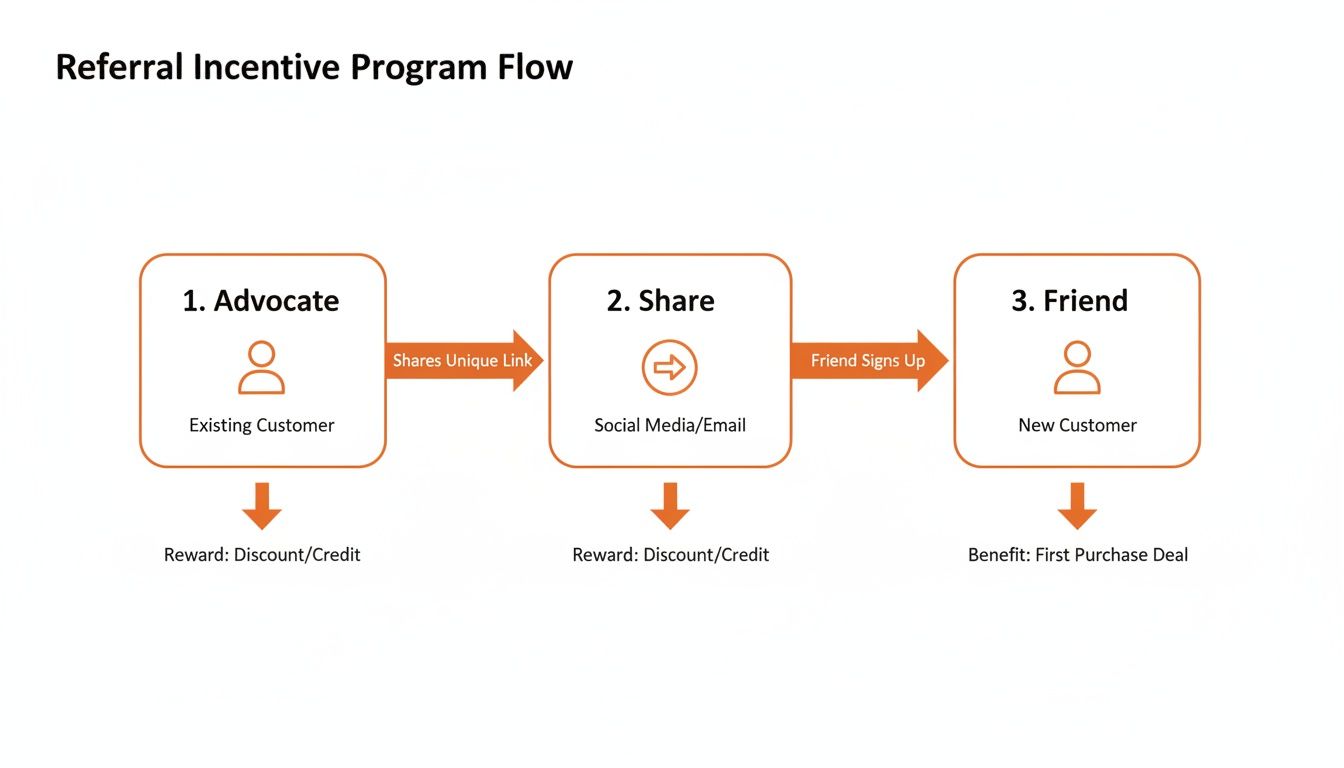
It’s this kind of simplicity that makes a well-built referral program such a powerful growth engine.
Using Modern Tools to Elevate the Experience
Beyond the basics of links and codes, a few modern touches can really make your program stand out. Integrating with digital wallets, for example, is a brilliant way to keep your brand top-of-mind.
Think about enabling Apple & Google Wallet passes. This lets both the advocate and their friend save rewards or store credit right on their phones. Suddenly, that reward isn't buried in an old email; it's a persistent, easy-to-find reminder. They might even get a notification when they’re near your store, nudging them to come in and use their credit.
Finally, don't overlook the landing page. When a friend clicks a referral link, don't just dump them on your homepage. Send them to a dedicated referral landing page that welcomes them, mentions the friend who sent them, and clearly repeats the offer. It’s a small detail that builds instant trust and can dramatically improve your conversion rate, turning that warm lead into your next loyal customer.
How to Promote Your Program So People Actually Use It
You’ve built the perfect referral program with killer incentives and a smooth technical setup. That's the hard part, right? Not quite. Now comes the real challenge: getting your customers to actually use it.
Just having a program isn’t enough. If it's buried in your website's footer, it might as well not exist. The difference between a forgotten feature and a genuine growth engine comes down to smart, consistent, multi-channel promotion. It’s all about putting the right invitation in front of the right customer at exactly the right time.
Make Your Program Impossible to Miss
First things first: your program needs to be visible. Think of it as prime real estate. You wouldn't hide your best-selling product, so don't hide your referral program.
Start with a dedicated landing page that gets straight to the point. No fluff, just a clear, compelling headline like, "Give $20, Get $20." This page is your program's home base.
From there, drive traffic to it with persistent, on-site reminders. A clean banner at the top of your homepage or a permanent link in your main navigation works wonders. You could even get creative with pop-ups that trigger after a customer’s second or third purchase. By then, they're clearly fans and much more likely to become advocates.
Key Takeaway: Promotion isn't a one-and-done announcement. You have to weave your referral program into the very fabric of the customer experience, making it an easy and obvious choice at every turn.
Tap Into Your Email and SMS Channels
Your email and SMS lists are goldmines. These are your most engaged customers, and you have a direct line to them. The trick is to go beyond a single launch email and build promotional triggers right into your existing automated flows.
The post-purchase window is your best shot. A customer just bought something, and their excitement for your brand is peaking. It's the perfect moment to ask them to share the love.
- Order Confirmation Emails: Slot a simple, eye-catching banner into your order confirmation emails. Something like, "Love it? Share with a friend & you both get $15 off."
- Shipping Confirmations: Double down on the message in your shipping notification. The anticipation of a package arriving makes people especially receptive to offers.
- Dedicated Campaigns: Don't forget standalone emails. Send one to a segmented list of your most loyal customers—say, anyone who has purchased 3+ times—and position it as a special perk just for them.
SMS can be incredibly powerful, too. Try a short, friendly message a week after delivery: "Enjoying your new gear? Refer a friend today and get 200 bonus points!" It’s personal, timely, and gets right to the point.
Turn Social Media into a Sharing Hub
Social media was built for sharing, so it's a natural fit for your referral program. Your goal here is to create content that’s not only easy to share but also crystal clear about the benefits for both the advocate and their friend.
Design some sharp graphics or a quick video explaining how it all works. You can spark a ton of engagement by running a limited-time "super referral" event with boosted rewards. Or, encourage user-generated content by asking followers to tag the friend they'd split their reward with.
To really get the most out of these channels, you need to think about how to generate leads on social media, which will help you attract brand new advocates, not just engage your existing followers.
Measuring What Matters for Your Referral Program's Success
Getting your refer friend program up and running is a great first step, but it’s really just the beginning. The real growth happens when you start paying close attention to what the data is telling you. Without a clear view of performance, you’re flying blind—you won't know if your incentives are compelling enough or if your promotion strategy is actually working.
To move beyond guesswork, you have to get serious about tracking the right key performance indicators (KPIs). Think of these metrics as the vital signs of your referral channel. They show you what's working, what isn't, and where your biggest opportunities are hiding.
Your Core Referral Program KPIs
You could easily get lost tracking dozens of different data points, but a handful of core metrics will tell you most of the story. Focusing on these essentials helps you avoid analysis paralysis and gives you a clear, actionable snapshot of your program’s health.
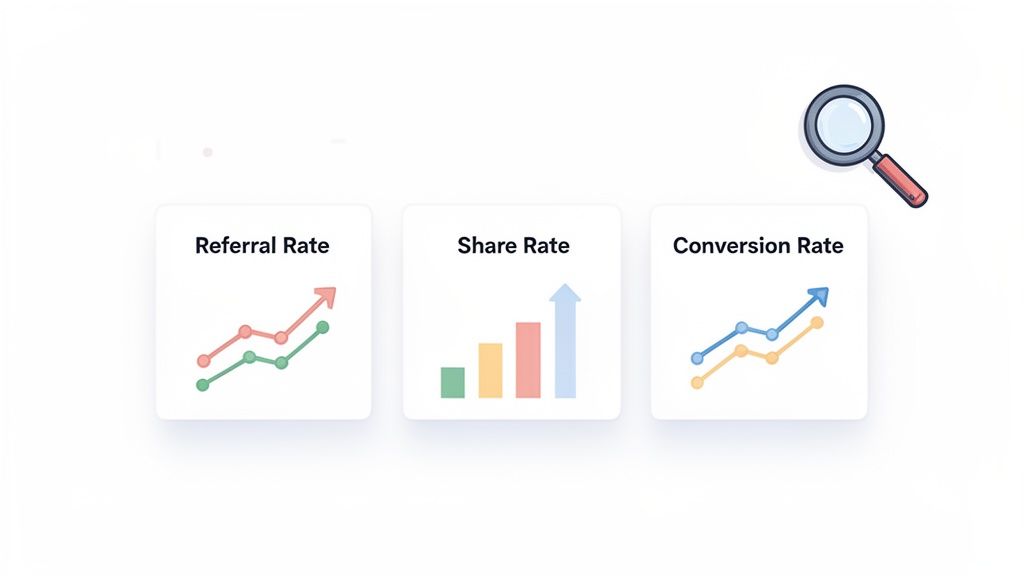
These three numbers work together to paint a complete picture of your referral funnel, from the initial share to the final sale.
-
Share Rate: This is your top-of-funnel metric. It’s simply the percentage of customers who see your referral offer and actually share their unique link or code. If your share rate is low, it’s often a red flag for issues with program visibility or uninspired incentives.
-
Referral Traffic (Clicks): This KPI counts how many people are clicking on those shared referral links. It's a direct measure of how compelling the advocate's message and the friend's offer are. High shares but low clicks might mean your advocates aren't framing the offer in an exciting way.
-
Conversion Rate: This is where the rubber meets the road. Your referral conversion rate is the percentage of those clicks that turn into a new customer making a purchase. It's the ultimate test of your offer, your landing page, and your brand's overall appeal.
By keeping a close eye on these three KPIs, you can pinpoint exactly where your funnel might be leaking and focus your energy where it'll have the biggest impact.
Decoding the Data to Drive Growth
Knowing your numbers is one thing; knowing what to do with them is another. Your analytics dashboard is a treasure map, and each metric is a clue that can lead you to more revenue and happier customers.
For instance, if your Share Rate is high but your Conversion Rate is lagging, that’s a fantastic sign! It means your customers are enthusiastic brand advocates, but the offer for their friends isn't quite hitting the mark. This is the perfect time to A/B test the friend’s incentive. Could a "20% off" offer outperform a "$15 off" coupon? The data will give you the answer.
A data-driven approach transforms your refer friend program from a static feature into a dynamic growth engine. By constantly testing, measuring, and iterating, you ensure your program evolves with your customers and continues to deliver a strong return.
The power of a well-oiled program is undeniable. Research shows that companies with formalized referral programs see 86% more revenue growth over two years, yet a surprisingly low 30% of businesses have one. The benefits go far beyond sales, too, with firms reporting much higher conversion rates and better customer lifetime value.
To help you get started, here's a breakdown of the most critical KPIs to watch, along with some industry benchmarks to aim for.
Essential KPIs for Your Refer Friend Program
| KPI | What It Measures | How to Calculate It | Good Benchmark |
|---|---|---|---|
| Share Rate | The percentage of participants who share their link. | (Number of Sharers / Number of Program Participants) x 100 | 10-15% |
| Referral Link Clicks | The number of clicks on shared referral links. | Total Clicks on All Shared Links | Varies by industry |
| Conversion Rate | The percentage of referred friends who make a purchase. | (Number of Referred Purchases / Number of Referral Clicks) x 100 | 5-10% |
| Participation Rate | The percentage of your customer base in the program. | (Number of Program Participants / Total Customers) x 100 | ~10% of active customers |
| Return on Investment (ROI) | The overall profitability of your program. | ((Revenue - Costs) / Costs) x 100 | 300% or higher |
These benchmarks are a great starting point, but remember that the most important thing is to improve your own numbers over time.
Calculating Your True Return on Investment
Ultimately, the biggest question is whether your program is actually making you money. Calculating your return on investment (ROI) is crucial for proving the value of your referral channel to your team and justifying any future spending on it.
The basic formula is pretty straightforward:
(Revenue from Referrals - Program Costs) / Program Costs
Revenue from Referrals is the total value of all sales that came from new customers using a referral link or code.
Program Costs include the total value of rewards you've paid out (to both advocates and their friends), plus any subscription fees for your referral marketing software.
For example, if your program generated $10,000 in new sales last quarter and your total costs were $2,000, your ROI would be a very healthy 400%.
Tracking ROI over time allows you to demonstrate the program’s long-term value and make smarter budget decisions. For a comprehensive guide on getting the technical side set up correctly, check out our article on referral program tracking. This data-centric mindset is what separates programs that just exist from those that truly excel.
Answering Your Top Refer-a-Friend Questions
Even with a solid plan, a few questions always pop up when you're about to launch your first refer-a-friend program. Let's walk through some of the common ones I hear from Shopify merchants to get you past those final hurdles.
What’s the Best Reward to Offer?
There’s no single "best" reward—it really comes down to your brand and what makes your customers tick. For most online stores, store credit or a percentage discount is a home run. Why? It drives business right back to your store from both the person referring and their friend.
A classic for a reason is the two-way incentive, like "$20 off for you, $20 off for your friend." It feels fair and generous, like a true gift. But if you sell products people buy often, like coffee or skincare, a points-based system can be a game-changer. It encourages long-term loyalty and makes referring feel like a fun challenge. The goal is to offer something that feels valuable enough to get someone to actually hit 'send'.
How Do I Stop People from Cheating the System?
Referral fraud is a real concern. You'll inevitably get a few people trying to refer themselves with a different email address. The good news is that modern referral apps have gotten incredibly smart about this.
Most quality platforms come with built-in fraud detection that automatically handles the dirty work by:
- Flagging IP addresses that are sending multiple referrals from the same device.
- Requiring a minimum purchase amount from the new customer to ensure it's a real sale.
- Delaying the reward (say, 30 days) until after your return window has closed.
Your terms and conditions page is your secret weapon here. Clearly state what you consider fraud and what happens if someone tries it. Just having that in black and white is often enough to deter most people.
How Fast Will I See Results?
Don't expect a viral explosion overnight. A referral program is a long-term play, not a quick win. Think of it more like SEO than a flash sale; it builds momentum over time.
You can expect to see real traction in about 3-6 months. That’s when the flywheel starts turning as more customers become aware of the program and sharing becomes second nature. At the beginning, keep your eye on early metrics like your share rate and how many people are clicking referral links. After a quarter or two, you’ll have enough data to see the real impact on your revenue. The key is to keep promoting it consistently.
Ready to turn your loyal customers into your most powerful marketing team? Toki provides all the tools you need to launch, manage, and scale a high-performing refer friend program on Shopify.