How Does Referral Work A Guide to Growth Through Advocacy
Discover how does referral work and learn to build a program that turns your best customers into powerful brand advocates. Grow your business with trust.
Ever wonder how some businesses seem to grow effortlessly? A huge part of that magic is often a killer referral program, which answers the question "how does referral work?" by turning your best customers into your most authentic sales team.
Think about it. When a friend raves about a new restaurant, you're probably going to try it. You trust their opinion way more than some flashy ad. That’s the core idea here—harnessing genuine trust to build a loyal customer base that keeps growing.
The Engine of Word-of-Mouth Growth
At its heart, a referral program is a structured way to encourage and reward your existing customers (the referrers) for bringing new people (the referees) into the fold. It takes the power of casual word-of-mouth and puts a system behind it, creating a simple, repeatable loop where everyone wins.
The mechanics are usually pretty straightforward. You give a happy customer a unique link or code to share. When their friend uses it to make a purchase, both of them typically get a reward. This isn't just about handing out discounts; it’s about fostering a community that expands organically, one trusted recommendation at a time.
Why This Model Is So Effective
The secret sauce is trust. It’s a simple concept, but its impact is massive. A staggering 86% of consumers trust recommendations from people they know far more than any form of traditional advertising.
This trust isn't just a feel-good metric; it directly translates to sales. In fact, customers who come from a referral are 4x more likely to make a purchase and often end up spending more. If you dig into the latest referral marketing statistics, you'll see just how powerful this effect is.
What you're really doing is building a self-perpetuating growth engine. Your advocates are already fans of what you do, so their recommendations are authentic, personal, and incredibly convincing.
A referral program isn’t just a marketing tactic; it’s a customer experience strategy. It identifies your most loyal supporters and gives them a reason to share their positive experiences, creating a cycle of loyalty and acquisition.
The Key Players in Every Program
To really get how a referral program works, you need to understand the roles of everyone involved. Breaking it down clarifies the entire process from start to finish and helps you optimize each step for success.
Let's quickly map out the core components that make any referral system tick.
| Component | Role in the Program | Example |
|---|---|---|
| The Merchant | The business running the program and providing the product/service. | Your online store or SaaS company. |
| The Referrer | An existing, happy customer who shares the offer with their network. | Jane, who just bought a great pair of running shoes from you. |
| The Referee | A new potential customer who receives the recommendation. | Tom, Jane’s friend, who is looking for new running shoes. |
| The Incentive | The reward offered to motivate the referrer and referee. | A $20 credit for Jane and 20% off the first purchase for Tom. |
| The Platform | The software that automates tracking, rewards, and analytics. | A tool like Toki that generates unique links and manages payouts. |
Understanding these pieces is the first step. When they all work together seamlessly, you've got a system that turns simple recommendations into measurable, predictable revenue for your business.
The Customer Journey in a Referral Program
To really understand how a referral program works, you have to step into your customers' shoes. A great program feels effortless for everyone involved—both for the loyal customer doing the sharing (the referrer) and the new person they bring in (the referee). Think of it as a smooth, rewarding conversation between your brand and its fans.
Let’s walk through the journey from both sides to see how a simple recommendation can turn into your next loyal customer.
This diagram breaks down the entire flow, showing how your business, your current customer, and a new customer all connect to drive a successful referral.
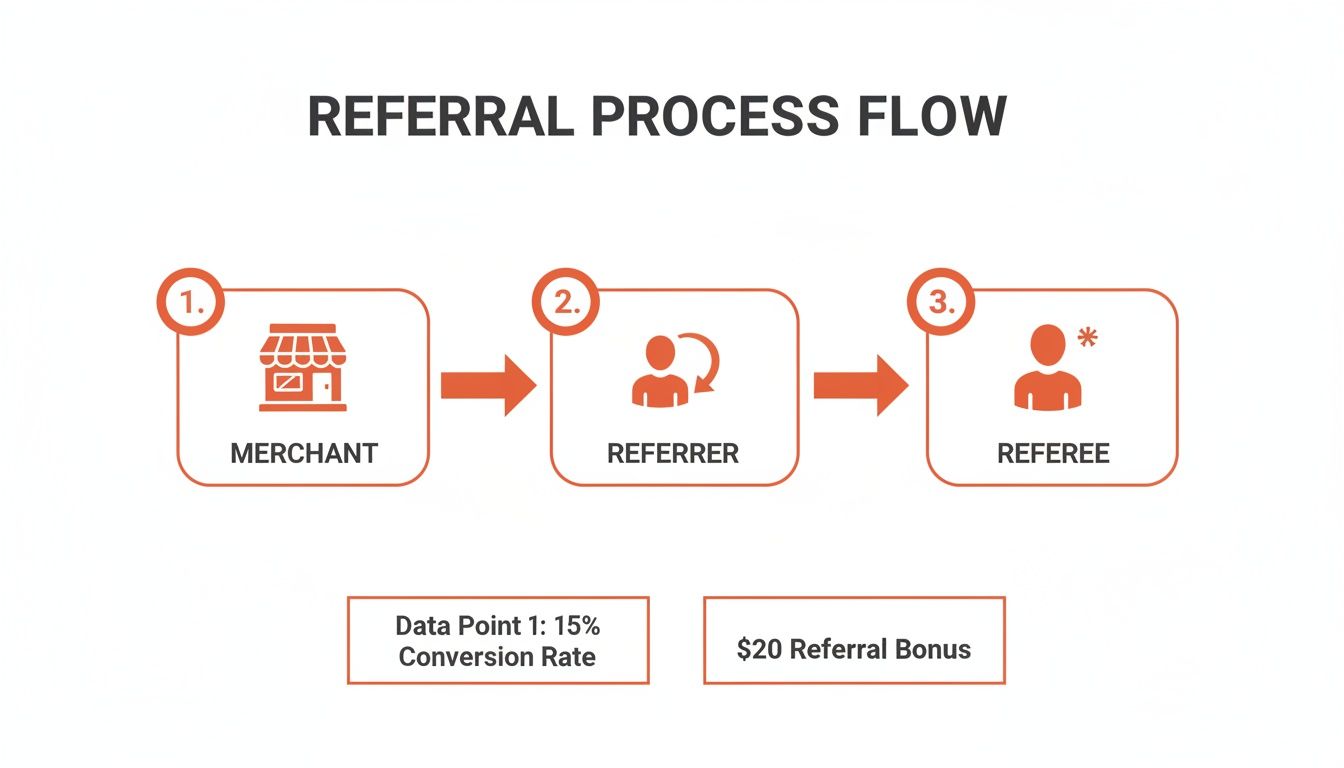
As you can see, a clean, automated process is what turns a casual share into a completed sale.
The Referrer’s Experience
For your existing customer, the experience needs to be simple and motivating. It all starts when they've just made a purchase, are feeling good about your brand, and see a chance to share that feeling.
- Discovery: They find out about your program. This might be on a post-purchase thank-you page, in an email, or through a loyalty program pop-up.
- Sharing: In just a click, they get their unique referral link. Sharing it should be dead simple—straight to social media, email, or a text message.
- Notification: The moment their friend buys something, they get a notification. It's a small but powerful confirmation that their recommendation mattered.
- Reward: The reward—store credit, points, a discount—lands in their account automatically, ready for their next shopping trip.
The less friction a referrer experiences, the more likely they are to share. The goal is to make sharing your brand feel as easy and rewarding as talking about their favorite movie.
The Referee’s Experience
For the new customer, this journey is all about trust and instant value. They aren't seeing a random ad; they're getting a personal tip from someone they know.
- Trust-Based Introduction: It begins with a message from a friend, which immediately cuts through the marketing noise.
- Instant Gratification: Clicking the link takes them straight to a clear, welcoming offer, like 20% off their first order. They feel valued right away.
- Seamless Purchase: The discount is applied at checkout automatically. No codes to remember, no hoops to jump through—just a smooth first purchase.
- Joining the Cycle: After they buy, they're invited to become a referrer, too. This is how you turn one new customer into another brand advocate, creating a cycle of growth.
This whole process highlights the power of a well-oiled customer journey. Platforms like Toki are built to automate every touchpoint, from generating the unique links to fulfilling the rewards, creating a growth engine that runs itself. You can dive deeper into optimizing these interactions by exploring effective customer journey management strategies.
Crafting Irresistible Referral Incentives
Let's be honest: a referral program lives or dies by its reward. If the incentive isn't exciting, even your most dedicated customers won't make the effort to share. The trick isn't just about slapping a big discount on it; it's about understanding what truly gets your customers to act.
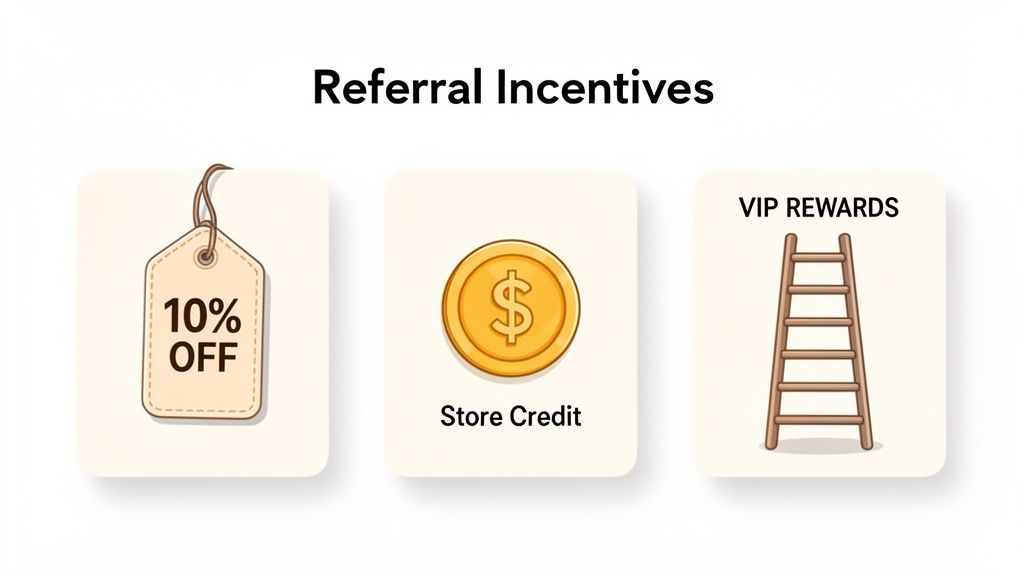
The first question you need to answer isn't just what to give, but who gets the reward. Do you reward the person sharing, the new customer they bring in, or both?
While one-sided rewards can work, a dual-sided incentive—where both the referrer and their friend get a bonus—is almost always more powerful. It transforms the act of sharing from a self-serving one into a genuine gift. The referrer feels good about giving their friend a deal, not just cashing in for themselves.
Choosing Your Incentive Model
There are a few tried-and-true models for referral rewards, and the best one for you will depend on your brand and how your customers shop.
Here's a quick look at the most common structures to help you figure out what might work best for your business.
Comparing Common Referral Incentive Models
| Incentive Model | Best For | Pros | Cons |
|---|---|---|---|
| Cash Discounts (%) | Driving immediate, first-time purchases. | Easy to understand, instantly valuable, great for impulse buys. | Can devalue your brand if overused; attracts deal-seekers. |
| Store Credit ($) | Encouraging repeat business and building loyalty. | Keeps value within your ecosystem, higher perceived value. | Less appealing to customers who don't plan to shop again soon. |
| Tiered Rewards | Turning casual sharers into super-advocates. | Motivates sustained sharing, creates a sense of achievement. | More complex to set up and communicate clearly. |
| Free Products/Services | Subscription models or brands with high-margin items. | High perceived value, showcases your product directly. | Cost can be high; only works if your product is desirable. |
| Exclusive Perks/VIP Access | Luxury brands or community-focused businesses. | Builds brand exclusivity, fosters a strong sense of community. | Value can be subjective and harder to quantify. |
The right incentive feels like it belongs to your brand. A luxury fashion label might find more success offering early access to a new collection than a simple 20% off. A coffee subscription service, on the other hand, would probably see a huge response by offering a free bag of beans.
Ultimately, a well-chosen incentive doesn't just drive a sale; it attracts the right kind of customer. Research from Forrester shows that referred customers are incredibly valuable—they churn 37% less and have a 150% higher average order value than people you acquire through ads.
Testing and Optimizing Your Offers
Here’s a little secret: your first idea for an incentive probably won't be your best one. And that’s perfectly fine. The magic is in the testing.
A successful referral program is never "set it and forget it." It requires continuous optimization, which is why a flexible platform is so important. You need the ability to experiment with different offers without calling in a developer every time you have a new idea.
For example, you could run a simple A/B test comparing a 15% discount against a $20 store credit. Let the data tell you which one motivates more people to follow through. Modern tools like Toki are built for this, giving you the analytics to see what’s working and what’s not, so you can make decisions based on real customer behavior.
If you're brainstorming what kind of rewards might work for your brand, our guide on referral incentive ideas has plenty of creative examples to get you started.
Understanding Referral Tracking and Attribution
Ever wonder how a company knows exactly who sent them a new customer? It’s not magic. It’s the smart, automated tracking technology that sits at the heart of every successful referral program, making sure your advocates get the credit they deserve.
The whole system works by giving each of your referrers a unique identifier—think of it as their digital fingerprint. This ID links all their sharing activity directly back to them. When a friend clicks their link or uses their special code, that fingerprint is passed along, telling your system, "Heads up, this sale came from Jane!"
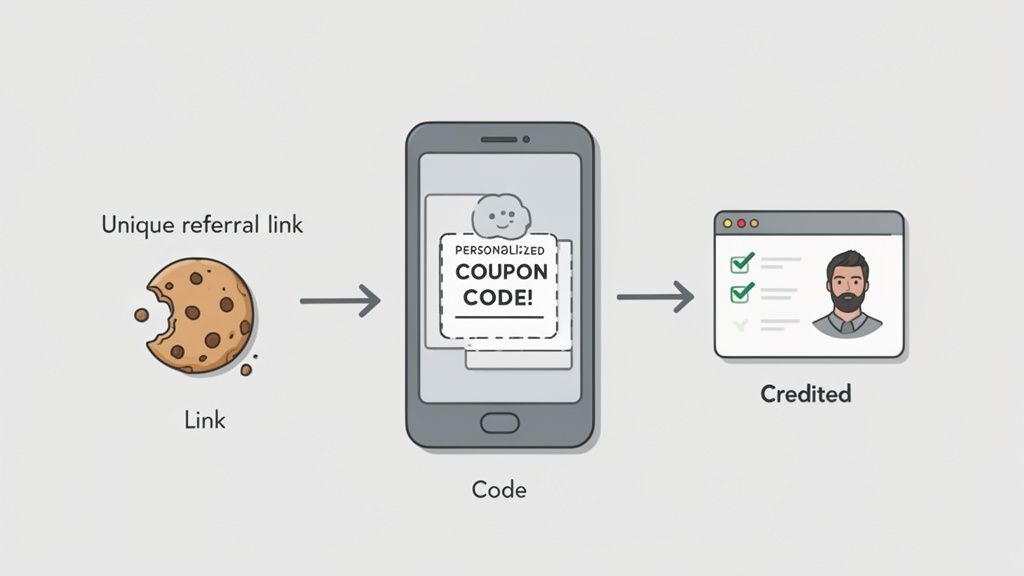
This transparency is fantastic for building trust. When your advocates see their successful referrals pop up in real-time, it’s a powerful motivator to keep sharing.
How The Tracking Actually Works
So, how is this digital fingerprint created and followed? Modern referral platforms typically use a couple of tried-and-true methods to make sure attribution is quick and accurate. Each one works a bit differently, but they all lead to the same result: a happy, rewarded advocate.
Here are the main techniques running behind the scenes:
- Unique Referral Links: This is the most popular method by far. Every advocate gets a special URL with their unique ID embedded in it. When a friend clicks that link, a small tracking file called a cookie is placed on their browser. If they make a purchase, that cookie tells your system who sent them.
- Personalized Coupon Codes: Another great approach is giving each advocate a unique discount code, something like JANE20. When a new customer enters that code at checkout, the system instantly knows who to credit for the sale. This is a brilliant method because it works just as well in a physical store as it does online.
At its core, attribution is about creating an unbroken chain of evidence. It connects the referrer's share to the referee's purchase, ensuring the right person gets rewarded every single time.
Getting this credit right is absolutely critical. Platforms like Toki handle all the heavy lifting for you, automatically generating and tracking these unique IDs without any manual work on your end. For a much deeper look into the mechanics, you can explore our guide on referral program tracking.
And if you want to get really sophisticated, it helps to start understanding omnichannel attribution. This helps you connect the dots between all the different ways a customer interacts with your brand, giving you a complete picture of their journey.
Launching Your First Referral Program
Alright, let's move from theory to action. Getting your first referral program off the ground is really about one thing: making it dead simple for your happy customers to tell their friends about you. You don't need a complicated, multi-layered system to start. In fact, a straightforward and clear program is often what works best, especially right out of the gate.
The first step, before you even think about designing a banner or writing an email, is to decide what you're actually trying to achieve. What does success look like? Don't settle for a vague goal like "get more customers." Get specific. A much better target is something like, “increase new customer acquisition by 15% in the next quarter.” That single, clear objective will be your North Star for every decision that follows.
Setting Up for Success
Once you have your goal locked in, it’s time to build the program itself. This is where you pick the right rewards for your customers and make the whole thing incredibly easy to find and use. Seriously, the fewer clicks it takes, the more people will actually do it.
Here’s a simple, no-fuss way to get started:
- Choose the Right Incentives: Think about your customers and what they'd actually want. A two-way deal is almost always a winner. Something like "$20 off for the friend, $20 credit for the advocate" gives everyone a compelling reason to participate.
- Create Simple Promotional Assets: You don't need a Super Bowl ad. Just start with a dedicated email to your customer list announcing the new program. Whip up a few social media graphics that are easy to share, and you're golden.
- Integrate It Into the Customer Journey: Make sure people can't miss it. Place your referral offer in high-visibility spots like the post-purchase thank-you page, inside your email newsletters, and on the customer's account dashboard.
The best referral programs don't feel like a separate marketing push. They feel like a natural part of the customer experience, woven right into the moments that matter.
Getting It Live, Fast
The good news is that you don't have to build this from scratch. Modern tools make launching a program incredibly straightforward. With platforms like Toki, you can use integrations for Shopify to get a fully functional referral system up and running in minutes, not weeks. This lets you skip the tedious development work and get straight to building your army of brand advocates.
And the potential payoff is huge. The influencer market, which runs on the same principle of trusted recommendations, is on track to hit $33 billion. More directly, companies with active referral programs see 17% more repeat buys and an 11% increase in spending per purchase. You can find more stats on referral marketing trends from artios.io. This isn't just theory; a well-planned launch can quickly deliver real, measurable results, turning your existing customers into your most effective growth channel.
Measuring The Success Of Your Referral Program
Getting your referral program off the ground is one thing, but knowing if it's actually working is where the real work begins. To truly understand its impact, you have to look past the surface-level numbers and dig into the Key Performance Indicators (KPIs) that tell the real story of your program's health and profitability.
Think of it like checking a patient's vital signs. These numbers tell you if your strategy is healthy and thriving or if it needs a little help. You don't need a massive analytics team to figure this out, either. It all starts with tracking a few core metrics that show you how people are moving through your program, from the moment they sign up to the moment they bring you a new customer.
Core Metrics To Monitor
To get a clear picture, start by zeroing in on three essential KPIs. Together, they create a snapshot of your referral funnel and pinpoint exactly where you can make improvements.
- Participation Rate: This is simply the percentage of your total customers who have actually signed up to be a referrer. If this number is low, it might be a sign that you need to get the word out more—maybe through a post-purchase pop-up or a dedicated email blast.
- Share Rate: Of all the people who joined your program, how many are actually sharing their referral links? This metric tells you if your incentives are genuinely motivating. If people sign up but don't share, the reward might not be compelling enough.
- Conversion Rate: This is the most critical one. It’s the percentage of shared links that turn into a new customer making a purchase. A high conversion rate is gold—it means your advocates are sending you high-quality traffic that's ready to buy.
A healthy referral program isn't just about getting tons of shares; it's about getting the right shares that lead to profitable new customers. Each metric tells a piece of that story, from initial engagement all the way to a successful sale.
Calculating Your Return On Investment
At the end of the day, you need to know one thing: is this program making me money? Figuring out your Return on Investment (ROI) and how it affects your Customer Acquisition Cost (CAC) is more straightforward than you might think.
For ROI, just compare the total revenue generated from referrals to the total cost of the rewards you’ve paid out. It’s a simple cost vs. benefit analysis.
When it comes to CAC, a referral program should dramatically lower your acquisition costs compared to channels like paid advertising. For instance, if you spend $50 in rewards to acquire a new customer who would have otherwise cost you $150 to get through ads, that’s a huge win. To really understand the long-term benefit, mastering customer lifetime value calculation is essential, as referred customers often prove to be more valuable over time.
This is where a platform like Toki shines. Its built-in analytics dashboards do the heavy lifting for you. You can instantly see who your top advocates are, track sales from referrals as they happen, and make smart, data-backed decisions to keep your program growing profitably—no guesswork required.
Your Top Referral Program Questions, Answered
Alright, so you've got the big picture. But when it comes to actually building your referral program, the devil is always in the details. Let's tackle some of the most common questions that pop up as merchants get ready to launch.
Getting these specifics right is what separates a program that just exists from one that actually drives serious growth.
How Much Should My Referral Reward Be?
Don't just pull a number out of thin air. The sweet spot for a reward is all about your own business math. A solid rule of thumb is to offer 10-20% of your average order value (AOV).
So, if your typical customer spends about $100, a reward in the $15 to $20 range for both the person referring and their friend is usually enough to get them excited. It feels like a real win, but it still makes financial sense for you.
Remember, the goal is to find that perfect balance—generous enough to motivate action, but sustainable for your bottom line. With a tool like Toki, you can easily experiment with different incentives, like store credit vs. a percentage off, to see what your customers truly prefer.
What's the Real Difference Between Referral and Affiliate Programs?
This one trips people up all the time, but the distinction is actually pretty simple. Think of it this way:
A referral program is all about your loyal customers. It’s designed for them to share your brand with people they actually know—their friends, family, and colleagues. The whole thing runs on genuine, personal trust.
An affiliate program, on the other hand, is a business partnership. You team up with creators, influencers, or other publishers who promote your products to their larger audience in exchange for a commission. It’s a performance marketing channel, not a customer loyalty play.
How Can I Stop People from Cheating the System?
Worried about fraud? That's a valid concern, but modern referral platforms are built with this in mind. They come with automated security measures designed to protect your program’s integrity and make sure you’re only rewarding legitimate new customers.
You'll find features that automatically track IP addresses to flag self-referrals, hold rewards until a new customer's first purchase is complete, and even let you cap the number of referrals a single person can make.
With a solid system in place, these safeguards run in the background. You can rest easy knowing your investment is protected and every reward you give out is generating real, profitable growth for your business.
Ready to turn your best customers into your most powerful marketing team? With Toki, you can launch a fully automated referral program in minutes, not weeks. Get started today and see the power of word-of-mouth marketing.