Online loyalty cards: Boost Retention with Digital Rewards
Explore how online loyalty cards boost customer retention with easy digital rewards programs. Learn practical steps to implement and drive revenue.
Online loyalty cards are the modern answer to the old paper punch card, living right inside a customer's smartphone in their Apple or Google Wallet. They ditch the hassle of lost or forgotten physical cards for a direct, interactive, and always-on way to build real brand loyalty.
From Paper Punch Cards To Digital Wallets
Remember digging through your wallet for that crumpled paper punch card, hoping you didn't leave it on the kitchen counter? It was a simple idea, but clunky and full of friction. That old method was like carrying around a folded paper map—it worked, but it was a pain.
Moving to an online loyalty card is like upgrading from that paper map to a live GPS. It's not just a digital copy; it's a complete evolution.
Instead of a passive piece of cardboard, a digital loyalty card is a dynamic, direct line to your best customers. It lives right where they are—on their phones. This means it’s never lost, never forgotten, and always ready to go. You can dive deeper into how wallet passes transform the customer experience in our detailed guide.
More Than Just a Digital Card
If you think of these as just a digital version of a punch card, you're missing the bigger picture. They're powerful tools that give e-commerce and omnichannel retailers a serious edge.
- Build Direct Relationships: They open up a private channel to send personalized offers, updates, and reminders straight to a customer’s lock screen. No algorithms, no spam filters.
- Gather Smarter Data: Every scan, point earned, and reward redeemed tells you something about your customers' habits, helping you understand what keeps them coming back.
- Create a Seamless Experience: They make earning and redeeming rewards ridiculously easy, whether someone is checking out online or standing at your counter in-store.
This shift isn't just a neat trick; it's a massive market movement. The global loyalty management market was recently valued at around $8.6 billion and is expected to surge past $18.2 billion by 2026. This incredible growth signals that businesses are finally treating loyalty as critical infrastructure, not just a marketing gimmick. You can find more stats on the growing loyalty market over at LoyaltyLion.
To truly grasp the shift, let's look at a side-by-side comparison.
Traditional Vs Online Loyalty Cards At A Glance
This table breaks down exactly how much more powerful a digital approach is compared to the classic paper card.
| Feature | Traditional Loyalty Card | Online Loyalty Card |
|---|---|---|
| Accessibility | Physical card; easily lost or forgotten. | Stored in a digital wallet; always on the customer's phone. |
| Communication | One-way; passive and static. | Two-way; allows for push notifications and updates. |
| Personalization | Generic; "one-size-fits-all" offers. | Highly personalized with customer data and segmentation. |
| Data & Analytics | Almost none; impossible to track individual usage. | Rich data on customer behavior, purchase frequency, and ROI. |
| User Experience | High friction; requires remembering and presenting. | Seamless; simple scan or tap at checkout. |
| Implementation Cost | Low initial cost, but high ongoing printing costs. | Higher initial setup, but lower long-term operational cost. |
The advantages are clear. Online loyalty programs offer a richer, more engaging, and ultimately more profitable way to connect with customers.
An online loyalty card transforms a simple transaction into an ongoing relationship. It gives customers a tangible reason to return, turning one-time buyers into lifelong advocates for your brand.
At their core, these programs run on simple, effective mechanics. Point systems act like a private currency for your brand, rewarding customers for every purchase and interaction. On top of that, tiered memberships create a feeling of achievement and exclusivity, encouraging people to spend more to unlock VIP perks.
These aren't just features; they are the fundamental building blocks for designing a modern customer journey that drives repeat business and forges genuine, lasting connections.
The Building Blocks Of A Modern Loyalty Program
A great loyalty program isn't just a digital punch card. It's a carefully designed system built to create a genuine connection with your customers and keep them coming back. Think of it like building a house: you need a solid foundation and different rooms that work together to make the space feel welcoming. A modern loyalty program is built from a few key components, and each one has a specific job to do.
The jump from a flimsy paper card to a slick digital system shows just how far customer engagement has come. This image says it all.
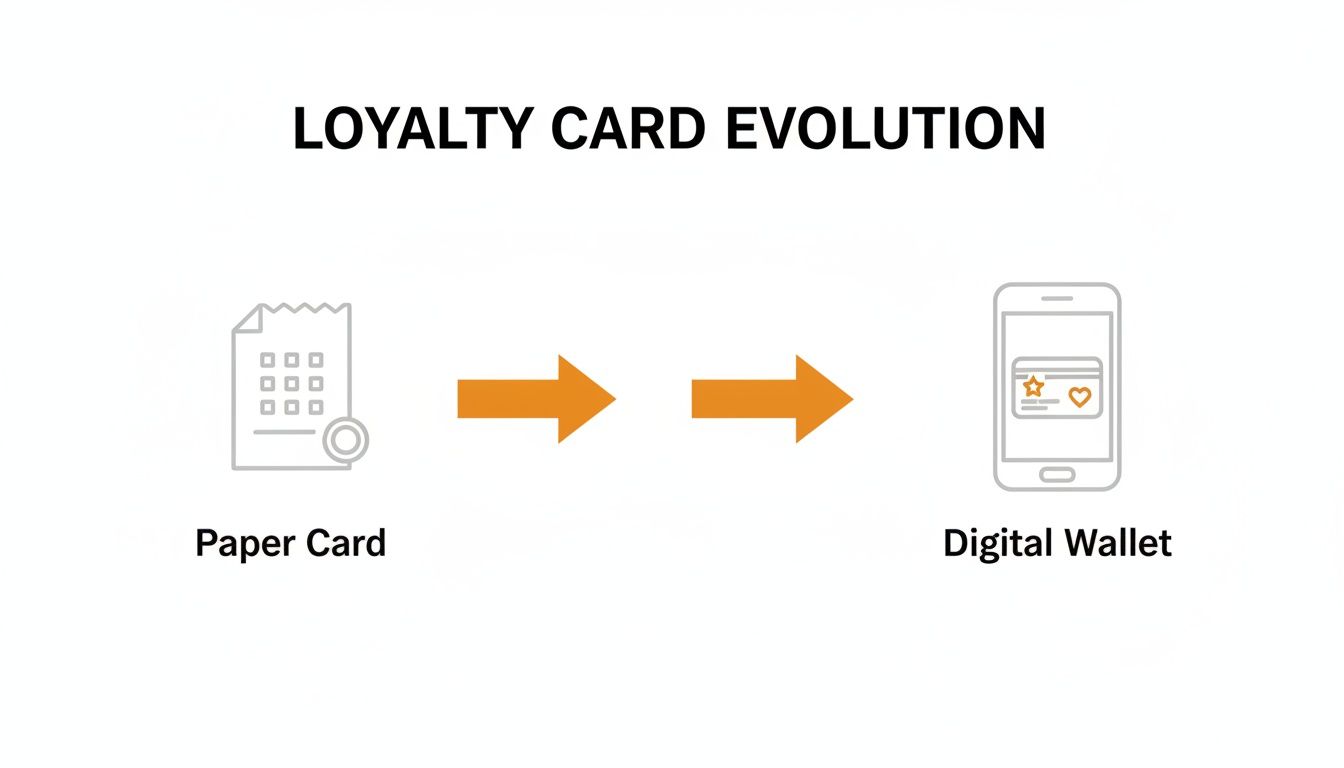
It’s a simple but powerful shift from something physical and easily lost to an integrated feature that lives on your customer's most-used device. Now, let's break down the essential pieces that make these programs click.
Points As A Private Brand Currency
The most familiar part of any loyalty program is the points system. The best way to think about points is as your own private brand currency. Customers earn this currency when they buy something, follow you on social media, or write a review. Then, they can "spend" their earnings on discounts, free products, or other special perks.
This simple idea completely changes the dynamic. A purchase is no longer just a one-off transaction; it’s a way for customers to invest in your brand’s little economy. Every dollar they spend gets them something extra, which strengthens their connection to your store and makes them feel seen. You can dive deeper with this complete guide to setting up a points and rewards system to see how it works in the real world.
Tiered Memberships The VIP Club Experience
While points reward individual actions, tiers reward long-term commitment. This system works just like an exclusive VIP club. Customers start on the ground floor and climb the ranks by hitting certain spending goals or collecting enough points. With each new tier, they unlock better and more valuable rewards.
- Bronze Tier: The basics, like earning points at the standard rate.
- Silver Tier: Better perks kick in, like free shipping or early access to sales.
- Gold Tier: The top level might offer exclusive products, a birthday gift, or double-point weekends.
Tiers give customers a clear sense of progress and achievement. The desire to unlock that next level of benefits encourages them to stick with your brand, which naturally boosts their average order value and lifetime value.
A tiered program gamifies loyalty. It gives your best customers a clear path to exclusivity and recognition, making them feel like true insiders and transforming them into your most passionate brand advocates.
Referral Programs Turning Customers Into Advocates
Your most loyal customers are your best marketers. You just have to give them a reason to talk. A referral program does exactly that by rewarding them for spreading the word. It's about empowering your biggest fans to become enthusiastic brand ambassadors.
Typically, when a current customer refers a friend, both of them get a reward—like a discount on their next purchase. It’s a win-win-win. You get a new customer at a very low cost, the new customer gets a nudge to make their first purchase, and your existing customer gets a thank you for their loyalty. A huge part of this is leaning into customer engagement best practices to boost loyalty.
Gamification Making Loyalty Fun
Finally, gamification injects a dose of fun and friendly competition into the whole experience. This element makes being part of your program feel less like a chore and more like a game. It's all about adding small, delightful moments that keep customers engaged.
A few examples include:
- Earning Badges: Awarding digital badges for hitting milestones, like making five purchases or referring three friends.
- Completing Challenges: Offering bonus points for trying a new product collection or shopping during a specific event.
- Progress Bars: Showing customers a visual of how close they are to their next reward or VIP tier.
These simple mechanics tap into our natural drive for achievement, making the entire program more memorable. They give customers fun reasons to check in with your brand, even when they aren't actively shopping.
It’s easy to think of a loyalty program as just another expense, a cost of doing business. But that’s a huge mistake. A well-designed online loyalty card system is actually a powerful revenue engine. It’s not about giving stuff away for free; it’s a strategic investment in your most valuable asset: your existing customers. By focusing on them, you're tapping into a highly profitable and predictable way to grow your business.
The financial impact isn't just theoretical, either. It shows up in the real-world, bottom-line metrics that every e-commerce merchant lives and breathes by. A good program actually changes customer behavior, turning one-time buyers into repeat purchasers and casual shoppers into genuine brand advocates. The core idea is simple, yet powerful: it costs way less to keep a happy customer than it does to find a new one.
Boosting Average Order Value
One of the quickest wins you'll see from an online loyalty card is an immediate lift in your Average Order Value (AOV). Think about it. When a customer sees they're just a few dollars away from unlocking a reward—like free shipping or a handful of bonus points—they have a real incentive to add one more item to their cart.
Imagine a shopper with a $45 cart who gets a notification that they’ll earn a $5 reward once they hit a $50 spending threshold. Tossing in a $10 product to cross that line suddenly feels like a smart, satisfying move, not like they're being upsold. This little psychological nudge plays out with every transaction, consistently pushing up your average sale size without you having to be pushy.
Increasing Customer Lifetime Value
Beyond just that single purchase, the real magic of a loyalty program unfolds over time. It dramatically increases Customer Lifetime Value (CLV), which is the total amount of money a customer is expected to spend with your brand over their entire relationship with you. By making repeat business the easiest and most rewarding choice, you give customers a compelling reason to stick around.
This isn't just a hunch; the data backs it up. Among companies that actually track their programs, a whopping 80% report a positive return on their investment. On average, successful programs generate 4.9 times more revenue than they cost to run. Even better, members who redeem points have a CLV that is 6.3 times higher than non-members. You can dig into more of these powerful loyalty program trends and their financial impact to see for yourself.
Investing in your existing customer base isn't just a feel-good strategy—it's a direct path to higher profitability. Online loyalty cards make this investment measurable, predictable, and incredibly effective.
Improving Purchase Frequency
Finally, digital loyalty cards give you a direct communication channel to your best customers, which is perfect for improving their purchase frequency. An email might get lost in a cluttered inbox or flagged as spam, but a notification from a digital wallet pass pops right up on a customer's lock screen. It’s hard to ignore.
This opens the door for all sorts of timely, relevant messages:
- Reward Reminders: "You're only 50 points away from your next reward!"
- Personalized Offers: "Enjoy double points on your favorite items this week only."
- Win-Back Campaigns: "We miss you! Here are 200 bonus points to welcome you back."
These gentle nudges keep your brand top-of-mind, encouraging customers to come back sooner and more often than they might have otherwise. This consistent engagement turns the customer relationship from a series of disconnected purchases into an ongoing conversation that fuels real, sustainable growth.
How to Set Up Your Digital Loyalty Program for Success
Launching a digital loyalty program might feel like a huge technical hurdle, but it's more straightforward than you think. The key is to break it down into a few manageable steps. Think of it as laying the foundation for a house—get the blueprint right, and everything else falls into place, creating a powerful system that drives sales and keeps customers coming back.
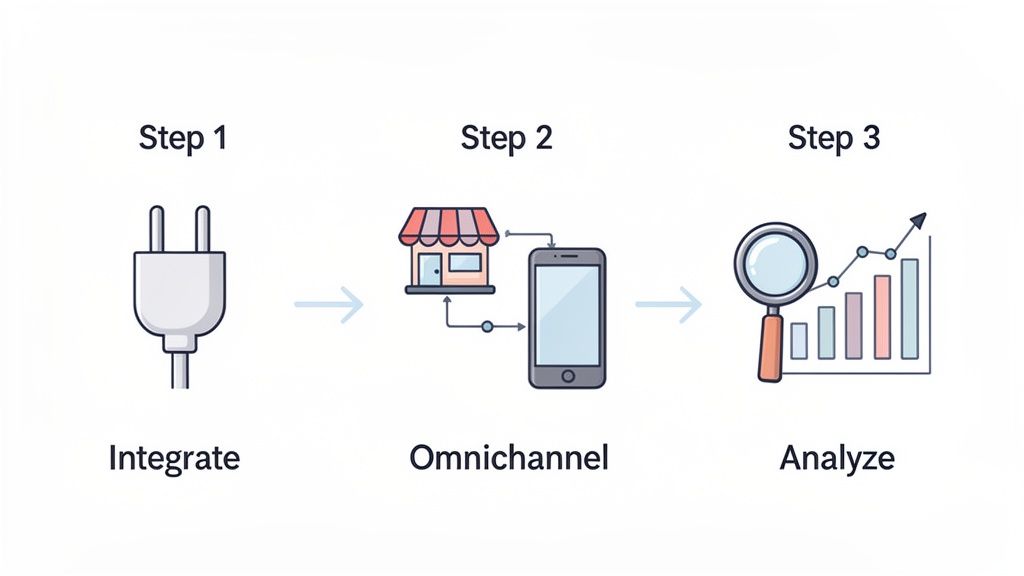
It all starts with picking the right tools and making sure they talk to your existing sales channels. This groundwork is what ensures a headache-free experience for both you and your customers, paving the way for a program that actually works.
Nail Your Platform Integration
First things first: you need a loyalty solution that plays nicely with your e-commerce platform, whether it’s Shopify, BigCommerce, or something else. A native, seamless integration isn’t just a nice feature; it’s non-negotiable. It’s the bridge that lets your loyalty program automatically sync customer data, track every purchase, and dish out rewards without you lifting a finger.
Without that solid connection, you’re stuck manually updating points. That's not just a time-sink; it's a recipe for mistakes. A smooth integration means when someone buys from your site, their digital loyalty card updates instantly. That immediate gratification is exactly what keeps people engaged and feeling valued.
Build a True Omnichannel Experience
The line between shopping online and in-store has all but disappeared. Your loyalty program has to live in both worlds, creating a single, unified omnichannel experience. A customer should be able to earn points on your website and spend them in your brick-and-mortar shop—and vice versa—all with the same digital card.
This consistency is what builds a powerful brand connection. When a customer’s loyalty status follows them wherever they shop, it deepens their relationship with your brand, not just one sales channel. And frankly, it's what people expect now. Data shows that 40% of corporate loyalty programs are already omnichannel because 78% of shoppers want to access rewards online and use them right away.
An omnichannel strategy elevates your loyalty program from a simple marketing tool to a core part of your brand experience. It tells your customers they matter, no matter how or where they choose to buy from you.
If you're thinking about adding a mobile app component, some upfront planning is smart. Before you commit, it’s worth reviewing a good mobile apps development cost and strategy guide to map out your investment and timeline.
Put Your Data and Analytics to Work
One of the best parts about online loyalty cards is the goldmine of data they generate. Every point earned and reward redeemed tells you something about your customers. A solid loyalty platform will have an analytics dashboard that makes it easy to see what’s going on under the hood.
This is where you find the answers to crucial questions:
- Who are my best customers? Pinpoint your VIPs and biggest spenders.
- Which rewards are actually working? See what offers people are most excited to redeem.
- Is this program making people buy more often? Compare purchase frequency between members and non-members.
This data is how you prove your program’s return on investment (ROI) and make smart tweaks to improve it over time.
Get Smart with Customer Segmentation
Finally, all that rich customer data unlocks the real magic: customer segmentation. Instead of blasting the same generic offer to everyone, you can create targeted campaigns that speak directly to specific groups. It’s about treating different customers differently, based on who they are and how they shop.
For example, you could create segments for:
- Newbies: Welcome them with bonus points on their first purchase to get them hooked.
- VIPs: Give your top customers exclusive access to new products or special sales.
- Customers Who Are Drifting Away: Nudge them back with a special discount if they haven't shopped in a while.
This kind of personalization makes customers feel understood. It turns your loyalty program from a simple punch card into a sophisticated engine for building real, lasting relationships.
Your Launch Checklist And Key Metrics To Watch
Launching your online loyalty card program is a huge step, but a successful rollout needs a clear plan. Without one, you're just hoping for the best. A structured approach is your mission plan for turning first-time buyers into lifelong fans, ensuring you cover all your bases from day one.
The easiest way to tackle this is by breaking the launch into three distinct phases: pre-launch, launch, and post-launch. This makes the whole process feel less overwhelming and helps you focus on what matters at each critical stage.
Your Three-Phase Launch Plan
A great program launch doesn't just happen by accident. Follow this checklist to make sure your debut is a hit with customers and starts building momentum right away.
1. The Pre-Launch Phase (The Blueprint)
This is where you do all the heavy lifting behind the scenes. Getting this stage right is absolutely essential for a smooth launch.
- Define Clear Goals: What are you really trying to achieve? Is it to increase repeat purchases by 15%? Or maybe boost your average order value? Set specific, measurable targets you can actually track.
- Design Your Rewards: Lock in your points system, tiers, and the specific rewards customers can earn. The key here is making sure the rewards feel valuable and genuinely desirable to your customers.
- Prepare Marketing Materials: Get your creative assets ready to go. This means drafting announcement emails, designing eye-catching social media posts, and creating website banners to build anticipation.
2. The Launch Phase (Go Time)
It's time to pull the trigger and introduce your program to the world with a bang.
- Promote Everywhere: Don't be shy. Announce the launch across every single channel you own—email newsletters, social media, and a can't-miss banner right on your homepage.
- Train Your Team: If you have a physical store, this is non-negotiable. Make sure your staff fully understands how the program works, why it's great, and can enthusiastically sign customers up.
- Offer a Launch Bonus: Give people a compelling reason to join now. Offering bonus points or an exclusive reward just for signing up in the first week is a fantastic way to drive early adoption.
3. The Post-Launch Phase (Listen and Adapt)
Your program is live, but the work is far from over. This phase is all about listening, learning, and optimizing.
- Monitor Performance: Keep a very close eye on your key metrics (we'll dive into those next). Are you on track to hit the goals you set in the pre-launch phase?
- Gather Customer Feedback: What do your members actually think? Send out simple surveys or just ask for reviews to understand what they love and what could be improved.
- Iterate and Improve: Use the data and feedback you're collecting to make smart adjustments. Maybe a reward isn't as popular as you thought, or perhaps a new promotion could re-engage dormant members.
Key Metrics That Truly Matter
Once your program is up and running, you need a way to prove it's actually working. Watching the right Key Performance Indicators (KPIs) tells you if your investment is paying off and transforming customer behavior. These numbers cut through the noise and give you a real-time pulse on your program's health. For an even deeper look, you can explore these essential loyalty program KPIs and what they mean for your business.
Tracking the right KPIs transforms your loyalty program from a "nice-to-have" marketing expense into a predictable, revenue-generating engine. Data tells you exactly what's working and where to focus your efforts for maximum impact.
So, what should you be tracking? Here’s a breakdown of the metrics that will give you the clearest picture of your program's success.
Essential KPIs For Your Loyalty Program
This table outlines the key metrics to track the health and ROI of your online loyalty card program, including how to calculate them and why they matter.
| KPI | What It Measures | Why It Matters |
|---|---|---|
| Repeat Purchase Rate | The percentage of customers who make more than one purchase. | This is the ultimate measure of loyalty. A rising rate shows your program is successfully encouraging customers to return. |
| Redemption Rate | The percentage of issued points that are actually redeemed for rewards. | A low rate may indicate your rewards aren't compelling enough. A healthy rate shows customers are engaged and find value. |
| Customer Lifetime Value (CLV) | The total revenue a customer is predicted to generate over their entire relationship with your brand. | This is your North Star metric. Comparing the CLV of loyalty members to non-members proves the program's long-term financial impact. |
| Participation Rate | The percentage of your total customers who have signed up for the loyalty program. | This metric shows how effectively you are promoting the program and how appealing it is to your customer base. |
By keeping these KPIs on your dashboard, you’ll always know how your loyalty program is performing and be able to make informed decisions to drive even better results.
Common Loyalty Program Mistakes And How To Avoid Them
Even with the best intentions, a loyalty program can fall flat if it’s not truly built for the customer. The good news? We can learn from the mistakes others have made. By spotting these common hurdles early, you can build a program that actually connects with your audience instead of frustrating them.
One of the biggest blunders is making things too complicated. If your customers need a PhD to figure out how to earn points or redeem rewards, they’ll just give up. That friction is a program killer.
Another classic error is offering rewards that just aren't worth the effort. A reward that feels cheap or random won't motivate anyone. The whole point is to offer something genuinely desirable—something that gets them excited to make that next purchase.
Confusing Rules and Unclear Value
Think about a program where points expire after 30 days, some products earn double points but only on Tuesdays, and you have to spend a certain amount just to use your reward. It’s exhausting just thinking about it, right? That kind of complexity instantly drains any excitement.
The Fix: Keep it simple. Seriously. A straightforward "spend a dollar, earn a point" model works because everyone gets it immediately. Make sure their point balance and progress are always visible right on their online loyalty card. The entire process should feel completely effortless.
In the same vein, offering a tiny 5% discount after a customer has spent $200 with you feels less like a reward and more like a slap in the face. The effort has to feel proportional to the prize. A weak reward sends the message that you don't really value their business, which poisons the entire well.
Poor Communication and Ignoring Data
Launching your program and then going silent is a surefire way to fail. People are busy. If you aren't reminding them about the cool perks they're earning, they will forget your program even exists. Out of sight, out of mind.
- The Problem: When you don’t talk about the program, it feels like an unimportant afterthought.
- The Solution: Use push notifications from digital wallet passes, targeted emails, and on-site reminders to keep the program top-of-mind. Send a quick note when they hit a new tier or get close to a reward. Make them feel seen.
Finally, the single biggest missed opportunity is flying blind and ignoring the data your program is generating. This information is pure gold—it tells you what your customers love, what they buy, and who your biggest fans are. Without it, you're just guessing.
By digging into participation and redemption rates, you can see what’s working and what isn’t. This allows you to constantly tweak your strategy and ensure your online loyalty cards remain one of your most powerful tools for growth.
Your Questions, Answered
Jumping into the world of online loyalty cards can bring up a few questions. That's perfectly normal. Here, I'll walk you through some of the most common things merchants ask, breaking down the costs, promotion tactics, and the best program types for your specific business.
How Much Should I Budget for a Loyalty Program?
The investment can really vary, depending on what you need. Think of it like a spectrum.
On one end, you have simple, plug-and-play loyalty apps from platforms like Shopify. Many offer free starting plans or have monthly fees that sit comfortably in the $20 to $100 per month range. These are fantastic for getting your feet wet without a huge commitment.
As you move up, you'll find more powerful platforms with custom branding, seamless POS integrations, and much deeper analytics. These tend to fall between $100 and $500 monthly. For a completely bespoke, custom-built program, you’re looking at a larger investment, often in the thousands. The smart move is to start with a solution that fits your current budget and scale up once you see the return on your investment.
What’s the Best Way to Launch a New Program?
A successful launch is all about building excitement. Don't just quietly add a link to your footer and hope for the best—make some noise!
- Go Big with an Announcement: Blast the news out everywhere. Use your email list, post about it on social media, and stick a can't-miss banner right on your homepage.
- Offer a Sweet Launch Bonus: Give people a reason to sign up right now. Offering something like 50 bonus points just for joining in the first week creates a sense of urgency and gets the ball rolling.
- Bring it In-Store: If you have a physical shop, this is your secret weapon. Get your staff excited to talk about the new program at checkout. A little bit of signage at the counter works wonders, too.
Do These Work for Businesses That Are Both Online and In-Store?
They absolutely do. In fact, this is where online loyalty cards truly shine. Modern loyalty systems are built specifically to bridge the gap between your e-commerce store and your physical locations, creating one smooth experience.
Imagine a customer earning points from a purchase on your website, then walking into your store and redeeming them right from their phone’s digital wallet. Or the other way around. This kind of unified approach is what builds real, lasting brand loyalty, making customers feel valued no matter where they shop.
A true omnichannel loyalty program makes your brand feel cohesive. It tells customers, "We know you, and we value you, wherever you are."
Should I Go with a Points-Based or a Tiered Program?
Great question. The right answer really comes down to your business model and how your customers shop.
- Points-Based Programs are a perfect fit for businesses where customers make frequent, smaller purchases—think coffee shops, cosmetics, or fast-casual food. They offer that quick hit of gratification and are super easy for everyone to understand.
- Tiered Programs are brilliant for brands with a higher average purchase price or those looking to reward true long-term loyalty. The appeal of unlocking exclusive VIP status and special perks gives customers a powerful reason to keep coming back and spending more over time.
Honestly, many of the most effective programs use a hybrid approach. Customers earn points for every purchase, and those points are what help them climb the ladder to the next VIP tier.
Ready to turn one-time shoppers into lifelong brand champions? Toki provides all the tools you need to launch and manage a powerful loyalty program, from digital wallet passes to tiered memberships. Start building lasting customer relationships today.