Points and Rewards System: Build Loyalty and Drive Repeat Purchases
Explore how a points and rewards system can boost loyalty and spark repeat purchases. Learn design, launch, and optimization tips to delight customers.
At its core, a points and rewards system is a simple but powerful idea. It's a loyalty strategy where you give customers points for doing things you want to encourage—like making a purchase, leaving a review, or even just following you on social media. Customers can then cash in these points for discounts, freebies, or other exclusive perks. The whole point is to make shoppers feel appreciated, encouraging them to stick around and buy from you again.
Unlocking Repeat Sales with a Points and Rewards System
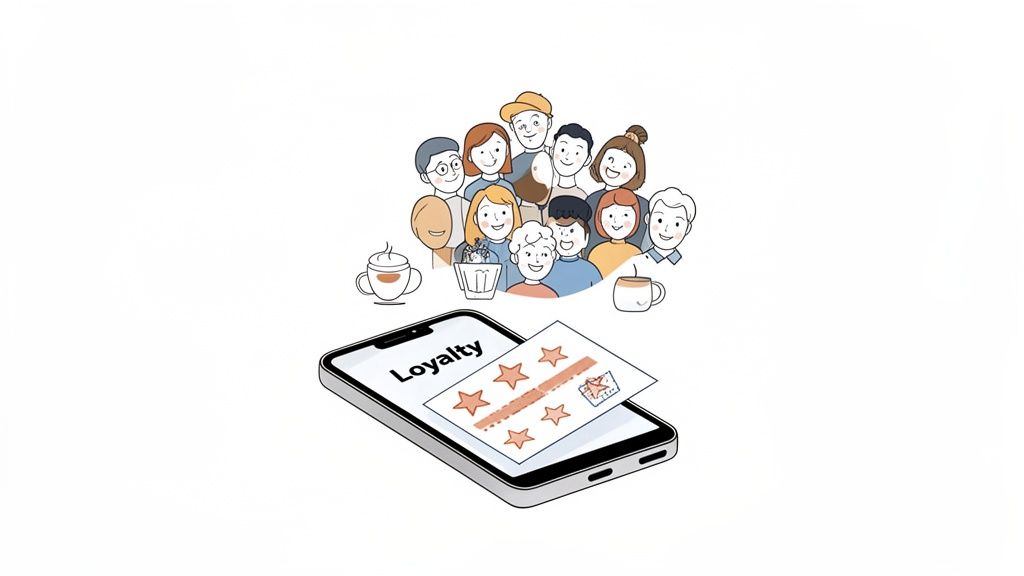
For any e-commerce brand today, the real challenge isn't just getting that first sale; it's turning that first-time buyer into a loyal, lifelong fan. With customer acquisition costs constantly on the rise, the secret to healthy, sustainable growth is keeping the customers you’ve already won over. This is exactly where a well-crafted points and rewards system becomes your most powerful tool.
Think of it as the modern-day version of the classic coffee shop punch card. But instead of a basic "buy nine, get the tenth free" deal, today’s loyalty systems are sophisticated engines for engagement. They can transform a simple, one-off transaction into a genuine, lasting relationship with your brand.
From Simple Transactions to Brand Advocacy
A truly effective points and rewards system goes way beyond just rewarding purchases. It creates a two-way value exchange that builds a real connection with your customers. The ultimate aim is to create a program that doesn't just feel like a discount scheme, but one that fosters an emotional tie to your brand.
This guide is for any merchant ready to build that connection. We'll walk you through everything, from the initial design and strategy to a successful launch and the ongoing tweaks that keep it effective. You'll learn how to build a program that not only drives sales but also gets your best customers talking.
When done right, a solid rewards program delivers some major wins:
- Increased Repeat Purchases: Customers who earn points have a built-in reason to come back, directly lifting your revenue.
- Higher Customer Lifetime Value (LTV): By fostering loyalty, you increase how much each customer spends with you over time.
- Enhanced Brand Affinity: A great program makes people feel seen and valued, turning them into your biggest cheerleaders.
A loyalty program isn't just another marketing tactic; it's a fundamental shift in business strategy. The focus moves from chasing new customers at any cost to nurturing the ones you already have, which builds a far more profitable and stable business.
Making It Easy with the Right Platform
In the past, building a program like this was a huge technical headache, often requiring a team of developers. Luckily, that's no longer the case. Modern platforms like Toki have made the entire process incredibly straightforward, putting powerful loyalty tools in the hands of brands of any size.
A dedicated loyalty platform does all the heavy lifting, freeing you up to focus on the creative strategy instead of the technical nitty-gritty. You can set up earning rules, track how everything is performing, and plug the system right into your online store with just a few clicks. This guide will show you exactly how to use these tools to create a powerful engine for growth.
How a Points and Rewards System Actually Works
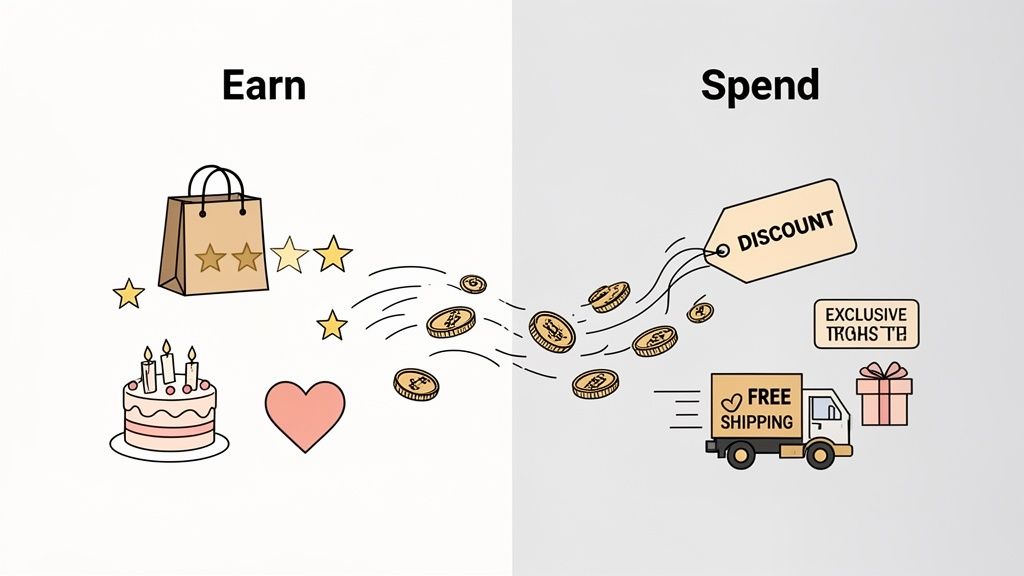
The best way to understand a points and rewards system is to think of it as a value exchange—a structured conversation between you and your customers. It's not about mindlessly handing out discounts. Instead, every action a customer takes is met with a tangible thank you. This whole dynamic rests on two simple ideas that create a powerful loop: how customers earn points and how they burn (or spend) them.
At its heart, the system works like a private currency for your brand. Customers build up a balance by doing things that help your business, and then they cash in that balance for rewards that make them feel valued. Nailing this flow is what turns a basic program into a customer retention powerhouse.
The data backs this up, big time. A points and rewards system is no longer a "nice-to-have"; it's a core part of modern e-commerce. According to a recent market study, 43% of consumers say these programs directly lead them to spend more, while 50% develop a more positive view of a brand that has one. This isn't a one-off interaction, either— 52% of consumers actively engage with their loyalty programs every single week. You can dig into more of these numbers in the 2025 EY Loyalty Market Study.
The Earning Side of the Equation
This is where you get to guide customer behavior. The earning phase is your chance to reward the actions you want to see more of. Sure, making a purchase is the obvious one, but a truly great points system goes way beyond the checkout page. This is where you can get creative and build a real relationship.
Think about it: every time a customer interacts with your brand, there's an opportunity. Each of these moments can become a chance to earn points, transforming your program from a simple sales driver into a genuine engagement hub.
Here are some of the most effective ways to let customers rack up points:
- Make a Purchase: The classic model. For example, offering 5 points for every $1 spent directly encourages bigger and more frequent orders.
- Create an Account: Roll out the welcome mat. Giving new customers a starting balance of points just for signing up makes a fantastic first impression.
- Leave a Product Review: User-generated content is gold. Offer points for honest reviews to build social proof and help other shoppers make decisions.
- Celebrate a Birthday: A simple, personal touch goes a long way. Bonus points during their birthday month shows you’re paying attention.
- Follow on Social Media: Want to grow your community? Reward customers for connecting with you on Instagram, TikTok, or wherever your brand lives online.
The Burning Side: Redeeming for Value
Once customers have a nice stash of points, it's time for the fun part: the "burn." This is the moment of truth where all that earning pays off. If your redemption options are lackluster or hard to get, you'll kill motivation fast. The key is to offer a variety of rewards that feel genuinely appealing.
The best redemption catalogs strike a balance between accessible and aspirational. Customers need small, easy wins to get a taste of the benefits, but they also need exciting, high-value perks to save up for.
Your goal here is to offer a mix that speaks to different types of customers. What excites one person might not move the needle for another, so flexibility is your best friend.
Some of the most popular redemption options include:
- Fixed-Value Discounts: Simple and effective. "500 points = $5 off" is easy to understand and always useful.
- Percentage-Off Coupons: Rewards like "1,000 points = 20% off" are especially tempting for customers planning a larger purchase.
- Free Shipping Vouchers: This is a perennial favorite. Shipping costs are a huge driver of cart abandonment, making this a consistently valuable perk.
- Exclusive Products or Early Access: Make your loyal customers feel like VIPs. Let them use points to unlock products or collections that nobody else can get.
When you get this earn-and-burn cycle right, it feeds itself. Customers are motivated to engage more frequently to earn points, and the act of redeeming those points for something great reinforces their connection to your brand. It makes them want to start the whole cycle all over again.
Key Components of a Modern Loyalty Program
Once you've nailed down the basic "earn and burn" rhythm of your points and rewards system, it’s time to think bigger. A great loyalty program is more than just a simple point-for-purchase exchange; it's a living, breathing ecosystem designed to pull customers deeper into your brand's world.
Think of the following components as powerful upgrades. You can bolt them onto your core program to create compelling goals, build a genuine community, and weave your brand into the daily lives of your customers.
Create Aspirational Goals with Tiered Programs
Tiers are a classic for a reason. They take the core principles of gamification and apply them to shopping, creating a clear path for customers to "level up." As people spend more or engage more often, they unlock new status levels filled with progressively better perks. This sense of achievement is a powerful motivator.
For instance, you could design a simple three-tier system:
- Bronze Tier: The starting line. Every member begins here, earning points and maybe getting a small welcome bonus.
- Silver Tier: This is for your regulars. They might unlock it after spending $250, earning them a point multiplier (like 1.25x points per dollar) and early sale access.
- Gold Tier: The VIP lounge. Reserved for your top spenders, this tier could offer free shipping on everything, exclusive products, and a special annual gift.
This structure works because it gives people something to shoot for. It plays on our natural desire for status and recognition, making your best customers feel valued while encouraging others to climb the ranks. If you're looking for the right software to manage these kinds of structures, our guide on loyalty platform providers is a great place to start.
Deliver Premium Value with Paid Memberships
While most loyalty programs are free to join, a paid or VIP membership flips the script. It asks your most dedicated customers to pay an upfront fee in exchange for instant, high-value benefits. It’s a model popularized by giants like Amazon Prime, and it creates a powerful psychological commitment from day one.
When a customer pays to join your club, they're not just a shopper anymore—they're an investor in your brand. In return, you owe them an experience that's a cut above the rest.
A paid membership shifts the customer mindset from "What can I get for free?" to "How can I maximize the value of my investment?" This leads to higher purchase frequency and a much stronger, more resilient customer relationship.
Imagine a beauty brand offering a $49/year VIP membership. For that fee, members could get:
- Free shipping on every single order, no minimum.
- A permanent 20% discount on all full-priced items.
- A "welcome box" of deluxe samples valued at over $60.
- First dibs on limited-edition product launches.
The membership fee gives you a predictable revenue stream, and the killer benefits keep these high-value customers coming back all year long.
Turn Customers into Advocates with Referral Programs
Let’s be honest: your happiest customers are your best marketers. A referral program simply gives them the tools—and the incentive—to spread the word. It’s a true win-win-win. Your current customer gets a reward, their friend gets a welcome discount, and you get a new customer at a much lower acquisition cost than traditional ads.
The data backs this up. Major brands see explosive growth by leaning into points-based loyalty. Sephora's loyalty members, for example, drive 80% of their total sales. H&M's program saw a staggering 71% year-over-year jump in 2021, swelling to over 120 million members by making rewards easy to earn and redeem. These stats show how a good rewards system turns casual shoppers into repeat buyers.
A classic referral flow is beautifully simple:
- Share: Your loyal customer, Maria, sends her unique referral link to her friend, David.
- Incentivize: David clicks the link and gets $15 off his first order of $50 or more.
- Reward: As soon as David completes his purchase, Maria automatically gets a thank-you reward, like 1,500 bonus points or a $15 coupon for herself.
This approach empowers your customer base to become a trusted marketing channel. Beyond just points, understanding how to use strategic deal structures like coupons, best deals, and lightning deals can add another layer of appeal to your program's incentives.
Stay Top-of-Mind with Digital Wallet Integration
In a world of endless apps and forgotten passwords, convenience is king. Digital wallet integration makes your loyalty program feel effortless. By letting customers add their loyalty pass to Apple Wallet or Google Pay, you put your brand right on their phone’s home screen.
No more digging through emails or logging into a website to check a point balance. It’s right there.
Every time they open their digital wallet to pay for coffee or scan a boarding pass, they see your brand. It's a subtle but constant reminder of their status and the rewards waiting for them. This frictionless experience ensures your points and rewards system is always just a tap away, keeping you top-of-mind for their next purchase.
The Business Case for Launching a Rewards Program
Every new initiative boils down to one simple question: what’s in it for the business? While the bells and whistles of a points and rewards system are nice, their real value is in the concrete results they drive. A well-crafted loyalty program isn't just another line item in the marketing budget; it's a direct investment in your most important asset—your existing customers.
The math is straightforward. It can cost five times more to land a new customer than to keep a current one. A rewards program tackles retention head-on, creating a powerful engine for growth by focusing on the people who already know and like your brand. That shift from acquisition to retention makes for a much healthier bottom line.
When you're pitching the idea internally, you need to show the potential return. For instance, knowing how to measure social media ROI effectively can help justify the resources needed to promote the program and keep members engaged.
Supercharging Customer Lifetime Value
Customer Lifetime Value (LTV) is the total amount of money you can expect a single customer to spend with you over time. A points program is one of the best ways to pump up this critical number. By rewarding repeat business, you give customers a clear incentive to stick with you instead of bouncing to a competitor for their next purchase.
It creates a really powerful cycle. Customers spend money to earn points, then come back to spend those points, and they usually end up buying something else while they're at it. Each purchase makes them more invested in your brand's ecosystem, steadily building their long-term value.
Driving Customer Retention and Purchase Frequency
So, why do rewarded customers stick around longer? It’s all about psychology—reciprocity and the feeling of making progress. As customers watch their points balance grow, they feel like they’re working toward a tangible goal. This "endowed progress effect" makes them hesitant to walk away and start over with another brand.
This little psychological hook has a big impact on buying habits. A customer with a healthy point balance is far more likely to make an impulse buy or choose your store because they're already part of the "game" of earning rewards.
The lifetime value of members who actually spend their points is a whopping 6.3 times higher than non-redeemers. Those who redeem personalized offers spend 4.5 times more annually.
These numbers tell a clear story: active participation in a points and rewards system is a massive indicator of a high-value customer. For Shopify merchants using a platform like Toki, a program tailored to your customers can be a game-changer for your financials.
Fostering Authentic Brand Advocacy
Finally, a truly great rewards program transforms happy customers into a volunteer marketing force. When people feel appreciated and see real value in being a member, they’re far more likely to rave about your brand to their friends and family. That kind of word-of-mouth marketing is pure gold because it comes from a source people actually trust.
You can even formalize this by rewarding actions like referrals or social media shout-outs. You’re not just buying their loyalty; you’re building a genuine community of advocates who are invested in seeing you succeed. To go a bit deeper on this, check out the many benefits of a loyalty program in our dedicated guide.
4. Designing and Launching Your Points System
Okay, so you've got the strategy down. Now for the fun part: bringing your points and rewards system to life. This is where the rubber meets the road, and a successful launch is about more than just flipping a switch. It’s a deliberate process of smart design, careful planning, and, most importantly, clear communication with your customers.
Think of this as your roadmap to building a program that not only runs smoothly but actually gets people excited to join in. The goal is to strike that perfect balance—a system that feels generous to your customers but remains sustainable for your business. It needs to be dead simple to understand, engaging enough to keep them coming back, and secure enough to protect you from headaches down the line.
This flow chart breaks down how rewards directly fuel your ROI. It's a clear path from customer engagement to real business growth through retention, repeat purchases, and turning happy customers into your best marketers.
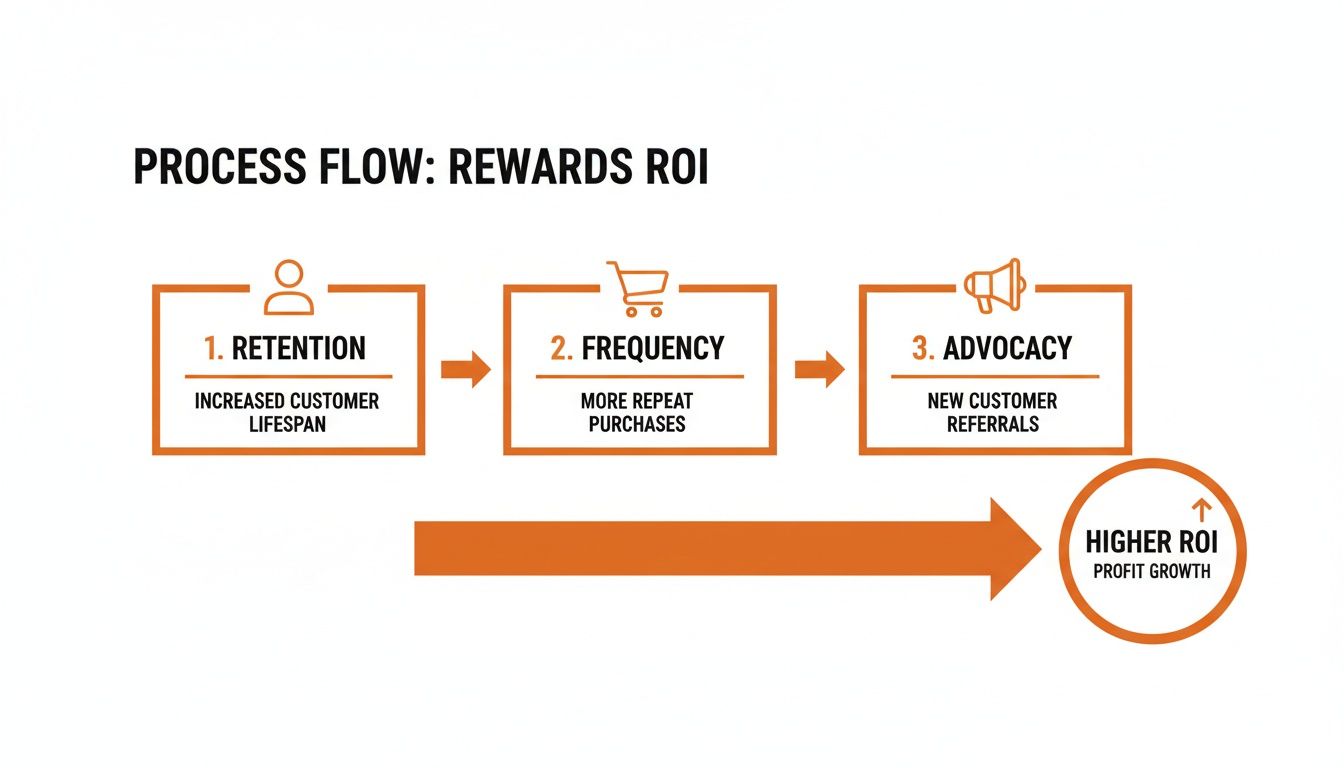
As you can see, each step builds on the last, turning that initial spark of loyalty into a powerful, self-sustaining growth engine for your brand.
Building the Foundation with Smart Design
Before you can launch anything, you need a solid blueprint. The design phase is where you set the rules of the game, making sure your program lines up perfectly with both your financial goals and your customers' expectations.
A great place to start is with customer segmentation. Let’s be real: not all customers are created equal, so their rewards shouldn't be a one-size-fits-all deal. Group your audience based on things like purchase history, engagement levels, or lifetime value. This lets you offer personalized perks that actually mean something to them, like bonus points on a product category they already love.
Next, you'll want to weave in a little gamification. This is all about making participation fun, not a chore.
- Badges and Achievements: Award cool digital badges for hitting milestones, like making five purchases or referring three friends. It's a simple, effective nod of appreciation.
- Challenges: Run limited-time events to drive specific actions. Think "Earn double points on all skincare this weekend!" It creates urgency and excitement.
These little touches add a layer of fun and give people more reasons to interact with your brand.
Establishing Clear Rules and Safeguards
Trust and clarity are everything. If your program is confusing or feels unfair, it’s doomed from the start. Your customers need to know exactly how it works, and you need to protect your investment from misuse.
First up, define your financial and legal guardrails. A big one here is establishing a clear point expiration policy. For instance, you might decide that points expire after 12 months of inactivity. This encourages people to stay active and prevents a massive, lingering liability on your books.
A well-defined expiration policy isn't about taking things away from customers. It’s a necessary tool for keeping your program financially healthy and motivating people to actually use their rewards.
It’s also smart to have some basic fraud prevention in place. Simple checks, like limiting how many points can be earned in a day or flagging accounts with really unusual activity, can shield you from abuse without making things difficult for your real customers.
Your Step-by-Step Implementation Roadmap
With your design and rules locked in, it’s time to launch. Following a clear roadmap helps ensure nothing gets missed. The good news is that modern tools make this much easier than it used to be. For a more detailed guide, check out our post on how to start a rewards program for your business.
- Select Your Platform: Choose a solution that plays nice with your e-commerce store. A tool like Toki can handle all the features you need, from tiers and referrals to slick wallet passes.
- Configure Your Rules: Jump into the platform's dashboard and set up your specific "earn and burn" rates, tier thresholds, and referral bonuses. This is where your blueprint becomes reality.
- Design the User Experience: Customize the look and feel of your rewards widget or landing page. It should feel like a natural part of your brand, not a tacked-on afterthought.
- Promote Your Launch: Don't just build it and hope they come. Announce your new program everywhere—email campaigns, social media, and a big, bold banner on your website to drive those crucial initial sign-ups.
Points programs are always evolving, too. Antavo's recent Global Customer Loyalty Report 2025 found that customers are now way more likely to join programs that use AI for personalization. With 27% of marketing spend now going toward loyalty and CRM, it's clear brands are betting big on these smarter, more engaging systems. You can read the full research on e-commerce loyalty trends to get a sense of where the industry is headed.
Turning Shoppers Into Brand Champions
Let's be honest, a points and rewards system isn't just another marketing gimmick. It's a completely different way of thinking about your business. It takes a simple, one-time purchase and turns it into the beginning of a genuine, long-term relationship.
We’ve walked through how these programs act as powerful growth engines, directly boosting the numbers that matter most to your bottom line. They drive repeat purchases, pump up customer lifetime value, and even build a community of true brand advocates who do the selling for you. A well-crafted loyalty program isn't just a nice-to-have; it's a real competitive edge. It helps you shift your focus from the expensive grind of acquiring new customers to the far more profitable game of delighting the ones you’ve already won.
The Path to Sustainable Growth
Here’s the main takeaway: customer loyalty doesn't just happen. It’s the result of a thoughtful, customer-first strategy that consistently delivers value and makes people feel genuinely seen and appreciated. The good news is, you no longer need a team of developers or a massive budget to pull this off.
A modern points and rewards system isn't just about handing out discounts. It's about creating an entire ecosystem where every click, purchase, and interaction deepens your connection with the customer, turning casual buyers into your most passionate fans.
With the right platform, you can bring all of these powerful ideas to life. You can design a program that’s not only effective and fun for your customers but also incredibly simple for you to manage. This frees you up to focus on what you're best at: creating an amazing brand experience.
The road from a first-time buyer to a lifelong brand champion is paved with positive, rewarding moments. It’s time to start creating those moments and build a loyalty program that doesn't just keep customers around—it becomes a cornerstone of your long-term success.
Ready to start building those lasting relationships? See just how easy it can be by exploring a powerful and intuitive loyalty solution like Toki.
Frequently Asked Questions
Jumping into the world of customer loyalty can bring up a lot of questions. We get it. Here are some straightforward answers to the things merchants ask us most often when they're thinking about a new points and rewards system.
How Much Does a Points and Rewards System Cost?
The price tag can swing quite a bit, but it’s probably more affordable than you imagine. Most modern platforms run on a subscription basis, with different plans tied to the number of customers you have or the volume of orders you process. A smaller, growing store could get started for around $50 per month. On the other end, larger brands that need heavy-duty features like API access and a dedicated support manager might spend several hundred dollars or more.
The real trick is to stop thinking of it as a cost and start seeing it as an investment. When your customer lifetime value and repeat purchase rates climb, that monthly fee should pay for itself many times over.
Is It Difficult to Set Up and Manage?
Not like it used to be. A decade ago, you’d need a team of developers and a hefty budget to build a custom loyalty program. Today, that’s all changed. Platforms like Toki are built for merchants, not engineers. They offer no-code setups that plug right into e-commerce platforms like Shopify in just a few clicks.
Honestly, you can get a solid, working points and rewards system live in less than an hour. The management side is just as simple, with dashboards so intuitive that anyone on your team can tweak point values or add new rewards without ever needing to call a developer.
How Do We Know If Our Rewards Program Is Working?
You have to measure it. Any good loyalty platform comes with an analytics dashboard that does the heavy lifting for you, tracking the key performance indicators (KPIs) that prove your return on investment.
Here are the vital signs you'll want to watch:
- Member Enrollment Rate: How many of your customers are actually signing up? This tells you if your offer is compelling.
- Redemption Rate: What percentage of points are people actually cashing in? A healthy rate, usually 20% or higher, means members genuinely want the rewards you're offering.
- Repeat Purchase Rate: This is a big one. Are program members coming back to buy more often than non-members?
- Average Order Value (AOV): Do your loyalty members spend more per checkout? The answer is often a resounding yes.
- Customer Lifetime Value (LTV): This is the ultimate scorecard. Tracking the LTV of members shows the real, long-term financial impact of your program.
By keeping a close eye on these numbers, you can easily prove the program's value and make smart, data-backed decisions to make it even better over time.
Ready to turn one-time buyers into loyal brand fans? Toki makes it simple to launch a powerful, fully customizable loyalty program that drives repeat sales and builds a real community.