Increasing Customer Loyalty: Proven Shopify Strategies for Repeat Sales
Discover practical steps to increasing customer loyalty on Shopify with proven programs that boost repeat purchases and sustainable growth.
Boosting customer loyalty is about so much more than just throwing discounts at people. It’s about building genuine emotional connections and creating consistently great experiences that turn a one-time buyer into a true fan of your brand. The real magic happens when you understand what your customers actually want and reward them in a way that feels personal, not just like another transaction.
Why Customer Loyalty Is Your Strongest Growth Engine
In the cut-throat world of e-commerce, we all know that getting a new customer can cost five times more than keeping an existing one. That’s a tough pill to swallow. It’s exactly why smart Shopify merchants are shifting their focus. Instead of constantly feeding a leaky acquisition funnel, the most reliable way to grow is by nurturing the customers you’ve already won over.
Think of your loyal customer base as a protective bubble around your brand. These repeat buyers are more than just a dependable stream of revenue—they’re a predictable one.
The Real Economics of a Loyal Customer
The true value of a loyal customer goes way beyond what they spend on a single order. They become your best marketers, your most honest feedback channel, and your shield when things get unpredictable.
Let’s look at the real-world benefits:
- They Spend More: It's a simple truth. Repeat customers spend more money over time. In fact, research often shows a brand's top 10% of customers spend three times more per order than the other 90%.
- They Buy More Often: Loyal customers don't just sit around waiting for your Black Friday sale. They come back again and again because they trust your products and feel a connection to your brand's mission.
- They Become Brand Advocates: A happy, loyal customer is the best marketing you can’t buy. They're the ones leaving glowing reviews, telling their friends about you, and singing your praises on social media.
- They're Less Focused on Price: A new shopper might jump ship for a 10% discount from a competitor. But a loyal customer? They’re sticking with you for the experience, the quality, and the trust you’ve built. That makes them far less likely to leave.
The secret to long-term growth isn't just about finding new customers. It's about turning the customers you already have into a community that feels heard, appreciated, and genuinely invested in your journey. That’s how you build a resilient e-commerce business.
To make this happen, you have to get serious about how to improve customer retention with strategies backed by real data. The entire industry is moving in this direction. The global loyalty management market is already worth around $8.6 billion and is expected to explode to over $18.2 billion by 2026.
This isn't just a fleeting trend; it’s a clear signal that merchants are investing serious resources into building these vital, long-term relationships. If you want to refine your approach, it helps to understand the differences between customer retention and customer loyalty.
For those looking to get started right away, here are some of the most effective and easy-to-implement tactics we'll be covering.
Quick Wins for Increasing Customer Loyalty
| Strategy | Primary Benefit | Ideal for... |
|---|---|---|
| Points Program | Encourages repeat purchases and builds habit. | Brands with high purchase frequency (e.g., coffee, skincare). |
| Referral Program | Lowers acquisition costs by leveraging word-of-mouth. | Businesses with a strong community or unique product. |
| Tiered VIP System | Creates aspiration and rewards top spenders. | Brands in fashion, beauty, or high-end goods. |
| Early Access | Makes customers feel like valued insiders. | Stores that frequently launch new products or collections. |
| Birthday Rewards | Adds a personal touch and drives an easy sale. | Any e-commerce brand looking for simple personalization. |
These strategies are a fantastic starting point. They're practical, proven, and can deliver a noticeable impact without requiring a massive overhaul of your operations.
Designing a Loyalty Program That Actually Sticks
A well-designed loyalty program is more than just a discount machine. It's how you make customers feel seen, appreciated, and genuinely connected to your brand. The right program structure doesn't just give away freebies; it encourages repeat business, builds powerful habits, and turns casual shoppers into your biggest fans.
But with so many options out there, where do you even start? The secret is to align the program's mechanics with your business model and your customers' buying habits. Let's break down the three most effective loyalty models for e-commerce and figure out which one is the perfect fit for your store.
This whole approach is built on a simple truth: focusing on your existing customers is a smarter, more predictable way to grow than constantly chasing new ones.
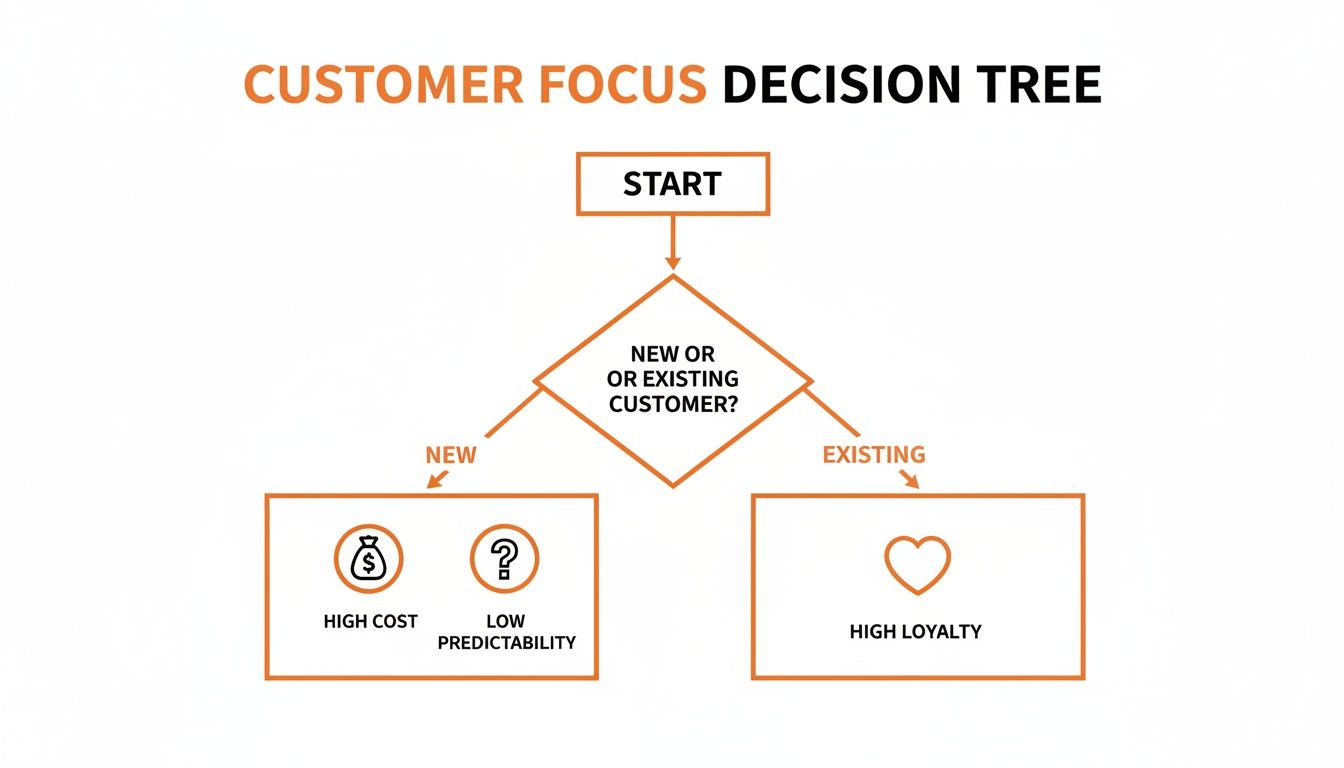
As the flowchart shows, acquiring new customers is expensive and unpredictable. Pouring that energy back into the people who already shop with you is a direct line to stronger loyalty and more reliable revenue.
The Classic: Points-Based Systems
This is the bread and butter of loyalty for a reason—it’s intuitive, effective, and people just get it. Customers earn points for actions like making a purchase, leaving a review, or following you on social media. They can then cash in those points for rewards like discounts, free products, or exclusive merch. Simple.
This model is a home run for brands with a high purchase frequency. Think coffee, skincare, or supplements. It creates a satisfying little dopamine hit where every transaction feels like you're making progress toward a tangible reward.
Don't just take my word for it. The data shows that 60% of 18-24-year-olds are fans of points programs, and a full 20% would consider leaving a brand if it got rid of its program. For Shopify merchants using a platform like Toki, this is a huge opportunity to offer customizable points, referrals, and even digital wallet passes for instant rewards. That’s a big deal when you consider that 78% of consumers want immediate online access to their loyalty perks.
Pro Tip: Don't limit points to just purchases. Award them for engagement, too. Things like creating an account, celebrating a birthday, or leaving a product review keep customers connected to your brand even when they aren't buying. Want more ideas? Check out our deep dive on building a points-based loyalty program.
The Aspirational: Tiered VIP Programs
Tiered programs tap into our desire for status and achievement. By spending more or engaging more often, customers "level up" through different tiers—like Bronze, Silver, and Gold—unlocking better and better perks along the way.
This strategy works wonders for brands in aspirational markets like fashion, high-end beauty, or premium home goods. The tiers give your best customers the recognition they deserve while giving everyone else a clear, motivating goal to strive for.
Here’s how that might look:
- Bronze Tier (Entry-Level): Basic points earning, maybe a small birthday gift.
- Silver Tier (Mid-Level): All the Bronze perks, plus free shipping and early access to sales.
- Gold Tier (Top-Level): The whole package—exclusive products, a dedicated support line, or invitations to members-only events.
The psychology here is incredibly powerful. The fear of missing out (FOMO) on the next tier's benefits is a strong motivator that encourages customers to consolidate their spending with you to climb the ladder and keep their status.
The Ultimate: Paid Memberships
Think of a paid membership as the inner circle of your brand. Customers pay a recurring fee (monthly or annually) to join an exclusive club that provides immediate, high-value benefits. This isn't about slowly earning rewards; it's about buying into a premium experience from day one.
Amazon Prime is the most famous example. You pay the fee and instantly unlock a suite of perks like free two-day shipping and streaming services. For your e-commerce store, this could translate to:
- An annual fee that unlocks free shipping on every single order.
- A monthly subscription for a "member's price" discount across your entire store.
- Exclusive first-dibs access to limited-edition product drops.
This model is best suited for brands that already have a loyal following and a product line that encourages frequent repeat buys. It creates a predictable, recurring revenue stream and essentially locks in your best customers. When the perks are good enough, shopping anywhere else just doesn't make sense. The key is to make sure the value of the benefits feels like an absolute steal compared to the cost of the membership.
Ditch the Discounts and Build a Real Community
Points and discounts are great, but they're just the starting point. If you want to build a truly loyal customer base, you have to move past simple transactions and start forging genuine emotional connections. The real goal is to make your customers feel like they're part of something special—insiders in a community, not just shoppers at a store.
This is the secret sauce that separates a good loyalty program from a truly great one. It’s about crafting an experience that’s memorable, engaging, and personal. When you get this right, you're not just getting another sale; you're creating a lifelong brand advocate.
Don't underestimate the power of that emotional bond. An incredible 70% of emotionally engaged consumers spend up to twice as much with brands they love. That’s a massive leap compared to the 49% with low engagement. This is exactly why modern e-commerce platforms like Toki are built with integrated gamification and community tools baked right in—they know that's where the real loyalty is built. You can dig into more of these powerful findings on customer loyalty statistics if you want to see the data for yourself.
Make Engagement Fun with Gamification
Gamification is all about injecting a little bit of play and healthy competition into the shopping experience. It makes things way more interactive and, frankly, a bit addictive. Instead of just passively collecting points, customers are actively chasing goals and hitting milestones, which feels much more rewarding.
Here are a few ways I’ve seen this work brilliantly:
- Milestone Badges: Award digital badges when customers do something notable. Maybe it’s for their 10th purchase, their first anniversary with your brand, or for leaving five product reviews. These little badges act as status symbols they can be proud of.
- Progress Bars: Nothing gets people moving like seeing a goal in sight. Show customers a progress bar inching closer to their next reward. It’s a powerful psychological nudge that encourages them to take that next step, whether it's another purchase or a review.
- Interactive Challenges: Run limited-time events like, "Spend $100 this month to unlock double points" or "Refer two friends to get a free product." This creates a sense of urgency and fun while driving the exact behaviors you want to see.
These small, engaging interactions make customers feel seen and valued in a way a simple 10% off coupon never will.
Cultivate a Vibe of Exclusivity
One of the most powerful ways to build a community is by making your best customers feel like VIPs. This means creating exclusive spaces and perks that the average shopper can't access. Exclusivity is a potent tool; it transforms customers into true members who feel like they're on the inside.
This feeling of being an "insider" is a cornerstone of deep-seated customer loyalty. It’s about belonging, not just buying.
A brand is no longer what we tell the consumer it is—it is what consumers tell each other it is. Creating a space for your top advocates to connect with each other amplifies their positive sentiment and builds a self-sustaining community around your products.
Imagine a skincare brand creating a private Facebook group or Slack channel just for its Gold Tier members. Inside this exclusive community, they could offer things like:
- Direct Q&A sessions with the brand's founders.
- Chances to vote on new product scents or packaging designs.
- Early sneak peeks of new launches before anyone else knows about them.
This strategy costs next to nothing to pull off but delivers enormous value. It validates your customer's loyalty and gives them a social reward that goes way beyond a discount. By layering these kinds of engagement tactics, you create a sticky brand experience that your competitors will find almost impossible to copy.
Turning Loyal Customers into a Growth Channel
Think about your best customers. They've bought from you, they love what you do, and they trust you. Their personal recommendation to a friend is worth more than any ad you could ever buy.
A referral program is how you bottle that magic. Instead of just crossing your fingers and hoping for word-of-mouth, you build a system that actively encourages and rewards your customers for spreading the word. It transforms passive fans into an active, low-cost growth engine for your business.
Crafting an Irresistible Two-Sided Incentive
Here’s where a lot of programs miss the mark: they only reward the person doing the referring. The real secret to a program that actually gets used is a dual-sided reward. You need to give the friend a compelling reason to make their first purchase, too.
A one-sided offer can feel a bit selfish. But when your customer can give their friend a genuine discount, it feels like they're sharing a gift, not just shilling for a reward. That small psychological shift makes all the difference.
A structure I’ve seen work wonders is the classic "give-and-get" model:
- For the Referrer: Give them something they’ll actually use after their friend buys. Think a meaningful store credit ($20 off), a popular free product, or a big drop of loyalty points.
- For the New Customer: Give them a warm welcome with an immediate offer. A percentage discount, like 20% off their first order, is often a great choice because it feels more valuable as their cart size increases.
This "give $20, get $20" approach creates a perfect win-win. Your current customer feels generous, and the new one feels like they’ve just been let in on a great deal.
Promoting Your Program Without Being Pushy
A great referral program is useless if nobody knows about it. The trick is to promote it at the moments when your customer is feeling happiest and most excited about your brand.
Weave your referral messaging into the natural flow of the customer journey.
- On the Post-Purchase Page: Right after they click "complete order," that's peak excitement. A simple banner saying, "Love it? Share with a friend and you both get $20 off" is incredibly effective here.
- In Email Workflows: Add a small, on-brand section about the referral program to the footer of your shipping and delivery confirmation emails. It’s a simple, non-intrusive reminder.
- In Your Loyalty Hub: Make your referral program a core part of their customer account page. Frame it as just another perk of being a loyal customer, right alongside earning points.
The best referral programs don't feel like a marketing campaign. They feel like an exclusive perk for being part of the community, turning advocacy into a natural next step for your biggest fans.
Referral vs. Affiliate Programs: What's the Difference?
People often use these terms interchangeably, but they’re built for very different audiences and goals. Knowing the distinction is key to picking the right strategy for your brand.
A customer referral program is for your actual customers and fans. It's casual, runs on genuine enthusiasm for your products, and usually pays out rewards in store credit or freebies. The goal is to get your entire customer base to bring in their friends and family.
An affiliate program is a more structured business partnership. You team up with content creators, influencers, or professional marketers who promote your products to their own audience. They're motivated by cash commissions and use specific tracking links to drive sales at a much larger scale.
Here’s a quick breakdown:
| Feature | Customer Referral Program | Affiliate Program |
|---|---|---|
| Participants | Existing customers and brand fans | Influencers, bloggers, content creators |
| Primary Incentive | Store credit, discounts, free products | Cash commission (% of sales) |
| Relationship | Informal, based on brand satisfaction | Formal, business partnership |
| Promotion Method | Personal sharing (email, DMs) | Public content (blog posts, videos) |
For most e-commerce brands, a customer referral program is the perfect place to start. It taps into your most authentic source of marketing: happy customers. Once that's running smoothly, you can explore an affiliate program to work with professional partners and scale your reach. Tools like Toki can help you manage both, automating the tracking and payouts to make it all feel effortless.
Weaving a Seamless Omnichannel Loyalty Experience
For today's brands, the line between online shopping and walking into a physical store has all but disappeared. Your customers don't see separate channels; they just see your brand. They expect a fluid, connected experience no matter how they choose to shop.
A clunky loyalty program that only works online—or worse, is totally different in-store—is more than just an inconvenience. It’s a major roadblock that tells your best customers you don’t have your act together.
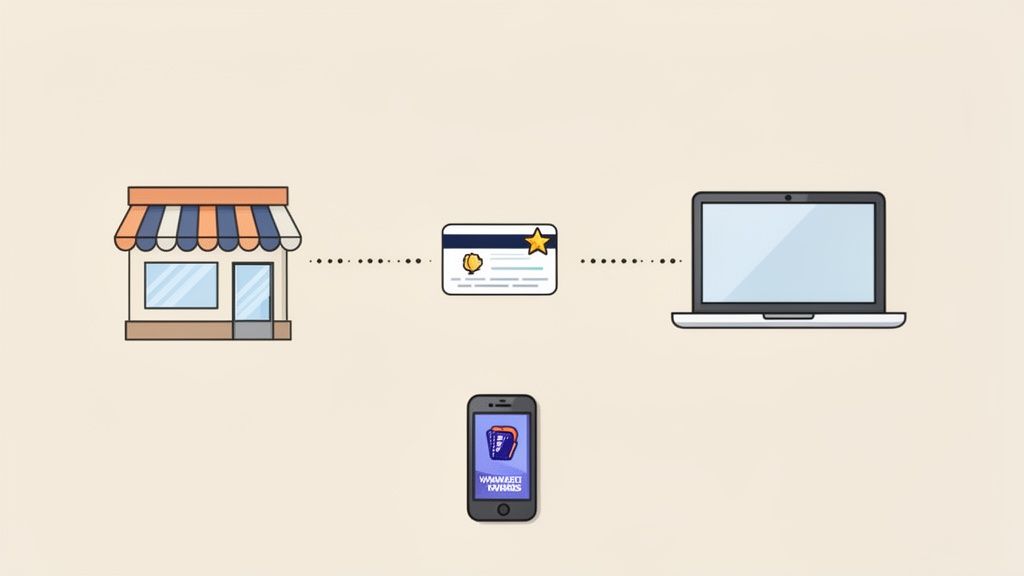
A truly seamless omnichannel strategy means a customer’s loyalty status, points, and rewards follow them everywhere. Whether they're browsing on a laptop at home or using your app in one of your brick-and-mortar locations, the experience has to feel the same. This kind of consistency is what builds real trust and makes engaging with your brand feel completely effortless.
Bridging the Digital and Physical Divide
So, what's the biggest hurdle? Getting your online loyalty program to talk to your in-store point-of-sale (POS) system. When these two systems are siloed, you’re creating friction. A customer might rack up points online only to find they can’t use them in your store, leading to instant frustration and a fractured brand image.
Integrating your e-commerce loyalty platform with your POS is the absolute first step. This ensures that every purchase, regardless of where it happens, feeds into a single, unified customer profile. Think about it: a customer should be able to buy a product in-store and see their points balance update on their phone moments later. No delays, no excuses.
A successful omnichannel loyalty program makes the technology invisible. The customer shouldn't have to think about where they earned their points, only about how they want to use their rewards.
This unified approach taps directly into a core customer expectation. While 59% of consumers say high-quality products are their top reason for loyalty, a memorable experience is right behind. A disjointed program is memorable for all the wrong reasons.
The Magic of Digital Wallet Passes
One of the most effective tools for building this bridge is the digital wallet pass, like those for Apple Wallet and Google Wallet. Instead of forcing customers to remember a login or carry a flimsy plastic card, a digital pass puts their loyalty status right on their phone.
This completely changes the in-store redemption game. Here’s how it usually plays out:
- Effortless Enrollment: Customers can add their loyalty card to their digital wallet with a single tap from an email, a text message, or your website. Done.
- Smart Reminders: The pass can use location services to pop up on the customer's lock screen when they're near one of your stores, reminding them of the rewards they have waiting.
- Frictionless Checkout: At the counter, the customer just shows the QR code on their wallet pass. The cashier scans it, and the POS system instantly applies their points or discounts. It's that simple.
This small touch has a massive impact on customer perception. It’s a key factor in building loyalty for any brand with a physical footprint. Platforms like Toki are built specifically to handle this integration smoothly, connecting your Shopify store to various POS systems to create that essential, unified customer journey.
How to Measure and Optimize Your Loyalty Program
Launching a loyalty program without a clear way to measure its impact is like flying blind. You’re spending time and money, but are you actually getting results? Moving from guesswork to data-driven decisions is what separates a program that’s just a cost center from one that becomes a predictable engine for growth.
The right metrics tell you the story of your program's health. By tracking just a few key performance indicators (KPIs), you can get a surprisingly clear picture of what’s working, what isn't, and where the real opportunities are hiding.
Defining Your Core Loyalty Metrics
To get started, don't overwhelm yourself. Just focus on a handful of metrics that directly connect program activity to your bottom line. These will be your north stars, guiding every decision you make about rewards, tiers, and communication.
Three of the most important metrics to watch are:
- Repeat Purchase Rate: This one is simple but powerful. It’s the percentage of your customers who come back to buy again. If this number is climbing after you launch your program, you’re on the right track.
- Customer Lifetime Value (CLV): CLV is the total amount of money a customer is expected to spend with you over their entire relationship. The big question to answer here is: do loyalty members have a higher CLV than non-members? If they do, your program is working.
- Redemption Rate: This shows you how many of the points you’re giving out are actually being used. A low rate can be a red flag. It might mean your rewards aren't exciting enough, or they're too hard to earn.
These data points give you a solid baseline. To dive deeper into turning this information into a full-blown strategy, check out our complete guide to loyalty program analytics.
To give you a clearer picture, here are some of the most critical KPIs you should be tracking.
Key Loyalty Program KPIs and What They Mean
This table breaks down the essential metrics for measuring loyalty program success. Think of it as your program's dashboard—a quick way to check its health and performance at a glance.
| Metric | What It Measures | Why It Matters |
|---|---|---|
| Repeat Purchase Rate (RPR) | The percentage of customers who have made two or more purchases. | Shows if your program is effectively encouraging customers to return. A rising RPR is a strong sign of success. |
| Customer Lifetime Value (CLV) | The total projected revenue a customer will generate throughout their entire relationship with your brand. | Your loyalty program's main goal is to increase CLV. Comparing the CLV of members vs. non-members proves ROI. |
| Redemption Rate | The percentage of loyalty points or rewards that are actually redeemed by customers. | A low rate can signal that your rewards aren't compelling or are too difficult to achieve. It’s a direct measure of engagement. |
| Average Order Value (AOV) | The average amount customers spend per transaction. | Are loyalty members spending more per order? They should be, especially if you offer incentives for hitting spending thresholds. |
| Purchase Frequency | How often a customer makes a purchase over a specific period. | A successful program should shorten the time between purchases, keeping your brand top-of-mind. |
Tracking these metrics isn't just about collecting data; it's about having the right information to make smart, profitable decisions for your business.
From Data to Actionable Improvements
Once you have a handle on these numbers, the fun part begins: optimization. This is where you use what you’ve learned to make your program even better.
A great place to start is with A/B testing your rewards. You could pit a 15% off coupon against a $10 off coupon for the same point value. Which one drives more redemptions? Which one leads to a higher cart value? You'd be surprised how small changes can produce big results.
The most effective loyalty programs are never static. They evolve based on real customer data, constantly being refined to better meet customer needs and deliver a stronger return on investment for the business.
Another game-changing tactic is customer segmentation. Stop treating all your loyalty members the same. Dig into your data to create groups like "High-Value VIPs" or "At-Risk Customers."
From there, you can send highly targeted offers. Give your VIPs exclusive early access to a new product drop. Send a "we miss you" bonus point offer to re-engage customers who haven't purchased in 90 days. This kind of personalization makes people feel seen and valued, which is the very foundation of true loyalty.
Got Questions? Let's Talk Loyalty.
Jumping into the world of customer loyalty can feel like a big step, and you probably have a few questions. I've heard them all from merchants just like you. Here are some straight answers to the most common ones I get asked.
How Quickly Will I Actually See Results?
This is the big one, right? While you won't double your repeat purchase rate overnight, you should start seeing some promising signs within the first 30 to 90 days.
Look for early indicators like a jump in customer account sign-ups, more email opt-ins, and the first few rewards being redeemed. These are the green shoots that show your program is resonating.
The real, meaningful impact on metrics like Customer Lifetime Value (CLV) and repeat purchase rates usually becomes clear around the six-month mark. By then, your customers have had time to really engage with the program and it's become a natural part of their shopping habit.
What's the Single Biggest Mistake I Could Make?
Hands down, the most common pitfall is making your program too complicated. Customers are busy. If they need a calculator to figure out your points system, they’ll just give up.
Keep it dead simple. A structure like 1 point per $1 spent is easy to understand. Make sure the first tier of rewards feels within reach. If a reward seems impossible to earn, it won't motivate anyone—in fact, it'll probably just frustrate them.
Your loyalty program should feel like a fun bonus, not a homework assignment. Keep it simple and make the value obvious. That’s how you get people to not just sign up, but to actually stick around.
Is a Loyalty Program Worth It for a Small Store?
Absolutely. I'd argue it’s even more critical for a smaller, growing brand. When you're just starting out, every single customer relationship is gold. A loyalty program is your best tool for turning those early buyers into lifelong fans.
For a small store, a program gives you a structured way to:
- Learn from your first true fans by gathering data on what they buy and when.
- Nudge first-time buyers over the line to make that all-important second purchase.
- Build the seeds of a community by making your early adopters feel seen and valued.
Starting a program early sets the tone for your brand. It shows you care about your customers from day one, which is a massive advantage. Trust me, your first 100 loyal fans will do more for your business than 1,000 people who only buy once.
Ready to turn casual shoppers into brand advocates? With Toki, you can get a beautiful, powerful loyalty and referral program running in minutes. It's time to start building relationships that last.