Build a Points Based Loyalty Program That Drives Revenue
Discover how to design, launch, and optimize a points based loyalty program. Learn proven strategies to boost customer retention and drive real revenue.
At its most basic, a points-based loyalty program is a marketing tool that rewards customers for sticking with your brand. They earn points for things like making a purchase or even just engaging with you on social media, and later, they can cash those points in for real rewards.
Think of it as a digital punch card, but one that does so much more than just track purchases. It turns the simple act of shopping into a kind of game, giving customers a real reason to come back and building a much stronger bond between them and your business.
What is a Points-Based Loyalty Program?
The whole system is built on a straightforward value exchange. When customers show their loyalty by shopping with you again and again, you thank them with a special currency—points—that has tangible value within your brand's world. This isn't just about handing out discounts. It's about building a system that makes your customers feel seen and valued, giving them a clear incentive to pick you over the competition.
Let's use a classic example: two coffee shops right next to each other. Both have great coffee, same prices. But one gives you points for every dollar you spend, points you can save up for a free latte. That simple little mechanic taps into a powerful psychological trigger. The closer we get to a goal, the harder we push to reach it. Suddenly, that free coffee isn't just a nice-to-have; it's a target, making it way more likely you'll walk into that specific shop.
It's More Than Just a Transaction
This is how you shift the relationship from purely transactional to something more personal. By rewarding your customers, you're telling them you appreciate their business and making them feel like part of an exclusive club. A well-thought-out points-based loyalty program creates a feeling of progress and accomplishment, which are huge drivers of human behavior. It transforms shopping from a chore into an engaging experience where every dollar spent gets them closer to a future perk.
This kind of consistent engagement is what helps you cut through the noise in a packed marketplace. The data doesn't lie: loyal customers spend 67% more on average than new ones. That makes customer retention one of the smartest, most cost-effective ways to grow. A points program is the perfect foundation for that strategy because it:
- Brings customers back more often: They want to rack up points faster.
- Increases what they spend: People will often toss an extra item in their cart just to hit a point milestone.
- Builds a genuine connection: The program creates a cycle of positive reinforcement, tying your brand to feelings of reward and satisfaction.
The Strategic Engine for Your Growth
When you get right down to it, a points program is a powerful tool for gathering incredibly useful customer data. Every point earned and every reward redeemed tells you something about what your customers like, how often they buy, and what really gets them excited. This insight is gold.
It allows you to start personalizing their experience with targeted offers that actually mean something to them, which only strengthens their loyalty. For any e-commerce brand, this creates a feedback loop that powers smarter marketing, drives real growth, and ultimately boosts the lifetime value of every single customer.
Designing the Core Economics of Your Program
At its heart, a points-based loyalty program is a miniature economy. For it to thrive, you have to get the fundamentals right—the rules that control how customers earn and spend points. Nail this, and you'll build a system that keeps customers happy without sacrificing your profit margins.
Think of your points as a special currency only available at your store. Your first job is to give that currency a clear, straightforward value. This decision is the bedrock of the entire program.
A great starting point is to keep the math simple for everyone. For instance, setting a value where 100 points = $1 makes it incredibly easy for shoppers to see the real-world value of their loyalty. They can quickly calculate how much they’re earning and what their points are worth.
This infographic breaks down just how powerful a well-designed program can be for your business, touching on growth, customer connection, and engagement.
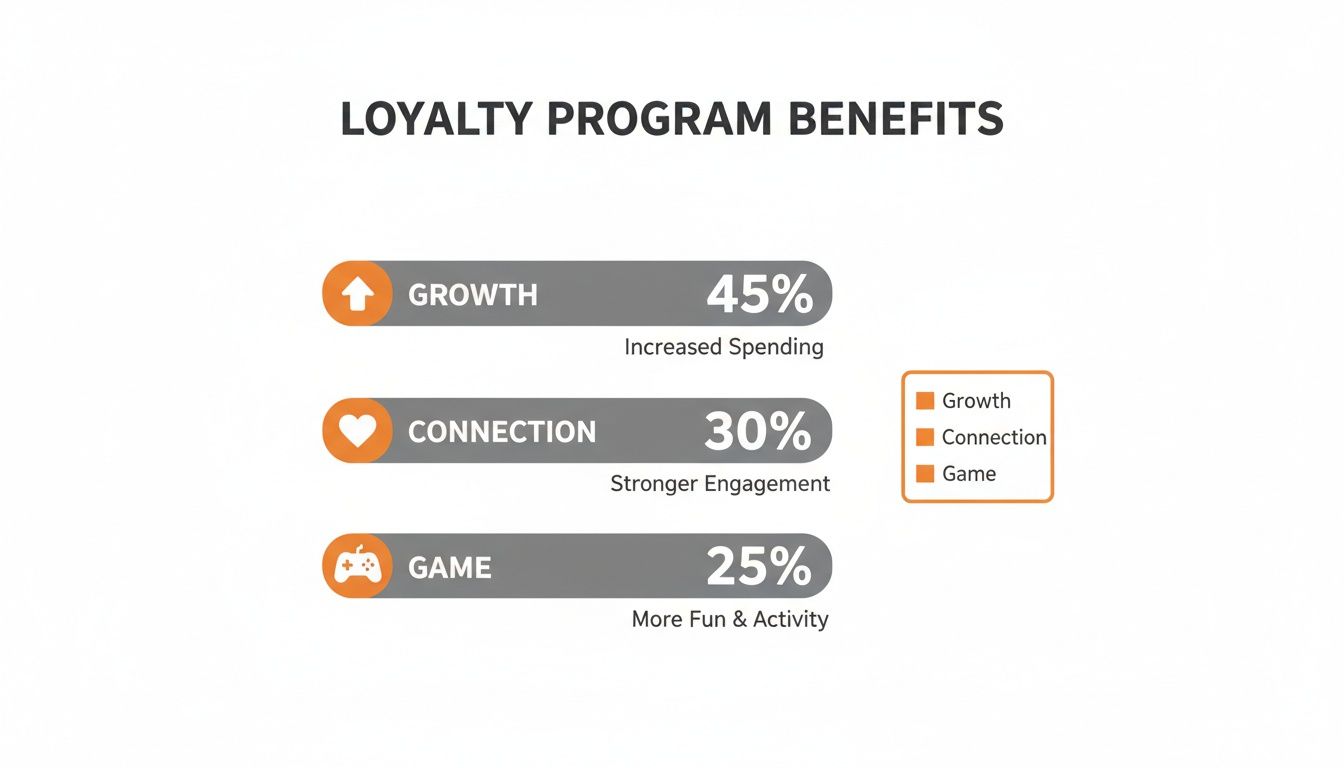
As you can see, these programs are much more than just a discount system; they’re a proven engine for growth that makes shopping more fun and rewarding.
Setting Your Earn and Spend Rules
Once you've decided what your points are worth, you need to figure out how customers get them. This is your earn rate—how many points a customer gets for every dollar they spend.
For example, if you offer 5 points for every $1 spent and 100 points equals $1, you're essentially giving customers a 5% reward on their purchases. The key is finding the sweet spot. It needs to be generous enough to feel worthwhile but sustainable for your bottom line.
A loyalty program's earn rate isn't just a number—it's a reflection of your brand's generosity and a key lever for influencing customer spending behavior. Setting it too low can make rewards feel unattainable, while setting it too high can erode profits.
To help you visualize how this works, here are a few different models you could adopt.
Sample Point Value and Reward Structures
This table illustrates different economic models for a points program, showing how earn rates and redemption values can be structured to fit various business goals and profit margins.
| Model | Points Earned per $1 Spent | Point Value (100 points = ?) | Example Redemption | Best For |
|---|---|---|---|---|
| Generous (5% Reward) | 10 | $2.00 | 500 points = $10 discount | Brands focused on rapid growth and high customer lifetime value. |
| Standard (2% Reward) | 5 | $1.00 | 1,000 points = $10 discount | A balanced approach suitable for most e-commerce businesses. |
| Conservative (1% Reward) | 2 | $0.50 | 2,000 points = $10 discount | Businesses with tight margins or high-ticket items. |
These are just starting points, of course. The best model depends entirely on your products, margins, and what you want to achieve with your program.
Beyond simple discounts, you can get creative and build a reward menu that speaks to different customer desires.
- Exclusive Products: Offer limited-edition items that can only be bought with points. This creates a powerful sense of scarcity and belonging.
- Early Access: Let your loyal members be the first to shop new collections or sales, making them feel like true insiders.
- Experiential Rewards: Go beyond products. Offer unique experiences like a one-on-one styling session or an invitation to a brand event.
These non-monetary rewards often feel far more valuable than a simple discount and can forge a much stronger emotional connection with your brand. For a deeper dive into this, check out our guide on how to create a reward points system.
Managing Points Liability
Here’s a crucial financial concept you can’t ignore: points liability. This is the total value of all the unredeemed points your customers are holding. On your balance sheet, it's technically a debt your company owes its members.
Keeping this liability in check is essential to making sure your program remains a profit driver, not a financial headache. A points expiration policy is a smart and common way to manage this. For instance, having points expire after 12 months of inactivity encourages customers to stay engaged and prevents that liability from spiraling.
The industry is already moving in this direction. A staggering 78.6% of program owners plan to overhaul their systems in the next three years to improve financial performance. And the data shows it works: 80% of businesses with loyalty programs see a positive ROI, with an average return of 4.9X on their investment. For Shopify stores, platforms like Toki are designed to help capture these gains with customizable points rules and clear analytics.
Driving Engagement with Tiers and Gamification
Once you’ve hammered out the basic economics of your points program, it’s time for the fun part: making it exciting. A simple earn-and-burn system works, sure, but it doesn’t create the emotional connection that turns casual shoppers into die-hard fans. That's where loyalty tiers and gamification come in. They transform the simple act of collecting points into a compelling experience.
Think of a standard program as a flat, straight road. It gets you where you're going, but it's not a memorable drive. Tiers add hills and milestones, giving your customers something to aim for. Gamification sprinkles in fun challenges and surprise rewards, making the journey itself enjoyable. Put them together, and you have a powerful engine for long-term customer engagement.
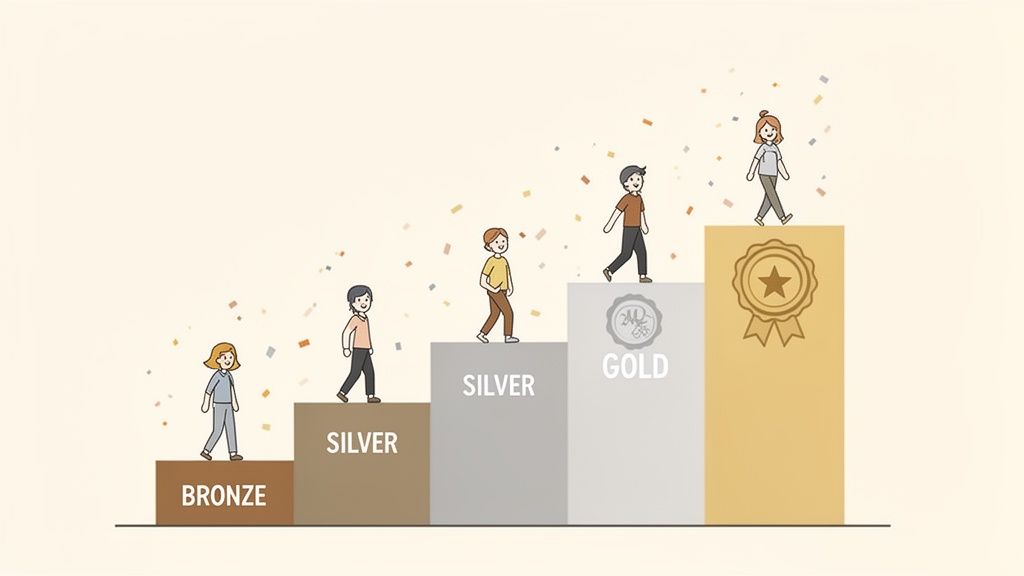
These strategies work because they tap into fundamental human psychology. We're wired to appreciate progress, status, and achievement. When customers see a clear path to better perks, they’re far more motivated to increase how often they buy—and how much they spend—to get there.
The Power of Loyalty Tiers
Loyalty tiers are all about rewarding your best customers with progressively better benefits. By setting up levels—think Bronze, Silver, and Gold—you create a clear ladder for customers to climb. Each new tier unlocks more exclusive perks, making them feel recognized and genuinely valued for their loyalty.
The secret to a great tiered system is making the benefits truly desirable. Your entry-level tier can be simple, but the higher tiers need to offer serious value to be motivating.
- Bronze Tier (Entry Level): This is where everyone starts. The benefits are straightforward, like earning a standard number of points for every dollar spent.
- Silver Tier (Mid-Level): Customers reach this tier after hitting a spending or points goal. Perks get better here, like a points multiplier (1.25x points on every purchase) or early access to sales events.
- Gold Tier (Top Level): Reserved for your VIPs, this tier should feel exclusive. Think free shipping on all orders, a dedicated customer service line, or invitations to members-only events.
Tiers shift a loyalty program from being just a discount tool to a status symbol. The goal is no longer just about saving a few bucks; it's about achieving a sense of belonging and exclusivity that keeps your top customers invested.
This structure is a powerful motivator. A customer who’s just a few dollars away from the next tier is incredibly likely to make another purchase to unlock those better benefits. This is known as the "goal-gradient effect," and it’s a proven psychological trigger that boosts customer lifetime value.
Adding Fun with Gamification
While tiers offer a long-term goal, gamification brings in short-term fun and keeps people engaged day-to-day. It weaves game-like mechanics into the program to encourage specific actions, making participation feel less like a marketing scheme and more like a genuinely enjoyable activity. Considering that 73% of shoppers are actively looking for ways to redeem rewards, gamification makes that whole process much more compelling.
There are countless ways to sprinkle these elements into your points program.
Common Gamification Tactics:
- Purchase Challenges: "Buy any two skincare items this month and get 500 bonus points!" These time-sensitive goals encourage customers to try new products or shop more frequently.
- Engagement Badges: Reward customers with digital badges for things other than spending money, like writing a product review or following you on social media. You can attach a small point bonus to each badge, too.
- Birthday Bonuses: A surprise gift of points on a customer's birthday is a simple, personal touch that goes a long way. It builds an emotional connection and often prompts a celebratory purchase.
- Point Streaks: Reward customers for making purchases in back-to-back weeks or months. This helps build a habit around your brand and encourages consistent engagement.
These tactics turn what could be a passive experience into an active, rewarding one. They provide those little dopamine hits that keep your brand top-of-mind and give customers more reasons to interact with you. To dig deeper, you can learn more about how gamification transforms loyalty programs and shapes customer behavior.
By combining the aspirational climb of tiers with the instant fun of gamification, you create a dynamic loyalty experience that keeps customers coming back and helps build a thriving community around your brand.
Learning from the Best: Points Programs in Action
It's one thing to talk about loyalty programs in theory, but it's another to see them working brilliantly in the real world. If you really want to get a feel for what makes a points program click, look at the brands that have absolutely mastered it. By breaking down their strategies, you can borrow from their playbook to build something that genuinely moves the needle for your own store.
These companies didn't just slap a discount system onto their business. They built entire ecosystems that make customers feel seen, appreciated, and excited to return. Their success offers a clear roadmap for any brand aiming to do the same.
The Starbucks Rewards Blueprint
Let's be honest, Starbucks has built one of the most iconic loyalty programs out there. It’s so woven into the customer experience that for millions of people, buying coffee is really about earning "Stars." The real magic is how seamlessly it all works within their mobile app, turning a simple purchase into a fun, game-like interaction.
At its heart, the system is straightforward: you earn Stars for every dollar you spend, and you cash them in for free drinks, food, or merchandise. But where Starbucks gets really smart is how they use the program to encourage specific behaviors.
- Double Star Days: These promotions create a little bit of FOMO, nudging people to stop by on what might otherwise be a slow Tuesday.
- Personalized Challenges: The app will throw out unique missions, like "buy three cold brews this week to earn 50 bonus Stars." This gets customers trying new things and coming back more often.
- Tiered Redemptions: You can cash in a few Stars for something small, like an espresso shot, or save up for a bigger prize. This gives customers a sense of control and constant progress.
And has it worked? Absolutely. Starbucks Rewards now has over 75 million members, and those members account for a staggering 57% of all U.S. sales. On top of that, members spend three times more per visit than non-members. It's definitive proof that a well-built program can completely reshape how customers shop. You can read more about how Starbucks built its loyalty empire on stampme.com.
Sephora’s Beauty Insider Experience
While Starbucks is all about building a daily habit, Sephora's Beauty Insider program is a masterclass in creating exclusivity and community. Yes, it's a points-based system, but its real power comes from mixing tangible rewards with experiences you just can't buy. This approach has been wildly successful—the program is responsible for over 80% of Sephora's total sales.
Sephora gets that its customers are truly passionate about beauty, so it designs rewards that speak directly to that passion.
Sephora’s success teaches a vital lesson: your rewards should be as unique as your brand. By offering exclusive products and experiences, you create a powerful incentive that transcends simple discounts and builds a loyal community.
Members can use their points for all sorts of perks that go way beyond a simple coupon code, making the whole thing much more compelling.
- Reward Bazaar: Think of this as a marketplace with a constantly changing lineup of deluxe samples, limited-edition products, and even unique experiences like a makeover with a pro artist. It keeps things fresh and gives members a reason to keep checking in.
- Exclusive Access: Higher-tier members get early access to new product drops and big sales events, making them feel like genuine insiders.
- Birthday Gifts: It’s a small touch, but the annual birthday gift is a beloved perk that builds an emotional connection and gets people into the store.
Both Starbucks and Sephora prove that a great program is about so much more than just points. It’s about deeply understanding your customer and creating a rewarding experience that fits naturally into their lives.
Measuring Your Program's Success and ROI
Launching a points program is just the first step. The real magic happens when you can actually see how it's affecting your bottom line. A great program isn't just about handing out points; it's a finely-tuned engine for generating a measurable return. By tracking the right numbers, you can prove its value and make smarter decisions to boost profitability.
To really get a handle on how well your program is working, you need to measure its return on investment. This guide offers some practical steps on how to measure marketing ROI effectively. Think of your analytics dashboard as the command center for your loyalty strategy—it gives you the insights you need to steer toward growth.
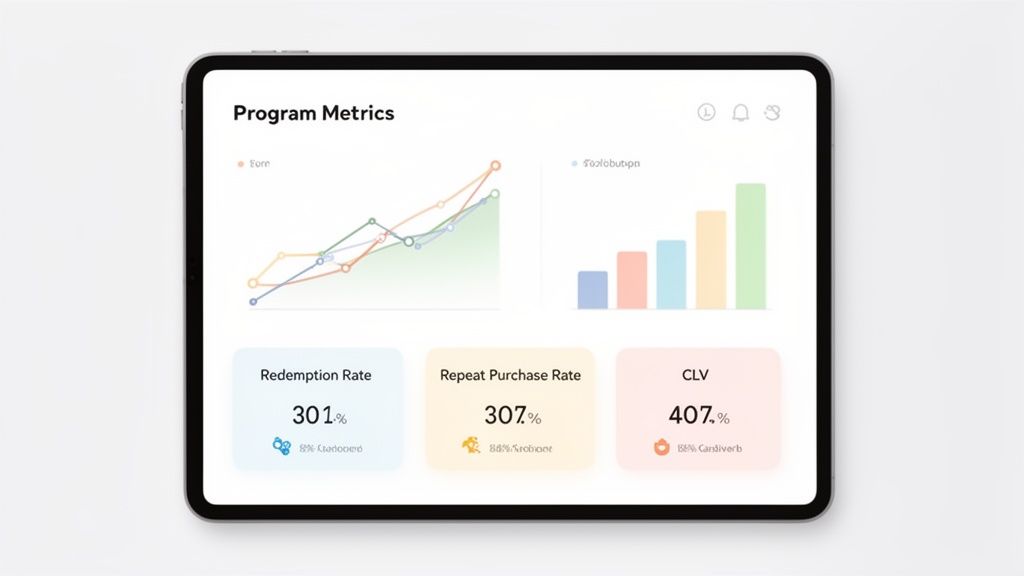
Without clear metrics, you're flying blind. You have no real way of knowing if your efforts are driving sales or just driving up costs.
Key Metrics You Must Monitor
To get a true feel for your program's health, you need to look past the vanity metrics. It's all about focusing on the numbers that tie directly to revenue and customer behavior. These key performance indicators (KPIs) are what tell the real story of your program's success.
- Redemption Rate: This is simple: what percentage of the points you issue are customers actually cashing in? A low rate could signal that your rewards aren't exciting enough, or maybe the redemption process is just a pain.
- Repeat Purchase Rate: This one’s a biggie. It tracks how many customers come back for a second, third, or fourth purchase. If this rate is climbing for your loyalty members, that's a fantastic sign your program is working.
- Customer Lifetime Value (CLV): This is the holy grail. When you compare the CLV of your loyalty members against non-members, you get a clear, direct look at the financial uplift your program is creating over time.
For a deeper dive into the numbers that matter, check out our guide on essential loyalty program KPIs.
Interpreting the Data to Prove ROI
Having the numbers is one thing, but understanding what they mean is where the value is. This is how you connect the dots between your loyalty program and your financial goals, making it easy to prove its ROI to anyone who asks.
A high redemption rate, for example, is almost always a good thing. It shows people are engaged. Recent survey data on global redemption rates reveals that many consumers save up points for big-ticket items, which naturally encourages them to keep shopping with you. In the U.S., where 85% of consumers say points and cashback are top priorities, a well-structured program is non-negotiable if you want their business.
A successful points-based loyalty program doesn’t just increase transactions; it transforms customer behavior. The goal is to see members not only spending more per order but also returning more frequently than the average shopper.
This is where a platform with powerful, built-in analytics really shines. A tool like Toki makes this whole process feel effortless, presenting clear dashboards that bring these critical metrics to life. You can easily track performance, spot trends as they emerge, and make data-backed tweaks on the fly. This creates a continuous optimization loop, ensuring your program isn't just a cost but a powerful profit center for your brand.
Launching Your Program with the Right Tools
Once you've mapped out your strategy, it’s time to bring it to life. Launching a points-based loyalty program used to feel like a massive technical headache, but modern tools have completely changed the game. The right platform can take your most ambitious ideas and turn them into a functional system that fits right into your existing store.
This is the point where your careful planning meets reality. You’re not just looking for a tool that handles the technical stuff; you need a partner that gives you the freedom to build an experience that feels genuinely you. The best solutions grow with you, making it easy to manage everything from day one.
The whole point is to get from A to B without getting tangled up in code or confusing setups. A great platform lets you launch fast, tweak things on the fly, and start seeing a return on your loyalty investment much sooner.
Seamless Installation and Setup
If you're running your store on a platform like Shopify, getting started should be dead simple. Most modern loyalty apps are built for a one-click install, which means you can have the basic skeleton of your program up and running in minutes. This completely removes the barrier that once kept these powerful programs out of reach for smaller brands.
Platforms like Toki are designed to make this first step painless. After you install it, a simple setup wizard walks you through the big decisions—configuring your earn and spend rules, setting up your first rewards, and tweaking the look of your loyalty widget so it matches your site's branding perfectly. This ensures a polished, professional experience for your customers right from the start.
This guided approach takes the guesswork out of the technical side, freeing you up to focus on the strategy that will actually make your program a hit.
Customizing the User Experience
A generic, cookie-cutter loyalty program isn't going to turn any heads. To get customers truly engaged, you have to create an experience that feels like a natural part of your brand. The best tools give you deep customization options so you can control every little detail of the member journey.
This is about more than just changing colors and fonts. You need the ability to:
- Design a Branded Loyalty Page: Build a central home for your program where customers can check their points, see what rewards they can get, and discover new ways to earn.
- Customize On-Site Widgets: Make sure pop-ups and notifications feel like they belong on your site, gently guiding customers to join and redeem without interrupting their shopping.
- Integrate with Email and SMS: Send personal updates about points, new rewards, and exclusive offers through the marketing channels you already use.
This level of control is what separates a program people forget from one they actually use. It lets you weave loyalty into every interaction, strengthening your brand and making members feel like they belong to an exclusive club.
The most effective loyalty programs don't feel like a separate marketing tool; they feel like an integral part of the shopping experience. Seamless integration and deep brand alignment are what turn a simple points system into a powerful retention engine.
Building Your Program Your Way
Modern loyalty platforms give you a set of building blocks to create a system that fits your business like a glove. You're not stuck with a one-size-fits-all solution. Instead, you can pick and choose the features that make the most sense for your customers and your bottom line.
For example, with a tool like Toki, you can set up more advanced features without hiring a developer. This includes creating tiered membership levels that unlock better perks as customers climb the ranks, or launching gamified challenges that reward specific actions like writing a review or following you on social media.
This flexibility is everything. It means your program can grow and change right along with your business. You might start with a simple points-for-purchase system and later add more complex layers like referral bonuses or exclusive access to events. Having the right tools ensures your points-based loyalty program stays fresh, engaging, and valuable for years to come.
Got Questions? We've Got Answers
Even with a solid plan, it's natural to have a few questions before diving into a points-based loyalty program. Let's tackle some of the most common ones we hear from e-commerce merchants to help you move forward with confidence.
What’s a Loyalty Program Going to Cost Me?
Think of it less as a cost and more as an investment. Modern loyalty platforms have made these programs incredibly accessible, with many offering free or low-cost starter plans that can grow with your business. The main costs you'll see are the software subscription and the actual value of the rewards your customers redeem.
But here's the crucial part: you need to look at the return. A well-built program isn't a line item expense; it’s a revenue generator. We often see programs deliver nearly 5x their investment by dramatically increasing customer retention, which is always cheaper than chasing after new customers.
Do Points Programs Even Work Anymore?
They absolutely do, but you can't just slap a generic program on your site and expect magic. The market is full of forgettable, copy-paste loyalty programs. The secret to success today is to create an experience that feels unique to your brand.
It's not really about the points themselves. It's about making your customers feel seen and valued. Use tiers to give them a sense of exclusivity, add fun challenges to keep them engaged, and offer rewards they can't get anywhere else.
When your program feels like a natural extension of your brand, it builds a genuine connection with your customers. That's a competitive edge that a basic "earn 1 point per dollar" system just can't buy.
How Can I Make Sure My Program Doesn't Lose Money?
Profitability isn't an accident; it's built right into the architecture of your program's economics. If you set up your rules thoughtfully, your program will be a profit driver, not a financial drain.
Here are a few guardrails to put in place:
- Protect Your Margins: First things first, do the math on your point value and earn rates. A safe and sustainable starting point is to offer a reward rate that works out to be 1-5% of what a customer spends.
- Manage Your Point Liability: Don't let unredeemed points pile up forever. A clear expiration policy is a must-have. It not only keeps your books clean but also nudges customers to come back and use their points before they're gone.
- Focus on Your Best Customers: Your program's data is gold. Use it to identify and reward your most valuable customers. This ensures you're spending your loyalty budget on the people who have the biggest impact on your bottom line.
Ultimately, a well-planned points-based loyalty program creates a fantastic win-win. Your customers feel appreciated and rewarded, and your business benefits from their repeat business and lasting loyalty.
Ready to turn casual shoppers into lifelong fans? Toki gives you all the tools to launch a beautiful, effective, and profitable loyalty program. Start building your program today.