A Shopify Merchant's Guide to Decrease Customer Churn
A practical guide for Shopify merchants looking to decrease customer churn. Learn proven retention strategies to build loyalty and increase lifetime value.
If you want to stop losing customers, you have to change your game plan. It's time to shift your energy from constantly chasing new buyers to taking care of the ones you've already won over. This is about understanding what a lost customer truly costs you and putting smart, proactive strategies in place to build real, lasting loyalty. For brands on Shopify, this means turning simple transactions into memorable experiences, right from that very first purchase.
Why Customer Churn Is Silently Sinking Your Shopify Store
So many store owners get fixated on their customer acquisition cost (CAC), but they completely miss the metric that's quietly wrecking their business: customer churn.
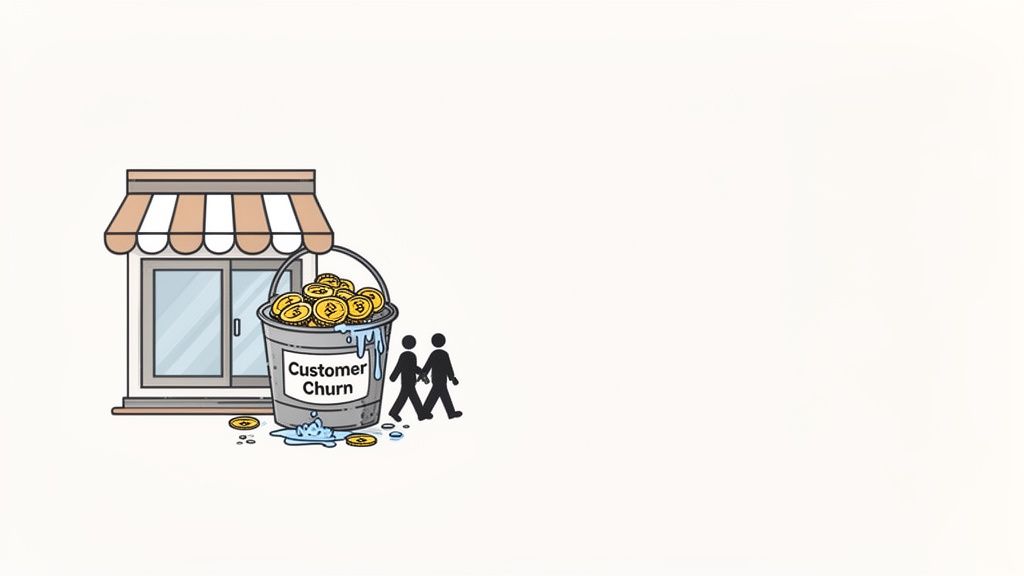
Churn is the silent killer of growth. Think of it as a leaky bucket. You can pour all the money you want into marketing to fill it up, but if you don't plug the holes, you're just treading water. When you can't keep the customers you have, scaling your business feels like a constant uphill battle.
The damage runs much deeper than just one lost sale. When a customer walks away for good, you don't just lose that one transaction. You lose their entire potential lifetime value, any friends they might have referred, and the priceless feedback they could have given you. This vicious cycle makes all your marketing efforts less effective because you're always spending just to replace the people who left.
The Staggering Financial Impact of Churn
In the cutthroat world of e-commerce, the global retail churn rate is hovering around 37% as of 2025. That’s a massive number. With competition this fierce, you can't afford to be passive.
Smart Shopify merchants are fighting back and slashing these defection rates by using things like tiered memberships and point-based rewards. And it works. A well-known study found that returning customers spend an incredible 67% more than brand-new buyers. You’re literally sitting on a goldmine with your existing customer base.
Let’s put that into perspective. If you’re a direct-to-consumer brand with 10,000 customers, churning at that industry average means you're losing 3,700 shoppers every single year. That's potentially millions in repeat revenue down the drain.
"Acquiring a new customer can cost five times more than retaining an existing customer. Improving customer retention by just 5% can increase profits from 25-95%."
This isn't just some textbook theory; it's a hard truth in e-commerce. Every customer who sticks around adds directly to your bottom line through higher order values and more frequent purchases—all without you spending another dime on ads to get them. For a closer look at the numbers, check out our complete guide to customer churn analysis.
This infographic really drives the point home, showing the clear relationship between churn and retention.
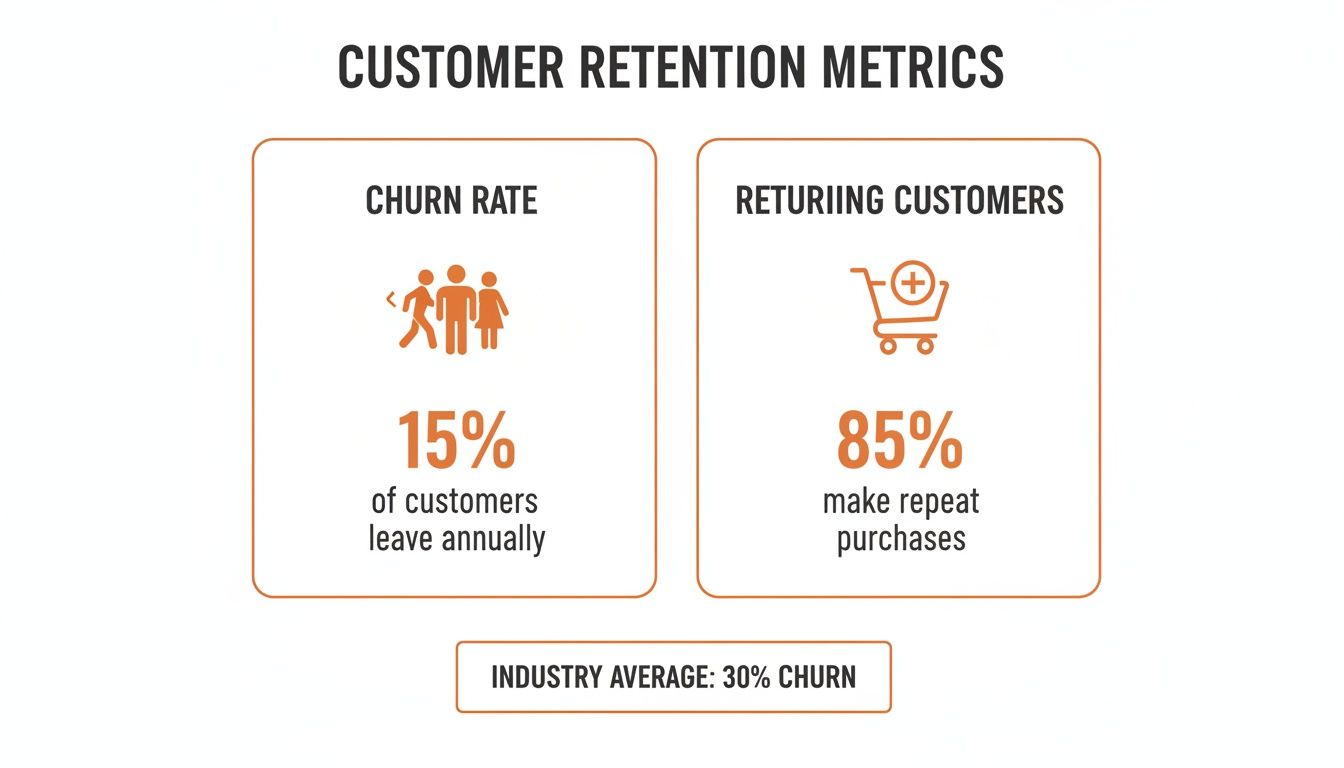
As you can see, a lower churn rate isn't just a vanity metric; it directly leads to a higher percentage of valuable, returning customers who are the engine for sustainable growth.
Customer Churn Impact At-A-Glance
To see just how different the outcomes can be, let's compare two scenarios for a hypothetical store with 10,000 customers and an average annual spend of $200 per customer. One has the industry-average churn, and the other has managed to cut it in half.
| Metric | High Churn Scenario (37% Annually) | Low Churn Scenario (15% Annually) |
|---|---|---|
| Customers Lost Annually | 3,700 | 1,500 |
| Lost Annual Revenue | $740,000 | $300,000 |
| Customers Retained | 6,300 | 8,500 |
| Retained Revenue | $1,260,000 | $1,700,000 |
The difference is stark. The store with lower churn isn't just losing less money; it's retaining an additional $440,000 in revenue every year from customers who stick around. Over time, that impact is massive.
Calculating The True Cost
To really feel the urgency, you need to calculate what each lost customer is actually costing your brand. It's more than just one missed sale.
Think about it this way:
- Lost Future Revenue: What would that customer have likely spent with you over the next year or two?
- Wasted Acquisition Costs: How much did you spend on ads, content, and marketing just to get them in the door? That money is now gone.
- Missed Referral Opportunities: A happy customer might bring you two or three new shoppers. An unhappy one brings zero.
When you add all of that up, the final number is usually pretty shocking. Understanding this real-world cost is the "why" you need to build a powerful retention strategy. In the sections that follow, we'll get into the "how," with actionable steps to turn those one-time buyers into lifelong fans.
1. Craft an Unforgettable First-Purchase Experience
The moment a customer makes their first purchase is a massive fork in the road. One path leads to them being a one-and-done buyer you never hear from again. The other path? That's the start of a long, profitable relationship.
What makes the difference is what happens immediately after they click "confirm order." Your job is to make them feel like they just joined an exclusive club, not just completed a transaction. This is where you have to move past the robotic "Thank you for your order" email. That first interaction is your golden opportunity to stop churn before it even starts.
Go Way Beyond the Receipt
Let's be honest: a generic receipt is a wasted opportunity. That first email should kick off a carefully planned welcome series designed to do more than just confirm a payment.
- Share Your Story: Why does your brand exist? Drop a short, compelling snippet about your mission. This is how you start building a real connection.
- Offer Real Value: Give them something useful that isn't just another sales pitch. Think a guide on getting the most out of their new product, special care instructions, or a link to a helpful video tutorial.
- Set Clear Expectations: Tell them what's coming next. When will it ship? How can they track it? Who do they talk to if something's wrong?
Getting this part wrong is a huge misstep. I’ve seen countless brands lose customers right here. For subscription businesses fighting monthly churn rates as high as 5-7%, a weak first impression is a killer. A recent retention report highlighted how a seemingly small 5% monthly churn wipes out nearly half your customer base in a year.
The data doesn't lie: a bad onboarding experience is directly responsible for 23% of all customer churn. This isn't just a "nice-to-have"; it's a critical part of your retention strategy.
Make Them an Insider, Instantly
Don't wait to invite new customers into your loyalty program. The absolute best time to ask is right after that first purchase, when their excitement is at its peak. This one move can seriously decrease customer churn by making them feel valued from the get-go.
But don't just mention your program. Make the invitation feel like an event. With a platform like Toki, you can automate this entire flow.
Pro Tip: Immediately give new members a small bonus—like 50 welcome points—just for creating an account. It’s instant gratification. This simple action shows them how easy it is to earn rewards and kicks off a powerful positive feedback loop.
This isn't just about getting sign-ups. It’s about showing them a clear path to their next reward. They can see the points they just earned and how close they already are to unlocking another perk. For a deeper dive, check out our guide on the best customer onboarding practices.
The First 30 Days are Everything
The journey has only just begun. That first month is your make-or-break window to reinforce their buying decision and build a habit of engagement.
Here’s a simple, actionable welcome series you can implement:
- Day 1 (Immediately): The welcome email. Confirm the order, tell your brand story, and invite them to the loyalty program with that sign-up bonus.
- Day 3 (Or When It Ships): The shipping notification. But add some value, like linking to a "how-to" guide for what they just bought.
- Day 7 (Around Delivery): The check-in. A quick email to see if they got their order and love it. Ask for feedback and gently remind them of the points they earned.
- Day 21: The follow-up. Send a targeted email with personalized recommendations based on what they bought, showing them how they could use their points on a future order.
This structured approach turns a one-time transaction into a real experience. Remember, working to improve your overall ecommerce customer experience is an ongoing effort. By making every new customer feel seen, valued, and part of your community right from the start, you build a foundation that makes it much, much harder for them to leave.
Design Loyalty Programs That Actually Keep Customers
Let's be honest, a basic "earn 1 point for every dollar" program isn't going to cut it anymore. That's the bare minimum. If you’re serious about keeping customers around, you need a loyalty experience that feels less like a transaction and more like a real relationship. Today's shoppers want to feel seen, valued, and genuinely rewarded for sticking with your brand.
It all comes down to basic human psychology. When customers feel like they're part of an exclusive group and are working toward a goal that matters, they're far less likely to wander off to a competitor. You're creating a sense of progress and belonging that a simple discount code just can't match. This is where you can get creative with things like tiered memberships and a little bit of fun.
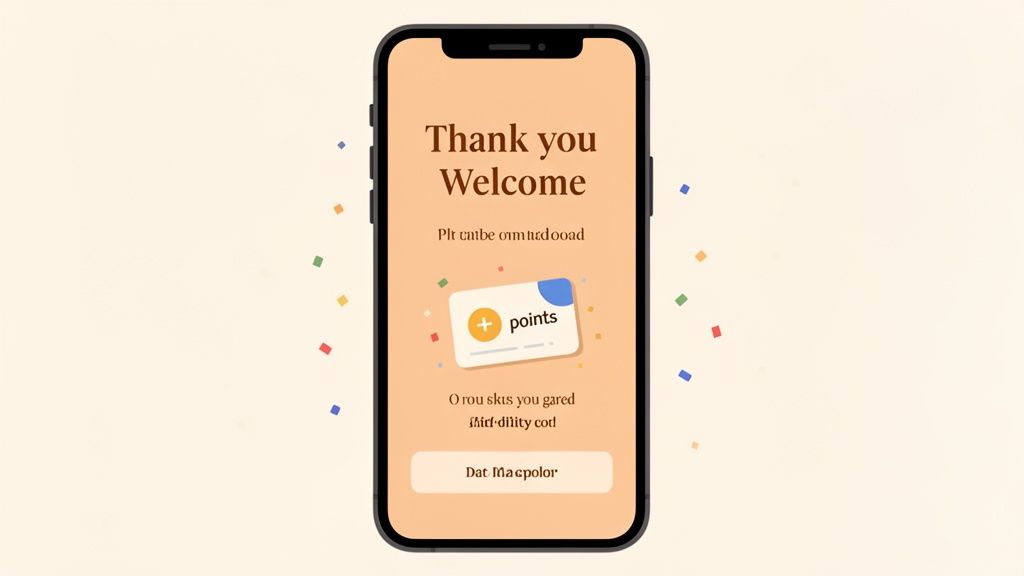
A great first impression goes a long way. For instance, with a tool like Toki, you can grant "Welcome Points" the second someone joins. This kind of instant gratification immediately shows them the value and encourages them to start engaging right away.
Build an Aspirational Tier System
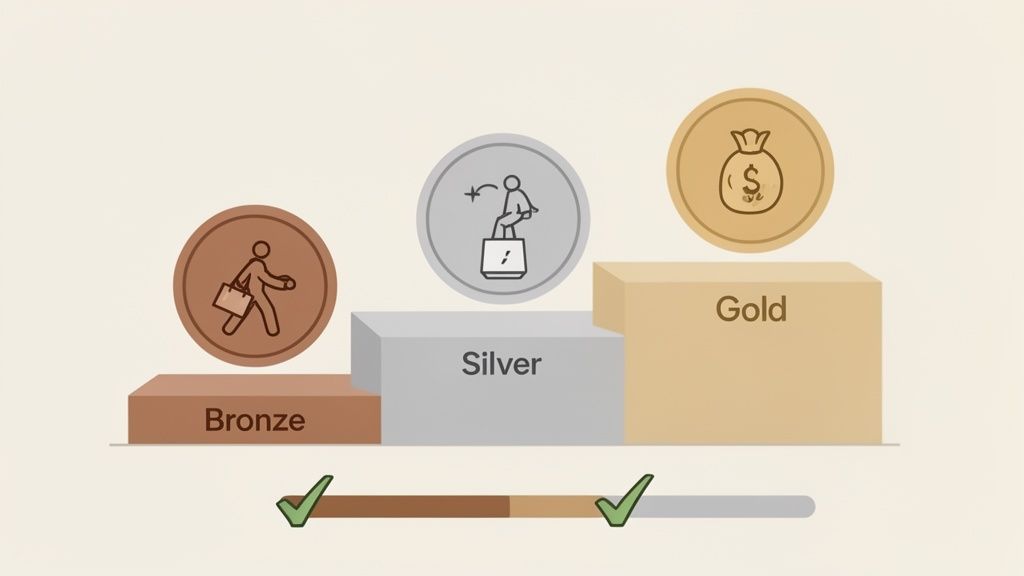
Tiers are incredibly effective because they give your customers a clear path forward—something to strive for. Instead of just mindlessly collecting points, they're on a journey with better and better perks at each level. The secret is making the benefits at the top tiers genuinely desirable, motivating people to spend a little more to unlock them.
Think of it like leveling up in a video game. Players are always pushing to unlock new skills or exclusive gear. Your loyalty program can tap into that same drive. The goal is to make that next tier feel both within reach and totally worth the effort.
Tiers transform a passive points system into an active pursuit. When a customer sees they're only two purchases away from unlocking free shipping for life, their entire purchasing behavior can change.
This creates a powerful incentive for customers to consolidate their spending with your brand. Why shop anywhere else when they're so close to that next big reward with you?
How to Structure Tiers With Escalating Value
A common misstep I see is making the perks between tiers too similar. A slightly better points multiplier just doesn't create enough excitement. For this to work, the value has to jump up in a meaningful way.
Here’s a practical look at how you might set this up. This table provides a template for a three-tier system that you can adapt for your own brand.
Sample Loyalty Tier Structure
| Tier Level | Entry Requirement | Key Perks & Rewards | Best For |
|---|---|---|---|
| Bronze | Sign Up | 1x points per dollar, birthday reward, member-only newsletter | New and infrequent shoppers. |
| Silver | Spend $250 annually | 1.5x points, early access to sales, free sample with orders | Regular, engaged customers. |
| Gold (VIP) | Spend $750 annually | 2x points, free shipping on all orders, exclusive VIP product access, annual gift | Your most loyal, high-value brand advocates. |
This structure is designed to hook customers in and keep them climbing. The Gold tier's offer of free shipping is a game-changer—it's often enough on its own to motivate a customer to hit that $750 spend threshold every year.
Inject Fun with Gamification
Gamification is just a fancy word for adding game-like elements—challenges, badges, progress bars—to your loyalty program to make it more interactive. It turns the simple act of shopping into something more engaging and, well, fun.
Instead of only rewarding purchases, you can start rewarding behaviors that build your brand and community.
Actionable Gamification Ideas:
- The Welcome Challenge: Create a "New Member" quest where customers earn bonus points for completing a series of actions in their first week, like following you on Instagram, writing a review, and making a second purchase.
- A Badge System: Award digital badges for hitting milestones. Think a "Super Fan" badge for making 10 purchases, or an "Innovator" badge for buying a new product on launch day. These provide a sense of accomplishment.
- Surprise and Delight: Randomly drop bonus points into the accounts of your best customers. An unexpected "just because we appreciate you" reward creates a memorable moment and a ton of goodwill.
These little touches tap into our natural desire for achievement. A progress bar showing a customer they are "80% of the way to VIP status" is far more compelling than a static point balance. It gives them a clear goal and encourages that final push.
When you combine an aspirational tier system with engaging gamification, you create a rich ecosystem that customers don't want to leave. They become invested not just in your products, but in their status within your brand's world. That deep connection is your best defense against churn.
Turn Your Best Customers into Brand Advocates
Your most dedicated customers are more than just a reliable source of revenue; they are your most powerful, untapped marketing force. If you can transform these happy shoppers into vocal brand advocates, you'll not only slash your customer churn rate but also supercharge your customer acquisition with high-quality, low-cost referrals.
It all comes down to creating a system where their loyalty isn't just passively appreciated—it's actively rewarded and amplified. When customers feel like you see them as partners, they naturally become your best salespeople.
Launch a Referral Program That Actually Works
Even in our digital world, word-of-mouth is still the most trusted form of marketing. A well-designed referral program simply formalizes this organic process, turning casual recommendations into a steady stream of new business for your brand.
The secret to a program that people actually use? Make it double-sided. This means both the person sharing the love (your advocate) and the new customer they bring in get a reward. This simple tweak removes any awkwardness from the exchange. Your advocate feels like they’re genuinely giving their friend a great deal, not just trying to earn a kickback.
Here’s what a compelling referral program looks like:
- Clear, Valuable Incentives: The offer needs to be something both sides genuinely want. This could be a percentage discount, a fixed dollar amount off, or a generous drop of loyalty points. A classic like “Give $15, Get $15” is simple, memorable, and instantly understood.
- Frictionless Sharing: Don’t make your customers jump through hoops. Provide one-click sharing options for email, social media, and messaging apps, directly from their account page. The easier it is to share their unique link, the more they will.
- Automated Tracking and Rewards: This part has to be seamless. When a new customer buys something using a referral link, the rewards for both people should land in their accounts automatically. Manual tracking is a recipe for frustration and will kill your program before it even gets going.
I’ve seen brands cut their customer acquisition costs by over 60% just by getting a strong double-sided referral system in place. When a friend recommends a product, that new customer arrives with a high level of trust already baked in, making them far more likely to convert and stick around for the long haul.
Build a True Brand Community
Beyond transactions and rewards, the deepest, stickiest form of loyalty comes from a sense of belonging. A brand community creates a space where your customers can connect with each other—and with your brand’s mission—on a much more personal level.
This is about more than just starting a Facebook group. It's about fostering a shared identity. When customers feel like they're part of a tribe, switching to a competitor feels like a betrayal of that group. That emotional connection is an incredibly powerful defense against churn.
Fostering That Sense of Belonging
Creating this environment takes a real effort to spark conversations and create shared experiences.
- Host Exclusive Events or Q&As: Give members-only access to live sessions with your founders, product designers, or industry experts. This gives them a behind-the-scenes peek and makes them feel like true insiders.
- Encourage User-Generated Content (UGC): Run contests or launch dedicated hashtags where customers can share photos and stories of your products in action. Feature the best submissions on your social channels and website to celebrate your community.
- Create a Forum for Connection: Whether it's a dedicated channel on Discord, a private group, or a forum on your site, give customers a place to ask questions, share tips, and connect with one another.
These initiatives are critical in a market where brands face brutal churn rates. The retail sector is particularly tough, with US general retail churn at 24% and global retail hitting a staggering 37%.
But there's good news. Brands that actively foster community through referrals and personalization see incredible results. As you can discover more insights about customer retention rates, it's clear that the payoff is huge. Increasing retention by just 5% can swell profits by 25-95%, because loyal customers spend 67% more and actively refer others. While 26% of US consumers have ditched brands in the last year, those with strong loyalty programs see an 86% recommendation rate.
By turning your best customers into advocates and building a real community, you create an ecosystem that is incredibly difficult to leave. You’re no longer just selling a product; you’re offering an identity and a network—a combination that builds lasting loyalty and dramatically cuts down churn.
Use Data to Proactively Prevent Customer Churn
The best way to cut down on churn is to get ahead of it. Instead of scrambling after a customer has already walked away, you can use the data you're already collecting to spot the warning signs and step in at just the right moment. This turns your retention strategy from a frantic rescue mission into a smart, data-driven way of managing customer relationships.
The idea here is pretty straightforward: customer behavior tells a story. When you see a drop in how often someone buys, a dip in their average order value, or just a long stretch of radio silence, you're reading chapters in a story that might end with them churning. Your job is to read those signals and change the ending.
Identify and Segment At-Risk Customers
First things first, you have to figure out who is starting to drift away. You'll need to define what "at-risk" actually looks like for your brand. While every business is a little different, some red flags are pretty universal in e-commerce.
Start by creating customer segments based on these behaviors:
- One-Time Buyers: These are the folks who made a single purchase months ago and never came back. They liked you once, but you haven't given them a compelling reason to return.
- Declining Purchase Frequency: These were once regular shoppers, but the time between their orders is getting longer and longer. A customer who used to buy every month but hasn't been seen in three is a classic example.
- Low Engagement: These are customers who haven’t opened your emails, visited your site, or interacted with your loyalty program in over 90 days. They're tuned out and on the verge of becoming totally inactive.
Using a platform with solid analytics, like Toki, makes this whole process way easier. You can ditch the guesswork and build these segments with just a few clicks. This gives you a clear, actionable list of customers who need your attention right now. For a deeper dive, you can explore the nuances of customer churn prediction to get even more precise.
The screenshot below from Toki’s segmentation tool shows just how easy it is to build these dynamic groups based on real-time data.
With a visual dashboard like this, you can layer different conditions—like purchase history and engagement level—to pinpoint exactly which customers fit your at-risk criteria.
Launch Targeted Win-Back Campaigns
Once you've identified your at-risk segments, a generic, one-size-fits-all email blast just isn't going to work. Winning these customers back is all about personalization. Your message has to show you remember them and give them a tailored incentive to come back into the fold.
Here’s a simple framework for your win-back campaigns:
- Acknowledge their absence. Kick things off with a friendly, low-pressure subject line like "We Miss You!" or "Is It Something We Said?".
- Offer a compelling, personalized incentive. This part is critical. For someone who hasn't bought anything in six months, a standard 10% off coupon probably won't be enough to get their attention. Think bigger, like 25% off their next order or a generous bundle of loyalty points to remind them of the value they're missing out on.
- Create a little urgency. Add a time limit to the offer—something like, "This special offer expires in 72 hours!"—to nudge them into action.
Pro Tip: For customers who've been gone for a really long time (say, over a year), you might need a more aggressive offer. A message like, "We'll give you 500 points just to come back," can be incredibly effective at waking up dormant accounts and reminding them of the rewards they left behind.
Give Your VIPs the Royal Treatment
While it's crucial to focus on at-risk customers, don't forget the other side of the coin: your most loyal shoppers. A good retention strategy isn't just about plugging leaks; it's also about reinforcing loyalty where it's strongest. Your VIPs are the foundation of your brand, and they need to feel appreciated.
Segmenting your top-tier customers lets you create an elevated experience that makes them feel truly special.
- Exclusive Access: Give them a sneak peek at new product launches or early access to sales before everyone else.
- Surprise and Delight: Randomly send them a small gift, a bonus points drop, or even a handwritten thank-you note. It's these unexpected gestures that create powerful emotional connections.
- Personalized Service: Make sure their support tickets always jump to the front of the line. A dedicated VIP support email or phone number can make a huge difference.
By using data to segment both your weakest and strongest customer relationships, you can put your resources where they’ll have the most impact. This dual approach ensures you’re not only patching the holes in your customer bucket but also reinforcing the base for solid, long-term growth.
Weave a Seamless Omnichannel Loyalty Experience
Your customers don't see your brand in channels. They don't think, "I'm shopping online now," versus, "I'm shopping in-store." They just see your brand. So, when their loyalty points from your website don't work at your physical shop, it’s not just a minor hiccup—it's a jarring disconnect.
This kind of friction makes your loyalty program feel like a chore instead of a reward. Customers have to mentally juggle two different systems, which instantly devalues the whole point of the program. The idea is to make engagement feel effortless and natural, creating one unified brand experience whether they're on your website, scrolling social media, opening an email, or walking through your doors.
This is the essence of an omnichannel experience, and for modern brands, it's no longer optional.
Bridge the Physical and Digital Worlds
For any brand with a Shopify store and a brick-and-mortar footprint, this is the biggest puzzle: how do you make the loyalty program truly portable? How does a customer who earned points online an hour ago walk into your store and use them instantly?
This is where the right tools are an absolute game-changer. Think digital wallet passes. With a platform like Toki, you can create beautiful, branded loyalty cards that customers add straight to their Apple or Google Wallet. No app download needed.
This one simple feature has an outsized impact. It puts your brand right in your customer’s pocket, making it incredibly easy to just pull out their phone, scan a QR code, and earn or redeem points on the spot. It feels modern, simple, and connected.
Keep Everything Consistent, Everywhere
A truly great omnichannel experience is about more than just the tech. It’s about obsessive consistency in your messaging, your branding, and the value you promise. Every single touchpoint a customer has with your loyalty program needs to feel familiar.
Here’s a quick checklist to keep you on track:
- Consistent Branding: The name, logo, and colors of your loyalty program must be identical everywhere—on your website's loyalty page, in the digital wallet pass, and on any in-store signs.
- Unified Language: Don't confuse people with terminology. If your top tier is called the "Insider Club" online, your staff shouldn't be calling it the "VIP Program" in the store.
- Identical Value: This is a big one. The value of a point or a reward can't change from one channel to another. If 100 points gets a customer a $10 discount online, it has to be the exact same in-store. Any difference, no matter how small, kills trust.
The core principle of an omnichannel strategy is to make it ridiculously easy for customers to be loyal. When they don’t have to stop and think about how or where to use your program, they’ll actually use it.
Turn Your Team into Loyalty Champions
Your in-store staff and customer support agents are the human face of your loyalty program. You can have the slickest tech in the world, but if a customer asks a simple question about their points and gets a blank stare, the experience shatters.
This is why training is non-negotiable. Your team needs to be able to:
- Explain the Program Clearly: Every employee should have a confident, concise pitch for why a customer should join, how to earn points, and what they get in return.
- Handle Common Problems: Equip them to troubleshoot the basics, like a customer who can't find their digital wallet pass or is confused about their point balance.
- Promote It Proactively: Empower them to invite every customer to join at checkout. A simple, "Are you part of our rewards program yet? You can get 15% off your next purchase just for signing up today," can work wonders.
A seamless experience also needs a strong support backbone. Sometimes, this means partnering with the best in the business, like some of the top customer support companies, to ensure every customer query is handled flawlessly. By marrying consistency with an empowered team, you create a connected ecosystem that builds genuine trust and makes loyalty the path of least resistance.
Ready to build a loyalty program that customers love and that actively works to decrease customer churn? With Toki, you can launch tiered memberships, referral programs, and seamless digital wallet passes in minutes. Start retaining more customers today.