A Practical Guide to Customer Engagement Planning
Transform your e-commerce business with our practical guide to customer engagement planning. Learn to build loyalty, increase sales, and boost lifetime value.
So, what exactly is customer engagement planning? It’s not just about sending a few marketing emails. It’s the art of deliberately designing every single interaction to build a strong, lasting relationship between your e-commerce brand and your customers.
Think of it as a strategic blueprint. This plan helps you move beyond one-off sales and start building a community of loyal fans who stick around. It’s a proactive approach focused on creating real value at every turn, turning first-time buyers into genuine brand advocates.
Why a Customer Engagement Plan Is Your Secret Growth Engine
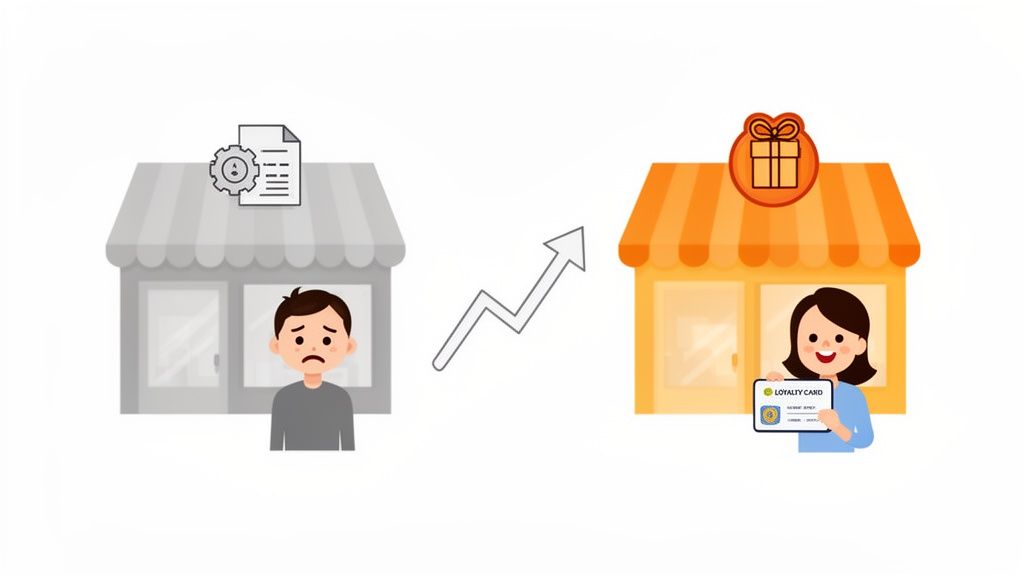
Let's cut through the noise. Too many e-commerce stores are stuck in a reactive loop—fulfilling orders, putting out fires, and hoping people come back. It works, but you're leaving a massive amount of growth on the table.
A proactive customer engagement plan completely flips this script. It’s the difference between a store that just answers support tickets and one that automatically sends a surprise thank-you reward after a customer's first purchase. That simple, planned interaction makes them feel seen and valued. This isn't just about warm fuzzies; it's about building a system that systematically encourages people to shop with you again and again.
Turn Customer Service from a Cost into a Money-Maker
For a long time, customer interaction was seen as just another cost of doing business. But the most successful e-commerce brands today know that smart engagement is one of their most powerful revenue streams. When you intentionally map out how you’ll connect with customers before, during, and after they buy, you create a seamless experience that builds serious trust and loyalty.
This strategic shift has a direct impact on your bottom line. Here’s how:
- Skyrockets Customer Lifetime Value (CLTV): When people feel connected to your brand, they don’t just buy once. They come back more often and spend more over their lifetime.
- Boosts Repeat Purchase Rates: A solid plan keeps your brand at the front of their minds and gives customers irresistible reasons to return.
- Generates Free Word-of-Mouth Marketing: A happy, engaged customer becomes your best salesperson, telling their friends and family about their great experience.
The numbers don't lie. A massive study of over 15,700 consumers found that customers who had a service engagement showed a 19% higher customer lifetime value (CLTV) than those who didn't. That’s a huge lift. The data, detailed in a Simon-Kucher study, makes it clear: proactive engagement is a direct lever for financial growth.
A great plan doesn't just manage customer relationships—it monetizes them. By anticipating needs and rewarding loyalty, you create an ecosystem where customers are genuinely excited to participate and spend more.
Getting Ready to Take Action
Thinking about this stuff is great, but putting it into practice is what separates the winners from the rest. The whole point of this guide is to give you a clear, step-by-step framework for building a plan that actually gets results.
We’re moving beyond theory and getting into the "how." By the time you're done, you'll have the tools to build a system that creates real loyalty and drives sustainable growth for your business. For a deeper dive into the basics, check out our guide on increasing customer engagement.
1. Laying the Foundation: Audits and Goals
Before you even think about launching a flashy new loyalty program or a clever SMS campaign, you have to do the groundwork. Jumping in without a plan is like trying to build a house without a blueprint—it’s going to get messy, and it’s probably going to fall apart.
The first step is taking a hard, honest look at where your customer engagement stands right now. You need to know your starting point before you can figure out where you're headed.
Get Real with an Engagement Audit
An audit sounds intimidating, but it’s really just an investigation. The goal is to figure out what’s working, what’s falling flat, and where the hidden opportunities are. It’s less about drowning in spreadsheets and more about understanding the real human experience behind the numbers. Where do your customers feel delighted? And more importantly, where are they getting frustrated and dropping off?
Start by mapping out every single place a customer can interact with your brand. Think bigger than just your website. This includes everything from your live chat and email newsletters to the DMs you get on Instagram. Once you have that map, you can start digging in.
Focus your investigation on a few key areas:
- Communication Channels: Where are you actually having conversations? Check the open rates on your emails, see how long it takes your team to respond to social media comments, and look at the engagement on your SMS alerts. Is there one channel that's clearly a winner?
- Feedback Loops: How are customers telling you what they think? Scour your product reviews, support tickets, and post-purchase surveys. If you see the same complaint about slow shipping pop up over and over, that’s not just a logistics problem—it’s a huge engagement issue.
- Buying Behavior: Dive into your sales data. What’s your repeat purchase rate? How long does it typically take for a first-time buyer to come back and make a second purchase? If that gap is massive, it’s a red flag that your post-purchase experience is weak.
The gold is in the friction. A high cart abandonment rate isn't just a lost sale; it's a symptom of an engagement problem. It means something in the process is killing the vibe, breaking trust, or just plain confusing people.
Set Goals That Actually Mean Something
Once your audit gives you a clear lay of the land, you can stop guessing and start planning with purpose. A vague goal like "we need to boost engagement" is pretty much useless because you can't measure it. This is where the SMART framework is your best friend.
It’s a simple but powerful way to make sure your goals are:
- Specific
- Measurable
- Achievable
- Relevant
- Time-bound
Using this framework turns a fuzzy idea into a clear, actionable target. For example, say your audit showed that you're great at getting first-time buyers, but almost none of them ever come back. You can build a goal to fix that exact problem.
Here’s how to turn a weak goal into a strong one:
- Vague Goal: We want more repeat customers.
- SMART Goal: Increase our repeat customer rate from 12% to 18% in the next 6 months by implementing a points-based loyalty program that specifically rewards the second purchase.
See the difference? This goal is crystal clear. You know what you're measuring (repeat customer rate), what the target is (18%), how you're going to do it (a new loyalty program), and your deadline (6 months). This kind of clarity is the bedrock of a solid engagement plan—it gives your whole team a north star to follow.
Mapping Your Omnichannel Customer Journey
Great customer engagement isn't about being everywhere at once; it's about meeting people exactly where they are. Think of it as creating one single, seamless conversation that flows effortlessly across every channel—from the first Instagram ad they see to the post-purchase survey they fill out weeks later.
This all starts by mapping out your unique customer journey. The real goal here is to tear down the walls between your digital and physical storefronts. You want to weave them into a single, cohesive world where an interaction that begins online can naturally continue in-store without missing a beat.
Identifying Your Core Customer Touchpoints
Before you can connect the dots, you have to know where all the dots are. A customer touchpoint is any moment, big or small, where a person interacts with your brand. It’s shocking how many businesses I’ve seen underestimate just how many of these actually exist.
Get a whiteboard out and start listing every possible point of contact. Be exhaustive.
- Digital Channels: This is the obvious stuff—your website, mobile app, email campaigns, SMS alerts, social media profiles (DMs included!), and all your paid ads.
- Physical Channels: Think about in-store visits, pop-up shops, customer service phone calls, and even the unboxing experience with your product packaging.
- Third-Party Channels: Don't forget the places you don't fully control, like online reviews on Yelp or Google, mentions from influencers, and features in online articles.
Once you have this list, you can start to visualize how a customer moves between these points. Maybe they see a targeted ad on Facebook, click through to your site to browse, add an item to their cart, but then decide to finish the purchase in your physical store later that day. A solid plan makes that entire sequence feel completely smooth.
Weaving a Cohesive Cross-Channel Experience
With your touchpoints laid out, the real work begins: designing the connections between them. The idea is to make your brand feel like one unified entity, not a collection of siloed departments. This is the heart and soul of a powerful omnichannel strategy.
For example, a customer earns loyalty points from an online purchase and wants to redeem them at your brick-and-mortar store. A true omnichannel setup makes this dead simple, maybe with a digital wallet pass on their phone that your in-store POS system can scan instantly. This little detail removes friction and shows the customer you recognize their entire history with your brand, no matter where they are. As you get deeper, it’s worth exploring different omnichannel marketing strategies to get more ideas on how to pull this off.
The magic happens when the lines between your channels blur. A customer shouldn't have to think, 'I'm on their website now' or 'I'm talking to their social media team.' They should just feel like they're interacting with your brand.
The diagram below shows how the foundational work—your audit, goals, and KPIs—sets the stage for this kind of journey mapping.
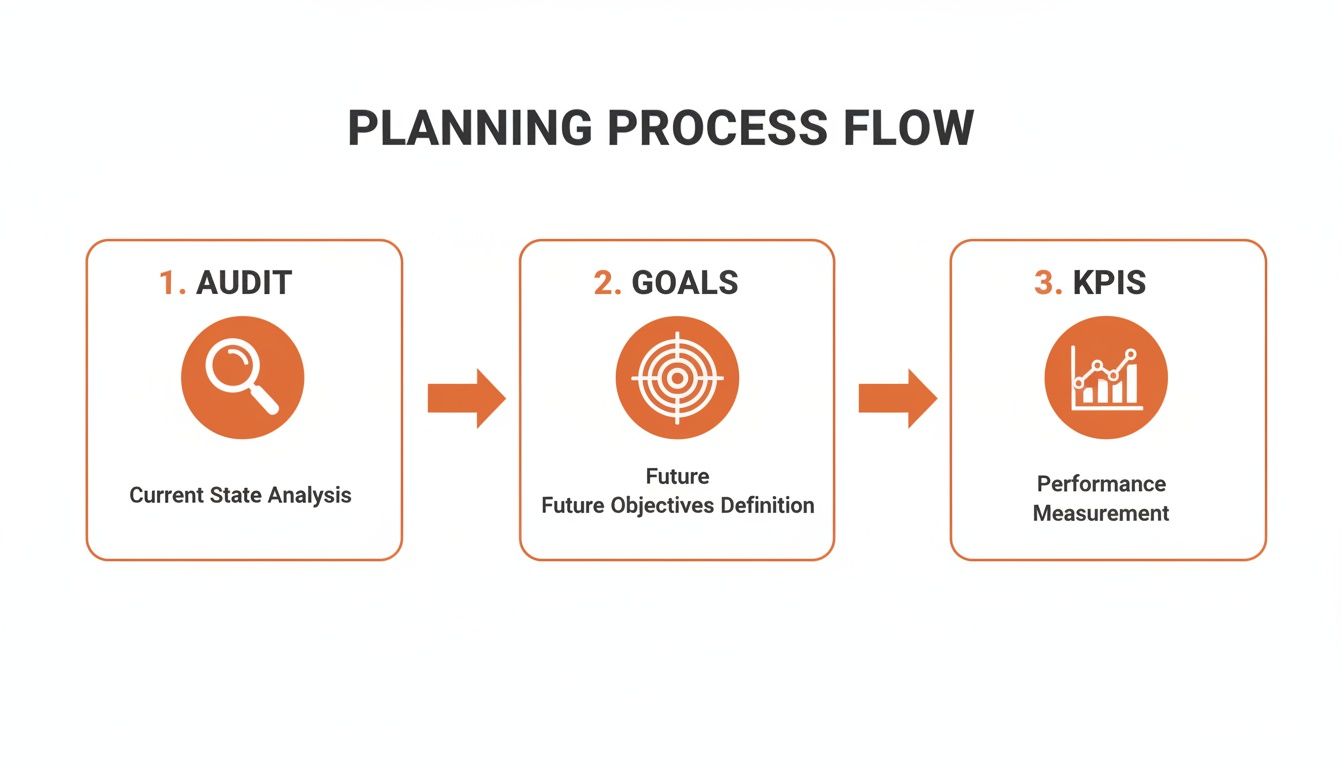
As you can see, a deep understanding of where you are now (the audit) is what allows you to set the specific, measurable goals you'll need to build a successful omnichannel map.
Putting Your Omnichannel Map into Action
Building this map isn't just a theoretical exercise; it’s about creating real, actionable workflows that get results. Let's walk through a common scenario.
A customer abandons their shopping cart. A basic strategy might just send a single reminder email. An omnichannel strategy, on the other hand, orchestrates a much smarter sequence:
- Email: About an hour after they leave, a friendly email lands in their inbox reminding them what they left behind.
- Social Media: The next day, if they still haven't checked out, a retargeting ad for one of the items in their cart pops up in their social feed.
- SMS: Two days later, a quick text message offers a small perk, like 10% off or free shipping, to nudge them over the finish line.
This multi-channel approach dramatically increases the odds of getting that sale, all without feeling pushy. It simply meets the customer on the platforms they’re already using, making it easy for them to jump back in when the moment is right. To learn more about designing these kinds of intricate flows, check out this guide on building a complete https://www.buildwithtoki.com/blog-post/omnichannel-customer-experience. By carefully mapping these interactions, you can turn a series of disconnected touchpoints into a powerful, unified, and profitable customer journey.
Designing Your Loyalty and Referral Engine
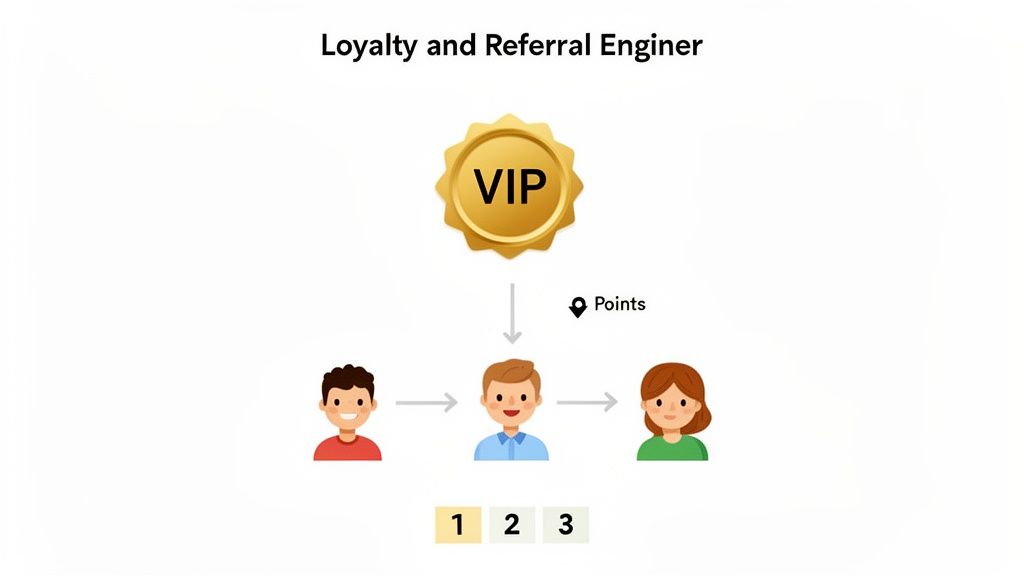
Alright, this is where the real fun begins. You’ve put in the foundational work—setting goals, understanding your customers, and mapping their journey. Now it’s time to build the machinery that powers long-term engagement and turns one-time buyers into genuine brand fans.
A well-crafted loyalty and referral engine isn't just about handing out discounts. It’s about creating a structured system that recognizes and rewards customers for sticking with you. This is how you build an emotional connection that transcends the simple act of a transaction, making people feel like they’re part of an exclusive club, not just another order number.
H3: Choosing Your Loyalty Program Model
The heart of your engine is the loyalty program, but there’s no magic bullet. The right model comes down to your brand’s personality, your products, and what behaviors you actually want to encourage.
Here are the most common and effective models I’ve seen work for e-commerce brands:
- Points-Based Systems: The classic for a reason—it’s simple, intuitive, and effective. Customers earn points for actions like making a purchase, leaving a review, or sharing on social media. They can then cash these points in for discounts or freebies. It’s a straightforward value exchange that everyone understands instantly.
- Tiered VIP Programs: This approach taps directly into our desire for status and recognition. As customers spend or engage more, they unlock new tiers (think Silver, Gold, Platinum) with progressively better perks. This could be anything from free shipping and early access to new collections to a dedicated support line. It gives customers a clear goal to strive for.
- Paid Memberships: Think Amazon Prime. This is for your most die-hard fans. Customers pay a recurring fee to join an exclusive club that offers premium, always-on benefits. This model is incredibly powerful because the upfront commitment makes members determined to get their money's worth, driving significant repeat business.
The best loyalty programs feel less like a marketing scheme and more like a game. The rewards need to be genuinely desirable, the rules have to be crystal clear, and customers should always feel like they're making progress. This shifts shopping from a task into a much more compelling experience.
The Power of Gamification in Engagement
Speaking of games, this is where you can really separate yourself from the pack. Gamification is the secret sauce that can turn a standard loyalty program into an addictive, interactive journey. It’s all about applying game-like elements—challenges, badges, leaderboards—to the shopping experience.
And this isn't just fluff; it directly impacts your bottom line. A recent report from Optimove found that gamified loyalty programs can drive a 40% increase in repeat buys. When the experience is interactive and fun, customers simply come back more often.
Imagine setting up a "Brand Ambassador" challenge. A customer could earn an exclusive digital badge and a bonus of 500 points just for getting three friends to make their first purchase. That simple mechanic achieves two critical goals at once: it drives new customer acquisition and makes your current customer feel like a valued partner in your brand’s growth.
Engagement Program Comparison
Deciding between a points system, a VIP club, or a referral-focused program isn't always easy. The right choice depends on your business model, profit margins, and what motivates your specific customer segments. This table breaks down which model works best for different scenarios.
| Program Type | Best For | Key Benefit | Example Toki Implementation |
|---|---|---|---|
| Points-Based | High-frequency, low-cost purchases (e.g., coffee, cosmetics). | Encourages repeat transactions and small engagements. | Award 10 points for every $1 spent. Offer a bonus 50 points for an Instagram follow. Let customers redeem 1,000 points for a $10 discount at checkout. |
| Tiered VIP | High-end or lifestyle brands with a strong community (e.g., fashion, fitness). | Fosters long-term loyalty and increases AOV. | Create Silver, Gold, and Platinum tiers based on annual spend. Gold members get free shipping, while Platinum members get early access to new product drops. |
| Referral-Focused | Brands with a strong word-of-mouth product and high trust factor. | Drives low-cost, high-quality customer acquisition. | Give the advocate a $25 store credit and the new customer 20% off their first order. Track everything through unique, shareable links. |
| Paid Membership | Businesses with high margins or consumable products (e.g., supplements, groceries). | Creates predictable, recurring revenue. | Charge $99/year for a "Pro" membership that gives customers 10% off all orders and free express shipping, no matter how much they spend. |
Ultimately, the most successful strategies often blend elements from each. You might have a points-based system that feeds into a VIP tier, with a strong referral component layered on top. The key is to start with the model that best aligns with your core business objectives.
Building a Referral Program That Actually Works
A referral program is one of the most cost-effective acquisition channels you can have, but only if it’s done right. Just throwing a "Refer a Friend" link in your footer and hoping for the best is a recipe for disappointment. A great program has to be a win-win-win: a win for your current customer, a win for the new customer, and a win for your business.
The secret is a compelling two-sided incentive.
- For the Advocate (Your Current Customer): The reward has to be worth their time and social capital. This could be a generous discount, a lump sum of loyalty points, or even a cash reward. It needs to be enticing enough to make them actively share.
- For the Friend (The New Customer): Give them a strong reason to act on the recommendation now. A first-purchase discount is standard, but try to make it better than any other public offer. This makes them feel like they're getting a true insider deal.
For example, a skincare brand could offer the advocate $20 in store credit while giving their referred friend 20% off their first order. This dual-sided offer dramatically increases the odds of conversion and builds goodwill from the very first interaction.
If you’re looking to dig deeper into the mechanics, our guide on how referral marketing works breaks it down even further. By carefully engineering these systems, you create a powerful, self-sustaining engine that fuels both engagement and growth.
Bringing Your Plan to Life with Smart Automation
A brilliant strategy on paper is one thing, but bringing it to life is where the magic really happens. This is the part where smart automation and genuine personalization turn your customer engagement plan from a document into real, tangible connections. The objective? Make every single customer feel seen and understood, not just like another number in your CRM.
To do this, we need to stop thinking in terms of broad demographics. The game has moved beyond targeting "women aged 25-34." Today, it's all about creating dynamic, behavioral groups. We're talking to "high-spenders," "at-risk customers," and "first-time buyers." This shift allows for conversations that are incredibly relevant and actually resonate on a personal level.
Building Automated Behavioral Campaigns
Automation is the engine that drives these personalized experiences at scale. By setting up triggers based on what your customers do (or don't do), you can deliver the right message at exactly the right moment. This is how your engagement plan stops being a manual chore and starts working for you 24/7.
Here are a few real-world examples of automated workflows I've seen work wonders:
-
Winning Back the 'At-Risk' Customer: Let's say a customer hasn't purchased in 90 days. Instead of letting them drift away, an automated workflow can send a friendly "We Miss You!" email. Sweeten the deal with an offer they can't refuse, like 250 extra loyalty points on their next purchase. It's a small, proactive nudge that can reignite a relationship.
-
Welcoming the 'First-Time Buyer': The moment that first order confirmation hits their inbox, the relationship-building should begin. A simple welcome series works perfectly here. Start with a thank you, follow up with a few tips on how to get the most out of their new product, and then introduce them to your loyalty program. You’re nurturing the connection right from that crucial first purchase.
-
Rewarding the 'High-Spender' (VIP): When a customer's lifetime value crosses a certain threshold—say, $1,000—it’s time to roll out the red carpet. An automation can instantly segment them into your VIP tier and send a congratulatory email outlining their new perks. Think exclusive access to sales or free express shipping. Make them feel special because they are.
The best automation never feels like a machine. It feels like a thoughtful concierge, anticipating needs and delivering value before the customer even has to ask. That’s how you build a real emotional connection.
Fueling Your Engine with Zero-Party Data and AI
Of course, for any of this to work, you need the right fuel. This is where zero-party data comes in. This is the goldmine of information customers willingly share with you through quizzes ("Find Your Perfect Coffee Blend"), surveys, or preference centers. They’re literally telling you what they want.
Combine that data with a smart AI engine, and you can create experiences that feel almost psychic. The AI can analyze a customer's quiz results, past purchases, and browsing behavior to send a perfectly timed email with the exact product they were thinking about.
This isn't just a "nice to have" anymore; it's what customers expect. In fact, Braze's 2025 Global Customer Engagement Review found that over 70% of consumers now anticipate personalized communications. More importantly, actively using zero-party data can boost response rates by 15%. The ROI is undeniable.
By activating your plan with smart, data-fueled automation, you're not just sending emails. You're building a responsive, intelligent system that deepens relationships and drives real growth for your business.
Measuring and Refining Your Engagement Strategy
You’ve built the plan. Now comes the hard part: making sure it actually works. A customer engagement strategy isn't something you can set up once and walk away from. It's a living, breathing part of your business that needs constant attention to stay effective. The real magic happens when you build a solid system for measuring, testing, and continuously refining your approach.
Without data, you’re just guessing. You might feel like that new loyalty program is a hit, but feelings don’t tell you the whole story. To understand what's truly resonating with your customers, you have to track the right customer engagement metrics. This is how you prove your ROI and make smart calls on where to double down.
Defining Your Core KPIs
Your goal isn't to track every metric under the sun. That’s just noise. Instead, focus on a handful of Key Performance Indicators (KPIs) that give you a clear, honest look at the health of your customer relationships and your business.
These are the numbers that matter:
- Repeat Purchase Rate: This is your north star for loyalty. It’s the percentage of customers who come back for a second, third, or tenth time. If this number is climbing, you’re doing something right.
- Customer Lifetime Value (CLTV): Think of this as the total worth of a customer over their entire relationship with you. A strong engagement plan should make this number grow consistently.
- Loyalty Program ROI: Go beyond just counting sign-ups. You need to know if the program is actually making you money. Compare the cost of your rewards to the lift in spending and purchase frequency from your members.
- Net Promoter Score (NPS): The classic "how likely are you to recommend us?" question. It’s a powerful, simple way to gauge overall sentiment and brand advocacy.
A plan without measurement is just a collection of good intentions. Consistent tracking turns your strategy into a dynamic, results-driven engine that adapts to real-world feedback.
Adopting an A/B Testing Mindset
Once your tracking is in place, you can start making things better. The best way to do that is to embrace an A/B testing mindset, which is really just a structured way of asking, "I wonder what would happen if...?" You’d be surprised how small, controlled experiments can lead to massive wins.
You don't need a huge team or a massive budget to get started. Pick one thing and test it. For example, what’s the best incentive to get people to join your new loyalty program?
- Group A: Gets 100 bonus points for signing up.
- Group B: Gets a 15% discount on their next order.
Let it run for a few weeks, then look at the numbers. Which offer drove more sign-ups? Which group spent more on their first purchase after joining? The data will give you a clear winner. This is what continuous improvement looks like in practice—a constant cycle of testing, learning, and refining that keeps your engagement plan sharp and effective.
Answering Your Top Questions About Customer Engagement Planning
Even with the best framework laid out, putting a customer engagement plan into action always brings up a few questions. Getting these details right from the start is what separates a plan that looks good on paper from one that actually works. Let's tackle some of the most common things that come up.
How Often Should I Be Looking at My Plan?
You'll want to do a full, deep-dive review of your entire engagement plan at least quarterly. This timing is a sweet spot—it gives you enough runway to collect meaningful data and see how you’re tracking against your big-picture KPIs without letting things go off the rails for too long. It's the perfect rhythm for adjusting to market changes or new customer habits.
That said, don't just set it and forget it for three months. You should be keeping a much closer eye on your core engagement metrics, ideally checking in weekly or bi-weekly. This lets you pounce on opportunities or fix problems fast. For example, if you launch a new gamified challenge and nobody's biting, you can tweak it right away instead of waiting until the end of the quarter to find out it was a flop.
What’s the Biggest Mistake Stores Make?
The most common trap I see is treating engagement as a bunch of one-off campaigns instead of a single, unified strategy. Firing off a random discount email isn’t a plan; it’s just a tactic. A real strategy weaves every single touchpoint—from that first welcome email to how you handle a support ticket—into one seamless customer journey.
Another huge misstep is skipping personalization. The days of one-size-fits-all messages are long gone. Customers today don't just appreciate it when you remember their preferences; they expect it. And they'll stick with the brands that get it right.
An effective plan is about smart strategy, not a massive budget. Small businesses can leverage scalable tools to implement powerful loyalty programs without a huge upfront investment.
Concentrate on the high-impact, low-cost moves first. You can make a massive difference with a simple points-for-purchase system, genuine interaction on one or two social media channels you actually enjoy using, and sending emails based on what people have bought before. The secret is to start with a focused plan and expand from there.
Ready to build a customer engagement plan that drives real growth? Toki provides the all-in-one platform you need to create loyalty programs, referral engines, and VIP tiers that turn shoppers into brand advocates. Start building with Toki today.