A Guide to Increasing Customer Engagement and Boosting Sales
Discover how increasing customer engagement can transform your Shopify store. This guide covers loyalty, gamification, and personalization strategies that work.
When we talk about increasing customer engagement, we're really talking about a fundamental shift in mindset. It’s moving away from simply processing one-time transactions and toward building genuine, lasting relationships that fuel repeat business and fierce brand loyalty. This means creating interactive, meaningful experiences using tools like loyalty programs, gamification, and personalized communication to turn casual browsers into your biggest fans.
Why Customer Engagement Is Your New Growth Engine
For far too long, e-commerce brands have been caught on the hamster wheel of customer acquisition. We've all been there—pouring money into ads to attract new eyeballs, only to watch those customers disappear after a single purchase. The modern growth playbook completely flips that script.
Real, sustainable revenue doesn't come from a revolving door of first-time buyers. It comes from building a loyal community that sticks with you, shops with you, and champions your brand to their friends. This is the heart of customer engagement. It’s a strategic pivot from chasing one-off sales to cultivating a tribe of advocates who feel a real connection to what you do. When you get this right, engagement becomes a powerful, self-sustaining growth engine for your store.
The Business Case For Engagement
The numbers don't lie. Customers who are deeply engaged with your brand aren't just happier—they are immensely more valuable to your business. They spend more with each order, buy more often, and aren't easily tempted by a competitor's flashy discount code.
This direct impact on the bottom line is why the global customer engagement solutions market is exploding. Projections show it will skyrocket to USD 45.9 billion by 2031, a clear signal that smart businesses are investing heavily in deepening these customer connections. For a deeper dive, you can explore this detailed market analysis on the rise of engagement solutions on mordorintelligence.com.
A focus on engagement directly boosts the metrics that matter most for any Shopify store:
- Higher Customer Lifetime Value (CLV): Engaged customers stick around, making multiple purchases over months and years, not just days.
- Increased Repeat Purchase Rates: Smart loyalty programs and relevant, personal offers give customers compelling reasons to come back for more.
- Lower Customer Acquisition Costs (CAC): Your happiest, most engaged customers become your best marketers, driving powerful word-of-mouth referrals that are far more effective (and cheaper) than any ad campaign.
To help visualize this, here’s a quick breakdown of how these strategies translate into real-world business results.
Key Engagement Strategies and Their Business Impact
This table provides a quick summary of the core engagement strategies discussed in this guide and the direct, measurable impact they have on a Shopify store's bottom line.
| Engagement Strategy | Primary Goal | Key Business Impact |
|---|---|---|
| Loyalty Programs | Reward repeat purchases and incentivize specific actions. | Increases Repeat Purchase Rate and Customer Lifetime Value (CLV). |
| Gamification | Make shopping fun and interactive to boost time on site. | Improves Conversion Rates and Average Order Value (AOV). |
| Referral Programs | Encourage customers to become brand advocates. | Lowers Customer Acquisition Cost (CAC) and increases CLV. |
| Personalization | Deliver relevant, tailored experiences to each user. | Boosts Conversion Rates and strengthens Brand Loyalty. |
These aren't just abstract concepts; they are tangible levers you can pull to drive real, profitable growth for your business.
From Transaction To Relationship
Think about your favorite local coffee shop. You probably go back for more than just the coffee, right? It's the friendly barista who remembers your name, the comfortable vibe, the feeling of being a "regular." That’s engagement in the physical world. For an online store, the principle is exactly the same—we just use different tools to create that feeling.
The goal is to make every interaction feel personal and rewarding, transforming a simple purchase into a memorable experience. This is how you move beyond a purely transactional relationship and build a true community.
Understanding the long-term payoff here is key. Learning how to calculate customer lifetime value will really drive home why customer engagement is your new growth engine. In this playbook, we'll walk through the concrete strategies—from launching a killer loyalty program to nailing your omnichannel tactics—that you can implement to start building those lasting relationships today.
Building a Loyalty Program That Customers Actually Use
A great loyalty program is so much more than a digital punch card. It’s about forging a real connection that turns a one-time shopper into a genuine fan. Let's be honest, the old "spend more, get more" model is tired. Today's shoppers want to feel seen and valued for more than just their wallet.
The secret to increasing customer engagement is to design a program that feels like an exclusive club, not just another marketing ploy. This means rewarding customers for all the ways they interact with you, transforming a purely transactional relationship into something with real staying power.
Reward More Than Just Purchases
Think about everything a customer does that helps your Shopify store grow. A rave review or an Instagram shout-out can be just as powerful as a repeat purchase, right? Your loyalty program should absolutely reflect that.
When you broaden the ways people can earn, you give them more reasons to connect with your brand, even when they aren't ready to buy. It keeps you on their radar.
Here are a few ideas to get you started:
- Social Media Love: Dish out points when someone follows you on Instagram, shares a post, or tags your brand in a photo. A makeup brand, for example, could offer 50 points for a quick story mention.
- Honest Reviews: Good reviews are pure gold for marketing. Make it worth their while to leave one by offering a hefty point bonus, maybe even more if they add a photo or video.
- Community Champions: If you have a brand community, reward people for starting conversations or helping other customers with their questions.
This approach doesn't just bump up your engagement metrics; it creates a treasure trove of user-generated content that helps you sell more. We go deeper into this in our guide on building a modern points-based loyalty program that truly resonates.
The Power of Tiered Memberships
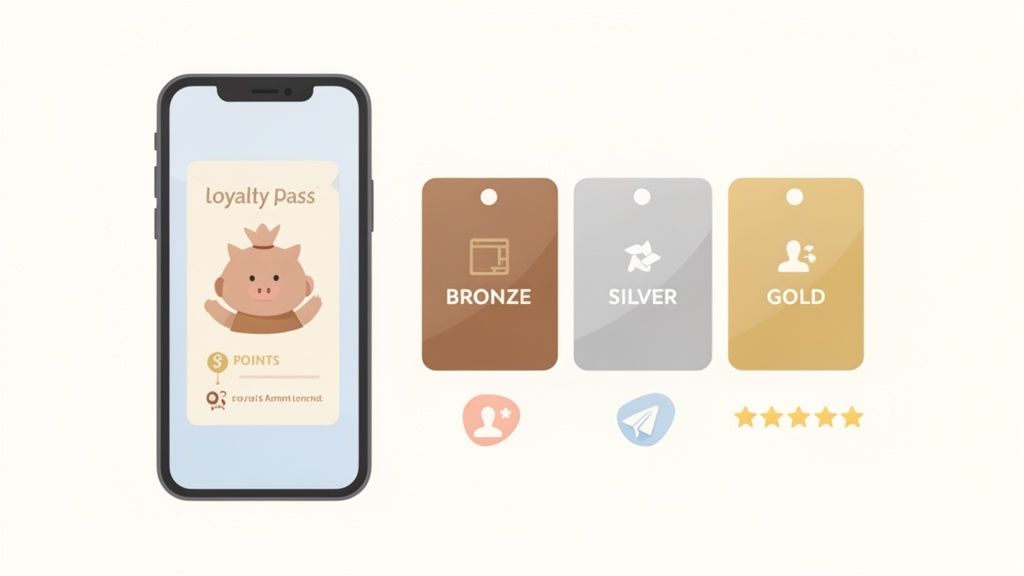
Want to make your customers feel special? Introduce tiers. A tiered loyalty program is one of the most effective ways to create a sense of aspiration and exclusivity. By setting up levels like Bronze, Silver, and Gold, you give people a clear path to progress and goals to shoot for.
It taps into a simple psychological driver: we all want to level up. This little bit of gamification encourages customers to spend more and engage more often as they chase the perks of the next tier.
A well-designed loyalty program is instrumental in boosting retention. The feeling of progression and achieving a new status makes customers more invested in your brand's ecosystem.
Imagine a Shopify store selling premium coffee beans. A tiered system could work like this:
- Bronze Tier (Welcome!): Members earn 5 points for every $1 spent.
- Silver Tier (Spend $250): Now they’re earning 8 points per dollar and get early access to new seasonal blends.
- Gold Tier (Spend $500): These VIPs get 10 points per dollar, a free bag of coffee on their birthday, and exclusive invites to virtual tasting events.
This structure makes your best customers feel like the VIPs they are and gives new members something exciting to aim for.
Make Rewards Tangible and Convenient
Here’s the final, crucial piece: make your rewards both awesome and ridiculously easy to claim. Friction is the absolute enemy of engagement. If redeeming points feels like a chore, your customers just won't do it.
This is where integrating with digital wallets like Apple and Google Wallet is a total game-changer. You can send a customer a digital loyalty pass they add to their phone with one tap. Now, every time they open their wallet app, they see your brand and their points balance—a perfect little nudge to come back and shop.
And don't just stick to percentage discounts for rewards. Mix it up!
- Free products or exclusive merch
- Free shipping for a year
- First dibs on limited-edition items
- A donation to a charity in their name
At the end of the day, a loyalty program is a powerhouse tool. To get a wider view on this, take a look at these proven customer retention strategies that will help keep your audience hooked. When you combine smart ways to earn, tiers to climb, and dead-simple redemption, you’ll have a program your customers actually love.
Using Gamification and Referrals to Drive Growth
Alright, you've got a solid loyalty program running. That's the foundation for building real, lasting relationships with your customers. Now, let's inject some excitement into the mix and turn that foundation into a serious growth engine. This is where gamification and referrals come in—two of the best tools for increasing customer engagement by making brand interactions genuinely fun and shareable.
Gamification simply means adding game-like elements—think points, badges, and leaderboards—to your store's experience. It’s about transforming shopping from a basic transaction into an interactive journey. And it works. I’ve seen brands boost their user activity by over 40% just by adding these kinds of mechanics.
Making Engagement Fun with Gamified Mechanics
Imagine your Shopify store not just as a place to buy things, but as a space where customers can hit milestones and get recognized for it. This simple shift in perspective can make a massive difference in how often people check in with your brand, even when they aren't planning a purchase.
Don't just stop at basic point collection. You can get way more creative by setting up achievement-based rewards that celebrate specific moments in a customer's journey.
Here are a few ideas you can steal:
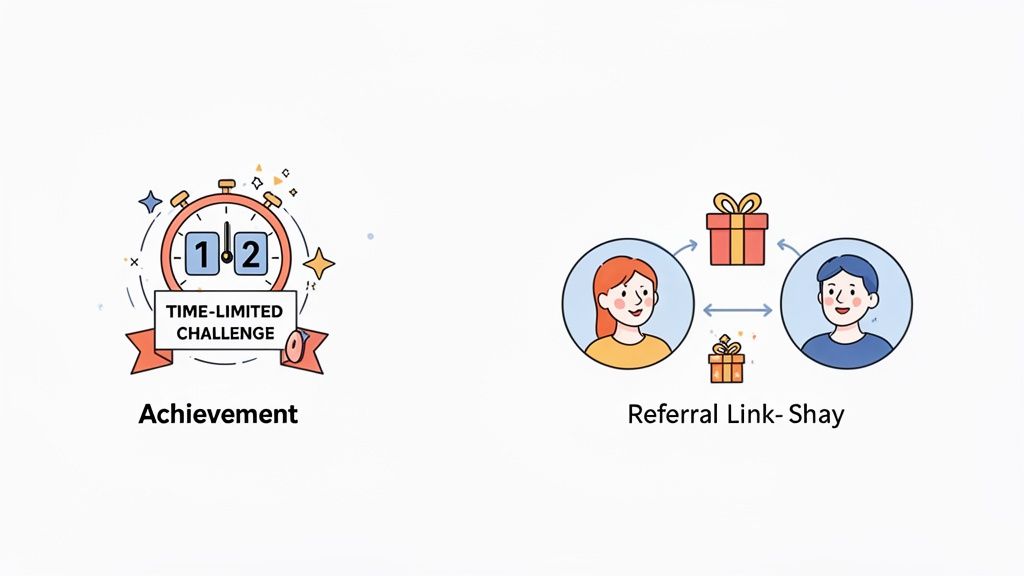
- Achievement Badges: Create unique digital badges for specific actions. If you sell skincare, you could offer an exclusive 'Glow-Getter' badge after a customer makes five purchases, unlocking a permanent 10% discount on moisturizers.
- Time-Sensitive Challenges: Build a little urgency and drive repeat visits with limited-time events. A coffee brand could run a "Weekend Barista Challenge," where anyone who buys two different blends over a weekend earns double points. It’s simple but effective.
- Interactive Quizzes: Engage your audience with fun, useful content. A sustainable fashion brand could create a "Find Your Eco-Style" quiz that gives personalized recommendations and rewards participants with 25 loyalty points just for finishing.
These small touches make interacting with your brand feel less transactional and more rewarding. We dive into more creative ways to use gamification in loyalty programs to keep customers hooked.
Building a High-Impact Referral Program
While gamification deepens the connection with your current customers, referral programs empower them to become your best marketers. Word-of-mouth is still king, and a smart referral program gives your happy customers a real reason to spread the word.
The secret to a great program is making the offer a no-brainer for both the person referring and the new customer they're bringing in. This is what we call a two-sided incentive.
A 'Give $10, Get $10' model is a classic for a reason—it creates a win-win scenario. The existing customer feels good about giving a friend a discount, and the new customer is more likely to make their first purchase.
To get a program off the ground that actually drives growth, you'll want to nail a few core components.
Critical Components of a Referral Program
| Component | Why It Matters | Shopify Example |
|---|---|---|
| Clear, Compelling Offer | The incentive has to be instantly understandable and valuable for both people. No one wants to decipher complex rules. | "Give your friends $15 off their first order of $50+, and you'll get $15 in points when they shop!" |
| Easy Sharing Mechanics | Make it ridiculously easy to share. Provide unique, copy-and-paste links that work perfectly on social media, email, and texts. | A "Share the Love" button on the customer account page that pops up a unique referral link. |
| Simple Tracking and Rewards | Customers need to see what's happening. They should be able to track their referrals and get their rewards automatically. | A dedicated referral dashboard showing pending and successful referrals, with points instantly added to their account. |
When you set this up right, your customer base becomes a proactive, incredibly cost-effective acquisition channel. It's one of the smartest ways to scale your marketing without just throwing more money at ads. By blending the addictive fun of gamification with the viral potential of referrals, you create a powerful system that not only keeps customers around but also finds new ones for you.
Personalizing the Customer Journey with Smart Segmentation
So, you've got a loyalty program running and maybe even some gamification elements live on your store. That's great! You’re now sitting on a goldmine of customer data. The next logical step—and where the real magic happens—is using that data to stop talking to everyone the same way.
Let’s be honest, generic, one-size-fits-all marketing blasts are a surefire way to get ignored or, worse, get that unsubscribe click. Smart segmentation is how you cut through the noise. It’s how you make every single customer feel like you’re speaking directly to them, not just shouting into a crowd.
This isn't about creating dozens of complicated rules or needing a data science degree. It’s about being smart with the information you already have—like purchase history, loyalty status, and on-site behavior—to group customers into meaningful segments. This lets you send hyper-relevant offers and messages that actually resonate, making your marketing feel less like an ad and more like a helpful recommendation from a friend.
Key Customer Segments You Can Create Today
The beauty of segmentation is you can start simple and get more sophisticated over time. The key is to think about the different types of customers interacting with your Shopify store and what they might actually want to hear from you.
Here are a few high-impact segments I always recommend starting with:
- New Customers: This group needs a warm welcome. Create a segment for anyone who made their first purchase in the last 30 days. You can then trigger an automated email series that shows them how to get the most out of their new product or introduces them to your brand story.
- VIPs / High Spenders: These are your best customers, so you need to treat them that way. Segment users who have spent over a certain amount (say, $500) or have reached your top loyalty tier. This is the group you give early access to new products, exclusive discounts, or bonus points campaigns.
- At-Risk or Lapsed Customers: Someone hasn't purchased in 90 days? Don't just let them fade away. Create a segment for these inactive customers and target them with a compelling "We Miss You!" offer, like a bonus of 250 points on their next purchase to entice them back.
- Specific Category Buyers: This is a must if you sell a wide range of products. A customer who only buys running shoes shouldn't be getting emails about your new line of hiking boots. Segment based on past purchase categories to ensure your promotions are always relevant.
If you want to go a step further, you can explore more advanced methods in our guide on customer segmentation in ecommerce. This is how you make personalization scalable.
Automating Campaigns for Maximum Impact
Creating segments is only half the battle. The real power comes from automating targeted campaigns that run in the background, engaging customers at just the right moment without you having to lift a finger. This is where a modern loyalty platform like Toki becomes essential.
The goal is to set up simple "if-then" scenarios that automatically deliver a personalized experience. If a customer enters the 'VIP' segment, then they automatically receive an email with their exclusive perks.
Imagine a Shopify store that sells organic tea. Using automated segmentation, they could set up a workflow like this:
- A customer makes their third purchase and is automatically moved into the "Tea Enthusiast" segment.
- This action triggers an email congratulating them and offering a free sample of a new, unreleased blend with their next order.
- They also get tagged internally for any future early-access announcements.
This isn't just clever marketing; it's a powerful retention machine. This push towards personalization is backed by some serious market trends. The customer success platforms market, a key driver here, is on track to hit $3.1 billion by 2026. That growth reflects a clear demand, especially when you learn that 86% of customers globally are willing to pay more for a better experience. The results speak for themselves: personalized emails can see click-through rates as high as 41%.
By using smart segmentation, you turn your customer data from a passive spreadsheet into an active engine for growth, making every interaction feel personal and valued.
Creating a Seamless Omnichannel Experience
Your customer's journey is rarely a straight line. They might spot your product in an Instagram ad, see it in person at a pop-up shop, and finally buy it a week later on your Shopify store from their laptop. A smart engagement strategy doesn't just acknowledge this—it embraces it, making the experience feel connected and smooth across every single one of these touchpoints.
An omnichannel approach is all about breaking down the walls between your different sales channels. It means a customer's loyalty status, points, and purchase history are always with them, whether they're shopping online or standing in your store. This creates a unified brand world where every interaction feels like a continuation of the same conversation, which is exactly how you build real, lasting loyalty.
When you nail this, your brand feels incredibly cohesive and thoughtful. You're removing friction and making it genuinely easier and more rewarding for people to shop with you, wherever they happen to be.
Bridging the Digital and Physical Divide
The secret to a great omnichannel strategy is having a central hub where all your customer data syncs up in real time. If you're a Shopify merchant who also runs a brick-and-mortar store or does the occasional pop-up market, this isn't just a nice-to-have; it's essential. This is the engine that keeps the entire experience running smoothly.
Picture this very common scenario:
- A customer is browsing your Shopify store and signs up for your loyalty program, instantly earning 150 points.
- A few days later, they stop by your pop-up shop and buy something. Your POS system immediately recognizes them, adds the purchase to their history, and awards them more points.
- Later that week, they're back on your website and decide to cash in their points for a discount on their next online order.
For the customer, this whole process is completely seamless. They don't have to manage different accounts or ask if their in-store purchase "counted" towards their online rewards. It all just works, plain and simple.
Using Digital Wallets for Proactive Engagement
One of the slickest tools for connecting your online and offline worlds is the digital wallet pass. When a customer adds your loyalty card to their Apple Wallet or Google Wallet, you've just secured a permanent spot right on their phone. This is so much more than just a digital points card.
Think of digital wallet passes as a direct line to your customer. You can send timely, relevant push notifications that cut through the noise of a crowded email inbox or social feed.
This opens up some incredible opportunities for location-based engagement. For example, you can set up geofenced notifications. Imagine a loyal customer with your pass installed walks within a few blocks of your physical store. Their phone buzzes with a lock screen message: "Hey Alex! You're near our shop. Stop by today and get double points on your purchase!"
It’s a simple, timely nudge that can be a massive driver of foot traffic, reminding people about your brand at the exact right moment.
Building a Unified Brand Experience
At the end of the day, an omnichannel strategy shows your customers you see them as one person, not a random collection of online profiles and in-store receipts. It's about making them feel recognized and valued at every turn.
To get this right, you really need to focus on a few key pillars:
- Centralized Customer Data: Make sure your loyalty platform talks to both your Shopify store and your POS system. This gives you a single, reliable record for every customer's activity.
- Consistent Rewards: The way customers earn and spend points has to be the same everywhere. A point earned online should have the exact same value as a point earned in your shop.
- Cross-Channel Promotions: Get creative and run campaigns that encourage people to move between your channels. For example, you could offer bonus points for picking up an online order in-store.
By weaving your digital and physical storefronts together, you create a powerful and cohesive world for your customers to exist in. This doesn't just boost engagement; it builds the kind of deep loyalty that turns casual shoppers into your biggest fans.
Measuring Success and Implementing Your Plan
So, you've got a great strategy on paper. Now comes the real work: turning those ideas into action and, just as importantly, figuring out if they're actually working. If you're not tracking the right numbers, you’re just guessing. You need hard data to see if your efforts to increase customer engagement are actually making a difference to your sales.
It's easy to get lost in a sea of data, so let's focus on a few core metrics that truly tell the story of customer loyalty and behavior.
Key Metrics to Watch
These are the numbers I always keep a close eye on.
- Repeat Customer Rate: This one’s straightforward—what percentage of your customers come back for a second, third, or fourth purchase? It’s the clearest, most immediate signal that your loyalty program is doing its job.
- Customer Lifetime Value (CLV): CLV measures the total amount of money a customer is expected to spend with your brand over their entire relationship with you. When your CLV is climbing, it's a solid sign that your engagement tactics are encouraging people to buy more, and more often.
- Redemption Rate: This shows you how many of the loyalty points you've handed out are actually being used. If this number is low, it’s a red flag. It could mean your rewards aren't exciting enough, or maybe the process to claim them is just too much of a hassle.
By tracking these KPIs, you can move from guesswork to making informed decisions based on what your customers are really doing.
Your 90-Day Implementation Roadmap
Trying to launch everything at once is a recipe for disaster. I've seen it happen. A phased approach is much smarter—it keeps things manageable and gives you a chance to listen and adapt. Here’s a sample timeline to get you through the first three months.
Month 1: Launch Your Core Loyalty Program The big goal for this month is getting your foundational points system up and running. Keep it simple to start. Think clear earning rules (like 5 points for every dollar spent) and a handful of desirable rewards that are easy to understand and redeem. Announce the launch everywhere—email, social media, your homepage—to get those initial sign-ups rolling in.
Month 2: Roll Out the Referral Campaign Now that you have a core group of engaged members, it's time to put them to work. Launch a two-sided referral program, something like the classic "Give $10, Get $10." The key here is to make sharing effortless. Give members simple, one-click links and a dashboard where they can see their referrals and rewards add up.
Month 3: Introduce Gamification and Analyze Data Time to add another layer of fun. Introduce something like achievement badges for completing certain actions or run a limited-time "Double Points Weekend" challenge. By the end of this month, you’ll have a decent amount of data to dig into. Start looking at your redemption rates and repeat purchase numbers to see what's working and what needs tweaking.
This roadmap helps build momentum, taking a customer from a simple online transaction to a much deeper, multi-channel relationship over time.
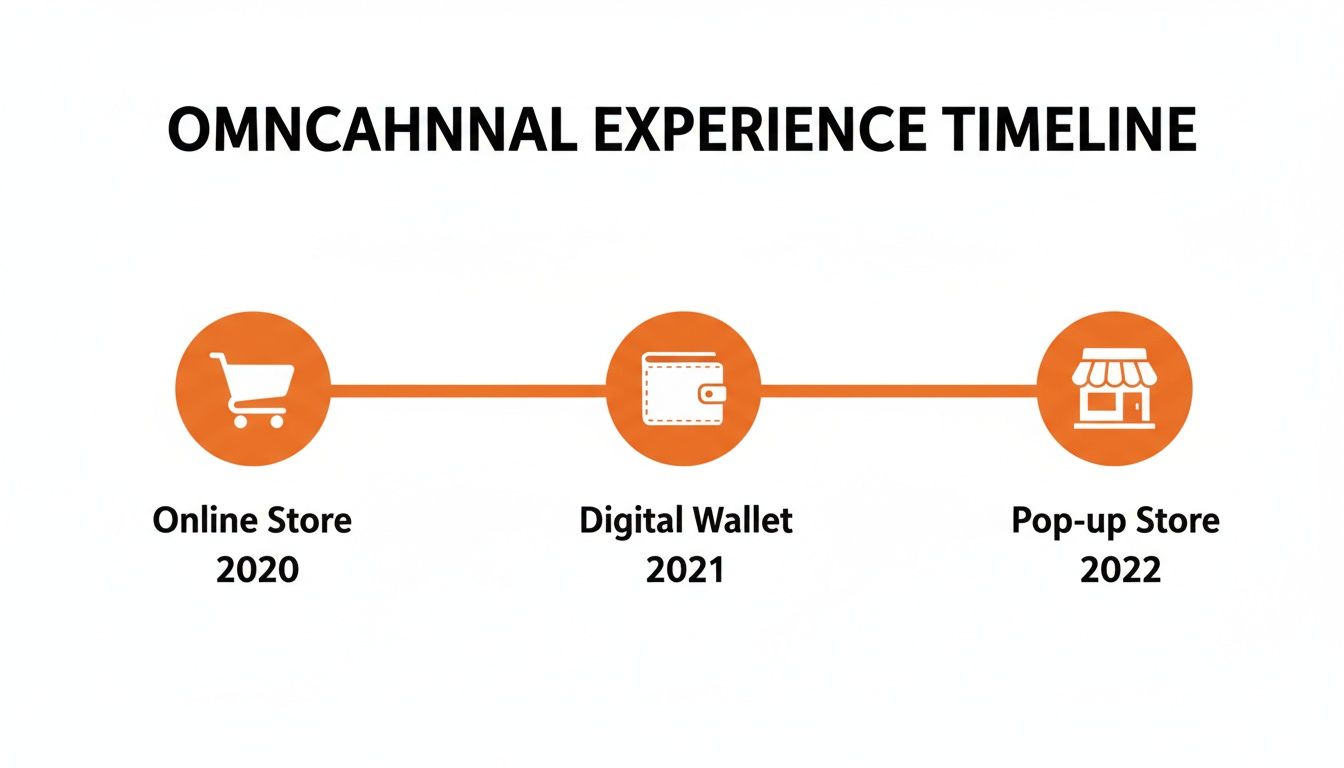
Following a plan like this ensures your strategy connects every touchpoint, from that very first click on your site all the way to a potential in-person experience.
Got Questions About Customer Engagement? We’ve Got Answers.
As you start digging into customer loyalty, you're bound to have questions. It’s a big topic. Here are some of the most common ones we hear from Shopify merchants trying to boost their engagement, along with some straight-to-the-point answers.
How Long Does It Take to See Real Results from a New Loyalty Program?
You’ll likely see people signing up pretty quickly, maybe within the first 30 days. That’s a great start. But the real, meaningful changes—the stuff that actually moves the needle on your repeat purchase rate and customer lifetime value (CLV)—that takes a bit longer.
You should give it about 3-6 months to really see a difference. That’s enough time to gather solid data, spot new buying patterns, and get a true feel for the program's ROI.
The name of the game is patience and consistency. Early sign-ups are encouraging, but the true win is in building long-term habits, not just getting a one-time sales bump.
Can Small Shopify Stores Actually Afford These Engagement Strategies?
Yes, absolutely. You don't need a massive budget to get started. Modern loyalty platforms are built to scale, with plans that fit businesses of every size.
For a small but growing store, you can kick things off with a simple, effective points-based loyalty and referral program. These strategies are surprisingly low-cost to run and they generate a direct return by driving repeat sales and getting customers to spread the word for you. Honestly, it’s one of the most budget-friendly growth tactics out there for new brands.
What’s the Biggest Mistake People Make with Customer Engagement?
The most common trap is launching a cookie-cutter program that has zero personality. Your rewards should feel like your brand. A quirky coffee company’s loyalty program should look and feel completely different from a high-end fashion boutique’s.
The other big mistake? Setting it and forgetting it. You can build the most amazing program in the world, but if nobody knows it exists, it’s useless. You have to actively promote it everywhere—in your emails, on social media, on your homepage. Make sure your customers not only see it but instantly get why it’s a great deal for them.
Ready to turn your casual shoppers into loyal fans? With Toki, you can launch a powerful loyalty, referral, and gamification program in just a few minutes. Start building lasting customer relationships today.