Proven Strategies to Reduce Customer Attrition and Boost Loyalty
Discover how to reduce customer attrition with actionable strategies. Learn to build loyalty, segment customers, and execute win-back campaigns that work.
If you're serious about reducing customer attrition, your mindset has to shift. Stop focusing all your energy on chasing new shoppers and start putting real effort into keeping the ones you already have. This means getting to the bottom of why they leave and then building smart, proactive strategies to make them stay.
Think loyalty programs, personalized outreach, and perfectly timed win-back campaigns. The payoff is huge—even a small bump in retention can send your profitability through the roof.
The Hidden Costs of Losing E-commerce Customers
It’s easy to see customer attrition—or churn—as just another line item on a spreadsheet. A few customers drop off, a few new ones come in, and things seem to even out. But that view misses the brutal financial reality. Constantly chasing new business is an expensive, never-ending grind.
When a customer walks away, you're not just losing one sale. You're losing their entire future with your brand. That means every repeat purchase they might have made, every friend they could have referred, and every opportunity to introduce them to new products—gone.
Their lifetime value craters to zero, and you're stuck paying to acquire someone new all over again.
The Financial Case for Retention
The data tells a pretty clear story. On average, acquiring a new customer costs 5 to 25 times more than keeping an existing one. That’s a massive difference.
And what happens when you focus on retention? Boosting it by just 5% can increase profits anywhere from 25% to 95%. It makes sense when you consider that repeat shoppers often account for 65% of a company's total revenue. You can dig into more of these eye-opening e-commerce figures in this detailed report on eDesk.com.
It all points to one simple truth: the most reliable path to growth is through the customers who already know and trust you.
"Thinking of retention as an 'expense' is a common mistake. It's not a cost center; it's a profit multiplier. Every dollar you invest in keeping a customer happy is an investment in predictable, long-term revenue."
This table breaks down the stark contrast between the cost of chasing new customers and the incredible value of nurturing the ones you already have.
The High Cost of Attrition vs. The ROI of Retention
| Metric | Customer Acquisition | Customer Retention |
|---|---|---|
| Cost | 5-25x higher | Lower operational costs |
| Conversion Rate | 5-20% average success rate | 60-70% probability of selling to an existing customer |
| Profitability Impact | Higher upfront costs, slower path to profitability | A 5% increase can boost profits by 25-95% |
| Average Order Value | Tend to spend less on their first purchase | Spend 31% more on average than new customers |
| Brand Advocacy | Minimal; they are still evaluating your brand | More likely to refer others and leave positive reviews |
As you can see, the numbers don't lie. Focusing on retention isn't just a "nice-to-have"—it's a core business strategy that directly fuels your bottom line.
This guide is designed to give you a practical, actionable plan for turning one-time buyers into loyal brand fans. We'll go over the essential strategies you need to build a "sticky" customer base that won't be tempted by your competitors.
Here’s a sneak peek at what we'll cover:
- Foundational Loyalty & Referral Programs: Simple, powerful tools to reward purchases and kickstart word-of-mouth marketing.
- Tiered Memberships & Gamification: Advanced tactics that create a sense of exclusivity and make shopping genuinely fun.
- Smart Customer Segmentation: Using your data to personalize communication and stop churn before it even starts.
- Effective Win-Back Campaigns: A clear playbook for re-engaging customers who have gone quiet and pulling them back into the fold.
By the time you're done, you'll have a clear roadmap to not only track customer attrition but to actively drive it down, securing a more stable and profitable future for your brand.
Building a Foundation with Loyalty and Referral Programs
Before you can get into sophisticated retention strategies, you have to nail the fundamentals. Loyalty and referral programs are the bedrock of any solid customer retention plan. Think of them as your first line of defense to reduce customer attrition—they transform a simple transaction into the beginning of a genuine relationship.
Why do they work so well? It’s simple psychology. These programs tap into our basic desire to be recognized and rewarded. When customers feel appreciated, they're no longer just buying a product; they're investing in a brand that invests right back in them. The numbers don't lie: 65% of a company's business typically comes from existing customers, which makes these programs a powerful engine for predictable revenue.
This simple shift changes the entire dynamic from a one-and-done purchase to a continuous cycle of engagement. Every dollar spent, every review left, and every friend referred becomes another chance to strengthen that connection and build a barrier against churn.
Designing a Points-Based Loyalty Program
A great loyalty program is about more than just discounts. It's about creating a system where customers are rewarded for all sorts of actions that add value, making them feel like they're part of an exclusive club. The goal is to make every interaction they have with your store a rewarding one.
You'll want to start with a points structure that's dead simple to understand. A common and highly effective model is tying points directly to spending.
- Earning Points: You could offer 10 points for every $1 spent. This keeps the math easy and lets customers see their rewards stack up fast.
- Redeeming Points: The path to redemption needs to be crystal clear. For example, 1,000 points could equal a $10 discount. This clarity is non-negotiable; customers need to know exactly what they're working towards.
But just rewarding purchases is a huge missed opportunity. You should encourage other behaviors that build community and drive growth.
Rewarding non-transactional behaviors is key. When you give points for a product review or a social media share, you're incentivizing actions that build social proof and attract new customers, all while making your current ones feel more connected.
Here are a few practical examples you can set up with a platform like Toki:
- Birthday Bonus: Award 500 bonus points on a customer's birthday. It's a small, personal gesture that goes a long way.
- Social Follows: Offer 100 points just for following your brand on Instagram or TikTok.
- Product Reviews: Give 250 points for leaving a review. This gives you valuable feedback and builds trust with potential shoppers.
By diversifying the ways customers can earn, you create more touchpoints for engagement and reinforce their decision to stick with you.
Launching a Powerful Referral Program
While loyalty programs focus on nurturing the customers you already have, referral programs are your secret weapon for low-cost acquisition. They turn your happiest shoppers into your most enthusiastic marketers. A truly effective referral program feels less like a marketing push and more like a friend sharing an awesome find.
The trick is to create a dual-sided incentive that benefits both the person making the referral (the advocate) and the new customer they're bringing in (the friend). This "give-and-get" model is incredibly persuasive.
Let's take a direct-to-consumer skincare brand as an example. Their referral program could look something like this:
- The Advocate's Offer: The existing customer gets a unique link to share. When their friend makes their first purchase using that link, the advocate gets $15 off their next order.
- The Friend's Offer: The new customer clicks the link and gets 15% off their first purchase.
This setup is a classic win-win. The advocate feels rewarded for their loyalty, and the friend feels welcomed with a special discount. It's a fantastic way to acquire high-quality customers who are already primed to trust your brand—after all, the recommendation came from someone they know. Putting a program like this in place is a straightforward strategy to reduce customer attrition in the long run by building a community of genuine brand fans right from the start.
Turning Loyalty into a Game with Tiers and Gamification
Alright, you’ve got your basic loyalty and referral programs running. That’s a great start. But if you really want to lock in your customers and reduce attrition for good, you need to make them feel something. It's time to go beyond simple point collection and create an experience.
This is where tiered memberships and gamification change the game entirely. They tap into some powerful psychology—our love for status, achievement, and a little friendly competition. Suddenly, shopping isn't just a transaction; it's a journey where customers are actively working towards a goal, making them emotionally invested in your brand.
Don't just take my word for it. The numbers are staggering. A tiny 5% boost in customer retention can skyrocket profits by 25% to 95%. And customers who feel genuinely engaged with a brand? They tend to spend 20-40% more. If you want to dive deeper into the data, this e-commerce statistics report from Elementor is full of great insights.
Build a Tiered Program People Want to Climb
Think of a tiered membership as your brand's VIP club. It gives your customers a clear path to follow, with better perks waiting at every level. The trick is to make each tier feel special but still attainable. You want to give them something to aspire to.
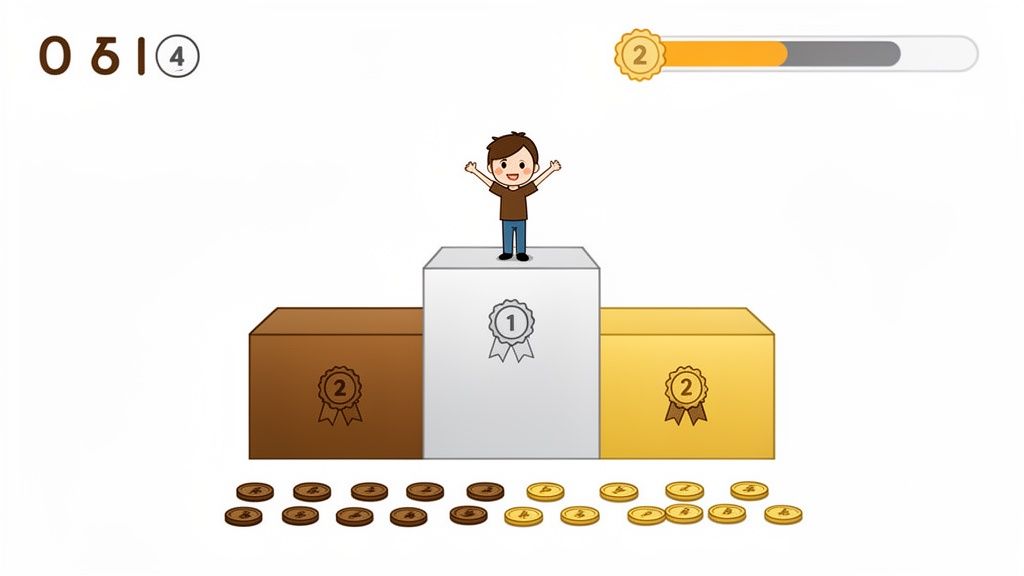
A simple three-tier system—like Bronze, Silver, and Gold—is often the most effective. Let’s imagine a fashion boutique setting one up:
- Bronze Tier (The Welcome Mat): Everyone gets in on their first purchase. They earn the standard points (say, 10 points per dollar) and get a little something for their birthday. It’s simple and welcoming.
- Silver Tier (The Insider): Customers unlock this after spending, for instance, $500 in a year. Now things get interesting. Give them a points multiplier (1.5x points), free standard shipping, and maybe exclusive access to a members-only sale a couple of times a year.
- Gold Tier (The VIP Lounge): This is for your top customers who hit $1,500 in annual spending. The rewards here need to feel truly exclusive: free expedited shipping, a first look at new collections before anyone else, a dedicated customer service contact, and a premium annual gift.
The beauty of this structure is its transparency. Customers know exactly what they need to do to level up. This clarity motivates them to consolidate their spending with you instead of spreading it around with your competitors.
A well-designed tiered system should do more than just reward past behavior; it should actively influence future behavior. When customers see they are only one or two purchases away from the next tier, it creates a powerful incentive to make another purchase sooner rather than later.
Make it Fun: Add Gamification to the Mix
Gamification is just a fancy word for making things fun by adding game-like elements. It’s a brilliant way to keep your loyalty program from getting stale. Instead of customers just passively watching their points pile up, you’re inviting them to play along.
This approach gives people fresh reasons to visit your site and interact with your brand, turning routine engagement into an exciting activity.
With a tool like Toki, you can easily weave these kinds of challenges into your program. Here are a few ideas to get you started:
- Monthly Purchase Challenges: Set a simple goal, like "Make 3 purchases this month to earn 1,000 bonus points." It’s a great way to encourage more frequent orders.
- Achievement Badges: Award fun digital badges for hitting milestones. A "Social Butterfly" badge for sharing five products, or a "Review Pro" badge for writing three helpful reviews. People love collecting them.
- Points-Boosting Events: Run special "Double Points Weekends" or highlight a product category that earns extra points for a limited time. This can be a fantastic way to move specific inventory while making customers feel like they’re getting a special deal.
When you combine the aspirational pull of tiers with the interactive fun of gamification, you create a seriously powerful retention machine. Your program stops being just a marketing tool and becomes a dynamic community that makes your customers feel like valued insiders—the kind who stick around for the long haul.
Using Customer Segmentation to Personalize Retention
While loyalty programs and gamification are great for keeping customers engaged, if you really want to reduce customer attrition, you have to get more personal. This is where we move from a shotgun approach to a sniper rifle. Instead of treating every customer the same, you can use your data to create experiences that make them feel genuinely seen and understood.
Think of customer segmentation as your secret weapon. It’s the practice of grouping your audience based on their behaviors or shared traits. When you know who your customers are and how they shop, you can stop guessing and start giving them exactly what they need, right when they need it.
This is how you get ahead of churn. Imagine sending an exclusive gift to your top spenders or a perfectly timed "we miss you" offer to someone who hasn't shopped in a while. You're not just reacting; you're proactively building relationships that last.
Identifying Your Key Customer Segments
First things first, you need to dig into your e-commerce data to find these meaningful groups. You don't need a dozen segments to get started—focusing on a few high-impact ones can make a world of difference. To really get this right, you might even consider looking into outsourced customer relationship management (CRM) services to help manage and make sense of the data.
Here are three essential segments every e-commerce brand should be tracking:
- High-Spenders (Your VIPs): These are the folks who consistently spend the most. They’re your potential brand advocates, and you should be rolling out the red carpet for them.
- At-Risk Shoppers (The Quiet Ones): These customers were active once, but they haven't bought anything in, say, 90 or 120 days. They're on the verge of leaving for good and need a gentle nudge to come back.
- First-Time Buyers (The Newcomers): This group just made their first purchase and is still on the fence about your brand. That initial 30-60 day window is your make-or-break moment to turn them into a loyal fan.
The real magic of segmentation isn't just about putting people in boxes. It's about anticipating their next move. When you know a customer is at risk of churning, you have a golden opportunity to step in with a compelling reason for them to stay.
Crafting a Retention Play for Each Segment
Once you've defined your segments, it's time to build targeted campaigns for each one. The trick is to match your offer and messaging to what actually motivates that specific group. A generic discount just won't cut it.
The High-Spenders Play
Your VIPs don't need another 10% off coupon; what they really want is recognition and exclusive treatment.
- Your Move: Send them an unexpected, high-value gift. Don't tie it to a purchase—just send it as a thank you for being awesome.
- Real-World Example: A specialty coffee brand could send its top 1% of customers a limited-edition mug with a handwritten note from the founder. That kind of personal touch builds an emotional connection a discount never could.
The At-Risk Shoppers Play
This group needs a good reason to come back. Your message should remind them why they liked you in the first place and create a little bit of urgency.
- Your Move: Set up an automated email sequence that kicks in after 90 days of inactivity.
- Real-World Example: The first email can be a friendly, "Hey, we miss you!" that showcases new products based on their past purchases. If that doesn't work, a follow-up a week later could offer a special discount or even a bonus of 500 loyalty points on their next order.
The First-Time Buyers Play
With this group, your entire goal is to lock in that crucial second purchase and show them the full value of your brand.
- Your Move: Enroll them in a post-purchase onboarding series.
- Real-World Example: Send a few emails that give them tips on using their new product, tell your brand's story, and invite them to join your loyalty program so they can start earning points right away.
By tailoring your approach, you make every communication feel relevant and personal. This dramatically boosts your chances of keeping customers around for the long haul. For a deeper look at this, our guide on customer segmentation in e-commerce covers even more advanced strategies.
How To Execute A Winning Win-Back Campaign
Even with a killer loyalty program, some customers will just go quiet. It happens. But a dormant customer isn't necessarily a lost one—not yet, anyway. This is your cue to launch a strategic win-back campaign, one of the most effective tools you have to reduce customer attrition.
A real win-back campaign is more than a single "We miss you!" email. It’s a smart, automated sequence designed to re-engage shoppers and pull them back into your world. Get this right, and you can turn a potential churn statistic into a repeat buyer.
Timing is everything. Move too soon, and you seem pushy. Wait too long, and they've completely forgotten you. From what I've seen, hitting them up after 120 days of inactivity is the sweet spot. It’s enough time for their natural buying cycle to lapse without letting the connection go completely cold.
First Impressions Matter: Crafting The Perfect Win-Back Email
That first email in your sequence is make-or-break. You have one shot to grab their attention, remind them why they liked you in the first place, and make an offer they can't refuse. It's worth the effort—a study found that 45% of people who open a win-back email will open future messages from you.
So, what goes into a great first email? Three things:
- A Subject Line That Stands Out: Ditch the generic stuff. Get personal or a little cheeky. "A Special Offer Just for You, [Customer Name]" or "Did We Do Something Wrong? Here’s 20% Off" are far more likely to get a click.
- A Quick Reminder of Your Value: Before you throw a discount at them, gently remind them what's great about your brand. Maybe it’s your commitment to quality, your unique mission, or some amazing new products you just dropped.
- An Offer They Can't Ignore: This is the main event. The incentive has to be strong enough to actually spark action.
Designing A Win-Back Offer That Actually Converts
A generic offer gets generic results. The best incentive will depend on your margins and what your customers actually value. A simple discount works, sure, but you can get more creative to reinforce the value of your loyalty program.
Here are a few win-back offers I’ve seen work wonders:
- Tiered Discounts: Encourage a bigger cart with offers like 15% off a $50 purchase or 20% off when they spend $75.
- Bonus Loyalty Points: Instead of a discount, give them a head start on their next reward. "1,000 bonus points on your next purchase" is a powerful way to pull them right back into your loyalty ecosystem.
- A Free Gift With Purchase: This often feels more valuable than a straight discount and can be a great way to introduce them to a new or popular product.
Figuring out who even needs a win-back campaign starts with smart segmentation. You have to group your customers to understand their behavior before you can try to change it.
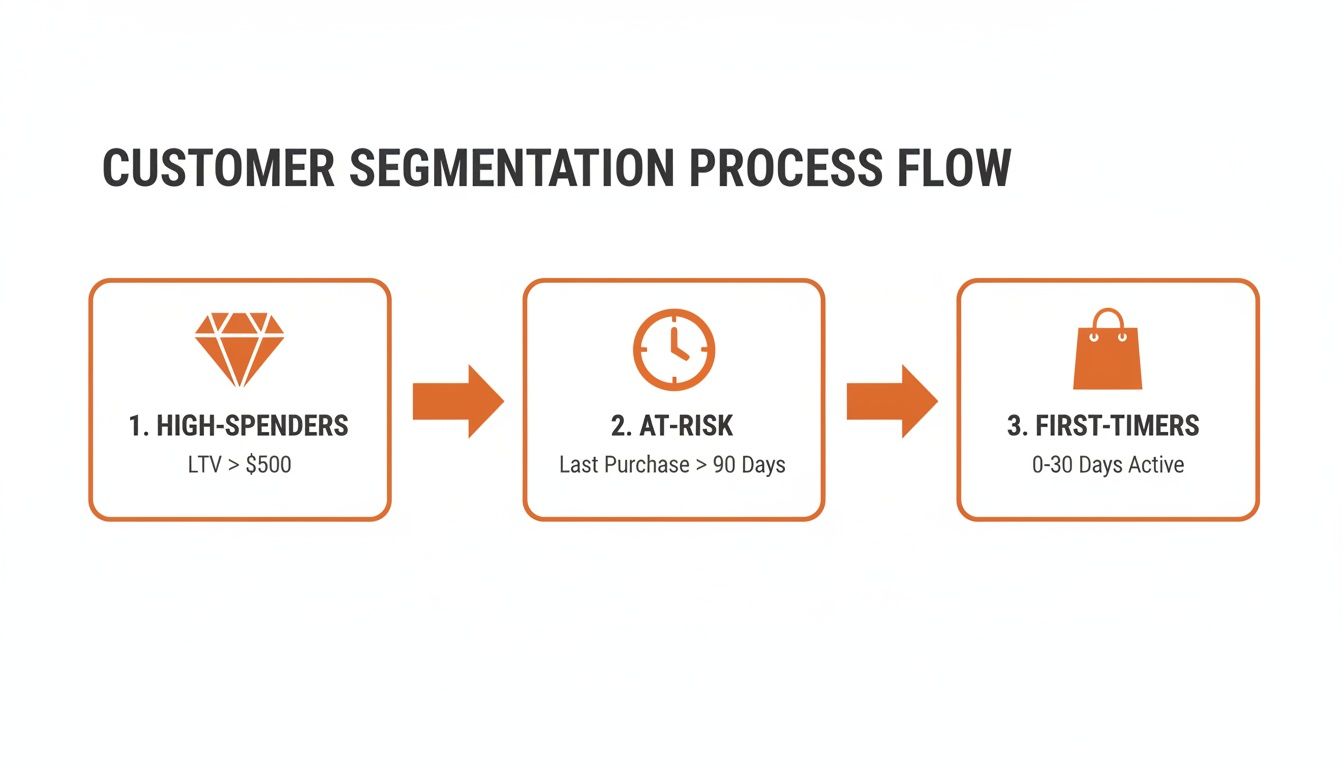
When you segment customers into groups like "High-Spenders," "First-Timers," or "At-Risk," you can tailor your messaging with incredible precision. A one-size-fits-all approach just doesn't cut it.
The goal here isn't just about getting one more sale. It's about bringing that customer back into the fold and reminding them of the value and experience they've been missing out on.
A Sample Campaign To Get You Started
To make this more concrete, here's a simple, effective email cadence you can adapt for your own brand.
Sample Win-Back Email Campaign Cadence
| Timing | Email Focus | Example Subject Line | Offer Type |
|---|---|---|---|
| Day 120 | The Re-Engagement | We've missed you! Here's a treat. | 20% Off or 1,000 Bonus Points |
| Day 127 | Urgency & New Arrivals | Your 20% off is expiring! See what's new. | Gentle reminder of the initial offer |
| Day 135 | Last Chance / Feedback | Final chance for 20% off. Where did we go wrong? | Final reminder + link to a short survey |
| Day 180 | The Unsubscribe | Is this goodbye? We'll be removing you soon. | No offer, just a final attempt to engage |
This structured approach prevents you from just spamming them with the same message, giving you multiple chances to reconnect in a meaningful way.
Don't Just Set It and Forget It
Your work isn't done once the campaign is live. You have to watch the numbers and see what’s working. Keep a close eye on your key metrics for each email: open rates, click-through rates, and—most importantly—conversion rates.
Seeing high open rates but low conversions? Your subject line is great, but your offer is falling flat. If open rates are low across the board, it's time to test new subject lines. For a deeper dive, you can check out our complete guide on how to win back lost customers and keep them around.
By constantly testing and refining your messaging, timing, and offers, you can turn customer attrition from a problem into a predictable opportunity for growth.
Measuring Success and Optimizing Your Attrition Rate
You can’t improve what you don’t measure. It’s an old saying, but it’s true. After you’ve put in the work to launch loyalty programs, win-back campaigns, and personalized segmentation, you need to close the loop by tracking the metrics that actually matter. This is how you prove your efforts are paying off and turn your strategy to reduce customer attrition into a fine-tuned, data-driven machine.
Without clear key performance indicators (KPIs), you’re essentially flying blind. You might feel like a new loyalty tier is working, but the data tells the real story. Tracking the right numbers connects your actions to tangible results, so you can make smarter decisions instead of just guessing.
Key Metrics to Monitor
To get a clear picture of your retention health, you really only need to focus on a few core metrics. These KPIs tell you more than just whether customers are leaving; they reveal how valuable the ones who stick around truly are.
-
Customer Churn Rate: This is your most direct measure of attrition. It’s simply the percentage of customers who stop buying from you over a set period. You calculate it like this:
(Lost Customers ÷ Total Customers at Start of Period) x 100. If this number starts creeping up, it’s an immediate red flag that something needs a closer look. -
Customer Lifetime Value (CLV): This metric is all about the long game. It estimates the total amount of money a single customer is likely to spend with you over their entire relationship with your brand. When your CLV is on the rise, it’s a fantastic sign that your retention strategies are working, because loyal customers almost always spend more over time.
-
Repeat Purchase Rate: This one is a great indicator of customer loyalty and satisfaction. It tracks the percentage of your customers who come back for a second, third, or fourth purchase. A high repeat purchase rate means you’re delivering real value that keeps people coming back for more.
Getting a handle on these numbers is fundamental. If you want to go deeper, our detailed guide on the most important customer retention KPIs is the perfect next step for your e-commerce store.
Interpreting the Data and Taking Action
Once you have these numbers, the real work begins. Your analytics dashboard shouldn't just be a report card—think of it as a roadmap for what to do next. For instance, if you see your churn rate spike the month after a price increase, you have immediate, direct feedback that you might need to rethink that decision or better communicate the value.
On the flip side, what if your Repeat Purchase Rate jumps after you introduce a new loyalty tier? That’s a clear signal you’ve found a winning tactic to double down on. This continuous feedback loop is what separates good retention strategies from great ones.
Don’t just look at the numbers in a vacuum. The magic happens when you connect them to your actions. Always be asking, "What did we do this quarter that could have caused our CLV to increase?" This shifts your team from constantly putting out fires to proactively refining your strategy.
To get the full story, you need to understand not just what is happening, but why. This is where qualitative feedback comes in. A tool like the Net Promoter System (NPS) can give you powerful insights into customer sentiment. By combining hard metrics with direct customer feedback, you create a complete picture of why customers stay or go, giving you everything you need to keep improving.
Common Questions About Tackling Customer Churn
It's natural to have questions when you're diving into the world of customer retention. I hear these all the time from merchants, so let's clear up a few of the most common ones.
How Quickly Can I Actually See Results from a New Loyalty Program?
You'll definitely see some immediate activity—people signing up, following you on social media, that sort of thing. That early buzz is great, but the real, bottom-line impact takes a little patience.
You should start looking for significant shifts in your customer attrition rate and lifetime value around the 3 to 6-month mark. That's usually enough time to gather meaningful data on repeat purchase habits and see if your efforts are truly moving the needle. Keep in mind, this isn’t a "set it and forget it" thing; consistent promotion is key to getting there faster.
If I Could Only Do One Thing, What's the Most Effective Attrition Strategy?
There’s no magic bullet that works for everyone, since so much depends on your specific products and customers. But if I had to recommend a starting point for most e-commerce brands, it would be a tiered loyalty program.
Why? It’s a powerhouse. It bundles multiple retention tactics into a single, cohesive system. You're not just rewarding purchases; you're building a sense of status and exclusivity that gives people a real reason to stick with you over the long run.
The best retention strategies I've seen go beyond just transactional rewards. They forge an emotional bond. Whether it's through VIP status, a sense of community, or just feeling understood, the goal is to make your customers feel like they're part of something special.
Can I Actually Reduce Attrition if I Have a Small Marketing Budget?
Yes, you absolutely can. Some of the most effective ways to keep customers coming back are surprisingly light on the wallet. Take a referral program—it basically turns your happy customers into your marketing team for a tiny acquisition cost.
Automated win-back email campaigns are another great example. Most marketing platforms let you set these up for free or very little cost. It's not about outspending your competitors; it's about being smarter with your data and more creative with your communication to create genuine value.
Ready to turn those first-time buyers into loyal fans for life? Toki provides everything you need to launch a top-tier loyalty, referral, and membership program designed to boost repeat sales and stop customer churn in its tracks. Start building with Toki today.