Punch Card Loyalty: Drive Retention with Digital Rewards (punch card loyalty)
Elevate retention with punch card loyalty - learn how to build digital rewards that drive repeat business for Shopify merchants.
You know the classic "buy ten, get one free" offer? That’s punch card loyalty in a nutshell. It’s a beautifully simple—and surprisingly powerful—way to reward customers who keep coming back. The magic is in creating a tangible sense of progress, turning every purchase into a visible step toward a guaranteed reward.
Why Punch Card Loyalty Still Works in E-Commerce
The humble punch card might bring to mind old-school coffee shops and delis, but the psychology behind it is more relevant than ever for today’s Shopify stores. It's not about the paper; it's about the predictable, habit-forming loop it creates.
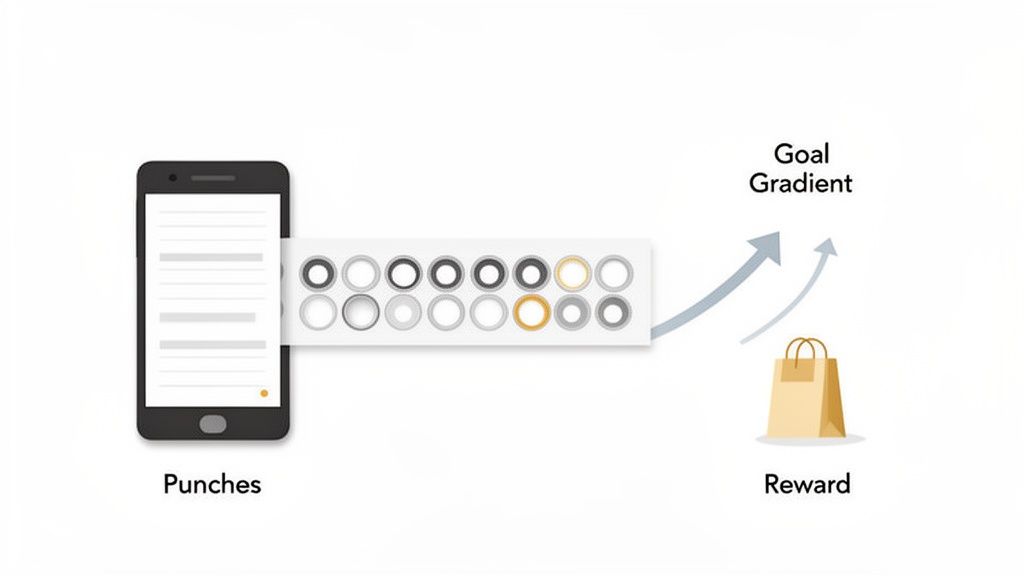
This timeless model taps directly into a powerful psychological trigger known as the goal gradient theory. The idea is simple: the closer we get to a goal, the more motivated we are to reach it. Each digital "punch" your customer earns isn't just a record of a sale—it's visible proof they’re getting closer to a prize. That visual momentum makes the final reward feel within reach, nudging them to make that next purchase just a little sooner.
The Evolution from Paper to Pixels
Punch cards were a powerhouse of customer engagement back in the day. By 1937, IBM was churning out up to 10 million of these cards every single day, cementing their place in commerce. For Shopify store owners, this history is important because it proves the core concept works: tangible incentives drive repeat business. Modern digital platforms like Toki just take that proven principle and supercharge it with gamified experiences.
Digital punch cards completely transform the old-school concept. They get rid of the biggest annoyance—lost or forgotten paper cards—and unlock a treasure trove of data. Suddenly, your loyalty program goes from a passive piece of paper to an active engagement channel.
With a digital system, you can:
- Automate Tracking: No more manual stamping. Purchases are logged automatically, making the whole process seamless for everyone.
- Personalize Communication: Imagine sending an automated push notification when a customer is just one punch away from their reward. That’s powerful.
- Gather Rich Data: You can finally understand purchase frequency and customer lifetime value with real precision.
A digital punch card program isn’t just a replacement for paper; it's a strategic evolution. It fuses the simple, motivating power of visible progress with the data-driven personalization that modern e-commerce demands.
This shift lets you create a loyalty experience that feels both familiar and refreshingly modern.
Traditional Paper vs Modern Digital Punch Cards
So, how do the classic paper cards really stack up against a modern digital system? The differences are pretty stark when you lay them out side-by-side. For a Shopify store, moving to digital isn't just a convenience—it's a massive upgrade in capability.
| Feature | Traditional Punch Card | Digital Punch Card (with Toki) |
|---|---|---|
| Accessibility | Physical card, easily lost or forgotten | Always on the customer's phone; never lost |
| Tracking | Manual stamping; prone to errors/fraud | Automated and secure; tied to customer accounts |
| Customer Data | Anonymous; provides no insights | Collects purchase history, frequency, and preferences |
| Personalization | One-size-fits-all offer | Tailor rewards and send targeted, timely notifications |
| Customer Experience | Adds friction at checkout | Seamless and integrated into the online shopping experience |
| Business Cost | Ongoing printing and distribution costs | SaaS subscription model; scales easily with your business |
As you can see, the digital approach offers far more than just convenience. It turns a simple reward system into a sophisticated marketing and retention tool.
The loyalty landscape is always evolving, and it's worth understanding modern approaches like Web3 loyalty programme management to stay ahead of the curve. By digitizing this proven method, you create a powerful, habit-forming system that turns one-time buyers into loyal advocates for your brand, directly boosting your bottom line.
Designing a Loyalty Program That Customers Actually Want
Before you ever touch an app or a line of code, let's talk strategy. The difference between a loyalty program that flops and one that becomes a core part of your business is all in the planning. A great program should feel like a natural extension of your brand, not some generic add-on you downloaded.
It all starts by figuring out what "winning" looks like for your store. Just installing a loyalty app without a clear goal is a recipe for wasted effort. You need a destination. Are you trying to get existing customers to come back more often? Or maybe you want to push a specific high-margin product line? Your goals will dictate every other choice you make.
What's the End Goal? Defining Your Program's Purpose
First things first: set some real, measurable objectives. A vague goal like "increase loyalty" is useless because you can't measure it. You have to get specific.
Think about what you actually want to achieve. For instance:
- More Frequent Purchases: Let's say your average customer buys twice a year. Your goal could be to bump that up to 2.5 times within six months.
- Higher Average Order Value (AOV): You could offer a punch for every $50 spent, with the aim of lifting your AOV by 10%.
- Spotlight a Product: Got a new skincare line you want to push? Offer double punches on those items for the first 30 days to get the ball rolling.
Having a concrete target, like a 15% increase in your repeat customer rate, gives you a clear benchmark for success. This isn't just a feel-good marketing tactic; it's a data-driven tool for growth.
Crafting Rewards That Genuinely Motivate
The rewards are the hook. They have to be something your customers actually care about, but they also can't sink your profit margins. A lot of stores default to a simple discount, but you can get so much more creative—and often more effective.
Don't just slap "10% off" on it and call it a day. Your best customers often respond more to a feeling of exclusivity than a small price cut.
The best rewards aren't just transactional; they're emotional. They make your customers feel seen and valued, creating a bond that a simple discount could never replicate.
Think about a mix of rewards that balance customer value with your costs:
- Low-Cost, High-Impact Perks: Things like free shipping, early access to new collections, or an exclusive digital download have a huge perceived value but cost you very little.
- Product-Based Rewards: Instead of a discount, why not offer a free product? This is often more profitable, especially if you pick an item with a high margin. It's also a fantastic way to get customers hooked on something new. Think of a coffee shop offering a free pastry—classic for a reason.
- Experiential Bonuses: For your top-tier fans, create rewards that build a real community. This could be an invite to a private online Q&A, a personal thank-you video from the founder, or a one-on-one styling session.
A cosmetics brand, for example, could offer a free travel-sized serum after five purchases. It feels like a premium gift, but it also acts as a product sample that can lead to a full-size purchase down the line. It's a win-win.
Weaving in Your Brand and Communication
Finally, your loyalty program can't feel like a third-party afterthought. It needs to look, sound, and feel like your brand. The name, the visuals, the way you talk about it—it all needs to align. A generic, unbranded punch card just feels cheap.
Start by giving it a name. Instead of the boring "Loyalty Program," a plant store could call it the "Bloom Club." Right away, it feels more like a community and less like a chore.
The communication, from the very first interaction, has to be on point.
- The Sign-Up: Create a clean, visually appealing pop-up or landing page that quickly explains how it works. No one wants to read a novel.
- The Visuals: Your digital wallet pass should use your brand’s colors, logo, and fonts. Platforms like Toki make this incredibly easy to customize.
- The Voice: Use your brand’s tone. If you're a playful brand, don't send sterile notifications. "Heck yes, you earned a punch!" is always going to land better than "Transaction recorded."
When you thoughtfully map out your goals, rewards, and branding, you're not just launching a program; you're building a powerful retention engine. This is how you create a punch card loyalty experience that customers love from day one, driving the repeat business that truly fuels growth.
Bringing Your Program to Life with Digital Wallet Passes
Alright, you’ve got your strategy nailed down. Now for the fun part: actually building your punch card loyalty program. The whole point here is to create a slick, app-free experience that lives right inside your customers' phones. Forget clunky app downloads—that's a major turn-off for most people.
Platforms like Toki make this surprisingly simple by tapping into the native Apple and Google Wallets already on everyone's device. This removes the friction that kills so many loyalty programs before they even get off the ground.
Getting started usually just means a quick, one-click install from the Shopify App Store. This little step handles all the tech-heavy lifting in the background. Once it's connected, the system can see every purchase and customer detail, creating the automated engine that will run your entire program.
Designing Your Digital Punch Card
Think of your digital wallet pass as a tiny billboard for your brand that lives in your customer's pocket. It’s a direct line to them, so it needs to look and feel like you. This is your chance to design something that not only works well but also reinforces your brand every single time they check their progress.
A great digital punch card needs a few key things:
- Your Logo and Brand Colors: This is non-negotiable. The pass has to be instantly recognizable as yours.
- Clear Progress Indicators: People need to see how close they are to a reward at a glance. Think visually—stamped icons, a progress bar, something that makes it obvious.
- Dynamic Information: The pass should feel personal. It needs to automatically update with the customer's name, their current punch count, and what they're working toward.
This is really about nailing three core pillars: having clear goals, offering great rewards, and wrapping it all in your unique brand.
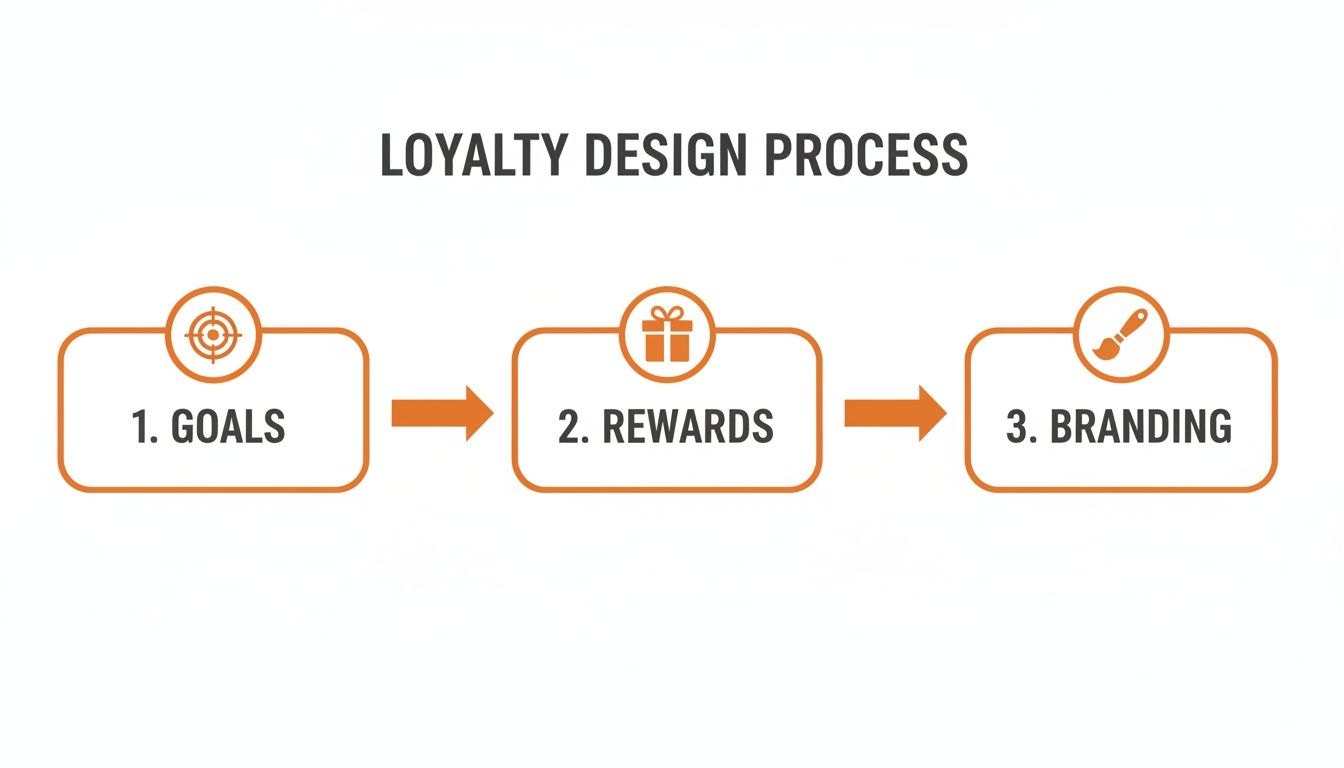
When you look at it this way, it’s clear that a solid program starts with a purpose (your goals), is driven by motivation (the rewards), and builds connection through consistent branding.
Setting the Rules for Earning Punches
This is where you define how customers actually earn their stamps. The best part about a digital system is its flexibility. You're not stuck with the old "one punch per purchase" model—you can get a lot more creative to encourage specific behaviors.
Here are a few ways to set up your rules:
- Per Purchase: The classic. It’s simple, easy to understand, and it works.
- Per Item: Got a new product line you want to push? Or a high-margin item? Offer a punch only when a customer buys that specific thing.
- Amount Spent: This is a fantastic way to bump up your average order value. Award a punch for every $25 or $50 spent.
- For Engagement: Turn customers into fans. Offer a punch for a social media follow, a product review, or even on their birthday.
From my experience, the most successful programs mix and match these rules. Start with a simple foundation, like one punch per order, then sprinkle in bonus opportunities to keep things fresh and exciting.
For example, a coffee roaster could give one punch for any bag of coffee but offer a bonus punch for trying their new single-origin roast. This drives both repeat business and product discovery. If you want to dive deeper into the nuts and bolts, it’s worth learning more about how digital wallet passes function.
Making the Customer Journey Effortless
Look, your program could be the best in the world, but if it's a pain to join, nobody will. The final, critical piece is making the sign-up process ridiculously easy.
Set up an automated email or an on-screen prompt that appears right after their first purchase. Use simple, direct language—no jargon. Something like, "Congrats! You've earned your first stamp. Tap here to add your digital punch card to your Apple/Google Wallet and track your progress to a free gift!"
That first interaction is everything. A smooth, one-tap sign-up gets customers enrolled and engaged from the get-go, paving the way for long-term loyalty. When done right, the results can be massive. One restaurant chain saw its average check size for loyalty members jump by 38% after putting a similar mobile program in place.
Make It Fun: Driving Engagement with Gamification and Personalization
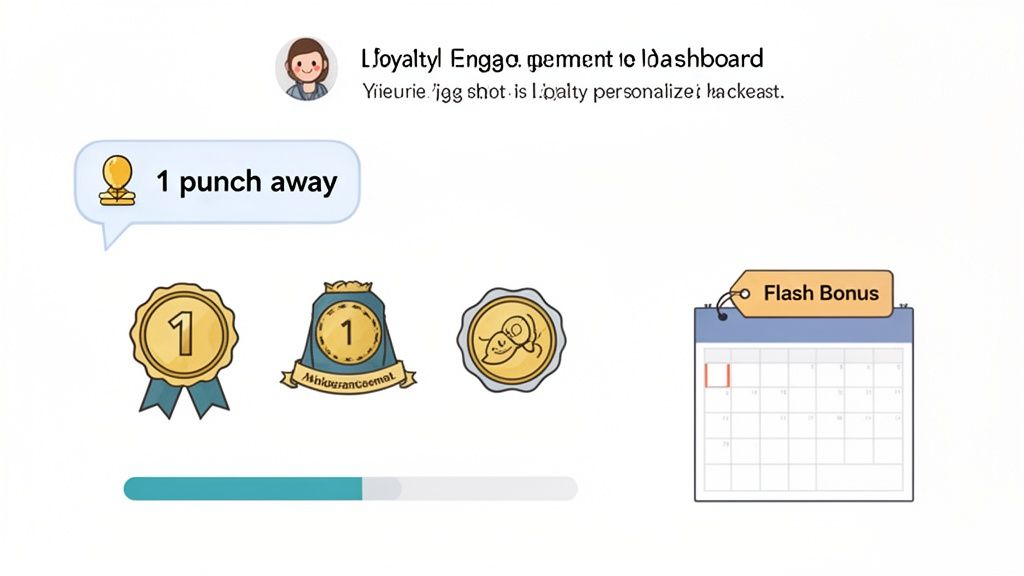
Getting your punch card loyalty program up and running is just the start. The real work—and the real magic—begins when you turn it from a simple "buy ten, get one free" tool into an experience your customers actually look forward to.
A static program quickly fades into the background. But one that feels dynamic, with a dash of fun and a personal touch? That’s what keeps people coming back.
Layering in the Fun with Gamification
When people hear "gamification," they often think of complicated video games. It's much simpler than that. It’s about adding familiar game-like elements to your program to keep things interesting and motivate customers to earn that next punch.
A few proven tactics can make a world of difference:
- Bonus Punch Events: Got a slow weekend coming up? Run a "Double Punch Weekend." The urgency alone can drive a significant spike in orders.
- Time-Sensitive Challenges: Offer a small, exclusive reward for customers who get, say, three punches in a single month. This encourages more frequent visits and gets people hooked on the habit of participating.
- Achievement Badges: Award digital badges for hitting certain milestones. Think "First Reward Unlocked," "Loyalty Legend" (for 5+ redemptions), or even "Trendsetter" for trying out a new product. People love collecting things and showing off their status.
These aren't huge changes, but they shift the dynamic. Suddenly, collecting punches becomes an active, interactive journey. For a deeper look at different tactics, our guide on gamification for loyalty programs has even more ideas.
The Power of Smart Personalization
Gamification is great for getting attention, but personalization is what builds the relationship. Your customer data is a goldmine, and using it to create timely, relevant messages is what makes members feel like you actually know them.
True engagement comes from showing customers you understand their journey. A well-timed, personalized notification is infinitely more powerful than a generic email blast. It proves you're paying attention.
Using a platform like Toki, you can segment your audience and trigger automated messages based on their actual behavior. This lets you move beyond one-size-fits-all campaigns and start having real, one-on-one conversations at scale.
Here’s what that looks like in the real world:
- The "Almost There" Nudge: A customer has nine punches. You can automatically send a push notification that says, "You're so close! Your next purchase earns you a freebie." It’s a simple, powerful motivator.
- The "Welcome Back" Offer: A customer hasn't made a purchase in 60 days and is about to go cold. Target them with a "We miss you!" email that includes a free bonus punch to get them back in the door.
- The Post-Reward Follow-Up: Right after a customer redeems their reward, send a thank you message. You could even use it as a chance to reveal a new, exclusive challenge just for members who have reached that level.
By blending the excitement of gamified elements with the thoughtful touch of personalization, your punch card program becomes more than just another marketing tactic. It becomes a central part of how customers experience your brand, fostering the kind of genuine loyalty that truly drives growth.
Measuring and Optimizing Your Program for Growth
Getting your digital punch card program live is a fantastic milestone, but the real work starts now. A loyalty program isn't a "set it and forget it" tool. It's a living, breathing part of your business that needs consistent attention and fine-tuning to really pay off.
The difference between a program that sputters out and one that becomes a true growth engine comes down to one thing: using data to make smart decisions.
It’s easy to drown in numbers, but focusing on just a few key metrics will tell you everything you need to know. To get a real handle on how your digital punch card is performing, you need to track the right digital marketing performance metrics.
Key Metrics That Actually Matter
Think of your analytics dashboard as your mission control. Instead of getting bogged down by every single data point, let's zoom in on the numbers that give you a clear, honest look at your punch card's health.
-
Participation Rate: What percentage of your customers are actually signing up? If this number is low, it could be a sign that your sign-up process is too complicated or you simply aren't promoting it well enough at checkout or in your emails.
-
Redemption Rate: This is a big one. It shows how many of the rewards people earn are actually being used. When customers earn rewards but don't bother to cash them in, it's a huge red flag. The prize just isn't exciting enough.
-
Purchase Frequency: Are your loyalty members coming back to buy more often than your regular customers? This is the core goal. A healthy increase here is solid proof that your program is successfully creating loyal habits.
-
Customer Lifetime Value (CLV): This is the ultimate scorecard. Comparing the CLV of your loyalty members to non-members shows you the real, long-term financial impact your program is having on the business.
A low redemption rate is often the most telling sign of a problem. If customers do the work to earn a reward but don't care enough to use it, you've fundamentally misjudged what motivates them. It’s time to rethink the prize.
By keeping a close eye on these KPIs, you can stop guessing and start knowing what works. For a much deeper look at the numbers, check out our detailed guide on loyalty program analytics.
Turning Data Into Action
Data doesn't mean much until you act on it. Your dashboard is telling you a story about what your customers want—your job is to listen and respond.
Let's walk through a real-world example. Imagine a skincare brand sees a great participation rate but a really disappointing redemption rate for their "10% off your next order" reward. The data is screaming that while customers are happy to join, the discount isn't compelling enough to bring them back.
Here’s how they could tackle that:
- Run an A/B Test: They could split their members into two groups. Group A keeps the 10% discount, while Group B gets an offer for a free, travel-sized version of their best-selling serum.
- Watch the Numbers: After a month, they compare the redemption rates. Did the free product move the needle?
- Pick the Winner: If the free serum drove way more redemptions and repeat orders, they've found their new, more effective reward and can roll it out to everyone.
This simple loop—Measure, Interpret, Test, Repeat—is the secret to keeping your program fresh and effective. It transforms your punch card from a static feature into a dynamic system that evolves right alongside your customers' tastes, ensuring it remains a powerful asset for years to come.
Answering Your Digital Punch Card Questions
Even with the best strategy laid out, you're bound to have a few questions before you dive into building your own digital punch card program. We get it. Let’s tackle the most common concerns and sticking points we see from merchants every day.
Think of this as your quick-reference guide to clear up those last few uncertainties, so you can launch with confidence.
Is a Punch Card Program a Good Fit for My Online Store?
Absolutely. While we often associate punch cards with the local coffee shop, the core idea—rewarding how often people buy—is a powerhouse for e-commerce.
A digital punch card works exceptionally well for businesses that sell consumables. Think skincare, coffee beans, supplements, or gourmet snacks. It’s also a perfect match for products that need regular top-ups, like pet food or cleaning supplies.
The principle is simple: if your products encourage customers to come back for more, a punch card will feel natural and rewarding. Modern digital systems make it effortless for Shopify merchants by automatically tracking every purchase tied to a customer's account. No more lost paper cards—just a smooth, automated way to boost customer lifetime value.
How Do Digital Wallet Passes Work Without a Custom App?
This is where things get really clever. When a customer joins your loyalty program, they’ll get a prompt to add a branded pass right into their phone's native Apple Wallet or Google Wallet. This isn't an app you have to build or that they have to download from an app store.
It’s just a dynamic digital card that sits in their phone, ready to go.
This pass can show their current punch status in real-time, display their name, and link them straight back to your store. The real magic, though, is in the push notifications.
Because the customer has actively chosen to add the pass, you can send highly visible, targeted messages directly to their lock screen. This opens up a powerful communication channel without the massive cost and headache of developing and maintaining a separate mobile app.
Imagine sending a quick alert like, "Heads up! You're only one punch away from your free gift!" or "Weekend special: Earn double punches on all orders!" That direct line to your customer is a total game-changer for engagement.
What Are the Biggest Mistakes People Make When Launching?
We’ve seen hundreds of merchants launch these programs, and a few common tripwires pop up time and again. Steering clear of these can be the difference between a program that takes off and one that just… sits there.
Here are the top three pitfalls to watch out for:
- Making Rewards Unreachable: If a customer sees a goal like "Buy 20, Get 1 Free," their brain immediately files it under "not gonna happen." They won't even try. It’s far more effective to offer a smaller, more achievable reward that gets them excited to complete that first cycle.
- Launching in Silence: You can build the world's best loyalty program, but if nobody knows it exists, it's a failure. You have to shout about it from the rooftops—in your email newsletters, on social media, with a banner on your site, and definitely in your post-purchase emails.
- Setting It and Forgetting It: A loyalty program isn't a slow cooker. The best ones are actively managed. You need to be looking at the data, asking for customer feedback, and refreshing your offers occasionally to keep things interesting.
Simply forgetting to check in on metrics like your redemption rate can cause a once-great program to slowly lose its momentum and profitability.
What Does a Program Like This Typically Cost?
The investment can vary, but it's probably more affordable than you think. Many of the best loyalty apps for Shopify have pricing tiers designed to grow with you, and many even start with a surprisingly robust free plan.
- Free Tiers: Platforms like BON Loyalty and Appy Stamp have free plans that can handle up to 250 monthly orders. This is a fantastic, risk-free way to get started.
- Entry-Level Paid Plans: For growing stores, dedicated punch card apps like Punchy offer unlimited orders for as little as $12.99/month.
- Comprehensive Platforms: If you want a more feature-rich solution that bundles punch cards with points systems and referral programs, you’re typically looking at a starting price around $25-$49/month.
The goal is to find a plan that matches your current order volume and gives you the tools you actually need, without paying for enterprise-level features you won't touch for years.
How Is This Different From a Standard Points Program?
The biggest difference comes down to simplicity and psychology. A punch card loyalty program gives your customer a single, clear mission with a specific reward at the end. The goal is fixed, visually tracked, and taps straight into a powerful psychological trigger called the goal-gradient effect—our motivation skyrockets the closer we get to finishing something. "Buy 5, Get 1 Free" is incredibly easy to grasp.
A points-based program, on the other hand, is more flexible but also more complicated. Customers earn points that act like a brand currency they can spend on different rewards. While choice can be good, it also introduces a "cognitive load." Customers have to do the math to figure out what their points are worth, which feels less immediate and satisfying than punching another hole in a card.
Of course, many modern platforms actually let you blend both approaches, giving you the best of both worlds.
Ready to turn one-time buyers into lifelong fans? With Toki, you can launch a beautiful, effective digital punch card program in minutes. Our platform integrates seamlessly with Shopify and gives you all the tools you need—from customizable wallet passes to powerful analytics—to build a loyalty experience your customers will love.