Loyalty Platform Providers: How to Choose the Right Solution
Discover how loyalty platform providers help boost retention. Compare features, pricing, and implementation steps to choose the right fit.
Loyalty platform providers give you the software and the playbook to build, run, and fine-tune a customer rewards program. Think of them as the engine that powers your efforts to move beyond simple discounts and forge real, lasting relationships with the people who buy from you.
Why the Right Loyalty Platform Provider Is a Game Changer
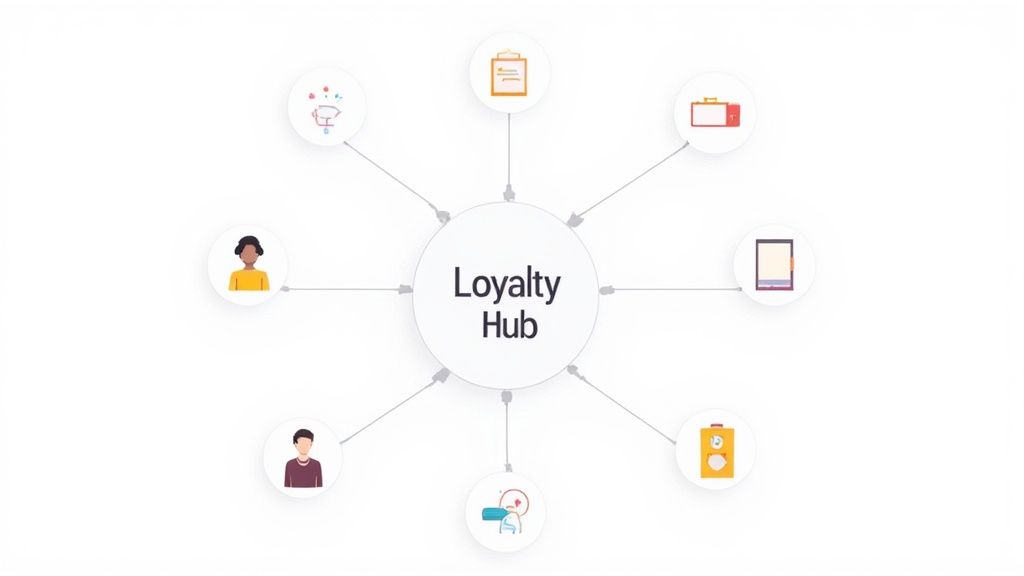
It's tempting to see a loyalty platform as just another piece of software, but that's selling it short. A good provider acts as the central hub for your entire customer retention strategy. In a world where it costs far more to attract a new customer than to keep an existing one, the right platform becomes your most valuable player.
A solid loyalty provider helps you tackle two of the biggest headaches in business: customers who disappear after one purchase and a frustrating lack of useful data. Without a system, your customer engagement is often just a series of random, one-off transactions. A well-chosen platform completely flips that script.
From Transactions to Relationships
At its heart, a loyalty platform is designed to shift your business from chasing one-off sales to creating genuine brand fans. It gives you the tools to reward customers not just for what they buy, but for how they interact with your brand—whether that’s leaving a review, sharing on social media, or referring a friend.
This shift away from a purely transactional mindset creates a powerful emotional bond. Customers feel noticed, valued, and part of something bigger, which builds the kind of deep-seated loyalty that a competitor's 10% off coupon can't touch. To really get a handle on this, it's worth exploring the benefits of platform membership for building loyalty and fostering a true sense of community.
A loyalty program acts as a bridge between your brand and your customers, turning routine purchases into meaningful interactions that build trust and encourage repeat business over the long term.
The market data tells the same story. The U.S. loyalty programs market has been booming, with a compound annual growth rate of 17.5% between 2020 and 2024. Starting from a valuation of around $23.57 billion in 2024, the industry is expected to nearly double to $44.73 billion by 2029. This isn't just a trend; it's a fundamental change in how businesses are approaching growth.
The Strategic Value of Choosing a Partner
When you get down to it, picking a loyalty platform provider isn't just a marketing task—it's a critical investment in your company's future. The right partner provides the foundation to:
- Boost Customer Lifetime Value (CLV): By giving customers compelling reasons to come back again and again, often spending more each time.
- Gather Valuable First-Party Data: Giving you direct, clear insights into what your customers actually want and how they behave.
- Build a Thriving Brand Community: Empowering your happiest customers to become your most effective marketers.
Nailing these points is the first step. If you want to dive deeper, our guide on the core benefits of a loyalty program explains exactly how these strategies can hit your bottom line.
What Really Makes a Loyalty Platform Work?
When you start looking at different loyalty platform providers, it’s easy to get lost in a sea of features. But a truly great loyalty program isn't about having the most bells and whistles; it's about having the right ones working together to create an experience your customers actually care about.
Think of these features less like a checklist and more like the essential ingredients in a recipe. Each plays a specific role, but their real magic comes from how they combine. Nailing these fundamentals is the first real step toward building a program that connects with people and delivers for your business.
The Power of a Simple Points System
Let’s start with the classic: the points system. It’s probably the most familiar feature for a reason—it just works. Customers take an action, you give them points, and they can cash those points in for rewards later. It's a straightforward value exchange that everyone gets instantly.
But a modern points system should do more than just reward sales. The best platforms let you get creative and reward all kinds of valuable interactions that strengthen your community.
- Social Engagement: Give out a few points when someone follows your brand on Instagram or shares a post.
- User-Generated Content: Offer a bigger point bonus for leaving a product review or posting a photo with your product. This builds trust with other shoppers.
- Account Creation: Drop some points into a customer's account the moment they sign up, giving them an immediate reason to feel good about joining.
This approach turns your points from a simple discount tool into a way to actively encourage behaviors that help your brand grow.
Creating Exclusivity with Tiered Memberships
If points are about the immediate win, tiered memberships are about playing the long game. This feature is all about making your best customers feel like VIPs. You group members into levels—think bronze, silver, gold—based on how much they spend or engage. As they climb the ladder, they unlock better and better perks.
Imagine a local bookstore with a simple tier system:
- Page Turners (Bronze): Earn basic points on every book.
- Bookworms (Silver): Get bonus points, a birthday discount, and free shipping.
- Literati (Gold): Receive all the Silver benefits, plus early access to new releases and exclusive invites to author signing events.
Tiers tap into a powerful psychological need for status and recognition. They give your best customers something to aim for, turning them from people who just buy from you into genuine brand advocates.
This structure adds a fun, game-like element to shopping. It gives people a clear goal, motivating them to stick with your brand to unlock that next level of rewards. It's a proven way to get customers to spend more and stay loyal longer.
Amplifying Your Reach with Referral Programs
Who are your best salespeople? Your happiest customers. A referral program is designed to tap into that enthusiasm by rewarding them for spreading the word. It's one of the most powerful and cost-effective ways to find new customers because it’s built on the foundation of genuine trust.
A good loyalty platform makes this process dead simple. A customer gets a unique link or code to share. When their friend uses it to make a purchase, both the original customer and their friend get a reward—maybe a discount or some bonus points.
This creates a beautiful, self-sustaining loop of growth. Happy customers bring in new customers, who are then encouraged to become loyal members and refer their own friends. It’s a smart feature that connects your retention strategy directly to your customer acquisition goals, creating a flywheel that builds momentum all on its own.
Taking Your Loyalty Program from Good to Great with Advanced Features
Once you have the basics like points and tiers in place, you’ve built a solid foundation. But to truly move the needle, you need to look beyond the fundamentals. The best loyalty platform providers equip you with advanced tools that transform a standard program into a real growth driver for your business.
These aren't just bells and whistles; they're designed to create richer, more interactive experiences that genuinely capture your customers' attention. It’s about moving past simple, transactional relationships to build a sense of community and, honestly, a bit of fun around your brand. Think of these features as the control panel for shaping customer behavior, not just tracking it.
It’s All Fun and Games: Making Loyalty Engaging with Gamification
Gamification is all about injecting a dose of play and friendly competition into the shopping journey. It taps into our natural drive for achievement and recognition, making the whole experience more memorable. Instead of just passively earning points, your customers get to complete challenges, unlock badges, and maybe even see their name at the top of a leaderboard.
Imagine a skincare brand launching a "7-Day Glow Up Challenge." Customers who buy certain products and track their routine for a week could unlock a "Skincare Guru" badge and a special bonus. Suddenly, a simple purchase becomes an interactive event they feel a part of.
- Badges and Achievements: Celebrate milestones by awarding digital badges for things like a customer's 10th purchase or for writing five product reviews. It’s a small gesture that goes a long way.
- Challenges: Run special, limited-time events that encourage specific actions, like trying a new product line or shopping during a typically slow period.
- Leaderboards: Foster some lighthearted competition by displaying top point-earners each week or month. A small prize for the winner can ignite a lot of activity.
This approach keeps your program from feeling stale. It gives customers new reasons to connect with your brand that go far beyond just hitting "buy."
When you add game-like mechanics, you shift loyalty from a passive, background process into an active, engaging experience. Customers aren't just collecting points; they're on a journey with you.
Loyalty in Their Pocket: Mobile and AI-Driven Personalization
Today’s loyalty programs have to be mobile-first and incredibly smart. People expect convenience and relevance, and the best platforms deliver on both. Digital wallet integration, for example, lets customers add their loyalty card and rewards right into their Apple or Google Wallet. No more fumbling for physical cards or trying to remember a password—it makes using rewards in-store or online completely seamless.
At the same time, technology is raising the bar for personalization. Customer preferences are leaning heavily toward mobile and AI-powered interactions, especially with younger shoppers. A whopping 69% of Millennials and 65% of Gen Z prefer using mobile apps for their loyalty programs. And don't underestimate the power of AI; 40% of consumers say they are more likely to join a program if artificial intelligence is part of the experience. If you want to dive deeper into these trends, you can discover more insights about customer loyalty statistics on Antavo.com.
Your Strategic Command Center: The Power of Analytics
Of all the advanced features, a powerful analytics dashboard might be the most critical. This is where you get the actionable insights that tell you what’s really going on with your program and your customers. It’s the difference between guessing what works and knowing what works.
A top-notch analytics suite lets you:
- Segment Your Audience: Group customers by their tier, purchase history, or engagement level to send them offers that actually feel relevant.
- Track Key KPIs: Keep a close eye on crucial metrics like customer lifetime value (CLV), repeat purchase rate, and your program's ROI in real time.
- Understand Redemption Patterns: See which rewards are flying off the shelf. This helps you ditch the duds and double down on what your customers truly value.
This data-first approach lets you constantly refine your strategy. You can pinpoint your most valuable customers and create campaigns just for them, or A/B test different reward types to see what gets the best response. Ultimately, solid analytics ensures your loyalty program isn't just running on autopilot—it's constantly evolving and delivering real, measurable results.
Your Framework for Evaluating Loyalty Platform Providers
Choosing a loyalty platform provider can feel like a massive decision, and honestly, it is. But it doesn't have to be overwhelming. With a solid game plan, you can cut through the marketing fluff and find a partner that genuinely fits your brand. This is about more than just ticking off features on a list; it's about matching a provider’s real-world capabilities to your business goals, your tech stack, and where you see your brand in a few years.
The trick is to go into demos with a clear head and the right questions. A structured approach means you're evaluating every option against what actually matters to you, like how smoothly it plays with your existing tools or if it can handle your growth without breaking a sweat.
Your Essential Evaluation Checklist
Before you even book a demo, sketch out your non-negotiables. Think of this as your personal scorecard. It'll keep you focused and help you compare providers based on substance, not just a slick presentation.
Here are the absolute must-haves to scrutinize:
- Integration Capabilities: How easily does the platform plug into your world? You want to see native, one-click integrations for systems like Shopify, BigCommerce, and your POS. Anything less means you're signing up for a custom development headache.
- Scalability and Flexibility: Your business is going to change, and your loyalty platform needs to keep pace. Ask if it can support expansion into new markets, manage a surge in customers, and handle a true omnichannel setup.
- Quality of Customer Support: When something goes wrong (and it will), you need an expert in your corner, fast. Dig into their support channels—email, phone, live chat—and ask about typical response times. A dedicated account manager is often a sign you're in good hands.
- Customization and Branding: Your loyalty program should look and feel like your brand, not some generic, bolted-on widget. Find out how much control you really have over the design, language, and rules to create a seamless customer experience.
Nailing these four pillars ensures you’re not just buying software; you’re bringing on a partner who’s invested in your growth.
Demystifying Pricing and Calculating ROI
Let's talk money. Understanding the financial piece of the puzzle is non-negotiable. Loyalty platform providers usually have a few different pricing models, and your job is to figure out which one aligns with your budget and usage patterns. The goal is simple: find a plan that delivers value without forcing you to pay for a bunch of features you'll never use.
There's a reason the global loyalty management market is set to explode, growing from $12.07 billion in 2024 to an expected $20.44 billion by 2030. Businesses are pouring money into these solutions because they work. When you're looking at pricing, ask about setup fees, the details of their monthly subscription tiers, and any hidden costs for going over customer or transaction limits.
To get a real sense of value, you need to calculate your potential Return on Investment (ROI). A great starting point is to estimate the expected lift in Customer Lifetime Value (CLV) and repeat purchase rates, then weigh that against the platform's annual cost.
This simple math immediately shifts the conversation from "How much does it cost?" to "How much will it make me?" A platform that costs a bit more but delivers a dramatically higher ROI is always the smarter long-term investment. If you want a deeper dive on this, check out our guide on how to choose from various loyalty program platforms.
The decision tree below can help you visualize how to connect your strategic goals to more advanced features.
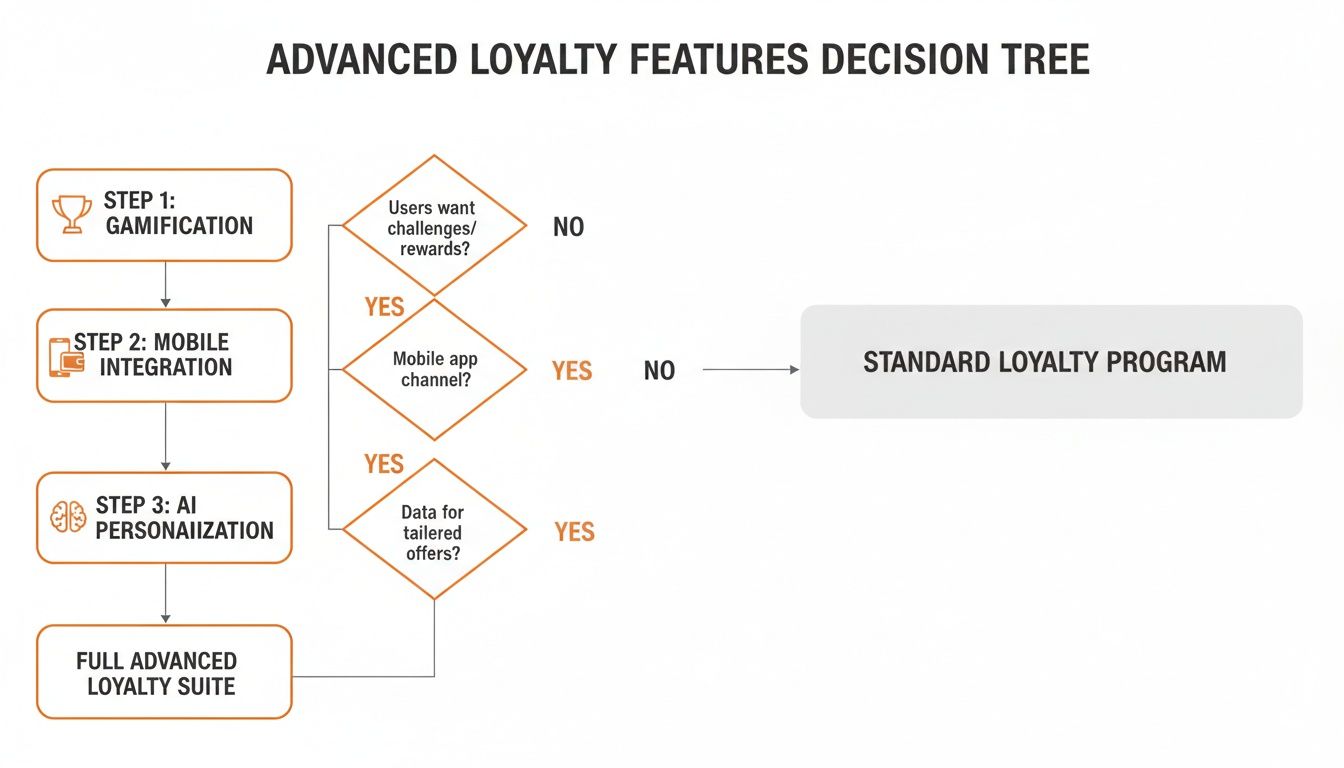
It’s a simple way to see how specific goals, like boosting engagement, might lead you to prioritize features like gamification or AI-driven personalization.
Asking the Right Questions
Finally, walk into every demo with a prepared list of sharp, specific questions. This is how you get past the sales pitch and uncover the information you actually need. Looking at how similar tools are evaluated, like in this review of the 12 best SaaS affiliate software platforms, can give you some great ideas for what to ask.
Here are a few to get your list started:
- Onboarding and Migration: What does your onboarding really look like? Can you walk me through how you'd help us migrate our existing customer data and points from our current system?
- Roadmap and Future Features: What's on your product roadmap for the next 12 months? How do you decide what to build next, and how much of that is based on customer feedback?
- Real-World Success: Can you share a case study from a client in our industry? Better yet, would you be willing to connect us with one of them for a quick chat?
With this framework in hand, you're ready. You can navigate the selection process with confidence and pick a loyalty partner that won’t just support your business today, but will help you build lasting customer relationships and drive real growth for years to come.
A Practical Roadmap for Implementation and Integration
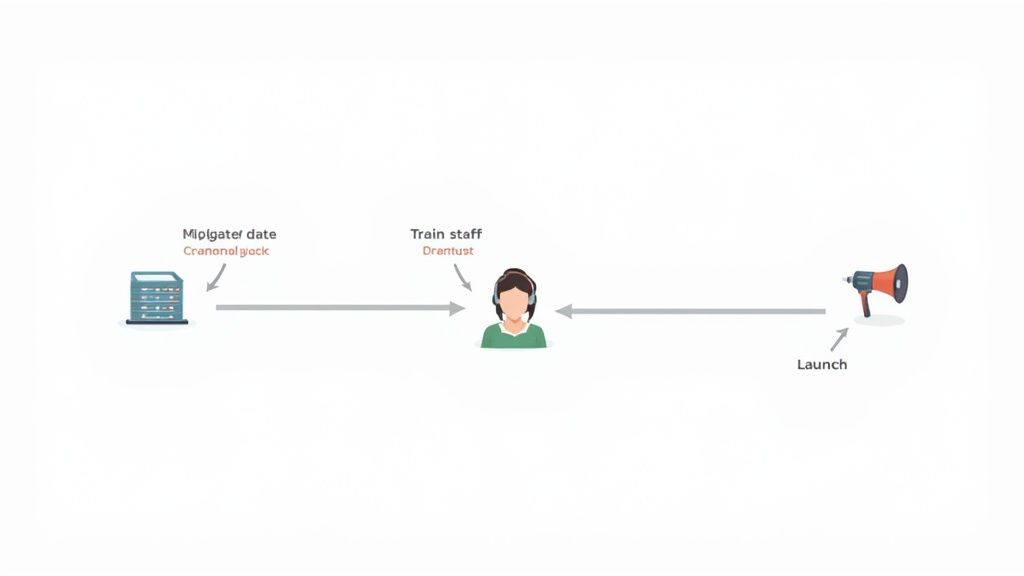
Picking a loyalty platform provider is a huge milestone, but let's be honest—the real work starts the moment you sign the contract. A brilliant strategy is just a document until you successfully weave it into the fabric of your business. This roadmap will walk you through the essential steps, from the nitty-gritty tech setup to a launch campaign that gets customers excited from day one.
Think of it like building a house. You wouldn't just start hammering walls together without a solid foundation and a detailed blueprint. Launching a loyalty program demands the same careful, step-by-step approach to sidestep common issues and make sure everything runs smoothly right out of the gate.
The Foundation Phase: Data and Integration
First things first: you have to get the technical side sorted. This is where you connect your shiny new loyalty platform to your existing e-commerce and POS systems. For most brands, the biggest source of anxiety here is data migration, especially if you’re moving from an old, clunky system.
You need to ensure every customer account, purchase history, and existing point balance makes the journey without a single hiccup. Losing that data would be a catastrophic blow to customer trust. The secret is working hand-in-glove with your provider’s onboarding team to map out the entire process. Any top-tier loyalty platform provider worth their salt will have a battle-tested method for this.
Key integration steps include:
- Connecting Your E-commerce Platform: You need a flawless sync with Shopify or whatever platform you use so online purchases are tracked in real-time.
- Syncing Your POS System: This is non-negotiable for anyone with a physical footprint. What a customer does in-store has to be reflected online, and vice-versa.
- Testing Every Touchpoint: Run a battery of test transactions. Make sure points are awarded correctly and rewards can be redeemed without a hint of friction.
Nailing the technical setup saves you from launch-day nightmares and creates a reliable foundation for your entire program. For a much deeper dive into what this all entails, check out our guide on loyalty program integration.
Preparing for Liftoff: Training and Launch Strategy
Once the tech is locked in, your focus needs to pivot to the human element: your team and your customers. Your staff, especially those on the front lines, are the official ambassadors for your new program. They need to understand it backwards and forwards to answer questions confidently and get people to sign up.
Your team's enthusiasm is infectious. A well-trained, confident employee can turn a simple transaction into a compelling invitation to join your brand's community.
Good training should cover how the program works, what's in it for the customer, and the exact steps for enrolling new members. This preparation is what makes the difference between a fumbled, confusing launch and a smooth, successful one.
Finally, you need to craft a launch campaign that actually builds some buzz. Don’t just quietly flip a switch; announce it with a bang.
- Offer a Launch Bonus: Give a nice chunk of extra points to everyone who signs up in the first week. It’s a simple, powerful incentive.
- Create Clear Messaging: Use email, social media, and in-store signs to spell out the benefits in plain, compelling language. No jargon.
- Run a Phased Rollout: You might want to consider a soft launch with a small group of your most loyal customers first. This lets you get real feedback and iron out any kinks before the big public reveal.
This deliberate approach ensures that when you do go live, your program is polished, your team is prepped, and your customers are genuinely excited to be a part of it.
How to Measure and Optimize Your Loyalty Program
Getting your loyalty program up and running is just the beginning. The real work—and the real payoff—comes from paying attention to what happens next. The best programs are never "set it and forget it." They're living, breathing parts of your business that grow and adapt right along with your customers.
Think of it like tending a garden. You can't just throw some seeds in the ground and hope for the best. You have to constantly water, weed, and prune to see it thrive. In the same way, you need to monitor your program’s health and make smart tweaks to make sure it’s actually driving growth for your brand.
Identifying Your Most Important KPIs
To figure out if your program is actually working, you have to track the right numbers. Your loyalty platform’s analytics dashboard is your mission control, but it's easy to get overwhelmed by all the data. The trick is to zero in on the key performance indicators (KPIs) that tell you the most about customer behavior and your bottom line.
Here are the metrics that truly matter:
- Customer Lifetime Value (CLV): This is the ultimate report card for loyalty. Are your program members spending more over their entire time with your brand than non-members? If the CLV for members is climbing, you’re on the right track.
- Repeat Purchase Rate: This one is simple but powerful. How often are your loyalty members coming back to buy again? This metric is a direct reflection of how well your program is keeping customers around.
- Redemption Rate: This tells you if your rewards are hitting the mark. It shows how many of the points you’re handing out are actually being cashed in. A low rate can be a red flag that your rewards aren't compelling enough or are too hard to earn.
- Average Order Value (AOV): Look at the AOV of members and compare it to non-members. A smart program design often nudges members to add just one more item to their cart to hit a reward threshold, boosting their AOV.
A loyalty program's success isn't just about how many people sign up. It’s about engagement. The goal is to create a cycle where customers are actively earning and redeeming, which is a clear sign of a healthy, valuable relationship.
Strategies for Continuous Improvement
Once you’re comfortable with your data, you can start making smart, informed changes. This is a constant loop of testing, learning, and refining. The best loyalty platform providers give you flexible tools to make these kinds of adjustments without a headache.
Here are a few practical ways to keep your program feeling fresh and effective:
- Refresh Your Rewards: Don't let your rewards go stale. A great way to find out what people want is to just ask them! Poll your members or drop in limited-time, seasonal rewards to create a bit of excitement and urgency.
- Run Targeted Campaigns: Use the segmentation tools in your platform to run special promotions for specific customer groups. Maybe you run a "we miss you" campaign for members who haven't shopped in a while, or you could surprise your top-tier VIPs with some bonus points.
- Actively Solicit Feedback: Your members are your single best source of great ideas. Send out simple surveys asking what they love about the program and what they wish was different. This kind of direct feedback is gold for making improvements that people will notice.
By constantly checking your KPIs and tweaking your strategy, you ensure your program evolves with your customers. This commitment to optimization is what separates a basic rewards system from a true engine for customer loyalty and long-term business growth.
Common Questions, Answered
Jumping into loyalty programs can feel like a big step, so it's natural to have questions. Let's clear up a few of the most common ones we hear from merchants.
How Much Should I Expect to Pay for a Loyalty Platform?
There’s no single price tag. The cost really depends on what you need—the features you want, the size of your customer base, and how much hands-on support you’re looking for.
Most loyalty platform providers use a monthly subscription model. This could be a few hundred dollars for a small shop or climb into the thousands for a large enterprise needing all the bells and whistles, like deep analytics and full API access. The key is to think beyond the monthly bill and consider the long-term return on your investment.
What if I Want to Switch Loyalty Providers Down the Road?
You absolutely can, but it takes a bit of planning to do it smoothly. The biggest hurdle is moving all your customer data—like their points and purchase history—without messing things up for your members.
Before you sign on with anyone, make sure you ask about their data export process. You don't want to get stuck. A great partner will make this easy. It's also smart to map out a clear transition plan so you can let your customers know what's happening.
Your customer and loyalty data belongs to you. Make sure any platform you choose lets you export it easily. This gives you the freedom to grow and switch tools without being locked in.
Isn't a Loyalty Platform Just a Fancy Points App?
Not at all. A simple points app does one thing: it lets customers earn and spend points. A true loyalty platform is the engine for your entire retention strategy.
Think of it this way: a platform connects all the dots. It plugs into your POS system, your Shopify store, and your marketing tools to give you a complete picture of every customer. This lets you do so much more than just points—we’re talking tiered memberships, referral campaigns, fun gamification, and personalized offers that work both online and in-store. It's a whole different ballgame.
Ready to turn casual shoppers into lifelong brand champions? With Toki, you can launch a fully customizable loyalty, referral, and membership program that integrates seamlessly with your store. Start building lasting customer relationships today.