10 High-Impact Marketing Referral Program Ideas for E-Commerce in 2026
Unlock growth with our top marketing referral program ideas. Discover 10 actionable strategies for Shopify merchants to boost loyalty and sales.
In the competitive world of e-commerce, customer acquisition costs are soaring, making every new sale a hard-won victory. While a basic “refer-a-friend” button is a decent start, it’s no longer enough to generate the exponential, community-driven growth your brand truly needs. The real power lies in strategically designed referral programs that transform your loyal customers from passive buyers into powerful, motivated brand advocates. A well-crafted referral system doesn't just bring in new customers; it brings in the right customers, ones who are predisposed to trust and value your brand because they were introduced by someone they know.
This guide moves beyond generic advice to provide a comprehensive breakdown of 10 actionable, high-impact marketing referral program ideas tailored specifically for Shopify and direct-to-consumer merchants. We'll unpack creative strategies that go far beyond the standard "give 10%, get 10%" model. For each idea, we will detail not just the 'what,' but the critical 'why' and 'how,' giving you a clear roadmap for implementation.
You'll discover how to structure everything from tiered and gamified challenges to cause-based and exclusive access programs. We'll cover reward structures, targeting tips, example copy, and the key performance indicators (KPIs) you need to track. By the end, you'll have a playbook of sophisticated referral concepts designed to drive measurable results, increase customer lifetime value, and turn authentic word-of-mouth into your most profitable marketing channel. Let’s get started.
1. Tiered Referral Rewards Program
A tiered referral rewards program moves beyond the simple "give one, get one" model by creating a multi-level structure where the value of rewards increases as a customer makes more successful referrals. This approach gamifies the referral process, motivating advocates to continuously share your brand to unlock higher, more exclusive tiers of rewards.
Think of it like a video game where advocates level up from Bronze to Silver, then to Gold, unlocking better perks at each stage. This escalating incentive structure is a powerful psychological driver, tapping into the human desire for achievement and status. It transforms one-time referrers into long-term brand evangelists.
Why This Idea Works
This is one of the most effective marketing referral program ideas because it rewards your most valuable advocates disproportionately. Instead of offering a flat reward, it recognizes and incentivizes the 20% of customers who often drive 80% of referrals. Companies like Uber have used this to great effect, offering escalating bonuses for drivers who refer new drivers that complete a certain number of trips.
Key Insight: A tiered system creates a "progress loop" that keeps customers engaged. Seeing how close they are to the next reward tier encourages them to make just one more referral.
Actionable Tips for Implementation
- Set Achievable Milestones: Design your tiers (e.g., Bronze: 1-2 referrals, Silver: 3-5, Gold: 6+) so that the first level is easy to reach. This initial success provides positive reinforcement and motivates further action.
- Visualize Progress: Use a clear dashboard within the customer's account to show their current tier, how many referrals they've made, and what they need to do to reach the next level. Visual progress bars are highly effective.
- Vary Reward Types: Offer a mix of rewards to keep things exciting. For example:
- Bronze Tier: $10 coupon for both referrer and friend.
- Silver Tier: $20 coupon + 100 loyalty points.
- Gold Tier: 15% lifetime discount + exclusive early access to new products.
- Promote Tier Benefits: Actively market the perks of higher tiers in your email campaigns and on your referral landing page to create aspiration and drive participation.
With a platform like Toki, you can automate tier tracking and reward distribution, ensuring a seamless experience. You can also pair tier achievements with badges and points to further enhance the gamified feel. For a deeper dive, learn more about how to design an effective tiered rewards program.
2. Double-Sided Incentive Referral Program
A double-sided incentive referral program, often called a dual-sided program, is a balanced model that rewards both the advocate (the referrer) and the new customer they bring in. This classic "give one, get one" approach creates a powerful win-win scenario, significantly reducing friction in the sharing process and boosting conversion rates.
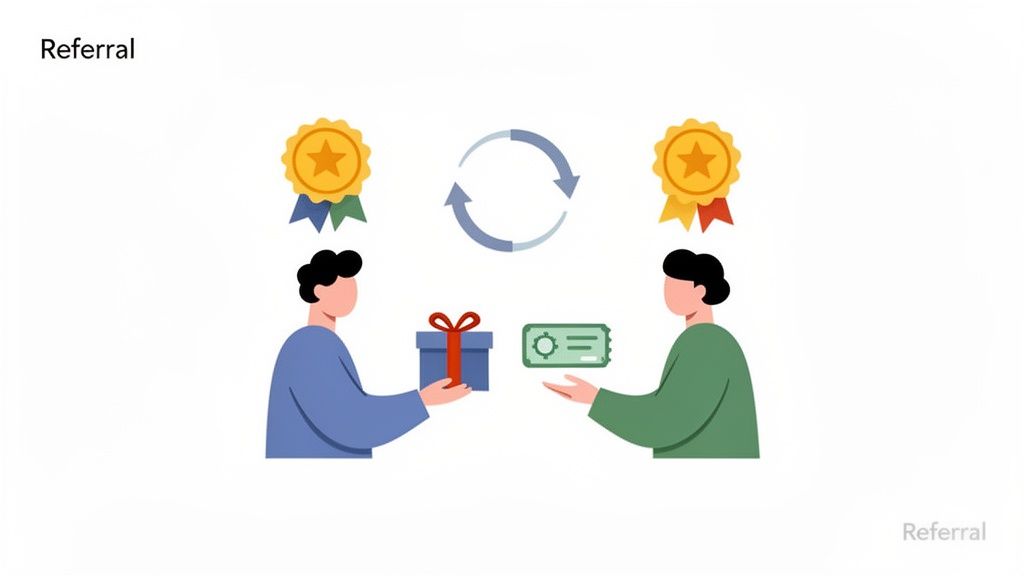
Unlike one-sided models that only reward the referrer, this structure gives the friend an immediate reason to act on the recommendation. The advocate feels good about sharing a genuine benefit, not just trying to earn a reward for themselves. This mutual value exchange is fundamental to why this is one of the most popular and effective marketing referral program ideas.
Why This Idea Works
The double-sided model is powerful because it leverages social proof and reciprocity. The advocate’s recommendation is instantly more credible because they are offering their friend a real discount or gift. The friend feels a social obligation to use the offer, while the advocate is motivated by their own reward. This two-way street increases participation and drives new customer acquisition effectively. PayPal's early growth was famously fueled by its $10 for you, $10 for your friend referral program.
Key Insight: A double-sided incentive turns a transactional referral into a shared gift. The advocate becomes a "hero" for sharing a valuable offer, which feels more authentic and less self-serving.
Actionable Tips for Implementation
- Balance the Incentives: The rewards don't have to be identical, but they should feel balanced. A common structure is "Give $15, Get $15" or "Give 20% off, Get $20." Test different combinations to see what motivates both parties most effectively.
- Create Urgency: Attach an expiration date to the friend's offer to encourage immediate action. For example, "Your friend gets 25% off their first order, but the offer expires in 7 days!"
- Simplify Redemption: Make it incredibly easy for both parties to claim their rewards. The new customer’s discount should apply automatically at checkout via the referral link. Use a platform that simplifies this process.
- Promote the "Win-Win": In your marketing copy, emphasize the mutual benefit. Use phrases like "Share the love," "Give your friends $10 off, and get $10 for yourself," or "Friends help friends save."
With a tool like Toki, you can easily set up and automate double-sided rewards. You can also leverage its analytics to track customer acquisition costs from your referral channel and A/B test different reward combinations to find the most profitable structure for your business.
3. Affiliate-Hybrid Referral Program
An affiliate-hybrid referral program bridges the gap between casual customer referrals and structured affiliate marketing. It creates a unified system where anyone from a happy customer to a professional influencer can promote your brand and earn rewards, typically a cash commission, for the sales they generate. This sophisticated model broadens your marketing reach by providing multiple pathways for participation.
Instead of running two separate programs, you combine them. A regular customer might share a link for a small commission, while a dedicated blogger or micro-influencer can access more robust tools, higher commission rates, and dedicated support. This approach acknowledges that your best advocates come in all forms and allows you to capitalize on every type of promotional effort under one roof.
Why This Idea Works
This is one of the most scalable marketing referral program ideas because it harnesses both the authenticity of customer advocacy and the reach of affiliate marketing. It allows you to build a community of brand partners who have a real financial stake in your success. Companies like Amazon with its Associates program have proven how powerful this can be, enabling millions of creators to earn from recommending products they use and trust.
Key Insight: This model transforms your referral program from a simple customer perk into a powerful revenue-generating engine. It attracts a wider, more motivated group of promoters beyond your immediate customer base.
Actionable Tips for Implementation
- Define Clear Tiers: Establish distinct levels for different types of partners (e.g., Customer Advocate: 5% commission, Affiliate Partner: 10% commission, Premier Influencer: 15% + bonuses). This clarifies expectations and provides a path for growth.
- Provide a Partner Toolkit: Equip your affiliates with the resources they need to succeed. This includes brand guidelines, pre-made banner ads, email copy templates, and unique, trackable links. Reducing friction is key to activation.
- Automate Commission Payouts: Use a system that handles commission tracking and payouts automatically. Reliable, on-time payments (e.g., monthly via PayPal) are crucial for maintaining trust and motivation with your partners.
- Identify and Nurture Top Performers: Use analytics to spot your most effective affiliates. Reach out to them personally, offer them a higher commission rate, and collaborate on co-branded campaigns to strengthen the partnership.
With a platform like Toki, you can manage both customer referrals and a multi-level affiliate structure from a single dashboard. This simplifies onboarding, tracking, and payments. For a complete guide, explore our article on how to create a successful affiliate program.
4. Gamified Referral Challenge Program
A gamified referral challenge program transforms a standard referral system into a time-limited, competitive event. It uses game mechanics like points, leaderboards, and achievement badges to create a sense of urgency and excitement. Instead of a continuous, passive program, you run focused campaigns where customers compete against each other or a set goal within a specific timeframe (e.g., a month or a quarter).

This approach taps into customers' competitive spirit and desire for recognition. By framing referrals as a challenge with a clear start and end date, you motivate advocates to concentrate their sharing efforts, leading to significant spikes in customer acquisition. Companies like Dropbox have run seasonal campaigns with leaderboards to successfully drive viral growth during key periods.
Why This Idea Works
This is one of the most engaging marketing referral program ideas because it leverages urgency and social competition. A limited timeframe encourages immediate action, preventing the procrastination often seen in evergreen programs. The public nature of a leaderboard adds social proof and motivates participants to climb the ranks for status and superior prizes, turning referrals into a community event.
Key Insight: Time-bound challenges create concentrated bursts of referral activity, which is ideal for product launches, seasonal promotions, or re-engaging your customer base.
Actionable Tips for Implementation
- Set Clear Timelines and Goals: Define the challenge duration (e.g., "The July Referral Sprint") and the specific actions that earn points. Run campaigns quarterly or monthly to keep the concept fresh and avoid fatigue.
- Implement a Public Leaderboard: Display a real-time leaderboard on your referral program page. To protect privacy, consider using customer first names and last initials (e.g., "Jane D.") or usernames.
- Offer Both Competitive and Individual Rewards: Reward the top 3-5 participants on the leaderboard with grand prizes (e.g., large gift cards, exclusive products), but also offer milestone rewards (e.g., earn 50 points, get a $10 coupon) so everyone feels like they can win something.
- Announce Winners Publicly: Celebrate the challenge winners through a dedicated email newsletter, social media posts, and in-app notifications. This provides recognition for the winners and builds excitement for your next challenge.
With a platform like Toki, you can easily set up leaderboards, automate point tracking, and distribute milestone-based badges. This lets you focus on promotion while the system handles the mechanics. For a complete guide, explore our insights on how to supercharge engagement with gamification in loyalty programs.
5. Exclusive Access Referral Program
An exclusive access referral program shifts the focus from monetary discounts to intangible, status-driven rewards. Instead of offering cash or coupons, this model provides advocates with special privileges like early access to new products, invitations to VIP events, limited-edition merchandise, or entry into an exclusive brand community.
This strategy appeals directly to your most loyal brand enthusiasts who are motivated by more than just savings. They value feeling like an insider and being part of an exclusive group. Offering these unique, money-can't-buy experiences transforms customers into true brand ambassadors who refer others not for a discount, but for the status and belonging it confers.
Why This Idea Works
This is one of the most powerful marketing referral program ideas for building a deeply loyal community. It leverages the psychological principle of exclusivity, where perceived scarcity and special access create immense value. Brands like Peloton have mastered this by offering top referrers access to exclusive member events, reinforcing their identity as part of an elite fitness community.
Key Insight: Exclusive, non-monetary rewards can feel more valuable than a cash discount because they are unique to your brand and build a stronger emotional connection.
Actionable Tips for Implementation
- Identify Valuable Perks: Survey your best customers to discover what kind of exclusive access they truly desire. Is it a behind-the-scenes look at product development, a private chat with the founder, or first dibs on a limited-edition collaboration?
- Create Tiered Exclusivity: Structure access in levels. For example, one successful referral might unlock a private Discord channel, while five referrals could grant early access to your next product drop. This gamifies the experience.
- Showcase the Benefits: Don't keep your exclusive perks a secret. Create a dedicated landing page with high-quality visuals and testimonials that clearly showcases what referrers can gain. Use language that emphasizes scarcity and prestige, such as "Join the Inner Circle" or "Limited Spots Available."
- Lean into Scarcity: Use time-sensitive or limited-quantity exclusive rewards to create urgency and drive referral velocity. For instance, "The first 50 advocates to make three referrals this month get our unreleased beta product."
With a platform like Toki, you can use customer tags to automatically segment advocates into different "VIP" tiers based on referral success, granting them access to exclusive content or hidden sections of your site.
6. Social Share Referral Program
A social share referral program is an initiative optimized specifically for sharing on social media platforms. It goes beyond a simple referral link by integrating one-click sharing buttons for channels like Facebook, Instagram, TikTok, and X (formerly Twitter), making the process frictionless for advocates and amplifying your brand’s reach exponentially.
This approach leverages the inherent virality and trust of social networks. When a customer shares your product with their friends and followers, it acts as a powerful form of social proof, far more authentic than a traditional advertisement. It's about turning customers into micro-influencers within their own digital circles.
Why This Idea Works
This is one of the most scalable marketing referral program ideas because it meets customers where they are already spending their time. Instead of asking them to compose an email, it allows them to share with their entire network in seconds. Brands like Klarna have mastered this with "Share and Earn" campaigns that feel native to platforms like Instagram, driving massive user acquisition.
Key Insight: The path of least resistance wins. By embedding social sharing tools directly into your referral interface, you remove friction and dramatically increase the likelihood of a share.
Actionable Tips for Implementation
- Create Platform-Specific Assets: Design visually appealing graphics and pre-written copy optimized for each social platform. An Instagram Story graphic will have different dimensions and style than a LinkedIn post.
- Implement One-Click Sharing: Integrate API-based sharing buttons directly into your referral page. The goal is to allow a customer to share to their chosen platform without ever leaving your site.
- Track Channel Performance: Use UTM parameters on your referral links to identify which social channels are driving the most conversions, not just clicks. This allows you to double down on what works. Consider integrating your program with platforms that have built-in sharing mechanisms, like Quora's sharing features, to make it easy for users to spread the word.
- Incentivize Converted Shares: Reward advocates when their shared link leads to a successful purchase. This ensures you're paying for results and encourages higher-quality referrals.
With Toki, you can easily embed social sharing buttons and use its advanced analytics to track the ROI from each channel, helping you refine your strategy over time. You can also A/B test different pre-written social media messages to see which copy performs best.
7. Subscription-Based Referral Rewards Program
A subscription-based referral rewards program is specifically tailored for businesses with recurring revenue models. Instead of one-off cash or coupon rewards, this model incentivizes referrals by offering subscription-related perks like account credits, free months, extended trials, or access to premium features. It’s a powerful self-reinforcing loop that uses your core product as the reward.
This approach directly ties the referral incentive to the value your customers already receive from your service. When a customer successfully refers a friend, they reduce their own subscription cost or enhance their user experience, deepening their loyalty and making them less likely to churn. It transforms satisfied subscribers into active growth partners for your business.
Why This Idea Works
This is one of the most sustainable marketing referral program ideas for subscription companies because the reward mechanism directly boosts customer lifetime value (LTV). By offering subscription credits, you are not just acquiring a new customer; you are also increasing the retention of your existing one. Companies like Skillshare and Spotify have used this model to give advocates free premium months, which strengthens product dependency and reduces churn.
Key Insight: Using your subscription as the reward creates a powerful cycle. The more a customer refers, the more they use and depend on your service, making them a more entrenched and valuable advocate.
Actionable Tips for Implementation
- Integrate Rewards into the User Dashboard: Make it easy for subscribers to track their earned credits or free months. Display referral progress directly within their subscription management or account settings page.
- Offer a Mix of Subscription Perks: Don't limit rewards to just discounts. Consider offering a variety of incentives to appeal to different motivations:
- Refer 1 Friend: Get a $10 credit toward your next bill.
- Refer 3 Friends: Unlock one month of your subscription for free.
- Refer 5 Friends: Gain permanent access to an exclusive premium feature.
- Balance Generosity and Profitability: Ensure the value of the reward (e.g., one free month) is less than the projected lifetime value of the new subscriber you acquire. This keeps the program profitable and sustainable.
- Set Clear Milestones: Create "referral quests" or milestone bonuses, such as "Refer 3 friends to get your next box free." This gamifies the experience and encourages repeat referrals beyond the first successful one.
With a platform like Toki, you can automate the application of subscription credits and track referred customer churn rates separately. This allows you to measure the true ROI of your program by comparing the LTV of referred customers against that of customers acquired through other channels.
8. Cause-Based Referral Program
A cause-based referral program connects customer advocacy with social impact by donating to a charity or supporting a cause for every successful referral. Instead of (or in addition to) giving the referrer a personal discount, the brand makes a contribution on their behalf. This model transforms a transactional action into a meaningful one, resonating deeply with purpose-driven consumers.
This approach aligns your brand with powerful values, building an emotional connection that transcends product benefits. When a customer refers a friend, they aren't just sharing a product; they are contributing to a shared mission. This is exemplified by brands like Bombas, where referrals can trigger a donation of socks to homeless shelters, turning brand advocacy into a community-centric act.
Why This Idea Works
This is one of the most resonant marketing referral program ideas for brands targeting socially conscious consumers. It taps into the principle of altruism, allowing customers to feel good about their advocacy. It also serves as a powerful differentiator, showing that your brand is committed to more than just profits. This can significantly boost brand reputation and foster a fiercely loyal community around shared values.
Key Insight: A cause-based program shifts the motivation from "what's in it for me?" to "what can we achieve together?" This creates a stronger, more authentic form of brand ambassadorship.
Actionable Tips for Implementation
- Align with Your Brand Mission: Partner with reputable charities or causes that genuinely reflect your brand's values. Authenticity is crucial; if the cause feels disconnected from your brand, the program will lack impact.
- Offer Customer Choice: Empower advocates by letting them choose from a few pre-vetted charities. This increases personal investment in the referral process and caters to diverse customer passions.
- Visualize the Collective Impact: Create a dedicated landing page or dashboard widget showing the total impact generated by the community (e.g., "Together, we've donated $10,000 to clean water projects!"). This fosters a sense of collective achievement.
- Combine with a Small Reward: Consider a hybrid model. Offer a small personal reward (like a 10% discount) alongside the charitable donation. This satisfies the desire for both personal gain and altruistic contribution, maximizing participation.
With a platform like Toki, you can set up custom rewards that trigger donations or track impact metrics automatically. You can also use its communication tools to share regular updates on the collective good your referral community is creating.
9. Points-Based Loyalty Integration Referral Program
A points-based loyalty integration model connects your referral program directly to a broader loyalty system. Instead of offering a standalone cash or discount reward, successful referrals award bonus points to both the advocate and the new customer. These points are then redeemable within your existing loyalty ecosystem for discounts, free products, or other exclusive perks.
This approach transforms referrals from a one-off transaction into an act that deepens a customer's engagement with your entire brand ecosystem. By rewarding with points, you encourage customers to explore your loyalty program, making them more likely to engage in other point-earning activities and ultimately increasing their lifetime value.
Why This Idea Works
This is one of the most powerful marketing referral program ideas for brands with established loyalty programs because it unifies customer incentives. It simplifies the value proposition for the customer, as every action, from purchasing to referring, contributes to the same goal. Brands like Sephora with its Beauty Insider program excel at this, allowing points earned from referrals to be pooled with purchase points for high-value rewards.
Key Insight: Integrating referrals into a points system increases the perceived value of your loyalty program and encourages a wider range of desired customer behaviors beyond just referring.
Actionable Tips for Implementation
- Make Referral Points Valuable: Set the point value for a successful referral significantly higher than a standard purchase. Awarding 2x to 5x the points for a referral makes the action feel more impactful and worthwhile.
- Visualize Point Progression: Use your customer account dashboard, app, and email notifications to clearly display point balances and show how referrals contributed. This real-time feedback provides instant gratification.
- Create Exclusive Redemptions: Design special rewards or redemption tiers that can only be unlocked with points earned through referral activities. This adds a layer of exclusivity and gamification.
- Combine with Loyalty Tiers: Amplify the incentive by offering higher point bonuses for referrals made by customers in your top loyalty tiers. For example, a VIP member might earn 500 points per referral, while a standard member earns 250.
With a platform like Toki, you can seamlessly automate the allocation of bonus points for successful referrals and track redemption patterns to ensure your points economy remains balanced and effective.
10. Community-Powered Referral Program with Social Proof
A community-powered referral program shifts the focus from brand-centric messaging to authentic peer-to-peer advocacy. Instead of simply asking for a share, this strategy leverages social proof by encouraging referrals through user testimonials, community forum discussions, and case studies. It’s about building a space where happy customers can organically share their positive experiences, which in turn drives new customer acquisition.
This approach builds trust by prioritizing the genuine voices of your existing customers. When a potential buyer sees a real person in a community forum or a detailed testimonial explaining why they love a product, it carries far more weight than a standard marketing message. It harnesses the power of social validation to create a self-sustaining loop of advocacy and growth.
Why This Idea Works
This is a powerful marketing referral program idea because it taps into the fundamental human need for connection and trust. Modern consumers are increasingly skeptical of direct advertising. Seeing authentic stories and recommendations from a community of peers, like in Nextdoor's hyper-local groups or Notion's user-led forums, feels more reliable and unbiased. This model transforms customers into a distributed, highly credible marketing team.
Key Insight: The most persuasive marketing doesn't come from your brand; it comes from your customers. A community provides the platform for these authentic conversations to happen at scale.
Actionable Tips for Implementation
- Create a Dedicated Hub: Establish a dedicated space for your community to connect, such as a private Slack channel, Discord server, or an on-site forum. This becomes the central hub for advocacy.
- Feature Member Stories: Actively seek out and prominently display customer testimonials, case studies, and user-generated content on your referral landing page and marketing channels.
- Incentivize with Recognition: Reward top community contributors not just with discounts, but with status. Offer badges, exclusive "Super Fan" titles, or early access to new features to recognize their value.
- Encourage Organic Sharing: Set clear community guidelines that encourage authentic sharing and discussion. Moderate the space to ensure conversations remain genuine and helpful, building a foundation of trust.
Using a platform like Toki, you can integrate community activities with your loyalty program, rewarding members for submitting testimonials or participating in discussions. This creates a seamless link between community engagement and tangible rewards.
Top 10 Referral Program Ideas Comparison
| Program | 🔄 Implementation Complexity | ⚡ Resource Requirements | ⭐ Expected Effectiveness | 📊 Expected Outcomes | 💡 Ideal Use Cases / Quick Tip |
|---|---|---|---|---|---|
| Tiered Referral Rewards Program | High — multi‑tier logic, real‑time tracking | Moderate–High — dev, analytics, reward budget | ⭐⭐⭐⭐ — strong for retention & loyalty | CLTV uplift; steady referral growth; repeat purchases | E‑commerce with established base; show clear progress dashboards |
| Double‑Sided Incentive Referral Program | Medium — dual‑reward tracking, fraud controls | Medium–High — incentive budget per txn, monitoring | ⭐⭐⭐⭐ — higher conversion (20–40%) | Increased referral conversions; lower CAC vs ads | DTC/subscription brands; balance reward value and add fraud detection |
| Affiliate‑Hybrid Referral Program | Very High — affiliate tracking, pixels, contracts | High — partner management, payouts, legal/compliance | ⭐⭐⭐ — high reach but variable quality | Scalable reach; multiple revenue streams; SEO benefit | Established brands with partner ops; provide clear tiers and assets |
| Gamified Referral Challenge Program | Medium–High — leaderboards, badges, anti‑fraud | Medium — campaign design, prizes, frequent content | ⭐⭐⭐ — strong short‑term spikes | Temporary referral velocity spikes; engagement bursts | Youthful/audience‑engaged brands; run quarterly with mixed rewards |
| Exclusive Access Referral Program | Medium — manage access, events, exclusives | Low–Medium — events, limited merch, community tools | ⭐⭐ — high perceived value, slower scaling | Higher‑quality advocates; stronger brand affinity | Premium/luxury brands; use scarcity and survey to pick perks |
| Social Share Referral Program | Low–Medium — social APIs, tracking attribution | Medium — creative production, UTM/tracking tooling | ⭐⭐⭐⭐ — high viral potential, variable conversion | Exponential reach; low CAC when viral; UGC generation | Socially active brands targeting Gen Z; optimize platform creatives |
| Subscription‑Based Referral Rewards Program | High — billing integration, credit expiry rules | High — integration with billing systems, credit reserves | ⭐⭐⭐⭐ — reduces CAC & churn for subs | Predictable recurring revenue; improved LTV | SaaS/subscription services; track referred churn and set expirations |
| Cause‑Based Referral Program | Medium — charity integration, impact reporting | Low–Medium — donation budget, verification overhead | ⭐⭐ — strong brand/CSR impact, slower velocity | Brand reputation lift; emotional engagement; lower sign‑up rate | Purpose‑driven brands; partner with reputable charities and report impact |
| Points‑Based Loyalty Integration Referral Program | Medium–High — ledger accuracy, point economy controls | Medium — loyalty platform, redemption ops | ⭐⭐⭐⭐ — drives repeat purchases & ecosystem use | Increased point velocity; more frequent purchases | Retailers with mature loyalty; manage point inflation and real‑time posting |
| Community‑Powered Referral Program with Social Proof | Medium — community tools, moderation, curation | Medium — moderation, content management, incentives | ⭐⭐⭐ — trust‑driven referrals; slower scale | Strong organic referrals; UGC & long‑term advocacy | Niche/community brands; create forums, reward quality testimonials |
Choosing and Launching Your Winning Referral Program
We've explored a diverse landscape of powerful marketing referral program ideas, from the compounding rewards of a Tiered Program to the community-driven momentum of a Social Proof initiative. The journey from a simple concept to a high-performing growth engine is about strategic selection, meticulous implementation, and continuous optimization. The most crucial takeaway is that there is no universal "best" referral program; the right approach is the one that aligns seamlessly with your brand's unique identity, your product's value proposition, and your customers' core motivations.
A gamified challenge might perfectly capture the competitive spirit of a gaming accessories brand, while a cause-based program will resonate more deeply with an ethically-sourced apparel company. The key is to move beyond the generic and build a system that feels like a natural, value-added extension of your customer experience, not just a transactional marketing tactic. By understanding the psychology behind why your customers share, you can design a program that taps into their desire for status, altruism, exclusive access, or simple financial reward.
Synthesizing Your Strategy: From Ideas to Action
To translate these ideas into a tangible, revenue-generating asset, your focus must now shift to implementation. Start by defining a single, clear objective. Are you aiming to acquire new customers at a lower cost, increase the lifetime value of existing ones, or boost brand awareness in a new market segment? Your primary goal will dictate which key performance indicators (KPIs) you track and which program structure you choose.
Next, conduct a deep dive into your customer data and behavior.
- Identify Your Advocates: Who are your most loyal, engaged customers? These are your ideal initial program participants. A points-based integration with your existing loyalty system can help pinpoint these individuals.
- Analyze Purchase Behavior: Do you have a subscription model? The Subscription-Based Referral Rewards program is a natural fit. Do customers often buy in groups? A Double-Sided Incentive can fuel that organic behavior.
- Map Your Customer Journey: Pinpoint the moments of highest customer satisfaction. These "magic moments," such as unboxing or achieving a key result with your product, are the perfect opportunities to present your referral offer.
Finally, remember that launching your program is just the beginning. The principles of modern marketing, particularly in an ever-evolving landscape, require agility. For a comprehensive guide on designing, launching, and optimizing your strategy, consider insights from building an effective Web3 referral program, which offers valuable frameworks on creating sustainable, community-owned growth loops.
The Foundation of Sustainable Growth
Ultimately, the most successful marketing referral program ideas are built on a foundation of genuine customer delight. No incentive, no matter how generous, can compensate for a subpar product or a frustrating customer experience. Your referral program should be an amplifier of existing happiness, giving your most passionate fans a structured, rewarding, and easy way to share the love they already feel.
By carefully selecting a program that fits your brand, segmenting your audience for maximum impact, and using a robust platform to manage the mechanics, you can transform your customer base from a passive audience into an active, motivated, and highly effective sales force. This is how you build a powerful, self-perpetuating growth engine that not only acquires new customers but also deepens loyalty and reinforces your brand's community-centric values.
Ready to turn these ideas into reality? Toki provides the all-in-one platform you need to build, launch, and scale any of these sophisticated referral programs with ease. Stop juggling spreadsheets and custom code, and start building a powerful growth engine by visiting Toki to see how our tools can bring your vision to life.