How to Start Affiliate Program: how to start affiliate program for growth
Learn how to start affiliate program for your e-commerce store with a practical, step-by-step guide covering strategy, recruitment, tech, and scaling.
Launching an affiliate program really comes down to a few key moves: figuring out your goals, picking the right tech, deciding on a commission that makes sense, and finding partners who actually fit your brand. The beauty of this model is that it's all based on performance. You're not just throwing money at ads and hoping for the best; you only pay when you make a sale. It’s one of the most efficient ways to grow.
Why an Affiliate Program Is Your Next Growth Engine
If you're hunting for a growth channel that scales with you and is purely performance-based, an affiliate program isn't just another box to check—it's essential. It flips your marketing budget from a line-item expense into a direct driver of revenue. How? By letting trusted creators, influencers, and even your own customers do the selling for you.
This whole model is a massive win for e-commerce brands because everyone's goals are aligned. Your partners are genuinely motivated to talk about your products because their paycheck is tied to your success. This creates a ripple effect, pushing your brand's reach far beyond what you could ever achieve with paid ads alone.
The Massive Market Opportunity
The affiliate marketing world isn't just growing; it's absolutely exploding. To put it in perspective, let’s look at the numbers.
The Affiliate Marketing Opportunity at a Glance
| Metric | Statistic | Implication for Your Store |
|---|---|---|
| Projected Global Value | $48 billion by 2027 | This isn't a niche tactic; it's a massive, mainstream sales channel. |
| Brand Adoption Rate | Over 80% of brands use affiliates. | Your competitors are likely already doing this. It's time to get in the game. |
| Average Return on Investment | $6.50 for every $1 spent | This is one of the highest-performing channels for direct, measurable ROI. |
| Current Industry Valuation | $17-18.5 billion in 2025 | The market is already huge and shows no signs of slowing down. |
The takeaway here is simple: there's a huge, profitable audience waiting to be reached through partnerships. The opportunity is too big to ignore. For a deeper dive, check out these affiliate marketing industry projections to see just how fast this space is moving.
An affiliate program de-risks your marketing spend. You're not gambling on clicks or impressions; you are investing directly in conversions. It’s one of the few channels where ROI is built into the model from day one.
A Clear Path to Launch
Getting your program off the ground doesn’t need to be some complicated, drawn-out process. It all starts with a solid foundation.
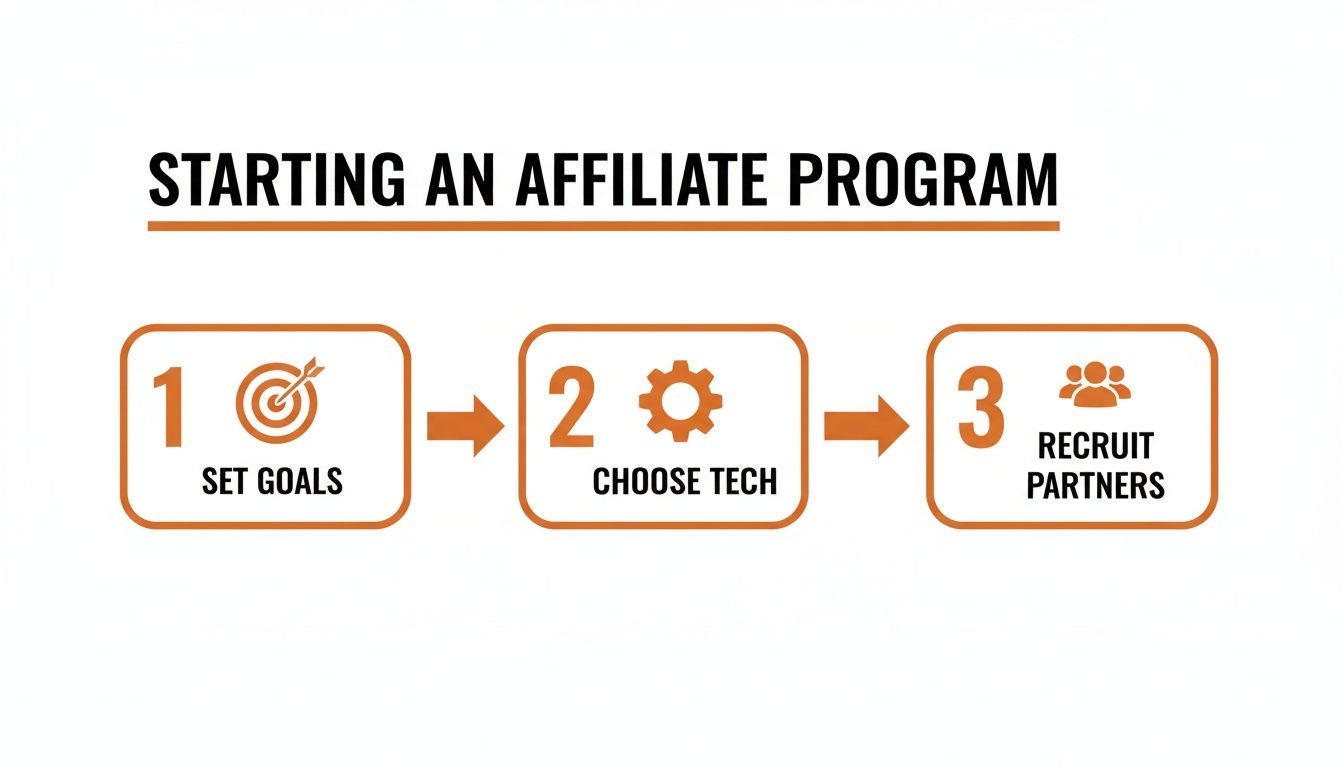
As you can see, a successful program really boils down to having clear goals from the start, using the right tools to manage it, and being smart about who you partner with.
This is where platforms like Toki come in, especially for Shopify merchants. They build affiliate management right into your store's backend, so you can manage everything—tracking, commissions, partner messages—all in one spot. This gets rid of the headache of juggling different software and creates a much smoother experience for you and your affiliates. For a complete A-to-Z plan, this affiliate marketing step-by-step guide is a fantastic resource.
Ultimately, learning how to start an affiliate program is about building an army of brand champions. It's about turning your biggest fans into your best salespeople and creating a growth engine that builds on itself over time.
Building the Strategic Foundation for Your Program
A profitable affiliate program doesn't just happen by accident. It's built on a smart, strategic foundation that you lay long before you even think about inviting your first partner. Honestly, jumping in without a clear plan is the fastest way to create a program that’s both a drain on your resources and a nightmare to manage.
This initial planning phase is all about defining what success actually looks like for your brand. Are you laser-focused on driving new sales, or is the real prize reaching a completely untapped audience? Maybe your main objective is to nudge up that average order value (AOV) or boost your overall customer lifetime value (LTV).
Having one primary goal is critical. It’s the north star that will guide every other decision you make, from the commission structure you offer to the specific type of affiliates you recruit.
Defining Your Program's Core Objectives
Start by zeroing in on one primary metric you want to move. This sharpens your focus and makes measuring success a whole lot easier.
- Increase New Customer Acquisition: This is the classic goal for most programs. You’ll measure success by tracking the percentage of affiliate-driven sales that come from first-time buyers.
- Boost Average Order Value (AOV): You could encourage affiliates to promote higher-ticket items or bundled deals. Success here is a clear, measurable lift in the AOV from affiliate traffic compared to your other channels.
- Drive Sales for a Specific Product: Got a new product line you want to push? Affiliates can create a massive groundswell of interest. Success is simple: how many units of that product did they sell?
Your key performance indicators (KPIs) should be directly tied to your business's bottom line. A great affiliate program doesn't just generate clicks; it generates profitable, sustainable growth that you can see on your P&L statement.
Crafting a Compelling Commission Structure
Think of your commission structure as the heart of your affiliate offer. It needs to be attractive enough to motivate high-quality partners but sustainable enough that it doesn’t chew up your profit margins. There's no single "best" model here; the right choice really depends on your products, margins, and goals.
Let's walk through the most common models with some real-world scenarios:
| Commission Model | How It Works | Best For |
|---|---|---|
| Percentage of Sale | Affiliates earn a set percentage (e.g., 10%) of the total sale amount. | E-commerce stores with a wide variety of product prices. It's straightforward and scales naturally. |
| Flat-Rate (CPA) | Affiliates earn a fixed dollar amount (e.g., $50) for each sale, no matter the order value. | Brands with a single high-value product or service. This makes commissions incredibly predictable. |
| Tiered Commissions | The commission percentage climbs as affiliates hit performance milestones. | Firing up your top performers. For example, 10% for 1-10 sales, 12% for 11-50, and 15% for 51+ sales. |
So, how do you calculate a profitable rate? Start with your product's gross margin and subtract your average customer acquisition cost (CAC). Your commission needs to fit comfortably within what’s left over, leaving you a healthy profit.
For instance, if a $100 product has a $40 margin and your typical CAC is $15, you could offer a 10% ($10) commission and still pocket $15 in profit from that affiliate sale.
Establishing Clear Program Terms and Conditions
Finally, your program absolutely needs a clear set of rules. A detailed terms and conditions document is your best friend for preventing misunderstandings and protecting your brand. This isn't just legal boilerplate; it's the official rulebook that ensures fairness and transparency for everyone. To get a better feel for how affiliates guide customers to a sale, you can learn more about the role of the affiliate marketing sales funnel in our detailed article.
Make sure your terms explicitly cover these key areas:
- Cookie Duration: How long after a click does an affiliate get credit for a sale? A 30-90 day window is pretty standard.
- Payout Schedule: When and how will you pay your partners? Monthly payouts via PayPal or direct deposit are common and reliable.
- Allowed Promotional Methods: Can affiliates use paid ads on Google or social media? Are there specific keywords (like your brand name) that are off-limits for them to bid on?
- Brand Guidelines: How should affiliates talk about and represent your brand? Provide crystal-clear rules on logo usage and approved messaging.
By setting these foundations—clear goals, a smart commission structure, and transparent rules—you're not just launching a program. You're building a powerful growth engine designed for long-term, profitable success.
Choosing the Right Tech for Seamless Management
The technology you choose is the engine that will power your entire affiliate program. Get this right, and you'll build trust, attract top-tier partners, and create a professional experience from day one. Trying to manage this on a spreadsheet? That’s a recipe for disaster. It's not just inaccurate and time-consuming; it's a surefire way to kill your program before it even gets off the ground.
For Shopify merchants, the sweet spot is finding a solution that feels like a natural extension of your store, not some clunky, bolted-on third-party tool. This is where a dedicated affiliate management platform becomes your best friend. Think of it as the central nervous system for your program—it handles everything from tracking clicks to paying your partners on time.
The whole point is to automate the tedious, administrative work. This frees you up to focus on what actually moves the needle: building real relationships with your affiliates and strategizing your program's growth.
Must-Have Features in an Affiliate Platform
When you start looking at tools, it's easy to get overwhelmed by a laundry list of features. Don't get lost in the noise. A few core functions are absolutely non-negotiable for running a program that people actually want to be a part of.
Here’s what you should be looking for:
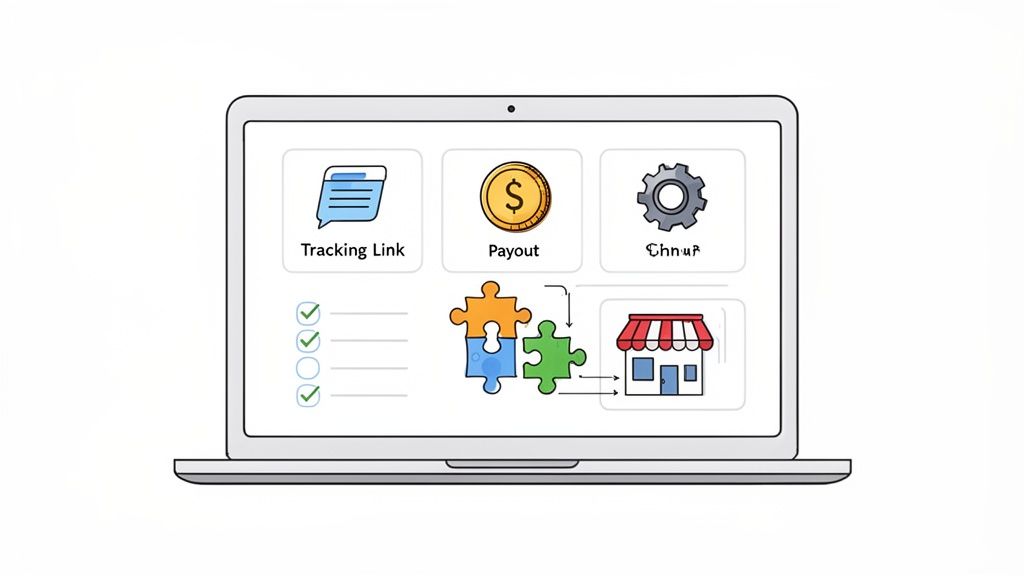
- Reliable, Real-Time Tracking: This is the absolute bedrock of trust. Affiliates need to see their efforts pay off the second a sale happens. Look for platforms that offer solid cookie-based and link-based tracking to make sure every single conversion is captured.
- Automated Commission Payouts: Let's be honest, nobody wants to spend hours manually calculating and sending payments. A good platform automates this, ensuring your partners get paid accurately and on schedule. This is critical for keeping your best people happy.
- A Customizable Affiliate Dashboard: Your partners need a home base. A clean, branded portal where they can grab their unique links, download creative assets, and see their performance is essential. It just looks professional.
- Comprehensive Analytics and Reporting: You can't improve what you don't measure. Your platform needs to give you a clear window into what's working—clicks, conversion rates, top-performing affiliates—so you can make smart, data-backed decisions.
An all-in-one solution like Toki pulls all of this together right inside your Shopify ecosystem. By having your affiliate, referral, and loyalty programs under one roof, you get a single, unified view of your entire brand advocacy machine.
This screenshot from Toki shows just how simple and clean an integrated dashboard can be.
What you’re seeing is a centralized hub. From here, you can manage every aspect of your growth programs, making it dead simple to track performance and stay connected with your partners.
Your Technical Setup Checklist
Getting your tech configured correctly from the start will save you a world of headaches later on. This isn't just about flipping a switch; it's about carefully building the infrastructure your affiliates will depend on.
Run through this checklist to get your program ready for its first partners:
-
Get Your Tracking Dialed In: First things first, make sure your tracking pixel or script is correctly installed on your site. This is the crucial piece that connects a click on an affiliate link to a sale in your store. Most modern apps make this a simple, one-click installation. If you want to go deeper, you can learn more about how to create and manage affiliate links effectively in our guide.
-
Customize Your Affiliate Portal: Make the affiliate dashboard your own. This is your program's storefront. Add your brand’s logo, colors, and a genuine welcome message. A polished portal shows affiliates you’re serious and gives them confidence in who they’re partnering with.
-
Stock Your Creative Library: Don’t make your affiliates create everything from scratch. You'll get much better results if you equip them with a library of high-converting creative assets. This is one of the most impactful things you can do to set them up for a quick win.
Pro Tip: Your creative asset library should be a living, breathing resource. Keep it fresh by regularly adding new product imagery, seasonal promotions, and updated ad copy. This prevents your affiliates' content from going stale.
So, what should you actually put in there?
- High-Resolution Product Photos: A mix of lifestyle and clean studio shots works best.
- Branded Banners: Offer standard ad sizes for blogs and websites (e.g., 728x90, 300x250).
- Email Swipe Copy: Write a few pre-approved email templates they can easily adapt.
- Social Media Templates: Create shareable graphics, stories, and short video clips.
By providing these resources, you make it incredibly easy for partners to start promoting your products effectively the moment they sign up. This thoughtful setup is the foundation for a program affiliates will love—and one that will drive serious growth for your brand.
Recruiting and Onboarding Your First Brand Champions
You've laid the groundwork and have your tech in place. Now for the fun part: finding the people who will actually shout about your brand from the rooftops. A killer affiliate program isn't about having the most partners; it's about having the right partners—people who are genuinely passionate about what you do. The goal is to build an army of authentic advocates, not just a list of faceless link-sharers.
This is where I see so many merchants stumble. They blast out hundreds of generic, cold emails and then get discouraged when they hear crickets. The secret is to stop thinking about it as mass recruitment and start treating it like building real relationships. Honestly, your best future affiliates are probably already in your orbit. You just need to know where to look.
Finding Your Ideal Affiliates
Instead of casting a wide, impersonal net, concentrate your energy on a few high-potential groups. These are the folks whose endorsements carry real weight because they come from a place of genuine enthusiasm.
- Your Loyal Customers: Who already loves and buys your products? Dive into your Shopify data. Look for your repeat buyers or customers with the highest lifetime value. A simple, personalized email inviting them to your new program can have an incredible response rate because they already believe in what you're selling.
- Niche Bloggers and Content Creators: Search for bloggers, YouTubers, or podcasters who are creating amazing content in your specific niche. If you sell sustainable home goods, find that blogger who lives and breathes eco-friendly living. Their audience hangs on their every word, making their recommendation pure gold.
- Micro-Influencers with High Engagement: Don't get caught up chasing influencers with a million followers. Micro-influencers (think 10k-100k followers) often have a much more connected and engaged community. Look for creators whose comment sections are full of actual conversations, not just fire emojis. Their followers trust them like a close friend.
As you start recruiting, incorporating proven influencer marketing best practices will make a world of difference. It helps ensure your partnerships are built on a solid, authentic foundation right from the get-go.
Crafting Outreach That Actually Gets a Response
Once you've pinpointed some great potential partners, the message you send is everything. Generic templates are the fastest way to get your email deleted. Your outreach needs to prove you've actually done your homework.
A great outreach email isn't about what you want; it's about what you can offer them. Frame the partnership as a mutual win that provides real value to their audience and a new revenue stream for their business.
Here’s a simple, effective structure I’ve seen work time and time again:
- Start with a Genuine Compliment: Mention a specific blog post, video, or Instagram story you genuinely enjoyed. Show them you're a real human who appreciates their work.
- Get to the Point: Briefly introduce your brand and explain exactly why you think a partnership would be a perfect fit for their audience.
- Highlight the Good Stuff: Clearly state your commission rate, cookie duration, and any other unique perks. Make it a no-brainer for them to see the value.
- End with a Low-Friction CTA: Instead of a demanding "Let's schedule a call," try something softer like, "If this sounds interesting, I'd be happy to share more details."
Creating an Unforgettable Onboarding Experience
Getting a "yes" is just the beginning. A smooth, welcoming onboarding process sets the tone for the entire relationship and gives your partners the confidence to start promoting right away. A confusing or clunky start is the quickest way to make a great new partner disappear.
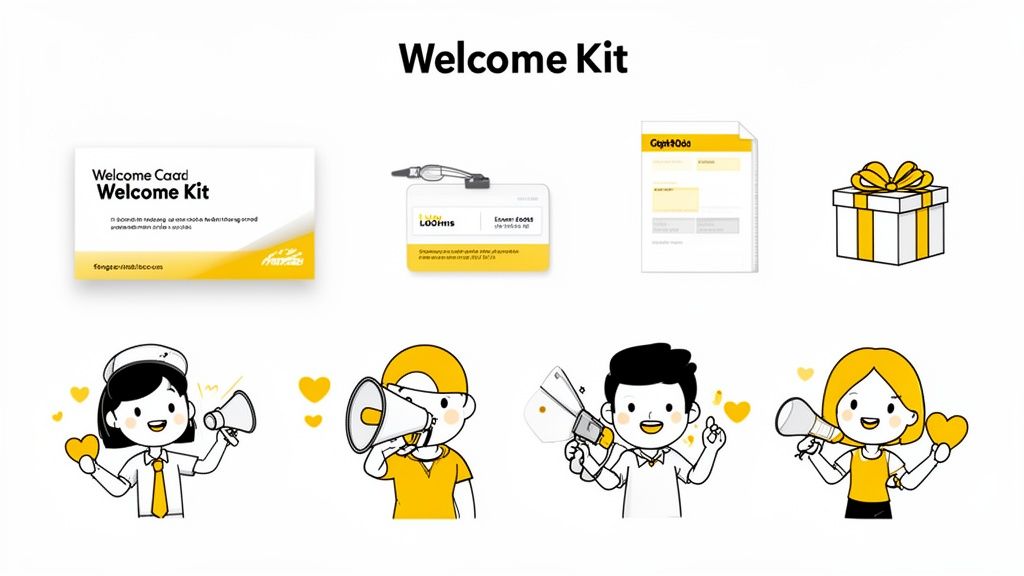
I always recommend creating a digital "Welcome Kit" that you automatically send to every new affiliate. Think of it as their go-to resource for everything they need to succeed.
Your Welcome Kit should include:
- A Personal Welcome Message: A short video or personalized note from you or the founder goes a long way.
- Login Details: Simple, clear instructions on how to access their affiliate dashboard.
- Program Quick-Start Guide: A one-page PDF outlining the commission structure, payout schedule, and key rules.
- Direct Link to Creative Assets: Don't make them hunt for banners and product photos. Give them one direct link to everything.
- Your Contact Information: Let them know exactly who to reach out to with questions. Having a dedicated contact makes them feel supported.
This level of organization signals that you're a professional brand that is genuinely invested in their success. A fantastic onboarding experience turns a fresh recruit into an enthusiastic, profitable partner from day one. For more inspiration on building these types of relationships, you can also check out our post on successful influencer marketing campaign examples.
How to Manage and Scale a Thriving Affiliate Network
Getting your affiliate program off the ground is just the first step. The real money and lasting value come from what you do next: actively managing and scaling that network. You can't just "set it and forget it" and expect results. The goal is to turn that initial group of partners into a powerful, self-sustaining sales channel that grows right alongside your brand.
This is where the real work begins. It’s all about building relationships, sparking motivation, and letting the data guide your decisions. Think of yourself less as a program administrator and more as a coach, giving your team the tools and encouragement they need to win.
Cultivate Engagement Through Consistent Communication
Out of sight, out of mind. It’s a cliché because it’s true. If your affiliates never hear from you, their motivation is going to dry up fast. Consistent, valuable communication is your single best tool for keeping your program top-of-mind and your partners actively promoting.
A simple monthly newsletter can work wonders here. This isn’t just a generic update—it’s a strategic touchpoint that keeps your partners in the loop and feeling like part of the team.
Here's what a great affiliate newsletter should always include:
- Upcoming Promotions: Give them a heads-up on sales or holiday deals so they can get their content ready ahead of time.
- New Product Launches: Arm them with details about new products, complete with fresh creative assets they can drop right into their content.
- Performance Tips: Show them what's working. Maybe that's a case study from a successful affiliate (with their permission, of course) or some pro tips on how to promote a specific product.
- Company News: Let them in on exciting brand milestones or positive press. It makes them feel like insiders, not just another number.
Motivate Performance with Gamification and Rewards
Your best affiliates are competitors at heart. Tapping into that drive with smart incentives can light a fire under your entire network. This is where gamification and tiered rewards—which are core features in platforms like Toki—really shine.
Instead of a one-size-fits-all commission rate, try introducing performance-based tiers. For example, an affiliate might start at 10% for their first 20 sales, but that rate jumps to 15% after they hit that milestone. It gives everyone a concrete goal to aim for.
You can also run short-term sales contests and broadcast a leaderboard. Offer a cash bonus or a sweet prize package to the top three affiliates who drive the most revenue in a given month. Publicly recognizing your top performers not only rewards their hustle but also shows everyone else what's possible, motivating the whole group to step up.
Dive Deep into Your Program Data
To really scale, you have to look past the total sales number. Your affiliate dashboard is a goldmine of information, and knowing how to read it is what separates a good program from a great one. You need to understand which metrics actually matter and what they’re telling you.
Here’s a breakdown of the essential metrics you should be tracking to measure your program’s health and find opportunities for growth.
| Key Metrics for Affiliate Program Optimization |
|---|
| Metric (Abbreviation) |
| Conversion Rate (CR) |
| Earnings Per Click (EPC) |
| Average Order Value (AOV) |
| Active Affiliates |
| Top-Performing Affiliates |
| Click-Through Rate (CTR) |
By keeping a close eye on these numbers, you’ll quickly see who your star players are and can learn from their strategies. You'll also be able to spot underperforming affiliates who might just need a little extra support to get going.
Key Takeaway: Analyzing these metrics helps you move from simply running a program to strategically optimizing it. You'll know exactly where to invest your time and resources for the biggest impact.
The affiliate world is moving fast. Since 2020, global affiliate click-volume has shot up by over 50%, and a whopping 57% of those purchases are now happening on mobile. With US affiliate spending projected to blow past $12 billion, using data to stay ahead is absolutely critical. You can get more insights on these affiliate marketing trends on FirstPromoter.com.
Build Trust with Compliance and Reliable Payouts
When it comes down to it, nothing builds trust faster than paying your partners on time, every single time. An automated, reliable payment system isn't a "nice-to-have"; it's a must. This is a business partnership, and your affiliates are counting on that income.
Just as important is having clear rules. Make sure your program's terms of service are easy to find and even easier to understand. Be firm but fair about your policies, especially around things like brand bidding in paid search and using approved promotional language. This protects your brand's integrity and creates a level playing field for all your partners. Enforcing these rules consistently shows you’re a professional, and that’s the foundation for a respectful, long-term relationship.
Common Questions About Starting an Affiliate Program
Diving into affiliate marketing for the first time? It's totally normal to have a ton of questions. While it’s an incredibly powerful way to grow your store, the details can feel a bit overwhelming at the start. Let's walk through some of the most common hurdles Shopify merchants face when figuring out how to get their program off the ground.
Getting these fundamentals right from the beginning is key. It helps you build a program you’re confident in, one that’s set up for genuine, profitable growth right from day one.
How Much Should I Pay My Affiliates?
This is the big one, isn't it? The honest answer is, it really depends on your business. For most e-commerce brands, commission rates usually land somewhere between 5% to 25% of the sale. The sweet spot for your brand will come down to your specific product margins, how much you typically spend to get a new customer (your CAC), and what your customer lifetime value (LTV) looks like.
If you're selling digital products with super low overhead, you can often go much higher—think 30% or more. For physical goods, a 10-15% commission is a really solid, competitive place to start.
Here's a pro tip: consider a tiered structure to really fire up your top performers. It gamifies the process and gives your best partners a real incentive to keep pushing.
- Bronze Tier: 10% for their first 10 sales each month.
- Silver Tier: 12% once they hit 11-50 sales.
- Gold Tier: 15% for every sale after 50.
This kind of setup is surprisingly easy to manage. When you use a tool like Toki, you can automate these tiered commissions, making it a scalable and hands-off way to reward your best affiliates.
What Is the Difference Between an Affiliate and a Referral Program?
This is a common point of confusion, but the distinction is actually pretty simple. While they both reward people for spreading the word, they’re built for very different groups and have different goals.
A referral program is all about your existing customers. You’re encouraging them to tell their friends and family about you, usually by offering store credit or a discount to both the person referring and their friend. It’s a word-of-mouth machine designed to build loyalty.
An affiliate program, on the other hand, is a more formal marketing partnership. You're teaming up with content creators, influencers, and professional marketers who promote your products to their wider audience in exchange for cash. This is a performance-based channel built for acquiring new customers at scale.
The smartest brands don't just pick one. They run both programs in parallel, creating a powerful growth engine that captures advocacy from happy customers and influential creators alike.
How Can I Prevent Affiliate Fraud?
Worries about fraud—like cookie stuffing or affiliates bidding on your branded keywords in their ads—are completely valid. The good news is, you can be proactive and protect yourself.
Your first line of defense is a rock-solid affiliate agreement. Your terms and conditions need to be crystal clear on what’s allowed and what isn’t. Make sure you explicitly forbid things like brand bidding, making misleading claims, or using sketchy traffic sources.
Next, lean on your technology. A good affiliate management platform will have fraud detection built right in. These systems can automatically flag suspicious activity, like a massive spike in clicks with no conversions or a sudden flood of traffic from a country you don't sell to.
Finally, nothing replaces a good old-fashioned manual check-in. Every so often, take a look at your top-performing affiliates. Visit their websites and social media channels. Does how they're representing your brand feel right? Building real relationships with your partners is often the best fraud prevention there is.
How Long Does It Take to See Results?
This is where you need to play the long game. An affiliate program isn't a switch you flip for instant sales; it's about building a sustainable, profitable channel that grows with you.
Realistically, you can expect the first few sales to start trickling in within the first 1-3 months. This is your recruitment and onboarding phase, where your first partners are just starting to create and publish their content.
To see significant, consistent revenue, you should plan for a 6-12 month runway. This is when your affiliates' content starts to gain traction, rank in search engines, and build real trust with their audiences. That initial slow build is completely normal, and it lays the foundation for a powerful and scalable sales channel down the road.
Ready to turn your customers and creators into your most powerful sales team? With Toki, you can launch a fully integrated affiliate, referral, and loyalty program right inside your Shopify store. Stop wondering how to start an affiliate program and begin building a community of brand champions today. Explore how Toki can ignite your brand's growth.