How to Reward Loyal Customers: Proven Strategies for Retention and Growth
How to reward loyal customers: discover proven strategies to boost retention and grow your e-commerce business.
When we talk about rewarding loyal customers, we’re talking about building a system of appreciation that runs deeper than a simple transaction. It’s about creating an emotional connection through points, exclusive access, or personalized experiences that turn happy shoppers into genuine brand advocates.
Why Customer Loyalty Is Your Strongest Growth Engine
Let's get one thing straight: the endless, costly cycle of chasing new leads is a trap. The most powerful, sustainable engine for long-term growth is already hiding in your customer list. The real secret to scaling an e-commerce brand isn’t just acquisition—it’s retention. Building a rock-solid foundation with your existing customers creates a competitive moat that flashy discounts and ad spend can't touch.
The psychology behind it is simple. Thoughtful rewards forge an emotional bond that a price tag can't compete with. When customers feel seen and valued, they stop making purely transactional purchases and start building a real relationship with your brand. This is the exact playbook industry giants like Sephora used to build their empires—not just by selling products, but by making millions of customers feel like insiders with their Beauty Insider program.
The Financial Case for Loyalty
Investing in your existing customers isn't just a feel-good strategy; it's a direct line to a healthier bottom line. The metric that matters most here is Customer Lifetime Value (CLV)—the total revenue you can expect from a single customer over their entire relationship with you. When you get rewards right, that CLV number doesn't just grow, it skyrockets.
Why does this happen? Loyal customers just behave differently.
- They spend more frequently, making your store their go-to and ignoring the temptation to shop around.
- They have a higher Average Order Value (AOV) because they trust your quality and are more willing to try new products or spring for premium items.
- They become your best marketers, leaving positive reviews and referring friends, which in turn drives down your customer acquisition costs.
Understanding how loyalty ties into the bigger picture is crucial, as it’s one of the essential factors of business growth.
The data is crystal clear: prioritizing customer retention pays off, big time. Acquiring a new customer can be anywhere from five to 25 times more expensive than keeping an existing one. Focusing on loyalty isn't just nice—it's the most efficient and profitable way to grow.
Loyalty as a Competitive Advantage
In a market this crowded, a well-executed loyalty program is your secret weapon. It’s a powerful differentiator that stops your brand from becoming just another commodity. It’s no surprise that over 90% of companies now have some form of loyalty program—they've become table stakes.
Here's a quick look at the core metrics a great loyalty program can move, and the direct impact you'll see on your business.
Key Loyalty Metrics and Their Impact on Your Business
| Metric | What It Measures | Direct Business Impact |
|---|---|---|
| Customer Lifetime Value (CLV) | Total revenue from a customer over time. | Higher CLV means more predictable, long-term revenue and higher profitability. |
| Customer Retention Rate | Percentage of customers who stay with you over a period. | A higher rate reduces churn and the high costs associated with acquiring new customers. |
| Purchase Frequency | How often a customer buys from you. | Increased frequency leads to more consistent cash flow and sales volume. |
| Average Order Value (AOV) | The average amount a customer spends per transaction. | A higher AOV directly increases revenue from each sale, boosting overall profitability. |
| Net Promoter Score (NPS) | Customer likelihood to recommend your brand. | A high NPS indicates strong brand advocacy, leading to organic growth through word-of-mouth. |
Ultimately, these numbers show that businesses with strong programs see loyal shoppers spend up to 57% more. When the economy gets shaky, nearly one in three shoppers lean even harder on these programs for value.
Learning how to reward loyal customers is about building a community, not just a customer base. These are the people who will stick by you, champion your brand, and provide the stable revenue you need to thrive. If you're ready to go deeper, check out our complete guide on the core benefits of a loyalty program for e-commerce stores.
How to Build a Loyalty Program That Actually Works
Jumping into a loyalty program without a clear game plan is a recipe for wasted effort. To build something that truly connects with customers and delivers a real return, you have to start with a solid foundation. That means getting crystal clear on what you want to achieve before you even think about points or perks.
So, what’s the primary goal here? Are you trying to get customers to buy more often? Is the main objective to bump up the average amount they spend? Or maybe you're looking to spark more word-of-mouth referrals. Nailing down your "why" is the most critical first step.
A well-designed loyalty program is far more than just another marketing tactic; it’s a powerful business tool. With the right structure, it can directly boost key metrics like customer lifetime value, purchase frequency, and average order value, turning casual shoppers into your most reliable source of revenue.
The numbers back this up. We've seen companies hit over 90% program adoption and a 57% increase in spending from loyal members. The financial upside is undeniable.
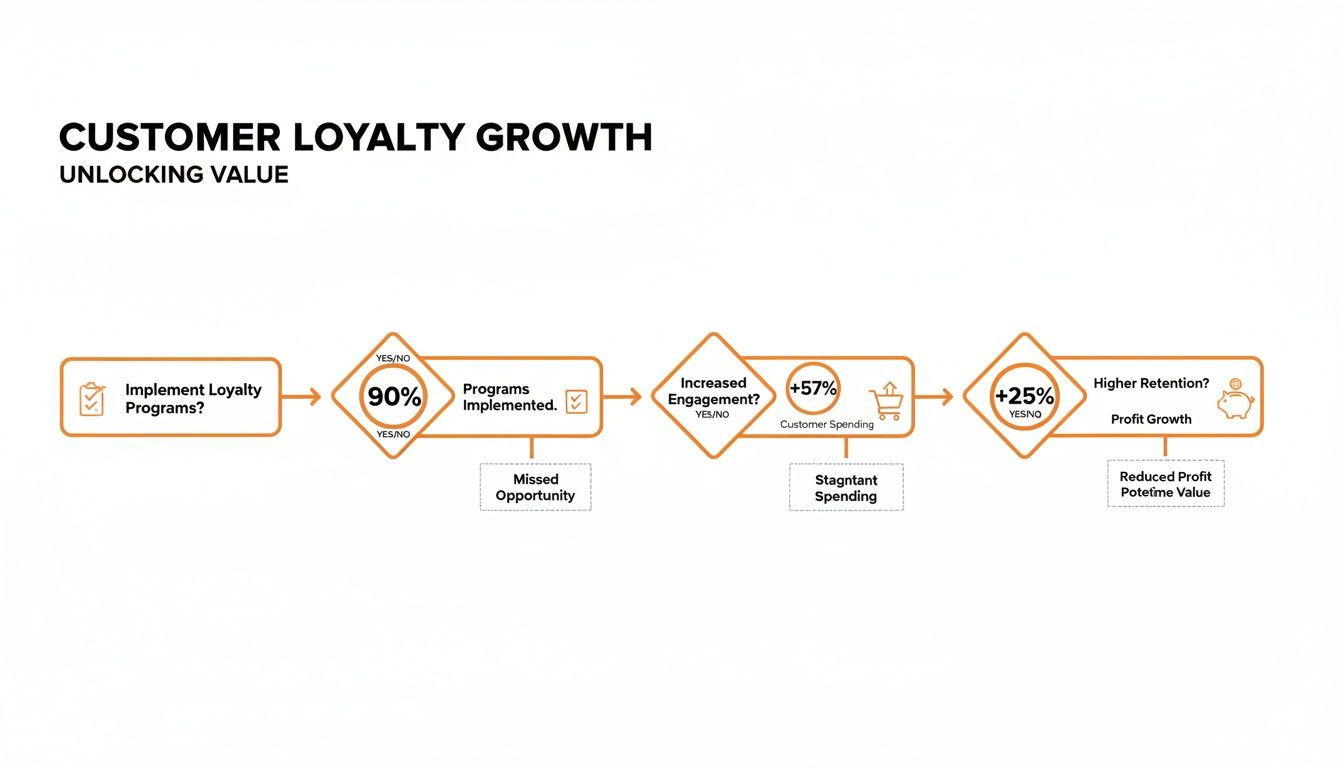
This flowchart really brings it home, showing how a thoughtful program creates a positive feedback loop of higher spending and better profitability. It’s a crucial growth lever.
Choosing Your Reward Structure
Once your goals are locked in, it’s time to pick a reward structure that fits those objectives and feels true to your brand. There are a few proven models, and the key is to select the one that makes the most sense for how your customers shop.
A points-based system is the classic for a reason—it’s simple and everyone gets it. Customers earn points for actions like making a purchase, leaving a review, or a social media follow. They can then cash in those points for discounts, freebies, or other goodies. This model is fantastic for encouraging frequent, smaller purchases and making engagement a habit. For a deeper look, check out our guide on setting up a successful points-based loyalty program.
Elevating the Experience with Tiers
If you want to create a sense of aspiration and exclusivity, a tiered program is a brilliant move. Customers unlock better perks as they spend more or engage more often. It’s a gamified approach that taps into our natural desire for status, motivating customers to stick with you to reach that next level.
Get creative with your tier names! Instead of a generic "Silver, Gold, Platinum," try something that reflects your brand’s personality. A plant shop could use "Sprout, Bloom, Evergreen," for example.
Here’s how a tiered structure might look for a fictional coffee brand:
- Bronze Bean (Entry Level): Earn 1 point per dollar, get a birthday reward.
- Silver Brewer (Spend $250/year): Earn 1.25 points per dollar, get free shipping, plus early access to new blends.
- Gold Roaster (Spend $500/year): Earn 1.5 points per dollar, all Silver benefits, plus a quarterly free bag of coffee and exclusive invites to virtual tasting events.
This structure makes the value of climbing the ladder incredibly clear, giving customers a powerful reason to concentrate their coffee budget with your brand.
Exploring Paid Memberships and Referrals
Another powerful option is the paid membership program, famously used by Amazon Prime. Customers pay a recurring fee for instant access to premium benefits like free shipping, exclusive discounts, or members-only content. This strategy works best for brands where customers buy frequently, as it creates a "lock-in" effect—people want to get their money's worth.
And never, ever underestimate the power of a solid referral program. Rewarding your current customers for bringing you new ones is one of the most cost-effective marketing strategies out there. The trick is to make it a win-win-win: the referrer gets a reward, their friend gets a sweet introductory offer, and you get a new customer.
A simple "Give $10, Get $10" model is compelling and easy to share. The impact on your bottom line can be massive.
In fact, research shows that just a 5% boost in customer retention can increase profits by up to 25%, since loyal customers tend to spend 57% more. Globally, 79% of consumers belong to some kind of membership or subscription. But here's the catch: 77% are also quicker than ever to ditch a brand due to "program fatigue." This makes it absolutely essential to design programs with compelling tiers and personalized rewards that genuinely keep people hooked.
By carefully matching your goals with the right reward structure, you can build a program that does more than just say "thanks"—it becomes a core part of your growth engine.
Using Personalization to Deepen Customer Connections
A generic rewards program is a forgettable one. Let's be honest, a one-size-fits-all approach just doesn't build the kind of deep, emotional connection that turns a casual shopper into a true brand advocate.
The real magic happens when you make your customers feel seen, understood, and individually valued. This is where personalization becomes your most powerful tool.
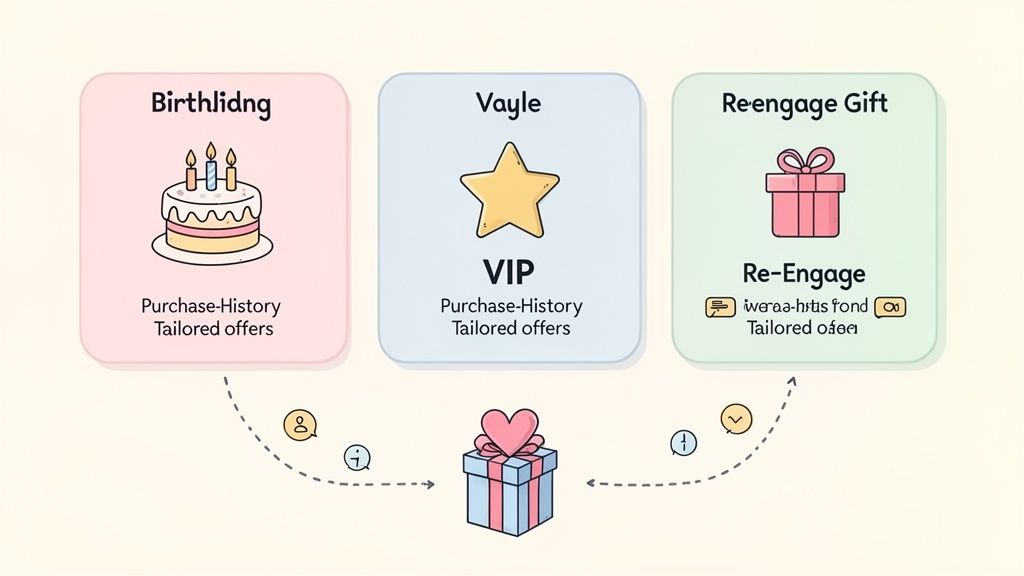
Real personalization goes way beyond just slotting a customer's first name into an email. It’s about using the data they share with you—both directly and through their behavior—to create interactions that are relevant, timely, and actually meaningful.
When you get this right, these moments feel less like marketing and more like genuine appreciation. To really nail this, you need to explore effective content personalization strategies that move far beyond generic messaging.
Segmenting Your Audience for Maximum Impact
Your first move toward powerful personalization is smart segmentation. Lumping all your loyal customers into one giant bucket is a huge missed opportunity. You need to group them based on their actual behaviors and where they are in their relationship with your brand.
This simple step allows you to craft rewards that actually resonate.
Here are three high-impact segments I always recommend starting with:
- Your VIPs and Top Spenders: These are the folks in your top 5-10%, measured by lifetime value or how often they buy. They're your champions and deserve the best you've got.
- At-Risk Customers: This group includes previously loyal shoppers who've gone quiet—maybe they haven't purchased in 90 or 120 days. A gentle, personalized nudge can be all it takes to bring them back.
- Milestone Achievers: Think of customers celebrating a birthday, an anniversary with your brand, or hitting a new loyalty tier. These are perfect moments for a surprise-and-delight campaign.
By segmenting your audience, you can stop shouting into the void and start having meaningful conversations. It's also worth thinking about how to get more of this valuable info straight from the source by understanding what is zero-party data.
Crafting Rewards That Feel Personal
Once your segments are defined, the fun begins. You can now design specific, creative campaigns for each group, matching the reward to the customer's context to make the offer feel both exclusive and incredibly relevant.
Here’s how you can put this into action for those key segments.
For Your VIPs
Your top customers have more than earned special treatment. You need to make them feel like true insiders with perks that money can't always buy.
- Grant early access: Let them shop new products or sales 24-48 hours before anyone else. The exclusivity is a powerful motivator.
- Offer exclusive products: Think about a limited-edition item or a unique bundle available only to your top loyalty tier.
- Provide a direct line: A dedicated customer service email or even a private Slack channel can make them feel incredibly valued.
A VIP program isn't just about discounts; it's about status and access. When your best customers feel like they are part of an exclusive club, their loyalty solidifies, and they are more likely to become vocal advocates for your brand.
For At-Risk Customers
Winning back a customer who has lapsed is almost always cheaper than acquiring a new one. A well-timed, personal "we miss you" campaign can work wonders.
- Send a compelling offer: A targeted email with "Here's 20% off to welcome you back" can be very effective.
- Reference their past purchases: Remind them of something they loved. For instance, "We noticed you're about to run out of your favorite coffee blend. Here’s a little something to help you restock."
- Give a bonus points incentive: Surprise them by adding 100 points to their account with a note saying you’d love to see them again soon.
For Milestone Achievers
Celebrating key moments shows you’re paying attention. These rewards should feel like a genuine gift, not just another promotion.
- Rethink birthday surprises: Go beyond a simple discount. Offer a free product with their next purchase or a big point bonus during their birthday month.
- Celebrate "brandiversaries": Acknowledge the anniversary of their first purchase with a special thank-you gift or an exclusive offer.
By tailoring how you reward your customers, you transform a generic program into a powerful relationship-building engine. Each personalized touch reinforces that you see them as an individual, not just another number in your database.
Driving Engagement with Gamification and Omnichannel Rewards
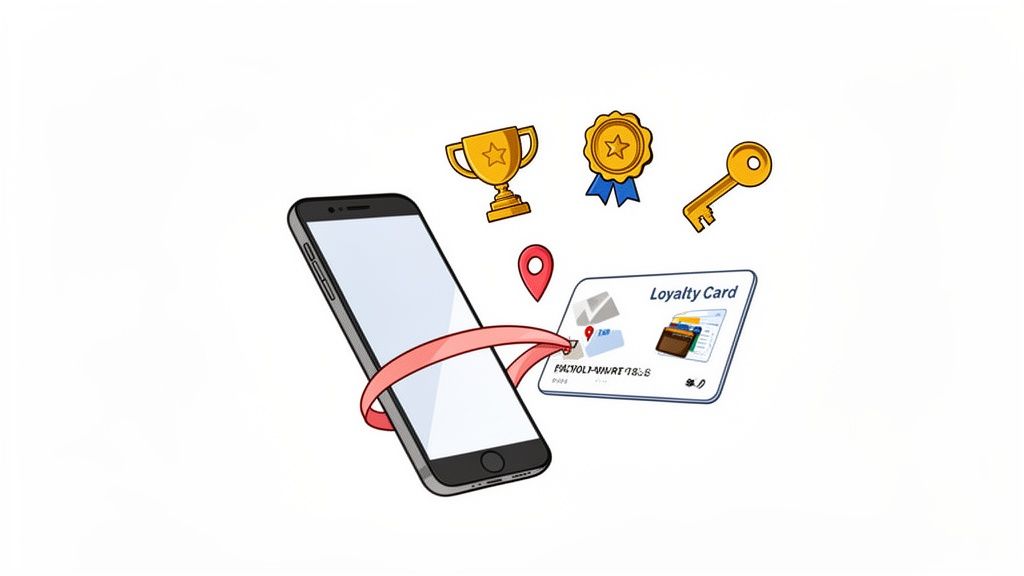
A great rewards structure is only half the battle. If your loyalty program feels like a chore, even the most generous perks will fall flat. The trick is to make participating feel fun and effortless—transforming a simple points system into an experience your customers actually look forward to.
This is where gamification really shines. It taps into our basic human desires for achievement, competition, and status, creating a positive feedback loop that keeps people coming back for more. Instead of just passively earning points on purchases, customers can take on challenges and unlock achievements, making them feel far more connected to your brand.
Sparking Excitement with Gamification Tactics
Gamification isn't about turning your store into a video game. It's about borrowing game-like mechanics to motivate specific actions. When you learn how to reward loyal customers with these tactics, you create small, satisfying wins that build momentum and deepen their connection to your program.
For instance, you could introduce simple challenges like "Make three purchases this month" or "Try a product from our new collection." Completing these tasks could unlock bonus points, a special discount, or even a digital badge they can show off on their profile. These badges create a sense of status and accomplishment, turning passive members into your most active fans.
The real power of gamification is its ability to make engagement feel earned, not just given. Customers who unlock a "secret sale" by completing a challenge value that reward far more than a generic discount code sent to everyone. This sense of exclusivity is a powerful driver of long-term loyalty.
Here are a few actionable ideas to get you started:
- Completion Challenges: Reward customers for simple things like finishing their profile, subscribing to your newsletter, or following you on social media. Each action is a small win that gets them more invested.
- Surprise Point Drops: Randomly award bonus points to active members. The unpredictability creates a little thrill and encourages them to check their loyalty status more often.
- Punch Card Quests: Digitize the classic coffee shop punch card. For example, offer a big reward after a customer makes 5 purchases in a specific category.
To help you brainstorm, here's a quick-reference table with some creative gamification ideas you can implement.
Gamification Ideas for Your E-commerce Store
| Tactic | How It Works | Best For |
|---|---|---|
| Digital Badges | Customers earn unique badges for achievements like their first purchase, spending milestones, or leaving a review. | Building a sense of community and recognizing specific positive behaviors beyond just spending. |
| Spin-to-Win Wheels | Offer a chance to spin a virtual wheel for a random prize (e.g., points, free shipping, a discount) after a purchase. | Increasing post-purchase engagement and adding an element of surprise and fun to the checkout process. |
| Secret Sales | Customers unlock access to exclusive, time-sensitive sales by completing a specific challenge or reaching a new tier. | Driving urgency, creating a feeling of exclusivity, and rewarding your most engaged customers. |
These tactics are just the beginning, but they show how simple game mechanics can make your program much more engaging.
Creating a Seamless Omnichannel Experience
Your loyalty program should feel like a consistent part of your brand, no matter where a customer is shopping. Nothing kills momentum faster than a disconnected experience where online points don't work in-store or vice-versa. That kind of frustration completely undermines the program.
True loyalty thrives on convenience, which is the whole point of an omnichannel rewards strategy. It means customers can earn and redeem points effortlessly, whether they're on your website, using your app in a brick-and-mortar store, or even interacting on social media. The experience has to be fluid.
Think about it: a customer could earn points from a purchase on their laptop, then redeem those points for a discount while checking out at your physical location just moments later. This unified approach removes all the friction and makes your loyalty program a genuinely helpful part of their shopping journey.
The Power of Digital Wallet Integration
One of the best ways to nail the omnichannel experience is by integrating your loyalty program with digital wallets like Apple Wallet and Google Wallet. This move is a game-changer for both customer convenience and brand visibility.
Instead of forcing customers to download yet another app or remember a physical card, a digital loyalty pass puts your brand right where they already keep their most important items: their credit cards and boarding passes.
Here's why this is so effective:
- Top-of-Wallet Presence: Your branded pass lives right in their phone, acting as a constant, subtle reminder of your brand and their current points balance.
- Location-Based Notifications: You can send a gentle push notification to their lock screen when they're near one of your physical stores, reminding them of their rewards or a special in-store offer.
- Ultimate Convenience: Customers simply scan their pass at checkout to earn or redeem points. It's fast, modern, and incredibly smooth.
By using digital wallets, you remove the biggest barriers to participation. You're making your program an effortless, almost invisible part of your customer's daily life—and that level of convenience is a reward in itself.
Your Go-To-Market Plan for a Successful Program Launch
All the effort you've poured into designing the perfect rewards program is wasted if your customers never hear about it. A powerful launch isn't just a single announcement; it's a carefully orchestrated campaign built to generate excitement, drive a flood of initial sign-ups, and lay the groundwork for long-term loyalty.
Let's walk through how to give your program the spotlight it deserves right from the start.
The secret to a killer launch is a multi-channel blitz that meets customers wherever they hang out. You can't just send one email and cross your fingers. The goal is to create a sense of omnipresence, making it practically impossible for your best customers to miss the news.
Building Pre-Launch Buzz
Before you even think about flipping the switch, you need to start dropping hints that something big is on the horizon. This builds anticipation and makes the official launch feel like a genuine event, not just another marketing email. Think of it as releasing a movie trailer for your rewards program.
A few simple moves can get the ball rolling:
- "Coming Soon" Banners: A week before launch, pop a subtle, intriguing banner onto your website's homepage. Something like, "Getting rewarded is about to get a whole lot easier. Stay tuned." is perfect.
- Social Media Teasers: Get creative on Instagram or TikTok. You could post a sneak peek of a cool tier name or a fun graphic about earning points, but hold back the full details. Keep them guessing.
- VIP Early Access: This one is gold. Email your top 10% of customers—your ride-or-dies—and give them the inside scoop and first access. It makes them feel valued and transforms them into your first wave of advocates.
This pre-launch phase warms up your audience. When the official announcement finally drops, they’re already leaning in, curious, and ready to jump on board.
Executing a Multi-Channel Launch Day Push
On launch day, it's time to go big. You're hitting every key marketing channel with maximum visibility and crystal-clear messaging. The key here is to frame every single piece of copy around what the customer gets, not just the features of your program.
High-Visibility Website Placements
Your website is your most valuable piece of real estate, so use it. Make your new program impossible to ignore.
- Homepage Hero Banner: This is non-negotiable. Your main banner should shout the news from the rooftops with a direct call-to-action like "Join the Club & Start Earning" or "Get Rewarded: Our New Program is Here!"
- Dedicated Landing Page: This is your program's home base. Create a comprehensive page that breaks down exactly how it works, shows off the rewards, and has a solid FAQ section. All your promotional traffic should point here. A platform like Toki can help you spin up a beautiful, on-brand landing page in no time.
- Pop-ups and Notifications: A simple, non-annoying pop-up for new visitors can work wonders. Invite them to join and earn points on their very first purchase.
Your launch messaging needs to be relentlessly benefit-driven. Don't say, "Our new loyalty program is now live." Instead, try, "Start earning points on every purchase and unlock exclusive rewards. Join today for free!" The difference is subtle but incredibly powerful.
Targeted Email and SMS Blasts
Your email and SMS lists are your direct line to your most loyal fans. Don't just blast everyone with the same message; a little segmentation goes a long way.
- General Announcement: Send a visually striking email to your entire list that clearly spells out the key benefits. Make sure the link to your loyalty landing page is front and center.
- Segmented Offers: For anyone who's purchased from you before, why not offer a "welcome back" bonus of points to get them started? It’s a great way to acknowledge their past loyalty and give them an instant reason to sign up.
Social Media Announcement Blitz
Use your social channels to build visual hype and get people talking.
- Announcement Post: Design a sharp graphic or a short, punchy video explaining the program. Pin this post to the top of your profiles for at least a couple of weeks.
- Instagram Stories: Go interactive. Use polls ("Are you excited to earn rewards?") and question stickers ("What rewards do you want to see most?") to get your followers engaged.
- Run a Small Ad Campaign: Put a little ad budget behind your announcement post. Target people who have already visited your website or engaged with your brand for an easy win.
Keeping the Momentum Going Post-Launch
A great launch is just the beginning. The days and weeks that follow are where you solidify the program's place in your customer experience.
- Train Your Support Team: Your customer service reps need to be your program's biggest cheerleaders. Arm them with all the info they need to answer questions and encourage sign-ups during their conversations with customers.
- Embed Reminders Everywhere: This is an easy one. Add a small banner about earning points to your transactional emails, like order confirmations and shipping updates.
- Follow-Up Campaigns: A week after the launch, hit your non-openers with a follow-up email. Or, better yet, run a "Double Points Weekend" to create another surge of interest and sign-ups.
When you treat your launch as a sustained campaign instead of a one-and-done event, you'll get the adoption you need to turn your program into a true retention powerhouse.
Common Questions About Rewarding Loyal Customers
Even with a solid plan, a few practical questions always pop up when you're about to launch a new loyalty program. It's totally normal. Getting straight answers to these common concerns is the key to moving forward with confidence. Let's tackle the big ones.
The first question I always hear is about the cost. Merchants often think a sophisticated program will break the bank, but that's not necessarily true.
How much does a loyalty program cost? Well, that's like asking how much a car costs—it depends on the model. A simple, old-school punch card system might just be a few hundred bucks for design and printing. On the other hand, a feature-rich program that plugs right into your Shopify store and lives in your customers' digital wallets will have a higher upfront cost.
But here’s how you need to think about it: shift your focus from the initial expense to the Return on Investment (ROI). A well-designed program isn't just another line item on your budget. It’s a revenue engine that pays for itself over and over by boosting customer lifetime value.
What Are the Most Common Mistakes to Avoid?
Knowing what not to do is just as important as having a great strategy. I've seen too many well-intentioned programs fall flat because of a few predictable, and totally avoidable, missteps.
Keep an eye out for these classic pitfalls:
- Making the rules too complicated. If your customers need a PhD to figure out how to earn points, they'll just tune out. Keep it simple. The path to a reward should be crystal clear and feel achievable.
- Offering lame rewards. A reward like "$5 off your next $100 purchase" often feels more like a slap in the face than a thank you. Your perks have to feel genuinely valuable and worth the effort.
- Forgetting to market the program. You can build the most amazing program in the world, but if nobody knows it exists, it's useless. You have to shout about it from the rooftops—on your website, in your emails, and across your social channels—to get people signed up and keep them coming back.
A loyalty program lives or dies by two things: its perceived value and its ease of use. If the rewards don't feel special or the rules are a headache, customers will see right through it. Simplicity and real value are your north stars.
How Soon Can I Expect to See Results?
This is a big one. While you'll get some positive feedback almost immediately, the real, game-changing impact of a loyalty program is a slow burn. It’s important to know what to look for, both in the short and long term.
Right after a strong launch, you should see a quick jump in metrics like program sign-up rates and member engagement. These are your early wins—proof that people are interested. But the metric that truly matters, an increase in Customer Lifetime Value (CLV), takes time. You’ll need a few months of data to really see how your program is moving the needle on long-term spending and retention. So, be patient with the big numbers and celebrate those early signs of success.
Can I Reward Customers for More Than Just Purchases?
Absolutely. In fact, you'd be crazy not to.
If you only reward transactions, you're missing a huge opportunity to build a real community and encourage people to spread the word about your brand. Rewarding non-purchase activities shows you value a customer's entire relationship with you, not just their wallet.
Think about incentivizing actions that help you grow:
- Leaving a product review (hello, social proof!)
- Sharing your brand on social media
- Referring a friend who makes a purchase
- Following your social media accounts
These actions are pure gold. They build trust and drive word-of-mouth marketing, which is far more powerful than any ad you could buy.
Ready to stop wondering and start building? With a platform like Toki, you can launch a powerful, fully-customized loyalty and rewards program in minutes. From points and referrals to VIP tiers and digital wallet passes, Toki gives you all the tools you need to turn shoppers into brand champions. Start your free trial today.