A Modern Guide to Ecommerce Customer Experience
Transform your online store with our guide to ecommerce customer experience. Learn how to map journeys, personalize interactions, and build lasting loyalty.
Your customer's experience with your brand is the sum of every single interaction they have with you online. It’s how they feel after browsing your site, talking to your support team, and unboxing their order. In a sea of look-alike products and competitive pricing, this total experience has become the single most powerful way to stand out.
We've moved far beyond the days when ecommerce was just a numbers game of price and product. Today's shoppers aren't just buying a thing; they're buying into a brand. That shift makes a thoughtfully designed customer journey less of a "nice-to-have" and more of a core pillar of your entire business strategy.
When you get the experience right, the impact on your numbers is real and measurable. Customers who feel seen and valued are far more likely to finish their purchase, come back again, and tell their friends about you. This directly lifts your conversion rates, average order value (AOV), and—the holy grail of ecommerce—customer lifetime value (LTV).
From Frustration to Loyalty
Think about the real-world consequences. We've all been there: a website with confusing menus, search results that miss the mark, or a checkout process that feels like it has a million steps. What do we do? We leave. In fact, nearly 80% of online shoppers will ditch their cart for these exact reasons, often jumping straight to a competitor. That’s not just a lost sale; it's a customer you may never see again.
Now, flip that scenario. A smooth, intuitive journey doesn't just prevent frustration; it actively creates brand fans. Here’s what an optimized experience actually delivers:
- Higher Conversions: When shoppers can easily find what they're looking for with smart search and clear product details, they have the confidence to hit "add to cart."
- Better LTV: Thoughtful product recommendations and a simple way to reorder past favorites give customers compelling reasons to return.
- Real Brand Loyalty: Quick, helpful support and a no-hassle returns process build the kind of trust that price matching can't touch.
The table below breaks down the stark difference between a frustrating customer journey and a truly optimized one. It’s a clear look at how small improvements at each touchpoint add up to a significant impact on your business.
Comparing Poor vs Optimized Ecommerce Customer Experience
| Customer Touchpoint | Poor Experience (Pain Point) | Optimized Experience (Benefit) |
|---|---|---|
| Site Navigation & Search | Confusing menus; irrelevant search results; slow loading pages. | Intuitive navigation; smart, predictive search; fast page speeds. |
| Product Discovery | Generic, one-size-fits-all recommendations; lack of social proof. | Personalized recommendations; user-generated reviews and photos. |
| Checkout Process | Multi-step, complex forms; surprise shipping costs; forced account creation. | Single-page checkout; express payment options; transparent costs. |
| Post-Purchase Communication | Generic order confirmation; no shipping updates; "black hole" of support. | Branded, proactive shipping notifications; easy order tracking. |
| Customer Support | Slow response times; disconnected channels; impersonal, scripted answers. | Instant chat support; unified customer history; proactive, human help. |
| Loyalty & Retention | No incentive to return; forgotten customer data; generic marketing blasts. | Points-based loyalty programs; personalized re-engagement offers. |
As you can see, the optimized path isn't about flashy gimmicks. It's about removing friction and adding value at every single step, turning potential pain points into moments of delight that build lasting customer relationships.
Investing in your ecommerce customer experience isn't an expense; it's a direct investment in revenue and retention. The brands that obsess over their customers' journey are the ones that will win in the long run.
A great experience often means anticipating what a customer needs before they even ask. For example, platforms like Toki help bridge the gap after a purchase by integrating loyalty programs and order tracking right into a customer's native digital wallet.
This small touch makes a customer's loyalty status and points instantly accessible on their phone. It removes the friction of remembering another login or app, making them feel like a valued part of your brand community with zero extra effort on their part.
Uncovering Friction by Mapping the Customer Journey
If you want to improve your customer's experience, you first have to walk a mile in their digital shoes. It’s easy to assume you know how people navigate your store, but assumptions are where sales go to die. The real first step is to map out their entire journey, from first glance to final click, to find the hidden roadblocks and frustrations. Think of yourself as a detective on the case.
Your mission is to trace a customer’s path from the moment they discover your brand all the way to becoming a repeat buyer. When you break this down into clear stages, you can stop guessing what’s wrong and start knowing exactly which tweaks will make the biggest difference.
Following the Customer's Path
Every customer journey, no matter how unique, generally follows four key stages. Figuring out what’s happening—and what’s going wrong—at each one is where the magic happens.
- Awareness: How are people finding you in the first place? Is it a Facebook ad, a blog post, a Google search? A classic point of friction here is an ad that promises one thing but dumps the user on a generic homepage, forcing them to start their search all over again.
- Consideration: Once they land on your site, how do they shop? They’re clicking through product photos, reading descriptions, and hunting for reviews. A clunky navigation menu or a search bar that returns zero relevant results is a massive roadblock.
- Purchase: This is the moment of truth. Friction during checkout is an absolute conversion killer. In fact, nearly 80% of shoppers will ditch their cart if they run into problems like being forced to create an account, getting hit with unexpected shipping costs, or having to navigate a ridiculously long form.
- Advocacy: What’s the experience after the purchase? This includes everything from the order confirmation email and shipping updates to the unboxing experience itself. A missing tracking number or a painful return process can sour the entire relationship, killing any chance of a repeat purchase.
The most powerful insights are hiding in your data. Session recordings and heatmaps don’t just show you what users did; they reveal where they hesitated, got stuck, or just gave up entirely.
Your Detective Toolkit for Finding Friction
To really find these sticking points, you need tools that show you how real people behave on your site. Hard data is great, but there's nothing more illuminating than watching a user struggle in real-time.
This flowchart maps out the typical journey from discovery to loyalty, showing just how many touchpoints you need to get right.
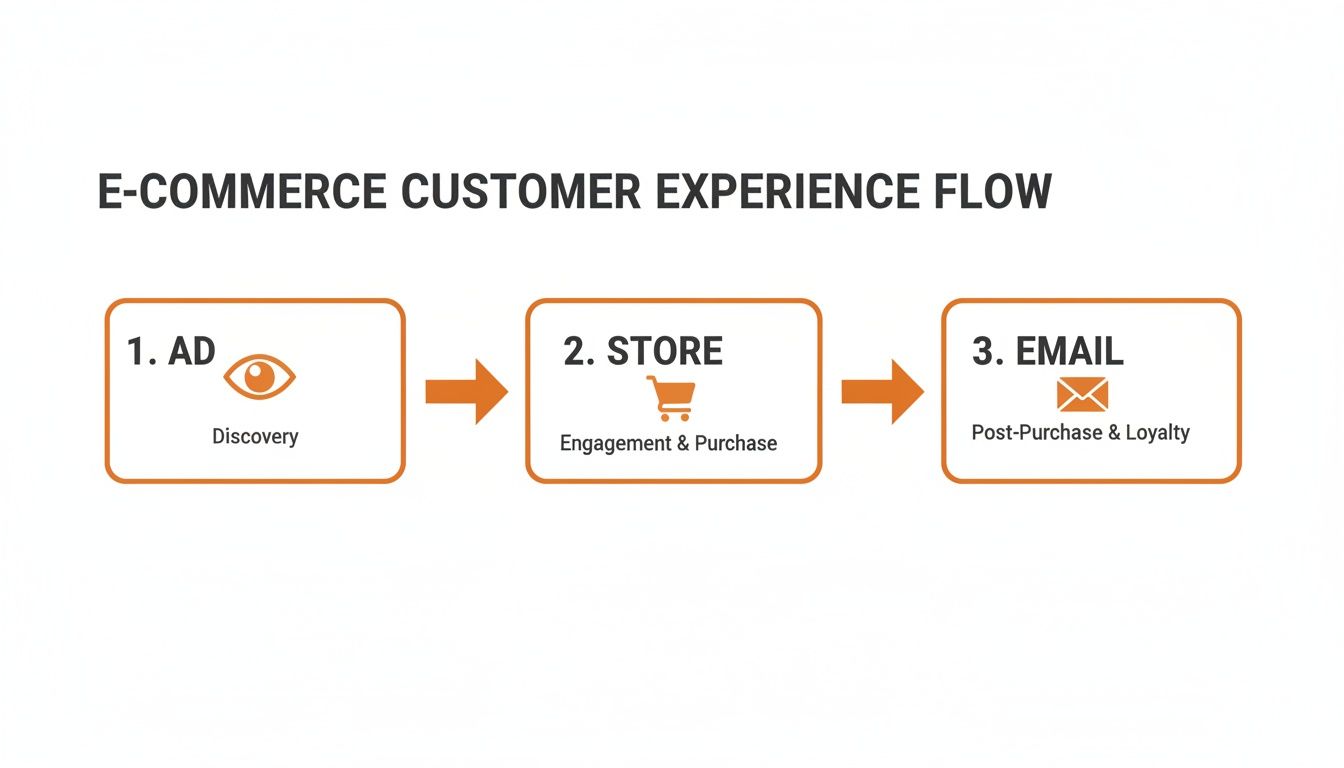
As you can see, a smooth handoff between each stage is critical. One bad experience can break the chain and lose you the customer for good.
Here are the essential tools for your investigation:
- Heatmaps: These give you a visual aggregate of where users click, move their mouse, and scroll. A heatmap can instantly show you that people are furiously clicking on a banner that isn't actually a link, or that they're not scrolling far enough to see your "Add to Cart" button.
- Session Recordings: This is like looking over a customer's shoulder. You can watch anonymized recordings of actual user sessions to see exactly where they get confused, what they hesitate on, and when they rage-click before bouncing.
- Customer Reviews & Surveys: Stop guessing and start listening. Your customers are already telling you what's broken. Dig through your support tickets, product reviews, and survey responses for patterns. Are multiple people complaining about sizing, shipping, or the same confusing page on your site?
- Analytics Data: Use your analytics to find the digital crime scene. Look for pages with unusually high exit rates or funnels with a massive drop-off at a specific step. If 70% of users abandon the cart on the shipping page, you know exactly where to start looking for clues.
By blending these qualitative and quantitative tools, you can build a complete picture of your customer experience. This gives you a data-backed, prioritized list of fixes that address real pain points. For a deeper look into this process, you can learn more about effective customer journey management and how to put it into action.
Designing a Seamless Website and Checkout Experience
Your website is your digital flagship, and its design has a massive impact on the customer experience. When a shopper lands on your site, they're not just looking for a product—they're looking for an easy, confident path to purchase. A clunky, confusing site is the digital equivalent of a cluttered store with unhelpful staff. It's a fast track to a lost sale.
The whole game is about removing friction. Think of your website’s navigation as the clear, well-lit aisles of a physical store. Shoppers should be able to find what they need intuitively, without having to guess or hunt around. This means you need logical categories, a prominent search bar that actually understands what people are looking for, and product pages that answer questions before they're even asked.
Crafting Product Pages That Convert
A great product page does more than just show an item; it builds genuine confidence. It needs to be a one-stop resource that gives a shopper everything they need to make a solid decision, cutting down on the need to click away or open a new tab for research.
To get this right, you need to nail a few key elements:
- High-Quality Visuals: Don't skimp here. You need multiple high-resolution images from every conceivable angle, a 360-degree view, and maybe even a short video of the product being used.
- Detailed Descriptions: Go beyond the basic specs. Tell a story about the product. Explain its benefits and use clear, scannable bullet points for the most important features.
- Comprehensive Sizing and Fit Guides: If you sell apparel or anything size-dependent, a detailed guide with measurements and model comparisons is non-negotiable. It's a deal-breaker.
- Visible Social Proof: Make sure star ratings and customer reviews are front and center. This user-generated content is often the final piece of validation a shopper needs to feel good about their purchase.
When you anticipate these needs, you create a self-service environment where customers feel empowered and sure of their choice. That's how you build the trust needed to move them from just browsing to actually buying.
The Checkout: Your Final and Most Critical Hurdle
No part of the on-site experience is more critical than the checkout. This is the moment where a happy browser can instantly become a frustrated, abandoned cart statistic. In fact, a clunky user experience is a primary reason why global mobile cart abandonment rates hover at a staggering 85.65%.
A seamless checkout isn't a luxury; it's a necessity for survival. To keep customers from bailing at the last second, you have to provide a smooth path to purchase. If you want to dig deeper into this, there are some great best practices for checkout forms you can check out.
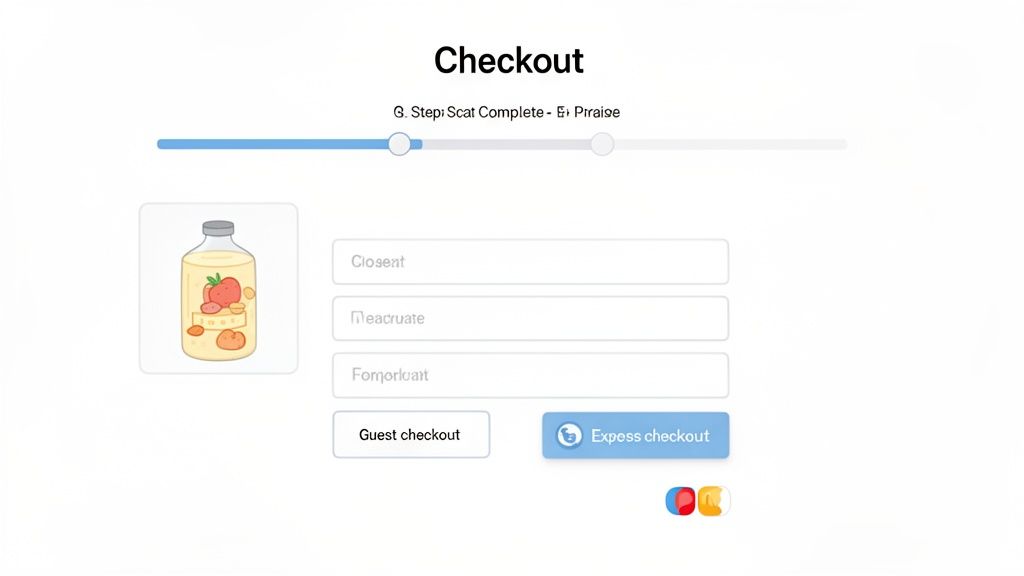
Today's customers expect speed and simplicity. They have zero patience for long forms, surprise fees, or being forced to create an account just to buy something.
Every extra field you require in your checkout form, and every additional click you demand, is an opportunity for your customer to second-guess their purchase and leave.
To streamline this final step, focus on these proven tactics:
- Offer Guest Checkout: Forcing account creation is one of the top reasons people abandon their carts. Always have a clear, easy guest checkout option.
- Implement Express Payment Options: Integrating digital wallets like Apple Pay, Google Pay, and PayPal is a game-changer. Customers can complete their purchase in seconds, skipping all the manual address and card entry.
- Use a Single-Page Design: Putting the entire checkout process onto one page reduces the feeling of a long, drawn-out process. It shows the customer the full picture upfront, including all costs.
- Be Transparent About Costs: Nothing kills a conversion faster than unexpected costs. Display all taxes and shipping fees early in the process so there are no nasty surprises at the end.
Turning Returns Into a Loyalty-Building Moment
The customer experience doesn't end when the payment goes through. How you handle the post-purchase journey—especially returns—can be a defining moment for your brand. A difficult returns process can permanently sour a customer relationship, but a smooth one can build incredible trust and loyalty.
This is where you can really shine. A prime example: 76% of first-time customers say they're likely to shop with a brand again after a hassle-free returns experience. This shows just how critical post-purchase service is for building loyalty.
Make your returns policy easy to find, simple to understand, and even easier to act on. Things like offering a self-service returns portal or providing pre-paid shipping labels can turn a potential negative into a powerfully positive interaction that secures a customer for life.
Using Personalization to Guide the Shopping Journey
Let's be honest, personalization isn't some futuristic concept anymore—it's the absolute bedrock of a great online shopping experience. This is how you make your store feel less like a massive, faceless website and more like a helpful conversation with a trusted expert. The real goal here is to use customer data not to be creepy, but to create a shopping journey that feels genuinely helpful.
It’s about moving way beyond just plugging a first name into an email. Real personalization means you’re anticipating what your customers need. You're guiding them to products they'll actually love, reminding them about that one thing they were eyeing last week, and making them feel like your brand gets them.
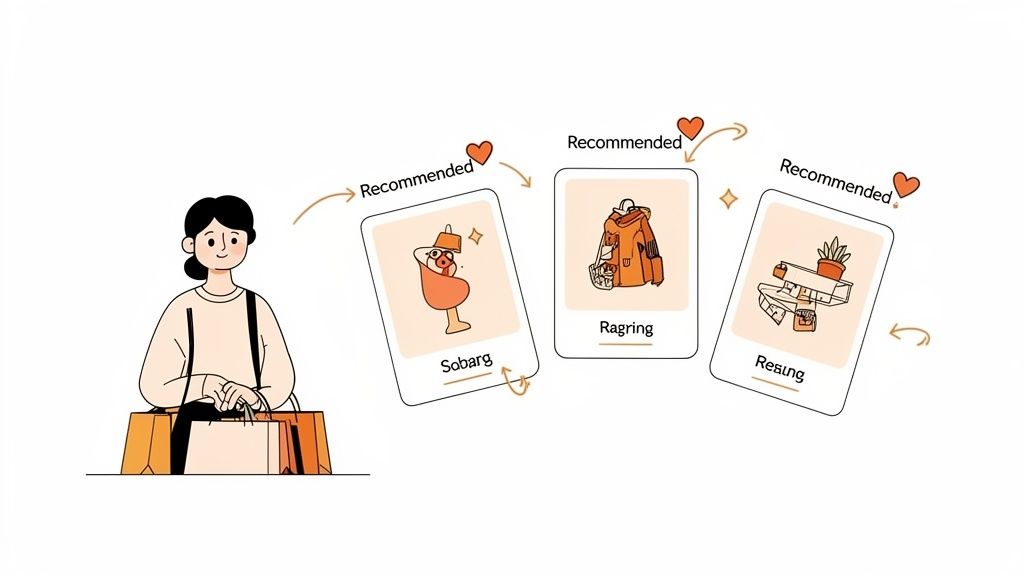
This kind of proactive, thoughtful approach has a massive impact on the bottom line. It's not just a hunch; a staggering 49% of shoppers have made an impulse buy simply because a brand served them a personalized recommendation. That's a powerful statistic that shows how guiding the journey can turn browsers into buyers and directly pad your sales numbers.
Dynamic Product Recommendations in Action
One of the most powerful ways to personalize the experience right on your site is with dynamic product recommendations. I’m not talking about those static, generic "You might also like" carousels. These are smart, real-time suggestions that change based on what a customer is doing right now.
Imagine a Shopify store selling outdoor gear. If a customer has been clicking on hiking boots and waterproof jackets, the recommendation engine should be smart enough to show them things like moisture-wicking socks or a durable backpack—not a random pair of tennis shoes.
You can even layer this for more impact:
- "Frequently Bought Together" Bundles: This is a classic for a reason. Showcasing items that other people buy with the product they're looking at is incredibly effective. Someone viewing a new camera? It's a no-brainer to suggest a memory card and a camera bag right there on the page.
- Post-Purchase Upsells: The conversation doesn't end at checkout. Use the confirmation page or a follow-up email to suggest relevant add-ons. If someone just bought a high-end coffee machine, you could immediately follow up with a personalized offer for coffee filters or the perfect espresso beans to go with it.
Personalization is at its best when it solves a problem for the customer before they even know they have it. It should answer the question, "What else do I need to get the most out of this?"
By making these kinds of smart suggestions, you’re not just pushing more products. You're making the entire shopping experience easier and more intuitive, which is exactly what customers want.
Segmenting Customers for Targeted Communication
Sending the exact same email blast to every single person on your list is a massive wasted opportunity. The magic is in segmentation—breaking your audience into smaller, more focused groups based on what you know about them. This lets you send highly relevant offers that speak directly to what each group actually cares about.
It's about shifting from mass-marketing shouts to meaningful, one-on-one conversations. The data you use for this is your superpower, especially when it's information that customers have willingly given you. If you want to dive deeper into this, our guide on the power of zero-party data is a great place to start.
Here are a few practical segmentation ideas you could put into action today:
| Customer Segment | Personalization Tactic | Goal |
|---|---|---|
| First-Time Buyers | Send a welcome email series with a special "thank you" discount on their next purchase. | Encourage that crucial second sale and start building loyalty from day one. |
| High Spenders (VIPs) | Give them early access to new product drops or exclusive members-only sales. | Reward your best customers and make them feel like insiders. |
| Cart Abandoners | Trigger a reminder email showing the exact items they left behind, maybe with a small incentive. | Recover potentially lost revenue by jogging their memory and nudging them back. |
| Location-Based | Send promotions for seasonal items relevant to their local climate (e.g., winter coats for northern customers). | Increase relevance by showing you understand their context. |
You don't need to overcomplicate this. Start by picking one or two important segments, like your VIPs or new customers, and build a simple, thoughtful campaign just for them. Even small, personalized gestures can have a huge impact on customer loyalty and lifetime value.
Building a Loyal Community with Memberships and Rewards
A single purchase is a transaction. True loyalty? That's about turning a customer into a genuine brand advocate. The best e-commerce experiences are built to forge this deeper connection, transforming one-time buyers into lifelong fans who feel like part of an exclusive club. And your best tool for making this happen is a strategic loyalty program.
Many so-called "loyalty" programs are really just discount schemes in disguise. Customers spend money, they get a coupon. While that might give you a short-term sales bump, it does very little to build real brand affinity. People in these programs are often loyal to the discount, not the brand, and they'll happily jump to a competitor offering a better deal.
A truly powerful program goes much deeper. It rewards customers for how they engage with your brand and creates a sense of belonging that a simple price cut can't replicate.
Designing Rewards Members Actually Value
To build a program that really clicks with your audience, you have to think beyond the transaction. The goal is to encourage all sorts of valuable interactions that strengthen the customer's relationship with your brand. That means rewarding them for more than just opening their wallets.
A modern, effective program needs a few key ingredients:
- Flexible Rewards: Offer points for actions that help build your community and marketing assets. Think about rewarding customers for writing a product review, following you on social media, or even sharing a photo of their new product.
- VIP Tiers: Creating levels like Bronze, Silver, and Gold gives members something to strive for. As they climb the ladder, they unlock better perks—maybe early access to sales, exclusive products, or free shipping. It’s a fantastic way to make your best customers feel seen and appreciated.
- Referral Programs: Let your happy customers become your most effective marketing channel. A smart referral program should reward both the existing customer for spreading the word and the new customer for making their first purchase, creating a powerful growth engine.
When you reward a whole spectrum of engagement, you foster a much deeper connection. You're showing customers you value their entire relationship with your brand, not just what they spend. To see a great model for incentivizing customer actions, check out this comprehensive reward points program.
The most successful loyalty programs make customers feel like insiders. Exclusivity and recognition are powerful motivators that create a bond far stronger than any discount code.
Tapping into the Psychology of Gamification
Gamification is just a fancy word for applying game-like elements to other activities, and it's an incredibly effective way to make your loyalty program more engaging. It taps into our natural desire for achievement, competition, and reward, making participation feel more like fun and less like a chore.
Instead of just watching points slowly add up, customers can take on challenges and earn badges. This simple shift creates a much more dynamic and interactive experience that keeps them coming back.
Here are a few gamification ideas to get you started:
- Challenges: Create specific, time-sensitive tasks. For example, a "Summer Style Challenge" could reward members for buying three items from a new collection within a month.
- Badges: Award digital badges for hitting certain milestones. A "Top Reviewer" badge for writing five helpful reviews or a "Brand Ambassador" badge for referring three friends offers social proof and recognition.
- Point Streaks: Give a bonus to customers who make a purchase in consecutive months. This encourages consistent buying and helps turn it into a habit.
These elements transform your loyalty program from a basic points system into a genuinely engaging experience. They give your customers clear goals to shoot for and a real sense of accomplishment when they hit them, strengthening their connection to your brand's community.
If this membership model sounds appealing, our guide on how to start a membership site is a great place to learn the foundational steps.
Ultimately, building a loyal community isn't just about driving more sales. It's about creating a tribe of people who actively participate in and advocate for your brand. A well-designed program that blends valuable rewards with fun, game-like elements can become one of your biggest competitive advantages.
Creating a Truly Unified Omnichannel Experience
Your customers don’t think in terms of channels. They really don't. To them, your Instagram feed, your retail store, and your website are all just different doors leading into the same house—your brand. The best ecommerce customer experiences don't just acknowledge this; they are built around it, intentionally blurring the lines between the digital and physical worlds.
This is the heart of what omnichannel really means: crafting one single, seamless experience, no matter how someone decides to shop with you. A classic example of where this often breaks down is a loyalty program that only works online. Think about it. Someone who shops in your store should be able to rack up and spend their points just as easily as the person buying from their couch.
Bridging the Digital and Physical Divide
Thankfully, modern tools have made this much easier to pull off. Integrating your loyalty program with digital wallet passes for Apple and Google Wallet, for instance, is a complete game-changer. Suddenly, a customer has their loyalty card stored right on their phone, complete with an up-to-the-minute point balance. That pass can be scanned at a physical register or applied at your online checkout, creating a perfectly connected system.
This small touch completely eliminates that awkward moment when a customer asks, "Can I use my points here?" only to hear that their online account is separate. It makes them feel like a genuine member of your community, wherever they are.
Customer support is another area where a lack of unity can cause serious friction. Nothing is more infuriating for a customer than having to re-explain their problem every single time they switch channels.
A conversation that starts in your Instagram DMs should be seamlessly picked up via email by a different support agent who has the full context. This isn't a luxury; it's the new standard for competent service.
Having this unified view of the customer is the backbone of a great omnichannel experience. It's a clear signal that you respect their time and are organized enough to keep track of their journey with you.
Meeting Customers Where They Are
The support landscape today is overwhelmingly mobile-first. Speed and accessibility are everything. Shoppers don't just prefer it; they demand it. Recent data shows that 52% of global shoppers now expect 24/7 support. And when it's an option, 45% prefer using WhatsApp, a huge signal that messaging apps are the new support hubs. The cost of getting this wrong is high—a massive 79% of customers will bail on a support chat if it isn't mobile-friendly. With mobile commerce projected to hit $4 trillion by 2025, you simply can't afford to treat mobile as an afterthought. You can dig into more of these powerful ecommerce customer service statistics to see just how critical this is.
This shift means you have to be proactive and meet people on the platforms they already use every day.
Here are a few practical ways to unify your support channels:
- Integrate a Unified Inbox: Use a customer service platform that pulls conversations from email, social media DMs, and live chat into a single dashboard. This gives your team a single source of truth.
- Offer Messaging App Support: Get your business set up on platforms like WhatsApp or Facebook Messenger. It’s where your customers are, and it offers the quick, back-and-forth support they crave.
- Create a Public Knowledge Base: Build out a robust FAQ or help center. Letting customers find answers on their own time is a great way to deflect common questions and empower them.
At the end of the day, a winning omnichannel strategy isn't about being on every single platform. It’s about creating a consistent, intelligent, and frictionless experience on the channels that matter most to your customers, making them feel seen and valued at every turn.
Ready to turn your shoppers into loyal brand advocates? Toki provides the all-in-one platform you need to build a thriving community with memberships, referrals, and rewards that customers love. Start creating unforgettable experiences today at https://buildwithtoki.com.