How to Start a Membership Site on Shopify A Merchant’s Playbook
Learn how to start a membership site on Shopify with this playbook. Unlock recurring revenue, build a loyal community, and scale your e-commerce brand.
Before you even think about the tech stack or which Shopify app to install, you have to nail down your strategy. This is the bedrock of a successful membership program. The entire process hinges on three things: defining your unique value, finding your ideal member, and setting clear business goals.
Getting this groundwork right is the secret sauce to building a community that not only signs up but sticks around for the long haul.
Laying the Groundwork for a Winning Membership Model
Too many people jump straight into designing landing pages and setting up payment gateways. That's a mistake. A successful membership program isn't just another sales channel; it’s a whole new way of doing business built on delivering real, consistent value.
Skipping the strategy phase is like building a house without a blueprint. It might look okay at first, but you're guaranteeing yourself some expensive, painful problems later on. This is where you figure out the "why" behind your program and make sure it clicks perfectly with your main business.
The first job? Crafting a value proposition so good it's a no-brainer for your audience. You have to answer their one big question: "What's in it for me?" This has to go way beyond a simple 10% discount.
Define Your Unique Value
Your value proposition is the magnet that pulls people in. It can't be generic. "Member-only content" just doesn't cut it anymore. You have to dig deeper and figure out what truly gets your audience excited.
Here are a few pillars you can build on to create something truly compelling:
- Exclusive Content: This could be anything from deep-dive video tutorials and behind-the-scenes access to early looks at new research. If you have an audio component, learning how to monetize a podcast can spark some great ideas for exclusive audio content.
- Community Access: Never underestimate the power of connection. A private Slack channel, a dedicated forum, or regular virtual meetups can be incredibly valuable. People will pay for a sense of belonging and the chance to network with others who share their interests.
- Unique Perks & Products: Think about offering early access to product drops, members-only merchandise, or personalized services that no one else can get.
- Enhanced Status: Make your members feel special. They aren't just customers; they're insiders, advocates, and part of an exclusive club. This sense of identity is powerful.
This simple flow diagram breaks down how these foundational pieces fit together.
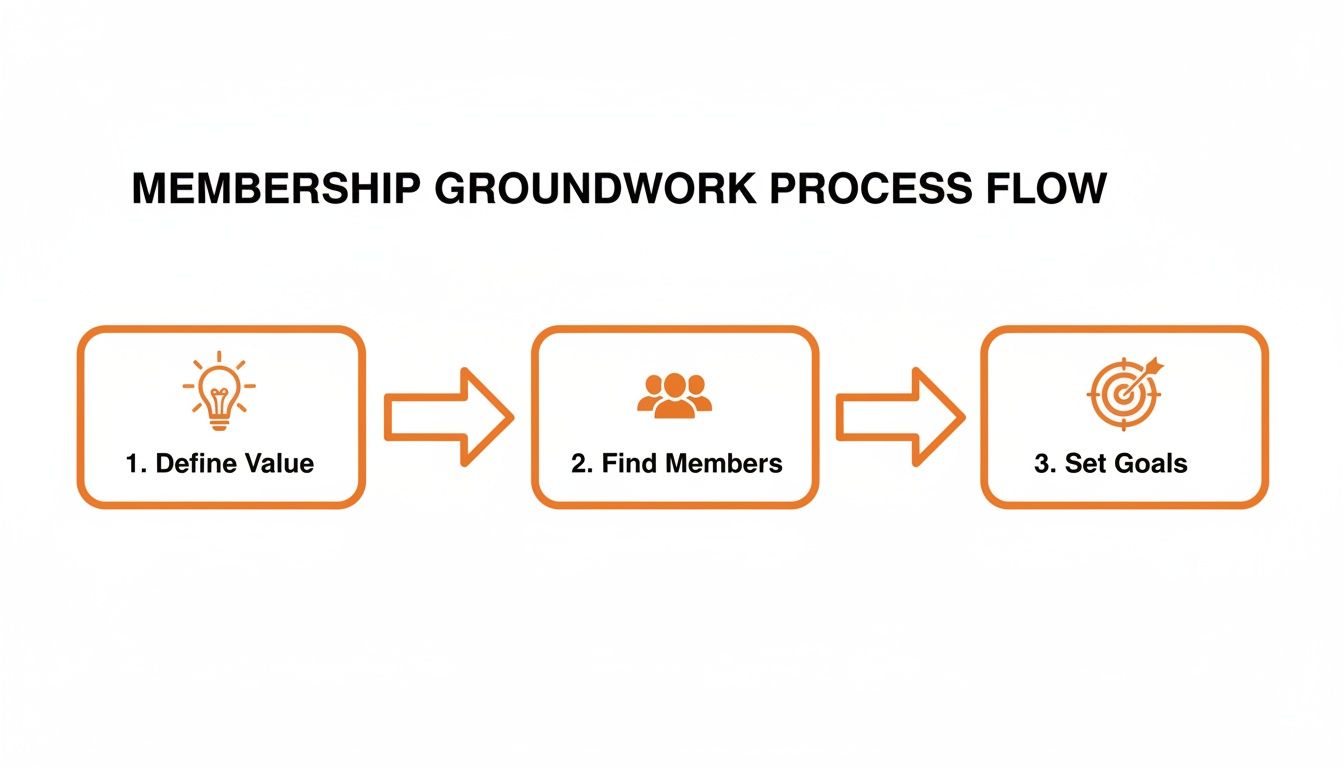
As you can see, defining your value is the starting point. It directly influences who you should be targeting and what you're trying to achieve.
Pinpoint Your Ideal Member
Once you know what you're offering, you need to be crystal clear on who you're offering it to. Don't try to be everything to everyone. The most successful membership sites serve a specific niche with laser focus.
Get granular and build a detailed profile of your ideal member. What keeps them up at night? What are their biggest goals? Where do they hang out online?
Understanding your ideal member's motivations is everything. Are they seeking education to advance their career, a community to feel less alone in a hobby, or exclusive access to feel like a VIP? The answer dictates your entire strategy.
When you narrow your focus to a specific persona, every part of your membership becomes more effective—from the content you create to the copy you write on your sales page. It all starts to resonate on a much deeper level.
Align Membership Goals with Business Objectives
Finally, you need to connect the dots between your membership program and your big-picture business goals. What's the end game here?
Maybe you're looking for more predictable, recurring revenue. Or perhaps you want to dramatically increase customer lifetime value (CLV). For many, the goal is to build a powerful brand with an army of loyal fans. Tapping into the booming subscription economy—projected to hit $2.1 trillion globally by 2025—is a smart move. For e-commerce brands, a membership model can deliver a 70% higher customer lifetime value (CLV) compared to one-off purchases.
Setting clear goals from the start is the only way to know if you're actually winning. If your goal is a higher CLV, you’ll obsessively track member spending versus non-member spending. If it's about building brand advocacy, you'll be watching referral rates and social media mentions like a hawk. This strategic alignment ensures your membership program is a core growth engine, not just a side project.
Designing Your Membership Tiers and Pricing
Alright, let's talk about the heart of your membership program: the tiers and pricing. This isn't just about picking numbers; it’s a mix of strategy and psychology. You're taking all that amazing value you’ve mapped out and turning it into a clear, compelling offer that makes someone say, "I'm in."
A great pricing structure does more than just process payments. It should actually guide your customers to the best option for them while ensuring the model is healthy for your business. The trick is to make each upgrade feel like an undeniable win for the member, not just a way for you to charge more.

Choosing Your Pricing Model
First things first, you need to decide on a model before you start setting prices. How you structure access depends entirely on the kind of value you're offering and your audience's appetite. For most e-commerce brands, it boils down to a few proven approaches.
- The Single-Tier Model: This is the "keep it simple" approach. One price gets you everything. It's perfect if you want to eliminate decision fatigue for your customers. Think a single $10/month fee that unlocks a members-only community and early access to product drops. Easy to understand, easy to sell.
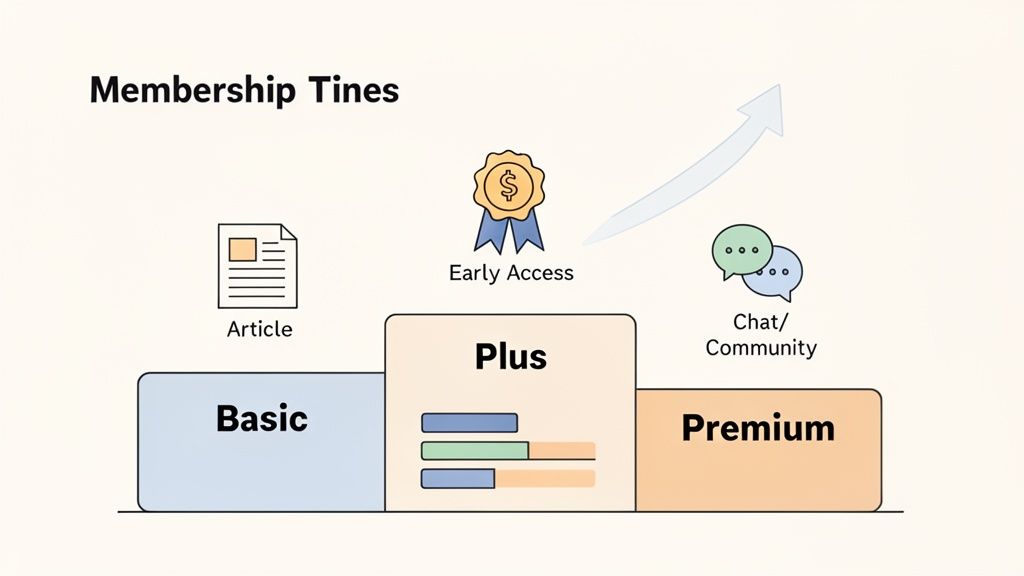
- The Multi-Tier Model: This is the most popular kid on the block for a reason. You typically see three tiers (think Bronze, Silver, Gold) with escalating value. This model is powerful because it lets you cater to different budgets and levels of commitment, widening your potential audience.
- The Freemium Model: Here, you offer a free, limited-access tier to cast a wide net and get people in the door. The whole point is to give them a taste of the value, leaving them hungry enough to upgrade for the full experience. A skincare brand might offer a free tier with a newsletter, while paid members get video tutorials and one-on-one consultations.
A little insider tip: The most effective tier structures often use the middle option as a "decoy." When people see three choices, they almost instinctively gravitate toward the one in the middle, especially when you frame it as the "best value."
Crafting Your Tiers with a Clear Value Ladder
Once you’ve picked your model, it's time to build out the tiers. Each level needs to offer a distinct, logical jump in benefits. I like to think of it as a value ladder—every step up should feel more enticing than the one before it.
The biggest mistake I see brands make is muddying the waters with too many similar benefits, which just confuses people. Instead, focus on a few high-impact perks for each tier that are easy to understand at a glance. For a much deeper dive into the strategy here, our guide on developing a membership pricing strategy is a great resource.
Here’s a practical look at how the tiers could be compared.
Sample Membership Tier Comparison
This table shows how a fictional craft coffee brand could structure its benefits to create a clear value proposition at each level.
| Benefit | Bronze Tier ($5/month) | Silver Tier ($15/month) | Gold Tier ($30/month) |
|---|---|---|---|
| Members-Only Blog | ✅ | ✅ | ✅ |
| Discount on All Coffee | 5% Off | 5% Off | 5% Off |
| Monthly "Roaster's Choice" Sample Bag | ✅ | ✅ | |
| Private Discord Community | ✅ | ✅ | |
| Monthly Virtual Tasting with Head Roaster | ✅ | ||
| Free Shipping on All Orders | ✅ |
Notice how each tier adds a tangible, high-value benefit? The jump from Bronze to Silver gets you a physical product and community access. The leap to Gold offers an exclusive experience and a huge logistical perk with free shipping. That’s how you make an upgrade feel irresistible.
Naming and Pricing Your Tiers
Don’t underestimate the power of a good name. Seriously, "Tier 1" and "Basic" are passion-killers. The names you choose should align with your brand's personality and create a sense of status or progression.
- Aspirational Names: Think Explorer, Adventurer, Conqueror. These names make members feel like they're on a journey with you.
- Branded Names: If your brand has a strong theme, lean into it. A space-themed company could use Crewmate, Captain, and Commander.
- Benefit-Oriented Names: You can also name tiers based on what they deliver, like Community, Creator, or Pro.
Finally, let's talk price points. You've probably seen charm pricing everywhere—that's when prices end in a 9, like $19/month instead of $20/month. It’s a small psychological trick, but it genuinely works by making the price feel lower. Just be sure to balance this against the real value you’re providing to find that sweet spot that feels fair to your members and keeps your business profitable.
Building Your Shopify Membership Tech Stack
Alright, you’ve got your strategy and pricing figured out. Now for the fun part: building the engine that makes it all run. Your technology stack—or "tech stack"—is simply the collection of apps and tools you'll use to create a seamless experience for your members (and for you). Getting this right on Shopify from the get-go is the key to avoiding a world of technical headaches down the road.
The best tech stack is one your members never even notice. For them, signing up should be a breeze, getting their content should be instant, and billing should just… work. For you, the right tools will automate all the tedious tasks—managing who gets what, tracking payments, delivering the goods—so you can focus on what actually matters: creating amazing value for your community.
The Core Components You Can't Skip
Don’t worry, your tech stack doesn't need to be a complex web of a dozen different apps. It really just boils down to three core layers that handle the entire member journey. Think of it as the foundation, walls, and roof of your digital clubhouse.
- Membership Management Platform: This is the heart of your entire operation. It's the app that handles sign-ups, controls who sees your members-only content, and syncs all that data with your customer profiles in Shopify. It's basically the friendly bouncer at the door of your VIP lounge.
- Recurring Payments Gateway: Shopify Payments is perfect for one-off sales, but memberships run on recurring revenue. You absolutely need a payment solution that's built for subscriptions. It needs to securely store payment info and automatically charge members monthly or annually without you lifting a finger.
- Content & Perk Delivery System: This is how you actually give people what they paid for. It could be as simple as an app that restricts access to certain pages on your Shopify store, or it might involve integrations with a course platform or a private community forum.
Nailing the combination of these three pieces is what makes launching a membership on Shopify so much more manageable today than it was just a few years ago.
Picking the Right Shopify Membership App
If there's one decision to really sweat the details on, it's choosing your main membership app from the Shopify App Store. This app is the central nervous system for your whole program. Choose wisely.
Here’s what I always look for when evaluating options:
- Deep Shopify Integration: Can the app automatically tag customers in Shopify when they become a member? Can you use those tags to unlock special discounts or show exclusive products? The tighter the integration, the more powerful and automated your program will be.
- Actual Ease of Use: You shouldn't need to hire a developer just to change a pricing tier. Look for an app with a clean, intuitive interface and good support documentation. Your time is far better spent engaging with your community, not fighting with your software.
- Ready to Scale: Will this app still work when you have 1,000 or 10,000 members? Make sure it can grow with you without dragging your site speed down. A slow members-only area is a classic, avoidable reason for people to cancel.
- Customization Power: Your membership portal should feel like it belongs to your brand, not some generic third-party plugin. Check that you can easily customize the colors, fonts, and layout to match your store’s look and feel.
The best tech stack is one that "just works" in the background. It automates member management so effectively that you can focus entirely on creating an incredible experience, which is the real key to retention.
For a great head-to-head comparison, check out this breakdown of the top 5 subscription apps for your Shopify store. It will give you a much clearer picture of which platform is the right fit for your specific goals.
Don't Forget the Rest of Your Ecosystem
A truly effective membership program doesn't live on an island. It needs to talk to the other tools you rely on to run your business. Before you commit to an app, think about how it will connect to your email marketing platform, like Klaviyo or Mailchimp.
This one connection is a game-changer. It lets you automatically send a welcome sequence to new members, email your community when new content drops, and even trigger re-engagement campaigns for members who might be at risk of canceling.
Similarly, an integration with your analytics tools is critical for tracking member engagement and proving the ROI of your program. Building these bridges from day one creates a powerful, automated system that’s built for sustainable growth.
Crafting an Unforgettable Member Onboarding Experience
The moment someone clicks "subscribe" is just the starting line. Those first few days and weeks are absolutely critical—it's when you have the best chance to win their long-term loyalty. This is where you prove they made the right choice, turning that initial spark of excitement into genuine, lasting engagement.
A single, generic "welcome" email just doesn't cut it anymore. If you want to build a thriving membership, you need a thoughtful, multi-step onboarding sequence that makes your new members feel seen, valued, and immediately successful.
The Welcome Sequence That Wins Hearts
Your welcome sequence is your first, and best, chance to make an incredible impression. Instead of a single info-dump email, think of it as a guided tour spread out over several days. The goal is to avoid overwhelming them while consistently showcasing the value they just unlocked.
Here’s a simple, effective sequence you can adapt:
- Email 1 (Immediately After Signup): This is the instant confirmation and celebration. Keep it warm and congratulatory. Confirm their access, give them their login details, and—this is key—provide one single, clear action to take. Maybe it's "Watch your 2-minute welcome video" or "Introduce yourself in the community forum." Don't give them a dozen options.
- Email 2 (Day 2): Now you can highlight a key benefit. Zero in on one of the most valuable parts of their membership. Guide them directly to your most popular exclusive course or a downloadable resource that solves a common pain point for your audience.
- Email 3 (Day 4): It's time to focus on the community. Introduce them to the social aspect of your membership. Share a link to your private forum or Slack channel, and maybe even highlight a recent interesting discussion to entice them to jump in.
- Email 4 (Day 7): Check in and ask for feedback. A simple, personal email asking how they're enjoying things so far goes a long way. It shows you actually care and opens up a valuable channel for direct feedback.
This staggered approach helps new members digest the benefits at their own pace and starts building a positive relationship right from the beginning.
Guide New Members with a Getting Started Checklist
Let's be honest, people love checking things off a list. A simple "Getting Started" checklist inside your members' area is a surprisingly powerful tool for guiding behavior and encouraging exploration. It basically turns the whole onboarding process into an interactive, rewarding game.
Your checklist should be full of small, achievable wins that quickly lead them to the core value of your membership. Ask yourself: what actions would make a new member feel like they’ve already gotten their money's worth in the first week?
For a fitness membership, a checklist might look something like this:
- Watch the "Welcome to the Program" video.
- Download your 7-day meal plan.
- Join our private Facebook group and say hello.
- Complete your first 20-minute workout.
- Set your personal fitness goals in your profile.
Every item they check off reinforces their decision to join and builds momentum, making them far more likely to stick around for the long haul.
The goal of onboarding is to create an early "win" for the member. When they can quickly and easily achieve something valuable, it validates their purchase and makes them feel smart for joining your community.
Reduce Churn with Gamification and Self-Service
Success really hinges on engagement. In fact, there's a 73% higher churn risk for members who don't engage within their first 90 days. Little gamification features like badges and challenges can seriously boost that engagement and lower the risk. On top of that, with 91% of customers preferring self-service, a smooth, intuitive onboarding process is non-negotiable. You can dig deeper into these trends by reading the full 2025 Membership Marketing Benchmarking Report.
Think about how you can integrate small rewards into your onboarding. Awarding a "Trailblazer" badge for finishing the checklist or a "Community Pro" badge after their first ten forum posts can create a really fun and motivating experience.
Ultimately, a great onboarding experience isn't about throwing every feature at your new members at once. It’s about a deliberate, thoughtful process that makes them feel welcomed, guides them straight to value, and sets them up for long-term success inside your community.
Keeping the Momentum: Strategies for Sustainable Growth and Retention
Getting your membership site launched is a huge win, but let's be real—the marathon has just begun. Once the launch-day confetti settles, your focus needs to shift to the long game. Success from here on out is a balancing act: you have to keep bringing in new members while making sure your existing ones are so happy they wouldn't dream of leaving.
Think of it like this: pouring all your effort into getting new sign-ups without focusing on retention is like trying to fill a bucket with a hole in it. You'll burn yourself out just trying to stay afloat. On the flip side, if you only focus on current members, your community can stagnate. The real magic happens when you nail both.
Turn Your Members into Your Best Marketers with Referrals
One of the most powerful, and frankly, cheapest ways to grow is to get your current members to do the selling for you. A recommendation from a friend carries so much more weight than any ad you could ever run. A smart referral program just gives them a little nudge and a reason to share.
Don't just slap a generic "share with a friend" link on the site. You need to create an offer that feels like a win-win for everyone involved.
Here are a few ideas I've seen work incredibly well:
- Give a little, get a little: Offer both the person referring and their friend a reward, like a $10 credit or a free month. This approach feels generous, turning your member into a hero who's giving a gift, not just a salesperson.
- Gamify with tiered rewards: Set up escalating rewards for multiple referrals. The first referral might get them a discount, but bringing in five friends could unlock exclusive merch or a special badge in your community.
- Set up a formal affiliate program: Once you have some traction, consider a more structured affiliate system. This is perfect for your power users or industry influencers, allowing them to earn a recurring commission (a 10-20% cut is pretty standard) for every new member they bring in.
A common mistake is to "set and forget" a referral program. You have to actively promote it. Weave it into your onboarding emails, give it a shout-out in community announcements, and make sure there’s a dedicated, easy-to-find page for it right in the member dashboard.
Mastering Retention and Beating Churn
It's a classic marketing stat for a reason: acquiring a new customer can cost five times more than keeping an existing one. This makes your retention strategy the absolute bedrock of a profitable membership. It’s not just a nice-to-have.
While paid ads can drive 27% of sign-ups, a strong referral program can boost growth by 18%. But on the retention side, the numbers are even more telling. The median renewal rate for membership sites is a healthy 84%, with first-year renewals sitting at 74%. This just hammers home how critical it is to have a solid retention plan from day one.
Retention isn't something you think about when people start leaving; it starts the second they sign up. It’s all about consistently delivering on the value you promised and looking for small ways to delight them.
Keep the Value Coming
People stay subscribed when they feel they're getting more than their money's worth. If your content library gets dusty or your community goes quiet, you’re practically begging for cancellations.
A simple content calendar is your best friend here. Map out your exclusive content—whether it’s articles, videos, webinars, or community hangouts—at least a month or two ahead. This not only keeps things fresh but also gives members something concrete to look forward to. For your site's long-term health, remember that keeping members is just as important as finding new ones. You can find some of the top e-commerce customer retention strategies to keep your community engaged.
Listen, Analyze, and Act on Feedback
Your members hold all the secrets to improving your program. You just have to ask. Don't wait around for an annual survey; create constant opportunities for feedback.
- Run quick polls: A one-question poll in the community or a simple survey in an email can give you a ton of insight without being intrusive.
- Be a fly on the wall: Pay close attention to the conversations happening in your community. What are people struggling with? What features are they raving about?
- Analyze your cancellations: When someone leaves, always find out why. A simple, automated exit survey can capture this data. Over time, you'll start seeing patterns that point directly to the weak spots in your membership. Learning how to https://www.buildwithtoki.com/blog-post/reduce-subscription-churn is one of the most valuable skills you can develop.
By constantly gathering feedback and actually acting on it, you can make smarter decisions that improve the entire member experience. This directly translates to better retention and helps you build a loyal community that sticks around for the long haul.
Common Questions About Shopify Memberships
Let's be honest, stepping into the world of memberships can feel a little daunting. You've got the big ideas mapped out, you’re looking at the tech, but a few practical questions are probably still rattling around. That’s perfectly normal.
We've helped countless merchants through this exact phase. Here are some of the most common questions we hear—and the straightforward answers you need to move forward with confidence.
How Much Content Do I Need Before I Launch?
This is the big one. It's the question that stops so many amazing membership ideas right in their tracks. The fear of launching an "empty" site is real, but you don't need a year's worth of content on day one. In fact, that can actually overwhelm new members.
Think quality over quantity. Your real goal is to give your first members an immediate win.
A solid launch-day foundation looks something like this:
- One "Cornerstone" Piece: This is your showstopper. It could be a signature mini-course, a deep-dive guide, or a toolkit that solves a major problem for your audience.
- Three to Five Supporting Pieces: Think smaller, valuable assets like exclusive articles, quick-win video tutorials, or downloadable templates that support your cornerstone content.
- A Clear Welcome Path: Don't overlook this! A simple welcome video and a "here's how to get started" guide are critical pieces of content themselves.
The secret isn't a massive library; it's a strong foundation and a clear content plan for the next 2-3 months. Showing people what's coming proves you're committed to delivering consistent value, which builds way more trust than a huge, static archive.
Can I Offer a Free Trial Without Getting Burned?
Yes, absolutely—and you probably should. A free trial or a "freemium" tier is one of the best ways to lower the barrier to entry. It lets people experience your value firsthand before they have to pull out their wallets.
The trick is to be strategic about it.
Don't give away the entire farm. Instead, offer a limited but genuinely valuable slice of your membership. Let them see one module of your main course or give them 7-day access to your community forum. It should be just enough to give them a real taste and leave them wanting more.
The data backs this up. Freemium trials can be a powerful way to get new customers, converting an average of 4.2% of users into paying members. This strategy gets even better when you drive traffic to a dedicated landing page, which can hit a 5.8% conversion rate—more than double what you'd see from a generic social media ad. You can dig into more of these membership marketing benchmarks on MemberJungle.com.
How Do I Handle Customer Service for Members?
Your members are your most valuable customers, so giving them great support is non-negotiable. The good news? It doesn't have to take over your life.
Start by creating a fantastic FAQ or knowledge base just for your members. This one thing can handle the majority of common questions about billing, accessing content, or finding their way around. Think of it as your first line of defense.
For everything else, set up a dedicated email address like members@yourbrand.com. The most important part is setting expectations. State your typical response time (e.g., "We answer all member emails within 24 business hours") right in your welcome materials. Being upfront prevents frustration and shows you respect their time. As you grow, you can look into help desk tools, but a simple email and a great FAQ are all you need to start strong.
Now that we've covered some of the most common hurdles, here's a quick reference table to summarize the key takeaways for getting your Shopify membership off the ground.
Frequently Asked Questions
| Question | Answer |
|---|---|
| How much content is needed for launch? | Focus on quality, not quantity. Aim for one cornerstone piece (like a mini-course) and 3-5 smaller supporting pieces, plus a clear onboarding guide. |
| Are free trials a good idea? | Yes, they are highly effective. Offer limited access to high-value content to give potential members a taste of what they're missing. |
| What's the best way to handle member support? | Start with a detailed FAQ/knowledge base to empower self-service. For direct contact, use a dedicated email and set clear response time expectations. |
| What's the most important thing for retention? | Consistency. A clear content calendar that shows members you're committed to delivering ongoing value is key to keeping them around. |
These simple frameworks can help you navigate the early days of your membership with a solid plan, letting you focus on what really matters: building a community your members will love.
With Toki, you can build, launch, and grow your Shopify membership program with ease. From tiered plans and exclusive content to powerful referral programs that turn members into marketers, Toki provides all the tools you need in one intuitive platform. Start building your loyal community today.