The Ultimate Guide to a Digital Rewards Card
Discover how a digital rewards card can boost customer loyalty and drive repeat sales for your e-commerce store. Learn to build and launch your program.
Think back to the old paper punch cards you used to stuff in your wallet. The “buy nine coffees, get the tenth free” kind of deal. A digital rewards card is the modern version of that, living right inside your customer's smartphone wallet—either Apple Wallet or Google Pay.
It’s more than just a digital punch card, though. It's a dynamic tool that keeps track of points, showcases available rewards, and helps you build a real connection with your customers, without ever getting lost, forgotten, or thrown away. This simple switch turns a basic loyalty program into a powerful, direct-to-customer marketing channel.
Moving Beyond Paper Punch Cards
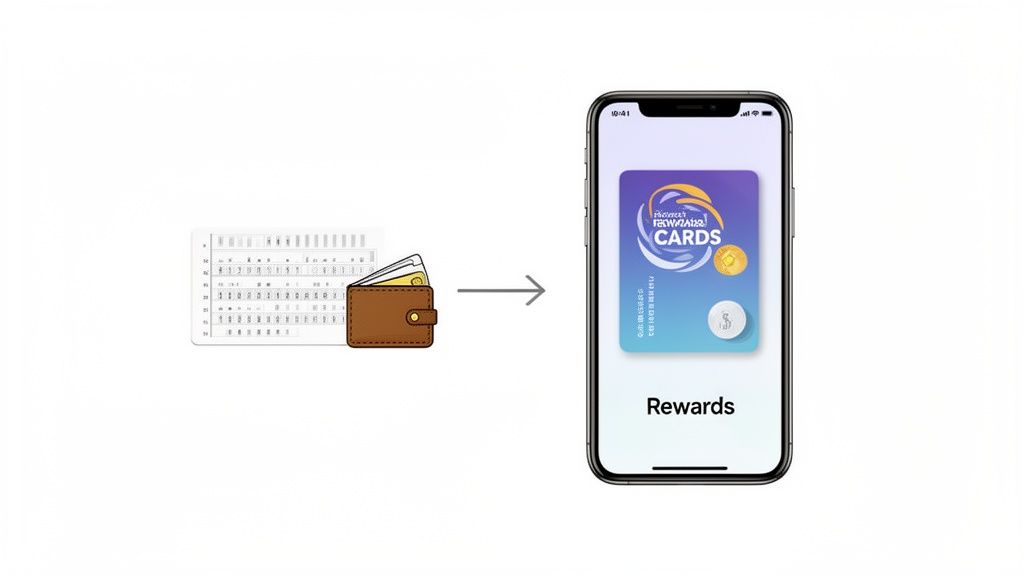
We’ve all had that bulky stack of paper and plastic cards cluttering up our wallets. They were clunky, easy to misplace, and frankly, a pretty one-sided conversation. That entire concept has now evolved into an intelligent, interactive tool that sits exactly where your customers already spend their time: on their phones.
The move from a physical wallet to a digital one is the perfect way to think about this. A leather wallet just holds static, unchanging items. A digital wallet, on the other hand, is a live environment where passes and cards can update themselves in real-time. That's exactly what a digital rewards card does—it transforms a passive point tracker into an active channel for customer engagement.
Why This Shift Matters For Merchants
For any e-commerce brand, especially those on platforms like Shopify, this isn't just a minor upgrade. It’s a complete game-changer. The benefits go way beyond saving paper. With a digital rewards card, you unlock a whole new set of tools to create a direct, personal, and valuable relationship with every customer.
Let's quickly compare the old with the new.
Digital vs Traditional Rewards Cards: A Quick Comparison
| Feature | Traditional Plastic/Paper Card | Modern Digital Rewards Card |
|---|---|---|
| Accessibility | Easily lost or forgotten at home. | Always on the customer's phone. |
| Updates | Static; cannot be changed once printed. | Dynamic; points and offers update in real-time. |
| Communication | One-way; no ability to contact the customer. | Two-way; send push notifications and personalized alerts. |
| Personalization | Generic for all customers. | Highly personalized with names, tiers, and targeted offers. |
| Data & Analytics | No data collection possible. | Rich data on usage, redemption, and customer behavior. |
| Cost & Distribution | Requires printing and physical distribution. | Instant, zero-cost digital distribution. |
As you can see, the digital approach opens up a world of possibilities that just weren't feasible with traditional methods.
Key advantages really boil down to a few core things:
- It’s Just More Convenient: Let’s be honest, people carry their phones everywhere. Their rewards card is always with them, which removes the biggest point of friction—actually remembering to bring it.
- You Can Personalize in Real-Time: You can instantly update a customer’s point balance after a purchase, send them a special offer on their birthday, or surprise them with bonus points for being a loyal shopper.
- It’s a Direct Line to Your Customer: A digital pass in Apple or Google Wallet becomes your own private communication channel. You can send lock-screen notifications about new rewards, flash sales, or special promotions they won’t want to miss.
This isn’t just a niche trend; it’s a reflection of a massive shift in how people shop. Digital wallets are booming, with 53% of all online purchases now flowing through them. If you want a deeper dive, our guide on creating a loyalty card online breaks down the nuts and bolts. The move to digital is the new standard for keeping customers engaged and, more importantly, coming back for more.
A digital rewards card isn't just a replacement for paper; it's a strategic upgrade. It turns a simple transaction into an ongoing conversation, building a relationship that drives measurable business growth and customer lifetime value.
How Your Digital Rewards Card Actually Works
So, how does a simple click on your website become a branded, interactive card living inside a customer's phone? It’s a lot simpler than it sounds and is designed to feel effortless for everyone involved. Think of it less like complicated tech and more like a smooth, well-planned customer journey.
Let's walk through it from two angles: what your customer sees and feels, and what’s happening behind the curtain on your end as a Shopify merchant. The whole thing is built to be so intuitive, it almost feels like magic.
The Customer Journey: From First Glance to Wallet
For your customer, the entire process is designed to be quick and gratifying. It’s a simple three-step dance that turns a casual browser into a loyal member in under a minute.
- The Instant "Yes": A customer visits your site and sees a pop-up or a banner inviting them to join your loyalty program. All they need to do is enter their email or phone number. No long forms, no creating a password they'll forget—just a simple, single field.
- One-Tap to Wallet: The moment they sign up, they get a prompt to add their new digital rewards card to their Apple or Google Wallet. One tap, and it's done. The pass is generated and tucked away securely in their phone's native wallet app, right alongside their credit cards.
- A Live Connection: From here on out, that wallet pass is a living, breathing connection to your brand. When they shop, their points balance updates automatically. When they unlock a new reward, it shows up right on the card.
This little pass isn't just a static picture. It's a dynamic tool that can show their name, current points, loyalty tier, and even a unique QR code for those times they might shop with you in person.
This digital-first approach is fueling a massive shift. The global loyalty programs market is on track to hit a staggering $155.22 billion by 2029. And when you consider that members who redeem rewards spend 3.1 times more each year, it’s clear that a seamless digital card is no longer a nice-to-have; it's a core retention strategy. You can dig deeper into the growth of digital loyalty programs to see where the industry is headed.
Behind the Scenes: The Merchant's View
While your customer is enjoying that slick experience, a powerful engine is humming along in the background, automating everything for you. If you're using an integrated platform like Toki, you barely have to lift a finger once it's set up. The system handles all the heavy lifting.
Here's a peek at how the operational side works:
- Seamless Handshake: Your loyalty platform connects directly to your Shopify store. This integration is key, as it lets the system watch for customer activity, track every purchase, and keep all the data in sync without you doing a thing.
- Automatic Point Updates: When a member makes a purchase, the system knows it's them by their email. It then does the math based on your rules (say, one point for every dollar spent) and instantly credits their account.
- Real-Time Wallet Sync: The moment those points are added, the system sends a quiet push notification to the customer's digital wallet pass. The next time they open their wallet, they’ll see their new balance. This immediate feedback is incredibly satisfying and reinforces the value of shopping with you.
This level of automation is precisely what makes a digital rewards card so powerful.
How Cashing in Rewards Works
Getting their hands on the good stuff is just as easy. Once a customer has collected enough points for a reward—maybe a discount or a free product—they can claim it right from their wallet pass or your website. The system then generates a unique discount code they can pop into the checkout field.
The entire loop, from earning points to cashing them in, is designed to run on its own. It frees you from the headache of managing a clunky, old-school program so you can focus on what really matters: dreaming up exciting rewards and building real relationships with your customers.
Unlocking Real Growth for Your Shopify Store
Let's be clear: a digital rewards card isn't just a fancy way to hand out discounts. It’s a direct investment in your store’s financial health and a strategic tool for building a predictable engine for repeat business.
The real goal here is to change customer behavior, shifting them from one-time buyers to loyal, habitual shoppers. When every purchase feels like progress toward a meaningful reward, you create a powerful incentive that keeps your brand top of mind. This is how you move from a purely transactional relationship to a relational one.
Drive Up Customer Lifetime Value
The single biggest impact you'll see from a digital rewards program is a jump in Customer Lifetime Value (CLV). Think of CLV as the total amount of money a customer will spend with you over their entire relationship with your brand. The higher it is, the more profitable each customer becomes.
A well-designed program naturally encourages people to come back and buy again. In fact, studies show that loyalty program members typically spend 12-18% more per year than non-members. That consistent, recurring revenue is the bedrock of any stable, growing e-commerce business.
Even better, with a platform like Toki, you can introduce tiered memberships. This creates a sense of achievement and exclusivity. As customers spend more to climb from "Silver" to "Gold," for example, their investment in your brand deepens, making them far less likely to even consider a competitor.
Boost Your Average Order Value
Another immediate win is a lift in your Average Order Value (AOV). We've all been there—when you know you’re just a few dollars away from a reward or a new tier, adding one more item to the cart suddenly feels like a smart move. It’s the same psychology as "spend $10 more to get free shipping," but applied across your entire loyalty ecosystem.
You can strategically nudge customers toward bigger carts:
- Tier Entry Thresholds: Set clear spending goals that unlock new membership levels with better perks.
- Point Multiplier Events: Run limited-time offers like double points on all orders over $75.
- Bonus Rewards: Surprise customers with an extra reward when their cart value hits a certain amount.
These simple tactics turn the checkout process into a mini-game where spending a little more feels rewarding, not wasteful.
This visual breaks down just how simple the customer's journey is, from the moment they sign up to when they become a fully engaged member.
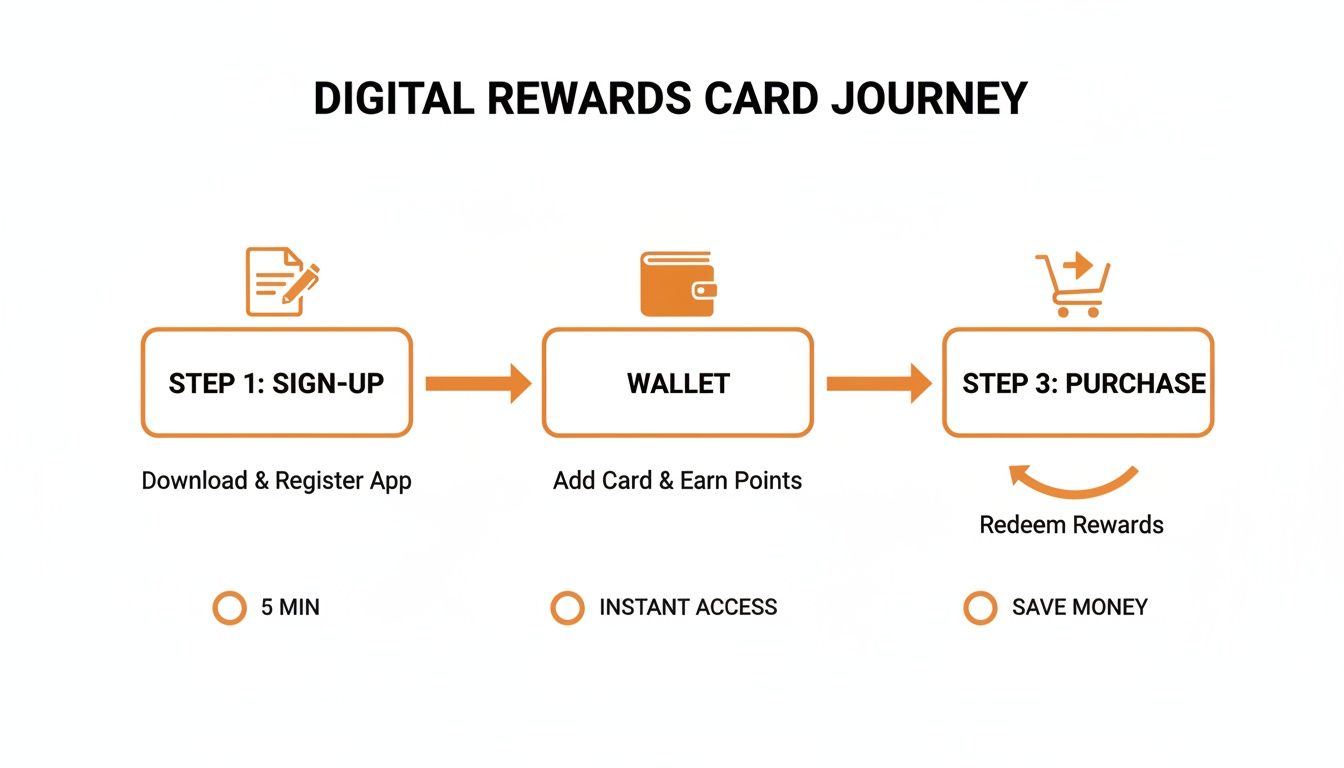
The flow is designed to be frictionless. Simplicity is key to getting customers to participate right away.
Gather Invaluable First-Party Data
In a world where third-party data is becoming less reliable by the day, your loyalty program is a goldmine of first-party data. Every sign-up, every purchase, and every redemption gives you direct insight into what your customers love and how they shop.
This isn't just data for data's sake; it's the fuel for creating highly personalized campaigns that actually work. You can start segmenting your audience based on real behavior:
- Spending Habits: Easily identify your top spenders and create exclusive VIP offers just for them.
- Reward Preferences: See which rewards get redeemed the most and fine-tune your offerings accordingly.
- Engagement Levels: Spot members who haven't purchased in a while and send them a special bonus to win them back.
By turning loyalty into a data-driven strategy, you can dramatically cut down on customer churn. A mere 5% increase in customer retention can boost profits by 25% to 95%. It just goes to show how powerful it is to keep your existing customers happy.
Ultimately, a key objective is to drive sales and repeat business, which has a direct and positive impact on improving website conversion rates. When you use the data you've gathered, you can refine every customer touchpoint—from email campaigns to on-site recommendations—to create a more effective and profitable journey.
Launching Your First Digital Rewards Program
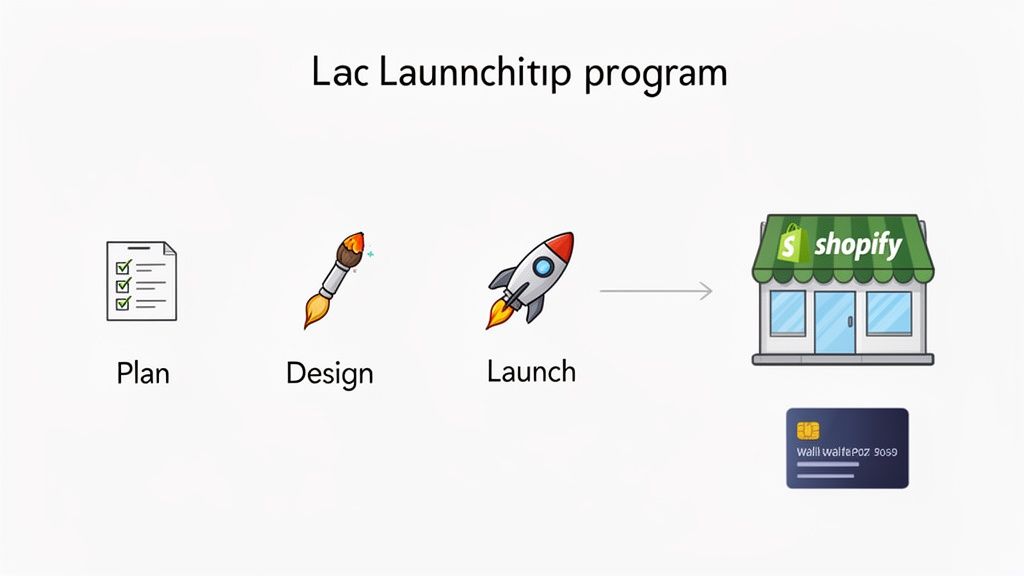
Alright, you understand the "why," but what about the "how"? Taking the leap from seeing the benefits to actually building your own program can feel like a big step. But trust me, it’s far more straightforward than you might think. With the right game plan and a good co-pilot (like Toki), you can go from a back-of-the-napkin idea to a full-blown digital rewards card program without breaking a sweat.
It all starts with getting specific about what you want to accomplish. "I want more loyal customers" is a great start, but it's not a goal—it's a wish. A real goal has numbers and a deadline. For instance, are you aiming to boost your repeat customer rate by 20% in the next six months? Or maybe increase your average order value by 15% before the holiday season? These are the kind of concrete targets that will shape every decision you make.
Define Your Program's Structure
With your goals locked in, it's time for the fun part: designing the actual program. This is where you map out how customers earn points and what cool stuff they can get with them. The golden rule here is to keep it simple. If a customer needs a flowchart to understand your rewards, you've already lost them.
A tiered system is a fantastic model because it taps into our natural desire to level up. It gamifies the shopping experience and gives people a real incentive to spend more.
Here’s a simple breakdown:
- Bronze Tier (Entry-Level): The starting line for everyone. Keep the earning rule simple, like 5 points for every $1 spent. Rewards can be just as straightforward, like a $5 off coupon.
- Silver Tier (Mid-Level): Customers unlock this after hitting a spending milestone, say $250. This is where you can sweeten the deal with a better point multiplier (maybe 7 points per $1) and early access to sales.
- Gold Tier (VIP): This is for your ride-or-dies. Reserve this for your most dedicated fans and offer exclusive perks like free shipping on everything, a special anniversary gift, or double-points weekends.
A structure like this doesn't just reward transactions; it builds a journey. Customers can see a clear path forward, giving them a compelling reason to stick with you.
The Technical Setup: A Simple Checklist
Now for the part that usually makes people nervous—the tech. But with modern apps that plug right into Shopify, this has become less of a technical nightmare and more of a simple to-do list. The whole point is to get your program up and running without needing to call in an IT favor.
To make the setup a breeze, you'll just need to have a few key assets and decisions ready to go.
Before you jump in, always remember that a loyalty program should feel like a genuine "thank you," not a marketing ploy. One study found that 75% of consumers are more likely to buy again after getting an incentive. Make your rewards feel generous and within reach.
Here’s a practical checklist to walk you through the entire process.
Digital Rewards Card Launch Checklist
This table breaks down the launch into five clear phases, helping you stay organized from initial idea to a full-scale promotion.
| Phase | Key Action | Pro-Tip from Toki |
|---|---|---|
| 1. Planning | Define your main business goal (e.g., increase repeat purchases by 20%). | Start with one clear objective. You can always add more goals once you have some real-world data to work with. |
| 2. Design | Create your branded wallet pass with your logo and brand colors. | Think of the wallet pass as a tiny billboard in your customer's pocket. It needs to be sharp and instantly recognizable. |
| 3. Configuration | Set up your earning rules and reward tiers within your loyalty app. | Get creative with your reward descriptions! "Unlock a Surprise Gift" sounds way more exciting than "1000 Points = Product X." |
| 4. Integration | Connect the loyalty platform to your Shopify store with a few clicks. | Make sure the sign-up widget is easy to spot on your homepage and at checkout. You want to make joining a no-brainer. |
| 5. Promotion | Announce your new program via email, social media, and a homepage banner. | Launch with a bang! Offer a nice sign-up bonus, like 200 free points, to show value right from the start. |
Getting your first digital rewards program off the ground should feel exciting, not overwhelming. By concentrating on clear goals, a simple structure, and on-point branding, you'll create an experience that not only gets customers excited but also delivers real, bottom-line results for your business.
And for those ready to master the mobile experience, our guide on how to add loyalty cards to Apple Wallet will show you everything you need to know.
Designing an Experience Customers Love

A great digital rewards card program isn't just about tracking points—it's about creating an experience. The best loyalty programs feel less like a marketing task and more like a game your customers actually want to play. This is where smart design and a little bit of psychology come together, turning a simple tool into a real driver of customer obsession.
It all starts with that first impression. When a customer adds your card to their Apple or Google Wallet, it’s living right next to their credit cards and boarding passes. That little piece of digital real estate is a constant brand touchpoint, so it absolutely needs to look and feel special.
Crafting a Visually Stunning Wallet Pass
Think of your digital wallet pass as a mini-billboard for your brand. A generic, default-looking card gets lost in the shuffle, but a beautiful, on-brand pass is something customers will be proud to have. The visual design is your first shot at reinforcing your brand identity and making the whole experience feel premium.
Here are the key visual elements to nail:
- Your Logo, Front and Center: The pass needs to be instantly recognizable. Make your logo prominent so customers can spot it in a split second.
- Consistent Brand Colors: Use the same color palette that people see on your website and social media. This visual thread builds brand recall and, more importantly, trust.
- Clean, Legible Fonts: Key info like their name, point balance, and tier level has to be easy to read on a small screen. Steer clear of overly decorative fonts that get in the way of clarity.
A well-designed pass signals that your program isn't just an afterthought. It shows you’ve put care into every part of their experience with you.
Turning Loyalty into a Game
This is where you can really set your program apart from the competition. Gamification is all about applying game-like elements—think points, badges, and leaderboards—to things that aren't games. It taps into our natural human desires for achievement, status, and competition, which makes the act of earning rewards genuinely fun.
Instead of just passively collecting points, customers become active players on a quest. That mental shift is what turns a passive member into an enthusiastic advocate for your brand. Done right, every interaction with your business feels like making progress.
The data backs this up. 62% of Gen X now prefer mobile apps for their loyalty programs. For e-commerce brands, this leads to real results: 55% of consumers are willing to share more data through gamified quizzes. This, in turn, fuels the personalized campaigns that 80% of future programs are planning to offer. Why? Because the high spenders—the ones redeeming those personalized rewards—outspend others by a whopping 4.3X. You can discover more insights about customer loyalty statistics to see the full picture.
Key Gamification Tactics to Implement
Here are a few powerful strategies to make your program more engaging and a lot less boring:
- Exclusive Challenges: Create limited-time tasks that nudge customers toward specific actions. A "Weekend Warrior" challenge, for instance, could offer bonus points for purchases made between Friday and Sunday. This creates a sense of urgency and gives people a great reason to shop now.
- Achievement Badges: Reward customers with digital badges when they hit certain milestones. Made their fifth purchase? They earn the "Super Fan" badge. Referred a friend? They unlock the "Brand Ambassador" badge. These small tokens of recognition provide a real sense of accomplishment.
- Tiered Memberships: As we've touched on, tiers are a cornerstone of good gamification. Creating clear levels like Bronze, Silver, and Gold gives customers a path to follow. The drive to unlock the exclusive perks of the next tier is a powerful motivator to spend a little more.
- Surprise and Delight: Don't let everything be predictable. Randomly dropping bonus points into a loyal customer's account or sending them an unexpected freebie creates a memorable moment that a standard discount just can't match. These are the little things that build a real emotional connection.
Platforms like Toki make it incredibly easy to build these elements directly into your program, letting you create a dynamic and exciting experience. By combining a beautiful visual design with compelling gamification, your digital rewards card becomes more than just a utility—it becomes a destination.
Measuring Your Program's Success
So you’ve launched your digital rewards card program. That’s a huge first step, but the real work starts now. How do you actually know if it’s working? If you’re not tracking the right numbers, you’re flying blind. You won't know if your program is driving real growth or just giving away products for free.
Measuring success isn't about staring at a single metric and hoping it goes up. It’s about learning to read the story your data is telling you about your customers. By focusing on a handful of key performance indicators (KPIs), you can get a crystal-clear picture of your program’s health, justify the investment, and discover smart ways to make it even better.
Core Metrics That Tell the Full Story
Think of your analytics dashboard as the mission control for your loyalty program. While you could track dozens of data points, only a few really get to the heart of what matters: customer loyalty and profitability. These are the numbers that separate vanity from value.
Here are the essential KPIs you absolutely need to be watching:
- Redemption Rate: This is the percentage of earned rewards that customers are actually cashing in. If this number is low, it’s a red flag. It could mean your rewards aren't exciting enough or they're too hard to reach.
- Repeat Purchase Rate: This one’s simple: what percentage of customers come back for a second purchase? It’s one of the purest measures of loyalty and shows if your program is successfully turning one-time buyers into regulars.
- Customer Lifetime Value (CLV): This is the big one—the total amount of money you can expect a customer to spend with you over their entire relationship. A great digital rewards card program should make your CLV climb steadily as members spend more, more often.
A loyalty program isn't just a retention tool; it's a direct line to your most valuable customers. Tracking these metrics helps you ensure that the experience you’ve built is genuinely rewarding and keeps them coming back for more.
Turning Insights into Action
Data is only useful if you act on it. Once you start tracking these KPIs, you'll begin to see trends and can make smart, informed decisions to constantly improve your program. A clean analytics dashboard, like the one we built at Toki, makes this easy by surfacing actionable insights you can understand at a glance. For a deeper dive, check out our full guide on the most important loyalty program KPIs.
This approach lets you move from guessing to knowing. For instance, if your redemption rate is lagging, you could try introducing a new, more attainable reward. If your repeat purchase rate has flatlined, maybe it’s time for a double-points weekend to wake up dormant members and remind them of the value they have waiting.
To truly dial in your program's performance, you need to make data-driven optimization a regular habit. Digging into A/B and multivariate testing strategies can help you fine-tune everything from the copy in your rewards emails to the point values themselves. By constantly testing, measuring, and tweaking, you ensure your digital rewards card remains a powerful, profitable tool that grows right alongside your business.
Got Questions About Digital Rewards Cards? Let's Clear Them Up
Even after seeing all the benefits, it's totally normal to have a few questions before diving into something new for your business. Let's tackle some of the most common hesitations head-on so you can feel confident that a digital rewards card is the right move.
A lot of merchants get hung up on the setup, picturing a technical nightmare that takes weeks to integrate. The good news is that modern loyalty platforms, especially those built for Shopify, are designed to be plug-and-play. Seriously, you can get the whole thing up and running in an afternoon without touching a single line of code.
"But Is It Expensive to Get Started?"
Cost is always a big question, and for good reason. But here's the thing: digital loyalty programs are way more budget-friendly than their old-school physical counterparts. Think about it—you immediately cut out the recurring costs of printing plastic cards or mailing out paper coupons.
Most platforms run on flexible pricing plans. This means you can start small with a basic tier and scale up only when you see the ROI rolling in, making it a low-risk, high-reward kind of investment.
Another big question we hear is, "Will my customers actually use it?"
The answer is a huge "yes." With 73% of consumers saying they're more likely to recommend brands that have good loyalty programs, the demand is definitely there. The trick is to make signing up and using the card ridiculously easy—which is precisely what a one-tap digital wallet pass does.
"What About Data Security and Privacy?"
In a world where everyone is (rightfully) concerned about their data, this is a critical question. Any reputable loyalty platform is built with security as its foundation. They use secure, encrypted methods for all customer data and are fully compliant with privacy laws like GDPR and CCPA.
Remember, a digital rewards system is built on first-party data. This is information your customers choose to share with you because they get real value in return. It’s a transparent relationship that builds trust, allowing you to use that data to make their experience better, not to exploit it.
Here are a few other quick-fire questions we get all the time:
- Can this work with my brick-and-mortar store? For sure. Platforms like Toki are built for omnichannel retail. Customers can earn and spend points seamlessly, whether they're shopping on your website or scanning a simple QR code from their digital pass at your physical checkout.
- How much day-to-day work is involved? Once you’re set up, the program practically runs itself. Your job is to check the analytics dashboard to see what's working and then get creative with new rewards or fun campaigns to keep your members hooked.
Hopefully, that clears things up! With these common concerns out of the way, you can move forward with a clear vision and build a program that your customers will absolutely love.
Ready to turn casual shoppers into loyal fans? Toki makes it easy to launch a stunning digital rewards card program on Shopify that drives repeat sales and builds lasting customer relationships. Get started with Toki today!