Unlocking Growth with Customer Retention Software
Discover how customer retention software turns one-time buyers into loyal fans. Learn the key features, AI strategies, and KPIs you need to boost repeat sales.
Think of customer retention software as a specialized toolkit for your business. Its entire purpose is to help you take the customers you already have and turn them into loyal, repeat buyers. Instead of pouring all your energy into finding new shoppers, this kind of software gives you the features you need to build real, lasting relationships and boost customer lifetime value.
Why Your Business Needs Customer Retention Software
Let's use an analogy. Imagine your business is a bucket, and you're constantly trying to fill it with new customers from the "acquisition" faucet. Without a solid plan to keep them, that bucket is riddled with holes. Customers—and revenue—are just leaking out. Customer retention software is how you strategically plug those holes.
It's easy to dismiss these platforms as just fancy discount generators, but that’s a huge misconception. They're actually sophisticated engines built for sustainable growth. They help you move beyond one-off sales to create meaningful, ongoing connections that keep customers coming back for more.
The Shift from Acquisition to Loyalty
For a long time, the e-commerce playbook was simple: spend a ton on ads to get new people in the door. That model is getting more expensive and less reliable by the day. The real, sustainable profit is in nurturing the customers you've already won over. A smart retention strategy helps you hit several key business goals at once:
- Boost Your Bottom Line: It costs way less to keep a customer than to find a new one. On top of that, loyal customers tend to spend more with you over time.
- Create a Better Customer Experience: These tools let you personalize interactions in a way that makes shoppers feel seen and valued. This is a core part of how you can improve customer experience and boost loyalty across the board.
- Generate Authentic Brand Advocacy: A happy, loyal customer is your best marketing asset. They become genuine brand advocates, telling friends and family about you—the kind of word-of-mouth marketing you can't buy.
This shift isn't just a trend; the numbers back it up. The global market for customer retention software was valued at a massive USD 27.5 billion in 2023. It’s expected to explode to USD 94.7 billion by 2033, growing at a staggering 15.0% each year. This growth is a clear signal that these platforms have become essential for any modern business.
By investing in the right tools, you transform your customer base from a transactional list into a thriving community. It’s the difference between a business that merely survives on new sales and one that flourishes on deep-rooted loyalty.
Ultimately, this software gives you the foundation to build a business that thrives on repeat purchases, not just a frantic, never-ending cycle of acquisition. To dive deeper, check out our guide on building a powerful retention marketing strategy.
The Core Features That Build Lasting Loyalty
So, what’s actually inside a customer retention platform? Think of it less like a single tool and more like a Swiss Army knife for building loyalty. Each feature is designed to forge a stronger, more profitable relationship with your customers, turning simple transactions into a long-term partnership.
The real goal here is to move beyond just throwing discounts at people. It’s about creating a sense of genuine value, exclusivity, and community. This is how you systematically turn one-time shoppers into devoted brand fans who not only keep buying but also start telling their friends about you.
This diagram perfectly illustrates how retention software fits into the bigger picture, acting as the engine that turns a new customer into a true brand advocate.
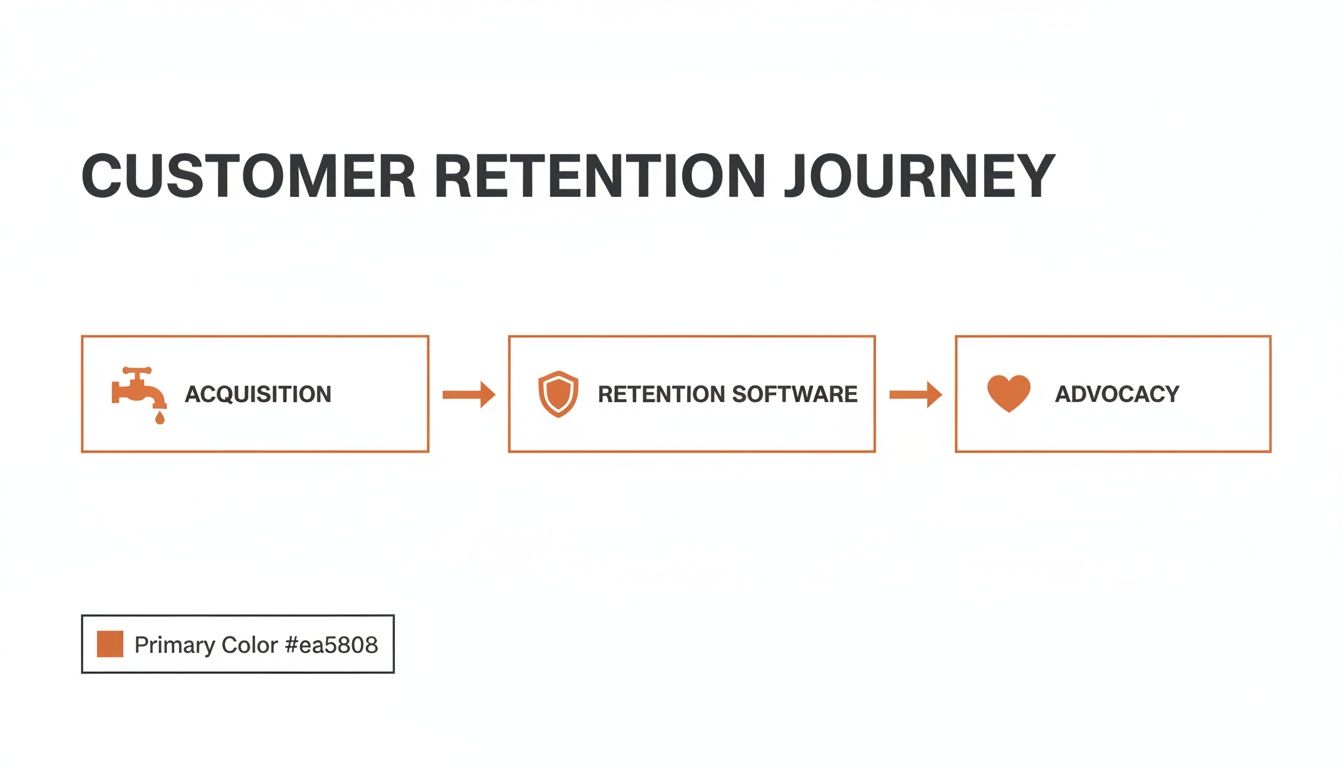
As you can see, the software doesn't just prevent customers from leaving; it actively guides them along a journey to become your most valuable marketing asset.
To give you a better feel for how these platforms work in the real world, let's break down the essential features and what they actually do for your business.
Key Retention Features and Their Business Impact
This table summarizes the core components of most customer retention platforms, connecting each feature to a clear goal and a practical example.
| Feature | Primary Goal | Example Use Case |
|---|---|---|
| Tiered Loyalty & Memberships | Reward your best customers and create a sense of VIP status. | A skincare brand offers a "Gold Tier" with free shipping and early access to new products for customers who spend over $500 a year. |
| Referral & Affiliate Programs | Turn happy customers into a low-cost acquisition channel. | An apparel store gives a customer $20 in store credit for every friend they refer who makes a purchase (and the friend gets $20 off, too). |
| Points, Rewards & Wallets | Encourage repeat purchases by creating a brand-specific "currency." | A coffee shop gives customers 10 points for every dollar spent, redeemable for a free drink once they hit 1,000 points, all tracked in their Apple Wallet. |
| Gamification & Community | Make interacting with your brand fun and build an emotional connection. | A supplement company awards digital badges for hitting workout streaks or trying new products, creating a community of engaged users. |
These features aren't just bells and whistles; they are the building blocks of a powerful, self-reinforcing loyalty loop that drives sustainable growth.
Tiered Loyalty and Paid Memberships
One of the smartest features you can roll out is a tiered loyalty program. It’s the e-commerce version of an airline's frequent flyer status. The more a customer shops, the higher they climb, unlocking better perks along the way—think free shipping, exclusive access, or a bigger points multiplier.
This structure taps into a basic human desire for status and recognition. It makes your top spenders feel seen and appreciated, giving them every reason to stick with you instead of shopping around.
Paid memberships crank this up a notch. Here, you're creating an exclusive club that customers actually pay to join. For example, a brand might charge a small annual fee for permanent free two-day shipping and first dibs on all new releases. This model not only locks in your most dedicated fans but also creates a predictable, recurring revenue stream.
Referral and Affiliate Programs
Let's be honest: your happiest customers are your best marketers. Referral and affiliate programs are what let you put that authentic, word-of-mouth energy to work. These features give customers a unique link to share with friends and family, making it dead simple to spread the word.
When a new person buys something through that link, both the original customer and the new one get a reward, like store credit or a discount. It’s a classic win-win-win:
- The loyal customer gets rewarded for their advocacy.
- The new shopper gets a little nudge to make that first purchase.
- Your business gets a high-value new customer for way less than what you'd spend on ads.
A recommendation from a friend cuts through the marketing noise like nothing else. It builds instant trust, leading to higher conversion rates and customers who are primed to become loyal from day one.
Points, Rewards, and Digital Wallets
At the heart of almost every customer retention software is a good old-fashioned points and rewards system. This creates a currency unique to your brand. Customers earn points for every purchase, but you can also reward them for things like writing a review or following you on Instagram. They can then cash in those points for discounts, free products, or other cool perks.
Where things get really clever is the integration with digital wallets like Apple Wallet and Google Wallet. Forget flimsy punch cards or forgotten passwords. A customer's point balance and VIP status can live right on their phone, keeping your brand top of mind and making it ridiculously easy to redeem rewards, whether they're checking out online or in your store.
Gamification and Community Building
Finally, gamification is all about adding a layer of fun to the experience. We're not talking about turning your website into a video game. It's about using simple game-like mechanics to encourage people to engage more deeply with your brand.
This could look like:
- Badges: Awarding digital trophies for milestones like making five purchases or referring three friends.
- Challenges: Running limited-time events, like "Spend $100 this month and unlock 500 bonus points."
- Leaderboards: Showing off your top members to create a little friendly competition.
These features transform shopping from a simple transaction into an enjoyable activity. They help build an emotional connection and a real sense of community, turning customers from passive buyers into active participants in your brand's story.
How AI Personalization Creates Unforgettable Experiences
If you want to create truly exceptional customer experiences, artificial intelligence is your secret weapon. It’s what separates generic, one-size-fits-all marketing from the kind of hyper-personalized interactions that make every customer feel seen and valued.
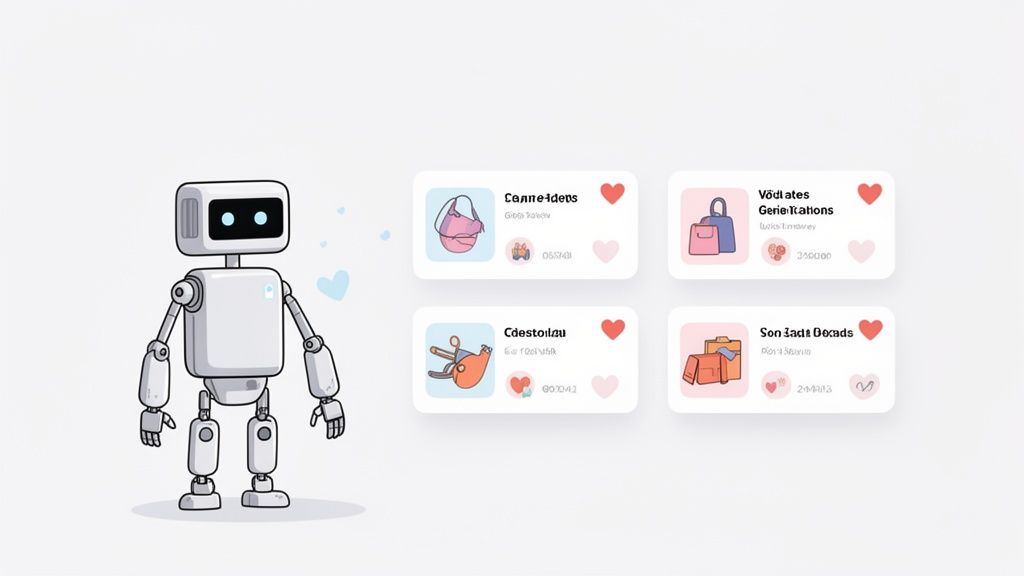
Think of it as giving a dedicated personal shopper to every single person who buys from you. This isn't just about plugging in a name; it’s a digital assistant that remembers every preference, analyzes every click, and anticipates what your customers will want next. It’s a level of one-to-one attention that was, until recently, impossible to deliver at scale.
From Data Points to Human Connections
At its core, AI is designed to sift through mountains of customer data and find the meaningful patterns hidden inside. It looks at everything—purchase history, browsing habits, even how often someone opens your emails. This allows the software to move beyond clunky, manual segmentation and create dynamic customer groups on the fly.
For example, instead of a broad "customers who haven't purchased in 90 days" list, AI can spot a very specific group: high-value shoppers who used to buy monthly but vanished right after a certain product went out of stock. That kind of insight is pure gold for your retention strategy.
This capability is driving massive investment. The AI in CRM market was valued at $11.04 billion in 2025 and is projected to hit $48.4 billion by 2033. It's easy to see why when you consider that basic CRM usage alone can boost customer retention by 27%. AI just puts that on steroids.
Practical Applications of AI in Retention
So, how does this all translate into real-world results that keep people coming back? AI-powered customer retention software doesn't just analyze data; it acts on it.
Here are a few powerful ways it works:
- Predictive Churn Alerts: The software can identify subtle changes in behavior that signal a customer is at risk of leaving—like they've stopped opening marketing emails or haven't logged in for weeks. This can trigger an automated workflow, like sending a personalized "we miss you" offer before they're gone for good.
- Hyper-Personalized Rewards: Instead of blasting everyone with the same 10% discount, AI can figure out the perfect reward for each person. A coffee lover might get bonus points on their next latte, while a new parent might get early access to a baby product launch. It’s about making the incentive feel special.
- Smarter Product Recommendations: By analyzing past purchases and browsing history, AI suggests other items a customer is highly likely to love. This doesn't just increase the average order value; it makes the shopping experience genuinely more helpful.
Using AI to understand customer intent transforms your marketing from a generic broadcast into a genuine, helpful conversation. It’s the difference between shouting at a crowd and having a meaningful one-on-one dialogue that builds real trust.
Crafting a Truly Individualized Journey
Ultimately, the goal of AI personalization is to make each customer feel like your brand gets them. It allows you to tailor every touchpoint of their journey, creating a seamless experience that stands out from the competition.
Picture two customers. One gets an automated "we miss you" email with a generic coupon. The other gets a message saying, "We noticed you loved the running shoes you bought last year. Here's a new model with similar features, plus a special reward just for you." The second approach, powered by AI, is infinitely more effective because it's relevant, timely, and personal.
This is what turns a one-time buyer into a lifelong fan. You can explore more real-world e-commerce personalization examples to see how leading brands are already putting this into practice.
How to Choose the Right Retention Platform
Picking the right customer retention software feels like a huge decision, but it gets a lot simpler once you know what to look for. Your goal isn't just to buy another tool; it's to find a strategic partner that clicks with your existing workflow and can grow right alongside your business.
Think of it like hiring a key team member. You need the right skills, the right cultural fit, and the right potential for the future. The whole process really comes down to four critical areas: how it connects with your other tools, its ability to scale, how the pricing works, and the support you'll get when you need it.
Let's break them down.
Seamless Integrations Are Non-Negotiable
Your e-commerce business is an ecosystem, not an island. You’ve got your e-commerce platform, your email service, a help desk, and maybe even a physical point-of-sale (POS) system. A retention platform that can’t talk to these other systems is like a musician who can't hear the rest of the band—it just creates a lot of noise and confusion.
To work properly, your customer retention software has to connect deeply and easily with the key players in your tech stack.
- E-commerce Platforms: A native app for Shopify or BigCommerce is a must. This ensures setup is a breeze and your data stays in sync without any manual work.
- Email & SMS Marketing: You need to connect with tools like Klaviyo or Attentive. This is how you'll automatically trigger messages like, "Heads up, you just earned a new reward!" based on what customers do.
- POS Systems: If you have a brick-and-mortar store, the software absolutely has to unify your online and in-store loyalty data. Anything less isn't a true omnichannel experience.
A platform with strong integrations gives you a single, unified view of each customer. Without it, you're stuck with messy data, a clunky experience for your shoppers, and a massive headache for your team. You can dive deeper into these customer data integration best practices.
Plan for Growth With a Scalable Platform
The loyalty program you launch today might be pretty simple. But what about in two years? As your business grows and your customer base expands, your needs will get more sophisticated. The last thing you want is to be forced into a painful migration because your software couldn't keep up.
Scalability isn't just about handling more customers. It’s about the platform's ability to support more complex strategies over time.
When you're talking to vendors, ask them point-blank:
- Can I start with a simple points-for-purchase program now and add VIP tiers later?
- Do you support paid membership programs if we decide to launch one down the road?
- Is there API access for custom development if we need something totally unique?
Choosing a scalable solution is an investment in your future. It’s a platform that can take you from a basic rewards system all the way to a sophisticated, multi-faceted membership and community ecosystem.
Demystifying Pricing Models
Pricing for retention software can look all over the map, but most vendors use one of a few common models. Getting a handle on them is the key to figuring out your potential return on investment (ROI) and avoiding sticker shock later on.
Here’s a quick breakdown of what you'll see:
| Pricing Model | How It Works | Best For |
|---|---|---|
| Tiered Plans | A fixed monthly fee based on feature sets, number of customers, or order volume. | Businesses that want predictable monthly costs and clear feature buckets. |
| Per-Member/User | You pay a small fee for each active member enrolled in your loyalty program. | Startups or brands with a smaller but highly engaged group of customers. |
| Usage-Based | Costs are tied directly to specific actions, like the number of rewards redeemed. | Companies with seasonal or fluctuating activity that only want to pay for what they use. |
Don't just glance at the price tag. Take the time to model out your expected costs based on your current customer numbers and your growth projections. A plan that looks like a bargain today could get expensive fast if it’s tied to a metric that’s about to explode for your brand.
The Hidden Value of Support and Onboarding
Finally, never, ever underestimate the human element. The most powerful software in the world is useless if you can't figure out how to use it. Fantastic support and a smooth onboarding process aren't just nice-to-haves; they are absolutely essential for success.
Look for a provider that offers more than just a generic help desk. A true partner will give you:
- Dedicated Onboarding: A specialist who actually walks you through setup and helps you launch your program without a hitch.
- Strategic Guidance: Real-world advice on how to structure your rewards, promote your program, and get your customers excited.
- Responsive Support: Fast, helpful answers from a team that understands your business and what you're trying to achieve.
The quality of a company's support tells you everything you need to know about their commitment to your success. Go with a vendor who acts like a partner invested in your growth, not just someone selling you a license.
Measuring the Metrics That Truly Matter
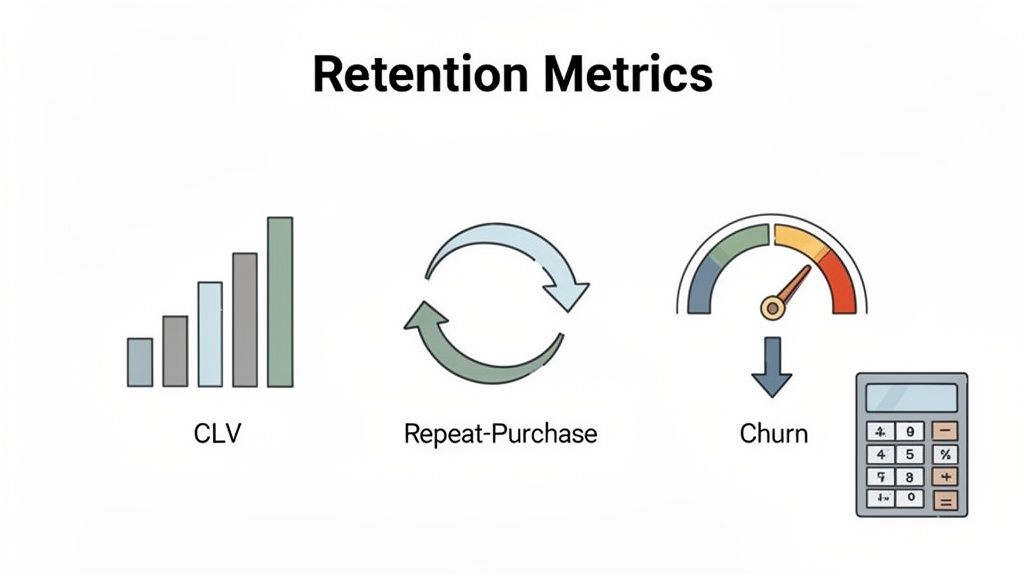
Running a loyalty program without tracking the right numbers is like sailing a ship with no compass. You might feel like you're moving, but you have no idea if you’re actually getting closer to your destination. To really nail down the financial impact of your customer retention software, you have to look past the surface-level fluff and zero in on the KPIs that prove your business is growing.
This means forgetting vanity metrics, like how many people have signed up for your program. Instead, you need to dig into the data that shows your retention efforts are bringing in real money. The right metrics tell a story about how your customers behave, how profitable they are, and what the long-term health of your brand looks like.
Customer Lifetime Value (CLV)
If there’s one metric to rule them all, it’s Customer Lifetime Value (CLV). Think of it as the total profit you can expect to make from an average customer over their entire relationship with your brand. It’s the ultimate report card for a healthy, sustainable business.
Instead of just celebrating a customer's first order, CLV forces you to think about the long game. A customer who spends $50 every month for three years is infinitely more valuable than someone who drops $300 once and disappears forever. Your retention software should be working 24/7 to push that CLV number higher for every single customer.
If you want to get a better handle on this critical KPI, check out this excellent guide on What Is Customer Lifetime Value and How To Calculate It.
A rising CLV is the clearest signal that your retention strategy is firing on all cylinders. It proves customers aren't just sticking around—they're spending more over time. That's the whole point.
Repeat Purchase Rate and Purchase Frequency
Next up, you need to know how often your customers are actually coming back. This is where a couple of closely related metrics come into play, and thankfully, your customer retention software makes tracking them a breeze.
- Repeat Purchase Rate: This is simply the percentage of your customers who’ve bought from you more than once. A high rate here is a great sign you're turning casual, one-time shoppers into loyal fans.
- Purchase Frequency: This one tracks how often the average customer buys from you over a set period, like a quarter or a year. Getting this number to tick up means your brand is becoming a regular part of their lives.
This is where you can see some serious revenue growth. Think about it: if you can convince your existing customer base to make just one extra purchase a year, the impact on your bottom line can be huge, all without spending another dime on acquiring new customers.
Customer Churn Rate
Finally, you have to watch your Customer Churn Rate like a hawk. This is the percentage of customers who stop buying from you over a given time. It’s the classic "leaky bucket" problem—this metric tells you how fast you're losing the very customers you worked so hard to get in the first place.
A high churn rate is a massive red flag. It could point to issues with your product, your pricing, or your overall customer experience. Your retention software can be your first line of defense here, helping you spot at-risk customers and automatically hit them with targeted win-back campaigns before they're gone for good.
Keeping customers has become a top priority for a reason. Recent research shows that 93.7% of companies are now measuring their success with revenue-based retention metrics. With customer acquisition rates falling from 4.1% in 2021 to just 2.8% in 2024, a retention-first mindset isn't just a good idea—it's a survival strategy.
Got Questions About Customer Retention Software? We've Got Answers.
Jumping into any new software can feel like a leap of faith, especially when it’s so closely tied to your customers and your bottom line. It’s completely normal to have questions. This FAQ is here to give you straight, clear answers to the things merchants ask us most often before they dive into a customer retention platform.
We'll cut through the jargon so you can make a smart decision, sidestep common stumbles, and feel great about building a program your customers will actually use and love.
How Quickly Can I Actually Launch a Loyalty Program?
This is almost always the first question, and the answer is probably faster than you think. Modern platforms, especially those built to work seamlessly with Shopify, are designed for speed. You can get a solid points-and-rewards program live in as little as one day. Seriously. The initial setup is meant to be quick and painless.
Now, if you’re dreaming bigger, it’ll take a little more time. A fully custom-branded program with paid membership tiers or complex integrations with your physical store’s POS system might take a week or two to get just right. The trick is to find a platform with clear guides and a support team that’s ready to help, making the process feel smooth, not stressful.
The basic launch usually just takes a few steps:
- Connect Your Store: Link your e-commerce platform with a single click.
- Set Your Rules: Decide how customers earn points—per dollar spent, for following you on social media, etc.
- Customize the Vibe: Tweak the on-site widgets and emails to match your brand's look and feel.
A good partner makes these first steps a breeze, letting you start rewarding your customers right away.
What Are the Biggest Mistakes to Avoid?
Getting a program live is one thing; making it a success is another. The single biggest mistake we see merchants make is overcomplicating things. If customers need a PhD to understand how your rewards work, they’ll just ignore it. Simplicity is everything. Keep the rules crystal clear and the value proposition obvious.
Another classic pitfall is offering boring rewards. A generic 5% discount is forgettable—your competitors are probably offering the same thing. The programs that really win are the ones that offer rewards with a high perceived value, like:
- Exclusive access to a limited-edition product drop.
- A head start on your biggest sales events.
- Unique experiences, like a personal styling session or a special anniversary gift.
Finally, don't fall into the "set it and forget it" trap. You have to shout about your program from the rooftops! Announce the launch with a dedicated email campaign, use social media to show off the perks, and remind customers about their point balances in your regular marketing. Think of it as a marketing channel that needs constant fuel to keep running.
Is This Just a Fancy Name for a Loyalty App?
While a loyalty program is a huge piece of the puzzle, true customer retention software is a whole different beast—it's much more powerful. An analogy might help here.
Think of a loyalty program as the dashboard of a car. It’s the part the customer sees and interacts with. The customer retention software is the entire engine under the hood. It’s the smart, powerful system that makes the whole thing go.
A basic app might just track points. A complete retention platform, on the other hand, is the machinery driving real business growth. It includes things like AI-powered customer segmentation, analytics that predict which customers are about to churn, and deep integrations that give you one unified view of a customer across every channel. The software is the strategic, data-driven engine for managing the entire customer journey, not just a simple rewards program.
How Much Should I Expect to Invest?
Pricing for these platforms can be all over the map, but most good ones offer tiered plans that grow with you. This means you only pay for what you need now, with a clear path to add more power as your business scales.
Here’s a rough breakdown of what you'll find out there:
- Starter Plans: For new businesses just getting their feet wet with loyalty features, you're typically looking at $50 to $150 per month.
- Growth Plans: When you’re ready for more advanced tools like paid memberships, API access, or deeper integrations, plans often fall in the $200 to $600 per month range.
- Enterprise Plans: For large, complex businesses that need dedicated support, white-glove service, and omnichannel solutions, plans can run $1,000+ per month.
But the price tag isn't the most important number. The real focus should be on your potential return on investment (ROI). A great retention program isn't an expense; it's an investment that should pay for itself many times over by driving repeat sales and turning your best customers into your most powerful marketing asset.
Ready to turn your customers into lifelong fans? With Toki, you can launch a stunning loyalty and rewards program that drives repeat sales and builds a thriving brand community.