Creating a Loyalty Program: Boost Loyalty & Revenue (creating a loyalty program)
Learn how creating a loyalty program can build real customer connections and drive repeat business beyond discounts.
A loyalty program isn’t just about handing out discounts; it’s about making your customers feel seen and valued. When done right, it's a powerful engine that turns casual, one-time buyers into dedicated, repeat customers who choose your brand every single time. It's less of a perk and more of a core part of building a resilient e-commerce business.
Why Your Loyalty Program Can Succeed Where Others Fail
Let's be real—most loyalty programs are pretty forgettable. They're often just a generic pop-up offering a measly discount that does little to inspire actual loyalty. That’s exactly why so many customers sign up and then ghost you.
But here’s the thing: a truly thoughtful, well-designed program can be one of the most powerful tools you have. It can shift from being a line item on your expense report to becoming your single best revenue driver.
The goal isn't just to give stuff away. It's a strategic play to dramatically increase customer lifetime value (CLV) and stop being so reliant on the endless, expensive churn of paid acquisition. With modern tools, you can finally build a program that your customers genuinely get excited about.
Shifting From Cost to Investment
One of the biggest mistakes merchants make is seeing their loyalty program as just another cost. You have to reframe it: this is a direct investment in your most valuable asset—your existing customers.
Think about it this way: members of a loyalty program generate 12% to 18% more incremental revenue per year than non-members. That's not a small number. Once you see the program as a growth engine, everything changes.
This financial upside is exactly why the market is booming. The global loyalty management market is already worth around $8.6 billion and is on track to hit a massive $18.2 billion by 2026. This isn't a fluke; it's a clear signal that brands investing in smart loyalty strategies are pulling way ahead of the competition.
A loyalty program isn't about rewarding a purchase that was going to happen anyway. It's about creating the next purchase and fostering an emotional connection that transcends price.
Building a Program That Resonates
A successful program all comes down to one thing: knowing what actually motivates your customers. So many programs flop because they're built on what the brand thinks customers want, not on actual data or feedback.
Ask yourself the hard questions. Is your program dead simple to understand? Are the rewards genuinely exciting and, more importantly, attainable? A confusing point system or a lame reward is a one-way ticket to disengagement. If you’re worried your current setup is falling flat, it’s a good idea to check out why your Shopify loyalty program isn't working and how to fix it.
To forge those lasting relationships, you also need to differentiate between a fleeting promotion and true brand affinity. Getting a handle on the dynamics of Brand vs Performance Marketing can give you the strategic lens needed to build a program that inspires loyalty, not just another transaction. When you nail the value proposition and create a seamless experience, you're setting your program up to win where so many others fail.
Choosing the Right Loyalty Model for Your Brand
Before you even think about what rewards to offer, you need to lock in the right framework for your loyalty program. This isn't about chasing trends; it's a strategic decision that needs to tie directly back to your core business goals. The structure you choose will shape everything—how customers interact with your brand, which behaviors get rewarded, and ultimately, the ROI you see.
The first step is to get crystal clear on what success actually looks like. Are you trying to bump up purchase frequency by 20%? Or is the bigger prize getting your multi-purchase customers to increase their average order value (AOV)? Your goals are the compass that will guide you to the perfect program model.
A brand selling consumables, like coffee or supplements, will probably want customers to buy more often. On the other hand, a high-end fashion boutique is likely more focused on increasing the total spend from its most dedicated clients. These are two very different objectives that call for two very different loyalty structures.
This decision tree can help you frame your thinking around whether your program is just another cost or a genuine revenue driver.
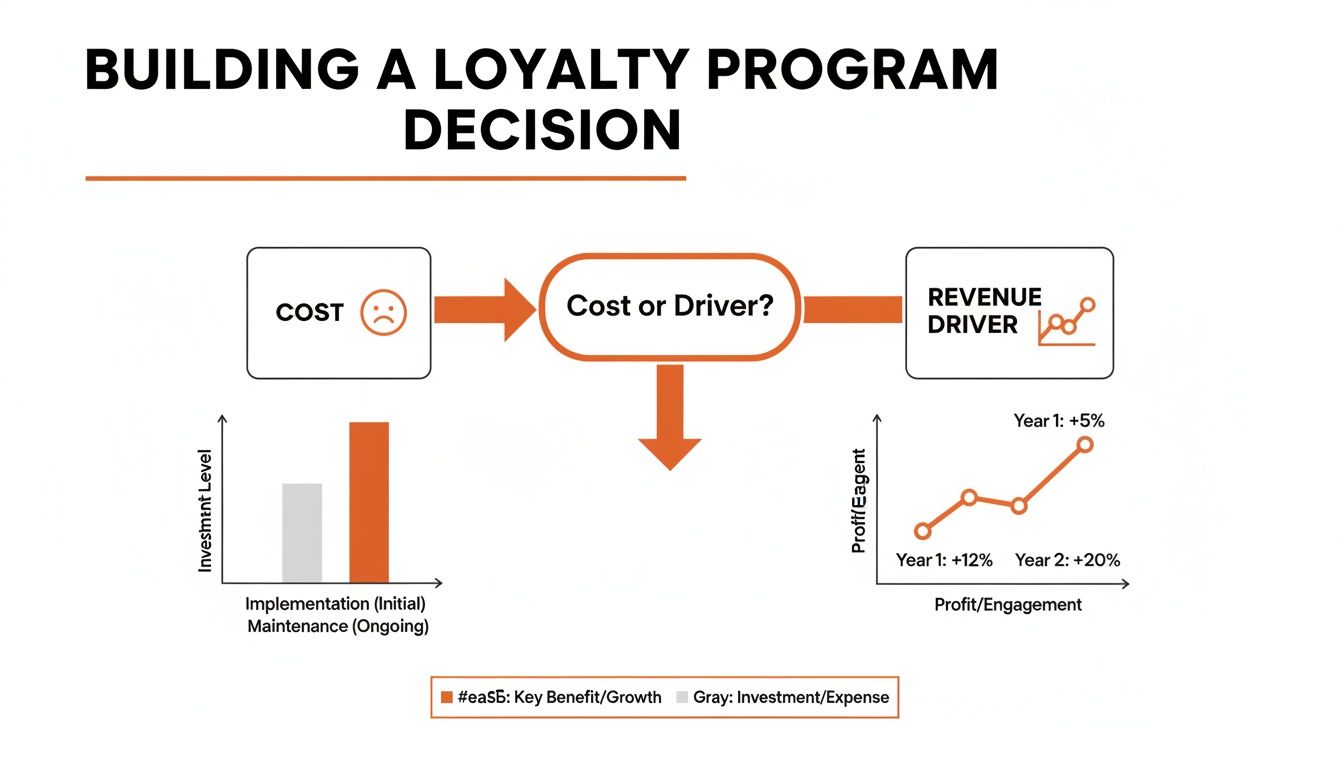
This simple diagram highlights a critical mindset shift. A well-designed program shouldn't just be an expense—it should actively generate revenue.
Exploring Points-Based Systems
The points-based system is popular for a reason: it's simple, intuitive, and incredibly effective for encouraging frequent, smaller purchases. Customers earn points for doing things you want them to do—making a purchase, sure, but also leaving a review or following you on social media. They then cash in those points for rewards.
This model creates a satisfying, game-like loop: take an action, get points, redeem for something cool. It's a natural fit for businesses where repeat purchases happen often, like a coffee roaster whose customers buy a new bag every few weeks. Every purchase feels like making progress toward a tangible reward, whether that's a free bag of beans or a discount on their next order.
The one thing to watch out for is setting the bar too high. If customers feel like the rewards are a million miles away, they'll lose interest. If you want to get into the nitty-gritty of the math, our guide on designing a point-based loyalty program is a great place to start.
The Power of Tiers
Tiered programs are all about making your best customers feel like VIPs. With this model, customers unlock new levels of status and better perks as they spend more or engage more over time. This approach taps into some powerful psychology—our desire for status and exclusivity.
Think about a beauty brand with three tiers: Bronze, Silver, and Gold.
- Bronze: Everyone starts here and earns basic points.
- Silver: After spending $250, they unlock free shipping and get early access to sales.
- Gold: Once they hit $500 in spend, they get exclusive products, a special birthday gift, and maybe even invites to members-only events.
This structure is brilliant for brands where customer spending varies a lot. It gives casual shoppers something to aspire to while making your most loyal fans feel truly seen and appreciated for their commitment. It shifts the focus from purely transactional rewards to long-term relationship building.
A tiered program changes the conversation from "What do I get for this purchase?" to "What status can I achieve with this brand?" It fosters a sense of belonging that simple points systems often can't match.
Paid Memberships and Exclusive Communities
A paid membership is the ultimate loyalty play. Customers pay a recurring fee, either monthly or annually, to get instant access to a suite of premium benefits. The classic example is Amazon Prime—the value is so obvious that millions of people are happy to pay for it.
This model is a home run for brands that can deliver significant, ongoing value. An apparel brand, for instance, might offer members-only perks like:
- Free shipping on every single order
- A permanent 15% discount
- First dibs on limited-edition drops
- A dedicated customer service line
By creating a paid program, you turn your loyalty initiative into its own revenue stream. You also cultivate a hyper-engaged group of brand advocates who are both financially and emotionally invested in your brand. Just remember, the barrier to entry is higher, so your value proposition has to be a no-brainer from day one.
Designing Rewards People Actually Want
This is where the real fun begins. A solid program structure is your foundation, but the rewards you offer? That's the heart of the entire experience. Get them right, and you create genuine desire and make customers feel seen. Get them wrong, and your program just feels like a transactional, uninspired afterthought.
So many brands just throw a generic 10% off coupon into the mix and call it a day. While discounts certainly have their place, they rarely forge the kind of deep, emotional bond that turns a one-time buyer into a true brand advocate. To design rewards people truly want, you have to think beyond the discount code.
Beyond Transactional Perks
Let's be clear: transactional rewards are a great starting point. We're talking about the straightforward stuff—free shipping, percentage-off coupons, or a fixed dollar amount off a purchase. They're effective, easy to grasp, and customers expect them. In fact, 66% of shoppers say that earning and redeeming rewards directly impacts their spending.
The danger, however, is relying on them exclusively. You risk training your customers to only buy when there's a deal on the table. This is where you need to layer in experiential and emotional rewards—the perks that make your members feel like they’re part of an exclusive club.
- Early Access: Give your loyal members a 24-hour head start on new product drops or major sales. It’s a simple way to create a powerful sense of urgency and exclusivity.
- Exclusive Products: Offer a unique product, a special colorway, or a curated bundle that is only available to your loyalty members. A skincare brand, for instance, could create a members-only travel kit of its bestsellers.
- VIP Events: Think bigger than just products. Host a members-only online workshop, a live Q&A with your founder, or a virtual styling session. These experiences build a community and personal connection that a coupon simply can't match.
Perks like these shift the entire dynamic from "saving money" to "gaining status." They tap into a customer’s inherent desire to be an insider, which is a much stronger driver for long-term loyalty. The psychology behind this is fascinating, and you can dive deeper into these strategies in our guide on reward psychology.
The Power of Gamification
Gamification is the secret ingredient that makes interacting with your program genuinely fun and, frankly, a little addictive. By weaving game-like elements into the shopping journey, you tap into our natural desire for achievement and friendly competition.
Suddenly, it’s not just about earning points anymore. Now, customers can complete challenges, hit milestones, and earn special badges that signify their status within your community. It creates a real sense of accomplishment.
A well-designed gamification layer transforms passive point collection into an active, engaging journey. It gives customers a reason to come back and see what they can achieve next.
For a masterclass in structured reward systems that keep users hooked, it's worth checking out the Swagbucks rewards program model for some proven design principles.
Practical Gamification Examples
You don't need a complex system to get started. Simple, creative challenges can have a massive impact on how customers interact with your brand.
Let's imagine how a skincare brand, Glow Up Skincare, could put this into practice:
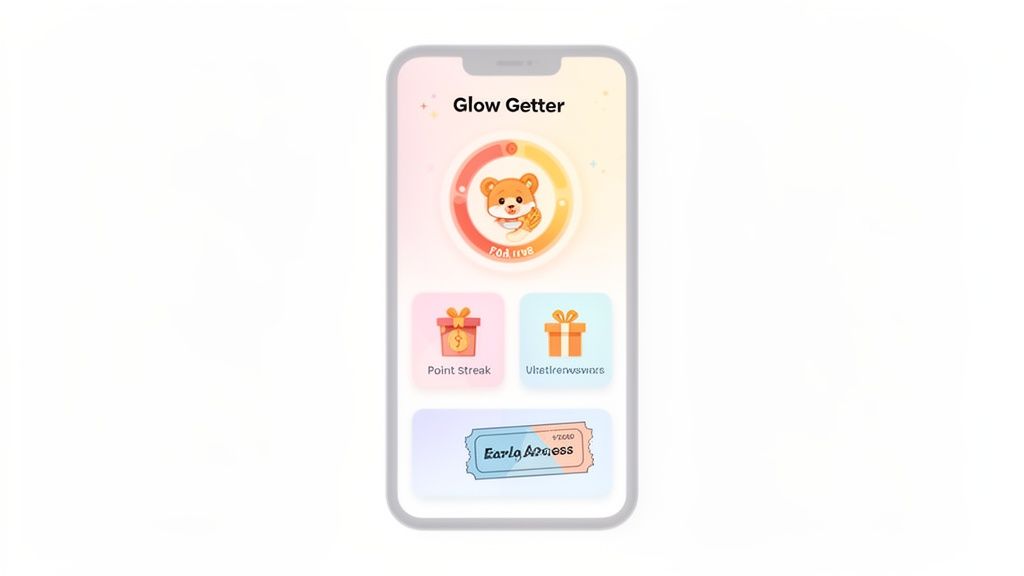
- The "Glow Getter" Badge: Award this to customers who make a purchase for three consecutive months. It’s a great way to encourage consistent buying habits.
- Point Streaks: Offer bonus points for visiting your site or making a purchase several weeks in a row. This builds a routine and keeps your brand top-of-mind.
- The "Review Pro" Challenge: Unlock an exclusive 15% off coupon after leaving three product reviews. This directly incentivizes user-generated content, which is gold for social proof.
- Community Milestones: Set a collective goal, like, "If we hit 1,000 product reviews this month, every member gets 100 bonus points!" This fosters a sense of teamwork and shared success.
By mixing tangible rewards like discounts with intangible ones like status badges and early access, you build a much more dynamic and exciting system. This layered approach ensures your program appeals to a wider range of customer motivations, creating a more resilient and engaging experience that truly stands out.
Launching Your Loyalty Program for Maximum Impact
You’ve put in the work—mapping out the rewards, defining your tiers, and building a strategic framework. Now for the exciting part: bringing it all to life. Moving from a plan on paper to a live program is where everything comes together. A brilliant program deserves a brilliant launch to match, one that generates genuine excitement and drives a flood of immediate sign-ups.
A successful rollout is a delicate balance of technical precision and marketing savvy. Getting the tech side buttoned up is absolutely critical. It ensures your customers have a smooth, frustration-free experience right from the very first click. This means making sure your loyalty platform, like Toki, integrates flawlessly across your entire e-commerce ecosystem.
For Shopify merchants, this is usually pretty straightforward, but you can't just assume it works. You need to verify it. The ultimate goal is a seamless omnichannel experience. A customer’s points and status should be perfectly in sync, whether they’re browsing on your website or checking out at a physical pop-up shop.
Your Pre-Launch Technical Checklist
Before you even whisper a word about the new program to your customers, a thorough testing phase is non-negotiable. Trust me on this. A buggy, confusing launch can kill your momentum and damage customer trust before you even get started.
Run through this checklist to make sure every single touchpoint is polished and ready for prime time:
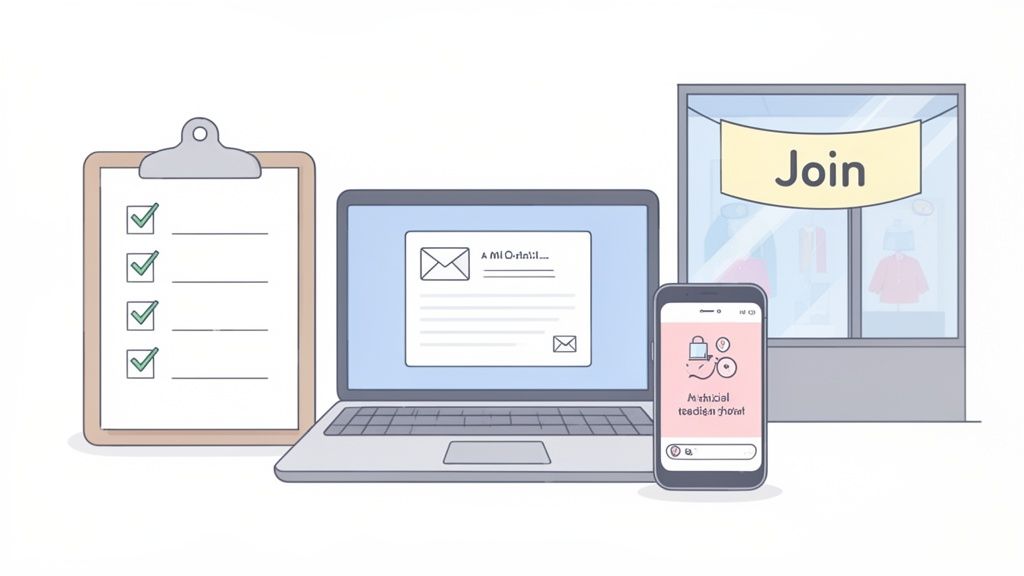
- Test the Sign-Up Flow: Put yourself in a new customer's shoes. Can you find the sign-up form easily? Is it simple and quick to fill out? Any friction here is a dealbreaker.
- Verify Point Accrual: Make a few test purchases for different items. Do the points show up in the test account correctly? And how fast?
- Check Reward Redemption: Go through and test every single reward you’ve set up. Can you actually redeem points for that discount code? Does the early access perk work as intended? The process has to be intuitive.
- POS Integration Test: If you have any brick-and-mortar presence, this is a must. Run some test transactions through your in-store POS to confirm that points are awarded and can be redeemed just as easily as they are online.
And don't forget your team! Your customer service crew is on the front lines. Get them ready with a detailed FAQ document so they can confidently answer questions about earning points, redeeming rewards, and troubleshooting any common hiccups.
Crafting a Winning Launch Campaign
Once your technical foundation is rock-solid, it’s time to shift gears and start building some real hype. Think of your launch not as a single announcement but as a multi-channel campaign that builds anticipation. A quiet, one-and-done email just won't cut it.
A generic marketing blast is a missed opportunity. Your customers aren't all the same, so your launch messaging shouldn't be either.
Your most loyal customers are your biggest asset during a launch. Treat them like the VIPs they are by giving them an exclusive first look and a special welcome gift. This simple act can turn them into your program's most powerful advocates.
Start by creating a segment of your best customers—think top spenders or most frequent buyers. A day or two before the public launch, send them a personalized "early access" email. Something as simple as, "As one of our most valued customers, we're giving you a head start and 200 bonus points to welcome you to our new rewards program," can create massive goodwill.
A Multi-Channel Promotional Strategy
After giving your VIPs their sneak peek, it’s time for the big reveal. Coordinate your efforts across all your key channels to get the most visibility possible.
On-Site Promotion: Your website is your most valuable real estate, so make the program impossible to miss.
- Homepage Banner: Use a prominent, eye-catching banner right at the top of your homepage.
- Dedicated Landing Page: Build a comprehensive page that clearly explains how the program works, showcases the rewards, and has an unmissable call-to-action to join.
- Post-Purchase Pop-Up: Catch customers right after they buy, when their excitement for your brand is at its peak, and prompt them to sign up.
Email and Social Media:
- Official Announcement Email: Design a beautiful email for your entire list that sells the benefits and makes it easy to sign up.
- Social Media Teasers: In the days leading up to launch, drop "coming soon" posts and behind-the-scenes hints to build curiosity.
- Launch Day Blitz: On the big day, go all out across your social channels. Use Instagram Stories with interactive polls ("Which reward are you most excited for?") to get people talking and make the launch feel like a community event.
By pairing meticulous testing with a smart, segmented marketing campaign, you’ll successfully bridge the gap between a great idea and a high-impact program that customers are genuinely excited to be a part of.
Measuring What Matters and Optimizing for Growth
Popping the champagne after your loyalty program launch is a great feeling, but it’s just the starting line. The real work—and the real magic—begins now. Think of your program not as a static feature you can "set and forget," but as a living part of your business that needs regular attention.
True success isn’t about chasing vanity metrics like sign-up numbers. It’s about creating real, measurable shifts in how your customers shop. This is where you roll up your sleeves and get into a rhythm of measuring, learning, and tweaking. That constant cycle of improvement is what turns a good program into a growth engine for your brand.
Defining Your Key Performance Indicators
Before you can improve anything, you have to know what you’re measuring. Staring at a dashboard without clear goals is a surefire way to get lost in the data. You need to zero in on a handful of KPIs that tie directly back to the original goals you set for your program.
These are the numbers that will tell you the honest truth about how things are going.
- Reward Redemption Rate: This is your north star. If members aren't cashing in their rewards, the program isn't providing value, plain and simple. A low rate is a red flag that your rewards are too hard to get, aren't appealing, or just aren't being promoted well.
- Repeat Purchase Rate: How many customers are coming back for a second, third, or fourth purchase? Seeing this number climb for loyalty members compared to non-members is a clear sign your program is doing its job and fostering real loyalty.
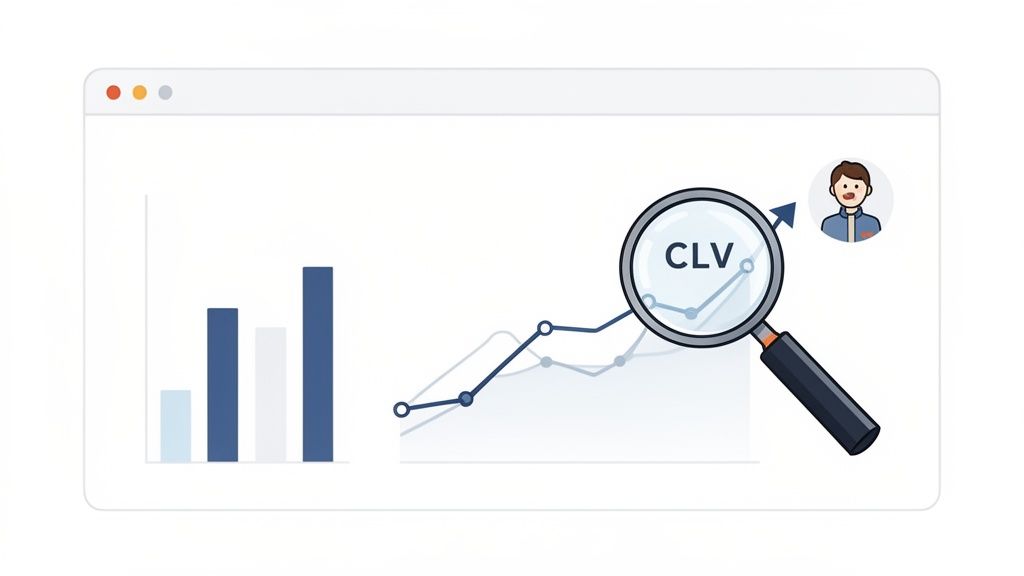
- Customer Lifetime Value (CLV): This is where the money is. Compare the CLV of your loyalty members to that of your average customer. A healthy program will show a much higher CLV for members, proving its direct impact on long-term revenue.
- Program ROI: At the end of the day, is this thing paying for itself? Calculate the extra revenue you're generating from members and subtract the program costs (rewards, platform fees, etc.). This tells you if your investment is truly driving profit.
Thankfully, you don’t have to build this from scratch. A platform like Toki gives you a clear analytics dashboard right out of the box, making it easy to track these essential KPIs and turn numbers into actionable insights.
Turning Data into Actionable Insights
Your analytics dashboard is a treasure map, but you have to know how to read it. Don’t just glance at the numbers; look for the stories they’re telling you. Always ask "why."
For example, you might see that one of your rewards has an abysmal redemption rate. Your first instinct might be to just kill it, but hold on. Is a "$5 off" coupon really that exciting for a brand where the average order is $150? Probably not. Or maybe the reward is great, but nobody knows it exists because it’s buried on a page no one visits.
Don't just look at what's happening; dig deeper to understand why it's happening. An underperforming reward isn't a failure—it's an opportunity to test something new and learn more about what truly motivates your customers.
Here's a real-world example: A fashion boutique noticed their "Free Tote Bag" reward had a redemption rate of just 2%. Instead of giving up, they A/B tested a different reward at the same point value: "Early Access to New Arrivals." One month later, the redemption rate for that reward slot shot up to 18%. That one small change, driven by looking at the data, made the program far more engaging.
The hard truth is that while over 90% of companies have some sort of loyalty program, the average person is only active in a fraction of them. The brands that win are the ones that evolve. In fact, companies that significantly revamp their programs report 64% satisfaction, a huge leap from the 43% for those who let theirs stagnate. You can dive deeper into this with Deloitte's detailed research on the topic.
The Power of Direct Member Feedback
Data tells you what people are doing, but only people can tell you why. Never, ever underestimate the power of just asking your customers what they think. Their insights are gold when it comes to fine-tuning your program.
And you don't need a huge budget for this.
- Post-Redemption Surveys: After a customer uses a reward, send them a simple, one-question email. "On a scale of 1-10, how happy were you with this reward?" It's quick, easy, and gives you immediate feedback.
- Social Media Polls: Use Instagram Stories or your Facebook group to ask members what they want. "Which of these new rewards would you be most excited about?"
- Chat with Customer Service: Your support team is on the front lines. They hear what customers love and what frustrates them every single day. Schedule a quick weekly chat to get their insights.
When you blend the hard data from your analytics with direct feedback from your members, you create a powerful loop. This is how you ensure your loyalty program stays fresh, exciting, and effective for years to come.
Answering Your Lingering Loyalty Program Questions
Even the best-laid plans come with a few last-minute questions. As you get closer to launch, you'll probably have some "what ifs" pop into your head. That's completely normal.
Let's tackle some of the most common questions we hear from merchants. Think of this as your quick-hit FAQ to clear up any final uncertainties.
"Is My Business Too Small for a Loyalty Program?"
Not a chance. In fact, I'd argue it's one of the smartest moves a small or growing business can make. A loyalty program is your secret weapon for building genuine, personal connections with your earliest customers—the kind of relationships that bigger, faceless competitors just can't replicate.
Your first members are pure gold. They're the ones who will become your most passionate brand advocates. Starting a program early lets you grow with them, gathering priceless feedback along the way. It’s far easier than trying to bolt one on after you’ve already hit a massive scale.
"What's This Going to Cost Me?"
The cost can swing wildly, but it's not nearly as scary as most people think. You could literally start with a paper punch card for a few bucks. On the other end of the spectrum, a fully custom-coded app could set you back tens of thousands.
For most online stores, the sweet spot is a dedicated platform. Modern tools like Toki have made sophisticated loyalty features incredibly accessible. You can get started with points, tiers, and referrals without a huge upfront investment. The key is to shift your mindset: this is a revenue driver, not just another line item on your expense sheet.
The right question isn’t "How much does a loyalty program cost?" but "What is the cost of not having one?" The expense of constantly acquiring new customers almost always outweighs the investment in retaining the ones you already have.
"What Should I Name My Program?"
Please, don't just call it "[Your Brand] Rewards." Your program’s name is a huge branding opportunity, so give it some personality! You want something that reflects your brand and signals the value inside.
Here are a few angles that work well:
- Make It Yours: Tie the name directly to your brand. Nordstrom’s "The Nordy Club" is a perfect example—it feels exclusive and on-brand.
- Focus on the Feeling: Highlight the core benefit. Sephora’s "Beauty Insider" brilliantly suggests members get special access and expert knowledge.
- Build a Community: Use a name that creates a sense of belonging. Imagine a skincare brand calling its program "The Glow Collective." It instantly feels like a club people want to join.
Whatever you choose, keep it simple and memorable. A great name makes the program feel like an essential part of your brand, not just a marketing add-on.
"How Many Rewards Should I Offer When We Launch?"
It’s so tempting to create a giant menu of rewards, but trust me on this: less is more, especially at the beginning. Launch with a tight, focused selection of 3-5 highly desirable rewards. This keeps things simple for new members and makes the value of joining immediately obvious.
You want a small mix that appeals to different customer motivations. A killer starting lineup might look something like this:
- The Quick Win: A small, easy-to-earn discount, like $5 off. This gives members instant gratification.
- The Product Prize: A free best-selling item. This is a fantastic way to showcase your hero products.
- The VIP Perk: An experiential reward like free shipping on all orders or early access to new drops.
You can—and should—add more rewards later on as you collect data on what your members actually want. Starting lean and focused gives you the clarity you need to see what's actually working.
Ready to stop losing customers and start building a community of loyal fans? Toki provides all the tools you need to launch a powerful, engaging loyalty program that drives repeat sales and deepens customer relationships. Get started with Toki today!