Create a Customer Loyalty Program That Actually Works
Stop guessing. Learn how to create a customer loyalty program that drives real growth. This guide covers strategy, rewards, and Shopify integration.
It's time to stop thinking of a loyalty program as just another marketing tactic. See it for what it truly is: essential business infrastructure. This mindset shift is your best defense against skyrocketing customer acquisition costs, letting you focus on the goldmine you're already sitting on—your existing customers.
A well-built loyalty program is a direct investment in customer lifetime value and creates a powerful brand moat that your competitors will struggle to cross.
Why a Loyalty Program Is Your Best Growth Strategy
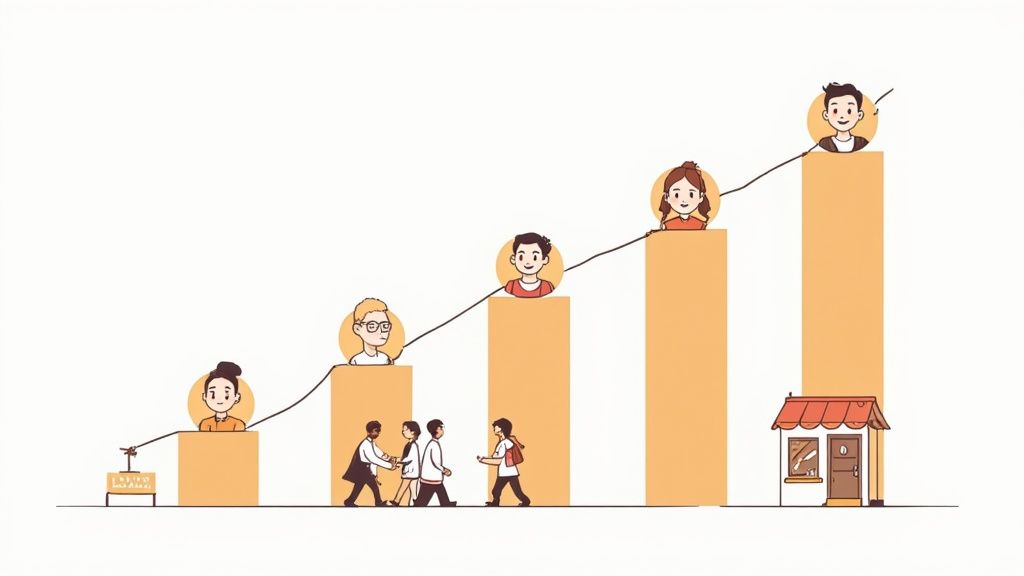
In the dog-eat-dog world of e-commerce, finding new customers is getting more expensive by the day. A smart loyalty program pushes back against this trend by turning one-time buyers into repeat customers and, eventually, genuine brand fans. The question isn't if you need one anymore; it's how to make it a knockout success.
The numbers don't lie. Putting your resources into retention almost always yields a better ROI than dumping more cash into top-of-funnel ads. Think about it: loyal customers not only spend more over their lifetime but they also become your best marketers through authentic word-of-mouth. This creates a self-sustaining growth engine that strengthens your entire brand.
The Economic Impact of Customer Retention
A great loyalty program is so much more than just another way to hand out discounts. It’s about building an entire ecosystem of value that makes your customers feel seen and appreciated. The best programs today move beyond simple points-for-purchase and weave in elements of community, exclusivity, and genuine connection.
Here’s a quick rundown of the core benefits you can expect:
- Increased Customer Lifetime Value (CLV): It's a proven fact. Loyalty program members buy more often and spend more per order, dramatically boosting their CLV compared to non-members.
- Improved Customer Retention: A compelling program gives shoppers a concrete reason to come back to you, even if a competitor dangles a slightly lower price.
- Valuable Data Collection: Loyalty programs are a treasure trove of first-party data. You get direct insight into what your best customers love, which lets you personalize their experience and sharpen your marketing.
One of the main goals here is to boost long-term profitability. For a deeper dive, there are some great strategies for improving customer lifetime value you can explore. Getting a handle on these concepts is the first real step toward building a program that actually works.
When you focus on the economics of retention, a loyalty program stops looking like a cost and starts looking like a core growth driver. It’s a strategic investment in the long-term health of your business.
This isn't just theory; the market is voting with its wallet. By 2025, industry surveys showed that over 90% of companies had some kind of loyalty program in place. The global loyalty management market itself was valued at $15.19 billion in 2025 and is expected to rocket to $41.21 billion by 2032. This shows just how much businesses are betting on loyalty.
Ultimately, when you create a customer loyalty program, you're building a defensive wall around your most important asset. To learn more about this, check out our guide on the benefits of a loyalty program. This loyal foundation makes your business far more resilient and less vulnerable to the unpredictable nature of customer acquisition.
Laying the Groundwork for a Program That Actually Works
Before you get carried away with naming reward tiers or picking out fun perks, we need to talk strategy. A great loyalty program isn't just about handing out discounts; it’s a powerful engine for growth, but only if it's built on a solid foundation.
If you skip this initial planning, you risk creating a program that costs you money without delivering results, or worse, one that just confuses your customers.
Let's start by getting crystal clear on what you're trying to achieve. Simply saying you want to "increase loyalty" is too vague. To build something effective, you have to connect your program directly to real, measurable business goals. This is how you'll know if it's working and prove its value later on.
What’s Your Number One Goal?
Every loyalty program can influence a lot of different customer behaviors, but the most successful ones have a single, primary focus. When you try to make your program do everything at once, it usually ends up doing nothing particularly well.
So, what’s the one key action you want to drive? Think about what would move the needle most for your business.
- Get customers to buy more often? If you sell consumables or drop new products frequently, aiming to increase purchase frequency is a classic retention play.
- Get customers to spend more each time? To boost Average Order Value (AOV), you can design your program to reward larger carts. Think bonus points for hitting a certain spend threshold.
- Get more social proof? You can incentivize customers to drive User-Generated Content (UGC) by offering points for leaving reviews or sharing photos of their purchases on social media.
- Get customers to spread the word? A program focused on encouraging referrals can turn your best customers into an amazing acquisition channel, effectively lowering your marketing costs.
Once you land on your primary objective, every other decision—from the rewards you offer to how you talk about the program—should be in service of that goal. For instance, if AOV is your target, offering a big points bonus on orders over $100 is far more effective than giving points for a social media follow.
Who Are You Building This For?
Let's be honest: not all customers are the same, and a one-size-fits-all loyalty program rarely works. The next crucial piece of the puzzle is identifying exactly who you're building this for. A quick look at your customer data should tell you which segments are your most valuable.
Are you trying to roll out the red carpet for your top spenders, or are you hoping to convince new shoppers to stick around? Each group needs a completely different approach.
- Your VIPs (Top 5-10%): These are your die-hard fans. They already love what you do. For them, a program should be all about exclusivity and recognition—things like early access to sales, members-only products, or maybe even a dedicated customer service line.
- Your Mid-Tier Customers: This bunch likes you, but they aren't fully committed yet. The goal here is to nurture them into becoming your next VIPs. Use attainable rewards and clear tier progression to keep them engaged and motivated to spend a little more.
- New or At-Risk Customers: These are the folks who've bought once but might disappear forever. A simple "welcome" gift, like a bonus set of points after their first purchase, gives them an immediate reason to come back and see what else you have to offer.
Don’t try to build a program that caters to every single customer from day one. Start by focusing on the segment that will have the biggest impact on your primary goal. A program designed to delight your top 5% of customers will look very different from one meant to re-engage lapsed shoppers.
By locking in your goals and zeroing in on a target audience, you’re creating a strategic blueprint. This ensures you create a customer loyalty program that functions as a genuine growth driver, not just another expense on your P&L. This is the secret behind the programs that people actually love and that deliver a serious return on investment. Now that we've got that sorted, you're ready to design the fun part: the rewards.
Designing a Reward Structure Customers Actually Want
Alright, let's get to the fun part. This is where your strategic groundwork turns into something your customers can actually see, feel, and get excited about. A cookie-cutter reward structure is a recipe for mediocre results. The real goal here is to design a system that feels like it’s a part of your brand’s DNA and offers real value to your specific customers.
The rewards you offer are the heart and soul of your program. They need to be tempting enough to actually change how people shop, but they also have to be sustainable for your business. It's a delicate dance, but getting this balance right is what separates a program that takes off from one that just fizzles out.
Finding the Sweet Spot Between Value and Sustainability
Before you start dreaming up cool perks, you have to nail the financial model. This isn’t about plucking a point value out of thin air; it’s about understanding the real impact on your margins. A great starting point for many brands is to offer a reward value that equals 1-5% of a customer's total spend.
So, what does that look like in practice? A 1% earn rate means a customer gets $1 in rewards for every $100 they spend. This is a super safe, sustainable model that works for most businesses. On the other hand, a more aggressive 5% rate could be a game-changer for brands with high margins or those in a dog-eat-dog market where a stronger hook is needed.
Don’t forget to think about redemption thresholds. If a customer has to spend $1,000 just to earn a $5 coupon, they’re going to check out before they even get started. That first reward needs to feel within reach to build some early momentum and show them the program is worth their time.
A loyalty program's success hinges on perceived value. The rewards must feel attainable and genuinely worthwhile. If the effort to earn a reward outweighs its benefit, customers simply won't engage.
This balance is absolutely critical because your engaged members are your most profitable ones. We’ve seen it time and again: studies show that 57% of consumers spend more with the brands they feel loyal to. A compelling reward structure is the engine that drives this behavior. Digging into retention economics, research reveals that even a tiny 5% increase in customer retention can boost profits by a staggering 25% to 95%. If you want to dive deeper, there are some powerful loyalty program statistics that really bring this impact to life.
Choosing Your Core Loyalty Model
Now, let's talk about the architecture of your program. There are a few tried-and-true models, and the best choice really boils down to your brand, your products, and what you want your customers to do.
To help you decide, let's break down the most common approaches. Each has its own vibe and is suited for different kinds of businesses and customer behaviors.
Comparing Common Loyalty Program Models
| Program Model | How It Works | Best For | Potential Drawback |
|---|---|---|---|
| Points-Based | Customers earn points for actions (purchases, reviews) and redeem them for rewards (discounts, free products). | Brands wanting a simple, flexible system that's easy for customers to grasp. Works great for businesses with frequent purchases. | Can sometimes feel too transactional if not paired with other perks. |
| Tiered | Customers unlock new levels of status and perks (e.g., Bronze, Silver, Gold) as they spend more or engage more. | Aspirational brands or those with a wide range of customer spending. It gamifies the experience and encourages higher spend. | The top-tier rewards need to be genuinely aspirational to motivate customers to climb the ladder. |
| VIP/Paid | Customers pay an upfront or recurring fee (e.g., Amazon Prime) for instant access to a bundle of exclusive benefits. | Businesses with a highly engaged customer base who will see clear value in paying for premium perks like free shipping. | The value proposition must be incredibly strong to convince customers to pay to join. |
| Value-Based | The program is built around shared values, often involving charitable donations or community-focused rewards. | Mission-driven brands that want to build a deep, emotional connection with customers who share their ethos. | The rewards may not appeal to purely price-driven shoppers. |
Ultimately, the best program is one that aligns perfectly with your brand identity and what your customers value most. You can even mix and match elements—like a points-based system with exclusive VIP tiers—to create something truly unique.
Beyond Discounts: Experiential and Exclusive Rewards
While discounts are the bread and butter of most programs, they aren't the only tool you have. The most memorable loyalty programs go a step further, offering rewards that money simply can't buy. These are the kinds of perks that forge true brand affinity and make your members feel like they’re part of an exclusive club.
Think about incorporating rewards that feel unique to your brand:
- Early Access: Let your best customers be the first to shop new collections or sales. It costs you nothing but delivers a huge sense of exclusivity.
- Exclusive Products: Create "members-only" merchandise or limited-run items that are only available through the loyalty program.
- Personalized Services: A beauty brand could offer a free virtual skincare consultation with an expert. An outdoor gear company might provide a custom gear-fitting session.
- Community Access: Give members a key to a private community forum, a members-only Slack channel, or invites to exclusive events (virtual or in-person!).
When you create a customer loyalty program, the real magic happens when you mix transactional rewards (like points for dollars off) with these emotional, experiential perks. It completely shifts the conversation from just saving money to being part of a unique brand story.
Bringing Your Program to Life on Shopify
You’ve done the hard work of laying out the strategy and designing your rewards. Now it’s time to bring that blueprint to life. For anyone running on Shopify, this transition from paper to platform hinges on choosing the right tech. Think of your loyalty app not just as a piece of software, but as the engine driving your entire retention strategy. Getting this part right is crucial.
The Shopify App Store has no shortage of options, but don't just grab the first one you see. You need a platform that does more than just count points. The real power comes from deep integration with the whole Shopify ecosystem, especially Shopify POS. If customers can't have the same great experience in-store as they do online, you're missing a huge opportunity. That’s non-negotiable in today's retail world.
Selecting and Configuring Your Loyalty App
The right app is the difference between a loyalty program that feels like a clunky add-on and one that becomes a seamless, valuable part of your brand. Tools like Toki were built from the ground up for this, giving you a powerful set of features right out of the box.
When you're comparing your options, zero in on these must-have capabilities:
- Customizable Widgets: Your loyalty program should look and feel like your store. The best apps let you completely tailor the on-site widgets—colors, fonts, language—so they blend in perfectly.
- Automated Workflows: Let the software do the heavy lifting. You want automated emails that notify members about their point balances, tier upgrades, and available rewards without you having to lift a finger.
- Deep POS Integration: This is a big one for any brand with a physical footprint. The app absolutely must sync loyalty data between your online and brick-and-mortar stores. Customers expect to earn and spend points anywhere, effortlessly.
Once you’ve made your choice, getting started is usually straightforward. You’ll install the app from the Shopify App Store and follow a setup wizard. This is where you’ll plug in your rules, like how many points customers earn per dollar spent and what those points are worth (e.g., 100 points = $5 off). For a deeper dive into the options, our guide on choosing the best Shopify loyalty app can help you narrow down the perfect fit.
Designing an Intuitive Member Experience
Your program's success lives or dies by how easy it is for customers to use. If they have to hunt for the rewards page or struggle through a confusing sign-up, they'll just give up. The entire experience needs to feel intuitive and immediately valuable.
Your loyalty landing page is ground zero. This is the hub where you need to clearly and concisely explain everything.
Make sure it covers:
- How to Earn: Don't just list the ways. Use simple icons and clear language to show customers exactly how they can rack up points, from making a purchase to leaving a review.
- What the Rewards Are: Show, don't just tell. Display your rewards visually, whether it’s a discount coupon, a free product, or access to an exclusive event.
- The Value Proposition: Immediately answer the customer's question: "What's in it for me?" A compelling headline and a few benefit-focused sentences are all you need.
This flowchart can help you connect your own business goals back to the kind of rewards that will actually resonate with your customers.
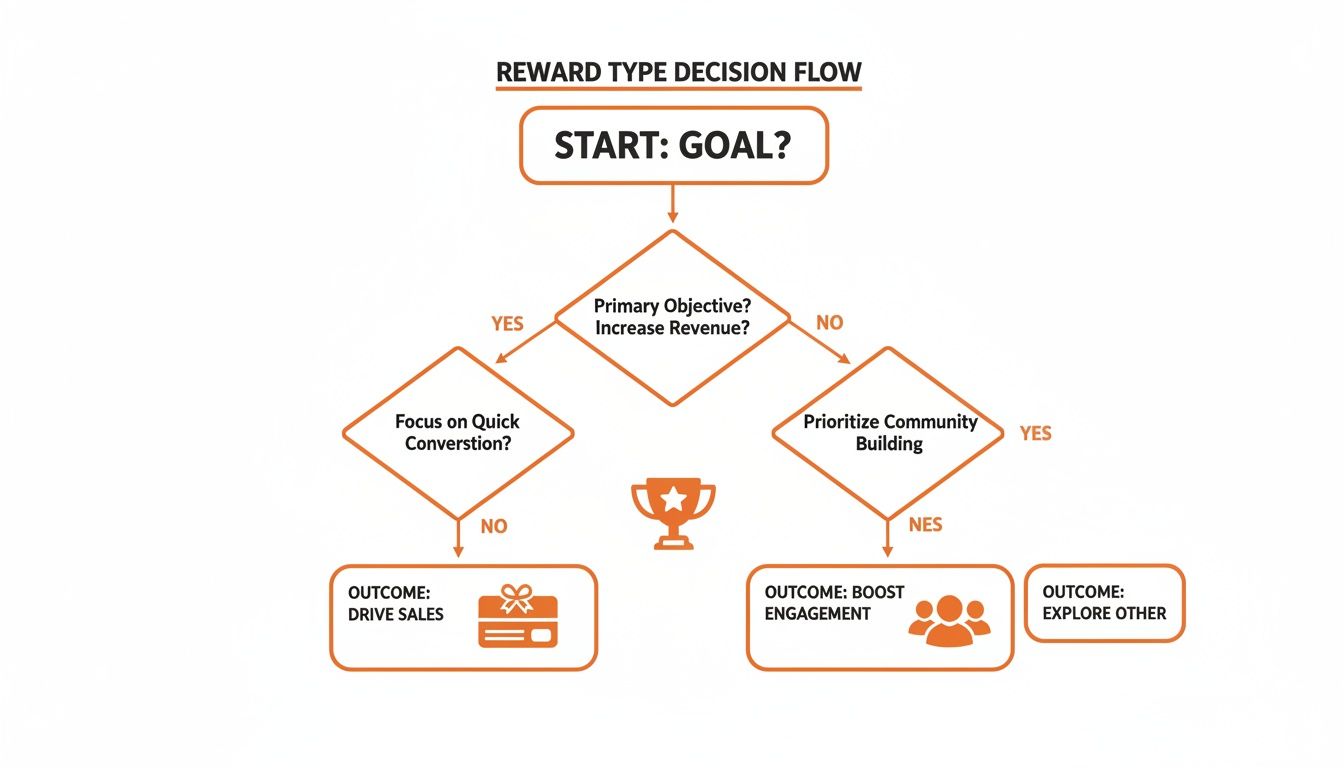
As you can see, if driving direct sales is your main goal, a straightforward reward like a gift card makes sense. But if you’re trying to build a community, perks like early access to new products are often more effective.
The Power of a Soft Launch
Instead of going for a big, splashy launch that puts all the pressure on day one, I always recommend a softer approach. Start by rolling out the program to a small, hand-picked group of people. This could be your internal team, a few of your most dedicated VIP customers, or even a segment of people who purchased in the last 30 days.
A soft launch is your secret weapon for a flawless rollout. It’s a chance to get real-world feedback, squash any bugs, and fine-tune your messaging in a low-risk environment before you open it up to everyone.
During this test phase, be proactive about asking for feedback. Send a quick survey asking things like, "Was it clear how to earn points?" or "Did the rewards feel valuable enough?" Their answers are pure gold. You can use their insights to tweak the user interface, adjust reward values, and polish your promotional emails.
This careful, iterative process ensures that when you're ready for the grand opening, your program is already proven, polished, and ready to succeed.
How to Measure and Optimize Your Program for Growth
Getting your loyalty program live is just the first step. The real magic happens next—the day-to-day management and constant tweaking that separates a program that truly drives growth from one that just sits there. If you’re not measuring, you’re just guessing.
Data is your best guide. By keeping a close eye on the right numbers, you can see exactly what’s resonating with your customers and what’s falling flat. This cycle of measuring, learning, and refining is what will turn a good program into a great one.
Identifying Your Core Program KPIs
You could track a hundred different things, but a few key performance indicators (KPIs) will give you 80% of the story. You don't need a fancy dashboard to start; even a simple spreadsheet can help you monitor the health of your program at a glance.
Make sure you're focused on these essentials:
- Member Enrollment Rate: What percentage of your customers are actually signing up? If this number is low, it’s a red flag. It could mean your value proposition isn't compelling or the sign-up process has too much friction.
- Redemption Rate: This is huge. It shows you the percentage of points being used for rewards. A high rate means you nailed it—your rewards are desirable and people are engaged. A low rate tells you the rewards might be uninspiring or the points needed are just too high.
- Customer Lifetime Value (CLV) of Members: This is the ultimate proof. Are your program members spending more over time compared to non-members? A significantly higher CLV for members is the clearest signal that your program is delivering a real return.
These are just the starting point. For a more exhaustive list, our article on the most important loyalty program KPIs dives much deeper into the metrics that matter.
Using Data to Drive Smart Decisions
Once you have the data, put it to work. Don't let it just collect dust in a report. Use it to ask smart questions and test new ideas. This is how your program evolves from a static feature into a dynamic engine for growth.
A/B testing is one of the most powerful tools in your optimization toolkit. Wondering if a $10 coupon is a better motivator than a free product? Don't guess. Test both offers on different segments of your audience and let the redemption rates tell you which one wins.
Think of your loyalty program as a living product, not a one-time project. You have to continuously gather feedback, analyze what people are doing, and iterate on your rewards to keep things fresh and effective.
Gathering Feedback and Closing the Loop
Numbers tell you what is happening, but direct feedback from your customers tells you why. Never underestimate the power of just asking your members what they think.
Here are a few simple ways to get that crucial feedback:
- Quick Surveys: After a member redeems a reward, send them a short, two-question survey. Ask about their experience and what other perks they’d love to see.
- Targeted Outreach: Send a personal email to your most active members and ask what they love. Then, do the same for your inactive members to find out what’s keeping them away.
- Post-Purchase Prompts: Use your post-purchase emails to do more than just ask for a review. Invite customers to join the program and ask for a quick thumbs-up or thumbs-down on their shopping experience.
This feedback loop is what keeps your program from getting stale. To really understand the financial impact of your efforts, it helps to get familiar with the principles of measuring marketing ROI. This will give you a framework to prove the revenue your program is generating, making it an undeniable asset to your business.
Got Questions? We've Got Answers
Even the best-laid plans come with a few questions. When you’re in the thick of building a customer loyalty program, some practical concerns always seem to surface. Let’s tackle some of the most common hurdles we see merchants face, so you can move forward with confidence.
How Much Should a Small Business Budget for a Loyalty Program?
Figuring out the budget can feel like a shot in the dark, but it doesn't have to be. Your main fixed cost is going to be the monthly subscription for your loyalty platform. Something like Shopify's own app or a dedicated tool like Toki can run anywhere from $29 to several hundred dollars a month, depending on how many features you need and your store's order volume.
Beyond the software, you need to think about the rewards themselves—this is your "points liability." The smartest way to approach this is to tie it directly to your profit margins. Most programs work well when the reward value sits between 1-5% of a customer's purchase value.
My advice? Start on the conservative side. It's much better to launch a profitable, sustainable program and then make your rewards more generous later as you see the ROI, rather than starting too big and having to pull back.
How Do I Promote My Program to Get People to Actually Sign Up?
Turning on your program is just the beginning. If you build it, they won't just come—you have to tell them about it, loudly and clearly. A strong launch is all about creating momentum from day one.
Your existing customer list is gold. Kick things off with an email campaign announcing the new program. Don't just list the features; sell the benefits. A little nudge like offering 50 free points for signing up in the first week can make a huge difference in your initial numbers.
At the same time, use your digital storefront. Get a banner on the homepage and maybe a friendly pop-up that doesn't annoy people. And of course, hit your social media channels with a clear announcement and a link to join.
Here's a pro tip that works wonders: Add a prompt to your post-purchase emails. A simple, "You could have earned 75 points on this order! Join our rewards club now to claim them," catches customers right when they're most excited about their purchase.
The key is making sign-up dead simple and showing people the immediate value. That’s what gets them off the fence.
What Are the Biggest Mistakes to Avoid?
I've seen a lot of loyalty programs stumble right out of the gate. It's rarely for a lack of effort. Usually, it comes down to a few common, and totally avoidable, pitfalls. If you can sidestep these, you're already ahead of the game.
Here’s what you need to watch out for:
- Making it too complicated. If your customers need a PhD in your program to understand how to earn and redeem points, they'll just give up. Keep the rules simple, clear, and intuitive.
- Offering boring rewards. A 5% discount isn't special if you're running sales all the time. Your rewards need to feel exclusive and desirable. Think about early access, unique products, or something that money can't buy.
- Adopting a "set it and forget it" mindset. A loyalty program is a relationship-building tool, not a piece of software you install and ignore. You need to keep communicating. Send point balance updates, announce new ways to earn, and celebrate milestones. Consistent engagement is what keeps your program valuable and top-of-mind for your customers.
Ready to build a loyalty program that customers love and that drives real growth for your business? With Toki, you can launch a beautiful, fully customizable rewards, referral, and membership program on Shopify in minutes. Stop guessing and start growing your brand with a partner built for retention.