Finding the Best Referral Program Software for E-Commerce
Discover the best referral program software for your e-commerce store. Our guide compares features, pricing, and ROI to help you choose the right platform.
When every e-commerce brand is fighting for attention, referral program software can be a game-changer. It gives you a way to turn your most enthusiastic customers into a genuine sales team, bringing in trusted, high-converting leads for way less than what you'd spend on traditional ads. This guide is all about helping you find the right software for your business.
Why Your E-Commerce Store Needs Referral Software
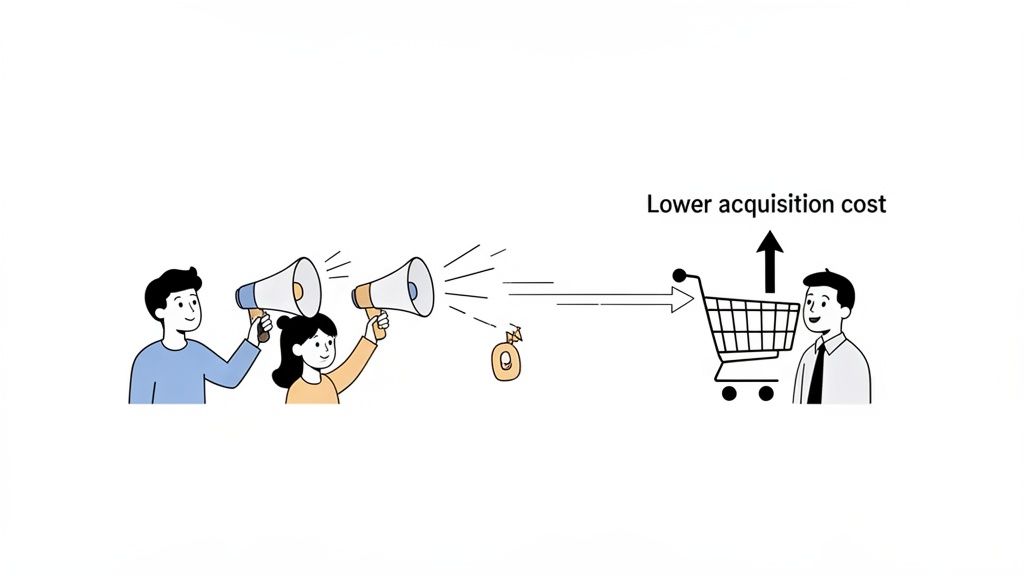
Let's face it: customer acquisition costs (CAC) in e-commerce are always climbing. If you're only relying on paid ads, you're constantly paying rent for an audience. A referral program completely changes that dynamic by tapping into your existing customer base as an organic, and much cheaper, way to get new business.
The idea is straightforward but incredibly effective. Instead of just another ad, you have your happy customers telling their friends and family about their great experience with your brand. That kind of word-of-mouth marketing is golden because it comes with built-in trust. A recommendation from a friend will always carry more weight than a paid promotion.
The Financial Case for Referral Marketing
Referral marketing is far more than just a feel-good strategy; it's a serious revenue generator with a clear financial payoff. The global market for referral management software is booming, jumping from $4.81 billion to $5.69 billion in a single year—that alone shows you how many brands are seeing real results. With projections showing the market hitting $10.82 billion by 2029, it's clear this is a major shift in how companies think about growth.
This rapid growth is fueled by real, measurable outcomes. Customers who come from referrals tend to have a higher lifetime value (LTV) and stick around longer. They show up already trusting your brand, which means they're more likely to make a purchase and become loyal customers themselves.
Turning Customers into Brand Advocates
This is where dedicated software comes in. It automates and scales the entire process, making it seamless for everyone involved. The software handles everything from generating unique referral links to tracking every conversion and sending out rewards instantly. Trying to manage this by hand is a recipe for disaster and can easily lead to mistakes that frustrate your best customers. If you want to get back to basics, you can explore our guide on the meaning of a referral program.
By putting a system behind word-of-mouth, you’re not just hoping for growth—you’re building a predictable, scalable engine for it. Your customers become an authentic extension of your marketing team, actively bringing you new, high-quality buyers.
Looking into how other advocacy models work, like setting up affiliate programs, can also give you a broader perspective on the power of referral software. At the end of the day, the right tool doesn’t just track links; it helps you build a genuine community of advocates who believe in your brand.
Key Features to Evaluate in Referral Software
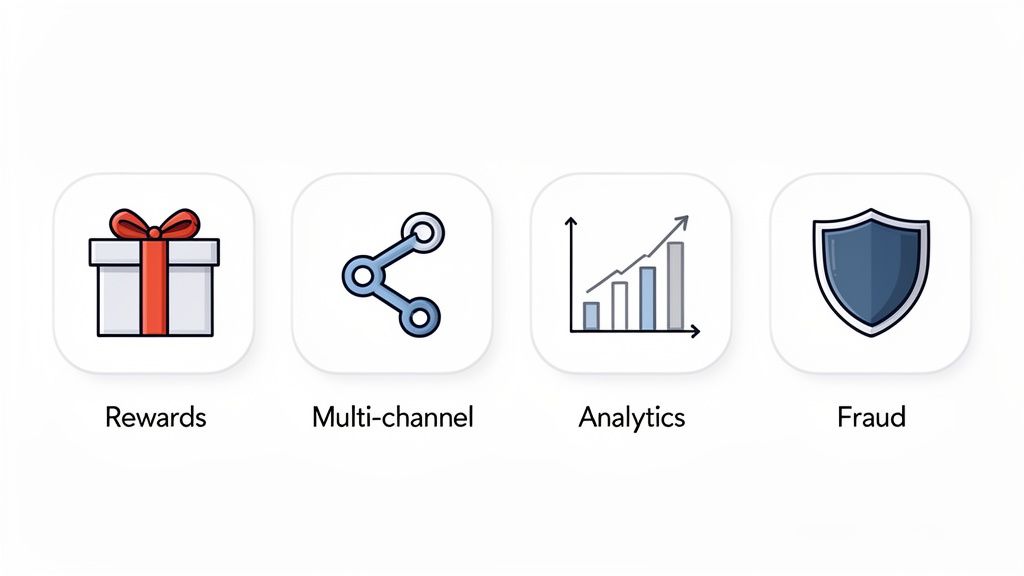
When you're shopping for referral software, it's easy to get distracted by sleek dashboards and long feature lists. But what really matters are the tools that will actually drive growth, make your life easier, and create an experience your customers love. A good platform automates the grunt work, gives you clear data, and makes sharing second nature for your advocates.
Instead of just ticking off boxes on a feature list, think about what problems you're trying to solve. You’re not just managing referrals; you're building a machine to acquire high-value customers with as little friction as possible. Let's break down the must-haves.
Reward Management and Customization
The heart of any referral program is the reward. If your software locks you into a single, rigid incentive, you're dead in the water before you even start. You absolutely need the flexibility to design offers that make sense for your brand and genuinely motivate your customers.
Your software should let you mix and match different reward types. Think about it:
- Percentage discounts are great for getting someone to try a product with a lower price point.
- Fixed amount discounts often feel more substantial and work well for higher-ticket items.
- Cash rewards are a powerful motivator for advocates, plain and simple.
- Store credit is a smart way to keep customers coming back, boosting their lifetime value.
Even better is the ability to create tiered rewards. This is how you turn casual sharers into genuine super-fans, offering them better incentives as they send more business your way. The right software makes setting up these kinds of complex, gamified rules surprisingly simple.
Multi-Channel Sharing and Advocate Experience
Here's the hard truth: if sharing is a hassle, your customers won't do it. People are busy. The software you choose must make sharing feel like a natural, effortless part of their experience with your brand.
That means giving them dead-simple sharing options right where they already are, like their account dashboard or a clean landing page. The essentials include:
- Unique Referral Links: The classic. Easy to copy, easy to share.
- Social Media Integrations: One-click sharing to Facebook, X, WhatsApp, and wherever else your customers hang out.
- Email Templates: Pre-written messages that advocates can fire off to their friends without having to think.
The advocate’s experience is everything. The software should do all the heavy lifting—generating unique codes and tracking links automatically. All the customer should have to do is click a button. A frictionless process is what gets you maximum participation.
Analytics and Performance Tracking
You can't improve what you don't measure. Solid analytics are non-negotiable. Without them, you're just guessing about your program's performance and can't prove its ROI. A simple count of clicks and shares just doesn't cut it; you need to go deeper.
A good analytics dashboard will put your most important numbers front and center:
- Referral Rate: What percentage of your total sales comes from referrals?
- Participation Rate: How many of your customers are actually signed up to refer?
- Conversion Rate: Of all the friends who get referred, how many actually buy something?
- Revenue Generated: The bottom line. How much money is the program bringing in?
The global average referral rate hovers around 2.35%, which shows just how much a well-oiled program can contribute to your revenue. Without clear tracking, you’re flying blind and leaving money on the table.
Fraud Detection and Prevention
As your program gains traction, it will attract cheaters. It’s an unfortunate reality. People will try to refer themselves or use fake accounts to game the system for rewards. Without automated protection, you’ll end up paying out for fake referrals and messing up your data.
This is why effective fraud prevention is a critical feature. Good software automatically flags sketchy activity by looking at things like IP addresses, browser cookies, and email patterns. This lets you step in and block fraudulent referrals before rewards are paid out, protecting your budget and the integrity of your program.
Comparing the Top Referral Software Solutions
Choosing the right referral software isn't just about ticking off features on a list. It's about finding a tool that fits how you operate and where you plan to go. The market really breaks down into three camps: all-in-one loyalty platforms, standalone referral apps, and massive enterprise-level solutions. Each one serves a very different kind of business, and knowing the real-world differences is what separates a smart investment from a future headache.
For anyone running an e-commerce store, especially on a platform like Shopify, the decision usually hinges on how well the tool integrates, how easily it can grow with you, and whether you can actually use it without a team of developers. A simple tool might feel right today but hold you back tomorrow, while an overly complex system is just a waste of resources for a growing brand. Let's break down how these options stack up in the real world.
All-In-One Loyalty Platforms
Think of an all-in-one platform like Toki as a complete customer loyalty toolkit. The core idea is that referrals aren't a siloed activity; they're one piece of a much larger puzzle that includes points, VIP tiers, and paid memberships. By bringing everything under one roof, these platforms create a seamless experience where customers are rewarded for all the ways they engage with your brand.
The biggest win here is having all your data in one place. You're not guessing which customers are your best advocates—you can see exactly which VIP members are also driving the most referrals. This allows you to create incredibly effective, targeted campaigns that feel personal. It's a huge leap from trying to patch together reports from two or three different apps.
For a Shopify merchant, an all-in-one platform just feels right. It plugs straight into your store and acts like a native feature, not some clunky add-on. This deep integration makes everything from issuing rewards to managing customer accounts a breeze.
This model is perfect for brands obsessed with customer lifetime value (LTV). You're not just rewarding a single transaction; you're building a community and encouraging a whole spectrum of positive behaviors.
Standalone Referral Apps
Standalone referral apps are specialists. They do one thing—run your referral program—and they’re usually very good at it. These tools are built for speed and simplicity, letting you get a basic word-of-mouth campaign off the ground in no time.
Their focused design is their greatest strength. The dashboard is clean, showing you only the metrics that matter for referrals: share rates, clicks, and conversions. If your only goal is to launch a referral program right now without getting bogged down in other loyalty features, this straightforward approach is incredibly appealing. It’s a fantastic entry point into advocacy marketing.
But that specialization has a downside. What happens when you decide you want to add a points system or a VIP program? You’re back to square one, searching for another app. This leads to a choppy customer experience and data that lives in separate silos. Imagine your customers having to log into one portal for their referral rewards and another for their loyalty points—it’s a recipe for confusion.
Enterprise-Level Solutions
Enterprise solutions are the heavy machinery of the referral world. These are built for huge, complex companies with very specific needs, like coordinating online and brick-and-mortar stores, operating across multiple countries, or requiring deep, custom integrations. They offer incredible power and flexibility, but it comes with a hefty price tag and a long setup process.
What really sets enterprise tools apart?
- Advanced API Access: Lets you connect the software to your company’s custom-built CRM, ERP, or other internal systems.
- White-Labeling: You can completely rebrand the software so it looks and feels like it was built in-house.
- Dedicated Support: You’ll likely get a dedicated account manager to hold your hand through implementation and beyond.
Honestly, for most e-commerce brands, even fast-growing ones, this is overkill. Implementation can take months and requires a significant budget for developer time. These platforms are really meant for massive corporations that have completely outgrown what all-in-one platforms and standalone apps can offer.
It's no surprise that more businesses are turning to software to manage this. The global referral market is projected to skyrocket to $7.24 billion by 2031, growing at a compound annual rate of 19.5%. This explosive growth shows just how much brands are relying on automated tools to scale their word-of-mouth marketing. You can dive deeper into the growth of referral marketing automation to see the full picture.
To help you visualize where your business fits, here’s a straightforward comparison of the three main software types.
Referral Software Feature Comparison Matrix
| Feature Category | All-in-One Platforms (e.g., Toki) | Standalone Referral Apps | Enterprise-Level Solutions |
|---|---|---|---|
| Primary Goal | Maximize customer LTV through a unified loyalty experience. | Launch a focused, high-performing referral program quickly. | Solve complex, large-scale advocacy challenges with custom builds. |
| Integration | Deep, native integration with e-commerce platforms like Shopify. | Basic integration, often through a simple app install. | Custom API-driven integration requiring developer resources. |
| Scalability | Designed to scale with brand growth, adding more loyalty features. | Limited scalability beyond the core referral function. | Built for massive scale and complex organizational structures. |
| Ease of Use | Generally intuitive, designed for marketers to manage. | Extremely easy to set up and manage for basic programs. | Complex, often requires a dedicated team to operate. |
| Best For | E-commerce brands wanting a complete, integrated loyalty and referral system. | Startups or businesses needing a simple, fast referral solution. | Large corporations with omni-channel needs and developer teams. |
Ultimately, the table shows there's no single "best" solution—only the best fit for your business's current needs and future ambitions.
Choosing the Right Software for Your Business Size
The "best" referral program software isn't some universal, one-size-fits-all solution. It’s the one that fits your business right now, with a little room to grow. A tool that works wonders for a scrappy startup could easily become a clunky, expensive mistake for a multi-location enterprise.
Making the right call is all about being honest about your immediate needs while also thinking about where you'll be in the next year or two. This mindset helps you sidestep the classic pitfalls: either paying a fortune for features you won’t touch or picking a cheap tool you'll outgrow in six months. The goal is to match the software's muscle to what your business can actually handle.
To help you figure this out, here’s a simple decision tree based on your current business stage.
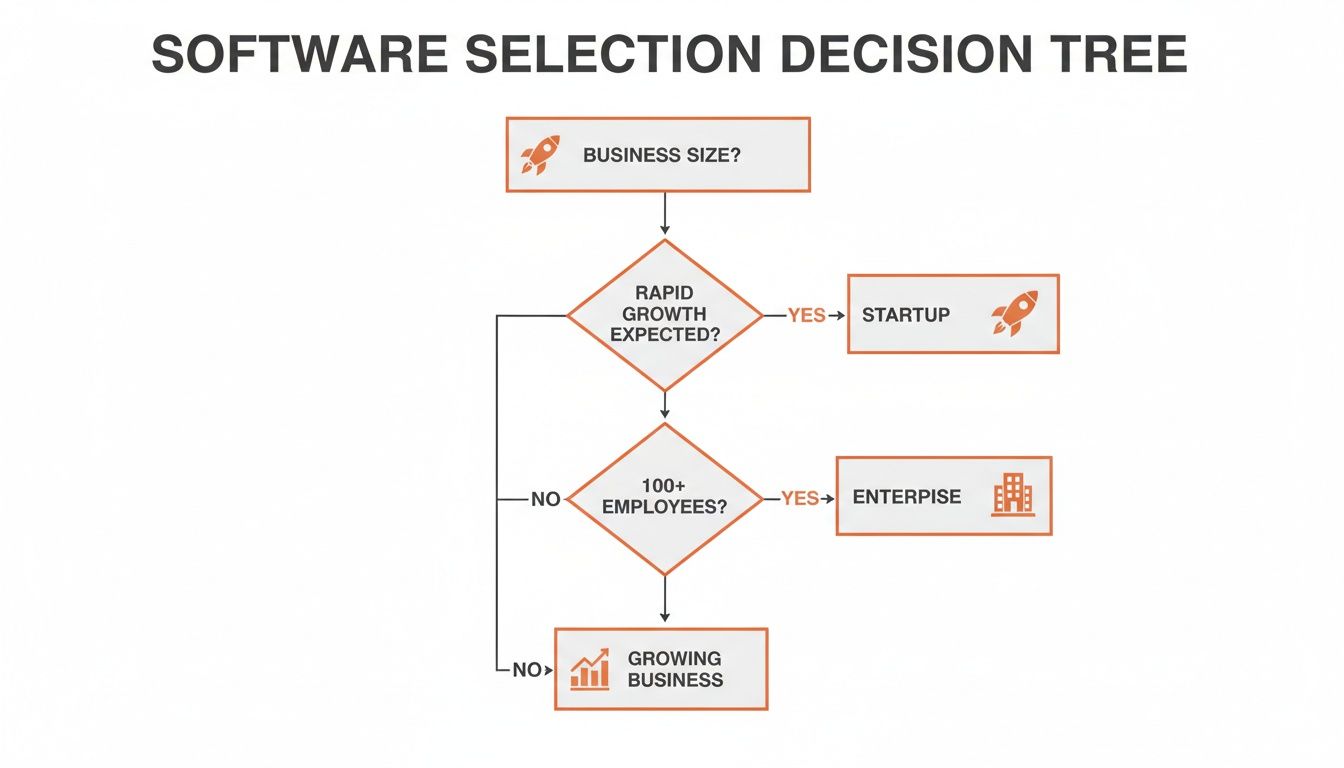
This visual guide breaks down how different business stages, from startups to enterprise-level companies, have very different needs. It’s designed to point you toward a solution built for your specific challenges.
For Startups and Budget-Conscious DTC Brands
When you’re a new direct-to-consumer (DTC) brand or an early-stage startup, your focus is laser-sharp: you need speed, simplicity, and something that won't break the bank. Your mission is to get your product validated and build some initial buzz without getting lost in complicated software or high monthly fees.
You need a tool you can get up and running in an afternoon, not a month. This is where a standalone referral app shines. These tools are built to do one thing and do it well: launch a functional referral program, fast. They give you the absolute essentials—unique referral links, basic tracking, and automated rewards—without the overwhelming complexity of a massive platform.
This approach lets you dip your toes into referral marketing and generate some word-of-mouth with a tiny upfront investment. Given the low cost and high potential return, it's no surprise that the referral marketing software market is seeing huge growth in the small and medium-sized e-commerce space.
For Fast-Growing Shopify Stores
Once your Shopify store is past the launch phase and hitting a growth spurt, your needs start to change. You're not just chasing your first referrals anymore; you're focused on maximizing customer lifetime value (LTV) and building a genuine community. At this point, trying to manage separate apps for referrals, loyalty points, and reviews just becomes a headache. It's inefficient and creates a messy experience for your customers.
This is the perfect time to level up to an all-in-one loyalty platform. These systems, like Toki, bring your referral program into a complete loyalty ecosystem.
- Unified Experience: Customers can check their referral rewards, loyalty points, and VIP status all in one place. No more confusion.
- Deeper Insights: You get a 360-degree view of your best customers. You can finally see who your top advocates are and how they engage with your other loyalty programs.
- Increased Engagement: By rewarding customers for more than just referrals (like making repeat purchases or leaving reviews), you build much stronger brand loyalty.
For a growing e-commerce brand, an all-in-one solution isn't just a tool; it's a strategic investment. It shifts your referral program from a simple tactic into a core piece of your customer retention engine, driving real, long-term growth.
For Established Omni-Channel and Enterprise Brands
Large, established brands play a completely different game. You’re likely managing a thriving e-commerce store alongside a network of physical retail locations. Your customer data is probably scattered across different systems—your POS, your CRM, your marketing platform—and any new software has to plug into this complex tech stack without causing chaos.
For businesses operating at this scale, an enterprise-level solution is really the only way to go. These platforms are engineered for complexity and deep customization. They offer powerful APIs that allow for custom integrations with your existing infrastructure, ensuring customers get the same seamless brand experience online and in-store. Features that might be "nice-to-haves" for smaller brands, like advanced fraud detection, multi-currency support, and full white-labeling, become non-negotiable.
Of course, this kind of software demands a significant investment and a dedicated team to implement and manage it. But for a large organization, it’s the only practical way to run a referral program across multiple channels and global markets while keeping your data and branding perfectly consistent.
Bringing It All Together: Unifying Referrals with a Full Loyalty Ecosystem
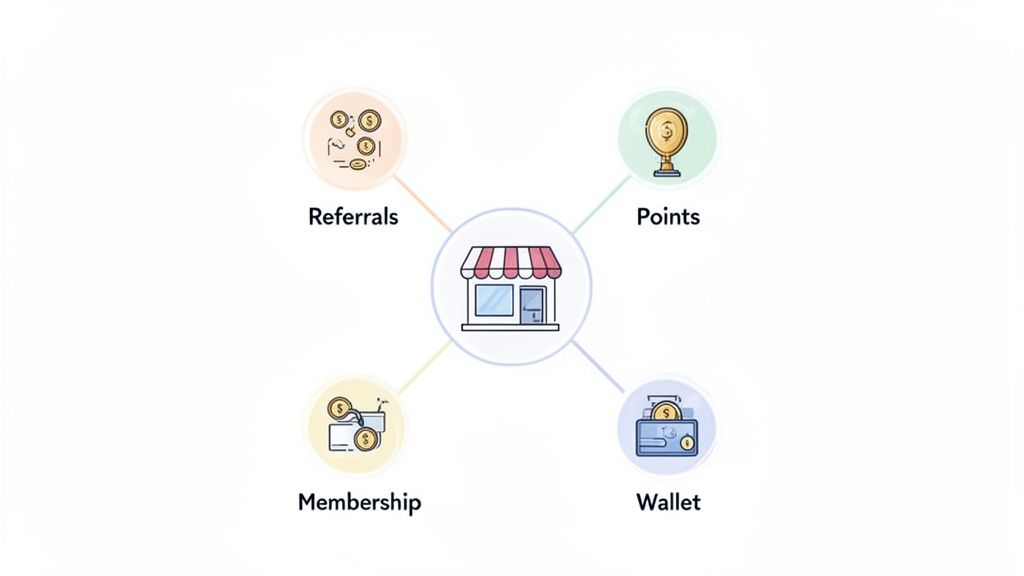
It’s easy to think of a referral program as just another marketing channel, a standalone tactic to get new customers. But that’s a pretty limited view. You unlock the real power of word-of-mouth when you weave it into a complete loyalty ecosystem. Instead of just rewarding a single referral, you create a seamless experience that recognizes all the ways a customer shows their support.
This approach shifts the focus from one-off transactions to building a real community of advocates. When customers can earn rewards not just for referrals but also for repeat purchases or by joining a paid membership, their connection to your brand goes much deeper. It’s no longer just about the deal; it’s about the relationship.
Building a Cohesive Customer Experience
The most effective referral software doesn't operate in a vacuum. It’s usually part of a larger platform that pulls all your loyalty initiatives together under one roof. Think about it from the customer's perspective—they shouldn't have to jump between different systems to check their referral status and their loyalty points. That’s just clunky.
Imagine a single dashboard where a customer can see everything at a glance:
- Referral Rewards: The status of their shared links and any credits they’ve earned.
- Points Balance: All the points they've racked up from buying, leaving reviews, or social follows.
- Membership Tier: The exclusive perks they get from their paid membership.
- Digital Wallet Pass: A simple way to pull up their loyalty status on their phone.
This unified model, which you'll find in platforms like Toki, makes it feel effortless and natural for customers to engage with your programs. It's a cornerstone of solid customer retention strategies because it makes every interaction feel more valuable. To see how these pieces fit together, you can learn more about how to offer a referral program within your loyalty program.
When referrals are part of a broader loyalty ecosystem, they become a natural extension of a customer’s overall brand journey. This creates a powerful flywheel effect where one positive engagement—like a successful referral—encourages others, like making another purchase to use the reward points.
The Power of Omni-Channel Integration
For any modern e-commerce brand, the customer journey is all over the place. Someone might find your product on Instagram, buy it from your Shopify store, and later visit a physical pop-up. An integrated loyalty ecosystem delivers a consistent experience across every single one of those touchpoints.
This is where seamless integration is absolutely non-negotiable. The right platform has to plug directly into your e-commerce backend (like Shopify) and your point-of-sale (POS) systems. This lets customers earn and redeem rewards whether they're shopping online or standing in your store, effectively breaking down the barrier between your digital and physical storefronts.
For example, a customer could refer a friend online and then walk into a retail location to spend their reward credit. That kind of omni-channel flexibility doesn't just make for a better customer experience; it gives you a complete, 360-degree view of your best advocates. You can see their entire history, not just bits and pieces, which is gold for personalization and future marketing. It’s this holistic view that truly separates a good referral program from a great one.
Measuring Your Referral Program ROI
Getting your referral program up and running is one thing, but proving it’s actually working is where the real work begins. To justify the investment in your software, you need a smart implementation plan and a rock-solid way to measure your return on investment (ROI). Success doesn't just happen; it's built on strategic execution and obsessive tracking.
Your first move is a smooth rollout. This is more than just flipping a switch—it’s about getting your existing customers on board. Use targeted email campaigns and on-site notifications to announce the program. Make sure you clearly explain the rewards and make it ridiculously easy for them to find and share their unique referral link. A great launch is all about high visibility and zero friction.
Defining Your Key Performance Indicators
Once you're live, your entire focus needs to shift to measurement. If you're not tracking the right metrics, you’re flying blind. The best referral program software gives you an analytics dashboard to monitor the KPIs that actually matter to your business.
These are the essential metrics to watch from day one:
- Referral Rate: What percentage of your total sales comes directly from referrals? The global average hovers around 2.35%, which gives you a solid benchmark to see how you stack up.
- Conversion Rate: This number tells you how many of those referred friends actually pull the trigger and make a purchase. A high conversion rate means your rewards are hitting the mark and the leads are high quality.
- Customer Lifetime Value (LTV): Are referred customers more valuable over time? You should be tracking the LTV of referred customers against your non-referred ones. Often, you'll find they are more loyal and spend more, which is a huge data point for proving long-term ROI.
Monitoring these metrics isn’t about creating pretty reports. It’s about making smart, informed decisions. If participation is low, you might need to promote the program more. If the conversion rate is weak, your friend offer probably isn’t compelling enough.
From Data to Optimization
Think of your analytics dashboard as your mission control for tweaking and improving performance. For example, if you see that advocates sharing via WhatsApp are bringing in better customers, you can redesign the user interface to make that sharing option more prominent. This is how you turn a static feature into a dynamic growth engine.
When you measure effectively, you can clearly demonstrate how your referral initiatives contribute to the bottom line. By linking referral activity directly to sales and LTV, you can show stakeholders exactly how word-of-mouth is driving real, sustainable growth. For a much deeper dive into the specific data points you should be watching, check out our complete guide on referral program tracking. It will help you turn raw numbers into insights you can actually use.
Frequently Asked Questions
When you're digging into referral marketing software, a few common questions always pop up. Here are some straight answers based on what we've seen work time and time again.
How Long Until I See Results?
This is the big one, right? While every launch is a bit different, you should start seeing early traction—like advocates signing up and sharing links—within the first few weeks if you promote it well.
As for actual sales, those usually start trickling in and then building momentum over the first 3 to 6 months. It takes a little time for your customers to get familiar with the program and start talking.
What Are the Best Referral Incentives?
Honestly, the best incentives are the ones your customers actually want. If you sell products people buy often, a simple percentage or fixed-amount discount on their next purchase is a great, low-friction reward.
But for bigger-ticket items, cash or a hefty store credit can be a much stronger motivator. Think about what would get you to refer a friend.
The key is making the reward feel worthwhile. As a rule of thumb, aim for a reward that's at least 10% of your average order value for both the person referring and their friend. Anything less can feel a bit underwhelming and might not be enough to get people to act.
Can Referral Software Prevent Fraud?
Absolutely, and it's a non-negotiable feature. Any decent platform will have built-in fraud prevention tools. They're designed to automatically catch and flag shady behavior, like someone trying to refer themselves from the same computer or using a bunch of disposable email addresses.
This isn't just about saving money; it's about protecting the integrity of your program's data so you can trust the results you're seeing.
Ready to turn your loyal customers into your most powerful growth engine? With Toki, you can launch a complete, unified loyalty and referral program that drives real results. Explore how Toki can elevate your e-commerce brand today.