Referral program meaning: How it fuels growth and loyalty
Learn the true referral program meaning and how to turn word-of-mouth into growth, lower costs, and loyal customers.
At its heart, a referral program is a simple, powerful idea: you reward your existing customers for bringing you new ones. It’s a formalized way to turn your happiest buyers into your most effective salespeople—your brand advocates.
This isn't just about hoping for word-of-mouth; it's about actively encouraging it with a clear, easy-to-follow system.
Understanding the Referral Program Engine
Think of a referral program as a structured, supercharged version of a friend's recommendation. Instead of leaving it to chance, you give customers a reason and a simple way to share their love for your brand. This builds a powerful, self-sustaining growth engine fueled by genuine trust.
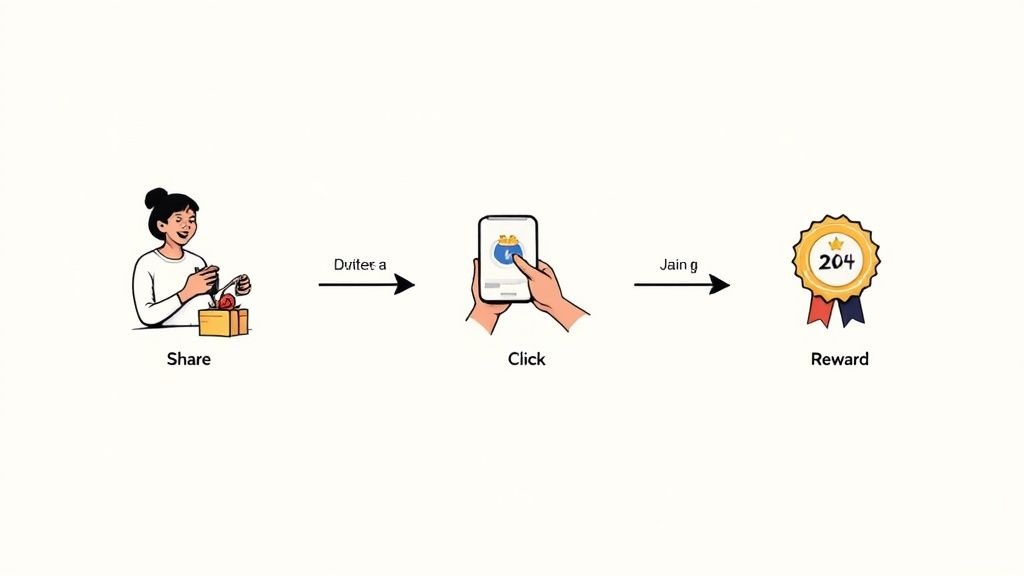
The process is refreshingly straightforward and usually follows a three-step cycle:
- Share: An existing customer (the advocate) shares their unique referral link or code with a friend.
- Click: The friend uses that link or code to make their first purchase, usually getting a nice welcome discount.
- Reward: As soon as the friend’s purchase is confirmed, the original advocate gets a reward—maybe store credit, a discount on their next order, or even a free product.
The Win-Win-Win Scenario
What makes this model so effective is that everyone benefits. Your business gets a new customer at a very low cost. The new customer feels good about getting a deal on their first purchase. And your loyal advocate gets a tangible thank you for their support.
It all boils down to trust. A recommendation from a friend will always carry more weight than a flashy ad. This is a core component of modern growth marketing strategies that prioritize authentic, customer-driven expansion over expensive, broad-stroke advertising.
The numbers don't lie. Referred customers have a 37% higher retention rate and their lifetime value is often 16% higher than customers who find you through other channels.
A referral program transforms your customer base from passive buyers into an active, motivated sales force. It’s not just about acquiring new leads; it’s about acquiring the right new leads—those who are already primed to trust and value your brand because someone they know does.
This strategy is a cornerstone for building a real community around your brand. By rewarding customers for their advocacy, you strengthen their connection to your business and give them a reason to keep shouting your name from the rooftops. To dig deeper into this, it's worth understanding what is customer advocacy and the role it plays in long-term success.
Why Referral Programs Outperform Traditional Ads
While traditional advertising is like shouting your message from a billboard, a referral program is more like a trusted conversation between friends. It’s no wonder so many businesses are shifting their focus—and their budgets—away from expensive ads and towards programs that turn happy customers into their best salespeople.
The reason is simple: referrals work because they're built on genuine trust.
Think about the last time you saw a banner ad. You instantly knew a company paid for that placement. But what happens when a friend raves about a new product they love? That recommendation cuts through all the marketing noise. This is the power of social proof at play; we're wired to trust people we know over a faceless corporation. A classic Nielsen report backs this up, finding that a staggering 92% of consumers trust recommendations from friends and family above all else.

Driving Higher Quality Customers
This foundation of trust delivers real-world results that ads just can't compete with. Referral programs don't just bring in more customers; they bring in better ones. A referred customer shows up already pre-sold, with a positive impression and a solid idea of what your brand is all about. They’re a much better fit from the get-go.
This translates directly to a healthier bottom line. Customers who come from referrals consistently show:
- A lower Customer Acquisition Cost (CAC) because your main expense is a reward, not a pricey ad campaign.
- A higher Customer Lifetime Value (LTV), as they tend to spend more and come back for repeat purchases.
- Better retention rates. Some studies show referred customers are 37% more likely to stick around.
A referral program isn't just a marketing tactic; it's a community-building tool. It creates a powerful feedback loop where happy customers are incentivized to share, which in turn brings in more ideal customers who are likely to become advocates themselves.
Let's break down how this stacks up against old-school advertising.
Referral Programs vs Traditional Advertising
Here’s a side-by-side comparison that makes the advantages crystal clear.
| Metric | Referral Program | Traditional Advertising |
|---|---|---|
| Foundation | Built on genuine trust and personal relationships. | Based on paid reach and brand-to-consumer messaging. |
| Cost | Performance-based; you only pay for successful conversions. | High upfront costs with no guarantee of results. |
| Trust Factor | Extremely high due to social proof. | Generally low; consumers are often skeptical of ads. |
| Targeting | Hyper-targeted; customers refer like-minded friends. | Broad and often imprecise, leading to wasted ad spend. |
| Customer LTV | High, as referred customers are more loyal. | Varies, but typically lower than referred customers. |
| Conversion Rate | Significantly higher because of the warm introduction. | Lower, as it relies on a "cold" approach. |
As you can see, referrals create a much more sustainable and cost-effective growth channel.
The Financial and Brand Impact
The economic case for referrals is a no-brainer. Instead of pumping money into ad platforms where costs are always rising, you’re investing directly back into your most loyal customers. This move not only slashes your acquisition costs but also deepens customer loyalty by making them feel like true partners in your brand's success.
This strategic shift is the real meaning behind a referral program. You stop paying for fleeting attention and start earning lasting trust. In doing so, you build a growth engine that gets more powerful with every single customer you delight.
Referral vs. Affiliate Marketing: What's the Difference?
It’s easy to get referral and affiliate programs mixed up. After all, they both involve other people driving sales for your brand. But they operate on completely different playing fields, and confusing the two can mean a misaligned strategy and wasted effort.
Think of it this way: a referral program is all about personal relationships. It's built for your actual customers—the people who already love what you do. It’s like a friend telling you about their favorite coffee shop because they genuinely think you'll love it too. The core motivation is authentic, word-of-mouth advocacy.
An affiliate program, on the other hand, is built for marketers. It's a performance-based partnership. This is the professional food blogger who writes a detailed review of that same coffee shop and earns a cash commission for every new customer they send through the door. The motivation here is primarily financial.
Key Distinctions in Motivation and Rewards
This fundamental difference in why people share shapes everything else, from who participates to how they're rewarded.
A referral program taps into your existing base of happy customers who want to share a brand they trust with their inner circle.
- Participants: Your loyal customers—the folks who already know and love your products.
- Relationship: The foundation is personal trust. A friend recommends a product to another friend.
- Rewards: The incentives are usually tied back to your brand, like store credit, discounts, or free products. A classic example is the "Give $20, Get $20" model, which encourages both the new and existing customer to keep shopping with you.
Affiliate marketing is a more formal, business-to-business arrangement. You partner with individuals or companies (the affiliates) who promote your products to their own audience. The relationship is commercial, not personal. They are essentially a commissioned, external sales team.
Affiliate programs are designed to operate at a larger, more transactional scale. Affiliates could be bloggers, influencers, or publishers who may or may not be customers themselves. Their real skill is marketing, not necessarily a deep personal connection to the brand.
- Participants: Professional marketers, influencers, content creators, and publishers.
- Relationship: It's a performance-based and transactional partnership focused on driving traffic and sales.
- Rewards: The payout is almost always a cash commission or a set percentage of the sales they generate. This structure is designed to incentivize high-volume performance.
So, which one is right for you? It really boils down to your goals. If you want to tap into the immense power of authentic, trusted recommendations from your most loyal fans, a referral program is the way to go. If your goal is to broaden your reach through performance-based marketing partnerships, an affiliate program is the right tool for the job.
Tracking the Metrics That Actually Matter
So, you've launched your referral program. Great. But launching it and walking away is like steering a ship out of the harbor and then abandoning the wheel. You're moving, sure, but are you headed in the right direction? To really know if your program is working, you have to look at the numbers that tell the real story.
We're not talking about vanity metrics. We need to get into the key performance indicators (KPIs) that give you a clear picture of your program's health. By keeping a close eye on these, you can spot what's not working, lean into what is, and make smart decisions that actually grow your business.
Core Referral Program KPIs
I like to think of a referral program's performance as a story told in three parts. Each metric reveals a different chapter, and together, they show you the entire customer journey from advocate to new sale. For a really detailed look at the setup, there are some great guides on referral program tracking that can walk you through the nitty-gritty.
Here are the three essential KPIs you absolutely need to monitor:
-
Participation Rate: This is simple: what percentage of your customers have actually signed up to be an advocate? If this number is low, it’s a big red flag. It might mean your program is buried on your website or the initial reward just isn't exciting enough to get people to join.
-
Share Rate: Okay, so they've signed up. Now what? The share rate tells you what percentage of those participants are actually sharing their referral link or code. This number is a direct reflection of how motivated your advocates are. A low share rate could mean the process is clunky or your advocates need a little nudge.
-
Conversion Rate: This is the moment of truth. Of all the shared links and codes sent out into the world, how many of them turned into a successful purchase from a new customer? You might have a fantastic share rate, but if conversions are low, it often points to one thing: the deal you're offering the friend isn't compelling enough for them to act on.
By looking at these three metrics together, you can diagnose exactly where your referral funnel is leaking. Is the problem getting people in the door? Getting them to talk? Or closing the deal with their friends?
Ultimately, tracking these numbers is about proving your program's value. Understanding the financial return is a huge part of this. To get a handle on the bigger picture, it’s worth learning how to calculate marketing ROI for all your campaigns. This ensures your referral strategy isn't just a "nice-to-have," but a real contributor to your bottom line.
Launching Your First Customer Referral Program
Alright, let's move from theory to action. This is where the real growth happens. Getting your first referral program off the ground isn't as daunting as it sounds. The secret is to build a simple, rewarding, and super easy-to-use system that your happiest customers will actually want to use. Think of it as a natural extension of the great experience they already have with your brand.
First things first, you need to know what you're aiming for. Is the goal to bring in 100 new customers this quarter? Or maybe you want to strengthen the bond with your existing brand advocates? Nailing down a clear, measurable goal will be your North Star for every decision that follows, from the rewards you choose to how you get the word out.
Crafting an Irresistible Two-Sided Incentive
The engine of any great referral program is the reward. What’s in it for them? I’ve found that the most powerful approach is a two-sided incentive, where both the person doing the referring (your advocate) and their friend (the new customer) get something. It’s a classic win-win that makes everyone feel good and dramatically increases the odds of people participating.
A go-to model that works like a charm is "Give 20%, Get 20%". The new customer gets an instant 20% off their first order, which is a fantastic nudge to get them to buy. In return, your advocate gets a 20% discount on their next purchase, giving them a reason to come back. This simple structure creates a powerful cycle of new customers and repeat business.
The best incentives are valuable to your customers but sustainable for your business. They should feel less like a transaction and more like a genuine thank you for spreading the word.
Making the Sharing Experience Effortless
Even the most amazing reward won't move the needle if sharing feels like a chore. The goal here is to remove every possible bit of friction. Your customers have a million things to do, so you need to make it possible for them to share your brand in just a few seconds.
This is where smart design and a little automation make all the difference. Here are a few must-haves for a frictionless sharing process:
- One-Click Sharing: Build in buttons that let advocates blast their unique link or code straight to social media, WhatsApp, or email with a single tap.
- Pre-Written Messages: Give them a ready-to-go message they can use as-is or tweak. This eliminates the "what should I say?" roadblock.
- A Clear Dashboard: Give your advocates a simple place to see how many friends they've referred, who has made a purchase, and what rewards they've racked up.
The flow chart below breaks down just how simple this journey should be—from a customer joining the program to sharing, and finally, to a successful conversion.
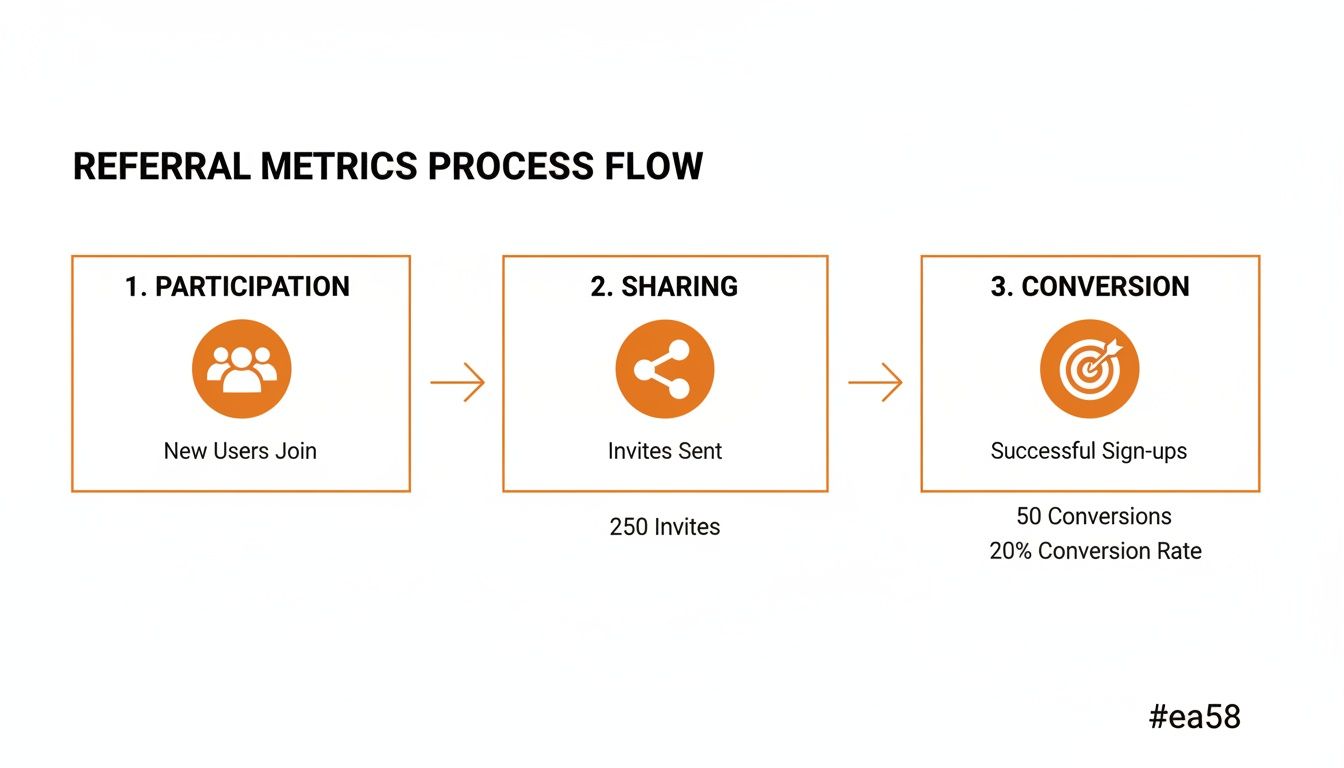
As you can see, each step needs to be optimized to gently guide people toward that final conversion.
Promoting Your Program Effectively
A referral program that nobody knows about is just a nice idea. You have to promote it. A great starting point is to announce the launch with a dedicated email campaign to your most loyal customers—they’re the ones most likely to bite. From there, weave promotional messages into the entire customer journey. Think post-purchase thank-you pages, order confirmation emails, and customer account dashboards. For a deeper dive, our guide on building a successful refer-a-friend program has even more ideas.
It's fascinating to see this model work in other areas, too, like employee recruitment. It turns out that around 69% of employers run formal employee referral programs for a good reason: they're a top source for quality hires. Some data even shows that 82% of employers rate referrals as their number one source for ROI. It just goes to show that the core principle of leveraging trusted relationships is a powerful one, whether you're looking for new customers or new team members.
Your Top Referral Program Questions, Answered
Alright, so you get the concept, but when the rubber meets the road, a ton of practical questions can come up. It's one thing to understand the 'why' and another to nail the 'how.' Let's walk through some of the most common questions we hear from merchants who are ready to get their first referral program off the ground.
Getting these details right is what separates a program that fizzles out from one that becomes a genuine growth engine for your store.
What’s the Best Incentive to Offer?
Hands down, the most effective incentive is almost always a two-sided reward. This means both the person referring (your current customer) and the person being referred (the new customer) get something valuable.
For e-commerce, the "Give 20%, Get 20%" or "Give $10, Get $10" models are classics for a reason—they work. This structure creates a win-win scenario where your advocate feels generous for giving a discount, and the new customer feels welcomed with a special offer.
The trick is finding the sweet spot between what feels like a great deal to your customers and what’s still profitable for you. Don't overlook non-cash incentives, either. Things like store credit, a free product, or early access to a new collection can actually outperform cash rewards because they tie the value directly back to your brand and encourage another purchase.
How Do I Actually Promote My New Program?
You can't just build it and hope they come. A successful launch requires a proactive and consistent promotion strategy. The moment your program goes live, kick things off with a dedicated email announcement to your entire customer list. Pay special attention to your most loyal, repeat buyers—they're your most likely advocates.
After that initial push, weave the program into the very fabric of the customer journey:
- Stick a banner on your homepage so it's one of the first things visitors see.
- Add a permanent link to the customer account dashboard.
- Show a pop-up or a message on the order confirmation page, right when customers are feeling good about their purchase.
Keep the momentum going by mentioning it in your regular email newsletters and social media posts. The goal is simple: make it impossible for your happy customers to miss the opportunity.
Can a Referral Program Really Work for a Brand-New Business?
Absolutely. In fact, it might be one of the smartest moves a new business can make. Your very first customers are often your most passionate supporters. A referral program gives them a concrete way to channel that enthusiasm and tell their friends.
Think about it: this strategy helps you build an early customer base of people who are a perfect fit for your brand, because they were brought in by others just like them. It’s a powerful, trusted, and incredibly cost-effective way to acquire new customers when your marketing budget is tight and every dollar counts.
A referral program turns your earliest, most enthusiastic customers into a volunteer sales force, creating authentic growth right when you need it most.
How Is a Referral Program Different from a Loyalty Program?
This is a great question, and the distinction is key. While they both reward customers, they serve two different primary goals.
- A referral program is all about customer acquisition. It rewards your current customers for one specific action: bringing new people to your brand.
- A loyalty program is all about customer retention. It rewards customers for their own repeat business and engagement, like making purchases, writing reviews, or following you on social media.
They aren't competing ideas; they're two sides of the same coin. The most successful brands often run both in parallel. This creates a powerful flywheel effect, rewarding customers for sticking around and for spreading the word, which maximizes customer lifetime value from every possible angle.
Ready to turn your customers into powerful brand advocates? With Toki, you can launch a fully automated referral program and a comprehensive loyalty system in minutes. Stop leaving growth on the table and start rewarding the customers who love you most. Learn more about Toki's all-in-one loyalty platform and build lasting relationships that drive repeat sales.