A Guide to Stores With Rewards Programs That Build Loyalty
Discover how top stores with rewards programs drive customer loyalty. Learn to design, launch, and measure a program that grows your business.
Stores with rewards programs aren't just a nice little perk anymore. They've become a core part of how smart businesses build real, lasting relationships with their customers and keep them coming back. We've moved way beyond simple punch cards into a world of sophisticated systems that make customers feel seen and genuinely valued.
Why Smart Retailers Invest in Customer Loyalty
Ever notice how almost every successful store you frequent has some kind of rewards program? It’s not just about tossing out random discounts. Today’s loyalty programs are powerful, data-driven engines at the heart of customer retention. The whole idea is built on a simple but powerful psychological truth: people want to feel like they matter.
When someone signs up for your program, the dynamic changes. It’s no longer just a transaction; it’s the beginning of a relationship. Forget the flimsy paper punch cards of the past. Modern strategies are all about turning a one-time buyer into a true fan of your brand. A well-crafted program gives customers a solid reason to choose you over a competitor, even if your prices aren't always the lowest.
The Psychology of Belonging
At their core, the best loyalty programs tap into our basic human need to belong. They make members feel like insiders who get special access and perks that others don't. This emotional connection is the secret sauce that separates a decent program from an unforgettable one. It’s what keeps a customer coming back for years, not just for one purchase.
This isn't just a feel-good strategy; it’s a smart investment that pays off big time by increasing a customer's lifetime value. It also creates a powerful competitive advantage that’s incredibly difficult for others to copy. In fact, loyalty programs are a cornerstone of effective customer retention marketing strategies that help retailers build solid, long-term relationships.
A loyalty program is more than a marketing tactic; it's a direct conversation with your most valuable customers, telling them, "We see you, we appreciate you, and we want you to stick around."
The Economic Impact of Loyalty
The numbers here are staggering, and they're only getting bigger. Loyalty programs are a massive economic driver in retail. The global market is currently valued at around $93.8 billion and is growing at an incredible compound annual rate of 17.8%. Experts predict the market will balloon to over $155.2 billion as more programs go digital and start using AI to personalize the experience. You can see the full breakdown in the global loyalty programs market intelligence report.
This massive growth highlights a critical reality for any modern retailer: finding a new customer costs a whole lot more than keeping an existing one happy. When you invest in loyalty, you're not just giving things away. You're building a reliable, sustainable engine for your business's growth. To really get into the weeds on this, you can learn more about the specific benefits of a loyalty program in our detailed guide.
Understanding the Different Types of Rewards Programs
Not all loyalty programs are created equal. Choosing the right structure is a bit like picking the right tool for a job—a hammer is great for a nail, but you wouldn't use it on a screw. The type of program you build will directly shape the customer behaviors you encourage.
The world of stores with rewards programs is pretty diverse, but most of them fall into a few key categories. Getting a handle on these foundational models is the first step toward designing something that fits your brand, clicks with your customers, and actually moves the needle on your business goals. Each type taps into different psychological triggers, from the simple satisfaction of a discount to the pride of having VIP status.
The Classic Points System
The points-based model is the most common and straightforward rewards program out there. Customers earn points for doing certain things—usually making a purchase—and can then cash those points in for discounts, free stuff, or other perks. It's a simple, transactional relationship: spend more, earn more.
This model is a home run for businesses with frequent, repeat customers, like your local coffee shop or a favorite beauty retailer. The constant drip of points acts as a steady stream of positive reinforcement, nudging customers to stick with one brand. The trick is to make the earn-to-burn ratio feel fair and achievable so that people stay motivated.
Tiered Programs That Gamify Loyalty
Tiered programs add a fun, game-like layer to the whole loyalty experience. Customers unlock new levels of status and better benefits as they spend more or engage more over time. Think about moving from "Silver" to "Gold" status to unlock perks like free shipping or early access to new products.
This structure taps right into our natural desire for status and achievement. It's incredibly effective for brands that want to build a real community and celebrate their most dedicated fans. Fashion, beauty, and travel brands often use tiered systems to make their top customers feel like true insiders. Sephora's Beauty Insider program is a perfect example, dangling increasingly better rewards that keep members aiming for that next level.
Loyalty isn't just about what customers get; it's about how they feel. A well-designed program makes customers feel recognized, valued, and like part of an exclusive club, transforming a simple transaction into an emotional connection.
This flowchart breaks down the core benefits a retailer can offer, focusing on recognition, value, and belonging.
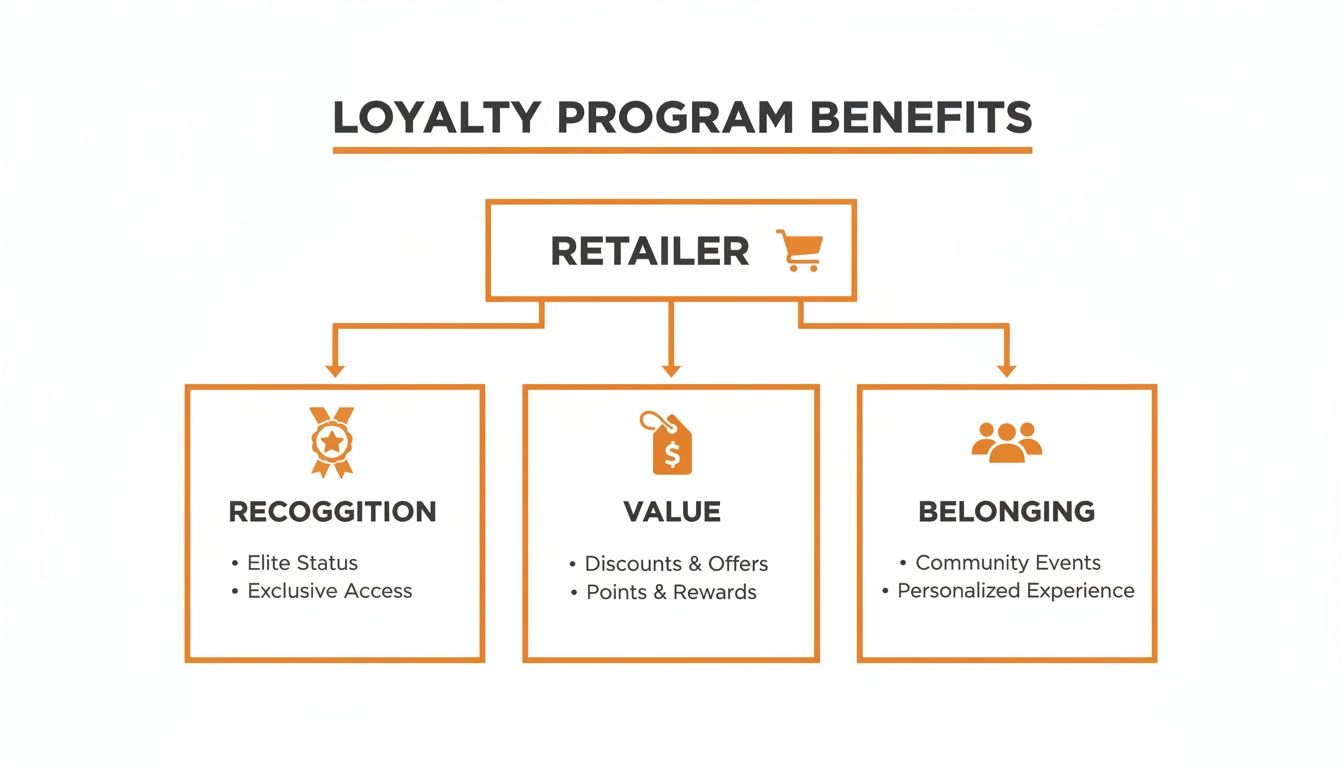
As you can see, the most successful programs don't just offer discounts; they create a sense of identity and community for their members.
Paid Memberships for Premium Access
Paid or subscription-based programs, like Amazon Prime, flip the traditional loyalty script. Instead of earning rewards over time, customers pay an upfront fee for instant access to high-value perks. It's a powerful way to create a "lock-in" effect where the benefits are so good that leaving feels like a real loss.
This approach works best for businesses that can deliver significant, consistent value, whether that’s free shipping, exclusive content, or major discounts. When a customer makes that initial investment, it creates a strong psychological commitment, often leading to them buying more frequently and spending more with you. The data backs this up, with 1.265 billion active loyalty memberships in the U.S. alone. In fact, global polls find that 92% of consumers are enrolled in at least one program.
Referral Programs That Build Community
Referral programs turn your happiest customers into your best marketers. By rewarding them for bringing new people into the fold, you tap into the most powerful marketing channel there is: word-of-mouth. These programs are less about rewarding individual spending and more about rewarding advocacy.
This model is a fantastic, low-cost way to acquire new customers, especially for direct-to-consumer brands trying to grow organically. The incentive—whether it's store credit, cash, or a free product—gets people sharing, and the built-in trust from a friend's recommendation makes the new customer far more likely to convert.
Rewards Program Models at a Glance
With these different models in mind, it's helpful to see them side-by-side. The right choice really depends on your business, your customers, and what you're trying to achieve.
| Program Type | How It Works | Best For | Customer Incentive |
|---|---|---|---|
| Points-Based | Customers earn points for purchases/actions and redeem them for rewards. | Businesses with high purchase frequency (e.g., coffee, beauty). | Tangible rewards like discounts or free products. |
| Tiered | Customers unlock escalating benefits and status by reaching spend thresholds. | Aspirational brands wanting to build community (e.g., fashion, travel). | Exclusivity, status, and recognition. |
| Paid Membership | Customers pay a recurring fee for instant, high-value perks. | Businesses offering consistent value (e.g., free shipping, content). | Immediate, ongoing benefits and convenience. |
| Referral | Existing customers are rewarded for bringing in new customers. | Growth-focused businesses, especially DTC brands. | Store credit, cash, or free products for successful referrals. |
Each of these structures offers a unique way to connect with your customers and encourage repeat business. For an even deeper dive, check out our guide on the 10 types of loyalty programs that can help your business thrive.
Learning from the Best Rewards Programs in Retail
If you want to understand what great customer loyalty looks like, you just have to look at the brands that do it best. The most successful stores with rewards programs don't just hand out discounts; they find ways to become part of a customer's daily life. By breaking down how giants like Starbucks, Sephora, and Amazon operate, we can pull out some powerful lessons that any business can use.
These leaders get it: a rewards program isn’t just some marketing gimmick. It’s a product. It has to be something people actually want, find simple to use, and feel like they’re getting real value from. Their success isn't an accident; it's built on a deep understanding of what makes customers tick, blending the practical perks with a genuine emotional connection.
Starbucks Rewards: The Master of Habit Formation
Starbucks Rewards is the undisputed champion of loyalty, with over 34 million active members in the U.S. alone. The real genius behind it is how perfectly it slides into a customer’s daily coffee routine. The program isn't just an add-on; for its most dedicated fans, it is the Starbucks experience.
Everything runs through the app, which rolls mobile ordering, payment, and rewards into one seamless action. That convenience creates an incredibly powerful habit. Customers earn "Stars" for every purchase, which they can cash in for anything from an extra espresso shot to branded merch. It’s a beautifully simple “earn-and-burn” cycle that just works.
The big lesson from Starbucks? Reduce friction. By making it easier to order and pay through the rewards program, they basically guarantee daily engagement. Loyalty becomes the easiest option.
On top of that, Starbucks keeps things interesting with personalized offers and little bonus games. This turns a simple morning coffee run into a small, rewarding moment in your day.
Sephora Beauty Insider: Building a Passionate Community
Sephora's Beauty Insider program is a masterclass in using tiers to create a sense of aspiration and community. It’s the engine that powers their business, with over 31 million members driving up to 80% of all sales. Sephora brilliantly transforms shopping for makeup into a game of status and exclusivity.
The program is broken down into three clear levels:
- Insider: This is the free, entry-level tier. It welcomes everyone with perks like birthday gifts and the ability to start earning points.
- VIB (Very Important Beauty): Once you spend $350 in a year, you hit VIB status, unlocking better point multipliers and access to special offers.
- Rouge: For the top spenders at $1,000 a year, this tier offers the best of everything, like early access to new products and invites to exclusive events.
This tiered system gamifies the whole experience, giving members a clear reason to spend a little more to reach that next level. But it's not just about spending. Sephora builds a real community through its members-only events and the "Rewards Bazaar," where points can be traded for unique samples and one-of-a-kind experiences. By focusing on these non-monetary perks, they build a much stronger emotional bond with their customers. For more ideas, check out these 7 Powerful Customer Loyalty Program Examples to get inspired.
Amazon Prime: The Undeniable Value Proposition
When it comes to paid memberships, Amazon Prime is in a league of its own. By charging an annual fee, Amazon creates an immediate psychological buy-in. Once you’ve paid for something, you’re naturally going to use it enough to feel like you got your money's worth. It’s a self-fulfilling loop of loyalty.
The sheer value packed into Prime is almost overwhelming. It all started with the simple, powerful promise of fast, free shipping—a solution to one of the biggest headaches of online shopping. From there, Amazon has layered on an incredible suite of benefits:
- Prime Video for movies and TV shows
- Prime Music for millions of songs
- Exclusive deals during events like Prime Day
- Grocery discounts at Whole Foods
This strategy makes the subscription feel like a non-negotiable part of modern life for its 200 million+ members worldwide. The lesson here is crystal clear: if you’re going to ask customers to pay for loyalty, the value you offer has to be so good that it’s an absolute no-brainer. These examples are just a few of the many powerful retail customer loyalty programs that show how smart design can lead to incredible business results.
A Step-by-Step Guide to Designing Your Own Program
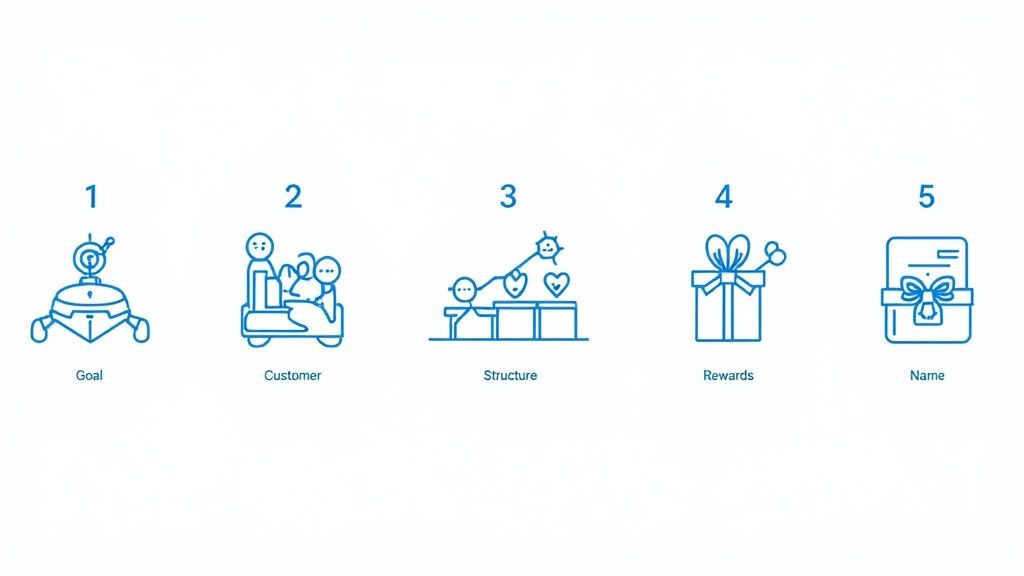
Building a rewards program from the ground up can feel like a massive undertaking, but it really just boils down to a series of smart decisions. When you break it down into a clear, step-by-step process, you can design a loyalty engine that perfectly fits your brand and genuinely excites your customers.
The key isn't to just copy what other stores with rewards programs are doing. It's to create something uniquely yours that reflects your brand’s personality and gives your best customers a compelling reason to stick around. A well-designed program is a strategic asset, not just another marketing line item.
Step 1: Define Your Core Objectives
Before you get lost in the fun stuff like points and perks, you have to answer one critical question: What do you actually want this program to do? Your answer here is the North Star for every other decision you’ll make. Without it, you'll end up with a program that feels unfocused and, frankly, won't deliver a real return.
Are you trying to get people to shop more often? Or is the bigger goal to get them to spend more each time they do? Maybe you’re just trying to win back customers who have gone quiet.
Common objectives usually fall into one of these buckets:
- Increasing purchase frequency: Turning that once-a-month shopper into a weekly regular.
- Boosting Average Order Value (AOV): Motivating customers to add just one more item to their cart.
- Improving customer retention: Keeping your hard-won customers happy and engaged for the long haul.
- Acquiring new customers: Using your existing fans to bring in their friends.
Once you land on a primary goal, every part of your program—from the rewards themselves to how you talk about it—should be laser-focused on hitting that target.
Step 2: Understand Your Customer Motivations
Okay, you know what you want. Now it's time to figure out what your customers want. A loyalty program is a two-way street; it only works if the rewards feel valuable and exciting to the people earning them. This means you have to get inside their heads.
Don't just assume everyone wants another 10% off coupon. For some customers, exclusivity and status are far more powerful motivators. For others, it might be all about convenience or access to one-of-a-kind experiences.
The most effective loyalty programs don't just reward transactions; they reward relationships. They make customers feel seen, understood, and appreciated for their commitment to the brand.
Dig into your customer data. Who are your ride-or-die fans? What do they typically buy? Better yet, just ask them! A simple survey or a few casual conversations can give you priceless insight into what kind of perks would actually make them change their behavior.
Step 3: Choose the Right Program Structure
With your goals set and customer insights in hand, you can pick the right framework for your program. This is the "how" of it all—the rules that govern how people earn and redeem rewards. The best structure is always the one that aligns with your business model and nudges the customer behaviors you want to see.
For instance, a simple points system is a no-brainer for a coffee shop trying to drive daily visits. On the other hand, a tiered program is a perfect fit for a fashion brand that wants to make its top spenders feel like true VIPs.
Here’s a quick recap of the main structures:
- Points-Based: Customers earn points for spending and trade them in for rewards. Best for: Simplicity and encouraging frequent, smaller purchases.
- Tiered: Members unlock better perks as they spend more and level up. Best for: Building aspiration and celebrating your most valuable customers.
- Paid Membership: Customers pay a fee for instant access to premium benefits. Best for: Creating a powerful lock-in effect with unbeatable value.
- Referral: Customers get rewarded for bringing new shoppers into the fold. Best for: Supercharging organic growth at a low acquisition cost.
This is where platforms like Toki really shine. They give you the flexibility to implement any of these models, letting you build and customize a program without needing to hire a team of developers.
Step 4: Craft Irresistible and Attainable Rewards
The rewards are the heart and soul of your program. They need to be desirable enough to get people to act, but also attainable enough that customers don't just give up. Finding that sweet spot is the secret to long-term engagement.
A classic mistake is making the best rewards feel like an impossible dream. It’s often much more effective to offer smaller, more frequent wins to keep the momentum going. That very first reward should be fairly easy to earn—it gives new members a taste of success and gets them hooked.
Think about mixing up your offerings to appeal to different people:
- Monetary Rewards: The classics like discounts, free products, or store credit.
- Non-Monetary Rewards: Things money can't buy, like early access to sales, exclusive content, or invitations to special events.
- Experiential Rewards: Unique opportunities like a personal styling session, a behind-the-scenes tour, or a shoutout on your social channels.
Using a platform like Toki, you can easily manage a diverse reward catalog and even tailor different offers to specific customer segments, making sure everyone feels like the program was designed just for them.
Step 5: Brand and Name Your Program
Last but not least, give your program an identity. A generic name like "Rewards Program" is completely forgettable. A creative, on-brand name, on the other hand, makes it feel like an exclusive club people actually want to be a part of. Think of Sephora’s "Beauty Insider" or The North Face’s "XPLR Pass"—these names instantly signal belonging and adventure.
This branding needs to be consistent across every touchpoint, from the sign-up page to the marketing emails. Use the same visuals, language, and tone of voice that you use everywhere else. This final step is what elevates your program from a simple system to a memorable brand experience that builds real, lasting loyalty.
Launching and Growing Your Loyalty Program for Success
Nailing the design of your rewards program is a huge accomplishment, but it's only half the battle. The real magic happens during the launch and through your commitment to growing it over time. This is what separates the programs that truly take off from the ones that quietly fade away.
Think of your launch as the grand opening. It sets the tone for everything that follows and can make or break how quickly your customers jump on board. If people don't know the program exists or find it a hassle to join, even the most amazing rewards won't move the needle.
Preparing for a Flawless Launch
Before you even think about announcing your new program, you need a rock-solid pre-launch checklist. Getting every detail ironed out behind the scenes is what makes for a smooth, professional rollout that builds customer confidence from the very first interaction.
Your team, especially anyone who talks to customers, needs to be your program's biggest fan. They need to understand not just the nuts and bolts of how it works, but how to get customers genuinely excited about it. Their enthusiasm is contagious.
Here are the essentials to get squared away before go-live:
- Finalize Program Mechanics: Triple-check every point value, tier requirement, and reward rule. The last thing you want is a confusing loophole or a frustrating term that sours the experience.
- Train Your Entire Team: Get your in-store staff and customer support reps ready to answer any question that comes their way. It helps to give them a simple script for how to introduce the program to every single customer.
- Prepare Marketing Materials: Get your creative assets ready. This means eye-catching in-store signs, website banners, email templates, and social media posts that all look and feel like your brand.
- Test the User Experience: Walk through the sign-up and redemption process yourself, and have others do it too. Is it dead simple? Is it intuitive? A clunky experience is a surefire way to kill adoption.
A platform like Toki can make this whole process much simpler. It gives you ready-made templates and a clear dashboard to make sure the technical side is sound and the program is easy to use for both your team and your customers right out of the gate.
Promoting Your Program Effectively
Once your foundation is set, it's time to make some noise. Your goal is to make it impossible for your customers not to know about your new program. This calls for a promotional strategy that reaches people on multiple fronts.
Start with your most direct lines of communication. An email blast to your existing customer list is a perfect first move—maybe even throw in an exclusive sign-up bonus to get people to act fast. Your website's homepage should feature the program front and center.
Don't treat your launch as a one-and-done event. It's the start of an ongoing conversation. You have to continuously remind customers about the value they're earning and the rewards that are waiting for them.
Sustained promotion is absolutely key. Weave messaging about the program into every touchpoint you can think of, from transaction receipts and email footers to your social media bios. This constant reinforcement keeps the program top-of-mind and drives engagement long after the initial launch buzz dies down.
Measuring and Refining for Long-Term Success
Getting your program out the door is just the beginning. The real, sustainable growth comes from constantly measuring its performance and tweaking your strategy based on real data and customer feedback. You have to know what's working and what's falling flat.
Key performance indicators (KPIs) give you that clear picture. Don't just get excited about the total number of sign-ups; you need to dig deeper to see how members are actually using the program.
Here are a few crucial metrics to watch:
- Redemption Rate: What percentage of the points people earn are they actually cashing in? A low rate could signal that your rewards aren't compelling enough or are too hard to reach.
- Customer Lifetime Value (CLV): This is the ultimate test. Compare the CLV of your program members to non-members. A healthy lift here proves your program's ROI.
- Purchase Frequency: Are members buying from you more often than your other customers? This ties directly back to the core goal of boosting retention.
Don't be afraid to ask your members what they think! Use simple surveys and feedback forms to find out what they love and what they wish you'd change. The best loyalty programs evolve right alongside their customers. Keeping things fresh with new challenges, seasonal rewards, or even surprise perks ensures your program remains a powerful tool for building those lasting customer relationships.
Platforms like Toki offer powerful analytics dashboards that make tracking these KPIs a breeze, so you can make smart, data-driven decisions to keep your program getting better and better.
Rewards Program FAQs
When you're thinking about customer loyalty, a lot of questions come up. It's totally normal. Whether you're kicking around the idea of starting your first program or trying to breathe new life into an old one, getting straight answers is the first step. Let's tackle some of the most common questions I hear from business owners.
What's the Biggest Mistake Stores Make with Rewards Programs?
Hands down, the biggest pitfall is making the rewards feel impossible to get. If a customer has to spend a fortune just to get a tiny discount, they won't even try. It's like asking someone to run a marathon for a free granola bar—most people will just pass.
The first reward needs to feel within reach. That initial win gets them hooked and creates momentum. The other big mistake? Terrible communication. You can’t expect people to get excited about a secret club they don't know exists or can't figure out how to join. Simplicity and consistent promotion are everything. Keep the rules simple and the perks front and center.
How Much Does It Cost to Start a Rewards Program?
Honestly, the cost can be all over the map. You could go old-school with a paper punch card for next to nothing, or you could invest in a monthly subscription for a sophisticated digital platform. While a simple system is cheap, you miss out on the incredible data, automation, and ability to grow that a real software solution offers.
When you're crunching the numbers, think about a few key things:
- Platform Fees: The monthly or annual cost for the loyalty software itself.
- Cost of Rewards: The actual margin you're giving away on discounts or freebies.
- Marketing Expenses: The budget for emails, signs, or ads to tell people about your awesome new program.
But here’s the thing: a good program isn't just another expense. It's an investment. It’s designed to pay for itself by bringing in more sales and keeping your customers coming back for more.
A rewards program isn't an expense line; it's a growth engine. The initial investment is designed to pay for itself many times over through higher customer lifetime value and more frequent purchases.
Can a Rewards Program Work for a Small Business?
Yes, a thousand times yes! In fact, this is where small businesses can really outshine the big box stores. You have the power to offer personal touches and unique experiences that huge corporations just can't manage. This is your secret weapon.
Think outside the "10% off" box. What about offering early access to a new collection? Or an invitation to a local VIP event you're hosting? Maybe even a one-on-one personal styling session. These are the kinds of perks that build a true community around your brand and create a loyalty that's about more than just transactions.
How Do I Measure the Return on Investment?
Measuring your ROI is all about comparing what you spend on the program to the money it brings in. To see the real impact, you have to look at how your customers' behavior changes once they join.
Start by tracking the purchase frequency and average order value (AOV) of your members and compare it to your non-members. You should see a clear lift. Also, keep an eye on your overall customer retention rate—it should climb after you launch the program. A simple formula to get started is: (Gain from Program - Cost of Program) / Cost of Program. The good news is that modern loyalty platforms have dashboards that do this for you, showing you the financial impact in real-time.
Ready to build a loyalty program that turns casual shoppers into lifelong fans? Toki provides all the tools you need to design, launch, and grow a rewards program that drives real results for your business. Explore Toki's powerful loyalty and rewards platform today.