Retail Consumer Engagement: A Definitive Guide to Loyal Customers
Discover proven tactics for retail consumer engagement to boost loyalty with personalized, omnichannel experiences.
Let's be honest, retail consumer engagement is more than just a buzzword. It’s the real, emotional connection a customer develops with your brand, built one interaction at a time. It’s what transforms a simple purchase into a lasting relationship—the kind that brings people back again and again.
Why Retail Consumer Engagement Is Your Most Valuable Asset
In a world flooded with options and squeezed budgets, just having a great product isn't the whole story anymore. Today’s shoppers aren’t just buying things; they’re looking for a genuine connection. This is where retail consumer engagement comes in. Think of it as the ongoing conversation you have with your customers, whether it's a "like" on social media, a personalized email, or a warm greeting in your store.
This connection isn't just a nice-to-have. It’s a powerful engine for growth and stability. When customers feel like you actually get them, they don't just come back—they spend more and tell their friends about you. A huge part of getting this right involves mastering strategies for creating content that genuinely resonates with the people you want to reach.
The Shift from Brand Loyalty to Experience Loyalty
The ground is shifting under our feet. A recent study revealed that a massive 88% of consumer product marketers plan to completely overhaul their customer engagement strategy by 2025. They have to. With 85% of consumers cutting back on spending, every dollar counts, and shoppers are pickier than ever. You can read the full research on changing consumer expectations from Emarsys.com.
This trend is especially clear with younger shoppers. A staggering 56% of Gen Z consumers say they don’t really care about brand names, as long as the product does what they need it to. This is a massive signal: the old playbook of just pushing a brand name is over. It’s all about the experience now.
The modern retail battlefield isn't won on price or product alone—it's won on the quality of the customer experience. Engagement is the key to creating memorable interactions that build lasting emotional equity and loyalty.
At its core, focusing on consumer engagement means investing in the human side of your business. It’s about creating meaningful moments, offering real value, and building a true community. By making these connections a priority, you’re not just surviving market ups and downs; you’re building a loyal base of customers who will choose you every time.
How Personalization Shapes the Modern Shopper's Journey

Personalization is the engine quietly running behind the best retail consumer engagement today. At its core, it’s about using customer data—everything from browsing habits to purchase history—to craft experiences that feel like they were made for one person. It’s the difference between a generic, one-size-fits-all shopping trip and a meaningful, one-on-one conversation.
Think about it. A customer lands on your website. Instead of a generic homepage, they see products that build on what they last viewed or items that perfectly complement their recent purchase. That’s not a lucky guess; it's smart, data-driven personalization that makes the shopper feel seen and understood.
This isn’t just a nice-to-have, either. It directly taps into a fundamental consumer expectation. A massive 66% of consumers now believe brands should understand their individual needs. When you deliver on that, the impact is undeniable.
The Tangible Impact of Tailored Experiences
Personalization does more than just create a warm, fuzzy feeling. It delivers real, measurable business results that forge deeper customer bonds. When you get it right, your marketing becomes sharper, and you start building the kind of loyalty that sticks around.
The numbers don't lie. Research shows that 76% of consumers are more likely to make a purchase from brands that personalize their experiences. This preference translates directly into results, with personalized emails seeing open rates of 29% and click-through rates of 41%—figures that blow industry averages out of the water.
By listening to what customers tell you through their actions, you can stop shouting generic messages and start having relevant conversations. This shift is the foundation of genuine, long-term engagement.
This requires a thoughtful approach to gathering and using information. One of the best ways to get actionable insights is through zero-party data—information customers willingly and intentionally share. Understanding what is zero-party data is key to building a personalization strategy that’s both effective and transparent.
Practical Applications of Personalization
Turning raw data into a better shopping journey means using specific, actionable tactics across all your channels. The goal is to make every touchpoint feel connected and relevant to the individual.
Here are a few ways to put personalization into practice:
- Hyper-Targeted Email Campaigns: Go way beyond just using a customer's first name. Segment your audience by their purchase history or browsing behavior to send them promotions for things they'll actually want.
- Dynamic Website Content: Your website should feel different for every visitor. Customize landing pages and product carousels to match their interests. If someone keeps buying running shoes, greet them with your newest athletic gear.
- AI-Driven Product Recommendations: Suggest products so accurately it’s like having a personal stylist. The rise of AI-powered shopping assistants has made this possible, guiding shoppers with spot-on recommendations that make the entire buying process smoother.
By weaving personalization into every part of the customer journey, you create an experience that's more intuitive, more engaging, and ultimately, more profitable. It’s how you show customers you’re paying attention—and that’s the bedrock of any great relationship.
Building a Seamless Omnichannel Experience
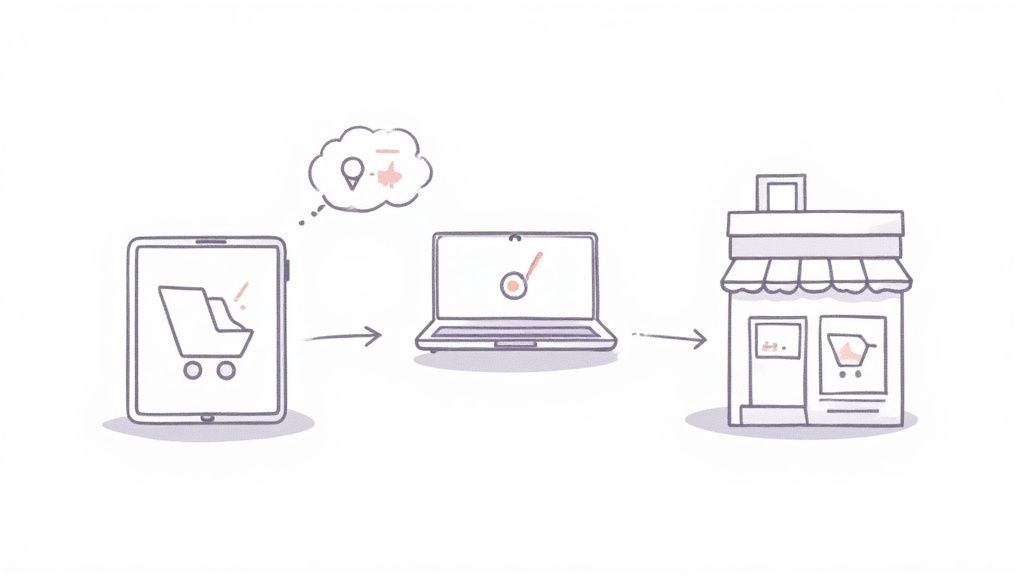
Real, lasting retail consumer engagement happens when you blur the lines between your physical and digital worlds. Today's customers don’t see separate channels—they just see your brand. An omnichannel strategy makes sure every single interaction feels like one continuous conversation, whether it happens online, in-store, or on a mobile app.
Think about it from a customer's perspective. They spot a pair of shoes in an Instagram ad, browse your site on their phone during their commute, add the shoes to their cart on a laptop that evening, and finally pop into your store to try them on. An omnichannel approach makes that entire journey feel completely natural and effortless.
This is the new standard. Shoppers want to start an experience in one place and finish it in another without any friction. When you nail this consistency, the whole process becomes intuitive and genuinely enjoyable, which is a massive driver for loyalty.
Synchronizing Every Customer Touchpoint
To create this unified feeling, all your systems have to be in sync. Your online inventory must know exactly what’s on the shelves in your brick-and-mortar stores. Your loyalty program has to work identically whether someone is scanning a QR code at the register or tapping a button in your app.
This backend synchronization is what holds a great omnichannel strategy together. It’s all about building a single, cohesive ecosystem where customer data and inventory information flow freely between every part of your business.
An omnichannel experience isn't about being everywhere; it's about being unified everywhere. It’s the art of making complex, multi-channel journeys feel simple and personal for every single customer.
When you remove those annoying little roadblocks, you directly boost engagement. Customers are far more likely to finish a purchase—and come back again—when their experience feels smooth and respected across every touchpoint.
Practical Tactics for a Unified Journey
Putting an omnichannel strategy into practice means taking concrete steps to connect your sales and marketing channels. The goal is to build a consistent and convenient experience that keeps people coming back. For a deeper look, check out our complete guide to building an omnichannel customer experience.
Here are a few key tactics that really work:
- Click-and-Collect Services: Let people buy online and pick up in-store. It’s not just a convenience for them; it’s a brilliant way to drive foot traffic and create opportunities for them to buy something extra while they're there.
- Integrated Inventory Management: A centralized system showing real-time stock levels across all locations is non-negotiable. This simple tool prevents the ultimate customer frustration: ordering an item that’s actually out of stock.
- Unified Customer Profiles: Aim for a single view of each customer that pulls together their online browsing habits, in-store purchase history, and app activity. This is where true personalization happens, like sending an offer for an item they looked at online and then saw in the store.
- Consistent Loyalty Programs: Make sure your customers can earn and spend points, rewards, or gift cards the same way everywhere. Whether they're on their phone, a desktop, or standing at your checkout counter, the experience should be identical.
By weaving these strategies together, you create a retail environment where every channel strengthens the others. The result is a powerful, cohesive customer journey that keeps people deeply engaged with your brand.
Measuring the True Impact of Your Engagement Efforts
Crafting brilliant retail consumer engagement strategies is one thing, but how do you know if they’re actually moving the needle? Just counting likes on social media or tallying website visits won't cut it. To see the real return on your efforts, you have to dig into the Key Performance Indicators (KPIs) that tell the true story of your business's health and your customers' loyalty.
These metrics go beyond the superficial, revealing the actual strength of your customer relationships. They are the hard proof—both financial and emotional—that your engagement efforts are paying off in real, sustainable growth.
Think of it like this: it's the difference between knowing how many people walked past your store versus knowing how many came inside, bought something, and are already planning their next visit.
Key Metrics That Truly Matter
To get the full picture, you need to track a mix of behavioral, financial, and loyalty-focused KPIs. Each metric offers a unique piece of the puzzle, helping you understand not just what your customers are doing, but why they're doing it.
Here's where to start:
-
Customer Lifetime Value (CLV): This is the big one. It’s the total profit you can reasonably expect from a single customer over the entire time they shop with you. When your CLV is on the rise, it’s a direct sign that your engagement strategy is building lasting relationships that encourage repeat business.
-
Repeat Purchase Rate (RPR): A simple but powerful metric, RPR tells you what percentage of your customers come back for a second purchase. A high RPR is proof that you made a great first impression and laid the groundwork for genuine loyalty.
-
Average Order Value (AOV): This tracks the average dollar amount a customer spends per transaction. Strong engagement often leads to a higher AOV because loyal customers trust your recommendations, making them more open to upsells and cross-sells.
Measuring engagement is about connecting dots. It’s seeing how a personalized email campaign doesn't just increase opens, but directly contributes to a higher Customer Lifetime Value and a lower churn rate. That’s when you know it's working.
Essential KPIs for Measuring Retail Engagement
Tracking the right data is everything. This table breaks down the most important metrics, what they actually measure, and why they are so critical for long-term growth.
| KPI | What It Measures | Why It's Important |
|---|---|---|
| Customer Lifetime Value (CLV) | The total projected revenue from a single customer account. | Shows the long-term financial impact of retaining happy customers. |
| Repeat Purchase Rate (RPR) | The percentage of customers who have made more than one purchase. | Directly indicates customer loyalty and the effectiveness of your retention efforts. |
| Average Order Value (AOV) | The average amount spent each time a customer places an order. | Reveals how well you're increasing the value of each transaction through engagement. |
| Net Promoter Score (NPS) | Customer willingness to recommend your brand to others. | A powerful indicator of overall satisfaction and potential for organic growth. |
| Customer Satisfaction (CSAT) | Short-term happiness with a specific product or interaction. | Provides immediate feedback on key touchpoints in the customer journey. |
| Customer Churn Rate | The percentage of customers who stop doing business with you. | Highlights potential problems in your customer experience that need fixing. |
By focusing on these core metrics, you move from guessing to knowing, allowing you to build a strategy based on what truly resonates with your audience.
Gauging Customer Sentiment and Loyalty
Beyond the cold, hard numbers, you have to measure how people feel about your brand. These sentiment-based KPIs give you the invaluable context behind the data, helping you understand the emotional connection you’re building with your customers.
Here are the loyalty indicators you can't afford to ignore:
-
Net Promoter Score (NPS): This classic metric gets straight to the point by asking, "How likely are you to recommend our brand to a friend or colleague?" It sorts your customers into Promoters, Passives, and Detractors, giving you a clear snapshot of brand advocacy.
-
Customer Satisfaction Score (CSAT): Usually measured right after a specific interaction (like a support call or a purchase), CSAT asks customers to rate their satisfaction. It gives you immediate, actionable feedback on critical moments in their journey.
-
Customer Churn Rate: This is the percentage of customers who stop buying from you over a set period. A low or shrinking churn rate is one of the strongest signals that your retail consumer engagement strategy is working.
By regularly tracking this blend of financial and loyalty metrics, you can make smarter, data-driven decisions. It’s a continuous feedback loop that allows you to double down on what works, fix what doesn't, and ensure every engagement effort delivers the biggest possible impact.
What's Next? The Future of Retail Engagement and Emerging Trends
The world of retail engagement is always in motion, shaped by new tech and what shoppers come to expect. If you want to stay ahead of the curve, you have to look past what works today and get a feel for the innovations that will define the shopping experience of tomorrow. The future isn't about siloed channels; it's about building one fluid, smart, and deeply personal ecosystem for your customers.
Artificial intelligence (AI) is leading the charge here. We're blowing past basic personalization and entering an era of predictive engagement, where AI can figure out what a customer needs before they even know they need it. Picture a store's app that not only remembers a customer's size but pings them with a new coat suggestion right as a cold front moves in, all based on their style and past buys. That kind of proactive help turns a brand from a simple seller into a trusted advisor.
The Rise of Immersive and Social Commerce
At the same time, the wall between content and commerce is crumbling. Social media platforms are no longer just places for discovery—they're becoming powerful storefronts in their own right. With shoppable social media, a customer can buy a product directly from a post or a video, closing the gap between inspiration and checkout in a single click. This is all part of a bigger trend called "retailtainment," where brands mix shopping with entertainment to create experiences that are genuinely fun and memorable.
Think of live shopping events, augmented reality (AR) try-on features, and shopping apps that feel more like games. These immersive tactics do more than just move inventory; they build communities and generate a real sense of excitement that pulls customers in and keeps them engaged.
The next wave of retail engagement will be defined by how frictionless, intuitive, and entertaining it can be. The goal is to weave commerce so seamlessly into a consumer's life that it feels like a natural part of their day, not an interruption.
This push toward a more integrated and convenient shopping journey is where the industry is heading. A recent retail outlook underscored this shift, showing that 80% of executives plan to lean more into social commerce and 70% are looking to build out their own delivery services. It’s all part of a larger strategy to create frictionless experiences built on personalization and digital convenience. You can dive deeper into these insights by exploring the future of retail from Deloitte.
Key Trends Shaping the Future
So, how do you prepare for what's next? It comes down to focusing on the tech and strategies that are poised to make the biggest splash. The main idea is to build an agile foundation that can adapt as quickly as customer habits change.
Here are the key areas to keep a close eye on:
- Hyper-Automation: AI will start handling everything from routine inventory checks to highly personalized marketing campaigns. This will free up your human teams to focus on the big-picture strategy and creative work that machines can't do.
- Augmented Reality (AR) Integration: AR is on track to become a standard tool. It will let customers visualize products in their own environment, whether that’s virtually trying on a pair of sneakers or seeing how a new sofa will look in their living room.
- Voice Commerce: As smart speakers become a household staple, shopping by voice will grow. This means retailers will need to optimize their product information for conversational search queries, not just typed ones.
By embracing these trends, retailers can build stronger, more relevant, and more engaging relationships with their customers. It's about ensuring you not only meet but consistently exceed the expectations of the modern shopper.
Unifying Your Strategy with a Centralized Platform
Trying to manage your engagement tactics across online, in-store, and mobile can feel like you're trying to conduct an orchestra where every musician is playing a different song. It's chaotic. A unified engagement platform is the conductor that brings all those moving parts into harmony, acting as the central nervous system for your entire retail consumer engagement strategy.
This kind of centralized system is designed to break down the data silos that naturally form between your e-commerce site, physical stores, and mobile app. When that data is integrated, every single customer interaction becomes part of one long, continuous conversation. Suddenly, personalization isn't just an isolated tactic—it's a consistent experience, no matter where or how a customer decides to shop.
The Power of a Single Source of Truth
A unified platform provides a complete, 360-degree view of each customer. You can see their purchase history, their loyalty status, their recent browsing—everything. This visibility is what allows you to build cohesive omnichannel campaigns, run a loyalty program that actually works, and send out personalized offers right when they’ll have the most impact.
A unified platform transforms a collection of individual tactics into a powerful, seamless customer experience machine. It’s where your strategy truly becomes greater than the sum of its parts, driving both efficiency and real growth.
This is how you turn disconnected interactions into a fluid, connected customer journey. Getting this right means following proven methods for combining your data. To dig deeper into the technical side, check out our guide on customer data integration best practices.
The image below highlights some of the key trends shaping the future of retail—all of which are supercharged by a centralized, data-driven approach.
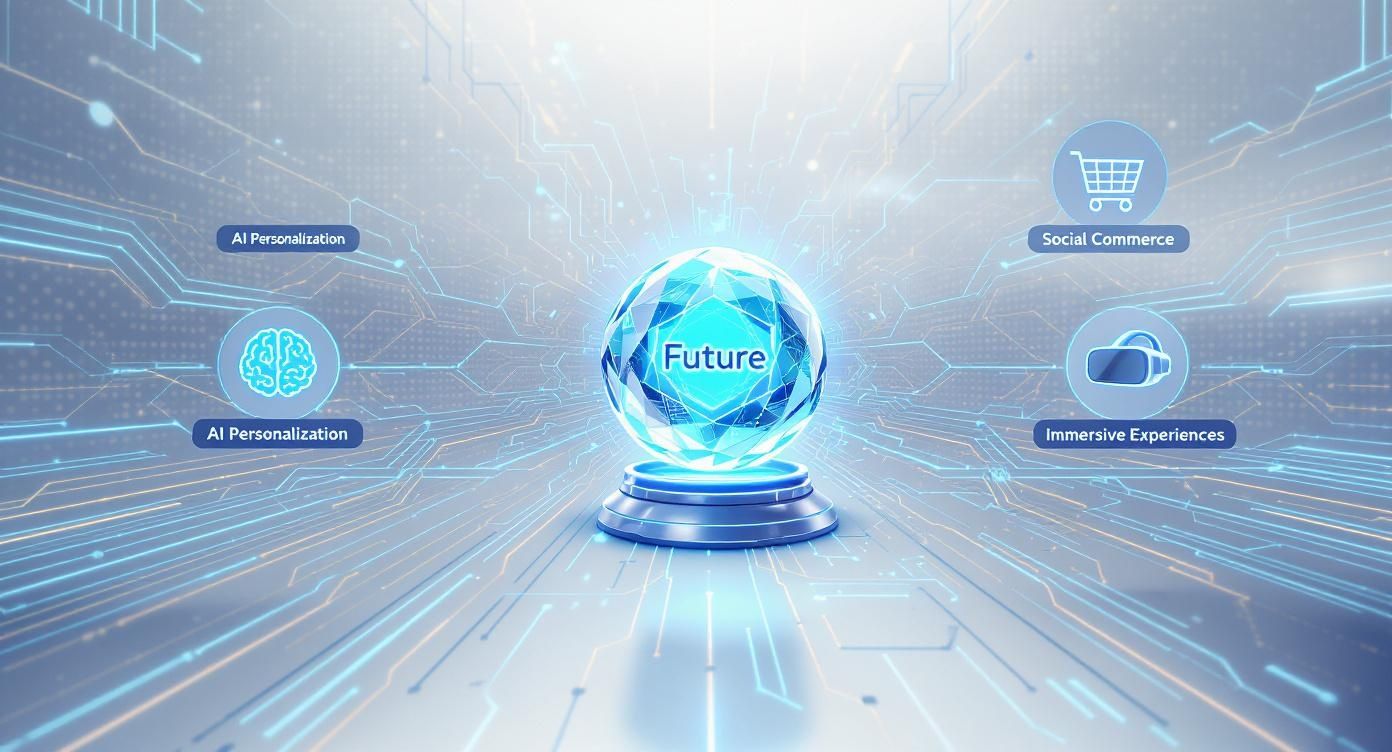
As you can see, the future hinges on things like AI-powered personalization, social commerce, and immersive experiences. None of these can reach their full potential without the unified data a centralized platform provides.
Your Top Questions About Retail Engagement, Answered
Still wondering how to put these ideas into practice? Let's tackle some of the most common questions retailers ask when they're getting serious about customer engagement.
Where Do I Even Begin with an Engagement Strategy?
The best place to start is with the people you already have: your customers. Before you dream up a single campaign, you need to get to know them. Dig into your sales data and see who your best customers are, what they’re buying, and how they prefer to shop. This isn't just about analytics; it’s about building your entire strategy on a solid foundation of what your shoppers actually want.
How Can a Small Shop Possibly Compete with the Big Chains?
This is where being small is your superpower. You can win by leaning into personalization and community in a way giant retailers simply can't. You can remember a customer's name, ask about their last purchase, and create a genuine local vibe. Use your agility to build real, human connections. That’s a competitive advantage no big-box store can easily copy.
The most effective retail consumer engagement isn’t about having the biggest budget. It’s about creating the most meaningful connections, which often comes from authentic, personalized interactions that make customers feel uniquely valued and understood.
How Quickly Will I See Results from All This?
It’s a mix. Some tactics, like a well-timed flash sale, can give you an instant bump in sales. But building real, lasting engagement is more of a long game. You’ll likely see early wins, like an increase in repeat visits, within the first few months. The ultimate goal—creating deep-rooted loyalty—takes time and consistent effort. Patience and persistence are your best friends here.
Ready to turn casual shoppers into lifelong fans? With a platform like Toki, you can launch a complete loyalty, referral, and membership program designed to boost engagement and drive repeat sales. See how Toki can transform your customer relationships today.