10 High-Impact Referral Program Ideas for Shopify Merchants in 2025
Unlock explosive growth with these 10 actionable referral program ideas. Find inspiration for your Shopify store and turn customers into advocates.
In today's competitive e-commerce market, simply adding a "Refer-a-Friend" button to your Shopify store is no longer a viable growth strategy. Customers are inundated with generic offers, and a one-size-fits-all approach fails to capture attention or motivate action. To transform your loyal customers into a powerful and sustainable acquisition channel, you need more sophisticated and engaging referral program ideas that align with your brand and resonate deeply with your audience. A well-designed program is one of the most effective strategies to increase e-commerce sales because it leverages the most powerful form of marketing: a trusted recommendation from a friend.
This guide moves beyond the basic, surface-level advice. We will explore 10 distinct, high-impact referral program models specifically designed for ambitious e-commerce merchants. Each idea is a complete blueprint, covering everything you need to launch a successful campaign. You will learn not just what to do, but how to do it effectively.
We will break down:
- Creative Incentive Structures: How to reward both the referrer and the new customer in a way that drives action.
- Actionable Implementation Tips: Step-by-step guidance to get your program live.
- Key Performance Indicators (KPIs): The essential metrics to track for measuring success and optimizing performance.
- Toki-Specific Automation: Practical notes on using a platform like Toki to build, manage, and scale each referral concept with ease.
From tiered rewards that create brand superfans to omni-channel programs that bridge your online and physical stores, these strategies will help you acquire high-value customers, increase loyalty, and boost lifetime value.
1. Tiered Referral Rewards Program
A tiered referral program moves beyond the standard "give a reward, get a reward" model by creating a multi-level structure. Advocates unlock increasingly valuable incentives as they successfully refer more new customers. This gamified approach transforms a one-off action into a continuous journey, motivating your most loyal customers to become powerful, long-term brand ambassadors.
Instead of a flat reward, this system creates a sense of progression. A customer's first successful referral might earn them a 10% discount, but their fifth could unlock a $50 gift card or exclusive early access to a new product line. This structure taps into the psychological drivers of achievement and status, making it one of the most effective referral program ideas for fostering sustained engagement.
Why This Approach Works
This model excels because it recognizes and disproportionately rewards your most influential advocates. It prevents your program from stagnating by constantly presenting a new goal to achieve. Brands like Dropbox famously used this, offering more free storage for each referral, creating a compelling reason for users to keep sharing. It's ideal for businesses with a strong community element or those looking to identify and cultivate super-fans.
Implementation Tips & Best Practices
- Clear Tier Progression: Define clear, achievable milestones for each reward tier. For example:
- Tier 1 (1 Referral): 15% off next purchase
- Tier 2 (3 Referrals): $25 store credit
- Tier 3 (5+ Referrals): Exclusive access to your VIP community + a free product.
- Visualize Progress: Use a visual progress bar in the customer's account dashboard. Showing them they are "only 2 referrals away from the next reward" is a powerful motivator.
- Automate Rewards: Ensure tier upgrades and reward distribution are automated. When a customer hits a new milestone, the reward should be delivered instantly to create a moment of delight and reinforce the behavior.
- Promote VIP Status: Frame the highest tiers not just as a reward, but as an exclusive status. Offer benefits like "VIP Customer Support" or a "Founders Club" membership to add intangible value beyond monetary discounts. This strategy is a core component of many successful programs. For a deeper dive, you can explore how to structure these systems effectively by reading more about tiered rewards programs.
How to Implement with Toki: Use Toki’s segmentation and automation features to create distinct customer tiers based on referral count. Trigger automated emails or in-app messages when a customer moves up a tier, and use Toki’s rewards engine to automatically issue the corresponding incentive, whether it’s points, a discount code, or a free gift.
2. Social Media Share & Earn Referral Program
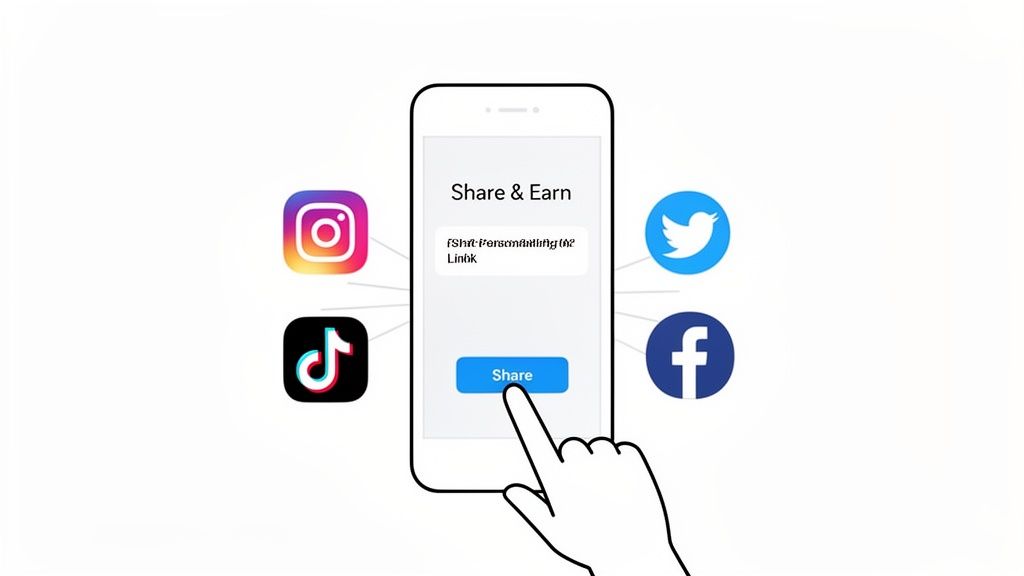
A Social Media Share & Earn program turns your customer base into a decentralized marketing army by incentivizing them to share referral links directly on their favorite social platforms. This approach is designed for virality, transforming a simple referral into a public endorsement that leverages the power of social proof. It encourages advocates to post on Instagram, TikTok, Facebook, or Twitter, reaching their entire network with a single click.
This model moves beyond private, one-to-one sharing and taps into the broad-reach potential of social media algorithms. A customer shares their unique link in an Instagram Story or a TikTok video, and anyone who clicks and makes a purchase is tracked back to them. The reward system is often tied directly to the action of sharing or the successful conversion, creating a low-friction way to generate widespread brand awareness and user-generated content.
Why This Approach Works
This strategy excels because it meets customers where they are already active and influential. A recommendation from a friend on social media feels more authentic and trustworthy than a traditional ad. Brands like Fashion Nova and Shein have mastered this by rewarding users for creating content, effectively crowdsourcing their marketing efforts. This idea is perfect for visually-driven brands in fashion, beauty, or lifestyle niches, where user-generated content is highly valuable for building credibility and driving sales.
Implementation Tips & Best Practices
- Create Shareable Assets: Provide pre-made, visually appealing graphics, video templates, and suggested captions. Optimize assets for different platforms, like vertical videos for Reels/TikTok and square images for Instagram feeds.
- Simplify the Sharing Process: Integrate one-click sharing buttons for major social platforms directly within the customer's referral dashboard. The fewer steps, the higher the participation rate.
- Offer Platform-Specific Bonuses: Run limited-time campaigns offering extra rewards for sharing on a specific platform, like "Double points for every referral from TikTok this week!" This helps you tap into trending platforms.
- Gamify with a Leaderboard: Create a public leaderboard showcasing the "Top Sharers" or "Most Viral Referrers" for the month. Award a special prize to the winner to foster friendly competition and encourage repeated sharing. This is one of the most engaging referral program ideas for community-focused brands.
How to Implement with Toki: Use Toki's referral link generator to create unique, trackable URLs for each customer. Embed social sharing buttons directly into your referral landing pages and post-purchase pop-ups. Track referral sources automatically to identify which social channels are driving the most conversions and reward advocates instantly when their friends make a purchase.
3. Double-Sided Incentive Referral Program
The double-sided incentive is one of the most classic and powerful referral program ideas because it creates a perfectly balanced win-win scenario. This model rewards both the person making the referral (the advocate) and the new customer they bring in. By giving both parties a compelling reason to participate, it removes the advocate's potential hesitation of feeling like they are just profiting from their friends.
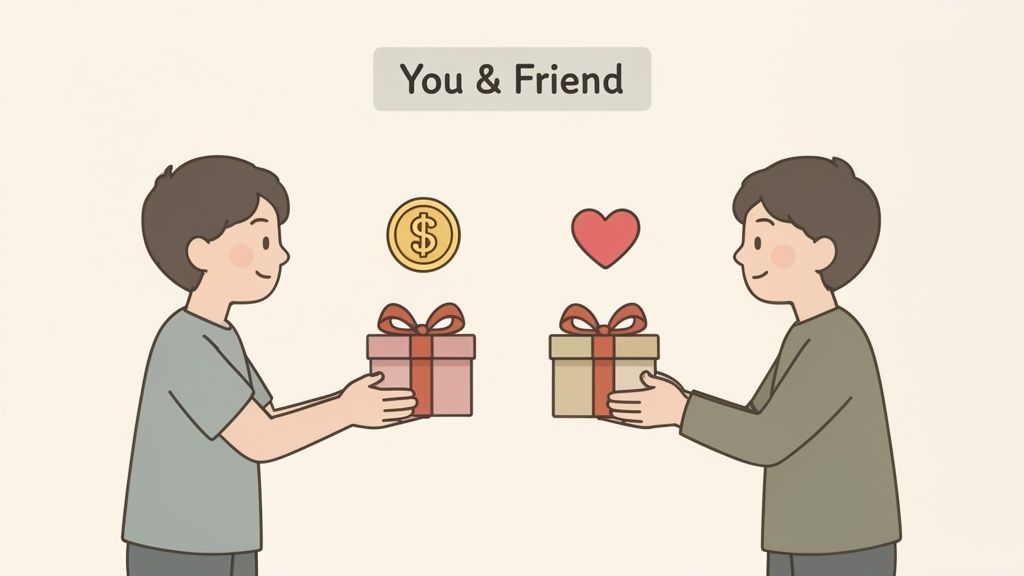
Instead of a one-way reward, this approach fosters a sense of mutual benefit and goodwill. The advocate feels good about sharing a genuine discount with a friend, and the friend feels welcomed with an immediate incentive to make their first purchase. This shared value drastically increases the likelihood of conversion and accelerates the potential for viral growth, as the offer is appealing to everyone involved.
Why This Approach Works
This model excels by lowering the barrier to entry for new customers while simultaneously motivating advocates. The friend receives an immediate, tangible benefit, making their first purchase decision much easier. This strategy was famously used by companies like PayPal and Airbnb to fuel exponential growth. PayPal offered $10 to both the referrer and the new user, creating a nearly irresistible offer that helped them acquire millions of users in their early days. It's ideal for businesses looking to rapidly expand their customer base and convert word-of-mouth interest into tangible sales.
Implementation Tips & Best Practices
- Balance the Rewards: Ensure the incentive is attractive to both parties. A common structure is "Give $20, Get $20," which is simple, memorable, and feels equitable.
- Set Clear Thresholds: To protect your margins, require a minimum purchase amount for the new customer to unlock the rewards. For example, the new customer gets $20 off their first order of $100 or more.
- Create Urgency: Introduce limited-time referral bonuses, such as doubling the reward value for a weekend. This can create spikes in sharing activity and drive immediate action from both advocates and their friends.
- A/B Test Incentives: Don't settle on the first reward amount you choose. Test different values (e.g., $15 vs. $25, or 10% vs. 20% off) to find the optimal balance between customer acquisition cost and conversion rate.
How to Implement with Toki: Set up a double-sided campaign using Toki’s referral program builder. You can define distinct rewards for the "Advocate" and the "Friend" and set rules, like a minimum order value for the friend’s first purchase. Toki's system will automatically track the referral link and issue the respective rewards (e.g., store credit for the advocate, a unique discount code for the friend) once the conditions are met.
4. Exclusive Access & Early Product Launch Referral Program
This referral program idea shifts the incentive from monetary discounts to something often more powerful: exclusivity. Instead of a coupon, successful referrers earn privileged access to new products before the public, limited-edition releases, or early entry to major sales events. This strategy leverages the psychological principles of scarcity and social status to create a highly desirable, non-monetary reward.
By offering access as the prize, you transform your referral program into a VIP club. Customers aren't just saving money; they are earning a unique status and joining an inner circle. This is particularly potent for brands in fashion, beauty, collectibles, or any industry with hype-driven product drops. The feeling of being "in the know" becomes the primary motivator, fostering a deep sense of community and loyalty among participants.
Why This Approach Works
This model thrives on the Fear of Missing Out (FOMO). When customers know that referrals are the only way to guarantee access to a coveted item, the incentive becomes incredibly compelling. It creates authentic brand evangelists who share out of a genuine desire to bring their friends into an exclusive community. Brands like Lululemon and Allbirds have used this to great effect, offering special product drops or early sale access to top customers and referrers, which in turn generates significant organic buzz and strengthens brand affinity.
Implementation Tips & Best Practices
- Communicate Exclusivity Clearly: Use language like "VIP Access," "Be the First," or "Members-Only Drop" in your program marketing. Make it clear that this benefit is not available to the general public and can only be earned.
- Create Urgency: Emphasize that early access products are available in limited quantities. Countdown timers or stock level indicators can amplify the urgency for referrers to act quickly once they unlock their reward.
- Segment Your Audience: Use customer tags to create a specific segment of users who have unlocked exclusive access. This allows you to send targeted email and SMS campaigns notifying them of upcoming drops or events.
- Leverage Social Proof: Encourage VIP members to share their exclusive hauls on social media. This creates a powerful feedback loop, showcasing the rewards and motivating others to join the referral program.
How to Implement with Toki: Use Toki's segmentation to automatically tag customers who have made a successful referral. Create a VIP customer segment based on this tag and use it to trigger automated email campaigns announcing exclusive drops. You can also build a dedicated landing page on your Shopify store, visible only to this segment, to house the early-access products.
5. Community-Based Referral Program with Team Leaderboards
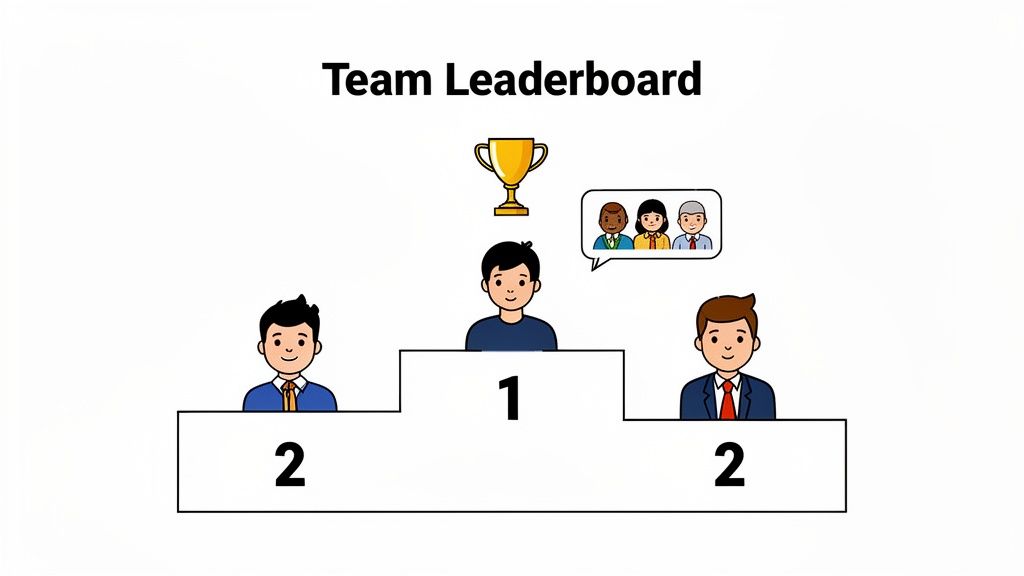
This gamified approach transforms individual referrals into a collective, competitive experience. Instead of advocates working alone, you group them into teams or communities that compete against each other for top rewards. All referrals from team members contribute to a collective score, which is displayed on a public leaderboard, creating powerful social proof and friendly competition.
This model leverages the human desire for belonging and achievement. When a customer's success is tied to their team's, it creates a strong sense of camaraderie and shared purpose. Seeing their team climb the leaderboard provides a continuous stream of motivation that individual rewards alone often can't match, making this one of the most dynamic referral program ideas available.
Why This Approach Works
Community-based programs tap into extrinsic and intrinsic motivators simultaneously. The leaderboard and grand prizes are the extrinsic pull, while the sense of community, teamwork, and social recognition provide powerful intrinsic rewards. This is ideal for brands with an active community, like fitness apps (Nike Run Club, Strava) or B2B software, where users can be grouped by company or industry. The competition drives a higher volume of referrals and deepens customer engagement with your brand ecosystem.
Implementation Tips & Best Practices
- Offer Both Team and Individual Rewards: Reward the winning team with a grand prize (e.g., exclusive products, a significant store credit), but also acknowledge top individual referrers within each team to motivate high-performers.
- Keep Competition Fresh: Run competitions in seasons or limited-time sprints (e.g., "The August Referral Race"). This gives new customers a chance to join and compete, preventing the same teams from dominating every time.
- Visualize Rankings: A live, dynamic leaderboard is non-negotiable. Display it prominently in the customer dashboard, in newsletters, and on social media to fuel the competitive spirit.
- Facilitate Team Communication: Create a dedicated space for teams to strategize and communicate, such as a private Slack channel, a Discord server, or a dedicated forum on your website. This strengthens the community bond and keeps engagement high.
How to Implement with Toki: Use Toki’s customer tagging and segmentation to assign users to different teams. Leverage the API to track referral points per team and display a live leaderboard on a dedicated landing page. Set up automated campaigns to send weekly ranking updates and trigger reward distribution to winning teams at the end of a competition cycle.
6. Cashback & Points Hybrid Referral Program
A cashback and points hybrid program offers a powerful, dual-incentive structure that caters to different customer motivations. This model provides an immediate, tangible reward in the form of cashback for a successful referral, while also rewarding the advocate with loyalty points that accumulate over time. This approach satisfies the desire for instant gratification and simultaneously builds long-term brand loyalty.
By combining these two reward types, you create a more flexible and appealing system. A customer might get $10 cashback instantly when their friend makes a purchase, plus 100 loyalty points they can save for a larger reward later. This is one of the most versatile referral program ideas because it successfully bridges the gap between short-term transactional value and long-term relational engagement, keeping customers invested in your ecosystem.
Why This Approach Works
This hybrid model excels by appealing to a wider audience. Some customers are motivated by immediate financial rewards, while others prefer to save up points for something more substantial. Brands like Rakuten and various credit card companies use this to great effect, offering instant cashback on purchases while also layering on a points system for continued engagement. It’s perfect for e-commerce stores that want to drive both new customer acquisition and increase the lifetime value of their existing referrers.
Implementation Tips & Best Practices
- Highlight Immediate Value: Make the cashback component the star of your initial messaging. "Get $15 cash now" is a more compelling immediate hook than "Earn 150 points."
- Clarify Point Value: Be transparent about what points are worth and how they can be redeemed. For example, "Every 100 points = $10 off your next order." A confusing system will kill participation.
- Promote Point Accumulation: Send automated email reminders when a customer’s point balance grows. This keeps them engaged and thinking about their next redemption goal. For a practical example of how a points-based system can engage customers, consider initiatives like the Aeros Couriers Reward Points Program.
- Create Exclusive Point Redemptions: Allow points to be redeemed for more than just discounts. Offer exclusive products, early access, or unique experiences to make your points currency feel more valuable than cash.
How to Implement with Toki: Configure Toki’s rewards engine to issue a dual reward for each successful referral. Set up a rule to automatically send a cashback reward (via a unique discount code or store credit) and simultaneously deposit a set number of points into the referrer's loyalty account. Use automated emails to notify the customer of both rewards.
7. Affiliate Hybrid Model with Commission Tiers
An affiliate hybrid model bridges the gap between casual customer referrals and a formal affiliate marketing program. This sophisticated approach creates a clear pathway for your most enthusiastic advocates to evolve from earning simple store credits into becoming true revenue-generating partners who earn cash commissions. It formalizes the relationship with your top referrers, equipping them with professional tools and higher incentives.
This model operates on a performance-based graduation system. A regular customer might refer friends for a discount, but once they hit a certain threshold of successful referrals, they are invited to join an exclusive affiliate tier. This elevates their status and unlocks a more lucrative commission-based reward structure, motivating them to promote your brand more strategically and consistently.
Why This Approach Works
This model is powerful because it builds a performance-driven pipeline of high-quality brand promoters. It allows you to identify your most influential customers and invest in them, transforming them into a scalable, commission-based sales force. Brands like ConvertKit and Bluehost leverage this by offering tiered commissions that reward top-performing affiliates, ensuring their best partners are motivated to keep driving sales. It's one of the best referral program ideas for creating a sustainable growth channel.
Implementation Tips & Best Practices
- Define Clear Graduation Criteria: Set specific, measurable metrics for moving from a referrer to an affiliate. For example, graduating after 10 successful referral sales or generating $1,000 in referral revenue.
- Equip Affiliates for Success: Provide your new affiliates with a dedicated dashboard, unique tracking links, and a media kit containing logos, banners, and pre-written copy. This professionalizes the partnership.
- Structure Commission Tiers: Motivate performance with tiered cash commissions.
- Bronze Tier (10-25 sales/month): 15% commission
- Silver Tier (26-50 sales/month): 20% commission
- Gold Tier (51+ sales/month): 25% commission + performance bonus
- Automate Payouts: Use a system that automates commission tracking and payouts. Timely and reliable payments are crucial for maintaining trust and motivation with your affiliates. To get started, you can explore how to create an affiliate program that scales with your business.
How to Implement with Toki: Use Toki to track referral attributions for all customers. Set up a workflow that automatically flags customers who cross a predefined threshold (e.g., 10 successful referrals). Trigger an automated email inviting them to your formal affiliate program, directing them to a unique sign-up page where they can access their new affiliate dashboard and commission structure.
8. Seasonal & Holiday-Specific Referral Campaigns
A seasonal or holiday-specific referral campaign aligns your program with key shopping periods like Black Friday, Cyber Monday, or Christmas. Instead of running a static program year-round, this approach introduces limited-time bonus multipliers and special rewards to create urgency and capitalize on existing consumer spending habits. It transforms your referral program into a timely event, driving concentrated bursts of activity.
This model leverages the built-in excitement of a holiday to amplify referral engagement. For instance, during a "Holiday Gifting" campaign, a successful referral might earn both the advocate and the new customer a bonus $20 gift card in addition to the standard reward. This strategy creates a powerful, time-sensitive incentive that encourages immediate action and makes sharing feel more relevant and rewarding.
Why This Approach Works
This strategy is effective because it taps into the heightened purchase intent that already exists during peak seasons. Customers are actively looking for deals and gift ideas, making them more receptive to sharing brands they love. By offering an elevated reward, you cut through the holiday noise and give your advocates a compelling reason to prioritize referring your brand. Sephora’s holiday bonus points for referrals are a great example of using this tactic to drive engagement when customers are already in a shopping mindset.
Implementation Tips & Best practices
- Plan in Advance: Begin planning your campaign 2-3 months ahead of the season. This provides ample time to prepare creative assets, segment your audience, and schedule promotional communications.
- Create Themed Assets: Design dedicated, holiday-themed landing pages, emails, and social media graphics. A cohesive visual theme makes the campaign feel like a special event and boosts participation.
- Use Countdown Timers: Add countdown timers to your landing page and emails to create a strong sense of urgency. Highlighting that the "bonus reward ends in 48 hours" is a powerful psychological trigger.
- Segment Your Messaging: Tailor your campaign announcements to different customer segments. For example, send a special "early access" notification to your most loyal advocates or past top referrers to make them feel valued and encourage initial momentum.
How to Implement with Toki: Schedule a temporary "Campaign" reward within Toki that runs for a specific date range. Use Toki’s email and SMS automation to announce the campaign, send mid-point reminders, and deliver a "last chance" message before it ends. Segment your audience to target past referrers with a special pre-launch offer.
9. Charity/Cause-Aligned Referral Program
A charity-aligned referral program shifts the focus from personal gain to collective good. Instead of rewarding the referrer with a discount or store credit, the brand makes a donation to a charitable cause on their behalf for every successful referral. This values-driven approach connects your brand with a greater purpose, attracting and retaining customers who are motivated by social impact.
This model transforms a transactional referral into a meaningful act of giving. When a customer refers a friend, they aren't just saving money; they are contributing to a cause they care about. This strategy builds deep emotional loyalty and positive brand association, making customers feel good about both their purchase and their advocacy. It's a powerful way to turn your customer base into a force for good.
Why This Approach Works
This model resonates deeply with socially-conscious consumers, who prioritize brands that align with their values. It differentiates your company in a crowded market by showcasing corporate responsibility. Brands like TOMS and Warby Parker have built empires on this "buy one, give one" philosophy, proving that purpose can be a powerful driver of growth. This is one of the most effective referral program ideas for brands targeting Millennial and Gen Z audiences who are passionate about making a difference.
Implementation Tips & Best Practices
- Offer Choice & Transparency: Partner with 3-5 reputable nonprofits that align with your brand's mission. Allowing customers to choose which cause their referral supports gives them a sense of ownership and personal connection.
- Show Tangible Impact: Don't just say you donated; show the result. Use impact-based metrics like "Your referral provided 10 meals" or "Your referral planted 5 trees." Visualizing the impact makes the act feel more concrete and rewarding.
- Communicate the 'Why': Clearly explain why you've chosen this model and highlight the partner charities in your marketing materials, on your website, and within the referral program interface. Tell the story behind your commitment.
- Create a Donation Dashboard: In the customer's account, display a running total of the impact they've generated through their referrals. This serves as a powerful, non-monetary motivator and reinforces their positive contribution over time.
How to Implement with Toki: Use Toki’s custom rewards feature to set up a "charitable donation" as a reward option. You can track successful referrals and then use Toki's reporting to calculate the total donation amounts for each partner charity. Leverage automated emails to notify customers when their referral results in a successful donation, sharing details about the impact they’ve made.
10. Omni-Channel Referral Program (Online + In-Store)
An omni-channel referral program breaks down the walls between your online and physical stores, creating a single, unified experience. Customers can refer friends and redeem rewards seamlessly, whether they are shopping on their laptop at home or browsing the aisles in your brick-and-mortar location. This approach recognizes that the modern customer journey is not linear and ensures their loyalty is captured and rewarded at every touchpoint.
This integrated system allows an in-store shopper to refer a friend who makes their first purchase online, and both receive rewards instantly. It bridges the digital and physical divide, providing a consistent brand experience that boosts customer lifetime value. By connecting these channels, you create a powerful, cohesive ecosystem where online engagement drives in-store traffic and vice-versa, making it one of the most sophisticated referral program ideas for modern retail.
Why This Approach Works
This model thrives by meeting customers where they are. It eliminates friction and ensures no referral opportunity is lost, regardless of how a customer chooses to interact with your brand. Brands like Sephora have perfected this with their Beauty Insider program, where points and rewards are synced across their app, website, and physical stores. This strategy is essential for retailers with a physical presence, as it transforms two separate customer bases into one unified community of advocates.
Implementation Tips & Best Practices
- Synchronize Customer Data: Your top priority is ensuring seamless data synchronization between your e-commerce platform (like Shopify) and your Point of Sale (POS) system. Customer profiles, referral codes, and reward balances must be consistent everywhere.
- Train In-Store Staff: Equip your retail team to be program champions. They should be able to explain how the program works, look up a customer's rewards, and help them redeem points at the checkout.
- Use QR Codes In-Store: Place QR codes on receipts, in-store signage, or product packaging that link directly to a customer's referral dashboard. This makes it easy for in-person shoppers to share on the spot.
- Create Unified Marketing: Promote the program consistently across all channels. Mention it in marketing emails, on social media, and with in-store signage to reinforce its omni-channel nature. For brands looking to build this unified experience, you can learn more about crafting an omni-channel loyalty program that truly resonates with customers.
How to Implement with Toki: Leverage Toki’s Shopify POS integration to connect your online and offline sales channels. This allows you to track referrals and issue rewards in real-time, whether a purchase happens online or in-store. Use Toki to generate unique QR codes for in-store displays and train your staff to use the POS interface to easily apply referral rewards to a customer's cart.
10-Point Referral Program Comparison
| Program | 🔄 Implementation Complexity | ⚡ Resource Requirements | 📊 Expected Outcomes | ⭐ Key Advantages | 💡 Ideal Use Cases |
|---|---|---|---|---|---|
| Tiered Referral Rewards Program | High — multi-tier logic, tracking & automation | Moderate–High — dev, analytics, reward budget | Strong LTV uplift; sustained referral activity | Creates aspirational progression; higher engagement at upper tiers | Subscription businesses, premium DTC, high-value e‑commerce |
| Social Media Share & Earn Referral Program | Medium — social integrations, link tracking | Low–Medium — creative assets, social analytics, influencer budget | High viral reach; variable conversion rates | Exponential organic reach; UGC-driven social proof | Fashion/beauty, Gen Z brands, viral growth startups |
| Double-Sided Incentive Referral Program | Low — straightforward reward flows | Medium — reward budget, fraud detection | Higher conversion rates; fast viral growth | Simple, easy-to-understand win‑win incentives | E‑commerce startups, marketplaces, price‑sensitive segments |
| Exclusive Access & Early Product Launch Referral Program | Medium — gating, inventory coordination | Low–Medium — product allocation, CRM work | Boosts brand desirability and buzz (harder to quantify) | Leverages scarcity; low cash outlay | Fashion, limited-edition DTC, community-focused luxury |
| Community-Based Referral Program with Team Leaderboards | High — team logic, leaderboards, moderation | High — platform dev, community managers, gamification | Sustained engagement; strong retention & network effects | Social motivation; builds community identity | Fitness/wellness, local retail, subscription communities |
| Cashback & Points Hybrid Referral Program | Medium — dual accounting & loyalty integration | Medium–High — payments, loyalty platform, analytics | Mix of immediate activation and long-term repeat purchases | Immediate gratification + long-term engagement flexibility | High-transaction e‑commerce, fintech, subscription services |
| Affiliate Hybrid Model with Commission Tiers | High — affiliate infrastructure & attribution | High — tracking systems, partner support, payout ops | Scalable acquisition; monetizes top performers | Converts super-users into revenue-generating partners | SaaS, digital products, e‑commerce merchants seeking scale |
| Seasonal & Holiday-Specific Referral Campaigns | Low–Medium — campaign setup and timing | Low — concentrated creative/marketing spend | Short-term spikes; high conversion during peaks | Creates urgency/FOMO; easy to promote | Retailers with seasonal peaks, gift-focused brands |
| Charity/Cause-Aligned Referral Program | Low–Medium — partnerships & impact reporting | Low–Medium — donation funds, nonprofit coordination | Strong brand sentiment; loyalty among values-driven buyers | Positive PR and emotional connection | Sustainable/ethical brands, purpose-driven DTC companies |
| Omni-Channel Referral Program (Online + In-Store) | Very High — POS + systems integration, sync | High — POS compatibility, staff training, IT support | Unified experience; higher capture across touchpoints | Seamless redemption across channels; comprehensive analytics | Retail brands with physical locations, national chains |
Ready to Launch? Turning Your Ideas Into a High-Performing Referral Engine
You've explored ten powerful referral program ideas, from tiered reward systems to community-driven leaderboards and omni-channel campaigns. The common thread connecting these strategies is a fundamental shift in marketing philosophy. Instead of just acquiring customers, the goal is to create advocates. Your most loyal fans are not just a revenue stream; they are your most authentic and effective marketing channel.
The journey from a basic concept to a thriving referral engine is built on understanding your audience and aligning incentives with their motivations. Whether you're offering exclusive product access, tiered cash commissions, or a chance to support a shared cause, the program must feel like a natural extension of your brand's values and your customer's experience.
Key Takeaways for Building Your Referral Program
To distill this comprehensive guide into actionable principles, remember these core tenets. The most successful referral programs are not set-it-and-forget-it solutions. They are dynamic, living parts of your marketing ecosystem that require attention, testing, and optimization.
Here are the critical takeaways to guide your implementation:
- Motivation is Not One-Size-Fits-All: As demonstrated by the cashback hybrid, tiered rewards, and charity-aligned models, different customers are motivated by different things. Some seek financial gain, others crave status and exclusive access, and many are driven by altruism. The most impactful referral program ideas offer a value proposition that resonates deeply with a specific customer segment.
- Simplicity Drives Participation: Complexity is the enemy of engagement. A referral process should be effortless for both the advocate and their friend. From a one-click share button on social media to a clear, concise landing page explaining the benefits, every step must be intuitive. The Double-Sided Incentive program excels here because its value is immediately understood by both parties.
- Exclusivity Creates Desire: The Exclusive Access and Community-Based programs highlight a powerful psychological trigger: people want to be part of something special. By framing your referral program as an inner circle or a gateway to unique benefits, you transform a simple transaction into a coveted status symbol, fostering a much deeper sense of brand loyalty.
- Measurement is Non-Negotiable: To turn your program into a true growth engine, you must move beyond vanity metrics. Track KPIs like your Referral Rate, Share Rate, and the Customer Lifetime Value (CLV) of referred customers. This data will reveal what's working, what isn't, and where you should invest your resources for maximum impact.
Your Actionable Next Steps
Feeling inspired is great, but taking action is what builds momentum. The difference between a list of ideas and a high-performing program lies in execution. Start small, validate your concept, and scale what works.
- Choose One Core Idea: Don't try to implement everything at once. Select the single referral program idea that best aligns with your brand identity and customer behavior. Is your audience highly active on social media? Start there. Do you have a passionate community? A leaderboard might be perfect.
- Define Your "Win" Conditions: Clearly outline what success looks like. Is it a 10% increase in new customers from referrals in the next quarter? Or achieving a 5% referral rate among your top customer segment? Set specific, measurable goals.
- Map the Customer Journey: Walk through the entire referral flow from the perspective of both the advocate and the referred friend. Where are the potential friction points? How can you make the experience seamless and delightful?
- Launch, Listen, and Iterate: Your first launch is a baseline, not a final product. Use customer feedback, survey data, and your key performance indicators to continuously refine your incentives, messaging, and overall strategy. The most effective programs evolve over time.
Ultimately, a world-class referral program does more than just lower your customer acquisition costs. It builds a powerful, self-perpetuating cycle of advocacy that strengthens your brand, deepens customer relationships, and creates a competitive moat that is nearly impossible for others to replicate. You're not just buying leads; you're investing in a community that believes in what you do.
Ready to transform these ideas into a powerful, automated growth engine for your store? Toki provides a comprehensive platform to build, manage, and optimize any referral program you can imagine, from simple two-sided rewards to complex tiered affiliate systems. Start building your referral program with Toki today and turn your best customers into your most effective marketers.