Your Guide to Winning with POS Rewards Programs
Discover how modern POS rewards programs unify online and in-store sales. Learn key strategies and features to boost loyalty and drive repeat purchases.
Think of your point-of-sale (POS) system as the heart of your business, pumping transactions through every day. Now, what happens when you connect a rewards program to it? That POS becomes your brand's brain, remembering every customer and every purchase, whether it happens online or in-store.
This connection is what turns a one-time buyer into a lifelong fan.
Why Modern POS Rewards Programs Are a Must-Have for Growth
We've all seen those flimsy paper punch cards—the ones that get lost in a wallet or forgotten at home. Thankfully, we've moved on. Today's POS rewards programs are built right into the systems you already use, creating a single, unified profile for every customer.
This is huge. It means you can finally connect the dots between your Shopify store and your physical shop, creating one seamless experience.
Imagine this: a customer browses a new product on your website, adds it to their cart, but doesn't check out. A week later, they walk into your store and buy it. Without an integrated system, you see two separate, incomplete actions. With one, you see the full story of a single customer's journey.
From Transactions to Relationships
Seeing that complete picture is where the magic really happens. When you can track online and in-store activity under one profile, you can stop guessing what your customers want and start building a loyalty strategy based on how they actually behave.
For any growing brand, this shift from simply processing transactions to actively building relationships is no longer just a nice-to-have; it's essential.
The benefits hit your bottom line directly:
- It brings people back. You’re giving customers a real reason to choose you over the competition, again and again.
- It boosts customer lifetime value. Happy, loyal customers simply spend more over their lifetime.
- It gives you priceless data. You get a clear view of buying habits, which helps you make smarter marketing and inventory decisions.
The goal is to build one intelligent customer profile. Every single interaction, from an online browse to an in-store purchase, should make their experience with your brand richer and more personal.
The Financial Impact of Integrated Loyalty
These programs have gone from a niche tool for supermarkets to a core growth engine for modern retail. The numbers don't lie. A small 5% increase in customer retention can lift profits anywhere from 25% to 100%, depending on your industry.
Globally, the data is just as compelling: 84% of consumers say they’re more likely to stick with a brand that offers a loyalty program. To get a better handle on the payment technologies that make these programs possible, it's worth tapping into deep payment processing expertise.
How Rewards Directly Change Customer Spending Habits
A well-designed POS rewards program does more than just make customers feel good; it actively and measurably changes how they spend their money. This isn't about some vague sense of brand loyalty—it's about triggering specific actions at the checkout counter that directly boost your bottom line.
Think of it like a progress bar in a video game. When a customer sees they’re just a few points away from their next reward, right there on the POS screen, it creates a powerful psychological nudge. Suddenly, adding one more item to their cart doesn't feel like an impulse buy. It feels like a smart move to unlock a real, tangible benefit.
Driving Real Financial Growth
This shift in thinking has a direct impact on the numbers that matter most. Customers who are part of a loyalty program consistently spend more, visit more often, and stick around longer than those who aren't. This is no accident. It’s the result of a smart strategy that makes every single purchase feel more valuable.
The financial upside is crystal clear across three core areas:
- Increased Average Order Value (AOV): Members are far more likely to add items to their cart to hit that next reward threshold, which immediately pumps up the value of each transaction.
- Higher Purchase Frequency: Earning points and seeing their progress gives customers a compelling reason to choose your store over a competitor for their next purchase.
- Improved Customer Lifetime Value (CLV): By encouraging repeat business and higher spending, rewards programs turn casual shoppers into your most profitable, long-term brand advocates.
The best POS rewards programs create a positive feedback loop. Customers spend more to earn rewards, and the value they get from those rewards encourages them to keep coming back and spending even more.
The evolution from simple paper punch cards to modern, unified POS systems has made it easier than ever to track and influence these behaviors.
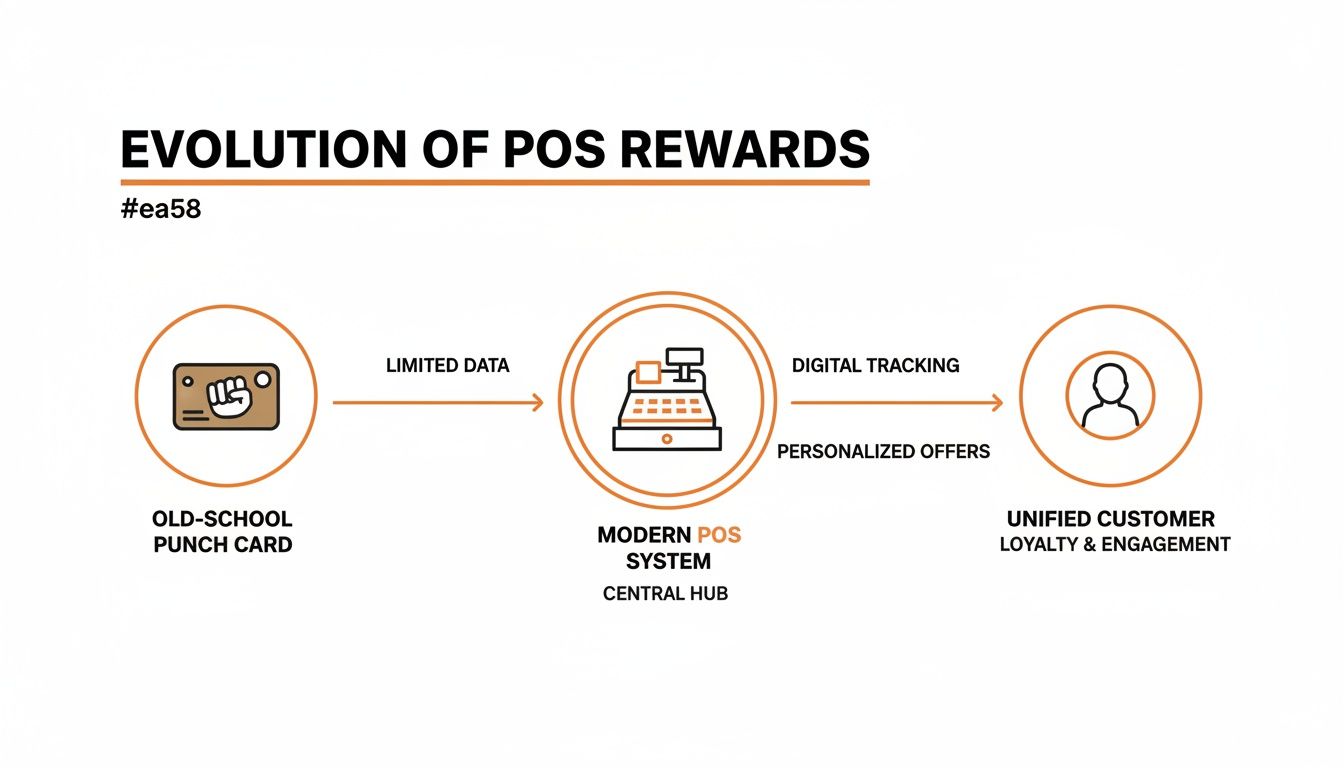
This visual journey shows how rewards have shifted from being simple, disconnected promotions to a core part of the customer's profile, managed right at the point of sale.
The Hard Data on Spending Changes
The proof is in the data flowing through your POS system. The numbers confirm just how much these programs alter spending behavior. Across industries, a whopping 66% of consumers say that the chance to earn rewards actually changes their spending habits, prompting them to increase their basket size.
Even better, loyalty program members generate 12%–18% more incremental revenue each year than non-members. And here’s the kicker: when members redeem their rewards, their annual spending can jump to be 3.1 times higher than that of members who never cash in. If you want to dive deeper, you can review more loyalty program statistics to see the full picture.
This data proves that a reward isn't just a discount. It's a powerful catalyst for future spending, turning your POS from a simple payment tool into a dynamic engine for growth.
Must-Have Features of a Modern POS Rewards Platform
Choosing the right technology is what turns a great rewards strategy into real-world results. A modern POS rewards program isn't just an add-on; it’s a deeply connected system built to bring every customer touchpoint together. For merchants, this means looking beyond the rewards themselves and focusing on how well a platform bridges the gap between your online store and your physical checkout counter.
The real goal is to build one cohesive loyalty ecosystem. Your customer should feel recognized whether they're clicking "buy now" on their laptop or swiping their card in your shop. This takes a specific set of features working in harmony to make everything effortless for both your customers and your staff.
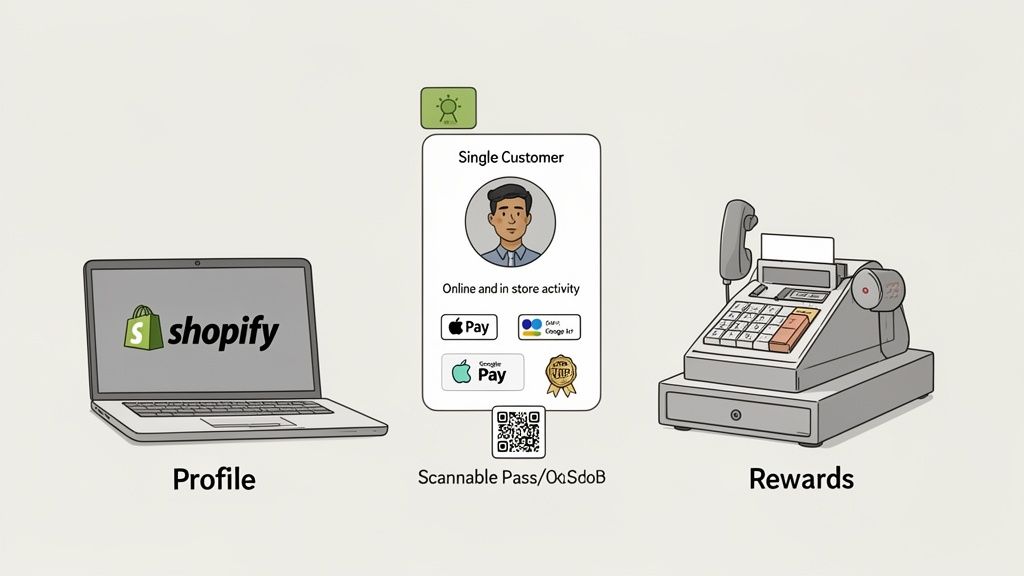
To really nail this omnichannel experience, you need to look for a few key capabilities in any platform you consider.
Unifying the Customer Journey
The absolute bedrock of a great omnichannel program is flawless integration. Your system has to act as a central nervous system, pulling in and syncing customer data in real-time across every single place you sell.
- Deep POS Integration: Your loyalty software needs to talk to your point-of-sale system without any hiccups. Look for native integrations with platforms like Shopify POS. This means when a customer gives their name or email in-store, their entire online history—points balance, available coupons, VIP status—pops up instantly for your staff.
- A Single Customer View: The platform must give you one unified profile for each customer. You should be able to see everything at a glance: their online orders, their in-store purchases, who they referred, and every reward they've ever redeemed. It all needs to be tied to one person.
A truly modern system makes the technology invisible. To the customer, it should feel like one continuous conversation with your brand, no matter where it takes place.
This seamless flow of information is what unlocks a genuinely personal and consistent experience.
To help you vet potential platforms, here’s a quick breakdown of what to look for, from the non-negotiables to the features that will set you apart.
Core Features for an Omnichannel POS Rewards Program
| Feature Category | Essential Functionality | Why It Matters for POS |
|---|---|---|
| Data Sync | Real-time, two-way synchronization between your e-commerce platform (like Shopify) and your POS system. | Eliminates delays. A customer can earn points online and immediately redeem them in-store, creating a seamless experience. |
| Customer Identification | Multiple ways for staff to look up customers in-store, such as by name, email, or phone number. | Speed and convenience are everything at checkout. This ensures no customer gets left behind because they can't remember an account number. |
| Reward Redemption | Simple, one-click or one-tap reward application at the point of sale. | Reduces friction and wait times. Staff can easily see and apply available rewards, making the customer feel valued and smart for participating. |
| Digital Wallet Integration | Ability for customers to add a scannable loyalty pass to their Apple Wallet or Google Pay. | This is a game-changer for in-store speed. It removes the need for physical cards or fumbling with apps, making checkout instant. |
| Staff Training & UI | An intuitive interface for your sales associates within the POS system that requires minimal training. | Your team is on the front lines. If the system is clunky or hard to use, they won't promote it, and the program will fall flat. |
Ultimately, these features work together to ensure the experience is just as smooth in person as it is online, which is the whole point of an omnichannel strategy.
Modern Tools for Engagement
Beyond just tracking points, the best platforms offer tools that make it fun, easy, and natural for people to participate. These features are designed to slide right into your customers' existing habits, not force them to learn a new process.
One of the most powerful tools is the scannable digital wallet pass. It allows a customer to add their loyalty card directly to their Apple Wallet or Google Pay. When they get to the register, they just tap their phone. That's it. They're instantly identified, and any eligible rewards can be applied on the spot. No plastic cards, no forgotten login details—just a lightning-fast checkout.
Flexible and Dynamic Reward Structures
The days of a simple "spend $100, get $5 off" program are over. Your platform has to support different kinds of reward structures to keep things interesting and appeal to all your different customer types. If you're curious about the options out there, exploring different loyalty platform providers will give you a great overview of what's possible.
At a minimum, you'll want the ability to run:
- Points-Based Systems: The classic model. Customers earn points for purchases and other actions, then cash them in for discounts or free products.
- VIP Tiers: As customers spend more, they unlock new levels with better perks, like early access to sales or a higher points-per-dollar earn rate. This gives them a clear goal to strive for.
- Paid Memberships: Offer a premium club with exclusive benefits—like free shipping on all orders or a permanent discount—in exchange for a monthly or annual fee. This creates a reliable, recurring revenue stream.
- Gamified Challenges & Referrals: Keep customers engaged with fun activities (e.g., "Make 3 purchases this month to earn 100 bonus points") and reward them for spreading the word to friends and family.
Crafting a Rewards Strategy Customers Will Actually Use
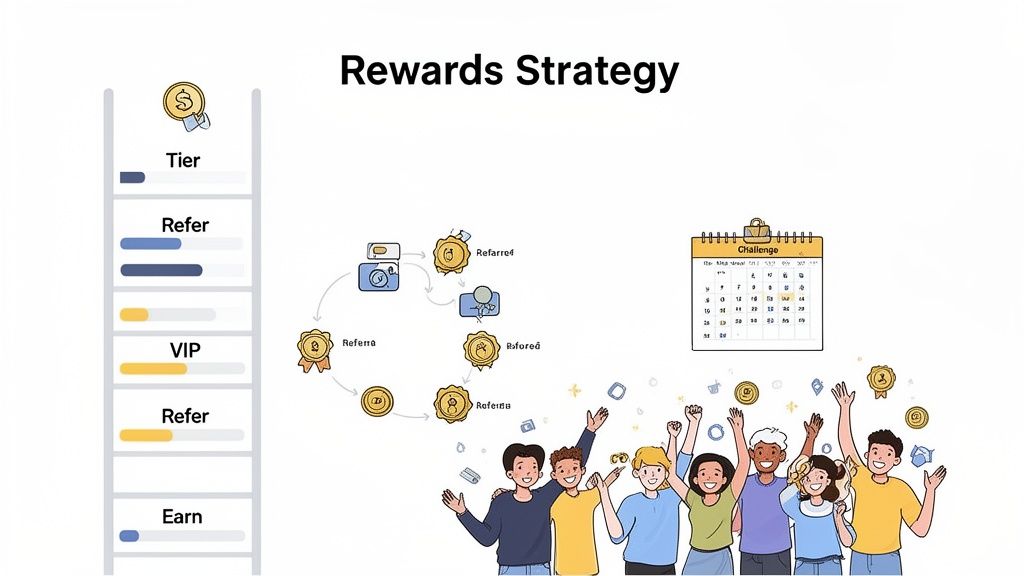
Having the right technology is a huge piece of the puzzle, but it's only half the story. The best POS rewards programs aren't just built on software; they’re built on a genuine understanding of what makes people tick. To create a program that customers actually get excited about, your strategy needs to feel valuable, personal, and maybe even a little bit fun.
This is where you move past the generic "10% off" coupons. By tapping into the goldmine of data from both your online store and your in-person POS, you can start creating personalized offers that speak directly to a customer's habits. That's how you make someone feel seen and appreciated.
The most successful strategies are the ones that connect with those core human desires for progress, exclusivity, and a sense of belonging. A simple discount just can't compete with that.
Designing Rewards with Real Value
First things first: if you want customers to participate, the rewards have to be worth their while. And "worth" doesn't always mean a dollar amount. A great program usually mixes different kinds of rewards to appeal to all sorts of customer motivations.
- Transactional Rewards: These are the bread and butter. Think points for every dollar spent, cash-back offers, or a freebie after a certain number of purchases. They’re straightforward, easy to understand, and provide clear, tangible value.
- Experiential Rewards: This is where you can get creative. Offer perks that money can't necessarily buy, like early access to a new collection, an invitation to a members-only event, or a personal styling session. These rewards make customers feel like true insiders.
- Emotional Rewards: Sometimes, the best reward is simply recognition. This could be a special birthday bonus, a shout-out on your social media, or some surprise "just because" points for being a loyal customer.
When you blend these types together, you create a much richer and more engaging experience that keeps people invested in your brand for the long haul.
The secret to a killer program isn't just about giving things away. It's about making customers feel like they're earning status and recognition. Every point they earn should reinforce that they made a smart choice by sticking with your brand.
Leveraging Different Program Structures
Modern POS rewards programs have come a long way from the simple punch card. Today, they're more like gamified ecosystems, and mobile is at the center of it all. In fact, about 59% of consumers now prefer to engage with loyalty programs through an app. Just look at the giants—Starbucks reports that its rewards program drives a staggering 53% of all its U.S. store spending, showing just how powerful a well-integrated app and POS system can be.
The structure of the program itself is also changing. While 78% of companies still offer free loyalty schemes, a growing 22% are now introducing premium, paid memberships for their most dedicated fans. You can dig into more of these stats in this breakdown of customer loyalty trends.
This all points to the need for a flexible structure that fits your brand and your customers.
- VIP Tiers: Nothing motivates people quite like the desire to level up. Tiers give customers a clear goal to work toward, unlocking better perks and a sense of exclusivity as they spend more.
- Referral Programs: Why not turn your best customers into your best marketers? Rewarding them for bringing in friends and family is a powerful way to build a real community around your brand.
- Gamified Badges & Challenges: Make it fun! Let customers earn special badges for completing challenges, like making five purchases in a month or trying a new product category.
These kinds of strategies transform a rewards program from a simple discount tool into an interactive experience. That’s how you build a genuine, lasting connection with your customers.
Your Step-By-Step Omnichannel Implementation Plan
Rolling out a POS rewards program that truly connects your online and brick-and-mortar stores doesn't have to be a massive technical headache. The best way to approach it is as a straightforward, five-stage project. When you break it down into smaller, concrete actions, you can confidently move from initial concept to a fully-realized loyalty system that your customers will love.
The path starts with a solid strategy and ends with happier, more engaged customers. This roadmap will walk you through each phase, making sure your technical setup perfectly supports your business ambitions. Keeping everything on schedule often comes down to solid project management for software engineering, especially when coordinating the different moving parts.
Step 1: Define Your Goals and Choose Your Platform
First things first, you need to know what success looks like. Simply aiming to "increase loyalty" is too vague to be useful. Get specific with your targets. Are you trying to increase repeat customer visits by 20%? Or maybe your goal is to boost the average order value by 15% for program members.
Once you have these clear goals, finding the right platform becomes much easier. You’ll want to look for a solution like Toki that was built for this kind of integration, offering native Shopify POS support, customizable reward structures, and digital wallet passes. This ensures the tech can actually help you hit your numbers.
Step 2: Configure Your Reward Rules
Now for the fun part—designing the actual program. Start with the foundation: how many points will a customer earn for every dollar they spend, whether they're shopping on your website or in your store? From there, decide what those points are worth. A common setup is offering a $10 discount for every 1,000 points earned.
But don't stop at the basics. You can make the program far more compelling by adding a few extra layers.
- VIP Tiers: Create spending levels that unlock special perks. Think free shipping for Gold members or early access to new products for your top-tier Platinum customers.
- Bonus Campaigns: Run special promotions to drive sales when you need them most. Offering double points on weekends, for instance, is a great way to bring people in during traditionally slower times.
Step 3: Train Your Team and Promote the Launch
Your frontline staff are the most important ambassadors for your new rewards program. They're the ones who will be signing people up and explaining the benefits. Make sure they know exactly how to enroll customers, look up their loyalty profiles, and apply rewards right at the POS. A system with a clean, intuitive interface will make this training a breeze.
With your team ready, it's time to get your customers excited. Plan your launch promotion with in-store signs, a series of email announcements, and a coordinated social media push. A well-executed launch campaign gets customers asking to sign up on day one. For a deeper dive into making all these channels work together, check out our guide to building an omnichannel loyalty program.
Measuring Success and Avoiding Common Mistakes
Launching a POS rewards program without a way to measure its impact is like flying blind. You need clear metrics to prove it's actually moving the needle, not just eating into your margins. Tracking the right key performance indicators (KPIs) is the only way to know what’s working, what isn’t, and how the program is really contributing to your bottom line.
Think of it as your program’s report card. It tells you if you’re building genuine loyalty or just handing out discounts.
Key Metrics to Track
To get a true sense of your program's health, you don’t need a mountain of data. Instead, focus on a few core metrics that tell a clear story about customer engagement and financial return.
- Program Enrollment Rate: This is your first checkpoint. It shows how well your team and in-store marketing are getting customers to sign up. If the rate is low, it’s a red flag that the value isn’t clear at checkout.
- Customer Retention Rate: This is the big one. It tracks the percentage of members who come back to make another purchase. Ultimately, this is the number that proves you’re building loyalty.
- Redemption Rate: This metric reveals how many earned rewards are actually being cashed in. A low rate can mean a few things: the rewards might be too hard to earn, or they just aren't exciting enough to bring people back.
A healthy program is a balanced ecosystem. High enrollment means nothing if customers never come back, and great retention is hard to achieve if rewards feel impossible to redeem.
By keeping a close eye on these numbers, you can stop guessing what your customers want and start making decisions based on real behavior. If you want to dive deeper, our complete guide to loyalty program analytics will help you build out a full tracking framework.
Common Pitfalls to Avoid
Even the most well-thought-out programs can stumble if they forget about the customer experience. Many brands fall into the same common, yet completely fixable, traps.
Here’s what to watch out for:
- Making Rewards Unattainable: If a customer has to spend a small fortune just to earn a tiny discount, they’ll check out fast. The journey to that first reward needs to feel quick and easy to get them hooked.
- Offering Uninspiring Perks: A generic 5% off coupon isn’t going to cut it for most people. Dig into your sales data. What do your best customers actually buy? Offer them a free version of a popular product or something else they'll truly value.
- Creating a Clunky In-Store Experience: The checkout line is no place for friction. If signing up or redeeming a reward is slow and complicated, it frustrates everyone—the customer, the staff, and the people waiting behind them. Keep it simple and fast.
Frequently Asked Questions
Still have a few questions floating around? We get it. Let’s tackle some of the most common things merchants ask about setting up a loyalty program right at their point-of-sale.
| Question | Answer |
|---|---|
| How do my customers sign up in-store? | The best systems make this dead simple.## Frequently Asked Questions |
Still have a few questions floating around? We get it. Let’s tackle some of the most common things merchants ask about setting up a loyalty program right at their point-of-sale.
| Question | Answer |
|---|---|
| How do my customers sign up in-store? | The best systems make this dead simple. At checkout, your staff just needs a name and a phone number or email to enroll a customer directly in the POS. It takes seconds, eliminating any friction that might stop someone from joining. |
| Do these programs really work? | You bet they do—when they’re set up thoughtfully. A good POS rewards program is a proven way to keep customers coming back and spending more. The key is making the rewards feel valuable and easy to earn. When customers can clearly see their progress, they're far more likely to stick around. |
| What kind of rewards can I offer? | You've got options! The most popular formats are points-based (earn points per dollar for discounts), tiered programs (unlock bigger perks with more spend), or cash-back (get a percentage back as store credit). It's all about finding what resonates with your customers. |
| Is this going to be expensive to set up? | Not necessarily. Many modern loyalty platforms bundle this feature into their existing subscription plans, so you often don't need a separate, costly tool. When you look at the boost in customer lifetime value, a solid POS rewards program quickly becomes an investment that pays for itself. |
Hopefully, that clears things up! A well-designed program isn't just a marketing tactic; it's a core part of building a business that people love.
Ready to turn your POS into a powerful retention engine? Toki offers seamless Shopify POS integration, digital wallet passes, and customizable reward structures designed to build lasting customer loyalty. Discover how Toki can help you grow.