Your Guide to Building an Online Loyalty Card Program
Discover how to build an online loyalty card program that drives repeat sales and customer retention. Learn must-have features, types, and best practices.
Think of the classic paper punch card from your favorite coffee shop. Now, imagine that concept completely redesigned for today's online world. That’s the essence of an online loyalty card program. It's a digital-first approach to rewarding your best customers, building real brand loyalty, and keeping them coming back.
Instead of a flimsy card that gets lost in a wallet, this system lives on your customers' smartphones, tracking purchases, points, and rewards seamlessly. For any e-commerce store, this isn't just a nice-to-have; it's a powerful engine for boosting customer retention and lifetime value.
The Modern Punch Card Your E-commerce Store Needs
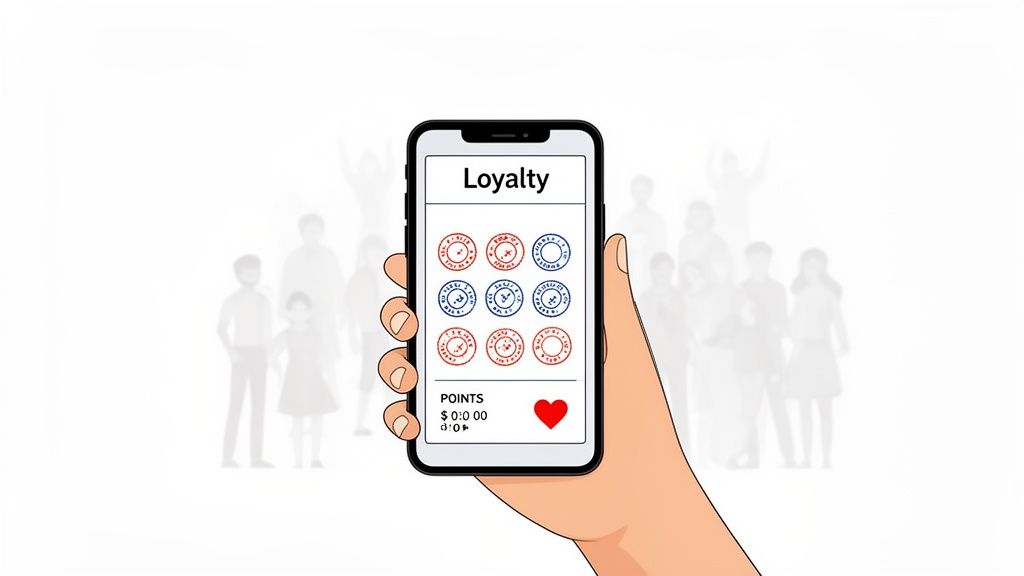
At its heart, an online loyalty card program is a system built to forge genuine, lasting relationships with the people who already love what you sell. It takes the simple, effective idea of the punch card and supercharges it for the digital age.
The magic is in its convenience. Because it’s often integrated with digital wallets like Apple Wallet or Google Pay, your brand stays right at your customer's fingertips. The goal here is bigger than just offering discounts. It's about turning one-time buyers into a loyal community that feels seen, appreciated, and connected to your brand’s journey.
From Transaction to Relationship
While the basic function is to reward repeat business, the true power of a digital loyalty program is its ability to deepen the customer relationship. It creates a space where every interaction, not just every purchase, feels meaningful and rewarding.
An online loyalty card program is more than a marketing tactic; it's a value exchange. Customers offer their repeat business and advocacy, and in return, brands provide exclusive perks, recognition, and a sense of belonging that simple discounts can't replicate.
This shift from a purely transactional view to a relational one explains why these programs have become so common. A staggering 90% of companies now have some form of loyalty program. This isn't a coincidence; it's a direct response to the need for brands to build real connections in a crowded market.
Why a Digital Approach Is a Game Changer
Making the switch from physical cards to a digital system opens up a world of possibilities. A modern online loyalty card program gives e-commerce merchants, especially those on platforms like Shopify, a serious competitive edge.
The immediate advantages of going digital are clear. Here’s a quick look at what you can expect.
| Benefit | Impact on Your E-commerce Business |
|---|---|
| Increased Customer Retention | Gives shoppers a powerful incentive to return to your store instead of turning to a competitor. |
| Higher Average Order Value (AOV) | Loyalty members often spend more per purchase to hit the next reward or unlock a new tier. |
| Valuable Customer Data | Unlocks deep insights into buying habits, paving the way for hyper-personalized marketing. |
| Enhanced Brand Advocacy | A great program inspires happy customers to become your most vocal brand ambassadors. |
Ultimately, a well-run program isn't a cost—it's a direct investment in the most valuable asset you have: your customer base. You can learn more about the specific benefits of a digital loyalty card and how it works.
Choosing the Right Type of Loyalty Program
Picking the right online loyalty card program is a lot like choosing the right tool for a job. A hammer is perfect for nails, but you wouldn't use it for screws. In the same way, the loyalty model that works for a high-frequency coffee shop probably won't be the best fit for a luxury fashion brand. The trick is to align the program's structure with your specific business goals and how your customers actually behave.
Not all loyalty programs are created equal. Some are built for simplicity and instant gratification, giving customers a quick win. Others are designed to create a sense of aspiration and long-term exclusivity. Understanding these core differences is the first step toward building a system that doesn't just hand out rewards but actively drives real business growth.
Let's break down the most effective models you can use.
Points and Rewards: The Classic Earn and Burn
The points-based system is probably the most common and easily understood loyalty program out there. Think of it as a digital piggy bank. For every dollar spent or action taken—like writing a review or following your brand on social media—customers collect points. Once they’ve saved up enough, they can "cash them in" for rewards.
This model's real strength lies in its simplicity. Customers get the "earn and burn" concept immediately, making it incredibly easy for them to jump in and start participating. It’s a fantastic fit for businesses with frequent, lower-value purchases, like cosmetics or coffee, because customers can see their points balance grow quickly, which encourages that next purchase.
A clear, user-friendly interface is key here.

When customers can easily see how to earn and what they can get, they're far more likely to stay engaged.
Tiered Memberships: Creating Your VIPs
Tiered programs are all about aspiration. Think of an airline's frequent flyer program—everyone wants to hit Silver, Gold, or Platinum status for the better perks. Your loyalty program can work the exact same way by creating an exclusive club that customers want to join and climb the ladder in.
As customers spend more or engage more frequently, they unlock new levels of benefits. The entry-level tier might offer basic points, but the real magic happens at higher tiers with perks like:
- Free expedited shipping
- Early access to new products
- Exclusive members-only sales
- A dedicated customer service line
This model is perfect for brands aiming to build a strong sense of community and status. It motivates customers to consolidate their spending with you to either maintain their status or reach the next level. Given that 85% of consumers say loyalty programs make them more likely to stick with a brand, adding tiers provides a powerful psychological nudge.
Paid and Premium Tiers: The Subscription Model
A paid or premium loyalty program flips the script: customers pay a recurring fee (monthly or annually) for instant, high-value benefits. Amazon Prime is the textbook example. For this to work, the value proposition has to be a no-brainer, so compelling that customers are happy to pay for it upfront.
This model creates a powerful psychological lock-in. Once a customer has invested their own money, they feel a commitment and are far more likely to shop exclusively with your brand to get their money's worth.
A paid loyalty program transforms the customer relationship from transactional to contractual. Members aren't just earning rewards; they've bought into an exclusive experience, making them your most dedicated and high-spending customers.
This approach works best for brands with a broad product range and high purchase frequency, which ensures members have plenty of opportunities to use and appreciate their benefits.
Referral Programs: Turning Customers into Advocates
While not always a standalone program, integrating referrals into your loyalty system is a total game-changer. It turns your happiest customers into your most authentic marketing team.
The mechanics are straightforward: an existing member shares a unique link with a friend. When that friend makes their first purchase, both the referrer and the new customer get a reward—like bonus points, a discount, or store credit. This creates a win-win that drives low-cost customer acquisition while rewarding your loyal base at the same time.
For a deeper dive into the different models, check out this guide on 10 types of loyalty programs.
Must-Have Features for E-commerce Success
Choosing the right type of loyalty program is just the first step. The real magic—and the long-term success—lies in the technology that powers it. A great online loyalty card program is far more than a simple points tracker; it's a sophisticated machine built with specific features to drive real engagement and, ultimately, revenue.
Think of these features as the engine, steering wheel, and dashboard of your loyalty program. Without them, you’re just coasting. But with them, you can navigate the customer journey with precision, accelerate growth, and see exactly where you're headed. Let's break down the non-negotiables.
Seamless Digital Wallet Integration
In a world run by smartphones, convenience is everything. That's where digital wallet integration comes in. This feature puts your loyalty card right inside your customer's Apple Wallet or Google Wallet, which is an absolute game-changer for visibility.
Instead of being a forgotten bookmark in a browser, your brand lives right next to their credit cards and plane tickets. This integration even allows for location-based push notifications, so you can remind customers about their points or special offers when they're near one of your physical stores. It’s the perfect way to bridge the gap between online and offline shopping.
This isn’t a nice-to-have anymore; it's an expectation. The loyalty management market is on track to hit a staggering $41.21 billion by 2032, and a huge part of that is driven by consumer demand for modern, mobile-first experiences. In fact, 69% of Millennials and 65% of Gen Z now expect digital wallet functionality from their favorite brands. You can find more customer loyalty statistics on antavo.com to see just how important this is.
Robust POS and Shopify Integration
If you sell both online and in a physical store, creating a unified experience is absolutely critical. Your online loyalty card program has to talk to your Point of Sale (POS) system and your Shopify store without any hiccups. This ensures a consistent, smooth experience no matter where or how a customer shops with you.
A customer should be able to:
- Earn points when they buy something at your brick-and-mortar location.
- Redeem a reward they earned online during an in-store checkout.
- See a single, up-to-date points balance across all channels.
Without this sync, you end up with a clunky, disjointed system that just frustrates customers and undermines the very loyalty you’re trying to build. A true omnichannel setup means every interaction, online or off, contributes to one complete customer profile.
Advanced Customer Segmentation
Let's be honest: not all customers are motivated by the same things. This is why advanced segmentation is so powerful. It lets you move beyond generic, one-size-fits-all rewards and start sending personalized offers that actually resonate with different groups of people.
For instance, you could create segments for:
- VIPs: Your top spenders who deserve exclusive access and premium perks.
- At-Risk Customers: Shoppers who haven't been back in a while and might need a little nudge.
- New Members: Customers who just signed up and need a good reason to make that all-important second purchase.
By targeting these groups with tailored campaigns—like offering double points to your VIPs or a special discount to win back an at-risk customer—you make each person feel seen and valued. This is the kind of personalization that turns a good program into a great one. To get a feel for what’s possible, it’s worth reviewing different platform features to see the full range of options out there.
Actionable Analytics and Reporting
You can't improve what you don't measure. A solid analytics dashboard is essential for understanding how your program is performing and proving its return on investment (ROI). Your loyalty platform absolutely must give you clear, actionable data on your key performance indicators (KPIs).
Actionable analytics transform your loyalty program from a cost center into a predictable revenue driver. It provides the data-backed confidence needed to make strategic decisions, optimize rewards, and demonstrate clear business impact.
Look for a dashboard that tracks metrics like member spend versus non-member spend, repeat purchase rates, customer lifetime value (CLV), and reward redemption rates. This data gives you the power to make informed decisions, tweak your strategy, and continuously improve your results. To go deeper on this, check out our guide on choosing the right ecommerce loyalty platform.
Your Step-by-Step Implementation Roadmap
Getting an online loyalty program off the ground doesn’t have to feel like a massive, complicated project. When you break it down into a few clear, manageable phases, any Shopify merchant can go from a great idea to a successful launch. This roadmap is designed to cut through the noise and give you an actionable framework to get started.
Think of it like building a piece of furniture from IKEA. You start with a picture of the finished product (your goal), gather all the right parts (your program model), and then follow the instructions one step at a time. The same structured approach works wonders here.
Phase 1: Define Your Core Business Goals
Before you even think about points or rewards, you have to answer one critical question: what problem are you actually trying to solve? A loyalty program without a clear objective is a ship without a rudder—it might look good, but it isn’t going anywhere specific.
Start by setting specific, measurable goals that will guide every decision you make down the line. Your main objective might be to:
- Increase Repeat Purchase Rate: Getting first-time buyers to come back for that crucial second purchase is a huge win.
- Boost Average Order Value (AOV): Nudge customers to add just one more item to their cart to hit a reward threshold.
- Drive Customer Referrals: Turn your most loyal customers into your most effective (and cheapest) marketing channel.
- Improve Customer Lifetime Value (CLV): Build real relationships that keep customers coming back for years, not just weeks.
A concrete goal like "increase our AOV by 15% in six months" gives you a clear target to aim for and a benchmark to measure success against.
Phase 2: Choose and Design Your Loyalty Model
With your goals locked in, you can now pick the loyalty model that’s going to help you achieve them. As we've covered, your options range from simple points systems to exclusive tiered memberships. My advice? If you're just starting out, keep it simple.
A points-based system is a fantastic entry point. You just need to decide on a clear earning rule, like "10 points for every $1 spent." Then, design a reward structure that feels both achievable and genuinely valuable to your customers—for instance, letting them redeem 1,000 points for a $10 discount.
The key is finding that sweet spot. The rewards have to be attractive enough to get people excited, but sustainable enough that you don't tank your profit margins. A program that gives away too much can bleed you dry, while one that's too stingy won't engage anyone.
Make sure the value is obvious from the get-go. A new member should instantly understand what they need to do to earn and exactly what they’ll get in return.
Phase 3: Integrate with Your Shopify Tech Stack
Okay, now for the technical part. Any modern online loyalty card program has to play nicely with the tools you already use, especially your Shopify store and any point-of-sale (POS) systems for brick-and-mortar locations. A clunky, disconnected experience is one of the fastest ways to make a customer lose faith.
This flow chart gives you a bird's-eye view of how all the pieces should connect to create that seamless experience.
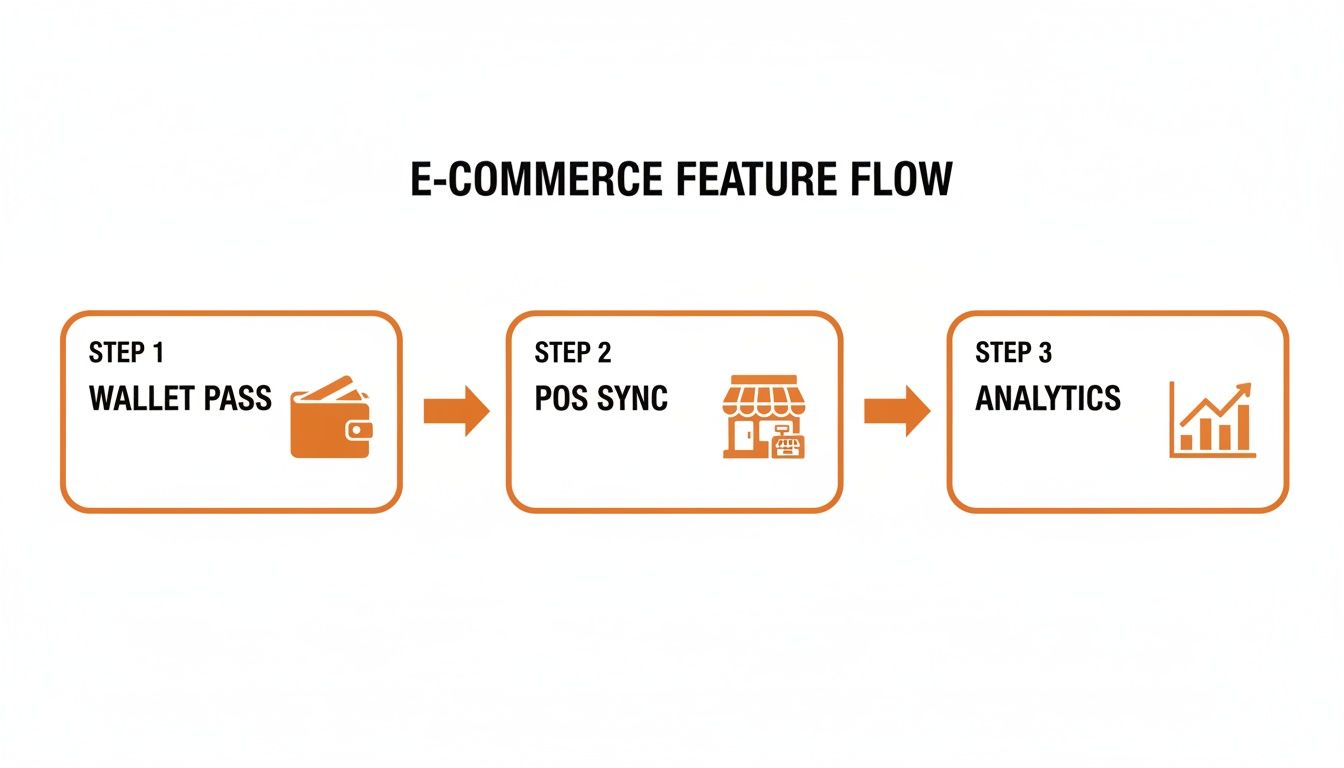
As you can see, a great program is a well-oiled machine where digital wallet passes, POS sync, and analytics all work together perfectly.
To make sure everything is running smoothly behind the scenes, use this checklist as you get things set up.
Shopify Integration Checklist
| Integration Point | Key Action | Verification Step |
|---|---|---|
| Shopify Store | Install the loyalty app; configure earning rules on product pages and at checkout. | Place a test order using a test customer account to confirm points are awarded correctly. |
| Point of Sale (POS) | Sync the loyalty program with your in-store POS to merge online and offline profiles. | Process an in-store test purchase and check if the customer's online point balance updates instantly. |
| Email Marketing Platform | Connect your loyalty app to your email provider (like Klaviyo or Mailchimp) for automated updates. | Trigger a "points balance update" email and confirm it sends with the correct personalized info. |
| Digital Wallet | Enable Apple Wallet and Google Wallet so members can add their digital card with one tap. | On your own phone, generate a test digital pass and make sure it updates dynamically when points are earned. |
Working through these steps methodically will save you a world of headaches later on by catching any technical snags before your customers do.
Phase 4: Plan a High-Impact Launch Campaign
Your program is built, tested, and ready to go. Now, you have to get people to actually sign up for it. A strong launch campaign is absolutely essential for building that initial momentum. Don't just quietly add a link to your website's footer and hope for the best—shout it from the rooftops!
Create a simple, multi-channel launch plan that covers all your bases:
- An Email Blast: Announce the new program to your entire email list. Be sure to highlight the best perks and maybe even offer a sign-up bonus, like 200 free points just for joining.
- Social Media Promotion: Create fun, engaging posts and stories for Instagram, Facebook, and TikTok that explain how it all works.
- On-Site Banners: Use eye-catching banners on your homepage and pop-ups during checkout to grab attention and drive enrollment.
- Post-Purchase Messaging: Add a small section about the program to your order confirmation emails and thank-you pages. It’s a perfect time to catch them when they're already engaged.
The goal here is simple: make it impossible for your customers to miss the new program and incredibly easy for them to join.
Proven Strategies to Maximize Adoption and ROI
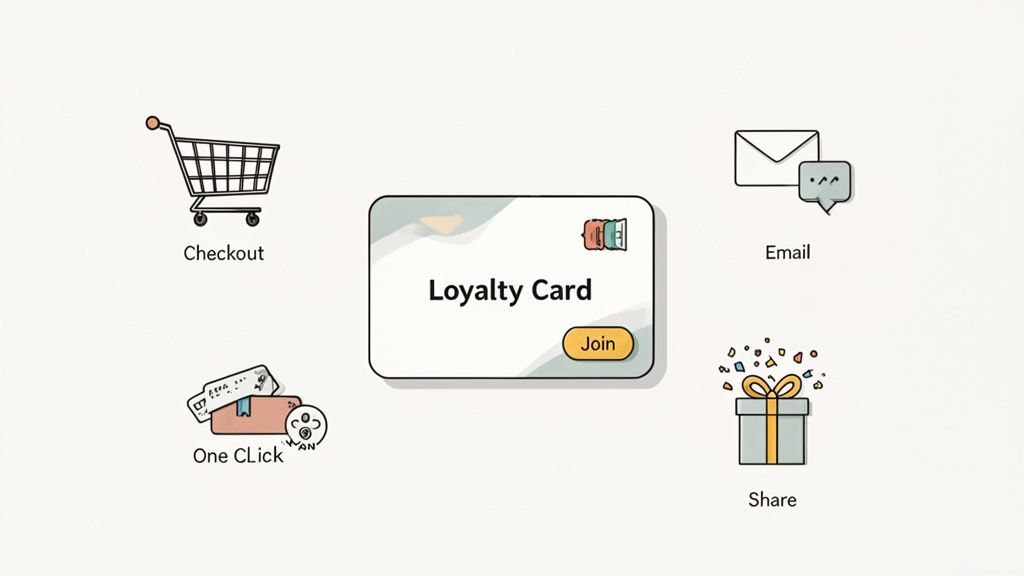
Getting your loyalty program launched is a huge first step, but the real work starts now. The true value of your online loyalty card program isn't just in having one; it’s in turning casual shoppers into passionate brand advocates through long-term, sustained engagement.
This means you have to build a program that's both incredibly easy to join and consistently rewarding to be a part of. The best brands get this. They don't treat their loyalty program as some separate marketing channel—it’s woven into the very fabric of the customer experience, from the moment someone lands on their site to the second they unbox their order.
Make Enrollment Effortless
Let's be honest: the biggest killer of program adoption is friction. If signing up means tackling a long form or clicking through a maze of pages, people are going to bail. You want enrollment to be an impulse decision, not a chore.
The gold standard here is one-click sign-up at checkout. A simple checkbox allows a customer to create an account and join the program at the same time. You’re catching them right at their peak moment of engagement, and it costs them zero extra effort.
Promote Your Program Everywhere
Once you’ve made it easy to join, you have to make sure people actually know the program exists. A single launch email isn't going to cut it. You need to keep it top-of-mind by promoting it consistently across all your channels.
Here are a few tactics that work well:
- Homepage Banners: A clear, punchy banner right at the top of your site is prime real estate. Use it to highlight the best perks.
- Email Marketing: Don't just send a one-off announcement. Dedicate a section in your regular newsletters to showcase new rewards or member-only benefits.
- Social Media Campaigns: Run posts and stories that break down how the program works. Better yet, share content from happy members showing off their rewards.
- Post-Purchase Communication: Slip a call-to-action into your order confirmation emails and on your thank-you page. It’s the perfect time to invite them in.
This constant drumbeat ensures that no matter how a customer interacts with your brand, they’re reminded of the value waiting for them. Of course, a core goal of any loyalty program is to reduce churn. For a deeper look into strategies to improve customer retention, this guide is a fantastic resource.
Create Personalized and Exclusive Experiences
A generic, one-size-fits-all rewards system will only get you so far. The real magic happens when you make members feel seen and valued. Use the data you’re collecting to segment your audience and deliver experiences that go way beyond a simple discount.
An online loyalty card program should feel less like a discount scheme and more like an exclusive club. The value isn't just in the savings; it's in the recognition, access, and sense of belonging that you offer your best customers.
Celebrate milestones. Offer bonus points on a member’s birthday or on the anniversary of their first purchase. Use segmentation to give your top-tier members early access to new product drops or exclusive content. These are the kinds of personal touches that build a genuine emotional connection and turn members into true fans.
Make no mistake, loyalty programs are revenue powerhouses. Members typically spend 12%-18% more on average and can drive up to 40% of an online store's total sales. What’s more, nearly 64% of participants admit to spending more just to reach their next reward, proving the massive returns are there if you prioritize adoption. By putting these strategies into practice, you can transform your program from a simple feature into a major driver of both customer loyalty and business growth.
Common Questions About Loyalty Programs
Thinking about launching an online loyalty card program? It's a big move, and it's totally normal to have a lot of questions pop up. You're probably wondering about the costs, how it will affect your brand's image, and what the day-to-day management looks like.
We get it. We've heard all the same concerns from merchants just like you. So, let's tackle those "what ifs" and "how-tos" head-on. This is your personal FAQ session to clear up any confusion and help you move forward with confidence.
How Much Does It Cost to Set Up an Online Loyalty Program?
This is usually the first question on everyone's mind, and the answer is probably more affordable than you think. The days of needing a massive budget for a custom-built system are long gone. Today's best loyalty platforms run on a SaaS (Software as a Service) model, which makes them accessible for just about any business.
Most providers use a scalable pricing structure. You can often get started with a low monthly fee that adjusts as your member base grows. The final price tag really depends on what you need—things like advanced customer segmentation or complex POS integrations for a physical store will influence the cost.
The best way to think about this is not as an expense, but as an investment. You're investing in your most valuable asset: your existing customers. Since loyal members are proven to spend more and buy more often, a great program will pay for itself many times over.
The trick is to find a plan that fits your budget now and lets you scale up as the program starts driving more revenue.
Will a Loyalty Program Devalue My Brand?
This is a really important concern, especially for premium and luxury brands. Nobody wants their products to feel like they're perpetually on sale. But here’s the thing: a well-designed online loyalty card program does the opposite. It actually makes your brand feel more valuable.
The secret is to build your program around exclusivity and amazing experiences, not just discounts. Instead of just handing out "10% off" coupons, think about rewards that feel special and earned.
- Tiered Benefits: Give your top-tier members early access to new collections before anyone else.
- Exclusive Experiences: Offer unique perks like a members-only online styling session, a free consultation, or premium packaging.
- Non-Monetary Rewards: Create a private community forum or provide access to exclusive content.
When you frame your program as a VIP club that offers recognition and insider access, you're not cheapening your products. You're building a premium experience that makes your brand even more desirable.
How Do I Measure the ROI of My Loyalty Program?
Measuring your return on investment (ROI) is crucial, and thankfully, modern loyalty platforms are built for this. You don't need a degree in data science to see the impact. A good analytics dashboard does all the heavy lifting by tracking a few key performance indicators (KPIs).
The simplest approach is to compare the behavior of your loyalty members to your non-members. The metrics that tell the biggest story are:
- Repeat Purchase Rate: Are members coming back to shop more often?
- Average Order Value (AOV): Are members spending more each time they check out?
- Customer Lifetime Value (CLV): Over time, are members generating more total revenue for your business?
When the extra money your members bring in—through higher spending and more frequent purchases—is greater than the program's cost and the value of redeemed rewards, you’ve got a clear, positive ROI. It's that straightforward.
Can I Integrate a Loyalty Program with My Physical Store?
Absolutely! In fact, connecting your online and in-person shopping experiences is one of the most powerful things you can do. The best loyalty platforms are specifically designed to bridge the gap between your e-commerce site and your brick-and-mortar stores with seamless POS integration.
This means the customer experience is smooth, no matter where they shop. A cashier can simply look up a customer by their email or phone number to apply points or redeem a reward right at the checkout counter.
Digital wallet passes for Apple or Google Wallet take this even further, creating a tangible link between both worlds. Imagine a customer earning points online, then getting a push notification about their new balance right as they walk by your physical store. That kind of seamless connection builds incredible brand loyalty across every channel.
Ready to turn your customers into a loyal community? Toki provides all the tools you need to launch a powerful online loyalty card program, from digital wallet passes to tiered memberships and referral programs. See how it works at buildwithtoki.com.