A Modern Playbook to Increase Customer Engagement for E-commerce
Discover how top Shopify merchants increase customer engagement with proven loyalty, gamification, and personalization strategies. Your complete guide.
Building a profitable e-commerce brand isn't just about making the next sale. It’s about creating real, lasting connections that encourage repeat purchases, build unshakable brand loyalty, and spark the kind of word-of-mouth marketing money can't buy. When you nail customer engagement, a healthier bottom line is the natural result.
Your North Star Metric: Customer Engagement
It’s tempting to get caught up in vanity metrics—how many likes did that post get? How much traffic did we see last week? While those numbers can feel good, they don’t paint the full picture of your brand's health. Sustainable growth is built on relationships, which makes customer engagement the single most important metric you should be tracking.
Engaged customers are the ones who stick around. They don't just make a single purchase and disappear; they become the bedrock of your business, directly impacting the numbers that truly define success.
How Engagement Directly Fuels Your Bottom Line
When you get serious about boosting customer engagement, you're doing more than just building a community—you're making a direct investment in your brand's financial future. The link between engagement and profit is crystal clear when you look at the right KPIs.
- Sky-High Customer Lifetime Value (LTV): It's simple: engaged customers spend more over their lifetime. Even a small bump in customer retention can cause a massive jump in profitability. For a deeper dive, check out this excellent resource: A Practitioner's Guide to Improving Customer Lifetime Value.
- A Healthy Repeat Purchase Rate: Every e-commerce store lives and dies by its repeat buyers. Smart engagement tactics, from loyalty programs to personalized emails, give shoppers a compelling reason to come back to you instead of the competition.
- Lower Customer Acquisition Costs (CAC): Let's face it, acquiring new customers is expensive. But your most engaged customers often become your best marketers, telling their friends and family about your brand. This organic, word-of-mouth advertising is incredibly powerful and brings your CAC down over time.
Shifting your focus from one-off transactions to long-term relationships transforms your customer base into your most powerful growth engine. This is exactly where a platform like Toki comes in, giving you all the tools you need to forge those critical connections.
At the end of the day, prioritizing engagement means building a more resilient, stable, and profitable business. You can explore this further by reviewing these essential metrics for e-commerce in our complete guide.
Taking an Honest Look at Where Your Customer Engagement Stands Today
Before you can build a killer engagement strategy, you need a clear, unfiltered picture of where you are right now. Jumping into new tactics without a baseline is like driving blind—you’re moving, but you have no idea if you’re getting closer to your destination. This audit is your starting point for a data-backed plan that will actually move the needle.
We're going to skip the vanity metrics like social media likes and get straight to the numbers that reflect the real health of your customer relationships and, ultimately, your bank account.
Where to Dig for the Real Data
Your most powerful insights are probably hiding in plain sight, spread across a few different platforms. The goal is to pull them all together to see the full story of how customers interact with your brand after they click "buy."
Start by pulling reports from these key places:
- Your E-commerce Platform: Whether you're on Shopify, BigCommerce, or another platform, this is your home base for hard numbers. Look for reports on repeat purchase rates, average order value (AOV), and purchase frequency.
- Google Analytics: Go deeper than just website traffic. In Google Analytics, you can analyze user behavior metrics like time on site and pages per session, specifically for logged-in customers versus first-time visitors. This tells you if your existing customers are actually sticking around.
- Your Marketing Tools: Your email and SMS platforms (like Klaviyo or Attentive) hold a treasure trove of data. Open and click-through rates are just the beginning. The real magic is in segment performance. How do your VIPs engage with your campaigns compared to your one-time buyers?
Putting in this effort to connect with customers isn't just about creating good vibes; it's a direct investment in your bottom line.
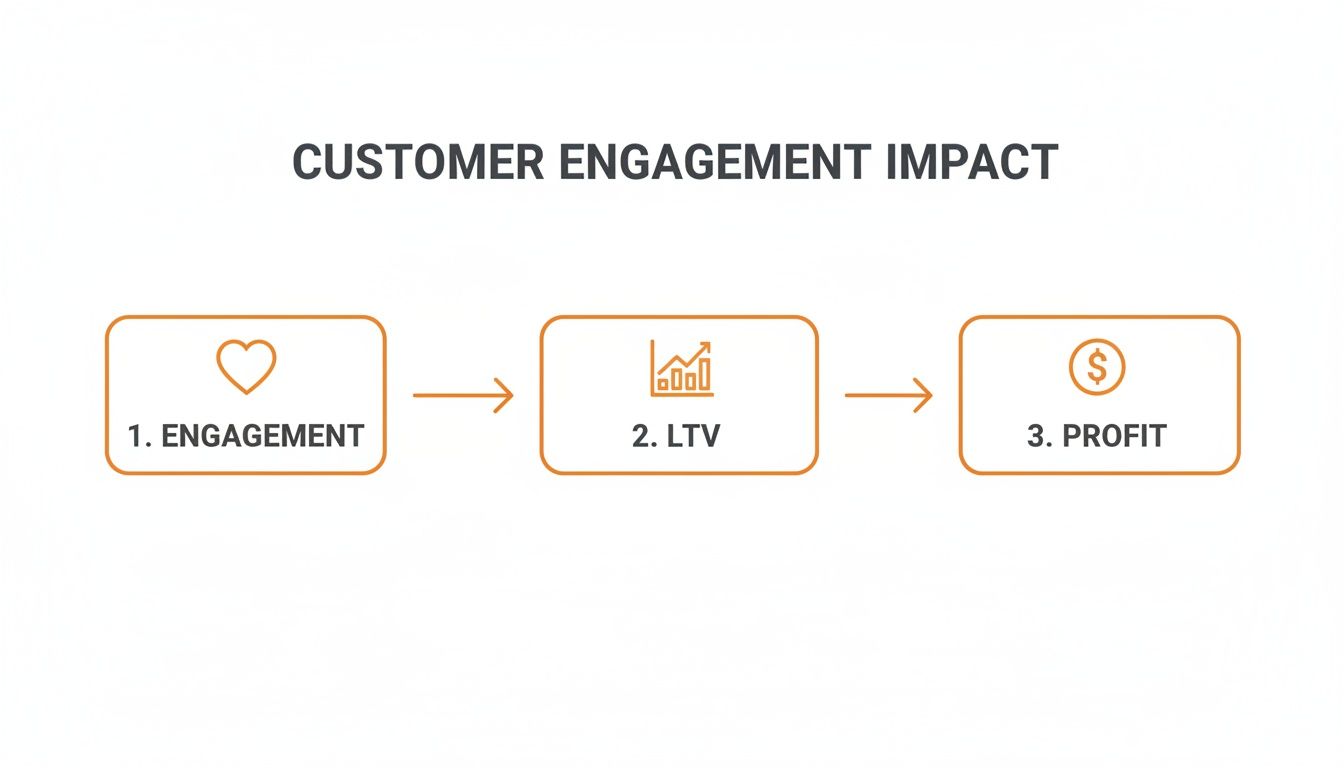
As you can see, the path is straightforward but incredibly powerful. Better engagement leads to higher customer lifetime value (LTV), which directly fuels your store's profitability.
The Key Engagement Metrics You Need to Know
Once you've gathered your data, it's time to focus on the KPIs that matter most. These numbers tell the true story of how connected your customers are to your brand.
Here’s a look at the essential metrics, what they measure, and what "good" versus "great" looks like in the wild.
Key Engagement Metrics and E-commerce Benchmarks
| Metric (KPI) | What It Measures | Good Benchmark | Great Benchmark |
|---|---|---|---|
| Customer Retention Rate | The percentage of customers who make a repeat purchase over a specific period. | 20-30% | 35%+ |
| Repeat Purchase Rate | The percentage of your customer base that has made more than one purchase. | 20-25% | 30%+ |
| Purchase Frequency | How often the average customer buys from you in a given timeframe (e.g., a year). | 1.5-2.0 | 2.5+ |
| Customer Lifetime Value (LTV) | The total revenue a single customer is predicted to generate over their entire relationship with your brand. | 3x your Customer Acquisition Cost (CAC) | 5x+ your Customer Acquisition Cost (CAC) |
| Time Between Purchases | The average number of days between a customer's consecutive orders. | 60-90 days | <60 days |
Remember, these benchmarks can vary by industry (a mattress company will have a much longer time between purchases than a coffee subscription), but they provide a solid starting point for your own analysis.
Asking the Tough Questions
With your KPIs in hand, it's time to put on your detective hat. The answers to these questions will show you exactly where the cracks are in your current strategy and point you toward your biggest opportunities.
Ask yourself and your team:
- What percentage of our customers are "one-and-dones"? A high number here is a red flag. It means you have a transactional business, not a relational one. This is often the single biggest area for improvement.
- What's the average time between a customer's first and second purchase? If it’s a long time, your post-purchase experience probably isn’t compelling enough to bring them back sooner.
- Which specific products do our loyal customers buy over and over? These are your golden geese. You can build entire reactivation campaigns around them.
- What’s the LTV of our top 10% of customers compared to the average? Seeing this gap is often an eye-opening moment. It shows you the massive potential you could unlock by turning more average customers into superfans.
- How does engagement change across different segments? Are your VIPs hanging on your every word while discount-hunters only show up for Black Friday? This will become the foundation of your personalization strategy.
An honest audit isn’t about beating yourself up over what’s broken. It's about finding specific, actionable opportunities to build stronger, more profitable relationships with the people who have already chosen to buy from you.
By answering these questions, you’re no longer guessing. You have a clear diagnosis of your engagement health, which is the perfect foundation for everything that comes next. You now have the "before" picture that will make the "after" feel so much more rewarding.
Building Your Engagement Engine with Loyalty and Gamification
Okay, you've done the diagnostic work. You know where your customer engagement stands right now. This is where the fun begins—building the actual engine that turns first-time buyers into loyal fans.
This isn't about just slapping a generic "earn points" banner on your site and calling it a day. It's about designing an experience that feels like a genuine part of your brand, something that truly rewards your customers for being part of your world.
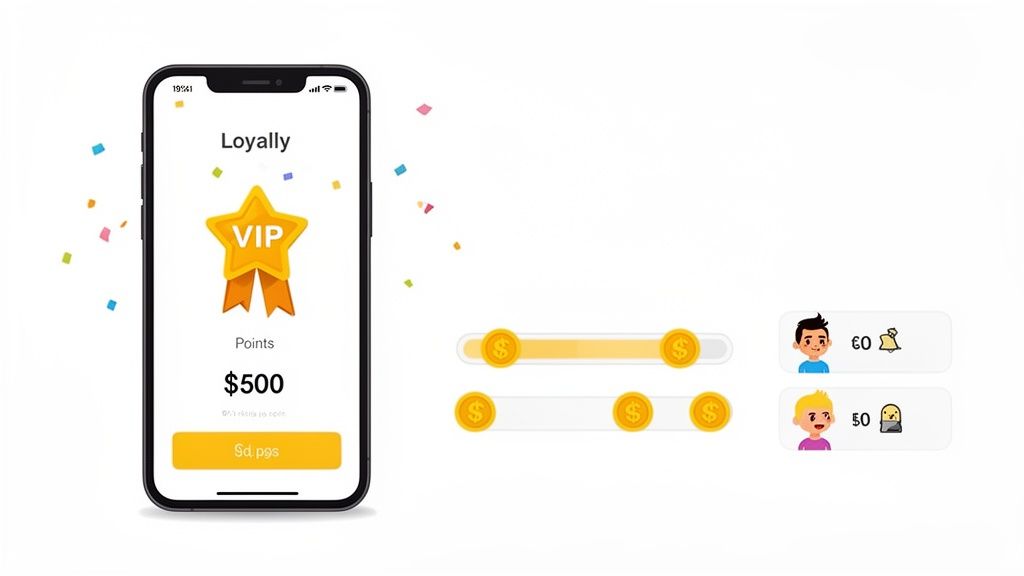
A well-thought-out loyalty program acts as a constant, gentle nudge, reminding customers about the value you bring. It creates a powerful loop where people are rewarded for the very things that help your business grow: making repeat purchases, trying new product lines, and telling their friends about you.
Designing a Loyalty Program That Actually Resonates
Here’s the thing: not all loyalty models are created equal. The right approach for a coffee shop with daily regulars is completely different from what a high-end furniture brand needs. Your goal is to make joining in feel effortless and genuinely valuable, not like another marketing chore your customers have to deal with.
Let’s look at the most common structures I've seen work in the real world:
- Points-Based Programs: This is the classic for a reason—it’s simple and it works. Customers earn points for buying stuff and for other actions, like writing a review or following you on social media. They can cash these points in for discounts, free products, or shipping. It's a no-brainer for brands with high purchase frequency, like skincare or supplements.
- Tiered Programs: This approach basically gamifies loyalty by creating status levels like Bronze, Silver, and Gold. As customers spend more, they unlock better perks—think early access to sales, exclusive products, or a dedicated support line. This creates a powerful sense of achievement and exclusivity that works wonders for aspirational brands.
- Paid Memberships (VIP Clubs): Think Amazon Prime. Customers pay a fee upfront for a whole suite of premium benefits, like free shipping on everything or special member-only prices. This model creates instant commitment and is perfect for brands whose top customers are already deeply invested and see the long-term value.
The trick is to pick the model that lines up with your business goals. If you want to get people buying more often, a points system is a great place to start. If you want to make your best customers feel like royalty, a tiered program delivers that sense of recognition they crave.
Injecting a Dose of Fun with Gamification
While a loyalty program provides the framework, gamification is what injects the personality and pure fun that keeps people coming back. It’s all about applying game-like mechanics—challenges, badges, leaderboards—to your marketing, making interactions with your brand more addictive and enjoyable.
Think about the psychology here. We're all wired to enjoy a bit of competition, the feeling of accomplishment, and getting recognized. Gamification plugs directly into these very human desires to increase customer engagement in a way that feels natural, not forced.
Instead of only rewarding transactions, you start rewarding actions. Here are a few ways to bring this to life:
- Badges for Milestones: Give new customers a "First Purchase Celebration" badge. It’s a small thing, but it creates a positive feeling right from the start. A "VIP Gold Tier" badge on a customer’s profile gives them a little social currency within your community.
- Challenges for Specific Actions: Run a "Share Your Style" challenge, asking customers to post photos with your product in exchange for bonus points. This not only drives engagement but also floods your marketing channels with fantastic user-generated content (UGC).
- Leaderboards for Friendly Competition: For your super-users, a monthly leaderboard showing who has earned the most points can create a fun, competitive vibe that encourages them to get even more involved.
Gamification transforms the customer relationship from a series of transactions into an ongoing, interactive experience. It makes customers feel like active participants in your brand's story, not just passive consumers.
The growth in this space is impossible to ignore. The AI marketing sector, which powers a lot of this, is projected to explode from $6.6 billion in 2020 to a massive $53.6 billion by 2025. This surge is fueled by tools that use badges and challenges to turn simple interactions into real revenue.
Putting It All Together with the Right Tools
I know, implementing all this might sound complicated, but modern platforms are built to make it surprisingly simple. An all-in-one tool like Toki lets you build and manage these programs without needing an entire dev team.
For example, you could set up a tiered loyalty program in a few clicks and define the perks for each level. Then, you could layer on a "Welcome Challenge" that gives new members bonus points for completing their profile, making their first purchase, and following you on Instagram.
Having this all in one place is key. When your loyalty and gamification efforts live in the same system, you can track everything seamlessly and see exactly how these initiatives are impacting your KPIs. For a deeper dive, check out our guide on how to combine gamification with loyalty programs for the best results.
By building this engagement engine, you create a powerful, self-sustaining cycle that drives retention, boosts LTV, and builds a brand that customers are genuinely excited to be a part of.
Using Personalization and Segmentation to Drive Action
Let's be honest: one-size-fits-all marketing is dead. Sending the same generic email blast to your most loyal VIPs and your one-time discount shoppers just doesn't cut it anymore. It’s a surefire way to get ignored. The real key to making customers feel seen and valued is using the data you already have to personalize their experience.
This goes way beyond just plugging a {{first_name}} into an email subject line. Real personalization is about understanding customer behavior—what they buy, when they buy, and what they browse—and then delivering the right message at the right time. It's the difference between shouting into a void and having a one-on-one conversation.
Move Beyond Basic Demographics
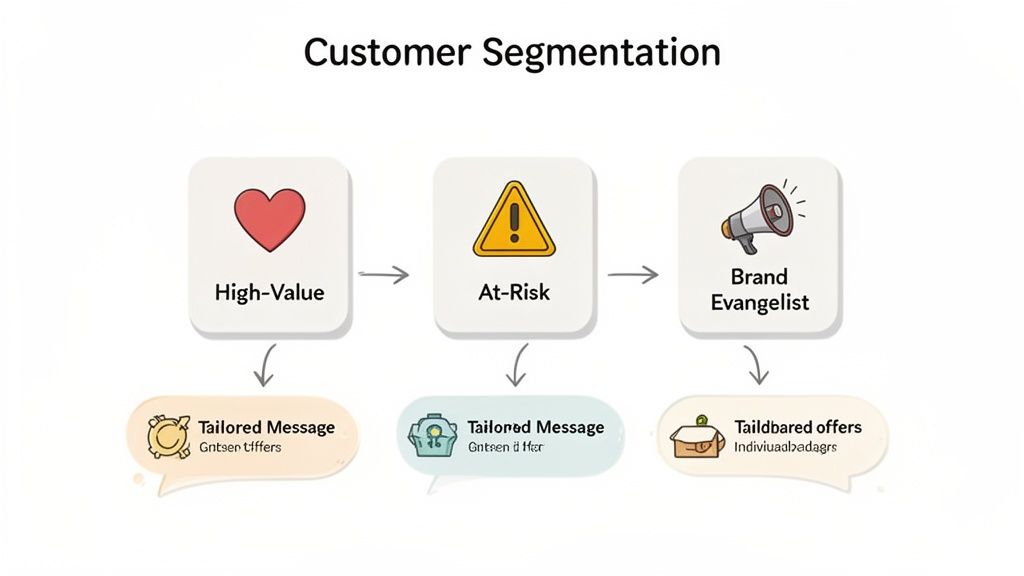
To really move the needle on engagement, you have to graduate from basic demographics like age or location. The magic happens when you start segmenting based on behavior—grouping customers by how they actually interact with your store. This is where you can start anticipating their needs instead of just reacting.
Here are a few of the most powerful behavioral segments I've seen deliver results for e-commerce stores:
- High-Value Shoppers (Your VIPs): These are the folks with the highest lifetime value (LTV). They shop often and spend more than anyone else. They are, quite simply, the lifeblood of your business.
- At-Risk Customers: These are people who used to be regulars but haven't bought anything in a while. That "while" varies by industry, but it's a critical group to win back before they churn for good.
- Brand Evangelists: This group does more than just shop. They’re your cheerleaders—leaving great reviews, referring friends, and shouting you out on social media. They're basically free marketing.
- Recent First-Time Buyers: This customer is at a crucial crossroads. A great post-purchase experience can turn them into a loyal fan. A generic one? You might never see them again.
Building these groups doesn't have to be a massive manual effort. Platforms like Toki can automatically analyze your customer data to identify and tag these segments, which makes creating targeted campaigns a whole lot easier. For a deeper dive, check out our guide on customer segmentation in e-commerce.
Connecting Segments to Real-World Tactics
Okay, you've got your segments. Now what? The next step is to match them with specific marketing actions that make each group feel like you're talking directly to them.
Here’s how you can tailor your approach:
For your High-Value Shoppers:
- The Play: Give them early access to new product drops or sales events.
- Why It Works: It reinforces their VIP status and rewards their loyalty with a feeling of exclusivity. They feel like insiders.
For your At-Risk Customers:
- The Play: Send a personalized "We Miss You" campaign with a tempting, time-sensitive offer based on their purchase history.
- Why It Works: It shows you actually noticed they were gone and gives them a relevant reason to come back.
For your Brand Evangelists:
- The Play: Invite them to an exclusive affiliate or referral program with unique perks.
- Why It Works: You're officially recognizing the advocacy they're already providing and giving them an incentive to do even more.
For your Recent First-Time Buyers:
- The Play: Drop them into a "Welcome" email series that tells your brand story, shows off your bestsellers, and offers a little something for their second purchase.
- Why It Works: You’re striking while the iron is hot, building on their initial excitement to guide them toward that all-important second sale.
Personalization isn't just a trendy feature; it’s a core driver of modern commerce. It turns generic marketing blasts into meaningful conversations, making your customers feel understood and appreciated.
The numbers back this up completely. Personalization is a powerhouse for driving engagement—a staggering 80% of customers are more likely to buy from brands that offer experiences tailored to them. This isn't just a passing fad; it's a fundamental shift in what shoppers expect.
By using smart segmentation and personalization, you can stop shouting at the crowd and start building real relationships, one customer at a time. This targeted approach doesn’t just boost sales in the short term; it lays the foundation for the kind of long-term loyalty that builds a resilient, profitable brand.
Unifying the Customer Journey Across All Channels
Your customer's world doesn't start and stop on your website, so your engagement efforts shouldn't either. People today move fluidly between browsing on their laptop, discovering products on Instagram, and walking into a physical store. A disconnected experience is jarring—think of a top-tier online customer who walks into your shop and is treated like a total stranger. That’s more than an oversight; it’s a massive missed opportunity.
True engagement happens when you build a single, seamless brand experience across every touchpoint. This is the heart of an omni-channel strategy. It’s no longer a nice-to-have, but a powerful advantage that gives modern shoppers the consistency they expect, whether they're on their phone or at your checkout counter.
Connecting Your Digital and Physical Worlds
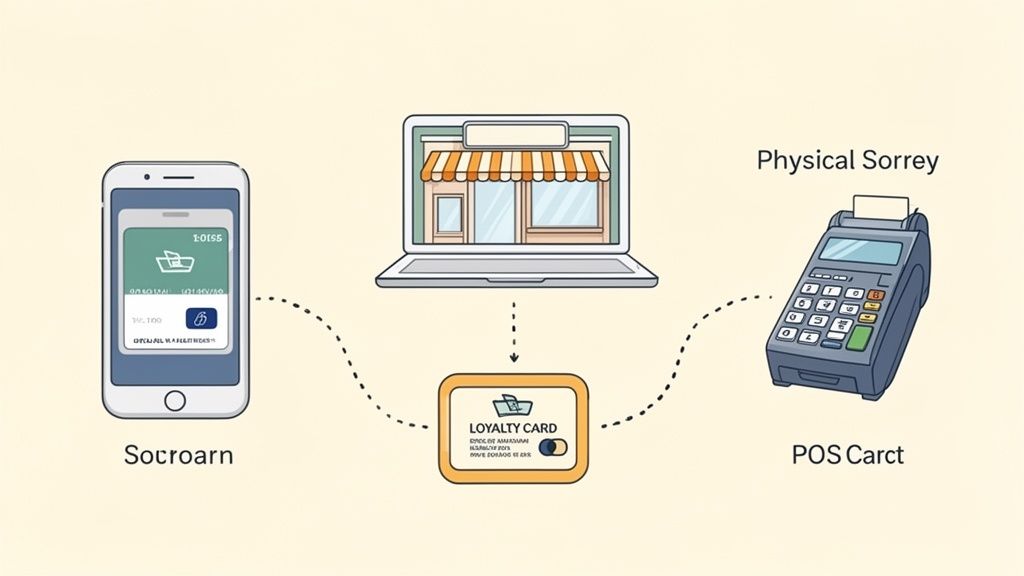
The most common breakdown I see is the gap between online and offline. Imagine a loyal customer who has spent hundreds with you online and earned VIP status. If they visit your brick-and-mortar store and the sales associate has no idea who they are, the connection you worked so hard to build online immediately starts to fray.
The fix is to get your systems talking to each other. This is where tools with seamless POS (Point of Sale) integrations, like Toki, become absolutely essential. This kind of integration means a customer’s loyalty status, points, and available rewards are right there at the checkout, no matter where they’re shopping.
Let’s say a customer is buying something in your physical store. With a truly integrated system, they can:
- Earn points on that purchase, and see them show up in their online account instantly.
- Redeem a reward they earned from a previous online purchase for a discount right then and there.
- Level up to the next loyalty tier because their combined online and offline spending finally pushed them over the threshold.
This simple act of recognition makes customers feel seen and valued, turning two separate channels into one cohesive brand experience.
The Power of the Digital Wallet
Another incredibly effective tool for bridging the digital-physical divide is the digital wallet pass. By offering passes for Apple and Google Wallet, you’re placing a dynamic, persistent connection to your brand right on your customer's phone. It's so much better than a plastic card that gets lost or an email that gets buried in a crowded inbox.
A digital wallet pass isn't just a static card; it’s a live communication channel. It can update a customer’s point balance in real-time and even send a location-based push notification when they're near one of your stores, reminding them of an available reward.
This tech turns a customer's phone into a direct line to your brand, making it incredibly easy for them to engage. No more forgotten logins or frantic searches for a coupon code; their loyalty status and offers are always just a tap away.
Why a Unified Strategy Is a Must
Getting your omni-channel strategy right isn't just about making customers happy; it has a huge impact on your bottom line. The data is clear: businesses with strong omni-channel strategies see an 89% customer retention rate, which blows away the 33% rate for businesses with siloed approaches. For Shopify merchants, this is especially critical.
What's more, omni-channel customers typically have a 30% higher lifetime value and spend more than those who stick to a single channel. If you want to dive deeper, you can explore more insights on customer experience.
By unifying your channels, you create a stickier, more valuable relationship. You make it effortless for customers to stay engaged, which is the ultimate goal. When every interaction, online or off, reinforces their connection to your brand, you build the kind of loyalty that drives sustainable, long-term growth.
Measuring Success and Optimizing for Growth
Getting your loyalty program and engagement campaigns live isn't the end of the road—it’s really just the beginning. If you're serious about boosting customer engagement for the long haul, you have to get into a rhythm of constant improvement. That means ditching the guesswork and letting real data guide your next move.
Think back to the KPIs you set during your initial audit. Those are your north stars now.
Your loyalty platform's dashboard is command central. It gives you a live look at how your program is performing, showing you exactly what's resonating with your customers and what isn't. Get comfortable in there. Don’t just check the high-level numbers; dig in and understand the story the data is telling you.
Interpreting Your Key Performance Indicators
So, what should you be looking for? It's all about figuring out what's working and what needs a rethink. Are people actually cashing in their points for rewards? Is that shiny new referral program bringing in new faces? Your dashboard holds the answers.
Keep a close eye on these vital signs:
- Reward Redemption Rate: This is a big one. It tells you point-blank if your rewards are actually desirable. If this number is low, it’s a clear sign you need to offer something more compelling.
- Referral Program Performance: How many new customers are coming from referrals? This metric is pure gold, showing that your best customers are becoming your most effective marketers.
- Points Earned vs. Points Spent: You're looking for a healthy flow here. When customers are both earning and spending points, it means they're actively involved and see real value in participating.
This isn't a "set it and forget it" situation. The whole point is to launch, measure, and then tweak based on what you learn. Your data is the map that shows you where to go next.
And don't forget, engagement happens everywhere, not just on your website. To truly understand the full picture, you also need to measure social media engagement and see how those relationships are developing across every channel.
Common Questions We Hear
Got a few more questions about getting started with customer engagement? You're not alone. Here are some of the most common things merchants ask us, along with some straight answers to help you get going.
How Long Until I Actually See a Difference?
This is the big one, isn't it? While you'll likely see some immediate buzz—a little spike in activity right after launching a new campaign—real, lasting engagement is more of a slow burn than a fireworks show.
You can expect to see early wins, like better email open rates or people starting to cash in their rewards, within the first 30-60 days. But the metrics that really move the needle, like a higher Customer Lifetime Value (LTV) or a better repeat purchase rate, usually start showing up after about 6-12 months of consistent work. It's a marathon, not a sprint.
Our Take: Don't get discouraged looking for a huge, overnight win. The goal is to build genuine loyalty over time, and that comes from one positive experience stacked on top of another.
Are Loyalty Programs Only for the Big Guys? Can a Small Shop Afford This?
Yes, absolutely. It's a common misconception that you need a massive budget to run a great loyalty program. Modern platforms have completely changed the game, making these powerful tools accessible to everyone, not just retail giants.
The right way to think about it isn't cost, but return on investment. A smart loyalty program isn't an expense; it's an investment that pays for itself over and over by encouraging repeat business. Most platforms offer flexible pricing, so you can start small and add more features as your business grows. When you remember that it costs far more to find a new customer than to keep one you already have, a loyalty program quickly becomes one of the smartest marketing moves you can make.
How Do I Know My Customer Data Is Safe?
This is non-negotiable. Protecting your customers' data is paramount, and any good loyalty platform takes this incredibly seriously. Trust is the foundation of loyalty, after all.
When you're vetting a provider, look for transparency. They should be upfront about their security measures and their compliance with privacy laws like GDPR and CCPA. Keeping your customers' trust is just as important as earning it in the first place.
Ready to turn casual shoppers into loyal fans and build a more predictable revenue stream? With Toki, you can get a beautiful, high-impact loyalty and engagement program up and running in minutes. See what you can build and start your journey today.