Your Guide to Building a Powerful E Commerce Rewards Program
Discover how to create a successful e commerce rewards program. Learn proven models and strategies to boost customer loyalty, retention, and lifetime value.
Think of the last time you went back to the same coffee shop. Was it just for the coffee, or was it because they handed you that little punch card? That simple card is a rewards program in its most basic form, a marketing tool designed to thank you for your loyalty and keep you coming back. An e‑commerce rewards program does the same thing, but for your online store.
It’s your way of creating a VIP club for your best customers, offering them points, exclusive perks, or special discounts every time they shop. The real goal here is to turn someone who buys from you once into a lifelong fan.
What Exactly Is an E-commerce Rewards Program?

At its heart, a rewards program is a simple value exchange. Your customers give you their repeat business, and you give them something valuable back that makes their experience better. It's a structured way to reward them for specific actions, usually for making a purchase.
But a great program isn't just about handing out discounts. It digs into the psychology of what makes us feel good. When a customer sees their points balance grow or they unlock a new tier, it creates a real sense of accomplishment. That surprise birthday gift or early access to a new product makes them feel seen and appreciated. It’s this emotional connection that makes your brand stick.
More Than Just Points and Discounts
While points are the classic currency, a modern rewards program is a powerful growth engine for your entire business. It becomes a direct channel to your most valuable customers, giving you a treasure trove of first-party data about what they love and how they shop.
This data is gold for personalization. Forget generic email blasts. Now you can send targeted offers that actually mean something to the individual. You can also get creative and reward customers for things that help grow your community, not just your revenue.
A well-executed rewards program can:
- Drive Repeat Purchases: This is the most obvious win. It gives customers a clear reason to shop with you again instead of a competitor.
- Increase Customer Lifetime Value (LTV): Loyal customers spend more over time. A rewards program is one of the best ways to nurture that long-term relationship.
- Build a Brand Community: It fosters a sense of belonging, turning passive shoppers into active advocates who rave about you to their friends.
- Encourage Key Behaviors: You can incentivize more than just sales. Think points for writing a review, sharing on social media, or referring a friend.
A rewards program shifts the customer relationship from purely transactional to relational. It’s the difference between a customer buying from you and a customer belonging to your brand.
In the end, a successful e-commerce rewards program isn't an expense. It's a strategic investment in your most important asset—your existing customers. By making them feel like insiders, you build a foundation of predictable revenue and create your most authentic marketing team.
Why Customer Loyalty Is Your Most Valuable Asset
In e-commerce, it’s easy to get caught up in the constant chase for new customers. But what if your most reliable path to growth isn't about chasing someone new, but about taking care of the customers you already have? Shifting your focus to customer loyalty isn't just a nice idea—it's a powerful engine for sustainable growth.
Think about this: acquiring a new customer can cost five times more than keeping an existing one. That single stat should completely change how you think about your marketing budget and effort. A loyalty-first mindset, driven by a smart e‑commerce rewards program, pivots your strategy from expensive acquisition to profitable retention.
This isn't just a theoretical concept. When you reward repeat business, you're doing more than just encouraging another sale. You're building a predictable, reliable revenue stream that can hold steady even when ad costs spike or the market gets shaky.
Moving Beyond a Single Transaction
A good rewards program changes the entire customer dynamic. It turns a series of one-off purchases into a long-term relationship. It gives people a real, tangible reason to come back to your store instead of heading to a competitor, which has a direct impact on the numbers that matter most.
When customers join your program, they become more invested in your brand. That investment shows up on the bottom line.
- Higher Repeat Purchase Rates: Loyalty members have a built-in reason to return. Seeing a points balance can be the perfect nudge a customer needs to choose you for their next purchase.
- Increased Average Order Value (AOV): You can design your program to encourage bigger carts. For example, offering bonus points on orders over a certain amount is a classic, effective way to lift the value of each transaction.
- Greater Customer Lifetime Value (CLV): This is the real prize. Loyal customers don't just buy more often; they tend to spend more over their entire relationship with you, making them your most valuable asset by a long shot.
The true power of a loyalty program lies in its ability to change spending behavior. It gives your best customers a reason to consolidate their spending with your brand, locking in future revenue.
The data backs this up. Recent analysis shows loyalty programs are gaining serious traction. Small to medium-sized brands, in particular, saw a massive 23.93% year-over-year increase in key metrics like purchase frequency and customer lifetime value directly from their programs. You can explore more e-commerce loyalty statistics to see the full impact.
Loyalty as a Data Goldmine
Beyond the direct sales boost, a rewards program is one of your best tools for gathering first-party data. Every time a member makes a purchase, redeems a reward, or refers a friend, they’re telling you exactly what they like.
This is the kind of information you need to create marketing that actually resonates. Instead of guessing what your customers want, you know. You can segment your audience by loyalty tier, purchase habits, and engagement levels, letting you send targeted offers that feel genuinely personal and valuable.
For instance, you could send an exclusive discount to your top-tier VIPs or run a special bonus points campaign for customers who haven't shopped in a while. This kind of personalization makes people feel seen and valued, deepening their connection to your brand. To truly cultivate long-term customer loyalty and boost your brand's revenue, it's essential to understand the interconnected roles of Customer Trust, Payment Security, and Revenue.
In the end, customer loyalty is much more than a soft metric. It’s your best defense in a crowded market. It delivers financial stability, invaluable customer insights, and a community of advocates who will help you grow. An e‑commerce rewards program isn't just another expense; it's a strategic investment in the future of your business.
Choosing the Right Rewards Model for Your Brand
Picking the right structure for your e‑commerce rewards program is a lot like choosing the foundation for a house. The model you select will shape how customers engage with your brand, which behaviors you reward, and ultimately, how successful your entire loyalty strategy becomes.
There's no one-size-fits-all solution here. A luxury fashion brand that thrives on exclusivity will need a completely different approach than a coffee subscription service that's all about frequent, small purchases. The goal is to perfectly align your program's structure with your products, your profit margins, and the kind of relationship you want to build with your customers.
Comparing Popular E Commerce Rewards Program Models
To help you decide, here’s a side-by-side look at the four main rewards program models. Think of this as a quick reference guide to find the best fit for your business and, most importantly, your customers.
| Program Model | How It Works | Best For | Key Benefit |
|---|---|---|---|
| Points-Based | Customers earn points for actions (like purchases) and redeem them for discounts or freebies. | Brands with high purchase frequency (e.g., cosmetics, consumables). | Simplicity. It's easy for customers to understand and see immediate value. |
| Tiered | Customers unlock exclusive tiers with better perks as their spending and engagement increase. | Aspirational brands (e.g., fashion, beauty, lifestyle). | Fosters a sense of achievement and status, making customers feel special. |
| Paid (VIP) | Customers pay a fee (monthly or annually) for instant access to premium, always-on benefits. | Established brands with a loyal, high-value customer base. | Creates a super-loyal segment that is financially invested in your brand. |
| Referral | Existing customers are rewarded for bringing new customers to the brand. | Growth-focused brands looking to scale word-of-mouth marketing. | Acquires new, high-trust customers at a lower cost than paid ads. |
Each of these models serves a different strategic purpose. Let's break them down a bit further.
Points-Based Programs: The Classic Approach
The points-based model is the most recognizable type of rewards program, and for good reason—it just works. The concept is simple: customers earn points for certain actions, most often for making purchases, and then trade those points in for rewards like discounts or free products. It’s like a digital punch card that your customers can’t lose.
This model is a powerhouse for encouraging repeat buys, especially for brands selling things people purchase often, like skincare or coffee beans. For example, you might offer 1 point for every $1 spent, where 100 points equals a $10 discount. Its greatest strength is its clarity; customers immediately grasp the value and feel a sense of progress with every single order.
Tiered Programs: Fostering Aspiration
Tiered programs introduce a fun layer of gamification and exclusivity. In this model, customers unlock new levels or "tiers" with increasingly valuable rewards as they spend more and engage more often. It taps directly into our innate desire for status and achievement.
That feeling of graduating from a "Silver" to a "Gold" member is a real psychological win. These upper tiers should grant access to perks that money can't necessarily buy, like early access to new collections, free two-day shipping for life, or invites to exclusive brand events. This structure is a natural fit for fashion, beauty, or lifestyle brands where customers aren't just buying an item—they're buying into an identity. To really dig into this strategy, you can learn more about designing effective tiered rewards programs and get the most out of them.
Paid VIP Programs: Creating Ultimate Exclusivity
With a paid or VIP program, you ask customers to pay a recurring or one-time fee to join an exclusive club with top-tier benefits. Amazon Prime is the most famous example of this. This model isn't for everyone, as you have to offer enough ongoing value to make the entry fee a no-brainer.
When you get it right, though, a paid program creates your most fiercely loyal customer segment. These members are financially invested in your brand, which makes them far more likely to shop with you over a competitor. The perks have to be instant and substantial, such as:
- Free shipping on all orders
- Permanent discounts (like 10% off everything, always)
- Guaranteed early access to sales and new drops
This model works best for established brands that already have a large, dedicated customer base who trusts the value you deliver. It turns loyalty from a transactional reward into a constant, premium experience.
This decision tree illustrates how investing in customer relationships through a rewards program can directly fuel financial growth.
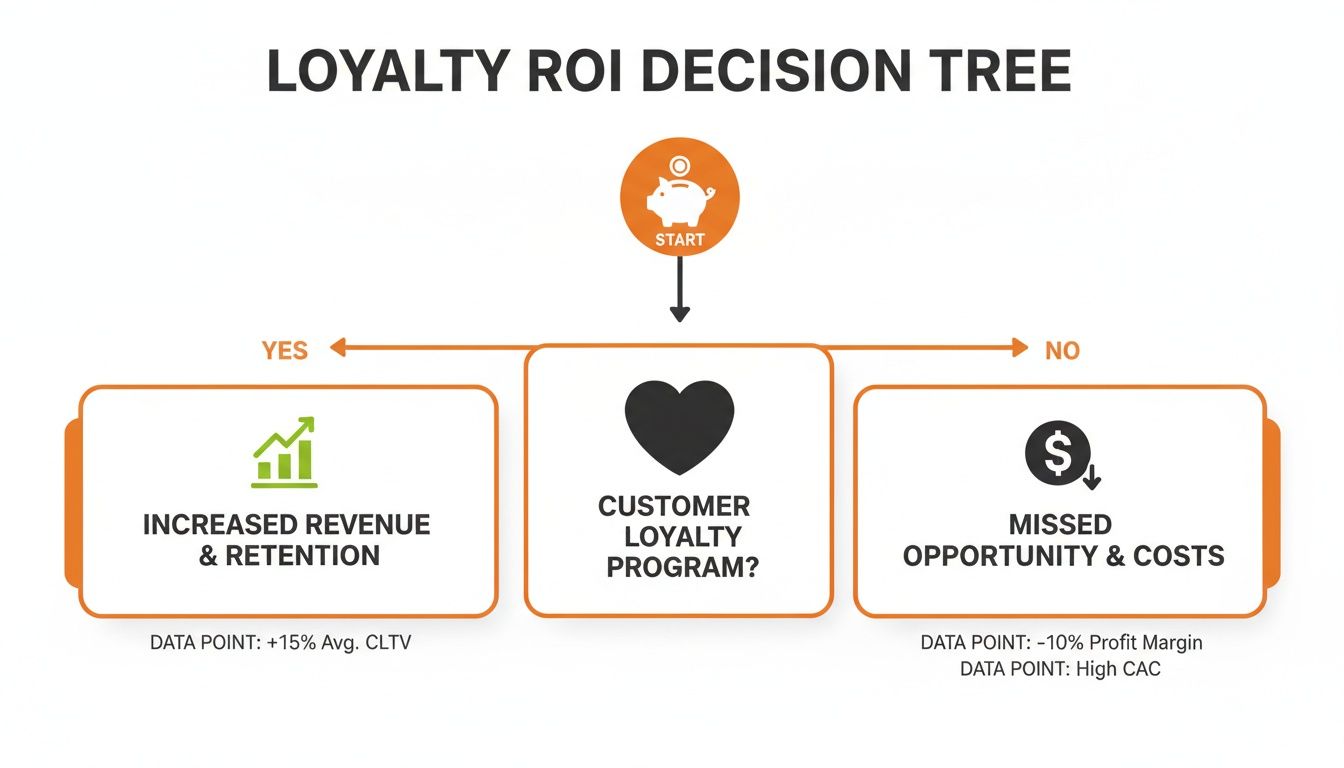 As you can see, nurturing loyalty isn't just a "nice-to-have" strategy; it's a direct path to a healthier bottom line.
Referral Programs: Turning Customers into Marketers
While it's often a feature within a larger loyalty program, a referral system can absolutely stand on its own as a powerful growth engine. It gives your existing customers a real incentive to become brand advocates by rewarding them for bringing new people into the fold.
A recommendation from a trusted friend is one of the most powerful marketing tools you have. A referral program simply formalizes and scales that word-of-mouth magic.
The best referral structures are a two-way street. The current customer gets points or a discount when their friend makes a purchase, and the new customer gets a welcome offer to seal the deal. This creates a win-win that builds your customer base with high-quality leads at a fraction of the cost of traditional advertising.
Key Features That Make a Rewards Program Irresistible
A basic points system is a decent starting point, but let's be honest—it’s not enough anymore. A truly great e-commerce rewards program does more than just hand out discounts; it creates an experience that makes customers feel like they're part of an exclusive club. To really stand out, you need to think beyond the transaction and build features that are fun, memorable, and feel personal.
Think of it like this: your points system is the ticket to the amusement park. It gets people in the door. But it’s the thrilling rides, unique shows, and special perks—the irresistible features—that make them want to stay all day and come back again and again.
Weave in Gamification to Make Loyalty Fun
Gamification is the secret sauce for turning passive members into active participants. It's all about adding game-like elements—challenges, badges, progress bars—into the shopping experience to make it genuinely enjoyable, not just a means to an end.
This approach taps directly into our natural human desire for achievement and a little friendly competition. Instead of just earning points, customers are completing "missions" or unlocking achievements. Suddenly, shopping becomes an interactive journey. Our guide on gamification in loyalty programs dives deeper into how to pull this off.
Here are a few ideas to get you started:
- Badges for Milestones: Award a digital badge when a customer makes their fifth purchase or leaves their first product review. It's a small nod that recognizes their loyalty.
- Progress Bars: Show customers exactly how close they are to unlocking the next reward or tier. That visual cue is a powerful motivator to close the gap.
- Interactive Challenges: Create limited-time missions like, "Spend $100 this month to earn 500 bonus points." This adds a sense of urgency and excitement.
Personalize Rewards to Show You're Listening
Generic, one-size-fits-all rewards feel impersonal and are easy to ignore. The real magic happens when you personalize the experience. When you tailor offers based on a customer’s past purchases and browsing habits, they feel seen and valued.
This isn't just a hunch; it's where the industry is heading. Today, over 45% of brands are investing more in gamification and experiential rewards. Even more telling, 57% are focusing on personalization, which makes perfect sense when you learn that 68% of customers believe tailored offers show a brand actually understands them.
A personalized reward tells a customer, "We know you, we see you, and we appreciate you." It's a powerful message that a generic discount code can never match.
For example, if a customer consistently buys your coffee beans, offer them early access to a new roast. A simple "happy birthday" bonus is another classic, effective way to create that personal touchpoint.
Offer Experiential Rewards for Deeper Connection
Sometimes the most powerful rewards aren't discounts at all—they're experiences. These are the kinds of perks that money can't always buy, and they create a strong emotional bond that a simple transaction never could.
Offering exclusive benefits makes your most loyal customers feel like true VIPs, building a sense of community and exclusivity that turns them into genuine brand advocates.
- Early Access: Give top-tier members a 24-hour head start on big sales or new product drops.
- Exclusive Content: Unlock members-only tutorials, behind-the-scenes videos, or digital lookbooks.
- VIP Events: Invite your best customers to an exclusive online Q&A with your founder or a special in-person gathering.
By blending the fun of gamification, the thoughtfulness of personalization, and the exclusivity of experiential rewards, you design a program that does more than just incentivize sales. You build a genuine connection that keeps your best customers coming back for more.
Your Step-by-Step Launch Plan
So, you're sold on the idea of an e‑commerce rewards program. Awesome. But turning that vision into a real, money-making part of your store can feel like a mountain to climb. The secret? Don't try to climb it all at once. Break it down into a simple, manageable checklist.
This guide will walk you through everything, from the back-of-the-napkin ideas to a launch that actually gets customers buzzing. Think of it like building a bridge. You wouldn't just start throwing down planks and hope for the best. You need a blueprint. Rushing in without clear goals is like building that bridge to nowhere—it might look cool, but it won’t get you or your customers anywhere useful.
Define Your Primary Goals
Before you get lost in the fun stuff like points and perks, stop and ask the most important question: What am I actually trying to do here? This single answer will shape every other decision you make.
Are you trying to:
- Increase Repeat Purchase Rate? If this is your main goal, you'll want rewards that are easy to earn and redeem, pulling customers back for their next purchase sooner rather than later.
- Boost Average Order Value (AOV)? Here, you might introduce spending thresholds, like offering bonus points on all orders over $75.
- Drive More Referrals? Your focus should be on a killer two-sided incentive. Make it a no-brainer for both your current customer and their friend to take part.
- Build a Stronger Community? Look beyond the buy button. Reward customers for leaving reviews, sharing your stuff on social media, or engaging with your brand in other ways.
Pick one or two main goals to start. A program that tries to do everything often ends up doing nothing well. Simplicity gives you focus, which is something both your team and your customers will appreciate.
Choose and Integrate Your Loyalty Software
With your goals locked in, it's time to find the engine that will run your program. For most brands, especially if you're on a platform like Shopify, a dedicated loyalty app is the way to go. They’re built to plug right into your store without a massive headache.
Look for a solution that checks these boxes:
- Easy Installation: You should be able to get it up and running without calling in a developer for a week-long project.
- Customization: The program needs to feel like your brand, not some clunky, tacked-on afterthought.
- Scalability: It should handle your day-one needs but also have features like tiers or VIP clubs that you can grow into later.
This screenshot from the Shopify App Store, for example, shows how a platform like Smile.io presents its features.
The clean layout and clear benefits are designed to help a busy store owner see the value and get started fast.
Design a Sustainable Reward Structure
This is where you balance generosity with profitability. You want a program that feels exciting to customers, but not one that sinks your profit margins. It's a classic balancing act.
The heart of a great reward structure is a dead-simple value proposition. A customer should get it in five seconds: "I do this, I get that." A common and effective starting point is offering 5-10 points for every dollar spent.
Once you set an earning rate, define the redemption value. Something like 100 points = $1 off is easy to understand and gives customers a real sense of progress. But don't just guess. Run the numbers. Figure out what your rewards will cost as a percentage of sales and make sure it fits comfortably within your marketing budget.
Create Your Go-to-Market Strategy
Your launch day is not the time to be shy. A great e‑commerce rewards program deserves a great launch, and that means a coordinated marketing push to get the word out and drive those crucial first sign-ups.
Your launch plan needs these key ingredients:
- A Dedicated Landing Page: This is your program's home base. It needs to clearly and visually explain how to earn, what the benefits are, and how to cash in.
- Email Marketing Campaign: Don't forget your existing customers! Announce the new program with a series of emails and offer a juicy sign-up bonus to get them on board immediately.
- On-Site Promotion: Use everything you've got—banners, pop-ups, and a permanent link in your site navigation. No visitor should leave without knowing your new program exists.
- Social Media Buzz: Create posts, stories, and maybe even a short video that shows off the awesome perks. You want to generate a little FOMO (fear of missing out).
By following these steps, you're not just launching a program; you're building a strategic asset designed for long-term success.
How to Measure and Optimize Your Program's Success
Getting your e-commerce rewards program off the ground is really just the beginning. The real magic happens when you treat it less like a "set it and forget it" feature and more like a living, breathing part of your business—something that needs regular care and attention to thrive.
Think of it like tending to a garden. You wouldn't just toss some seeds on the ground and hope for the best, right? You’d water them, pull the weeds, and see which plants are flourishing. For your loyalty program, tracking Key Performance Indicators (KPIs) is your watering can, and using those insights to fine-tune the member experience is how you pull the weeds.
Key Metrics to Track
To get a true sense of how your program is doing, you only need to focus on a handful of core metrics. These numbers tell a story about whether customers are signing up, staying engaged, and ultimately, if the program is actually encouraging the loyalty you're after.
Here are the essential data points to start with:
- Member Enrollment Rate: This is simply the percentage of your customers who are signing up. If this number is low, it could be a sign that your program isn't visible enough on your site or that the sign-up bonus isn't quite hitting the mark.
- Redemption Rate: What percentage of earned points are actually being used for rewards? A healthy rate, often hovering around 20%, is a great sign that your rewards are both desirable and attainable for the average customer.
- Repeat Purchase Rate: This one is crucial. Compare the buying frequency of your program members against non-members. It's the most direct way to see if your program is turning one-time buyers into repeat customers.
A loyalty program's success isn't just about how many people join; it's about how many people actively use it. An engaged member base is a profitable one, directly impacting your bottom line.
Don't underestimate the power of a good reward. Research shows that 66% of consumers say that the ability to earn rewards changes their spending behavior. In fact, members who redeem rewards end up spending 3.1 times more each year than those who don't, which proves just how critical redemption is for driving revenue. You can find more data on how loyalty impacts spending on loyaltylion.com.
Strategies for Continuous Optimization
Once you start gathering this data, it's time to put it to work. Optimization is all about a continuous cycle: test, learn, and improve. If you want to dive deeper into the specific numbers you should be watching, check out our complete guide to loyalty program KPIs.
Here are a few practical ways to keep your program fresh and performing at its best:
- A/B Test Your Rewards: Are you wondering if customers would rather have a $10 discount or free shipping? There's no need to guess—test it! Offer one reward to a segment of your members and the other reward to a different segment, then sit back and see which one gets more redemptions.
- Survey Your Members: Sometimes the most direct path is the best one. Just ask your members what they want! Send out quick, simple surveys asking what kind of rewards they'd be excited to earn or what would make their experience better.
- Segment for Personalization: Use your purchase data to group customers into segments. You could send a surprise bonus point offer to your top-tier VIPs or a gentle "we miss you" incentive to members who haven't shopped in a while. A little personalization goes a long way in making members feel seen and valued.
Common Questions About E-commerce Rewards Programs
So, you're thinking about launching a rewards program. It's a big step, and it's totally normal to have a few questions swirling around before you dive in. Let's tackle some of the most common ones head-on so you can move forward with confidence.
How Much Does a Rewards Program Cost?
This is usually the first question on every merchant's mind. The honest answer? It varies. You can get started with a simple plug-and-play app on Shopify for a pretty modest monthly fee, or you could go all-in on a completely custom-built system for a larger enterprise.
But here’s a better way to think about it: this isn't just another line item on your expense sheet. It's a strategic investment in your future revenue. The real goal is to generate a measurable return on that investment (ROI) through higher retention and a bigger customer lifetime value.
Will a Rewards Program Hurt My Profit Margins?
The fear of "giving away the store" is real. I get it. The last thing you want is to hand out so many discounts that you start losing money on every sale.
The good news is that you're in complete control. By carefully setting how customers earn and spend points, you can build a program that's profitable from day one.
The net gain from getting customers to buy more often and spend more each time almost always outweighs the cost of the rewards. You're not just giving discounts; you're buying loyalty that pays dividends over and over.
When your program is balanced correctly, it becomes a net positive for your bottom line. To keep a close eye on this, using tools for real-time e-commerce analytics can make a huge difference in tracking performance and making smart adjustments.
How Do I Get Existing Customers to Join?
Getting your loyal, existing customers on board is the key to a successful launch. The secret isn't complicated: make the offer too good to refuse and make signing up an absolute breeze.
Here are a few tactics that work like a charm:
- Offer a juicy sign-up bonus: Give people an instant win, like 100 free points, just for creating an account. It’s a small gesture that shows immediate value.
- Run a dedicated launch campaign: Don't just quietly add it to your site. Announce it with a bang! Use your email list and social media channels to build hype and explain the exclusive perks.
- Promote it on your post-purchase pages: Right after a customer buys something, they're feeling great about your brand. That's the perfect moment to invite them to join the club and get rewarded for their purchase.
Ready to turn one-time shoppers into lifelong fans? Toki provides all the tools you need to launch a powerful, engaging rewards program that drives repeat sales and builds a thriving brand community. Start building with Toki today.