Customer Retention in Ecommerce: Growth Playbook
Master customer retention in ecommerce with proven strategies to boost loyalty, drive repeat purchases, and sustainable growth from day one.
Let’s be real for a minute: the endless grind of finding new customers is a tough, expensive game. This guide is all about a smarter, more sustainable way to grow—by focusing on the people who have already bought from you. We’re going to get into the nitty-gritty of customer retention in ecommerce and show you exactly why keeping one customer is so much more valuable than chasing down a new one.
Why Your Growth Depends on Customer Retention
Forget the high-level fluff. This is a hands-on playbook packed with tactics you can use today. We’ll walk through how to create amazing first impressions, set up loyalty programs people actually want to join, and use your data to make every customer feel like a VIP. Think of this as your guide to turning casual shoppers into loyal fans who actively help you grow.
The truth is, most ecommerce brands have a retention problem. On average, only about 30% to 38% of customers come back for a second purchase. That's a huge missed opportunity, especially when you consider the numbers.
Here’s a quick look at some key benchmarks that show just how important—and challenging—retention can be.
Key Ecommerce Retention Benchmarks
| Metric | Industry Average | High-Performing Industries |
|---|---|---|
| Repeat Purchase Rate (3 months) | ~22% | 35%+ (e.g., Subscription, Food & Beverage) |
| Customer Churn Rate (Annual) | ~70-80% | <50% (e.g., Pet Supplies, Health) |
| Customer Lifetime Value (CLV) | Varies widely | 3-5x Customer Acquisition Cost (CAC) |
These figures tell a clear story: keeping customers is where the real money is made. Improving your retention by a mere 5% can boost your profits by anywhere from 25% to 95%. It all comes down to simple math—it costs 5 to 25 times more to acquire a new customer than it does to keep a current one happy.
This diagram nails the core concept: acquisition is a big, one-time cost, while retention is an ongoing, lower-cost effort that pays off over and over again.
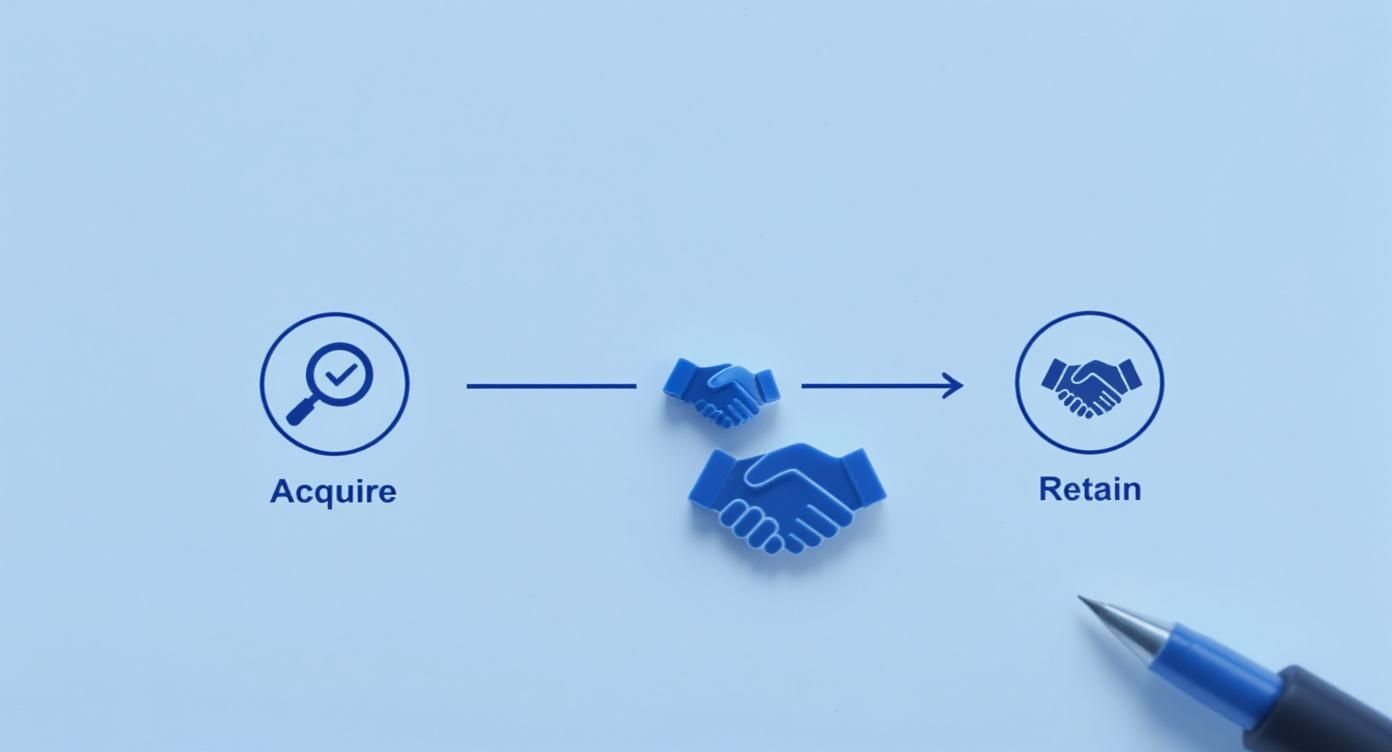
Think of it as an investment. That initial acquisition cost is just the beginning; the real returns come from nurturing that relationship over the long haul.
The Shift From Acquisition to Loyalty
For a long time, the ecommerce playbook was all about traffic, traffic, traffic. The main goal was to get that first sale. But that “acquisition at all costs” mindset creates a leaky bucket—you’re so busy pouring new customers in the top that you don’t notice the old ones slipping out the bottom. Real growth isn't about constantly refilling a leaky bucket; it's about plugging the holes.
Shifting your focus from short-term acquisition to long-term value is the cornerstone of a profitable ecommerce business. A loyal customer base provides predictable revenue, valuable feedback, and powerful word-of-mouth marketing.
This means you have to start thinking differently about the entire customer journey. Your job isn’t done when they click "Confirm Order." Honestly, that's where the real work of retention kicks off.
- First impressions count. What happens after the purchase is what determines if there will be a second one.
- Value builds loyalty. People come back when they feel appreciated and understood, not just like they’re another number on a mailing list.
- Data is your best friend. You need to know why customers stick around—and more importantly, why they leave.
If you’re ready to move past vanity metrics and build a truly resilient brand, a great next step is to explore some strategies to increase customer lifetime value. And if you want to get serious about measurement, our guide on the essential client retention metrics will show you exactly what to track. The goal here is to build a community, not just a customer list. Mastering that shift in thinking is your first step toward building a brand that lasts.
Nail the First Impression: Your Onboarding and Post-Purchase Playbook
The moment a customer clicks "buy" isn't the finish line. It’s the starting gun for your relationship. This immediate post-purchase window is your golden opportunity to prove they made the right choice and lay the groundwork for a long, happy partnership. Getting this right is a masterclass in customer retention in ecommerce; it turns a one-off sale into a memorable brand experience.
So many brands fumble this. They send a single, dry order confirmation and then... crickets. That dead air is where buyer's remorse creeps in. Your job is to fill that space with value, reassurance, and a heavy dose of your brand's personality.
The Welcome Email Series: Your Secret Weapon
A standalone order confirmation is just a receipt. A well-crafted welcome email series, however, is a retention-building powerhouse. This isn’t about hammering them with more ads. It’s about pulling them into your world and making them feel like they belong.
A solid welcome flow should check a few critical boxes:
- Reassure and Inform: First things first, confirm the order and give them a clear idea of when to expect it. This simple move builds instant trust and drastically cuts down on those "Where is my order?" support tickets.
- Tell Your Story: Why did you start this brand? What’s your mission? Sharing this helps customers connect with you as people, not just a faceless online store.
- Deliver Instant Value: Give them something to chew on while they wait. This could be a blog post on how to get the most out of their new product, an invite to your VIP Facebook group, or a quick video tutorial.
Imagine a specialty skincare brand. Their second email could be titled, "Get Ready for Your Glow-Up," with a few simple tips on how to prep their skin before the product even arrives. That’s value. That’s how you build anticipation.
The Unboxing Experience: Your Physical Touchpoint
In the digital world of ecommerce, the unboxing is your big moment—the closest you'll get to a hands-on, in-store experience. It’s when customer excitement is at its absolute peak. A plain brown box gets the job done, but a thoughtfully designed unboxing creates an emotional connection that people can't wait to share online.
An exceptional unboxing experience does more than just deliver a product; it delivers a feeling. It’s a tangible expression of your brand's appreciation and attention to detail, making the customer feel genuinely valued, not just processed.
Turning your unboxing from meh to memorable doesn't have to break the bank. In fact, it's often the small, personal touches that resonate the most.
Actionable Unboxing Ideas to Steal
- Handwritten Thank-You Notes: Never underestimate the power of a simple, personalized note. "Thanks, Sarah! Hope you love the new..." shows there’s a real human on the other side of the screen. It's an analog touch in a digital world, and it works wonders.
- A Small, Unexpected Gift: A free sample of a related product, a cool branded sticker, or even a small piece of candy can spark genuine delight. This little act of generosity makes people feel seen and appreciated.
- Helpful Inserts: Don't make them dig through your website's FAQ. Include a beautifully designed card with quick-start tips, care instructions, or a unique way to use the product they just bought.
Think of a small-batch coffee roaster including a card with the roaster's personal tasting notes and a suggested brewing method for that specific bag of beans. That’s not just a product; it’s an experience. That’s the kind of detail that gets you a second purchase.
Proactive Shipping and Delivery Updates
Let’s be honest, post-purchase anxiety boils down to one question: "Where's my stuff?" Taking charge of shipping communication is non-negotiable for a great first impression. Don't make your customers hunt for a tracking number and decipher a cryptic carrier site.
Instead, build out a simple email or SMS flow that sends friendly, branded updates.
- "Your Order Has Shipped!" - Turn this logistical step into a mini-celebration.
- "Heads Up! It's Out for Delivery!" - Build excitement for its arrival that same day.
- "It's Here! Your Package Has Arrived!" - Confirm the delivery and maybe link them to a setup guide or ask for initial feedback.
By owning the shipping narrative, you turn a stressful waiting game into an engaging part of the brand experience. You’re showing them you’re reliable and you’ve got their back, setting the stage for every interaction to come.
Designing Loyalty Programs That Actually Work
Let's be honest, a simple "points-for-purchase" system is table stakes these days. It’s a start, but it’s not going to make you stand out. The loyalty programs I see winning today are less about the transaction and more about creating a genuine sense of belonging and exclusive value. Your goal should be to build a program that doesn't just reward spending but actively deepens your relationship with each customer. That's how you really boost customer retention in ecommerce.
The numbers don't lie. Your most loyal customers are absolute gold, with some studies showing they're worth up to 10 times what they spent on their first purchase. And with over 90% of companies running some kind of loyalty initiative, you can bet your competitors are chasing them. Engaged shoppers are 5 times more likely to buy from you again and 7 times more likely to try a new product. If you need more convincing, there's some great data on how loyal customers impact your bottom line.
To get there, you have to think beyond a single reward structure. It’s about creating a multi-layered experience that makes your best customers feel like they're part of an exclusive club.
Evolving Beyond Points with Tiered VIP Systems
One of the most powerful ways to gamify loyalty is with a tiered VIP system. It gives customers a clear path to "level up," unlocking better perks and a real sense of status with each tier they reach. This strategy plays directly into our natural desire for progress and recognition.
Imagine a beauty brand’s tiered system:
- Bronze Tier (Entry Level): Earn 1 point for every dollar spent. Simple and straightforward.
- Silver Tier (After $250 spent): Now things get interesting. They earn 1.25 points per dollar, get early access to sales, and a birthday gift.
- Gold Tier (After $750 spent): Top-tier treatment. They get 1.5 points per dollar, free shipping on everything, and an invite to an exclusive online masterclass.
This kind of progression naturally encourages customers to spend more and more often. They can see the next level of rewards right there, motivating them to consolidate their shopping with your brand to unlock those better benefits.
The Rise of Paid Memberships
Want to take the VIP club concept to the next level? Ask customers to invest upfront with a paid membership. This model, made famous by Amazon Prime, creates a powerful psychological commitment. As soon as someone pays that fee, they're highly motivated to shop with you to "get their money's worth."
This works especially well for brands with high-frequency purchases—think coffee, supplements, or pet food. The key is making the value so obvious it feels like a no-brainer.
A successful paid loyalty program should offer benefits so compelling the membership fee feels like an absolute steal. The perceived value of the perks must significantly outweigh the cost, creating an immediate and ongoing sense of getting a special deal.
Think about a CPG brand selling healthy snacks. A $49/year membership could offer:
- A flat 20% off every single order.
- Free shipping, no minimum spend.
- First dibs on new flavor launches.
- A "members-only" section of the store with exclusive product bundles.
For any regular customer, the savings on discounts and shipping would quickly blow past the membership fee. It's an easy sell. For you, it creates a predictable, recurring revenue stream and puts a lock on your most valuable customers.
Rewarding More Than Just Purchases
The most sophisticated loyalty programs I've seen reward a whole range of actions that help grow the brand, not just sales. Your customers contribute value in so many ways, and your program should recognize and reward that. This is how you turn a retention tool into a full-blown community and marketing engine.
Start awarding points or perks for things that are critical for growth:
- Writing a Product Review: 50 points for a review, maybe 100 points if they add a photo.
- Social Media Engagement: 25 points for an Instagram follow, 75 points for sharing a tagged photo using your product.
- Referring a Friend: 500 points (or $10 off) for both people after the new customer's first purchase.
- Completing a Profile: 20 points for adding a birthday or product preferences—giving you priceless zero-party data.
When you reward these actions, you’re encouraging customers to become your best brand advocates. They create user-generated content, build social proof, and drive word-of-mouth—all while feeling more connected to you. For a deeper dive on putting this all together, our guide on loyalty program design breaks down how to build a rewards system that truly aligns with your goals.
Turning Happy Customers into Brand Advocates
https://www.youtube.com/embed/62JXaS5dvL8
Loyalty programs are great for keeping your current customers happy, but what if you could get those same people to bring in new ones for you? That's the real power of referral and affiliate programs. They turn your biggest fans into your most authentic and effective sales team.
Think about it: your best advocates are the people who already use and love your products. When a friend recommends something, it just hits different. That kind of personal endorsement cuts through all the marketing noise with a level of trust that no ad campaign can ever replicate. Setting up a formal program to encourage and reward this word-of-mouth is a game-changer for any serious customer retention in ecommerce strategy.
Crafting a Win-Win Incentive Structure
The secret to a killer referral program is making sure everyone wins. A great offer doesn't just reward the person doing the sharing; it gives their friend a compelling reason to actually make a purchase. If only the referrer gets something, it can feel a bit self-serving. But when both people benefit, it feels like sharing a gift, not just chasing a commission.
The classic "Give $10, Get $10" model is so popular for a reason: it's simple, fair, and everyone gets it instantly. Both people get equal value, which makes the whole thing feel good and encourages more sharing.
Here are a few incentive models I've seen work well:
- Store Credit for Both: This is my personal favorite. Offering something like "Give $20, Get $20" in store credit is a brilliant retention move. It pulls both the original customer and the new one right back into your store for another purchase, feeding that loyalty loop.
- Discount for Friend, Reward for Advocate: A very common approach. For instance, the new customer gets 15% off their first order, and once they buy, the original customer gets a $15 reward.
- Tiered Rewards: This works especially well for more formal affiliate programs. An affiliate might start by earning a 10% commission on their first ten sales, but that could jump to 15% after they pass that milestone, encouraging them to keep promoting.
The best referral programs feel less like a cold transaction and more like a genuine thank you. When you reward both the person sharing and the person buying, you create a powerful cycle that builds community and drives real, sustainable growth.
Setting Up the Right Tech for Success
Trying to track referrals with a spreadsheet is a nightmare waiting to happen. To run a program that can actually grow, you absolutely need the right software to automate tracking, attribute sales correctly, and handle payouts without any manual work. This keeps the experience smooth for your advocates and saves you from an administrative black hole.
Thankfully, there are fantastic tools out there that make this easy. If you're on a platform like Shopify, you've got a whole ecosystem of apps at your fingertips. Tools like ReferralCandy or BixGrow plug directly into your store, handling everything from generating unique referral links to automatically sending out rewards.
When you're picking a tool, make sure it has these key features:
- Unique Tracking Links: Every advocate needs their own unique, shareable link. This is non-negotiable for accurately tracing where new customers come from.
- Automated Reward Payouts: The system has to do the work for you. Whether it's store credit, discount codes, or cash, it should be sent out automatically when a referral is successful.
- A Clear Dashboard: Your advocates need a simple place to log in, see how many referrals they've made, check their earnings, and grab their sharing link.
Promoting Your Program for Maximum Impact
Just because you build it doesn't mean they'll come. You have to actively promote your referral program. The key is to ask for the referral when your customer is happiest.
Don't bury the link in your website's footer. Put clear calls-to-action right where your customers will see them: in post-purchase emails, on the order confirmation page, and inside their customer account portal.
A simple banner that says, "Love our products? Share with a friend and you both get $10 off!" can do wonders. It turns that moment of customer delight into your most powerful channel for finding new ones.
Using Data to Personalize the Customer Journey
Let’s be honest: generic, one-size-fits-all marketing is a one-way ticket to your customer’s spam folder. To build real, lasting connections, you have to show them you’re paying attention. This goes way beyond just slotting their first name into an email. It’s about using the data they share with you to create experiences that actually feel personal and valuable.
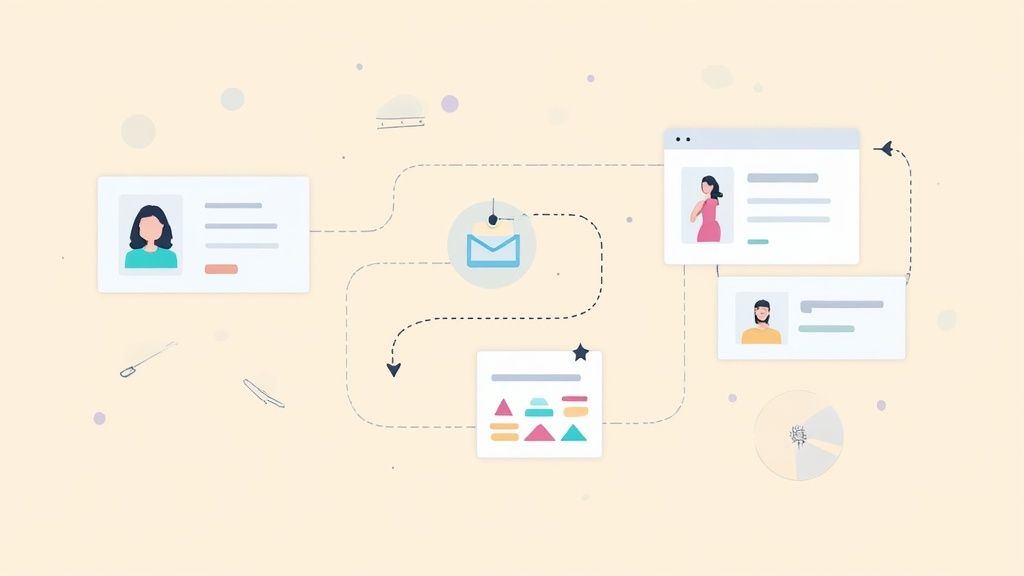
This isn't just a nice-to-have anymore; it’s a core part of a strong retention strategy. To really pull this off and manage all those customer relationships effectively, you'll need the right tools. Investing in powerful CRM solutions is a must, as they help you gather, organize, and—most importantly—act on all that customer insight.
Actionable Segmentation Strategies
The whole game of personalization starts with smart segmentation. Tossing all your customers into one giant bucket is a recipe for being ignored. The real magic happens when you group them based on their behavior and how they interact with your brand. This is what allows you to send the right message to the right person at the perfect time.
Here are a few high-impact segments I've seen work wonders:
- Your VIPs (High-Spenders): These are the customers at the top of your list based on Customer Lifetime Value (CLV). They’ve earned some special treatment—think early access to new drops, exclusive discounts, or maybe even a personal thank-you note.
- Recent First-Time Buyers: This group is at a critical fork in the road. Your mission is to totally wow them and lock in that crucial second purchase. Follow up with an email showing them how to get the most out of their new product or offer a small discount on a complementary item.
- At-Risk Customers: These are folks who haven't bought anything in a while, say, 90 days. A simple "We miss you!" email with a special offer can be surprisingly effective at bringing them back before they're gone for good.
The goal of segmentation isn't just to divide your audience; it's to understand them. By grouping customers based on shared behaviors, you can craft messages and offers that resonate deeply, making them feel seen and valued.
Understanding the different ways you can slice and dice your customer data is crucial. Here's a quick breakdown of some effective models you can use.
Table: Effective Customer Segmentation Strategies
| Segmentation Type | Description | Example Use Case |
|---|---|---|
| Demographic | Groups customers by age, gender, income, location, etc. | A skincare brand targeting a new anti-aging line to customers aged 40+. |
| Psychographic | Segments based on lifestyle, values, interests, and personality traits. | A sustainable fashion brand sending content about ethical sourcing to eco-conscious shoppers. |
| Behavioral | Divides customers based on their purchase history, browsing activity, and product usage. | An online bookstore sending sci-fi recommendations to customers who have previously bought sci-fi novels. |
| RFM (Recency, Frequency, Monetary) | Ranks customers based on how recently they bought, how often they buy, and how much they spend. | A coffee subscription service offering an exclusive blend to their most recent, frequent, and high-spending customers. |
Each model gives you a different lens through which to view your customers, and often, the most powerful strategies combine elements from two or three.
Personalizing Key Touchpoints
Once you have your segments, you can start tailoring your communication across every channel. This isn't just about email—it should be woven into your website, your ads, and every other place a customer interacts with you.
Make Your Website Dynamic: Your site shouldn't be a static brochure. Why show a VIP the same homepage as a brand-new visitor? Greet a returning top customer with a "Welcome Back!" banner featuring exclusive deals. For someone who’s been browsing a specific category, make sure product recommendations from that same category are front and center.
Send Emails That Actually Matter: This is where your segmentation work really pays off. Instead of blasting everyone with the same weekly newsletter, send targeted campaigns that speak to what each group actually cares about.
- Replenishment Reminders: Did a customer buy a 30-day supply of vitamins or dog food? An automated email around day 25 reminding them it’s time to reorder is incredibly helpful, not pushy. This one is a massive driver of repeat sales.
- Birthday & Anniversary Offers: A simple "Happy Birthday!" email with a small gift or discount is an easy win. It’s a personal touch that shows you’re paying attention and gives them a great reason to come back.
- Smart Cross-Sells: Someone just bought a new tent? Now’s the perfect time to show them your best-selling sleeping bags or portable stoves. Use what you know about their purchase history to make intelligent, helpful suggestions.
The information you collect directly from your audience is pure gold. We're talking about preferences, birthdays, and feedback you get from quizzes or surveys. This is called zero-party data, and it's incredibly powerful. To learn more about it, check out our guide on https://www.buildwithtoki.com/blog-post/what-is-zero-party-data.
Common Questions About Ecommerce Retention
Even with a great game plan, putting retention strategies into practice always brings up some tricky questions. Let's dig into the most common hurdles I see ecommerce brands face and get you some clear, actionable answers. We're moving from theory to real-world results.
What Is the Most Important First Step for Improving Retention?
Get your post-purchase experience right. It's that simple.
Before you dive into complex loyalty programs or deep personalization, you have to absolutely nail the experience after a customer clicks "buy." This is your first, best chance to prove they made the right choice. It sets the foundation for everything that comes after.
Think about it: this is the moment that confirms their decision and makes them receptive to hearing from you again. If you mess this up, any other retention tactic you try will feel like an uphill battle.
Focus on the fundamentals here:
- Keep them in the loop with clear communication about their order status.
- Ship it fast and reliably. No one likes waiting.
- Create a memorable unboxing experience.
- Make returns or getting help completely painless.
How Do I Measure the Success of My Retention Efforts?
You can't improve what you don't measure. Focusing on a few key performance indicators (KPIs) will tell you exactly what's working and where you need to adjust your approach.
Your north star metric is Customer Retention Rate (CRR). This tells you, flat out, what percentage of your customers stick around over a certain period. But that's just the start. Customer Lifetime Value (CLV) is just as crucial—it predicts how much money a customer will spend with you over their entire relationship with your brand.
You'll also want to keep a close eye on your Repeat Purchase Rate, which is the percentage of customers who come back for a second, third, or fourth purchase. And don't forget sentiment; track your Net Promoter Score (NPS) or other satisfaction scores. A winning retention strategy will show all of these numbers trending up and to the right.
Are Loyalty Programs Worth It for a Small Ecommerce Business?
Absolutely, as long as you're thoughtful about it. You don't need a massive, complicated system to make a real impact. A simple, well-designed program can be incredibly effective and deliver a great return.
Forget trying to copy Starbucks or Sephora. A tiered system that offers early access to sales or a small, exclusive gift after a few purchases can work wonders. The secret is making the rewards feel both attainable and genuinely valuable to your specific customers.
The real investment isn't just in the freebies. It's in the customer data and engagement you get back. A good loyalty program helps you pinpoint your best customers, drives repeat business, and gives you a direct line to your biggest fans—an audience that will always outperform a cold ad.
How Much Should I Spend on Customer Retention?
There isn't a magic number, but a great starting point is to shift some of what you spend on customer acquisition over to retention. A classic rule of thumb is the 5:1 ratio—spending five times more to get a new customer than to keep an existing one—but this can vary wildly based on your industry and how long you've been in business.
For a more strategic take, look at your Customer Lifetime Value (CLV) in relation to your Customer Acquisition Cost (CAC). If your CLV is at least 3x your CAC, you’re in a healthy spot and have room to invest back into keeping those valuable customers around.
My advice? Start small. Test an initiative, measure the impact, and then scale up what works. If a simple "we miss you" email campaign with a 10% discount brings back customers profitably, you can confidently put more budget behind it.
What's the Difference Between Loyalty and Retention?
This is a big one. They're related, but they are not the same thing, and knowing the difference is key to building a truly powerful strategy.
| Concept | Description | Key Indicator |
|---|---|---|
| Customer Retention | This is all about behavior. It simply measures whether a customer keeps buying from you. They could be retained for lots of reasons—maybe you're just the most convenient option. | Repeat Purchase Rate, Churn Rate |
| Customer Loyalty | This is all about attitude. It’s a customer's genuine emotional connection and preference for your brand. A loyal customer picks you even when a competitor is cheaper. | Net Promoter Score (NPS), Referrals |
Retention is about stopping customers from leaving. Loyalty is about giving them a reason they want to stay. Your ultimate goal is to build true loyalty. That's how you create a resilient, profitable customer base that can weather any storm.
How Soon Should I Ask a New Customer for a Review or Referral?
Timing is everything. Ask too soon and you seem desperate; wait too long and you've missed the magic.
You want to make the ask right after they've experienced the value of what you sold them.
For a product review, I find the sweet spot is about 7-14 days after the package has been delivered. This gives them enough time to actually use the product and form a real opinion.
For a referral, pounce on a moment of high satisfaction. The perfect time is right after they leave a 5-star review, make their second or third purchase, or have a fantastic experience with your support team. Frame it as a way for them to share something they love with a friend—it feels less like an ask and more like a favor.
Ready to turn these insights into action? Toki provides a complete suite of tools to build a world-class retention program. From tiered loyalty systems and automated referral campaigns to paid memberships and community features, our platform makes it easy to convert shoppers into lifelong brand advocates. Start building lasting customer relationships with Toki today.