10 High-Impact Customer Referral Program Ideas for Shopify Stores in 2025
Discover 10 powerful customer referral program ideas to boost sales and loyalty for your Shopify store. Actionable tips and examples included.
While paid ads and social media campaigns are essential, a powerful, often-overlooked growth channel is already at your fingertips: your existing customer base. Word-of-mouth marketing isn't just a buzzword; it's a strategic asset that unlocks sustainable growth. A well-designed customer referral program can transform your happy shoppers into a motivated sales force, driving high-quality leads at a fraction of the cost of traditional acquisition channels.
The data speaks for itself: referred customers are more loyal, have a higher lifetime value, and convert faster than leads from other sources. But not all referral programs are created equal. A generic, one-size-fits-all approach rarely delivers impactful results. To succeed, you need a strategy that resonates with your brand, excites your advocates, and motivates your specific audience. Simply offering a discount isn't enough; the structure and reward must align perfectly with customer expectations.
In this guide, we will move beyond the basics and explore 10 proven customer referral program ideas tailored specifically for e-commerce. We will break down each concept with actionable steps to implement them effectively using loyalty and referral platforms like Toki. For practical examples of how these programs function in the real world, exploring a list of diverse apps designed for earning through referrals can be highly insightful. By the end of this article, you'll have a clear roadmap to turn every satisfied customer into a powerful, revenue-generating brand advocate.
1. Tiered Reward Referral Program
A tiered reward referral program gamifies the referral process by offering progressively better rewards as a customer refers more people. Instead of a single, static reward for every referral, this model creates a ladder of incentives. Customers start at a base tier and unlock more valuable rewards as they hit specific referral milestones, motivating them to become true brand evangelists.
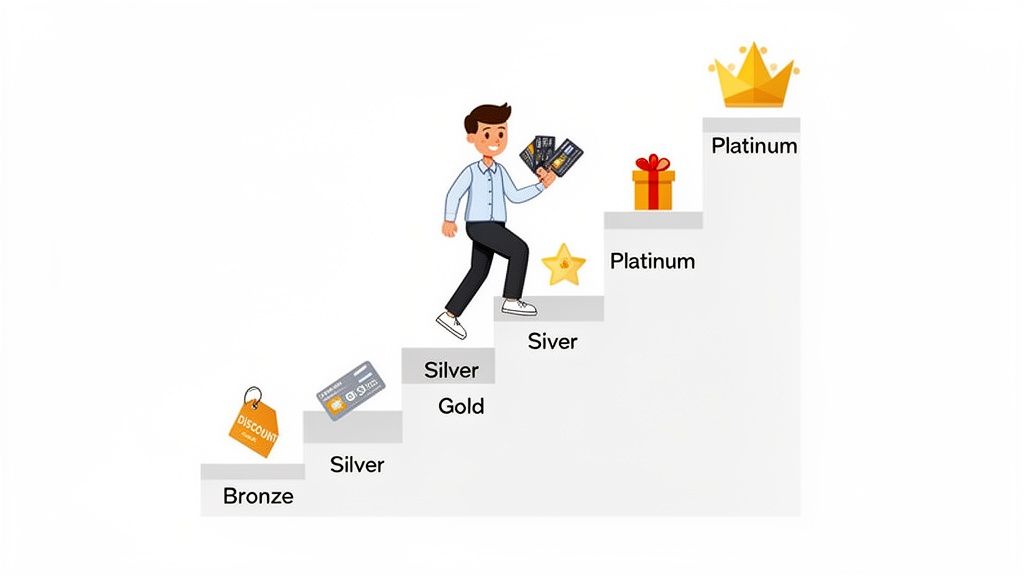
This structure capitalizes on the human desire for achievement and status. Think of Dropbox, which offered increasing amounts of free storage for each successful referral, or Uber's driver referral program, where bonuses escalated after hitting 5, 10, or 20 referrals. The key is making each next step feel both aspirational and achievable.
Why It Works
This is one of the most effective customer referral program ideas because it segments your advocates. It gives casual referrers a simple reward while providing super-fans with compelling reasons to continue promoting your brand. The structure encourages sustained effort rather than a one-time action.
Implementation Tips
- Structure Your Tiers Clearly: Define specific, attainable goals for each level. For example:
- Bronze (1-3 Referrals): 15% off their next purchase.
- Silver (4-7 Referrals): $30 store credit.
- Gold (8+ Referrals): A free product from a select category or exclusive early access to new collections.
- Communicate Progression: Use a visual progress bar in the customer's account dashboard to show them how close they are to the next tier. This transparency is crucial for motivation.
- Offer Exclusive Benefits: Higher tiers should offer more than just bigger discounts. Consider non-monetary perks like VIP customer support, exclusive content, or an invitation to a brand community.
- Integrate with Your Platform: Use a loyalty and referrals app like Toki to automate tier tracking and reward distribution seamlessly within your Shopify store. This ensures a smooth user experience for both you and your customers.
For a deeper dive into structuring these incentives, you can learn more about how to set up a referral reward structure that converts.
2. Double-Sided Incentive Program
A double-sided incentive program, often called a dual-sided referral, is a structure where both the person making the referral (the advocate) and the new customer they refer (the friend) receive a reward. This reciprocal approach creates a win-win scenario, removing any feeling of one-sided gain and dramatically increasing the likelihood that the friend will make a purchase.
This model is exceptionally popular because it gives the new customer an immediate reason to convert while also rewarding the existing customer for their loyalty. Classic examples include Airbnb, which gives travel credit to both the referrer and the new guest, and Lyft, which often provides ride credits to both parties. The core principle is sharing the value created by the referral.
Why It Works
This is one of the most powerful customer referral program ideas because it lowers the barrier to entry for both participants. The existing customer feels good about sharing a genuine discount with a friend, and the new customer is incentivized to try a new brand with a special offer. This mutual benefit accelerates word-of-mouth marketing and improves conversion rates for new traffic.
Implementation Tips
- Balance the Rewards: Keep the incentive for the referrer and the new customer equal or very similar (e.g., $10 for you, $10 for your friend). This fosters a sense of fairness and makes the offer more appealing to share.
- Set Clear Activation Rules: Define what constitutes a "successful referral." Usually, this means the new customer must complete a purchase or sign up for a service. Be transparent about these conditions.
- Promote the "Give and Get" Angle: Frame your marketing messages around sharing. Use language like "Give your friends 20% off, and you'll get 20% off your next order." This emphasizes the generosity of the act.
- Automate Notifications: Use your referral platform to send automated email or push notifications to both parties. Let the referrer know when their friend has made a purchase and their reward is available. This positive feedback loop encourages more referrals.
3. Cash Back or Credit Referral Program
A cash back or credit referral program is one of the most direct and universally appealing incentive models. It rewards advocates with tangible monetary value, either as actual cash, account credit, or a store gift card, for every new customer they successfully bring in. The reward can be a flat amount or a percentage of the new customer's first purchase.
This straightforward approach removes any guesswork for the referrer. They know exactly what they’re getting in return for their efforts. Think of fintech giant Venmo, which offers a simple cash bonus for new sign-ups, or DoorDash, which provides a significant account credit for referring a new user who places an order. The appeal lies in the immediate, practical value of the reward.
Why It Works
This is a powerful entry in our list of customer referral program ideas because its value is clear and immediate. Cash or store credit is a highly motivating incentive that appeals to a broad audience, unlike niche product rewards that may only interest a segment of your customer base. This model is particularly effective for businesses whose products have a high repeat purchase rate, as store credit directly encourages the advocate to shop again.
Implementation Tips
- Define Reward Structure: Decide between a flat fee (e.g., $10 credit per referral) or a percentage (e.g., 10% of their friend's first order value). Flat fees are simpler to manage, while percentages incentivize advocates to encourage larger first-time purchases.
- Set Clear Conditions: Implement a minimum purchase threshold for the referred friend to prevent low-value referrals. For example, the new customer must spend at least $50 for the advocate to receive their credit.
- Automate Reward Delivery: Use a referrals app to automatically apply the credit to the advocate's account or send a digital gift card once the conditions are met. A frictionless redemption process is key to keeping advocates engaged.
- Communicate Value Clearly: Your messaging should be direct and simple. Use clear calls to action like, "Give your friends $15 off their first order and get $15 in credit for yourself!" This transparency builds trust and encourages participation.
4. Exclusive Access or Premium Perks Program
An exclusive access or premium perks program moves beyond simple discounts, offering referrers special status and benefits that money can't buy. This model rewards loyal customers with VIP treatment, such as early access to new product launches, exclusive content, premium customer support, or invitations to special events. It taps into the desire for recognition and belonging, making advocates feel like true insiders.
This approach is highly effective for brands with a strong community or aspirational products. Think of Tesla’s past programs offering exclusive merchandise and invitations to vehicle unveilings, or Shopify's Partner Program, which provides developers with exclusive training and resources. The core idea is to offer value that strengthens the customer's emotional connection to your brand, turning them into passionate ambassadors.
Why It Works
This is one of the more powerful customer referral program ideas for building long-term loyalty. Monetary rewards are spent and forgotten, but the feeling of being a VIP creates a lasting bond. It gives your most dedicated fans a compelling reason to refer others by offering them a higher status within your brand's ecosystem, which can be more motivating than a simple cash bonus.
Implementation Tips
- Define Genuinely Desirable Perks: Ensure the benefits are truly exclusive and valuable. Survey your best customers to find out what they would appreciate most.
- Early Access: Let top referrers shop new collections 24 hours before anyone else.
- VIP Support: Offer a dedicated support line or faster response times.
- Exclusive Content: Provide access to behind-the-scenes content, tutorials, or Q&A sessions with the founders.
- Communicate the Exclusivity: Clearly market these perks as rewards for your most valued brand advocates. Use language like "Join the Inner Circle" or "Become a Brand VIP" to highlight their special status.
- Tier the Perks: Create levels of exclusivity. A customer's first referral might unlock a digital badge, while five successful referrals could grant them access to an exclusive online community or event.
- Automate Perk Delivery: Use your loyalty platform to automatically tag customers who unlock VIP status. This allows you to create segmented email campaigns and grant access to specific site pages or products, ensuring the experience feels seamless.
5. Gamified Referral Program with Leaderboards
A gamified referral program turns the simple act of referring a friend into an engaging and competitive experience. By incorporating game mechanics like points, badges, and public leaderboards, you motivate customers not just with rewards but with the thrill of competition and the satisfaction of achievement. Participants compete to see who can generate the most successful referrals within a specific period.

This model taps into our innate desire for status and recognition. Think of Robinhood's referral contests or Duolingo’s competitive challenges, where users can see their rank compared to others. The public nature of a leaderboard adds a powerful social proof element, encouraging more participation as customers vie for the top spots and the exclusive prizes that come with them.
Why It Works
This is one of the most engaging customer referral program ideas because it fosters a sense of community and friendly competition. It rewards your most active advocates in a highly visible way, which can inspire others to increase their referral efforts. Time-bound contests also create a sense of urgency, driving a significant surge in referrals in a short period.
Implementation Tips
- Keep Rules Simple: Ensure the scoring system is transparent and easy to understand. For example, one successful referral equals 100 points.
- Offer Layered Rewards: Don't just reward the grand prize winner. Offer smaller prizes for hitting milestones or for top performers in different categories to keep more people engaged.
- Refresh Leaderboards Regularly: Run weekly, monthly, or seasonal contests to give everyone a fresh chance to win. This prevents early leaders from discouraging new participants.
- Celebrate Winners Publicly: Announce and feature top referrers on your social media, in newsletters, or on your website. This provides valuable recognition and social proof.
- Automate Tracking: Use a platform like Toki to automatically track referral points, update leaderboards in real-time, and manage prize distribution. This is essential for maintaining fairness and excitement.
To learn how to apply these concepts more broadly, you can explore more about the gamification of loyalty programs.
6. Social Media-Driven Referral Program
A social media-driven referral program is specifically designed to be shared across platforms like Instagram, TikTok, Facebook, and X (formerly Twitter). Instead of relying solely on email or direct messages, this strategy leverages the viral nature of social networks by making it incredibly easy for customers to share their unique referral link with their followers. The focus is on creating visually appealing, shareable content that spreads organically.
This approach taps into the power of social proof and influencer culture at every level. Think of Glossier’s early success, built on a community of brand reps sharing their unique links on Instagram, or Fashion Nova's dominance, fueled by a network of influencers and customers posting their outfits. It turns your customer base into a decentralized marketing team.
Why It Works
This is one of the most powerful customer referral program ideas for brands with a strong visual identity and a socially active audience. It meets customers where they are already spending their time and provides them with the tools to become micro-influencers. The public nature of the share adds a layer of social proof that a private email referral can't match.
Implementation Tips
- Enable One-Click Sharing: Your referral interface should have dedicated buttons to share directly to major social platforms like Instagram Stories, Facebook, and TikTok. The fewer steps, the higher the share rate.
- Create Shareable Assets: Provide pre-designed, aesthetically pleasing templates or images that customers can use. Include your branding and a clear call-to-action.
- Leverage User-Generated Content (UGC): Encourage referrers to post photos or videos with your product, and reward them for it. This authentic content is far more compelling than branded ads.
- Use UTM Parameters: Track every social share with unique UTM codes to identify which platforms and even which influencers are driving the most successful referrals. This data is crucial for optimizing your campaigns.
7. Partner and Affiliate Referral Network
A partner and affiliate referral network formalizes word-of-mouth marketing into a structured B2B channel. Instead of relying solely on individual customers, this program incentivizes complementary businesses, agencies, influencers, or affiliates to refer new customers, typically in exchange for a commission or revenue share. It transforms your referral strategy from a consumer-focused tactic into a scalable business development engine.
This model is a cornerstone for many B2B and SaaS companies but is highly effective for e-commerce brands as well. Think of Shopify's own partner program, which rewards agencies and developers for bringing new merchants to the platform, or how a fitness apparel brand might partner with personal trainers and gyms to drive sales through affiliate links.
Why It Works
This is one of the most powerful customer referral program ideas for reaching new, highly-qualified audiences at scale. Partners and affiliates have already built trust with their followers or clients, so their recommendation carries significant weight. It allows you to tap into established communities and sales channels without the high upfront cost of traditional advertising.
Implementation Tips
- Define Partner Criteria: Clearly outline who can join your program. Vet applicants to ensure they align with your brand values and have a relevant audience.
- Offer Competitive Commissions: Research industry standards and offer an attractive commission rate to attract high-quality partners. This could be a percentage of the sale or a flat fee.
- Provide a Partner Toolkit: Equip your partners for success with a comprehensive kit. Include logos, brand guidelines, product images, pre-written copy, and unique tracking links.
- Automate Tracking and Payouts: Use a dedicated affiliate management platform to handle link tracking, sales attribution, and commission payouts transparently and reliably. This builds trust and reduces administrative work.
- Build a Community: Create a dedicated portal, newsletter, or Slack channel for your partners. Use it to share tips, announce new products, and foster a sense of community to keep them engaged.
8. Charity or Cause-Based Referral Program
A charity or cause-based referral program ties customer advocacy directly to social impact. Instead of offering a personal discount or cash reward, this model allows the referrer, the new customer, or both to trigger a donation to a partner nonprofit. This approach appeals deeply to customers who prioritize brand values and want their spending to contribute to a greater good.
This model transforms a transactional referral into a meaningful, community-building action. For example, Warby Parker's program has historically supported vision-focused nonprofits, while Aspiration's referrals contribute to planting trees. The power lies in aligning your brand's mission with a cause that resonates with your target audience, fostering a stronger emotional connection.
Why It Works
This is one of the most powerful customer referral program ideas for mission-driven brands. It attracts and retains customers who share your values, building a loyal community around a shared purpose rather than just discounts. It also generates positive brand sentiment and powerful user-generated content, as customers are proud to share their impact.
Implementation Tips
- Align with Your Mission: Partner with reputable nonprofits that genuinely reflect your brand's core values. A mismatch can feel inauthentic and backfire.
- Offer Choice and Transparency: Allow customers to choose from a few pre-vetted charities. Regularly publish reports on the total donations generated through the program to build trust.
- Amplify the Impact: Consider a company-matching component to double the donation for each successful referral. This shows your commitment and makes the customer’s action feel even more significant.
- Showcase the Stories: Feature testimonials from your charity partners or stories about the impact of the donations. This makes the program's success tangible and emotionally resonant.
- Integrate Giving Seamlessly: Use apps that can automate charitable donations upon a successful referral. Tools like Pledgeling or Givz can integrate with Shopify to manage the process, ensuring donations are tracked and fulfilled reliably.
9. Customer Loyalty Points Conversion Referral Program
A customer loyalty points conversion program integrates your referral and loyalty systems into a single, powerful ecosystem. Instead of offering a separate cash or discount reward, you reward successful referrals with loyalty points. This model incentivizes advocates by adding value to a system they are already invested in, boosting engagement with both programs simultaneously.
This approach leverages existing customer habits. If a shopper is already saving points for a specific reward, the chance to earn a large bonus through a referral becomes highly compelling. Think of how airlines like United offer thousands of frequent flyer miles for referrals, or how Starbucks occasionally runs promotions where members earn bonus Stars for bringing in friends, accelerating their path to a free drink.
Why It Works
This is one of the most cohesive customer referral program ideas for brands with established loyalty programs. It reinforces the value of your points system and encourages repeat purchases, as the rewards (points) can only be redeemed within your store. It creates a virtuous cycle: referrals earn points, and points encourage more spending and brand interaction.
Implementation Tips
- Set Attractive Point Values: The points awarded for a referral must feel substantial. For example, if a customer earns 1 point per dollar spent, a 500-point referral bonus (equivalent to $500 in spending) is a powerful motivator.
- Create Referral-Exclusive Bonuses: Offer limited-time "double points" events for referrals during slower seasons or new product launches to create urgency and drive focused acquisition.
- Ensure Value Transparency: Clearly communicate the cash or product value of the points being offered. For instance, state "Refer a friend and get 1,000 points (a $10 value)!" in your referral messaging.
- Integrate Seamlessly: Use a platform like Toki that can manage both loyalty points and referrals. This allows for automated point allocation upon successful referral, ensuring a smooth experience without manual tracking.
- Promote Point Opportunities: Actively market the referral program to your loyalty members through email and on-site notifications, reminding them how close they are to their next reward and how referrals can help them get there faster.
10. Content-Driven Referral Program with Affiliate Marketing
A content-driven referral program merges the trust of referrals with the reach of affiliate marketing. Instead of just sharing a link, advocates are incentivized to create and distribute valuable content about your brand, such as reviews, tutorials, unboxing videos, or blog posts. They then earn a commission or rewards when their content drives a sale.
This model transforms customers into creative partners. Think of Amazon's Associates program, where bloggers and YouTubers create in-depth product reviews, or Skillshare's model that rewards instructors for bringing new students to the platform through their content. The focus shifts from a simple share to authentic, user-generated storytelling that builds social proof.
Why It Works
This is one of the most powerful customer referral program ideas for brands seeking high-quality, authentic marketing assets. It generates evergreen content that can attract customers long-term, tapping into the power of niche creators and micro-influencers who have a dedicated, trusting audience. The content itself becomes a valuable, scalable marketing engine.
Implementation Tips
- Provide Clear Guidelines: Offer a content creation brief that outlines your brand's do's and don'ts, key messaging points, and FTC disclosure requirements without stifling creativity.
- Equip Your Creators: Give them the tools to succeed. This could include product samples, a media kit with logos and brand imagery, or even templates for social media posts.
- Showcase Top Performers: Feature the best user-generated content on your own channels (with permission). This provides social proof and motivates other creators by showing them what success looks like.
- Offer Performance-Based Tiers: Reward creators based on the quality and performance of their content. For example, a high-converting blog post could earn a higher commission rate than a standard social media share. Specifically, for content creators focusing on written content, mastering affiliate marketing for bloggers is key to maximizing their earnings and impact.
For a comprehensive guide on setting up the technical side of this program, you can learn more about creating a successful affiliate program.
Top 10 Customer Referral Programs Compared
| Program | 🔄 Implementation Complexity | ⚡ Resource Requirements | ⭐ Expected Effectiveness | 📊 Expected Outcomes / Impact | 💡 Ideal Use Cases / Key Advantage |
|---|---|---|---|---|---|
| Tiered Reward Referral Program | High — multi-tier tracking & fraud controls | Medium–High — fulfillment, UI, support | ⭐⭐⭐⭐ — strong long-term engagement | Increases LTV and repeat referrals; higher ongoing cost | Best for B2C brands seeking loyalty; keep tiers realistic & transparent |
| Double-Sided Incentive Program | Medium–High — dual-party tracking & verification | High — rewards for both referrer & referee | ⭐⭐⭐⭐ — boosts conversions and participation | Higher sign-up and activation rates; raises CAC | Best for growth-stage firms with solid unit economics; balance reward equity |
| Cash Back or Credit Referral Program | Low — simple rules and payouts | Medium–High — scalable monetary payouts | ⭐⭐⭐ — immediate attractiveness, risk of cost scaling | Fast conversions; measurable ROI but margin pressure | Best for fintech/e‑commerce; cap earnings and require thresholds |
| Exclusive Access or Premium Perks Program | Medium — curate perks and manage exclusivity | Low–Medium — experiential costs, events | ⭐⭐⭐ — strong brand affinity, slower conversion | Builds emotional loyalty and community; lower cash spend | Best for premium SaaS/brands; ensure perks are genuinely desirable |
| Gamified Referral Program with Leaderboards | High — game mechanics, anti-fraud, content refresh | Medium–High — dev, design, ongoing content | ⭐⭐⭐⭐ — high engagement & viral potential | Large engagement and UGC; can be costly and needs moderation | Best for apps, gaming, younger audiences; refresh frequently and guard vs. manipulation |
| Social Media-Driven Referral Program | Low–Medium — sharing UX and UTM tracking | Low–Medium — creative assets + influencer costs | ⭐⭐⭐ — broad reach, algorithm-dependent | Wide organic reach and UGC; variable conversion rates | Best for B2C, fashion, Gen Z brands; make sharing effortless and track via UTM |
| Partner and Affiliate Referral Network | High — contracts, portals, performance tracking | Medium–High — partner managers, commissions | ⭐⭐⭐⭐ — high-quality, scalable leads | Predictable recurring revenue; reduced margins from sharing | Best for B2B SaaS & enterprise; provide partner training & clear tracking |
| Charity or Cause-Based Referral Program | Medium — nonprofit partnerships & reporting | Medium — donation matching/administration | ⭐⭐⭐ — strong PR and emotional resonance | Improves brand reputation; may lower immediate conversions | Best for mission-driven brands; publish transparent impact reports |
| Customer Loyalty Points Conversion Referral Program | Medium — loyalty integration & accounting | Low–Medium — uses existing loyalty budget | ⭐⭐⭐ — leverages existing engagement, cost-efficient | Increased loyalty program activity; careful margin control needed | Best for retailers/hospitality with loyalty systems; cap referral point inflation |
| Content-Driven Referral Program with Affiliate Marketing | Medium — content guidelines, approval workflows | Medium — creator payouts, tools, analytics | ⭐⭐⭐⭐ — authentic reach and niche trust | Builds marketing content library; slower, performance-based conversions | Best for tech, education, e‑commerce; provide clear guidance and timely payments |
Putting It All Together: Your Next Steps to Referral Success
We've explored a comprehensive menu of high-impact customer referral program ideas, from the competitive thrill of a gamified leaderboard to the altruistic appeal of a charity-based model. The journey from inspiration to implementation, however, is where a good idea transforms into a powerful growth engine. The central theme connecting all these successful strategies is strategic alignment. Your referral program cannot exist in a vacuum; it must be a natural extension of your brand's voice, your customers' motivations, and your overarching business objectives.
A double-sided incentive might be the perfect, straightforward solution for a brand focused on rapid customer acquisition. In contrast, a content-driven affiliate program may be better suited for a niche brand with a dedicated community of creators. The key takeaway is that there is no single "best" referral program. The most effective approach is one that is meticulously tailored to your unique context.
Key Takeaways for Building Your Referral Engine
Before you begin, distill your strategy down to these core principles:
- Clarity is King: Your offer must be instantly understandable. If a customer needs a flowchart to figure out how they and their friends benefit, your program is too complicated. Simplicity drives participation.
- Accessibility is Crucial: Don't bury your referral program in a footer link or a forgotten FAQ page. Promote it on your homepage, in post-purchase emails, on social media, and within customer account dashboards. Make it an unmissable part of the customer experience.
- Motivation Matters: Understand what truly drives your customers. Is it a monetary discount, exclusive access to a new product, social recognition, or the satisfaction of supporting a cause they care about? Align your incentives with these intrinsic and extrinsic motivators.
- Friction is the Enemy: The sharing process should be seamless. A customer should be able to generate and share their unique referral link in just a few clicks or taps, directly from the device they are using. Any unnecessary steps will cause a significant drop-off in engagement.
Your Actionable Next Steps
Feeling inspired? It’s time to move from planning to action. The most successful brands don't just launch a program; they build a system for continuous improvement.
- Define Your Primary Goal: Start with a single, clear objective. Are you aiming to increase customer acquisition by 15%? Boost customer lifetime value? Or drive repeat purchases? Your primary KPI will dictate the structure of your program.
- Select Your Starting Model: Choose one of the customer referral program ideas from this list that best aligns with your brand and your primary goal. Don't try to implement everything at once. It's better to launch a simple, well-executed program than a complex one that confuses customers.
- Map the Customer Journey: Walk through the entire referral process from both the advocate's and the referred friend's perspective. Where will they find the program? What does the sharing message look like? How is the reward delivered? Identify and eliminate any potential points of friction.
- Leverage the Right Technology: Manually tracking referrals is inefficient and prone to error. A dedicated loyalty and referrals platform is non-negotiable for scaling your efforts. This technology automates link generation, tracks conversions, and handles reward fulfillment, freeing you up to focus on strategy and promotion.
- Launch, Test, and Iterate: Your referral program is not a "set it and forget it" initiative. Monitor your key metrics, gather customer feedback, and be prepared to A/B test different incentives, messaging, and promotional channels. The data you collect will be invaluable for optimizing performance over time.
Ultimately, a powerful referral program does more than just bring in new sales. It transforms your most satisfied customers into a proactive, trusted, and highly effective marketing team. It builds a self-perpetuating cycle of advocacy and trust that strengthens your brand community and creates a sustainable competitive advantage in a crowded e-commerce landscape. The journey starts with a single idea, but its success is built on thoughtful execution and a commitment to creating genuine value for every participant.
Ready to turn these ideas into a powerful, automated growth engine for your Shopify store? Toki provides an all-in-one platform to seamlessly launch, manage, and optimize any of these referral programs alongside your loyalty and VIP initiatives. Stop juggling multiple apps and start building a unified brand community today by exploring what you can build with Toki.