10 Powerful Customer Engagement Examples to Drive Loyalty in 2026
Explore 10 powerful customer engagement examples to boost loyalty and sales. Discover strategies like tiered rewards, gamification, and digital wallets.
In a crowded market, repeat business isn't a given; it's earned. While transactions pay the bills today, genuine customer engagement builds the foundation for tomorrow's growth. It's the critical difference between a one-time buyer and a lifelong brand advocate who actively champions your business. But what does effective engagement actually look like in practice, and how can you implement it?
This article moves beyond abstract theory to provide a deep dive into powerful, real-world customer engagement examples. We will dissect the strategy behind each tactic, from tiered VIP programs that reward top spenders to gamified challenges that make shopping an interactive experience. This is not just a list of ideas; it's a strategic playbook designed for action.
You will learn not just what works, but why it works. Each example includes a clear blueprint for implementation, covering:
- The core goals and KPIs.
- Step-by-step execution notes.
- Actionable takeaways for your own brand.
Our focus is on providing replicable strategies that convert casual shoppers into a loyal, thriving community. We will break down specific tactics used by leading brands in referral marketing, community building, and personalized rewards. We'll also show how a platform like Toki can streamline and enhance these initiatives, helping you build lasting customer relationships that drive sustainable revenue. Let's explore the examples that turn passive purchasers into active participants.
1. Tiered Loyalty Programs
Tiered loyalty programs are a powerful customer engagement example that gamifies the shopping experience. This multi-level rewards structure incentivizes customers to increase their spending and interaction frequency by offering escalating benefits as they ascend through different levels, such as Bronze, Silver, and Gold.
This approach taps into key psychological drivers like status, achievement, and exclusivity. By creating a clear path to better rewards, brands motivate customers to consolidate their spending and make repeat purchases to unlock the next level of perks.
Strategic Breakdown
Sephora’s Beauty Insider Program is a masterclass in this strategy. It progresses from a free-to-join "Insider" tier to "VIB" (Very Important Beauty) and the top-tier "VIB Rouge," with spending thresholds for each.
-
Goals & KPIs:
- Increase Average Order Value (AOV) as customers "stretch" to meet tier thresholds.
- Boost Customer Lifetime Value (CLV) by fostering long-term loyalty.
- Improve purchase frequency.
- KPIs: Tier migration rate, spend-per-tier, repeat purchase rate.
-
Execution:
- Insider: Basic points-per-dollar, birthday gift, standard sales access.
- VIB ($350/year spend): Enhanced point multipliers, more gift options, and early access to sales events.
- VIB Rouge ($1000/year spend): Highest point multipliers, free shipping, exclusive access to events, and first dibs on new product launches.
Key Takeaway: The value proposition must escalate significantly with each tier. The jump from VIB to Rouge feels substantial, justifying the higher spend with tangible benefits like free shipping and exclusive access, making the goal feel both desirable and worthwhile.
How to Replicate and Enhance with Toki
- Define Achievable Tiers: Don't set the bar too high. The first tier should be easily accessible to encourage participation, with subsequent tiers motivating higher spending without feeling impossible.
- Communicate Progress Clearly: Use personalized dashboards and email notifications to show customers how close they are to the next tier. Celebrate when they level up to reinforce positive behavior.
- Offer Experiential Rewards: Go beyond discounts. Provide tier-specific perks like early access to new products, invitations to exclusive virtual events, or surprise "delight" gifts for top-tier members.
Using Toki: Merchants can leverage Toki’s segmentation tools to define tier entry rules based on spending, purchase frequency, or points earned. Toki’s analytics can help identify the optimal thresholds for each tier by analyzing customer spending habits, preventing churn caused by unattainable goals.
2. Referral and Affiliate Programs
Referral and affiliate programs are performance-based customer engagement examples that transform your most loyal customers into a powerful acquisition channel. This strategy incentivizes existing customers to become brand ambassadors by rewarding them for bringing in new business, typically through unique links or codes.
This approach leverages the immense power of social proof and word-of-mouth marketing. A recommendation from a trusted friend is far more persuasive than traditional advertising, allowing brands to acquire high-value customers at a significantly lower cost.
Strategic Breakdown
Dropbox's viral referral program is a landmark example of this strategy. By offering extra storage space to both the referrer and the new user, Dropbox created a simple, valuable, and highly shareable incentive that fueled its explosive early growth.
-
Goals & KPIs:
- Decrease Customer Acquisition Cost (CAC).
- Increase user sign-ups and conversion rates.
- Improve customer loyalty by rewarding advocacy.
- KPIs: Referral conversion rate, viral coefficient (K-factor), cost-per-acquisition via referral.
-
Execution:
- Dual-Sided Incentive: Both the person referring and the new user received 500 MB of bonus storage space, making it a win-win.
- Frictionless Sharing: The referral process was seamlessly integrated into the user onboarding and account settings, making it easy to invite contacts.
- Clear Value Proposition: The reward (more storage) was directly tied to the core product, making it immediately useful and desirable for active users.
Key Takeaway: The most effective referral programs offer a dual-sided incentive that is intrinsically linked to the product's core value. Making the reward beneficial for both parties and easy to share creates a self-perpetuating growth loop.
How to Replicate and Enhance with Toki
- Offer Compelling, Mutual Rewards: Provide value to both the referrer and the new customer. This could be a discount, store credit, a free product, or exclusive content. To effectively leverage customer advocacy, strategies like referral and affiliate programs are invaluable. You can explore a practical guide on how to start affiliate marketing to drive revenue growth.
- Promote the Program Post-Purchase: The moment after a customer makes a purchase is when their excitement is highest. Use a post-purchase pop-up or a dedicated email to prompt them to share their positive experience with friends.
- Create Branded, Simple Sharing: Design a clean, on-brand landing page that explains the program benefits clearly. Provide pre-written messages and one-click sharing buttons for email, SMS, and social media.
Using Toki: Merchants can use Toki to automatically generate unique referral codes for each customer and track conversions in real-time. The platform can automate the distribution of rewards (like points or discounts) once a successful referral is completed, removing manual work and ensuring a seamless experience.
3. Gamification with Badges and Challenges
Gamification is a popular customer engagement example that applies game-like mechanics such as points, leaderboards, and achievement badges to non-game contexts. This strategy transforms routine actions like making a purchase, leaving a review, or sharing on social media into a fun and rewarding experience that encourages specific customer behaviors.
By setting clear challenges and celebrating milestones with digital badges, brands tap into our intrinsic desire for achievement, competition, and social recognition. It’s an effective way to guide customers along their journey and motivate deeper, more frequent interaction with your brand.
Strategic Breakdown
Nike Run Club (NRC) exemplifies this strategy by transforming the solitary act of running into a connected and competitive game. The app uses challenges, achievements, and social leaderboards to keep its global community of runners motivated and engaged.
-
Goals & KPIs:
- Increase user engagement and daily active users (DAU) on the app.
- Foster a sense of community and brand loyalty.
- Encourage consistent product usage (running).
- KPIs: Challenge participation rate, number of badges earned, social shares of achievements, app session duration.
-
Execution:
- Personal Milestones: Users unlock colorful badges for hitting personal records like their fastest 5K or longest run.
- Monthly Challenges: Nike issues community-wide challenges (e.g., "Run 100km in January") that users can join to compete against themselves and others.
- Leaderboards: Friends can connect and compare their mileage and pace, adding a friendly competitive element.
- Celebration: The app uses celebratory animations and messages when a user unlocks a new achievement, reinforcing the positive behavior.
Key Takeaway: The most effective gamification ties rewards directly to the core value of the product. Nike's badges aren't for buying shoes; they're for running, which reinforces the brand's purpose and builds an authentic connection with the user's personal goals.
How to Replicate and Enhance with Toki
- Align Badges with Business Goals: Create badges for actions that drive value, such as "First Purchase," "5-Star Reviewer," "Social Sharer," or completing a customer profile.
- Create Time-Limited Challenges: Launch seasonal or monthly challenges that encourage a specific behavior, like "Make 3 purchases in Q2 to unlock a 20% off coupon."
- Showcase Progress and Achievements: Use a dedicated "Achievements" page in the customer's account to display earned and upcoming badges. This visual progress encourages completion.
Using Toki: Merchants can use Toki’s rules engine to automatically award badges and points when customers complete predefined actions. You can create segmented campaigns that target users who are close to unlocking a new badge with encouraging reminders, boosting participation and driving desired behaviors.
4. Personalized Reward Segmentation
Personalized reward segmentation is a sophisticated customer engagement example that moves beyond one-size-fits-all incentives. It involves strategically dividing a customer base into distinct groups based on purchase history, browsing behavior, or demographics and then delivering tailored rewards that resonate with each specific segment.
This data-driven approach ensures that promotions are highly relevant, significantly boosting redemption rates and perceived value. Instead of broadcasting a generic discount, brands can send targeted offers, such as exclusive early access to a new product line for high-spending loyalists or a special discount on a frequently viewed item for a price-sensitive shopper.
Strategic Breakdown
Target's legendary use of purchase data to send hyper-personalized mailers and digital offers is a prime example. The retailer analyzes shopping history to predict future needs, such as sending coupons for baby supplies to customers whose purchases indicate they may be expecting.
-
Goals & KPIs:
- Increase offer redemption rates by improving relevance.
- Boost conversion rates on targeted promotions.
- Enhance Customer Lifetime Value (CLV) by demonstrating an understanding of individual needs.
- KPIs: Segment-specific conversion rate, offer redemption rate, AOV per segment.
-
Execution:
- Data Collection: Aggregate data on past purchases, viewed products, cart abandonments, and demographic information.
- Segmentation: Create customer groups, such as "High-Value VIPs," "Recent First-Time Buyers," "At-Risk Customers," or segments based on product category affinity (e.g., "Skincare Enthusiasts").
- Targeted Offers: Deploy unique rewards for each segment. VIPs might get early access to sales, while first-time buyers receive a compelling discount on their second purchase to encourage a repeat visit.
Key Takeaway: True personalization is predictive, not just reactive. By analyzing behavioral data to anticipate a customer's next move, brands can deliver value at the precise moment it’s most impactful, making the customer feel understood rather than just marketed to.
How to Replicate and Enhance with Toki
- Start with Behavioral Segments: Don't get overwhelmed by data. Begin with simple, powerful segments like customers who haven't purchased in 90 days or those who have bought a specific product category multiple times.
- A/B Test Rewards: Within a single segment, test different offers to see what resonates most. Does the "Skincare Enthusiast" segment respond better to a 15% discount or a free gift with purchase?
- Communicate the "Why": Frame your offers to build trust. An email that says, "Because you love our hiking boots, here's early access to our new outdoor collection," feels exclusive and thoughtful.
Using Toki: Merchants can use Toki's robust segmentation engine to create dynamic customer groups based on real-time data like spending habits, products purchased, or engagement levels. This allows for automated, hyper-targeted campaigns where specific rewards are sent to precisely the right audience, maximizing ROI and engagement.
5. Community-Building and Brand Advocacy
Building a community is one of the most powerful customer engagement examples because it transforms the transactional customer-brand relationship into one of shared identity and belonging. This strategy involves creating exclusive spaces, like online forums or social groups, where customers connect with the brand and each other, fostering a sense of ownership and loyalty.
These engaged communities become a self-sustaining engine for advocacy. Members organically generate word-of-mouth marketing, create user-generated content, and provide invaluable feedback, turning passive buyers into passionate brand evangelists.
Strategic Breakdown
Glossier’s “Into the Gloss” blog and community exemplify this approach. Before it was a product company, Glossier was a content and community platform where beauty enthusiasts shared routines, tips, and product feedback. This community-first model allowed them to build products their audience was already asking for.
-
Goals & KPIs:
- Increase User-Generated Content (UGC) to use in marketing materials.
- Reduce product development risk by sourcing ideas directly from the community.
- Enhance brand loyalty and reduce customer churn.
- KPIs: Community engagement rate (comments, shares), UGC submission volume, customer feedback-to-feature implementation rate.
-
Execution:
- Content as a Hub: The "Into the Gloss" blog serves as the central point for conversation, featuring interviews and reader-submitted stories.
- Feedback Loops: Glossier actively solicits opinions on product development through blog comments and social media, making customers feel like co-creators.
- Product Launches: New products are often previewed or launched first to the most engaged community members, reinforcing their insider status.
Key Takeaway: A successful community isn't just a marketing channel; it's a core part of the business model. By treating customer feedback as a strategic asset, Glossier built a cult following that feels personally invested in the brand's success.
How to Replicate and Enhance with Toki
- Create an Exclusive Space: Use a private Facebook group, a dedicated Slack channel, or a forum on your website for paying customers or top-tier loyalty members.
- Facilitate Peer-to-Peer Interaction: Don't make every conversation about the brand. Post discussion prompts related to the lifestyle or interests surrounding your products to encourage organic connections.
- Recognize and Reward Top Contributors: Actively feature customer stories, photos, and testimonials. Use shout-outs and special perks to reward the members who contribute the most value to the community.
Using Toki: Merchants can use Toki’s segmentation to grant access to an exclusive community based on customer tags (e.g., "VIP Member," "Top Contributor"). Toki can also automate rewarding members who participate in community challenges or refer new members, linking advocacy directly to tangible benefits.
6. Digital Wallet Passes and Mobile Integration
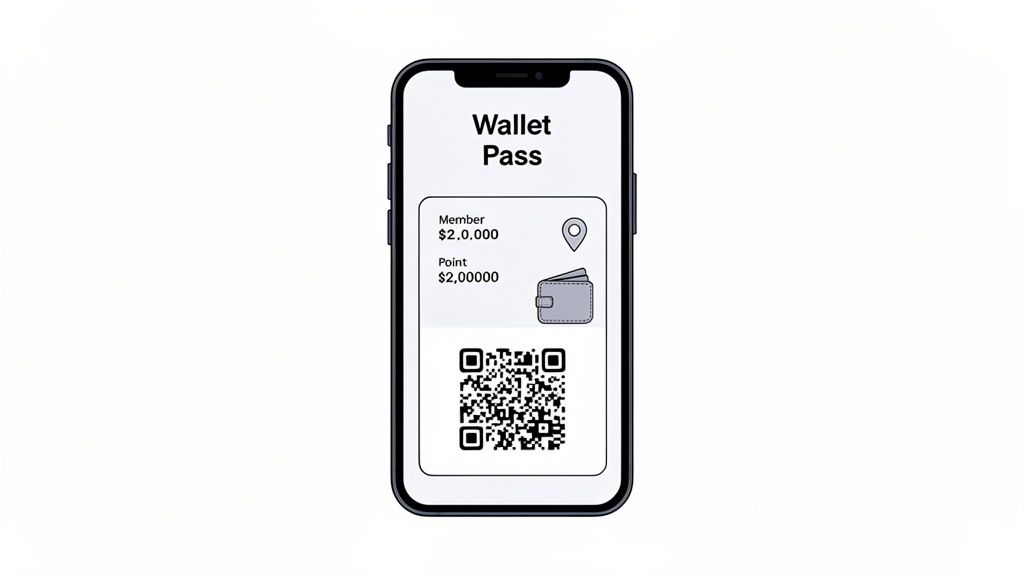
Digital wallet passes are a prime customer engagement example that embeds brand loyalty directly into a customer’s smartphone. By integrating with Apple Wallet and Google Wallet, businesses can replace physical loyalty cards with dynamic, easily accessible digital versions that display points, offers, and membership status in real-time.
This strategy capitalizes on mobile convenience, creating a frictionless experience at checkout. Instead of fumbling for a card, customers simply tap their phone, boosting redemption rates and ensuring the loyalty program remains top-of-mind.
Strategic Breakdown
Starbucks' mobile app and wallet integration is the gold standard for this tactic. The brand has seamlessly connected its payment system, rewards program, and mobile ordering into a single, cohesive ecosystem that lives on a customer's phone.
-
Goals & KPIs:
- Increase in-store and mobile order transaction speed.
- Boost offer redemption rates through timely push notifications.
- Improve program engagement by making points balances highly visible.
- KPIs: Wallet pass installation rate, redemption rate from pass-based offers, transaction frequency per mobile user.
-
Execution:
- Simple Onboarding: Customers can add their Starbucks Card to their digital wallet directly from the app with a single tap.
- Dynamic Updates: The pass automatically updates the points balance and available rewards after every purchase.
- Geo-fenced Notifications: The pass can trigger lock-screen notifications when a customer is near a Starbucks location, reminding them of their balance or current offers.
Key Takeaway: The power of a digital wallet pass lies in its ability to reduce friction to near zero. By integrating payment and loyalty into one scannable code, Starbucks makes using rewards an effortless, almost reflexive part of the transaction process.
How to Replicate and Enhance with Toki
- Offer One-Click Installation: Make adding the pass to a wallet an easy, single-step process from a post-purchase email, SMS, or within a customer's account page.
- Use Push Notifications Strategically: Send updates for new rewards, expiring points, or exclusive offers directly to the lock screen. Geo-fencing can prompt users with relevant offers when they are near a physical store.
- Keep the Pass Clean and Clear: Design the pass to clearly display the most important information: customer name, points balance, member tier, and a scannable QR or barcode.
Using Toki: Merchants can use Toki’s digital wallet feature to automatically generate and distribute personalized passes for Apple and Google Wallet. Toki’s platform allows for real-time updates to the pass-–syncing points balances and available offers-–and enables targeted push notifications to drive both online and in-store engagement.
7. Exclusive Early Access and Product Launches
Granting exclusive early access to new products or sales is a customer engagement example that leverages exclusivity and urgency. By rewarding loyal customers with a first look, brands make them feel like valued insiders, strengthening their emotional connection and encouraging immediate action.
This strategy taps into the fear of missing out (FOMO) and the desire for status. It pre-qualifies an audience that is already highly engaged, leading to higher conversion rates and creating a buzz that amplifies the general release.
Strategic Breakdown
Nike's SNKRS app is a prime example of using exclusivity to drive massive engagement. The app uses features like the SNKRS Pass to give select members early access to purchase highly anticipated, limited-edition sneakers at local retail stores.
-
Goals & KPIs:
- Drive hype and demand for new product releases.
- Reward and retain high-value, engaged community members.
- Increase app engagement and session duration.
- KPIs: Early access redemption rate, sell-through rate during the exclusive window, app user activity spikes.
-
Execution:
- Scarcity: Nike announces a limited-quantity sneaker drop exclusively through the app.
- Targeted Access: Access is often granted based on engagement history, location (for local pick-ups), or through a lottery system, making the opportunity feel rare and valuable.
- Urgency: The access window is extremely short, sometimes just minutes, compelling immediate action from users who receive the notification.
Key Takeaway: The perceived value of the access must be exceptionally high. For Nike, this is access to products that often resell for many times their retail price. This high-stakes reward ensures customers are constantly engaging with the app, hoping to be chosen for the next drop.
How to Replicate and Enhance with Toki
- Segment Your Insiders: Create a specific customer segment for your most loyal or highest-spending customers. This group will be your go-to audience for early access perks.
- Build Anticipation: Announce the early access event to your exclusive segment 24-48 hours in advance via email or SMS, highlighting the product and the specific time it will be available to them.
- Create a Seamless Experience: Ensure the early access link or code works flawlessly at the designated time. Any friction can diminish the feeling of a premium, exclusive experience.
Using Toki: Merchants can use Toki’s advanced segmentation to create dynamic "VIP" lists based on loyalty tier, lifetime spend, or engagement score. Toki’s campaign tools can then automate the delivery of unique early access links or notifications to these specific segments, ensuring the right customers get the exclusive treatment.
8. Points-Based Reward Systems
Points-based reward systems are a foundational customer engagement example, creating a simple, transactional loop. Customers earn points for specific actions, primarily purchases, which they can later redeem for discounts, free products, or other defined rewards. This system is effective because it’s easy to understand and provides a clear, tangible value exchange.
The structure motivates repeat business by giving customers a concrete reason to return. Each purchase feels like an investment towards a future reward, increasing the perceived value of every transaction and encouraging customers to consolidate their spending with one brand.
Strategic Breakdown
Walgreens’ myWalgreens (formerly Balance Rewards) program exemplifies a flexible points system integrated into daily shopping. Customers earn points not just on general purchases but also on specific product categories and health-related actions, making rewards feel more accessible.
-
Goals & KPIs:
- Increase purchase frequency and basket size.
- Boost engagement with specific product lines through bonus point offers.
- Improve customer data collection for personalized marketing.
- KPIs: Points redemption rate, repeat purchase rate, average time between purchases.
-
Execution:
- Simple Earning: Customers earn 1% Walgreens Cash rewards storewide and 5% on Walgreens-branded products.
- Bonus Offers: Frequent promotions offer bonus points (e.g., "$5 in Walgreens Cash when you spend $20") on specific categories.
- Easy Redemption: Points are converted to "Walgreens Cash" which can be applied directly to purchases at checkout, making redemption frictionless.
Key Takeaway: The power of a points system lies in its clarity and flexibility. By offering multiple ways to earn and a simple redemption process, Walgreens makes the program feel constantly active and valuable, turning routine shopping trips into rewarding experiences.
How to Replicate and Enhance with Toki
- Keep it Simple: Start with an easy-to-understand value, like 10 points for every $1 spent. Clear math removes friction and encourages participation.
- Create Multiplier Events: Run limited-time promotions offering 2x or 3x points on certain products or during specific seasons to create urgency and boost sales.
- Visualize Progress: Prominently display a customer's point balance in their account dashboard, emails, and post-purchase notifications to keep the next reward top-of-mind.
Using Toki: Merchants can use Toki to easily set up earning rules and redemption tiers. Toki's platform can automatically track point balances and trigger personalized notifications when a customer is close to a redemption threshold, a powerful tactic to drive a return visit.
9. Subscription-Based Membership Models
Subscription-based membership models are a direct and effective customer engagement example where customers pay a recurring fee for access to exclusive benefits. This strategy transforms casual shoppers into invested brand advocates by creating a powerful value exchange: the customer pays for premium perks, and the brand gains a predictable revenue stream and a highly committed audience.
This model leverages the principle of commitment and consistency. Once a customer pays a membership fee, they are psychologically motivated to maximize its value by engaging more frequently and spending more with the brand, thereby justifying their initial investment.
Strategic Breakdown
Amazon Prime is the quintessential example of a successful subscription model. By bundling a suite of high-value benefits under a single annual fee, Amazon has created an ecosystem that is incredibly difficult for members to leave.
-
Goals & KPIs:
- Increase Customer Lifetime Value (CLV) significantly.
- Boost purchase frequency and Average Order Value (AOV).
- Create a recurring, predictable revenue stream.
- KPIs: Membership renewal rate, non-member to member conversion rate, average spend per member vs. non-member.
-
Execution:
- Core Offering: The initial hook was free two-day shipping, a powerful and easily understood benefit.
- Value Stacking: Amazon continuously added value without a proportional price increase, including Prime Video, Prime Music, Prime Reading, and exclusive deals like Prime Day.
- Low-Friction Entry: A free trial period effectively removes the barrier to entry, allowing customers to experience the benefits firsthand before committing financially.
Key Takeaway: The perceived value of the membership must far exceed its cost. Amazon ensures that the combined worth of free shipping, entertainment, and exclusive deals makes the annual fee feel like an undeniable bargain, which is crucial for retention.
How to Replicate and Enhance with Toki
- Calculate Member ROI: Clearly define and communicate the value. Show members how much they've saved on shipping or gained through exclusive discounts to constantly reinforce the membership's worth.
- Offer a Trial Period: A 14 or 30-day free trial can dramatically increase sign-ups. Use this period to showcase the best perks and onboard new members effectively.
- Send Regular Value Reminders: Don't let members forget why they're paying. Send periodic emails summarizing their savings, benefits used, and upcoming exclusive opportunities to combat churn.
Using Toki: Merchants can use Toki’s paid membership features to easily launch and manage subscription programs. You can create different membership tiers with unique benefits, automate recurring billing, and segment members to send targeted communications and value-reinforcing campaigns.
10. Behavioral Email and SMS Campaigns
Behavioral email and SMS campaigns are automated, trigger-based messages that respond directly to customer actions or lifecycle milestones. Instead of generic blasts, these communications are highly contextual and timely, such as abandoned cart reminders, post-purchase follow-ups, or birthday offers.
This approach is a cornerstone of modern customer engagement examples because it delivers relevance at scale. By reacting to specific behaviors, brands can send messages that feel personal and helpful, significantly boosting open rates, click-through rates, and conversions compared to standard marketing campaigns.
Strategic Breakdown
Chewy, the online pet supply retailer, excels at using behavioral triggers to create powerful emotional connections. Their post-purchase and re-engagement campaigns go beyond simple transactional updates, focusing on the customer and their pet's journey.
-
Goals & KPIs:
- Increase conversion rates from abandoned carts.
- Boost repeat purchase rates through timely re-engagement.
- Improve customer satisfaction and long-term loyalty (CLV).
- KPIs: Cart recovery rate, open/click-through rates on triggered emails, repeat purchase frequency, customer feedback scores.
-
Execution:
- Post-Purchase: Chewy sends order confirmations and shipping updates that are warm and brand-aligned. They follow up with emails asking for reviews on specific products purchased.
- Lifecycle Triggers: They famously send personalized birthday cards for customers' pets and even condolence flowers when they learn a pet has passed away, an unexpected touchpoint that builds profound loyalty.
- Re-engagement: If a customer who regularly buys dog food hasn't purchased in a while, they receive a gentle reminder that they might be running low.
Key Takeaway: The most effective behavioral campaigns combine automation with genuine empathy. While the trigger is automated, the content should feel human and considerate, addressing a specific customer need or moment in their journey.
How to Replicate and Enhance with Toki
- Map Key Customer Actions: Identify high-value touchpoints in your customer journey, such as first purchase, cart abandonment, reaching a new loyalty tier, or a period of inactivity.
- Segment Your Triggers: Don't send the same abandoned cart message to everyone. A first-time visitor might get a simple reminder, while a VIP customer could receive a small, exclusive discount to encourage completion.
- Integrate Channels: Use a combination of email and SMS. An abandoned cart email can be followed up with a time-sensitive SMS offer 24 hours later for maximum impact.
Using Toki: Merchants can use Toki’s powerful automation engine to create sophisticated behavioral triggers. For example, automatically send an email or SMS with a bonus point offer when a customer abandons a cart, or trigger a "Happy Anniversary" message with a special reward one year after their first purchase, all managed from a single platform.
10 Customer Engagement Strategies Comparison
| Tactic | 🔄 Implementation complexity | ⚡ Resource requirements | 📊 Expected outcomes | 💡 Ideal use cases | ⭐ Key advantages |
|---|---|---|---|---|---|
| Tiered Loyalty Programs | 🔄🔄🔄🔄 — multi-level rules & tracking | ⚡⚡⚡ — CRM/analytics + ops | 📊 ↑ AOV & LTV; ⭐ High | 💡 Established retailers, hospitality, subscription brands | ⭐ Drives premium spend, segmentation, predictable revenue |
| Referral and Affiliate Programs | 🔄🔄🔄 — tracking & fraud controls | ⚡⚡ — tracking + reward fulfillment | 📊 ↑ new customers; lower CAC; ⭐ Medium‑High | 💡 Startups, SaaS, D2C brands seeking acquisition | ⭐ Cost‑effective growth, scalable advocacy |
| Gamification with Badges and Challenges | 🔄🔄🔄 — design + campaign cadence | ⚡⚡ — creative + light dev | 📊 ↑ engagement frequency & shares; ⭐ High | 💡 Apps, fitness, brands needing engagement boosts | ⭐ Increases interaction, shareability, low cost vs ROI |
| Personalized Reward Segmentation | 🔄🔄🔄🔄 — advanced data models | ⚡⚡⚡⚡ — analytics, data pipelines | 📊 ↑ redemption & ROI; ⭐ High | 💡 Data‑rich e‑commerce, luxury, subscription services | ⭐ Higher relevance, better ROI, targeted retention |
| Community‑Building and Brand Advocacy | 🔄🔄🔄🔄 — ongoing community management | ⚡⚡⚡ — moderators, events, content | 📊 ↑ advocacy & UGC; retention gains; ⭐ Medium‑High | 💡 Lifestyle, fitness, premium brands, niche communities | ⭐ Emotional loyalty, UGC, product feedback loop |
| Digital Wallet Passes & Mobile Integration | 🔄🔄🔄 — wallet APIs + POS integration | ⚡⚡⚡ — engineering + testing | 📊 ↑ adoption & seamless redemptions; ⭐ High | 💡 Omni‑channel retailers, QSRs, tech‑forward brands | ⭐ Frictionless UX, geo‑targeting, richer location data |
| Exclusive Early Access & Product Launches | 🔄🔄 — gating + inventory coordination | ⚡⚡ — comms + segmentation | 📊 ↑ conversion & AOV via FOMO; ⭐ High | 💡 Streetwear, limited editions, D2C product drops | ⭐ Drives urgency, rewards loyalty, high conversion |
| Points‑Based Reward Systems | 🔄🔄🔄 — earning rules + accounting | ⚡⚡⚡ — tracking, liability management | 📊 ↑ repeat purchases & milestone engagement; ⭐ High | 💡 Broad retail, groceries, credit card programs | ⭐ Transparent, flexible, widely understood by customers |
| Subscription‑Based Membership Models | 🔄🔄🔄🔄 — billing + churn management | ⚡⚡⚡⚡ — fulfillment, benefits, support | 📊 ↑ recurring revenue & LTV; ⭐ High | 💡 E‑commerce giants, D2C, subscription boxes | ⭐ Predictable revenue, higher customer commitment |
| Behavioral Email & SMS Campaigns | 🔄🔄🔄 — triggers + personalization logic | ⚡⚡ — automation platform & content | 📊 ↑ open/CTR, recover carts, boost retention; ⭐ High | 💡 E‑commerce, SaaS, subscription services | ⭐ Timely relevance, automated revenue recovery, measurable ROI |
Your Blueprint for Building an Unbeatable Engagement Strategy
The diverse customer engagement examples we've explored, from Sephora's tiered Beauty Insider program to Starbucks' gamified mobile challenges, share a powerful common denominator: they transform transactions into relationships. They prove that modern customer loyalty isn't bought with a single discount; it’s earned through consistent, value-driven, and personalized interactions that make customers feel like integral parts of your brand's story.
We've seen how tiered programs create aspiration, how gamification injects fun into the buying cycle, and how community-building initiatives turn passive buyers into vocal advocates. These aren't just isolated tactics but interconnected components of a comprehensive engagement ecosystem. The goal is to move beyond the one-off sale and cultivate a continuous dialogue with your audience.
Key Strategic Pillars from Today's Examples
To distill these extensive examples into a core philosophy, focus on these three strategic pillars as you build or refine your own approach:
- Value Over Volume: The most successful programs prioritize delivering genuine value. This could be exclusive access, personalized recommendations, or the simple joy of unlocking a new badge. The points and rewards are merely the mechanics; the feeling of being valued is the real driver of retention.
- Personalization as the Standard: Generic, one-size-fits-all campaigns no longer cut it. As seen in the behavioral email and segmentation examples, success hinges on delivering the right message, to the right person, at the right moment. This level of personalization shows you understand the customer's journey and are actively catering to their needs.
- Integration Across Channels: The line between online and offline commerce is increasingly blurred. The best customer engagement examples, like those using digital wallet passes, create a seamless experience whether a customer is browsing on their phone or visiting a physical store. This omnichannel consistency builds a stronger, more cohesive brand identity.
Your Actionable Next Steps
Feeling inspired is one thing; taking action is what generates results. Use the insights from this article to chart your course. Start by asking critical questions about your own business:
- Assess Your Current State: Where does your customer engagement currently stand? Are you relying solely on transactional emails, or do you have the beginnings of a loyalty program? Identify your biggest gaps.
- Define Your Primary Goal: Are you trying to increase purchase frequency, boost average order value, or generate more user-generated content? Choose one primary objective to focus on first. A gamified challenge might be perfect for frequency, while a referral program excels at acquisition.
- Choose Your Starting Tactic: You don't need to launch ten new initiatives at once. Pick one or two of the customer engagement examples that align best with your brand and target audience. If you have a strong community, a referral program might be a quick win. If you have a wide product range, a points-based system could be ideal.
As you implement these programs, remember that engagement extends to every touchpoint. To effectively implement your engagement strategy, it's beneficial to explore various top customer engagement strategies for social media, as these platforms are often the frontline for community building and brand advocacy.
Ultimately, building a powerful engagement strategy is an investment in your brand's future. It’s about creating a resilient business where customers stick around not just because of what you sell, but because of how you make them feel. By adopting these frameworks, you’re not just chasing the next sale; you’re building an army of loyal fans who will champion your brand for years to come.
Ready to turn these examples into your reality? Toki provides the all-in-one platform to build, manage, and scale the exact loyalty, referral, and tiered membership programs we've discussed. Stop juggling separate apps and start building your unified engagement engine today with Toki.