Choosing Customer Loyalty Program Software
Discover how customer loyalty program software boosts retention. This guide covers features, benefits, and how to choose the right solution for your business.
At its heart, customer loyalty program software is the digital toolkit that lets you automatically reward people for sticking with your brand. It’s the engine that runs everything from your points system and VIP tiers to referral programs, helping you turn first-time buyers into lifelong fans.
What Is Loyalty Program Software and Why It Matters
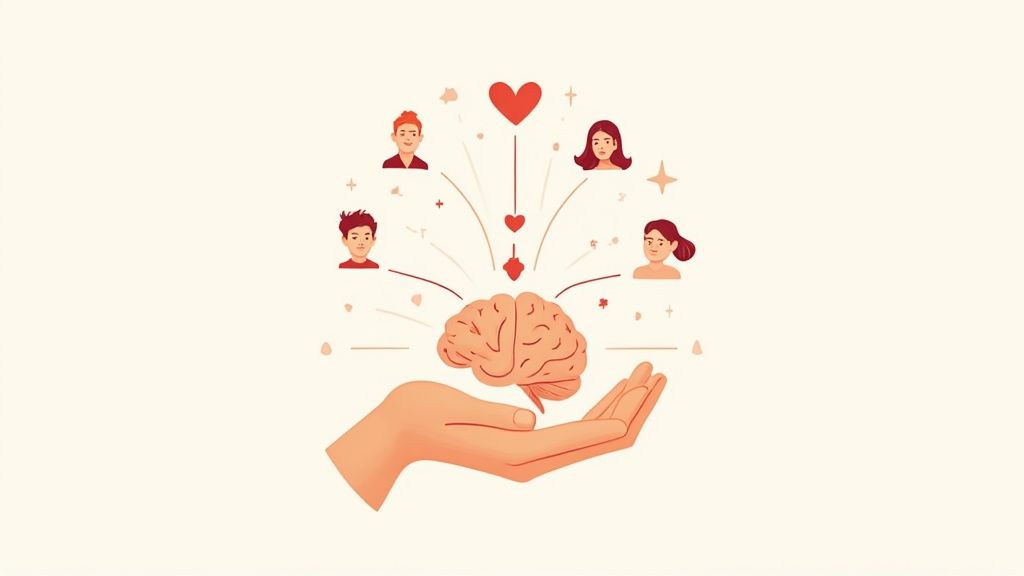
Think of customer loyalty program software as your business's perfect memory. It keeps track of every single purchase, click, and customer milestone so you can build real relationships instead of just processing one-off transactions. This tech takes on the heavy lifting of figuring out who your best customers are and making sure they feel appreciated for their business.
The whole idea is to create a clear value exchange. Your customers get real perks—like discounts, early access to new products, or freebies—for being loyal. In return, you get something way more valuable than a single sale: consistent repeat business, higher order values, and a base of customers who actively promote your brand.
Moving Beyond Simple Discounts
Today's loyalty platforms are a world away from the old-school "buy ten, get one free" punch card. They're sophisticated systems built to encourage specific customer actions and collect incredibly useful data along the way. The goal isn't just to hand out free stuff; it's to forge an emotional bond that makes your brand their first and only choice.
Here’s what this kind of software really does:
- Automates Rewards: It handles all the tedious work by automatically assigning points, tracking reward progress, and sending customers updates. No manual spreadsheets needed.
- Collects Data: The software is a goldmine for zero-party data. Customers are happy to share their preferences and info when they know they’ll get more personalized perks in return.
- Boosts Engagement: Features like gamified challenges, birthday rewards, and social sharing incentives make interacting with your brand fun, not just transactional.
A well-designed loyalty program pays for itself by increasing customer lifetime value (CLV) and making you less dependent on increasingly expensive acquisition channels. It's an investment in the customers you already have.
The Strategic Advantage for Your Business
Putting a customer loyalty program in place is a smart business decision that hits your bottom line directly. Did you know loyal customers spend 67% more on average than new ones? Even better, boosting retention by just 5% can pump up profits by as much as 95%. This software is what makes those numbers a reality.
For a deeper dive into tools specifically designed to keep customers engaged and coming back, explore what is available in the realm of customer retention software.
Ultimately, this technology gives you a powerful way to stand out in a crowded market. You can learn more about the specific benefits of a loyalty program in our detailed guide. It allows you to stop competing solely on price and start building a brand that customers love, trust, and return to again and again.
What's Really Under The Hood? A Look At Core Loyalty Software Features
When you peel back the layers, loyalty program software is much more than just a set of tools; it's a way to tap into customer psychology. Each feature is designed to encourage specific behaviors that not only keep people coming back but also turn them into genuine fans of your brand.
Think of it as an ecosystem. Someone might sign up for the easy points, but they stick around for the VIP treatment and start telling their friends because of the referral bonuses. Let's dig into the essential building blocks that make these programs work so well.
Points and Rewards Systems
This is the bread and butter of almost every loyalty program. Often called an "earn and burn" model, it’s the transactional engine that drives everything. Customers do something you want—make a purchase, write a review, follow you on social media—and they get points in return.
Once they've saved up enough, they can "burn" those points on rewards. This simple give-and-get creates a powerful psychological loop. It turns shopping into a game where customers have a clear goal, giving them a real reason to choose you over a competitor to unlock that next reward.
For a points system to really work, it has to be:
- Easy to Understand: Customers need to know exactly how to earn points and what they're worth. Confusion is a killer.
- Flexible: Don't just offer one type of reward. Mix it up with dollar-off coupons, free shipping, exclusive products, or early access to sales.
- Automatic: The best customer loyalty program software runs on its own, tracking points and sending out rewards without you lifting a finger.
Tiered Membership Levels
Tiers are what turn a basic program into something aspirational. Instead of a one-size-fits-all approach, you create levels—think Bronze, Silver, and Gold—that customers climb by hitting spending goals or engagement milestones.
This simple idea taps directly into our desire for status and recognition. Customers in the Bronze tier see the cool perks waiting for them in Silver and are motivated to spend a little more. Meanwhile, your Gold-level members feel seen and appreciated, solidifying their loyalty. It’s no surprise that top-tier loyalty programs can increase revenue from members by 15-25% a year. A big part of that comes from the incremental spending tiers encourage. You can see more data on how loyalty programs fuel revenue growth on scoop.market.us.
Tiers transform a simple rewards program into a journey. They give your most valuable customers a reason to feel special, creating an emotional connection that goes far beyond discounts.
Referral and Affiliate Programs
Let's be honest: your happiest customers are your best marketers. A referral program gives you a systematic way to put that energy to work. The software creates a unique link or code for every member, making it dead simple for them to share with friends and family.
When a friend uses that link to make a purchase, both the original customer and the new one get a reward. It's a true win-win that drives incredible customer acquisition at a tiny fraction of what you'd spend on ads. This is word-of-mouth marketing, put on steroids with a little help from technology.
Gamification and Engagement Tools
Modern loyalty software knows that you have to keep things interesting. Gamification features add a layer of fun and healthy competition to keep your members engaged, even when they aren't actively buying something.
These aren't just gimmicks; they're smart ways to build a stronger brand connection:
- Badges and Achievements: Award customers with cool digital badges for hitting milestones, like making their fifth purchase or sharing a product on Instagram.
- Challenges: Spark some action during slow periods with time-sensitive goals, like "Spend $100 this month to unlock 500 bonus points."
- Leaderboards: Show off your top point-earners to foster a bit of friendly competition and build a sense of community among your biggest fans.
These elements make interacting with your program something people actually enjoy, ensuring it stays top-of-mind long after the first purchase.
Key Features and Their Business Impact
To put it all together, it helps to see exactly how a specific feature translates into a tangible business outcome. The right tool doesn't just make customers happy; it directly impacts your bottom line.
| Feature | What It Does | Primary Business Benefit |
|---|---|---|
| Points & Rewards | Gives customers points for purchases and other actions that can be redeemed for value. | Increases repeat purchase frequency and AOV. |
| Tiered Memberships | Creates exclusive levels with better perks for customers who spend or engage more. | Boosts Customer Lifetime Value (CLV). |
| Referral Programs | Empowers customers to refer friends in exchange for mutual rewards. | Lowers Customer Acquisition Cost (CAC). |
| Gamification | Adds game-like elements like badges, challenges, and leaderboards to the experience. | Improves customer engagement and brand recall. |
| Personalized Offers | Uses customer data to send targeted rewards and promotions. | Increases conversion rates and customer loyalty. |
| Automated Communication | Sends automatic emails or notifications for points updates, tier changes, and rewards. | Strengthens customer relationships and saves time. |
Each of these components works together to create a program that’s more than the sum of its parts. It becomes a powerful engine for growth, driven by your most loyal customers.
The Strategic Business Benefits of a Loyalty Program
https://www.youtube.com/embed/g39B_mNxRG4
It’s easy to get caught up in the tactical bits of a loyalty program—the points, the tiers, the rewards. But those are just the tools. The real magic happens when you look at the bigger picture and see how a well-run program can fundamentally change your business for the better.
Think of it less as a discount strategy and more as a core part of your growth engine. When done right, a loyalty program creates a powerful feedback loop that strengthens your brand, deepens customer relationships, and gives you a serious leg up on the competition. It moves customers from one-off buyers to genuine, long-term fans.
Drastically Increase Customer Lifetime Value
Right out of the gate, the most significant impact you'll see is a jump in Customer Lifetime Value (CLV). This isn't just a fancy metric; it’s the total amount of money you can expect a customer to spend with you over their entire relationship with your brand. Simply put, loyal customers buy more, and they buy more often.
Once a customer is invested in your program, your brand becomes their go-to. They're motivated to hit that next reward or unlock a new VIP tier, so they’ll actively choose you over a competitor. This leads directly to a higher average order value and more frequent purchases.
This changes the entire financial dynamic of your business. Instead of constantly burning cash to find new customers who might only buy once, you're investing in the profitable relationships you’ve already built. The result is a more stable, predictable, and resilient revenue stream.
Build a Powerful Competitive Moat
Let's face it, competing on price is a losing game. There will always be someone cheaper. A loyalty program allows you to sidestep that race to the bottom by building a competitive moat—a defense built on emotional connection and earned value.
When a customer has racked up points or achieved a special status with your brand, they have skin in the game. The idea of walking away and starting from scratch with a competitor feels like a loss. This creates a powerful barrier that keeps them coming back to you.
A loyalty program makes your brand the default choice. It shifts the customer's decision-making process from "Who has the lowest price?" to "Where do I get the most value and recognition?"
This kind of brand equity is your best defense against price wars. Your most valuable customers won't be easily tempted by a competitor's 10% off coupon because they value the perks, recognition, and feeling of belonging they get from you. It's a long-term strategy that builds true brand loyalty.
Unlock a Goldmine of Zero-Party Data
With growing privacy regulations and the slow death of third-party cookies, understanding your customers is harder than ever. This is where a loyalty program becomes your secret weapon for gathering zero-party data.
Zero-party data is information that customers willingly and knowingly share with you. In exchange for better, more personalized rewards, members will gladly tell you their birthday, product preferences, and shopping habits. For your marketing team, this is pure gold.
With this data, you can finally:
- Segment Your Audience: Stop blasting generic emails and start creating targeted campaigns for VIPs, new members, or customers who haven't shopped in a while.
- Personalize Offers: Offer rewards that people actually want instead of one-size-fits-all discounts.
- Improve Product Development: See what your best customers are buying and use those insights to inform your next product launch.
This direct line to your customers ensures every marketing dollar is spent more effectively, driving better results and creating an experience that feels truly personal. It’s no wonder the global customer loyalty program software market is expected to hit USD 10.97 billion by 2032. You can read the full research about these market projections to see just how big this trend is becoming.
How to Choose the Right Loyalty Software for Your Business
Picking the right loyalty software is a lot like hiring a key team member. The platform you choose will become the face of your customer relationships and a major driver of repeat business. It's easy to get lost in a sea of demos and feature lists, so the first step isn't looking at software at all—it's looking at your own business.
This isn't a one-size-fits-all decision. The perfect tool for a scrappy Shopify startup is completely different from what a multi-location retailer needs. A little strategy upfront will ensure your investment pays off instead of just becoming another monthly subscription.
Start with Your Business Goals
Before you even glance at a pricing page, ask yourself one simple question: What problem am I trying to solve? A loyalty program is a tool, and you need to know what you’re building with it. Setting clear, measurable goals is the only way to know if it's actually working.
What's your primary objective?
- Increasing Purchase Frequency: You want to turn those "one and done" shoppers into regulars who come back every month.
- Boosting Average Order Value (AOV): The goal is to get customers to add just one more item to their cart, consistently.
- Improving Customer Retention: You're focused on keeping the customers you already have from drifting away to a competitor.
- Driving Customer Acquisition: You want to turn your loyal fans into a marketing engine that brings in new customers through referrals.
Be honest about your biggest bottleneck. If customers buy once and disappear, a program laser-focused on retention is your priority. If your AOV is stubbornly low, you need software with powerful spending tiers that reward bigger carts.
Key Evaluation Criteria for Loyalty Software
Once you know why you need a program, you can start figuring out what you need in a platform. Think of this as your non-negotiable checklist for vetting potential partners. The right software should feel like it was built specifically for your brand and your tech stack.
H3: Seamless E-commerce Integration
This is the big one. Your loyalty software must play nicely with your e-commerce platform. For anyone on Shopify or BigCommerce, this means finding a solution with a deep, native app integration. A clunky connection will cause data sync nightmares, a terrible user experience, and constant headaches for your team.
H3: Scalability and Growth Potential
Think about where you want to be in two years. Choose a platform that can grow with you. A system that works great for 1,000 customers might buckle under the pressure of 50,000. Check out their pricing tiers and the features they offer at higher levels. You're looking for a partner for the long haul to avoid a painful migration down the road.
The ideal loyalty software doesn't just manage your current customer base; it provides a clear pathway for future growth. Ensure the platform's architecture and pricing model align with your long-term business vision.
H3: User-Friendly Interface
The software has two audiences: your team and your customers. It has to be easy for both. Your marketing manager should be able to spin up a new campaign without calling IT. And for your customers, signing up and redeeming points needs to be dead simple. If it's complicated, they just won't use it.
H3: Quality of Vendor Support
When things break—and they will—you need to know someone has your back. Dig into the vendor’s reputation for customer support. Do they offer live chat? What's their average response time? Good support is the difference between a five-minute fix and a five-day sales disaster.
When evaluating potential loyalty program software, understanding how it integrates with or offers robust marketing automation strategies can significantly enhance your customer engagement efforts.
Analyze Pricing Models and ROI
Finally, let's talk money. Most loyalty platforms charge a monthly subscription, usually based on your number of customers or orders. But don't just fixate on the monthly fee.
Consider the total cost and, more importantly, the potential return. A cheaper plan might be missing the one feature that could actually move the needle on your revenue. For a full breakdown, check out different loyalty program platforms to see how their features and pricing compare. Your goal isn't to find the cheapest option; it's to find the one that gives you the tools to hit your goals and generate a real profit.
Your Roadmap for Implementing a Killer Loyalty Program
Launching a loyalty program is a big move. It’s not just flipping a switch on a new piece of software; it’s about weaving a new, crucial thread into the relationship you have with your customers. A great rollout needs a smart plan, covering everything from the initial design to the big launch day announcement and all the fine-tuning that comes after.
This guide will walk you through the essential steps. We'll make sure your program doesn't just launch smoothly but actually gets people excited from day one and keeps them coming back for more. Think of it as a three-part journey: setting your goals, making sure the tech works seamlessly, and planning for growth down the line.
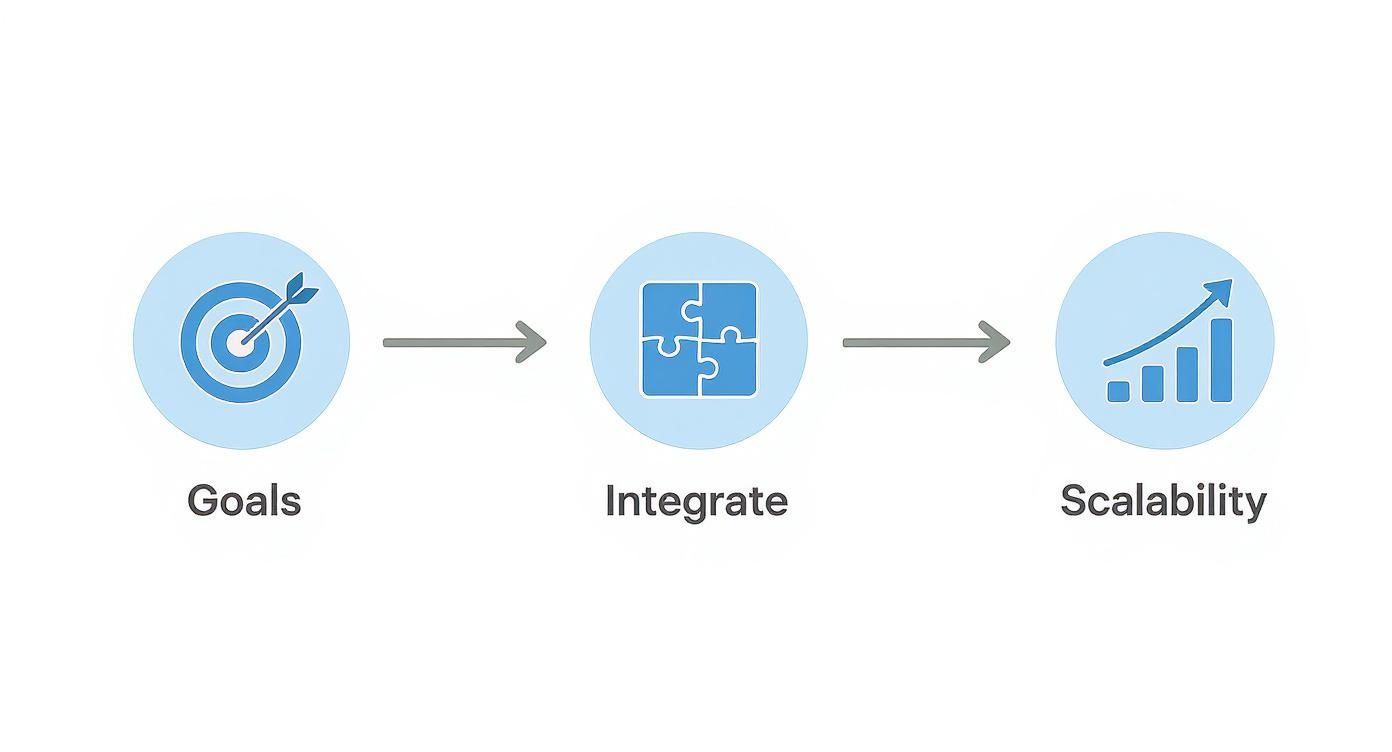
As you can see, a successful program starts with a clear vision and is built on a solid technical foundation. Let's get into the details.
H3: Laying the Groundwork for a Strong Start
First things first: your program has to look and feel like it belongs to your brand. The on-site widget—that little pop-up or icon where customers check their points—needs to be fully customized. We're talking about matching your brand's exact colors, fonts, and logo. When it looks cohesive, customers trust it. It feels like a part of your store, not some random third-party plugin.
Next up, the rewards. This is where a lot of brands miss the mark. Your rewards have to be two things: genuinely appealing to your customers and financially sustainable for you. Don't just slap a generic discount on it and call it a day.
Try mixing it up with different types of rewards to hit different customer motivations:
- Transactional Rewards: These are the classics. Think dollar-off coupons, percentage discounts, or free shipping. They offer straightforward, immediate value.
- Experiential Rewards: This is where you build an emotional connection. Offer early access to new products, exclusive content, or an invite to a members-only community.
- Product-Based Rewards: Let customers cash in their points for a tangible product, like one of your best-sellers or a special limited-edition item.
A well-designed rewards structure is simple, compelling, and makes people feel like you truly appreciate their business.
H3: Master Audience Segmentation for Maximum Impact
One of the most powerful things you can do with modern loyalty software is segment your audience. Lumping all your customers together is a huge missed opportunity. The real magic happens when you create distinct groups and tailor your offers to their specific behaviors.
For example, you could create segments for:
- New Customers: Give them a nice bonus for simple first actions, like creating an account or making their second purchase. It’s a great way to hook them in early.
- VIPs: Your biggest fans and top spenders deserve the red-carpet treatment. Create an exclusive tier just for them with better point-earning rates, unique rewards, and maybe even a dedicated support line.
- At-Risk Customers: Got customers who haven't bought anything in a while? Don't let them fade away. Send them a targeted "we miss you" offer with some bonus points to bring them back into the fold.
By segmenting your audience, you stop shouting at everyone with the same message and start having personalized conversations. This targeted approach is way more effective at driving action and making every single customer feel seen.
This kind of personalization isn't just a nice-to-have anymore. By 2025, it's predicted that over 50% of loyalty programs will use AI-driven tools to anticipate customer needs and offer perfectly timed rewards. This is the future of building strong customer relationships.
H3: Crafting a Winning Launch Strategy
How you introduce your program is every bit as important as the program itself. A well-orchestrated launch builds buzz and gets people signing up right away. Don't just quietly turn it on and hope for the best—make an event out of it.
Your launch plan should have a few key ingredients:
- A "Sign-Up Bonus" Campaign: Give everyone who joins in the first week a generous handful of points to get started. Nobody likes starting from zero; this gives them an immediate taste of the benefits.
- Multi-Channel Promotion: Shout it from the rooftops. Announce the new program everywhere your customers are: email marketing, social media, a big banner on your homepage, and even a quick mention in order confirmation emails.
- Educate Your Customers: Make it crystal clear how the program works. Use simple language and maybe a fun graphic to show people how to earn points and what cool stuff they can get with them.
A great launch sets the tone for the entire life of your program. For a deeper dive into the technical side of connecting your tools, our guide on loyalty program integration has some fantastic pointers.
To keep your launch on track, a simple checklist can be a lifesaver. Here’s a breakdown of the key phases and actions to ensure you cover all your bases from planning to post-launch analysis.
Loyalty Program Launch Checklist
| Phase | Key Action Items | Success Metric |
|---|---|---|
| Phase 1: Foundation & Design | - Define program goals (e.g., increase repeat purchases by 15%). - Design brand-aligned widget and assets. - Finalize reward structure and point values. | - Program design approved. - Reward cost-benefit analysis complete. |
| Phase 2: Technical Setup | - Integrate loyalty software with your e-commerce platform. - Set up initial customer segments (VIPs, new users). - Perform end-to-end testing of point earning and redemption. | - Successful test transactions processed. - Integration with email/SMS platforms confirmed. |
| Phase 3: Launch & Promotion | - Prepare all marketing materials (emails, social posts, banners). - Set up a launch-week sign-up bonus. - Announce the program across all channels simultaneously. | - Member enrollment rate in the first 7 days. - Engagement on launch announcements. |
| Phase 4: Post-Launch Analysis | - Monitor key KPIs (enrollment, redemption, repeat purchase rate). - Gather initial customer feedback. - Plan the first optimization campaign based on early data. | - Redemption rate above target threshold. - Positive shift in repeat purchase rate for members. |
Following a structured checklist like this helps ensure no critical steps are missed, paving the way for a program that delivers real results right from the start.
H3: Tracking the Right KPIs for Success
Once your program is live, the job shifts from building to optimizing. And to do that right, you need to track the right Key Performance Indicators (KPIs). These numbers tell you what’s working, what’s not, and where you need to make adjustments.
Zero in on these essential metrics:
- Member Enrollment Rate: What percentage of your customers are actually signing up? This is a direct measure of how effective your launch promotion is.
- Reward Redemption Rate: Are people using their points? A low rate could signal that your rewards aren't exciting enough or that they're too difficult to earn.
- Repeat Purchase Rate: This is the big one. Compare the buying frequency of your loyalty members to non-members. This tells you if the program is actually achieving its main goal.
- Customer Lifetime Value (CLV): Keep an eye on the CLV of your members over time. A successful program should show a clear, steady increase in how much a member spends with your brand.
By constantly monitoring these KPIs, you can make data-driven decisions that ensure your loyalty program is always delivering a real, measurable return on your investment.
Common Loyalty Program Mistakes and How to Avoid Them
Even the best-intentioned loyalty program can fall completely flat. It's rarely the software's fault; more often than not, a flawed strategy is the real culprit. Building a program that customers actually want to use means sidestepping a few common, but avoidable, pitfalls.
The biggest mistake? Making your program feel like work. If customers have to break out a calculator to understand your points system or feel like rewards are a million miles away, they'll just check out. You're trying to build excitement and deliver value, not create a frustrating puzzle.
Making Your Program Too Complicated
One of the fastest ways to kill a program is with a rulebook thicker than a novel. When people don't immediately grasp how to earn points or what they're worth, their interest evaporates. Keep it simple. Be transparent.
Instead of a tangled mess of rules, aim for crystal clarity:
- Clear Earning Rules: Make it dead simple. "10 points for every $1 spent" is instantly understandable, unlike a complicated system that changes based on product type.
- Visible Progress: Customers should be able to see their points balance and how close they are to their next reward at a glance, right from their account dashboard.
- Simple Redemption: Cashing in rewards should be a satisfying, one-click affair at checkout, not a ten-step process that feels like filing taxes.
Offering Uninspiring or Irrelevant Rewards
Another all-too-common misstep is handing out rewards that just don't land. A generic 5% off coupon is easy, sure, but it does absolutely nothing to build an emotional connection with your brand. Your rewards need to feel special and reflect what your best customers actually care about.
Try to think beyond the discount. What about offering early access to a new collection? Or exclusive behind-the-scenes content? Even giving away a free, best-selling product can feel far more valuable and memorable than just another small price cut.
The most successful loyalty programs don't just offer discounts; they offer a sense of belonging and recognition. The rewards should make your best customers feel seen and appreciated for their continued support.
Forgetting to Promote Your Program
You could build the most brilliant loyalty program on the planet, but if no one knows it exists, it’s just digital dust. A "set it and forget it" mindset is a surefire way to get zero results. You have to shout about it from the rooftops, consistently.
Weave your program into the very fabric of your marketing:
- Announce it everywhere: Launch with a bang using homepage banners, dedicated email blasts, and a social media blitz.
- Incorporate it into communications: Slip point balances and reward reminders into order confirmation emails and regular newsletters. It keeps the program top of mind.
- Train your team: If you have a physical store or a customer support team, make sure they’re your program's biggest cheerleaders and can get customers signed up.
There's a reason the investment in customer loyalty program software is exploding. The global market, valued at around USD 12.7 billion in 2025, is on track to hit a staggering USD 52.3 billion by 2034. You can dig deeper into the future of customer loyalty management software on marketresearch.com. By steering clear of these common mistakes, you can make sure your investment actually pays off by building stronger customer relationships and driving real, sustainable growth.
Got Questions? We've Got Answers
Diving into loyalty program software can feel like a lot to take in. It's totally normal to have questions! To help you out, we’ve put together answers to some of the things we get asked most often.
What's This Going to Cost Me?
That's the big question, isn't it? The pricing for these tools is all over the map, but most are set up as a monthly subscription. For a small but growing store, you can expect to find plans starting around $50 per month.
As your business scales, with more customers and a need for more advanced features or hands-on support, that price can climb into the hundreds or even thousands. The key is to find a plan that fits your customer base now but has room for you to grow, so you aren't forced to switch platforms down the line.
Will This Work With My Shopify Store?
You bet. Pretty much any loyalty software worth its salt has a dedicated app for platforms like Shopify, BigCommerce, and WooCommerce. These integrations are usually a simple one-click install and handle all the heavy lifting, syncing customer data and automating rewards without you having to touch a line of code.
Pro Tip: Always, always check the provider's app store page or official list of integrations before you sign up. A smooth, native integration is non-negotiable—it's what makes the experience seamless for you and your customers.
What's the Single Most Important Metric to Watch?
If you only track one thing, make it your Customer Retention Rate. This number tells you, in no uncertain terms, if your loyalty program is actually doing its main job: getting people to stick around.
Of course, a few other metrics are crucial for getting the full picture:
- Reward Redemption Rate: Are people actually using the points and rewards you’re offering? This tells you how engaging your program is.
- Customer Lifetime Value (CLV): This is where the money is. Comparing the CLV of loyalty members to non-members is the clearest way to see the direct financial impact your program is having.
How Quickly Will I See Results?
You'll see the first signs of life pretty fast. Things like program sign-ups and maybe even a few early reward redemptions will likely pop up within the first month.
But the real, bottom-line impact? That takes a bit more time. You should give it about 3 to 6 months to see a meaningful shift in bigger metrics like retention and lifetime value. Keep promoting your program and tweaking it based on what you see, and you'll get there faster.
Ready to turn casual shoppers into your biggest fans? With Toki, you can launch a beautiful, on-brand loyalty and rewards program in just a few minutes. Start driving more repeat sales, boosting customer lifetime value, and building a community that loves what you do. Start building with Toki today.